PENGUIN CLASSICS
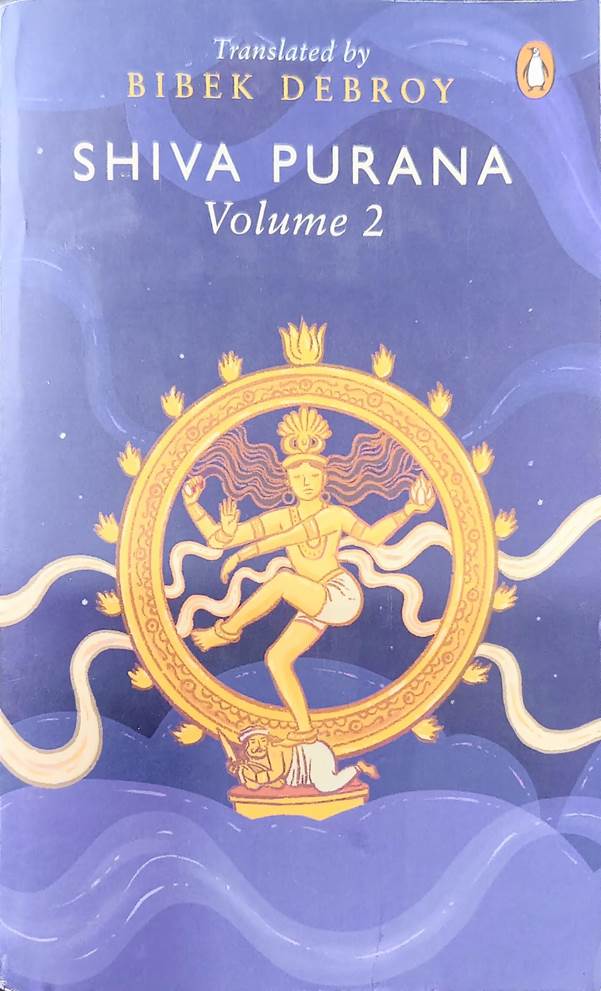
SHIVA PURANA: VOLUME 2
Bibek Debroy is a renowned
economist, scholar and translator. He has worked in universities, research
institutes, the industry and for the government. He has widely published books,
papers and articles on economics. As a translator, he is best known for his
magnificent rendition of the Mahabharata in ten volumes, the three-volume
translation of the Valmiki Ramayana, the Harivamsha, Bhagavata Purana,
Markandeya Purana, Brahma Purana and additionally Vishnu Purana, published to
wide acclaim by Penguin Classics. He is also the author of Sarama and Her
Children, which splices his interest in Hinduism with his love for dogs.
PRAISE FOR THE BHAGAVATA PURANA
'An exhaustive but accessible
translation of a crucial mythological text-Indian Express
"The beauty of recounting
these stories lies in the manner in which the cosmic significance and the
temporal implications are intermingled. Debroy's easy translation makes that
experience even more sublime' -Business Standard
'The Puranas are 18 volumes with
more than four lakh shlokas, and all in Sanskrit-the language of our ancestors
and the sages, which only a few can speak and read today and only a handful
have the mastery to translate. Bibek Debroy is one such master translator, who
wears the twin title of economist and Sanskrit scholar, doing equal justice to
both'-Outloo
PRAISE FOR THE MARKANDEYA PURANA
'[The] Markandeya Purana is a marvelous amalgam of mythology
and metaphysics that unfolds a series of conversations in which sage Markandeya
is asked to answer some deeper questions raised by the events in the
Mahabharata'-Indian Express.
'Bibek Debroy's translation of the Markandeya Purana presents
the English reader with an opportunity to read the unabridged version in
English. As he writes in the Introduction, "But all said and done, there
is no substitute to reading these texts in the original Sanskrit." If you
cannot read the original in Sanskrit, this is perhaps the next best
thing'-Abhinav Agarwal
PRAISE FOR THE VISHNU PURANA
'Bibek Debroy's unabridged translation brings his trademark
and a scrupulous attention to keeping this a translation and not an felicity of
prose. Copious footnotes, numbering over a thousand, interpretation make this a
much-needed and valuable text'-Firstpost
'Like the others, this Purana captures ancient and medieval
stories and concepts of Hinduism in a range and complexity that no other
Sanskrit texts offer... The Vishnu Purana ends on a sombre note, but not
without offering the hope that those who chant Vishnu's name can still reclaim
dharma'-Business Standard
'Immense credit to the translator for keeping the flow as
light and engaging as the original may allow and for capturing and conveying
intact the soul of the Vishnu Purana In essence, this text functions as a
concise encyclopaedia of perhaps the most evolved research and thought of the
time and a 360-degree portrayal of Lord Vishnu in myriad forms aggregated from
various oral or lost sources and tales... A treasure trove; a slow-paced
perusal of the text is an eye-opener, an education in itself'-New Indian
Express
PRAISE FOR THE BRAHMA PURANA
'In two volumes and over 1,000 pages, Mr Debroy's translation
of what is called the Adi Purana (or the original Purana) brings alive the many
myths and legends surrounding Hindu gods, traditions, customs and ways of
living'-Business Standard
SHIVA PURANA
Volume 2
Translated by
BIBEK DEBROY
PENGUIN BOOKS
An imprint of Penguin
Random House
PENGUIN BOOKS
USA |Canada |UK |
Ireland |Australia
New Zealand |India I
South Africa | China |Singapore
Penguin Books is part
of the Penguin Random House group of companies whose addresses can be found at
global.penguinrandomhouse.com
Published by Penguin Random
House India Pvt. Ltd 4th Floor, Capital Tower 1, MG Road, Gurugram 122 002,
Haryana, India
Penguin Random House
India
First published in
Penguin Books by Penguin Random House India 2023
Translation copyright
Bibek Debroy 2023
All rights reserved
10 9 8 7 6 5 4 3 2
The views and opinions
expressed in this book are the author's own and the facts are as reported by
him which have been verified to the extent possible, and the publishers are not
in any way liable for the same.
ISBN 9780143459705
Typeset in Sabon by
Manipal Technologies Limited, Manipal Printed at Manipal Technologies Limited,
India
This book is sold
subject to the condition that it shall not, by way of trade or otherwise, be
lent, resold, hired out, or otherwise circulated without the publisher's prior
consent in any form of binding or cover other than that in which it is
published and without a similar condition including this condition being
imposed on the subsequent purchaser.
www.penguinbooksindia.com
MIX Paper Supporting
responsible forestry
FSC
FSC C043100
This is a legitimate
digitally printed version of the book and therefore might not have certain
extra finishing on the cover.
For Sadguru, Jaggi Vasudev
CONTENTS
Introduction. 12
Kumara Khanda. 43
Chapter 151-3.4(1) (Shiva's
Amusement) 43
Chapter 152-3.4(2) (Birth of Shiva's
Son) 46
Chapter 153-3.4(3) (Kartikeya's
Pastimes) 49
Chapter 154-3.4(4) (Search for
Kartikeya) 51
Chapter 155-3.4(5) (Kumara's
Abhisheka) 54
Chapter 156-3.4(6) (Kumara's
Extraordinary Conduct) 57
Chapter 157-3.4(7) (Start of the War) 59
Chapter 158-3.4(8) (The Battle in
General) 61
Chapter 159-3.4(9) (Taraka Fights
against Shakra, Vishnu and Virabhadra) 63
Chapter 160-3.4(10) (Taraka's Death) 66
Chapter 161-3.4(11) (Bana and
Pralamba Are Killed) 68
Chapter 162-3.4(12) (Kartika, Shiva
and Shivaa) 69
Chapter 163-3.4(13) (Ganesha's
Origin) 72
Chapter 164-3.4(14) (Quarrel with the
Ganas) 74
Chapter 165-3.4(15) (Description of
Ganesha's Battle) 76
Chapter 166-3.4(16) (Severing of
Ganesha's Head) 79
Chapter 167-3.4(17) (Ganesha Gets His
Life Back) 80
Chapter 168-3.4(18) (Ganesha Obtains
the Title of Ganadhipa) 82
Chapter 169-3.4(19) (Prelude to
Ganesha's Marriage) 85
Chapter 170-3.4(20) (Ganesha's
Marriage) 87
Yuddha Khanda. 90
Chapter 171-3.5(1) (Description of
Tripura) 90
Chapter 172-3.5(2) (Praise by Devas) 93
Chapter 173-3.5(3) (The Dharma of
Tripura) 97
Chapter 174-3.5(4) (Initiation of
Residents of Tripura) 100
Chapter 175-3.5(5) (Delusion of
Tripura) 102
Chapter 176-3.5(6) (Praise of Shiva) 105
Chapter 177-3.5(7) (Praise by Devas) 107
Chapter 178-3.5(8) (Description of
the Chariot) 109
Chapter 179-3.5(9) (Shiva's Advance) 111
Chapter 180-3.5(10) (Burning of
Tripura) 114
Chapter 181-3.5(11) (Praise by Devas) 116
Chapter 182-3.5(12) (Devas Return) 117
Chapter 183-3.5(13) (Shakra Gets His
Life Back) 119
Chapter 184-3.5(14) (Jalandhara's
Birth and Marriage) 121
Chapter 185-3.5(15) (Battle between
Devas and Jalandhara) 123
Chapter 186-3.5(16) (Devas Fight
Back) 126
Chapter 188-3.5(18) (Conversation
between Narada and Jalandhara) 130
Chapter 189-3.5(19) (Jalandhara Sends
a Messenger) 132
Chapter 190-3.5(20) (Ordinary Ganas
and Asuras Fight) 134
Chapter 191-3.5(21) (Special Fights) 137
Chapter 192-3.5(22) (Description of
Jalandhara's Fighting) 139
Chapter 193-3.5(23) (Violation of
Vrinda's Faithfulness) 141
Chapter 194-3.5(24) (Description of Jalandhara) 143
Chapter 195-3.5(25) (Praise by Devas) 146
Chapter 196-3.5(26) (Dispelling of
Vishnu's Delusion) 148
Chapter 197-3.5(27) (Shankhachuda's
Origin) 151
Chapter 198-3.5(28) (Shankhachuda's
Austerities and Marriage) 152
Chapter 199-3.5(29) (Shankhachuda's
Rule and Earlier Birth) 154
Chapter 200-3.5(30) (Prayer to the
Lord of Devas) 156
Chapter 201-3.5(31) (Shiva's Advice) 158
Chapter 202-3.5(32) (The Messenger Is
Sent) 160
Chapter 203-3.5(33) (Mahadeva's
Advance) 161
Chapter 204-3.5(34) (Shankhachuda's
Advance) 163
Chapter 205-3.5(35) (Conversation
between Shiva and the Messenger) 164
Chapter 206-3.5(36) (The Mutual
Fight) 167
Chapter 207-3.5(37) (Shankhachuda
Fights) 168
Chapter 208-3.5(38) (Kali Fights) 170
Chapter 209-3.5(39) (Shankhachuda's
Soldiers Are Killed) 171
Chapter 210-3.5(40) (Shankhachuda Is
Killed) 173
Chapter 211-3.5(41) (Tulasi's Curse) 175
Chapter 212-3.5(42) (Killing of
Hiranyaksha) 177
Chapter 213-3.5(43) (Killing of
Hiranyakashipu) 180
Chapter 214-3.5(44) (Andhaka's
Austerities)501 182
Chapter 215-3.5(45) (The Battle
Commences) 186
Chapter 216-3.5(46) (Andhaka's Fight) 189
Chapter 217-3.5(47) (Swallowing of
Shukra) 192
Chapter 218-3.5(48) (Swallowing of
Shukra Continued) 194
Chapter 219-3.5(49) (Andhaka Becomes
a Gana) 196
Chapter 220-3.5(50) (Shukra Obtains
Knowledge about Mritasanjivani) 201
Chapter 221-3.5(51) (Usha's Story) 204
Chapter 222-3.5(52) (Usha's Story
Continued) 207
Chapter 223-3.5(53) (Aniruddha and
Usha Amuse Themselves) 209
Chapter 224-3.5(54) (Banasura, Rudra,
Krishna and Others Fight) 211
Chapter 225-3.5(55) (Slicing of
Bana's Hands) 214
Chapter 226-3.5(56) (Banasura Becomes
a Ganapati) 216
Chapter 227-3.5(57) (Slaying of
Gajasura) 218
Chapter 228-3.5(58) (Slaying of
Dundubhi-Nirhrada) 221
Chapter 229-3.5(59) (Slaying of
Vidala and Utpala) 223
Shata Rudra Samhita 701 225
Chapter 230-4(1) (Shiva's Five
Avataras) 225
Chapter 231-4(2) (Shiva's Eight
Forms) 228
Chapter 232-4(3) (Arddha-Nari-Nara
Avatara. 229
Chapter 233-4(4) (Story of Rishabha) 230
Chapter 234-4(5) (Nineteen of Shiva's
Avataras) 231
Chapter 235-4(6) (The Nandikeshvara
avatara. 234
Chapter 236-4(7) (Nandikeshvara's
Abhisheka and Marriage) 236
Chapter 237-4(8) (Bhairava Avatara) 239
Chapter 238-4(9) (Bhairava Avatara's
Pastimes) 242
Chapter 239-4(10) (Nrisimha's
Conduct) 245
Chapter 240-4(11) (Prelude to
Sharabha Avatara) 247
Chapter 241-4(12) (Prelude to
Sharabha Avatara) 249
Chapter 242-4(13) (Prelude to
Grihapati Avatara) 251
Chapter 243-4(14) (Grihapati Avatara) 255
Chapter 244-4(15) (Grihapati Avatara
Continued) 257
Chapter 245-4(16) (Yaksheshvara
Avatara) 260
Chapter 246-4(17) (Ten Avataras of
Shiva) 262
Chapter 247-4(18) (Eleven Avataras) 263
Chapter 248-4(19) (Story of Durvasa) 264
Chapter 249-4(20) (Hanuman Avatara) 267
Chapter 250-4(21) (Mahesha Avatara) 269
Chapter 251-4(22) (Prelude to Vrisha
Avatara) 270
Chapter 252-4(23) (Vrisha Avatara) 272
Chapter 253-4(24) (Pippalada Avatara) 275
Chapter 254-4(25) (Pippalada Avatara
Continued) 277
Chapter 255-4(26) (Vaishyanatha
Avatara) 278
Chapter 256-4(27) (Dvijeshvara
Avatara) 281
Chapter 257-4(28) (Yatinatha
Brahma-Hamsa Avatara) 284
Chapter 258-4(29) (Krishna-Darshana
Avatara) 286
Chapter 259-4(30) (Avadhuteshvara
Avatara) 288
Chapter 260-4(31) (Bhikshuvarya
Avatara) 290
Chapter 261-4(32) (Sureshvara
Avatara) 294
Chapter 262-4(33) (Brahmachari
Avatara) 297
Chapter 263-4(34) (Sunartaka-Nata
Avatara) 299
Chapter 264-4(35) (Avatara as a
Virtuous Brahmana) 301
Chapter 265-4(36) (Avatara as
Ashvatthama) 302
Chapter 266-4(37) (Prelude to Kirata
Avatara) 304
Chapter 267-4(38) (Arjuna's
Austerities) 307
Chapter 268-4(39) (Slaying of Muka
Daitya) 310
Chapter 269-4(40) (Conversation
between the Bhilla and Arjuna) 312
Chapter 270-4(41) (Kirateshvara
Avatara) 313
Chapter 271-4(42) (Twelve
Jyotirlingams) 316
Koti Rudra Samhita951 320
Chapter 272-5(1) (Greatness of
Jyotirlingams and Upalingams) 320
Chapter 273-5(2) (Greatness of
Shiva's Lingams) 322
Chapter 274-5(3) (Anasuya and Atri's
Austerities) 323
Chapter 275-5(4) (The Greatness of
Atrishvara) 324
Chapter 276-5(5) (Death of the
Brahmani and Nandikeshvara) 327
Chapter 277-5(6) (The Brahmani Goes
to Heaven) 328
Chapter 278-5(7) (Greatness of
Nandikeshvara) 331
Chapter 279-5(8) (Greatness of
Mahabala) 332
Chapter 280-5(9) (The Chandali's Good
Destination) 333
Chapter 281-5(10) (The Greatness of
Mahabala Shiva Lingam) 335
Chapter 282-5(11) (The Greatness of
Pashupatinatha Shiva Lingam) 337
Chapter 283-5(12) (The Nature of the
Lingam) 338
Chapter 284-5(13) (Origin of Vatuka) 340
Chapter 285-5(14) (Origin of
Somanatha Jyotirlingam) 343
Chapter 286-5(15) (Description of
Mallikarjuna Jyotirlingam) 345
Chapter 287-5(16) (Greatness of Mahakala
Jyotirlingam) 346
Chapter 288-5(17) (Greatness of
Mahakala Jyotirlingam Continued) 348
Chapter 289-5(18) (Greatness of
Omkareshvara Jyotirlingam) 351
Chapter 290-5(19) (Greatness of
Kedareshvara Jyotirlingam) 352
Chapter 291-5(20) (Greatness of
Bhimeshvara Jyotirlingam) 353
Chapter 292-5(21) (Origin and Greatness
of Bhimeshvara Jyotirlingam) 355
Chapter 293-5(22) (Rudra's Arrival in
Kashi) 357
Chapter 294-5(23) (Greatness of
Kashi-Vishveshvara Jyotirlingam) 359
Chapter 295-5(24) (Greatness of
Tryambakeshvara and Goutama) 361
Chapter 296-5(25) (Goutama's
Arrangements) 362
Chapter 297-5(26) (Greatness of
Tryambakeshvara) 364
Chapter 298-5(27) (Greatness of
Tryambakeshvara Continued) 366
Chapter 299-5(28) (Greatness of
Vaidyanatheshvara Jyotirlingam) 368
Chapter 300-5(29) (Depredations of
Rakshasas in Darukavana) 371
Chapter 301-5(30) (Greatness of
Nageshvara Jyotirlingam) 373
Chapter 302-5(31) (Greatness of Rameshvara) 375
Chapter 303-5(32) (Sudeha and
Sudharma) 376
Chapter 304-5(33) (Origin and
Greatness of Ghushmesha Jyotirlingam) 378
Acknowledgements. 381
The word 'Purana' means old,
ancient. The Puranas are old texts, usually referred to in conjunction with
Itihasa (the Ramayana and the Mahabharata).1 Whether Itihasa
originally meant only the Mahabharata, with the Ramayana being added to that
expression later, is a proposition on which there has been some discussion. But
that's not relevant for our purposes. In the Chandogya Upanishad, there is an
instance of the sage Narada approaching the sage Sanatkumara for instruction.
Asked about what he already knows, Narada says he knows Itihasa and Purana, the
Fifth Veda.2 In other words, Itihasa-Purana possessed an elevated
status. This by no means implies that the word 'Purana', as used in these two
Upanishads and other texts too, is to be understood in the sense of the word
being applied to a set of texts known as the Puranas today. The Valmiki
Ramayana is believed to have been composed by Valmiki and the Mahabharata by
Krishna Dvaipayana Vedavyasa. After composing the Mahabharata, Krishna
Dvaipayana Vedavyasa is believed to have composed the Puranas. The use of the
word 'composed' immediately indicates that Itihasa-Purana are smriti texts,
with a human origin. They are not shruti texts, which have a divine origin.
Composition does not mean these texts were rendered into writing. Instead,
there was a process of oral transmission, with inevitable noise in the
transmission and distribution process. Writing came much later.
Pargiter's book on the Puranas is
still one of the best introductions to this corpus.3 To explain the
composition and transmission process, one can do no better than to quote him.
The Vayu and Padma
Puranas tell us how ancient genealogies, tales and ballads were preserved,
namely, by the sutas,4 and they describe the suta's duty... The
Vayu, Brahmanda and Visnu give an account, how the original Purana came into
existence... Those three Puranas say-Krsna Dvaipayana divided the single Veda
into four and arranged them, and so was called Vyasa. He entrusted them to his
four disciples, one to each, namely Paila, Vaisampayana, Jaimini and Sumantu.
Then with tales, anecdotes, songs and lore that had come down from the ages he
compiled a Purana, and taught it and the Itihasa to his fifth disciple, the
suta Romaharsana or Lomaharsana... After that he composed the Mahabharata. The
epic itself implies that the Purana preceded it... As explained above, the
sutas had from remote times preserved the genealogies of gods, rishis and
kings, and traditions and ballads about celebrated men, that is, exactly the
material-tales, songs and ancient lore-out of which the Purana was constructed.
Whether or not Vyasa composed the original Purana or superintended its
compilation, is immaterial for the present ____________________
1 For example, shlokas 2.4.10, 4.1.2 and
4.5.11 of the Brihadaranyaka Upanishad use the two expressions together.
2 Chandogya Upanishad, 7.1.2.
3 F.E. Pargiter, Ancient Indian
Historical Tradition, Oxford University Press, London, 1922.
4 Sutas were bards, minstrels and
raconteurs.
purpose After the
original Purana was composed, by Vyasa as is said,his disciple Romaharsana
taught it to his son Ugrasravas, and Ugrasravas the sauti appears as the
reciter in some of the present Puranas; and the sutas still retained the right
to recite it for their livelihood. But, as stated above, Romaharsana taught it
to his six disciples, at least five of whom were brahmans. It thus passed into
the hands of brahmans, and their appropriation and development of it increased
in the course of time, as the Purana grew into many Puranas, as Sanskrit
learning became peculiarly the province of the brahmans, and as new and frankly
sectarian Puranas were composed.
Pargiter cited reasons for his
belief that the Mahabharata was composed after the original Purana, though that
runs contrary to the popular perception about the Mahabharata having been
composed before the Puranas. That popular and linear perception is too
simplistic, since texts evolved in parallel, not necessarily sequentially.
In popular perception, Krishna
Dvaipayana Vedavyasa composed the Mahabharata. He then composed the Puranas.
Alternatively, he composed an original core Purana text, which has been lost,
and others embellished it through additions. The adjective 'Purana', meaning
old account or old text, became a proper noun, signifying a specific text. To
be classified as a Purana, a Purana has to possess five attributes-pancha
lakshmana. That is, five topics must be discussed-sarga, pratisarga, vamsha,
manvantara and vamshanucharita. The clearest statement of this is in the Matsya
Purana. Unlike the Ramayana and the Mahabharata, there is no Critical Edition
of the Puranas.5 Therefore, citing chapter and verse from a Purana
text is somewhat more difficult, since verse, if not chapter, may vary from
text to text. With that caveat, the relevant shloka (verse) should be in the
53rd chapter of the Matysa Purana. Sarga means the original or primary
creation. The converse of sarga is universal destruction and dissolution, or
pralaya. That period of sarga lasts for one of Brahma's days, known as kalpa.
When Brahma sleeps, during his night, there is universal destruction.
In measuring time, there is the
notion of a yuga (era) and there are four yugas-satya yuga (also known as krita
yuga), treta yuga, dvapara yuga and kali yuga. Satya yuga lasts for 4,000
years, treta yuga for 3,000 years, dvapara yuga for 2,000 years and kali yuga
for 1,000 years. However, these are not human years. The gods have a different
timescale and these are the years of the gods. As one progressively moves from
satya yuga to kali yuga, virtue (dharma) declines. But at the end of kali yuga,
the cycle begins afresh, with satya yuga. An entire cycle, from satya yuga to
kali yuga, is known as a mahayuga (great era). However, a mahayuga is not just
10,000 years. There is a further complication. At the beginning and the end of
every yuga, there are some additional years. These additional years are 400 for
satya yuga, 300 for treta yuga, 200 for dvapara yuga and 100 for kali yuga. A
mahayuga thus has 12,000 years, adding years both at the beginning and at the
end. 1,000 mahayugas make up one kalpa (eon), a single day for Brahma. A kalpa
is also divided into fourteen manvantaras, a manvantara being a period during
which a Manu presides and rules over creation.
_______________________
5 The Critical Edition of the Valmiki
Ramayana was brought out by the Baroda Oriental Institute, now part of the
Maharaja Sayajirao University of Baroda. The Critical Edition of the
Mahabharata was brought out by the Bhandarkar Oriental Research Institute,
Pune.
Therefore, there are 71.4 mahayugas
in a manvantara. Our present kalpa is known as the Shveta Varaha kalpa. Within
that, six Manus have come and gone. Their names are (1) Svayambhuva Manu, (2)
Svarochisha Manu, (3) Uttama Manu, (4) Tapasa Manu, (5) Raivata Manu and (6)
Chakshusha Manu. The present Manu is known as Vaivasvata Manu. Vivasvat, also
written as Vivasvan, is the name of Surya, the Sun God. Vaivasvata Manu has
that name because he is Surya's son. Not only do Manus change from one
manvantara to another. So do the gods, the ruler of the gods and the seven
great sages, known as the saptarshis (seven rishis). Indra is a title of the
ruler of the gods. It is not a proper name. The present Indra is Purandara.
However, in a different manvantara, someone else will hold the title. In the
present seventh manvantara, known as Vaivasvata manvantara, there will also be
71.4 mahayugas. We are in the 28th of these. Since a different Vedavyasa
performs that task of classifying and collating the Vedas in every mahayuga,
Krishna Dvaipayana Vedavyasa is the 28th in that series. Just so that it is
clear, Vedavyasa isn't a proper name. It is a title conferred on someone who
collates and classifies the Vedas. There have been twenty-seven who have held
the title of Vedavyasa before him and he is the 28th. His proper name is
Krishna Dvaipayana, Krishna because he was dark and Dvaipayana because he was
born on an island (dvipa). This gives us an idea of what the topic of
manvantara is about. This still leaves pratisarga, vamsha and vamshanucharita.
The two famous dynasties/lineages were the solar dynasty (surya vamsha) and
lunar dynasty (chandra vamsha) and all the famous kings belonged to one or
other of these two dynasties. Vamshanucharita is about these lineages and the
conduct of these kings. There were the gods and sages (rishis) too, not always
born through a process of physical procreation. Their lineages are described
under the heading of vamsha. Finally, within that cycle of primary creation and
destruction, there are smaller and secondary cycles of creation and
destruction. That's the domain of pratisarga. In greater or lesser degree, all
the Puranas cover these five topics, some more than the others. The Purana
which strictly adheres to this five-topic classification is the Vishnu Purana.
There are Puranas and Puranas. Some
are known as Sthala Puranas, describing the greatness and sanctity of a
specific geographical place. Some are known as Upa-Puranas, minor Puranas. The
listing of Upa-Puranas has regional variations and there is no country-wide
consensus about the list of Upa-Puranas, though it is often accepted that there
are eighteen. The Puranas we have in mind are known as Maha-Puranas, major
Puranas. Henceforth, when we use the word Puranas, we mean Maha-Puranas. There
is consensus that there are eighteen Maha-Puranas, though it is not obvious
that this number of eighteen existed right from the beginning. The names are
mentioned in several of these texts, including a shloka that follows the shloka
cited from the Matsya Purana. Thus, the eighteen Puranas are (1) Agni (15,400);
(2) Bhagavata (18,000); (3) Brahma (10,000); (4) Brahmanda (12,000); (5) Brahmavaivarta
(18,000); (6) Garuda (19,000); (7) Kurma (17,000); (8) Linga (11,000); (9)
Markandeya (9,000); (10) Matsya (14,000); (11) Narada (25,000); (12) Padma
(55,000); (13) Shiva (24,000); (14) Skanda (81,100); (15) Vamana (10,000); (16)
Varaha (24,000); (17) Vayu (24,000) and (18) Vishnu (23,000).
A few additional points about this
list. First, the Harivamsha is sometimes loosely described as a Purana, but
strictly speaking, it is not a Purana. It is more like an addendum to the
Mahabharata. Second, Bhavishya (14,500) is sometimes mentioned, with Vayu
excised from the list. However, the Vayu Purana exhibits many more Purana
characteristics than the Bhavishya Purana. There are references to a Bhavishyat
Purana that existed, but that may not necessarily be the Bhavishya Purana as we
know it today. That's true of some other Puranas too. Texts have been
completely restructured hundreds of years later. Third, it is not just a
question of Bhavishya Purana and Vayu Purana. In the lists given in some
Puranas, Vayu is part of the 18, but Agni is knocked out. In some others,
Narasimha and Vayu are included, but Brahmanda and Garuda are knocked out.
Fourth, when a list is given, the order also indicates some notion of priority
or importance. Since that varies from text to text, our listing is simply
alphabetical, according to the English alphabet. Fifth, when one uses the term
Bhagavata, does one mean Bhagavata Purana or Devi Bhagavata Purana? The numbers
within brackets indicate the number of shlokas each of these Puranas has or is
believed to have. The range is from 9,000 in Markandeya to a mammoth 81,100 in
Skanda. The aggregate is a colossal 409,500 shlokas. To convey a rough idea of
the orders of magnitude, the Mahabharata has, or is believed to have, 100,000 shlokas.
It's a bit difficult to convert a shloka into word counts in English,
especially because Sanskrit words have a slightly different structure. However,
as a very crude approximation, one shloka is roughly twenty words. Thus,
100,000 shlokas become 2 million words and 400,000 shlokas, four times the size
of the Mahabharata, amounts to 8 million words. There is a reason for using the
expression 'is believed to have', as opposed to 'has'. Rendering into writing
is of later vintage, the initial process was one of oral transmission. In the
process, many texts have been lost, or are retained in imperfect condition.
This is true of texts in general and is also specifically true of Itihasa and
Puranas. The Critical Edition of the Mahabharata, mentioned earlier, no longer
possesses 100,000 shlokas. Including the Harivamsha, there are around 80,000
shlokas. The Critical Edition of the Mahabharata has, of course, deliberately
excised some shlokas. For the Puranas, there is no counterpart of Critical
Editions. However, whichever edition of the Puranas one chooses, the number of
shlokas in that specific Purana will generally be fewer than the numbers
mentioned here earlier. Either those many shlokas did not originally exist, or
they have been lost. This is the right place to mention that a reading of the
Puranas assumes a basic degree of familiarity with the Valmiki Ramayana and the
Mahabharata, more the latter than the former. Without that familiarity, one
will often fail to appreciate the context completely. More than passing
familiarity with the Bhagavat Gita, strictly speaking a part of the
Mahabharata, helps."6
Other than the five attributes, the
Puranas have a considerable amount of information on geography and even
geological changes (changes in courses of river) and astronomy. Therefore,
those five attributes shouldn't suggest the Puranas have nothing more. They do,
and they have, therefore, been described as encyclopedias. Bharatavarsha is
vast and heterogeneous and each Purana may very well have originated in one
particular part of the country. Accordingly, within that broad compass of an
overall geographical description, the extent of geographical information varies
from Purana to Purana. Some are more familiar with one part of the country than
with another. Though not explicitly mentioned in the five attributes, the
Puranas are also about pursuing dharma, artha, kama and moksha, the four
objectives of human existence, and about the four varnas and the four ashramas.
________________________
6The
Bhagavat Gita translation was published in 2006 and reprinted in 2019, the
translation of the Critical Edition of the Mahabharata in 10 volumes between
2010 and 2014 (with a box set in 2015) and the translation of the Critical
Edition of the Valmiki Ramayana in 2017. The translations are by Bibek Debroy,
and in each case, the publisher is Penguin.
The general understanding and
practice of dharma is based much more on the Puranas than on the Vedas.
Culture, notions of law, rituals, architecture and iconography are based on the
Puranas. There is beautiful poetry too.
Perhaps one should
mention that there are two ways these 18 Puranas are classified. The trinity
has Brahma as the creator, Vishnu as the preserver and Shiva as the destroyer.
Therefore, Puranas where creation themes feature prominently are identified
with Brahma (Brahma, Brahmanda, Brahmavaivarta, Markandeya). Puranas where
Vishnu features prominently are identified as Vaishnava Puranas (Bhagavata,
Garuda, Kurma, Matysa, Narada, Padma, Vamana, Varaha, Vishnu). Puranas where
Shiva features prominently are identified as Shaiva Puranas (Agni, Linga,
Shiva, Skanda, Vayu). While there is a grain of truth in this, Brahma, Vishnu
and Shiva are all important and all three feature in every Purana. Therefore,
beyond the relative superiority of Vishnu vis-à-vis Shiva, the taxonomy
probably doesn't serve much purpose. The second classification is even more
tenuous and is based on the three gunas of sattva (purity), rajas (passion) and
tamas (ignorance). For example, the Uttara Khanda of the Padma Purana has a few
shlokas along these lines, recited by Shiva to Parvati. With a caveat similar
to the one mentioned earlier, this should be in the 236th chapter of Uttara
Khanda. According to this, the Puranas characterized by sattva are Bhagavata,
Garuda, Narada, Padma, Varaha and Vishnu. Those characterized by rajas are
Bhavishya, Brahma, Brahmanda, Brahmavaivarta, Markandeya and Vamana. Those
characterized by tamas are Agni, Kurma, Linga, Matysa, Skanda and Shiva.
Within a specific
Purana text, there are earlier sections, as well as later ones. That makes it
difficult to date a Purana, except as a range. Across Purana texts, there are
older Puranas, as well as later ones. Extremely speculatively, the dating will be
something like the following. (1) Agni (800-1100 CE); (2) Bhagavata (500-1000
CE); (3) Brahma (700-1500 CE); (4) Brahmanda (400-600 CE); (5) Brahmavaivarta
(700-1500 CE); (6) Garuda (800-1100 CE); (7) Kurma (600-900 CE); (8) Linga
(500-1000 CE); (9) Markandeya (250-700 CE); (10) Matsya (200-500 CE); (11)
Narada (900-1600 CE); (12) Padma (400-1600 CE); (13) Shiva (1000-1400 CE); (14)
Skanda (600-1200 CE); (15) Vamana (450-900 CE); (16) Varaha (1000-1200 CE);
(17) Vayu (350-550 CE); (18) Vishnu (300 CE-450 CE) and (19) Bhavishya
(500-1900 CE). Reiterating once again that there is no great precision in these
ranges, by this reckoning, the Vishnu Purana is the oldest and some parts of
the Bhavishya Purana are as recent as the 19th century.
As mentioned earlier, there is no
Critical Edition for the Puranas. Therefore, one has to choose a Sanskrit text
one is going to translate from. If one is going to translate all the Puranas,
it is preferable, though not essential, that one opts for a common source for
all the Purana texts. In all the Purana translations, as a common source, I
have used, and will use, the ones brought out by Nag Publishers, with funding
from the Ministry of Human Resource Development. It is no different for the
Shiva Purana.7 To the best of my knowledge, other than this
translation, there are only two other unabridged translations of the Shiva
Purana in English. J.L. Shastri was the editor of the first and a board of
scholars undertook the translation, published under the title 'Ancient Indian
Tradition and Mythology in English Translation'.8
_________________
7 The Sivamahapuranam, Nag Publishers,
Delhi, 1986.
8
The Siva-Purana, translated and annotated by a Board of Scholars, edited by J.
L. Shastri, 4 volumes, Motilal Banarsidass Publishers, Delhi, 1970.
In the course of this translation,
extensive comparisons have been made with the Shastri translation. The Sanskrit
texts used for the two translations are similar, but not always identical.
However, differences are minor. More importantly, the discerning reader, who
compares the two, will find that we have differed in interpreting words and
sentences. The second unabridged translation is by Shanti Lal Nagar."9
In the second half of the 19th century, the contribution of Calcutta and
Bengal towards preserving the Itihasa-Purana legacy was remarkable. Consider
the following. (1) Kaliprasanna Singha's unabridged translation of the
Mahabharata in Bengali; (2) The Sanskrit and unabridged Bengali translation of
the Burdwan edition of the Mahabharata; (3) The unabridged Bengali translation
of the Mahabharata, published by Pratap Chandra Roy; (4) The unabridged English
translation of the Valmiki Ramayana by William Carey and Joshua Marshman; (5)
Hemachandra Bhattacharya's unabridged translation of the Valmiki Ramayana in
Bengali; (6) Ganga Prasad Mukhopadhyaya's verse translation of the Valmiki
Ramayana; (7) Panchanan Tarkaratna's Sanskrit editions and Bengali translations
of Valmiki Ramayana, Adhyatma Ramayana and several Puranas; (8) Unabridged
translations of the Mahabharata in English by Kisari Mohan Ganguli and Manmatha
Nath Dutt; (9) Asiatic Society's10 Bibliotheca Indica Sanskrit
editions of Agni Purana, Brihad Dharma Purana, Brihad Naradiya Purana, Kurma
Purana, Varaha Purana and Vayu Purana; and (10) F. E. Pargiter's unabridged
English translation of Markandeya Purana. (11) And most important of all,
Horace Hayman's Wilson translation of the Vishnu Purana, in five volumes,
between 1864 and 1870.11 Though Wilson's translation wasn't part of
the Bibliotheca Indica corpus, it was part of the same broad tradition.
Wilson's work was almost certainly the first unabridged translation of any
Purana into English and the scholarship was remarkable. An act of research and
scholarship still needs to be undertaken, cross-referencing names, genealogies
and incidents across Itihasa and Purana texts. Often, when the same incident is
narrated in different Purana texts, there are differences in nuances and
details. Since ours is a translation, we have deliberately refrained from
undertaking such an exercise. But the Horace Hayman Wilson translation did seek
to do that. Before that work can be undertaken, the Purana corpus has to be
translated, meaning translation into English. More often than not, practices of
dharma are based on the Itihasa-Purana corpus. The Purana project, published by
Penguin, is part of that translation endeavour. Translations of Bhagavata
Purana, Markandeya Purana, Brahma Purana and Vishnu Purana have already been
published and Shiva Purana is the fifth.
As has been mentioned earlier, the
composition of Shiva Purana is dated to between 1000 and 1400 CE. It is a
relatively later Purana. The Shiva Purana has a considerable degree of overlap
with the Vayu Purana, dated to between 350 and 550 CE. It is the consensus that
the Vayu Purana evolved earlier. R. C. Hazra's dissertation is still one of the
best introductions to the Purana corpus, for all the Puranas.12
_________________
9 Shanti Lal Nagar, Siva Mahapurana, An
Exhaustive Introduction, Sanskrit Text, English Translation with Photographs of
Archaeological Evidence, 3 volumes, Parimal Publications, 2007.
10 Asiatic Society went through several
name changes, but it can simply be called the Asiatic Society.
11 Horace Hayman Wilson, The Vishnu
Purana, A System of Hindu Mythology and Tradition, Trubner & Company,
London, 1864-1870.
12 Studies
in the Puranic Records on Hindu Rites and Customs, R. C. Hazra, University of
Dacca, 1940. This has since been reprinted several times, by different
publishers.
Because of that later date of
composition, Hazra paid short shrift to the Shiva Purana, not even mentioning
it as a separate Purana. He focused instead on Vayu Purana.
The Vayu is
perhaps the oldest of the extant Puranas. The Mahabharata speaks of a 'Purana
proclaimed by Vayu;' the Harivamsa refers to 'Vayu' as an authority; Banabhatta
says in his Harsa-carita that he attended the reading of the Vayu Purana in his
native village; and Alberuni repeatedly quotes and names a Vayu Purana in his
account of India. The character of the Vayu as a Mahapurana has sometimes been
called into question. The cause of this doubt is the use of the title 'Siva' or
'Saivya' for 'Vayaviya' in the majority of the lists of the 'eighteen
Mahapuranas'. But this substitution, which has been taken wrongly in favour of
the comparatively late sectarian Upapurana called 'Siva-purana', is based on
the Saiva character of the Vayu. Hence it seems that the attempt to raise the
Siva-purana to the status of a Mahapurana was due to a comparatively late
sectarian zeal.
A quote from Wilson's Preface13
will add to what has already been said and Wilson was less dismissive of the
Shiva Purana.
The Siva or Saiva
Purana is, as above remarked, omitted in some of the lists; and, in general,
when that is the case, it is replaced by the Vayu or Vayaviya. When the Siva is
specified, as in the Bhagavata, then the Vayu is omitted; intimating the
possible identity of these two works.
In all Puranas, there are chapters
that are almost verbatim reproductions of sections from the Mahabharata,
Harivamsha and other Puranas. One should not deduce that a specific Purana text
has copied from another, since these various texts might have had a common
origin. That apart, even when the shlokas seem to be virtually identical, there
are interesting changes in words and nuances. This has a bearing on the Hazra
and Wilson arguments. Today, given the texts we possess, it is impossible to
unambiguously establish the original text. There may very well have been an
original proto-Vayu Purana and an original proto-Shiva Purana. Who can
determine which preceded which? Suffice to say, there was a consolidation of
the present Shiva Purana, perhaps even as late as between 1000 and 1400 CE,
though something like 1000 CE to 1100 CE seems more reasonable. After all, each
Purana evolved and was added to. In terms of its present structure and
attributes, the Shiva Purana displays all the characteristics of a Maha-Purana.
One shouldn't be dismissive. The Shiva Purana is an important text in the
corpus of texts that forms the edifice of Shaiva dharma. There are Shaiva agama
texts that are part of this corpus too, 28 to be precise. There are Upa-Puranas
as part the corpus, for instance, Shivadharma Purana, Shivadharmapurva Purana,
Shivarahasya Purana and Maheshvara Purana. Whether it is Puranas or other
texts, the Shiva Purana exhibits the influence of texts on Shakti and tantra.
We are told in the text [Chapter
9-2(2)] that the Shiva Purana originally consisted of 100,000 shlokas and was
divided into 12 Samhitas or sections-Vidyeshvara, Rudra, Vainayaka, Uma,
_____________
13 Op. cit.
Matri, Rudraikadasha, Kailasa,
Shatadrudra, Kotirudra, Sahasrakotirudra, Vayaviya and Dharmasamja. These
aggregated to 100,000 shlokas. However, we are also told that Vedavyasa
abridged the original Shiva Purana and compressed it into 24,000 shlokas,
retaining seven Samhitas and eliminating five (Vainayaka, Matri, Rudraikadasha,
Sahasrakotirudra and Dharmasamja). In the Sanskrit text of the Shiva Purana
used by us, seven chapters and 373 shlokas from the Skanda Purana have also
been included, since they concern the Shiva Purana. Accordingly, we have also
translated these and our translation has 464 chapters and 24,646 shlokas (as
shown in the table that follows). With the Skanda Purana segment deducted,
there are 457 chapters and 24,273 shlokas (reasonably close to the stated
24,000). The seven Samhitas that remain are Vidyeshvara (25 chapters, 1,540
shlokas), Rudra (197 chapters, 10,268 shlokas), Shata Rudra (42 chapters, 2,188
shlokas), Koti Rudra (43 chapters, 2,187 shlokas), Uma (51 chapters, 2,679
shlokas), Kailasa (23 chapters, 1,285 shlokas) and Vayaviya (76 chapters, 4,126
shlokas). Rudra Samhita is long and is subdivided into five subsections or
khandas (Srishti, Sati, Parvati, Kumara and Yuddha). The longish Vayaviya
Samhita also has two subsections or bhagas (Purva and Uttara). A word about the
numbering we have followed for the chapters, such as Chapter 423-8.2(1). The
first number is a consecutive numbering of chapters of the entire Shiva Purana,
while the second number indicates the number of the Samhita. (With the Skanda
Purana segment included, this numbering extends to eight, not seven.) If there
is a decimal point after the number given to the Samhita, this indicates the
part of the Samhita. For instance, 8.2 indicates the second part of Vayaviya
Samhita. Finally, the number within brackets indicates a consecutive numbering
of chapters within that Samhita.
As with every Purana, there are
layers within layers and the account is not recited by a single person. The
basic template is, of course, the standard one of Suta reciting the Purana to
sages who have assembled for a sacrifice in Naimisha forest. But there are also
sub-strands of Vyasa recounting parts to sages, Brahma relating it to Narada,
Nandi relating it to Sanatkumara, Upamanyu relating it to Krishna, Vayu
relating it to the sages and even Shiva reciting parts to Parvati.
In the translations of the Bhagavat
Gita, the Mahabharata, the Harivamsha, the Valmiki Ramayana, the Bhagavata
Purana, the Markandeya Purana, the Brahma Purana and the Vishnu Purana,14
we followed the principle of not using diacritical marks. The use of
diacritical marks (effectively the international alphabet of Sanskrit
transliteration) makes the pronunciation and rendering more accurate, but also
tends to put off readers who are less academically inclined. Since diacritical
marks are not being used, there is a challenge of rendering Sanskrit names in
English. Sanskrit is a phonetic language and we have used that principle as a
basis. Applied consistently, this means that words are rendered in ways that
may seem unfamiliar. Hence, Gautama will appear as Goutama here. This is true
of proper names, and, in a few rare cases, of geographical names. The absence
of diacritical marks causes some minor problems. How does one distinguish
Mahadeva Shiva from Parvati Shivaa? Often, the context will make the difference
clear. If not, we have written Mahadeva as Shiva and Parvati as Shivaa. In
translating, the attempt has been to provide a word-for-word translation, so
that if one were to hold up the Sanskrit text, there would be a perfect match.
_____________________
14 The Bhagavata Purana, Volumes 1-3,
Penguin Books, 2018. The Markandeya Purana, Penguin Books, 2019. The Brahma
Purana, Volumes 1-2, Penguin Books, 2021. The Vishnu Purana, Penguin Books,
2022.
In the process, the English is not
as smooth as it might have been, deliberately so. In this particular
translation, we have also been pedantic, perhaps unnecessarily so. For example,
the text refers to Krishna as both Shri Krishna and Krishna. We have strictly
adhered to whatever the text says, word for word. There was another minor issue
one should flag. In most texts, chapters have headings. If chapters don't have
headings, the colophon at the end of the chapter indicates what the heading or
title of the chapter should be. The Shiva Purana text has no such chapter
headings before the chapter, and sometimes, does not even have them in the
colophon. Therefore, the chapter headings we have given are subjective, based
on the contents of that particular chapter, unless of course the colophon
suggests a chapter heading.
The intention is to offer a
translation, not an interpretation. That sounds like a simple principle to
adopt, and for the most part, is easy to follow. However, there is a thin
dividing line between translation and interpretation. In some instances, it is
impossible to translate without bringing in a little bit of interpretation.
Inevitably, interpretation is subjective. We have tried to minimize the problem
by (a) reducing interpretation; (b) relegating interpretation to footnotes and
(c) when there are alternative interpretations, pointing this out to the reader
through those footnotes. But all said and done, there is no substitute to
reading these texts in the original Sanskrit.
Finally, the Shiva Purana is not an
easy Purana to translate, read and understand. That's often because the average
reader is relatively unfamiliar with mantra, mandala, tantra, yantra, chakra,
Shakti concepts (iccha, jnana, kriya), rituals and the theology (for want of a
better word) of Shaiva dharma. Shiva's 36 tattvas are different from the
tattvas of samkhya, with many people being somewhat familiar with the latter.
Shiva is in the centre of a mandala, surrounded by the five kalaas (Nivritti,
Pratishtha, Vidya, Shanta and Shantyatita). Depending on time and space, there
are six paths to reach the supreme consciousness (varna, mantra, pada, kaala,
tattva, bhuvana) and there are five sheaths (time, limited knowledge,
attachment, destiny and limitation) that constrain one from reaching that
supreme consciousness. As for Shiva himself, there are the five aspects of
Sadyojata, Vamadeva, Aghora, Tatpurusha and Ishana. If this sounds esoteric, it
is undoubtedly so. But a reading of Shiva Purana is also a convenient means of
becoming exposed to these topics.
Shiva Purana
|
|
Chapter
|
|
Number
of shlokas
|
|
The Skanda Purana
segment
|
1-1(1)
|
Greatness of Shiva
Purana
|
51
|
|
|
2-1(2)
|
Devaraja's story
|
40
|
|
|
3-1(3)
|
Chanchula's story
|
57
|
|
|
4-1(4)
|
Chanchula's
emancipation
|
50
|
|
|
5-1(5)
|
Binduga's
emancipation
|
60
|
|
|
6-1(6)
|
Rules for listening
|
65
|
|
|
7-1(7)
|
Rules and restraints
|
50
|
|
Total in the Skanda
Purana segment
|
7
|
|
373
|
|
Vidyeshvara Samhita
|
8-2(1)
|
The sages describe
kali yuga
|
38
|
|
|
9-2(2)
|
Greatness of Shiva
Purana and its components
|
67
|
|
|
10-2(3)
|
The objective and
the means
|
27
|
|
|
11-2(4)
|
More on the means
|
23
|
|
|
12-2(5)
|
Greatness of lingam
|
31
|
|
|
13-2(6)
|
Rivalry between
Brahma and Vishnu
|
28
|
|
|
14-2(7)
|
The column of fire
|
33
|
|
|
15-2(8)
|
The humbling of
Brahma
|
21
|
|
|
16-2(9)
|
The lingam and
Ishatva
|
46
|
|
|
17-2(10)
|
Aumkara mantra
|
39
|
|
|
18-2(11)
|
Worshipping the
lingam
|
69
|
|
|
19-2(12)
|
Shiva temples
|
43
|
|
|
20-2(13)
|
Good behaviour
|
85
|
|
|
21-2(14)
|
Agni yajna
|
46
|
|
|
22-2(15)
|
Deva yajna
|
61
|
|
|
23-2(16)
|
Worship of deities
|
117
|
|
|
24-2(17)
|
AUM and panchakshara
mantra
|
153
|
|
|
25-2(18)
|
Bondage and
liberation
|
162
|
|
|
26-2(19)
|
Parthiva lingam
|
37
|
|
|
27-2(20)
|
Worship of Parthiva
lingam
|
66
|
|
|
28-2(21)
|
More on lingams
|
56
|
|
|
29-2(22)
|
Naivedya and bilva
|
36
|
|
|
30-2(23)
|
Rudraksha and
Shiva's names
|
45
|
|
|
31-2(24)
|
Bhasma and its
greatness
|
116
|
|
|
32-2(25)
|
Greatness of
rudraksha
|
95
|
|
Total in Vidyeshvara
Samhita
|
25
|
|
1,540
|
|
Rudra Samhita
|
|
|
|
|
Srishti Khanda
|
The section on
creation
|
|
|
|
|
33-3.1(1)
|
The sages ask
|
32
|
|
|
34-3.1(2)
|
Narada's austerities
and pride
|
55
|
|
|
35-3.1(3)
|
Narada and the
svayamvara
|
59
|
|
|
36-3.1(4)
|
Narada curses Vishnu
|
76
|
|
|
37-3.1(5)
|
Narada's visit to
Kashi
|
35
|
|
|
38-3.1(6)
|
Mahapralaya and
Vishnu's origin
|
59
|
|
|
39-3.1(7)
|
Dispute between
Brahma and Vishnu
|
69
|
|
|
40-3.1(8)
|
AUM
|
53
|
|
|
41-3.1(9)
|
Shiva tattva
|
65
|
|
|
42-3.1(10)
|
Parama Shiva tattva
|
40
|
|
|
43-3.1(11)
|
Methods of
worshipping Shiva
|
85
|
|
|
44-3.1(12)
|
The essential and
the non-essential
|
86
|
|
|
45-3.1(13)
|
Description of
Shiva's worship
|
83
|
|
|
46-3.1(14)
|
More descriptions of
worship
|
87
|
|
|
47-3.1(15)
|
Rudra's avatara
|
65
|
|
|
48-3.1(16)
|
Description of
creation
|
50
|
|
|
49-3.1(17)
|
Gunanidhi's conduct
|
61
|
|
|
50-3.1(18)
|
Gunanidhi's virtuous
end
|
67
|
|
|
51-3.1(19)
|
Shiva's friendship
with Kubera
|
33
|
|
|
52-3.1(20)
|
Shiva's departure
for Kailasa
|
62
|
|
Total in Srishti
Khanda
|
20
|
|
1,222
|
|
Sati Khanda
|
The section on Sati
|
|
|
|
|
53-3.2(1)
|
Sati's conduct in
brief
|
46
|
|
|
54-3.2(2)
|
Kama's origin
|
43
|
|
|
55-3.2(3)
|
Kama's curse
|
78
|
|
|
56-3.2(4)
|
Kama's marriage
|
34
|
|
|
57-3.2(5)
|
Sandhya's story
|
68
|
|
|
58-3.2(6)
|
Sandhya's
austerities
|
62
|
|
|
59-3.2(7)
|
Arundhati marries
Vasishtha
|
27
|
|
|
60-3.2(8)
|
Description of
Vasanta
|
53
|
|
|
61-3.2(9)
|
Kama's powers and
his aides
|
63
|
|
|
62-3.2(10)
|
Conversation between
Brahma and Vishnu
|
61
|
|
|
63-3.2(11)
|
Durga's praise and
Brahma's boon
|
51
|
|
|
64-3.2(12)
|
Daksha's boon
|
37
|
|
|
65-3.2(13)
|
Daksha curses Narada
|
40
|
|
|
66-3.2(14)
|
Sati's birth and
childhood
|
59
|
|
|
67-3.2(15)
|
Nanda vows and
Shiva's praise
|
67
|
|
|
68-3.2(16)
|
Brahma and Vishnu
pray to Shiva
|
58
|
|
|
69-3.2(17)
|
Sati gets the boon
|
73
|
|
|
70-3.2(18)
|
Bestowing of the
daughter
|
37
|
|
|
71-3.2(19)
|
Shiva's pastimes
|
76
|
|
|
72-3.2(20)
|
Description of
Sati's marriage
|
61
|
|
|
73-3.2(21)
|
Sati and Shiva's sport
|
47
|
|
|
74-3.2(22)
|
More on Sati and Shiva's sport
|
70
|
|
|
75-3.2(23)
|
Power of bhakti
|
56
|
|
|
76-3.2(24)
|
Rama's test
|
61
|
|
|
77-3.2(25)
|
Sati's separation
|
69
|
|
|
78-3.2(26)
|
Conflict between Shiva and
Daksha
|
54
|
|
|
79-3.2(27)
|
Commencement of the sacrifice
|
56
|
|
|
80-3.2(28)
|
Sati's journey
|
43
|
|
|
81-3.2(29)
|
Sati's words
|
64
|
|
|
82-3.2(30)
|
Sati gives up her life
|
31
|
|
|
83-3.2(31)
|
A voice from the firmament
|
37
|
|
|
84-3.2(32)
|
Virabhadra's origin
|
59
|
|
|
85-3.2(33)
|
Virabhadra's march
|
39
|
|
|
86-3.2(34)
|
Bad omens
|
26
|
|
|
87-3.2(35)
|
Vishnu's words
|
54
|
|
|
88-3.2(36)
|
Conversation between Vishnu and
Virabhadra
|
70
|
|
|
89-3.2(37)
|
Destruction of the sacrifice
|
68
|
|
|
90-3.2(38)
|
Conversation between Kshuva and
Dadhichi
|
63
|
|
|
91-3.2(39)
|
Clash between Vishnu and Dadhichi
|
55
|
|
|
92-3.2(40)
|
Sight of Shiva
|
46
|
|
|
93-3.2(41)
|
Devas praise Shiva
|
52
|
|
|
94-3.2(42)
|
End to Daksha's misery
|
55
|
|
|
95-312(43)
|
Arranging Daksha's sacrifice
|
44
|
|
Total in Sati Khanda
|
43
|
|
2,313
|
|
Parvati Khanda
|
The section on Parvati
|
|
|
|
|
96-3.3(1)
|
Himachala's marriage
|
32
|
|
|
97-3.3(2)
|
An earlier account
|
42
|
|
|
98-3.3(3)
|
Prayer to Devi
|
39
|
|
|
99-3.3(4)
|
Comforting the gods
|
50
|
|
|
100-3.3(5)
|
Mena's boon
|
50
|
|
|
101-3.3(6)
|
Parvati's birth
|
54
|
|
|
102-3.3(7)
|
Parvati's childhood pastimes
|
25
|
|
|
103-3.3(8)
|
Conversation between Narada and
Himalaya
|
56
|
|
|
104-3.3(9)
|
The dream
|
36
|
|
|
105-3.3(10)
|
Bhouma's origin
|
28
|
|
|
106-3.3(11)
|
Shiva and the mountain meet
|
42
|
|
|
107-3.3(12)
|
Shiva and the mountain converse
|
36
|
|
|
108-3.3(13)
|
Conversation between Parvati and
Parameshvara
|
60
|
|
|
109-3.3(14)
|
Taraka and Vajranga's origin
|
43
|
|
|
110-3.3(15)
|
Tarakasura's austerities and
kingdom
|
56
|
|
|
111-3.3(16)
|
Assuring the devas
|
46
|
|
|
112-3.3(17)
|
Conversation between Indra and
Kama
|
43
|
|
|
113-3.3(18)
|
Kama's disturbances
|
45
|
|
|
114-3.3(19)
|
Kama's destruction
|
52
|
|
|
115-3.3(20)
|
The Vadava fire
|
23
|
|
|
116-3.3(21)
|
Narada's instruction to Parvati
|
41
|
|
|
117-3.3(22)
|
Parvati's austerities
|
71
|
|
|
118-3.3(23)
|
Attempts to dissuade Parvati
|
51
|
|
|
119-3.3(24)
|
Shiva agrees to the marriage
|
77
|
|
|
120-3.3(25)
|
Test by the saptarshis
|
73
|
|
|
121-3.3(26)
|
Shivaa's conversation with
Jatila
|
44
|
|
|
122-3.3(27)
|
The brahmachari's deceptive
words
|
39
|
|
|
123-3.3(28)
|
Parvati sees Shiva's form
|
50
|
|
|
124-3.3(29)
|
Conversation between Shiva and
Shivaa
|
42
|
|
|
125-3.3(30)
|
Parvati's return
|
54
|
|
|
126-3.3(31)
|
Shiva's maya and the brahmana
|
53
|
|
|
127-3.3(32)
|
Arrival of saptarshis
|
65
|
|
|
128-3.3(33)
|
Assuring the mountain
|
64
|
|
|
129-3.3(34)
|
Anaranya's conduct
|
34
|
|
|
130-3.3(35)
|
Padma and Pippalada
|
62
|
|
|
131-3.3(36)
|
Words of the saptarshis
|
34
|
|
|
132-3,3(37)
|
Invitations and arrival for the
wedding
|
50
|
|
|
133-3.3(38)
|
Construction of the pavilion
|
40
|
|
|
134-3.3(39)
|
Devas arrive
|
62
|
|
|
135-3.3(40)
|
The marriage procession
|
57
|
|
|
136-3.3(41)
|
Description of the pavilion
|
54
|
|
|
137-3.3(42)
|
Meeting between the divinity and
the mountain
|
31
|
|
|
138-3.3(43)
|
Shiva's wonderful pastimes
|
65
|
|
|
139-3.3(44)
|
Mena gains her senses
|
102
|
|
|
140-3.3(45)
|
Shiva's beautiful form
|
46
|
|
|
141-3.3(46)
|
Arrival of the groom
|
36
|
|
|
142-3.3(47)
|
Festivities inside Himalaya's
house
|
55
|
|
|
143-3.3(48)
|
Bestowing the bride
|
56
|
|
|
144-3.3(49)
|
Vidhatri's delusion
|
47
|
|
|
145-3.3(50)
|
Amusements
|
45
|
|
|
146-3.3(51)
|
Kama comes back to life
|
43
|
|
|
147-3.3(52)
|
Feeding the groom's party
|
40
|
|
|
148-3.3(53)
|
Preparations for Shiva's return
|
37
|
|
|
149-3.3(54)
|
Dharma of a virtuous wife
|
83
|
|
|
150-3.3(55)
|
Shiva's return to Kailasa
|
38
|
|
Total in Parvati Khanda
|
55
|
|
2,699
|
|
Kumara Khanda
|
The section on Kumara
|
|
|
|
|
151-3.4(1)
|
Shiva's amusement
|
63
|
|
|
152-3.4(2)
|
Birth of Shiva's son
|
73
|
|
|
153-3.4(3)
|
Kartikeya's pastimes
|
40
|
|
|
154-3,4(4)
|
Search for Kartikeya
|
67
|
|
|
155-3.4(5)
|
Kumara's abhisheka
|
67
|
|
|
156-3.4(6)
|
Kumara's extraordinary conduct
|
33
|
|
|
157-3.4(7)
|
Start of the war
|
41
|
|
|
158-3.4(8)
|
The battle in general
|
52
|
|
|
159-3.4(9)
|
Taraka fights against Shakra,
Vishnu and Virabhadra
|
54
|
|
|
160-3.4(10)
|
Taraka's death
|
52
|
|
|
161-3.4(11)
|
Bana and Pralamba are killed
|
33
|
|
|
162-3.4(12)
|
Kartika, Shiva and Shivaa
|
56
|
|
|
163-3.4(13)
|
Ganesha's origin
|
39
|
|
|
164-3.4(14)
|
Quarrel with the ganas
|
63
|
|
|
165-3.4(15)
|
Description of Ganesha's battle
|
72
|
|
|
166-3.4(16)
|
Severing of Ganesha's head
|
37
|
|
|
167-3.4(17)
|
Ganesha gets his life back
|
59
|
|
|
168-3.4(18)
|
Ganesha obtains the title of
Ganadhipa
|
79
|
|
|
169-3.4(19)
|
Prelude to Ganesha's marriage
|
55
|
|
|
170-3.4(20)
|
Ganesha's marriage
|
45
|
|
Total in Kumara Khanda
|
20
|
|
1,080
|
|
Yuddha Khanda
|
The section about the war
|
|
|
|
|
171-3.5(1)
|
Description of Tripura
|
78
|
|
|
172-3.5(2)
|
Praise by devas
|
63
|
|
|
173-3.5(3)
|
Dharma of Tripura
|
54
|
|
|
174-3.5(4)
|
Initiation of residents of
Tripura
|
64
|
|
|
175-3.5(5)
|
Delusion of Tripura
|
63
|
|
|
176-3.5(6)
|
Praise of Shiva
|
55
|
|
|
177-3.5(7)
|
Praise by devas
|
44
|
|
|
178-3.5(8)
|
Description of the chariot
|
30
|
|
|
179-3.5(9)
|
Shiva's advance
|
44
|
|
|
180-3.5(10)
|
Burning of Tripura
|
44
|
|
|
181-3.5(11)
|
Praise by devas
|
41
|
|
|
182-3.5(12)
|
Devas return
|
41
|
|
|
183-3.5(13)
|
Shakra gets his life back
|
52
|
|
|
184-3.5(14)
|
Jalandhara's birth and marriage
|
40
|
|
|
185-3.5(15)
|
Battle between devas and
Jalandhara
|
66
|
|
|
186-3.5(16)
|
Devas fight back
|
44
|
|
|
187-3.5(17)
|
Vishnu and Jalandhara fight
|
50
|
|
|
188-3.5(18)
|
Conversation between Narada and
Jalandhara
|
51
|
|
|
189-3.5(19)
|
Jalandhara sends a messenger
|
51
|
|
|
190-3.5(20)
|
Ordinary ganas and asuras fight
|
62
|
|
|
191-3.5(21)
|
Special fights
|
55
|
|
|
192-3.5(22)
|
Description of Jalandhara's
fighting
|
52
|
|
|
193-3.5(23)
|
Violation of Vrinda's
faithfulness
|
51
|
|
|
194-3.5(24)
|
Description of Jalandhara
|
58
|
|
|
195-3.5(25)
|
Praise by devas
|
37
|
|
|
196-3.5(26)
|
Dispelling of Vishnu's delusion
|
61
|
|
|
197-3.5(27)
|
Shankhachuda's origin
|
36
|
|
|
198-3.5(28)
|
Shankhachuda's austerities and
marriage
|
41
|
|
|
199-3.5(29)
|
Shankhachuda's rule and earlier
birth
|
59
|
|
|
200-3.5(30)
|
Prayer to the lord of devas
|
40
|
|
|
201-3.5(31)
|
Shiva's advice
|
55
|
|
|
202-3.5(32)
|
The messenger is sent
|
35
|
|
|
203-3.5(33)
|
Mahadeva's advance
|
49
|
|
|
204-3.5(34)
|
Shankhachuda's advance
|
25
|
|
|
205-3.5(35)
|
Conversation between Shiva and
the messenger
|
50
|
|
|
206-3.5(36)
|
The mutual fight
|
36
|
|
|
207-3.5(37)
|
Shankhachuda fights
|
45
|
|
|
208-3.5(38)
|
Kali fights
|
37
|
|
|
209-3.5(39)
|
Shankhachuda's soldiers are
killed
|
45
|
|
|
210-3.5(40)
|
Shankhachuda is killed
|
43
|
|
|
211-3.5(41)
|
Tulasi's curse
|
64
|
|
|
212-3.5(42)
|
Killing of Hiranyaksha
|
49
|
|
|
213-3.5(43)
|
Killing of Hiranyakashipu
|
43
|
|
|
214-3.5(44)
|
Andhaka's austerities
|
71
|
|
|
215-3.5(45)
|
The battle commences
|
54
|
|
|
216-3.5(46)
|
Andhaka's fight
|
41
|
|
|
217-3.5(47)
|
Swallowing of Shukra
|
53
|
|
|
218-3.5(48)
|
Swallowing of Shukra continued
|
48
|
|
|
219-3.5(49)
|
Andhaka becomes a gana
|
42
|
|
|
220-3.5(50)
|
Shukra obtains knowledge about mritasanjivani
|
53
|
|
|
221-3.5(51)
|
Usha's story
|
62
|
|
|
222-3.5(52)
|
Usha's story continued
|
63
|
|
|
223-3.5(53)
|
Aniruddha and Usha amuse
themselves
|
54
|
|
|
224-3.5(54)
|
Banasura, Rudra, Krishna and
others fight
|
63
|
|
|
225-3.5(55)
|
Slicing of Bana's hands
|
48
|
|
|
226-3.5(56)
|
Banasura becomes a ganapati
|
34
|
|
|
227-3.5(57)
|
Slaying of Gajasura
|
73
|
|
|
228-3.5(58)
|
Slaying of Dundubhi-nirhrada
|
50
|
|
|
229-3.5(59)
|
Slaying of Vidala and Utpala
|
42
|
|
Total in Yuddha Khanda
|
59
|
|
2,954
|
|
Total in Rudra Samhita
|
197
|
|
10,268
|
|
Shata Rudra Samhita
|
|
|
|
|
|
230-4(1)
|
Shiva's five avataras
|
50
|
|
|
231-4(2)
|
Shiva's eight forms
|
17
|
|
|
232-4(3)
|
Arddha-nar-nara avatara
|
31
|
|
|
233-4(4)
|
Story of Rishabha
|
48
|
|
|
234-4(5)
|
Nineteen of Shiva's avataras
|
59
|
|
|
235-4(6)
|
The Nandikeshvara avatara
|
62
|
|
|
236-4(7)
|
Nandikeshvara's abhisheka and
marriage
|
63
|
|
|
237-4(8)
|
Bhairava avatara
|
66
|
|
|
238-4(9)
|
Bhairava avatara's pastimes
|
72
|
|
|
239-4(10)
|
Nrisimha's conduct
|
41
|
|
|
240-4(11)
|
Prelude to Sharabha avatara
|
64
|
|
|
241-4(12)
|
Sharabha avatara
|
47
|
|
|
242-4(13)
|
Prelude to Grihapati avatara
|
64
|
|
|
243-4(14)
|
Grihapati avatara
|
47
|
|
|
244-4(15)
|
Grihapati avatara continued
|
69
|
|
|
245-4(16)
|
Yaksheshvara avatara
|
42
|
|
|
246-4(17)
|
Ten avataras of Shiva
|
20
|
|
|
247-4(18)
|
Eleven avataras
|
35
|
|
|
248-4(19)
|
Story of Durvasa
|
71
|
|
|
249-4(20)
|
Hanuman avatara
|
40
|
|
|
250-4(21)
|
Mahesha avatara
|
15
|
|
|
251-4(22)
|
Prelude to Vrisha avatara
|
55
|
|
|
252-4(23)
|
Vrisha avatara
|
39
|
|
|
253-4(24)
|
Pippalada avatara
|
64
|
|
|
254-4(25)
|
Pippalada avatara continued
|
24
|
|
|
255-4(26)
|
Vaishyanatha avatara
|
65
|
|
|
256-4(27)
|
Dvijeshvara avatara
|
71
|
|
|
257-4(28)
|
Yatinatha Brahma-hamsa avatara
|
41
|
|
|
258-4(29)
|
Krishna-darshana avatara
|
59
|
|
|
259-4(30)
|
Avadhutehsvara avatara
|
44
|
|
|
260-4(31)
|
Bhikshuvarya avatara
|
78
|
|
|
261-4(32)
|
Sureshvara avatara
|
78
|
|
|
262-4(33)
|
Brahmachari avatara
|
65
|
|
|
263-4(34)
|
Sunartaka-nata avatara
|
39
|
|
|
264-4(35)
|
Avatara as a virtuous brahmana
|
37
|
|
|
265-4(36)
|
Avatara as Ashvatthama
|
44
|
|
|
266-4(37)
|
Prelude to Kirata avatara
|
68
|
|
|
267-4(38)
|
Arjuna's austerities
|
65
|
|
|
268-4(39)
|
Slaying of Muka daitya
|
53
|
|
|
269-4(40)
|
Conversation between the bhilla
and Arjuna
|
49
|
|
|
270-4(41)
|
Kirateshvara avatara
|
67
|
|
|
271-4(42)
|
Twelve jyotirlingams
|
60
|
|
Total in Shata Rudra Samhita
|
42
|
|
2,188
|
|
Koti Rudra Samhita
|
|
|
|
|
|
272-5(1)
|
Greatness of jyotirlingams and upalingams
|
44
|
|
|
273-5(2)
|
Greatness of Shiva's lingams
|
31
|
|
|
274-5(3)
|
Anasuya and Atri's austerities
|
39
|
|
|
275-5(4)
|
The greatness of Atrishvara
|
61
|
|
|
276-5(5)
|
Death of the brahmani and
Nandikeshvara
|
39
|
|
|
277-5(6)
|
The brahmani goes to heaven
|
66
|
|
|
278-5(7)
|
Greatness of Nandikeshvara
|
35
|
|
|
279-5(8)
|
Greatness of Mahabala
|
28
|
|
|
280-5(9)
|
The chandali's good destination
|
39
|
|
|
281-5(10)
|
The greatness of Mahabala Shiva
lingam
|
51
|
|
|
282-5(11)
|
The greatness of Pashupatinatha
Shiva lingam
|
21
|
|
|
283-5(12)
|
The nature of the lingam
|
54
|
|
|
284-5(13)
|
Origin of Vatuka
|
77
|
|
|
285-5(14)
|
Origin of Somanatha jyotirlingam
|
62
|
|
|
286-5(15)
|
Description of Mallikarjuna
jyotirlingam
|
23
|
|
|
287-5(16)
|
Greatness of Mahakala
jyotirlingam
|
52
|
|
|
288-5(17)
|
Greatness of Mahakala jyotirlingam
continued
|
78
|
|
|
289-5(18)
|
Greatness of Omkareshvara
jyotirlingam
|
27
|
|
|
290-5(19)
|
Greatness of Kedareshvara
jyotirlingam
|
26
|
|
|
291-5(20)
|
Greatness of Bhimeshvara
jyotirlingam
|
67,920
|
|
|
292-5(21)
|
Origin and greatness of
Bhimeshvara jyotirlingam
|
54
|
|
|
293-5(22)
|
Rudra's arrival in Kashi
|
40
|
|
|
294-5(23)
|
Greatness of Kashi-Vishveshvara
jyotirlingam
|
57
|
|
|
295-5(24)
|
Greatness of Tryambakeshvara and
Goutama
|
33
|
|
|
296-5(25)
|
Goutama's arrangements
|
58
|
|
|
297-5(26)
|
Greatness of Tryambakeshvara
|
57
|
|
|
298-5(27)
|
Greatness of Tryambakeshvara
continued
|
50
|
|
|
299-5(28)
|
Greatness of Vaidyanatheshvara
jyotirlingam
|
76
|
|
|
300-5(29)
|
Depredations of rakshasas in
Darukavana
|
53
|
|
|
301-5(30)
|
Greatness of Nageshvara
jyotirlingam
|
44
|
|
|
302-5(31)
|
Greatness of Rameshvara
|
45
|
|
|
303-5(32)
|
Sudeha and Sudharma
|
52
|
|
|
304-5(33)
|
Origin and greatness of
Ghushmesha jyotirlingam
|
56
|
|
|
305-5(34)
|
Vishnu obtains Sudarshana chakra
|
35
|
|
|
306-5(35)
|
Shiva's one thousand names
|
133
|
|
|
307-5(36)
|
The fruits of the one thousand
names
|
38
|
|
|
308-5(37)
|
Shiva's devotees
|
55
|
|
|
309-5(38)
|
Greatness of Shiva Ratri
|
88
|
|
|
310-5(39)
|
Shiva Ratri's udyapana
|
23
|
|
|
311-5(40)
|
Greatness of Vyadheshvara and
Shiva Ratri
|
102
|
|
|
312-5(41)
|
Nature of emancipation
|
27
|
|
|
313-5(42)
|
Difference between saguna and
nirguna
|
32
|
|
|
314-5(43)
|
Nature of jnana
|
59
|
|
Total in Koti Rudra Samhita
|
43
|
|
2,187
|
|
Uma Samhita
|
|
|
|
|
|
315-6(1)
|
Conversation between Krishna and
Upamanyu
|
71
|
|
|
316-6(2)
|
Upamanyu's instructions
|
52
|
|
|
317-6(3)
|
Shiva's greatness
|
78
|
|
|
318-6(4)
|
The power of Shiva's maya
|
39
|
|
|
319-6(5)
|
Major sins
|
40
|
|
|
320-6(6)
|
Different types of sins
|
58
|
|
|
321-6(7)
|
Yama's messengers and the path
to hell
|
59
|
|
|
322-6(8)
|
Description of hell
|
45
|
|
|
323-6(9)
|
Description of consequences in
hell
|
46
|
|
|
324-6(10)
|
happens in hell Description of
what
|
57
|
|
|
325-6(11)
|
Greatness of donations of food
|
53
|
|
|
326-6(12)
|
Greatness of austerities
|
54
|
|
|
327-6(13)
|
Greatness of Puranas
|
42
|
|
|
328-6(14)
|
General donations
|
32
|
|
|
329-6(15)
|
The nether regions
|
33
|
|
|
330-6(16)
|
Being saved from hell
|
40
|
|
|
331-6(17)
|
Jambudvipa and the varshas
|
44
|
|
|
332-6(18)
|
Description of seven dvipas
|
77
|
|
|
333-6(19)
|
Description of the worlds
|
44
|
|
|
334-6(20)
|
Special descriptions of men
|
54
|
|
|
335-6(21)
|
Fruits of battle
|
38
|
|
|
336-6(22)
|
The origin of the body
|
51
|
|
|
337-6(23)
|
Different impurities of the body
|
65
|
|
|
338-6(24)
|
Feminine nature
|
37
|
|
|
339-6(25)
|
Knowledge about time
|
75
|
|
|
340-6(26)
|
Deceiving Kala
|
54
|
|
|
341-6(27)
|
Deceiving Kala and obtaining
Shiva
|
39
|
|
|
342-6(28)
|
Beholding the shadowy being
|
31
|
|
|
343-6(29)
|
The original creation
|
28
|
|
|
344-6(30)
|
Description of creation
|
54
|
|
|
345-6(31)
|
Description of creation
continued
|
39
|
|
|
346-6(32)
|
Kashyapa's lineage
|
52
|
|
|
347-6(33)
|
Description of creation
continued
|
31
|
|
|
348-6(34)
|
The manvantaras
|
78
|
|
|
349-6(35)
|
Description of Vaivasvata
manvantara
|
42
|
|
|
350-6(36)
|
Manu's lineage and nine sons.
|
61
|
|
|
351-6(37)
|
Manu's lineage continued
|
59
|
|
|
352-6(38)
|
Satyavrata to Sagara
|
57
|
|
|
353-6(39)
|
Kings of surya vamsha
|
46
|
|
|
354-6(40)
|
The power of ancestors
|
60
|
|
|
355-6(41)
|
The seven hunters
|
53
|
|
|
356-6(42)
|
The power of ancestors continued
|
23
|
|
|
357-6(43)
|
Worship of Vyasa
|
8
|
|
|
358-6(44)
|
Vyasa's origin
|
140
|
|
|
359-6(45)
|
The avatara of Mahakalika
|
78
|
|
|
360-6(46)
|
Mahishasura's death and Mahalakshmi's
origin
|
63
|
|
|
361-6(47)
|
Deaths of Dhumralochana, Chanda,
Munda and Raktabija
|
66
|
|
|
362-6(48)
|
Manifestation of Sarasvati
|
50
|
|
|
363-6(49)
|
Uma's manifestation
|
43
|
|
|
364-6(50)
|
Shatakshi avatara
|
52
|
|
|
365-6(51)
|
Nature of kriya yoga
|
88
|
|
Total in Uma Samhita
|
51
|
|
2,679
|
|
Kailasa Samhita
|
366-7(1)
|
Conversation between Vyasa and
the sages
|
46
|
|
|
367-7(2)
|
Devi's questions
|
30
|
|
|
368-7(3)
|
Procedures for sannyasa
|
70
|
|
|
369-7(4)
|
A sannyasi's conduct
|
34
|
|
|
370-7(5)
|
A sannyasi's mandala
|
36
|
|
|
371-7(6)
|
Description of nyasa
|
77
|
|
|
372-7(7)
|
Dhyana and worship of Shiva
|
80
|
|
|
373-7(8)
|
The avarana worship
|
38
|
|
|
374-7(9)
|
Description of Pranava
|
58
|
|
|
375-7(10)
|
Suta's instructions
|
40
|
|
|
376-7(11)
|
Description of Vamadeva
|
55
|
|
|
377-7(12)
|
Rules for sannyasa
|
98
|
|
|
378-7(13)
|
Rules for sannyasa continued
|
96
|
|
|
379-7(14)
|
Pranava as Shiva's form
|
46
|
|
|
380-7(15)
|
The image that is worshipped
|
51
|
|
|
381-7(16)
|
Shiva's tattva
|
84
|
|
|
382-7(17)
|
Original creation
|
49
|
|
|
383-7(18)
|
Initiating a shishya
|
47
|
|
|
384-7(19)
|
Yogapatta rules
|
57
|
|
|
385-7(20)
|
Shaving and bathing rules
|
37
|
|
|
386-7(21)
|
Rites for ten days, after a
mendicant's death
|
66
|
|
|
387-7(22)
|
Rites on the eleventh day, after
a mendicant's death
|
45
|
|
|
387-7(23)
|
Rites on the twelfth day, after
a mendicant's death
|
45
|
|
Total in Kailasa Samhita
|
23
|
|
1,285
|
|
Vayaviya Samhita
|
|
|
|
|
Purva Bhaga (first part)
|
|
|
|
|
|
388-8.1(1)
|
Origin of vidya
|
68
|
|
|
389-8.1(2)
|
Sages present their case
|
31
|
|
|
390-8.1(3)
|
The Naimisha account
|
63
|
|
|
391-8.1(4)
|
Vayu's arrival
|
24
|
|
|
392-8.1(5)
|
Jnana about Shiva's tattva
|
64
|
|
|
393-8.1(6)
|
Jnana about Shiva's tattva
continued
|
76
|
|
|
394-8.1(7)
|
Greatness of Kala
|
26
|
|
|
395-8.1(8)
|
Lifespans of the three
divinities
|
31
|
|
|
396-8.1(9)
|
Creation, preservation and
dissolution
|
24
|
|
|
397-8.1(10)
|
Description of Brahmanda
|
48
|
|
|
398-8.1(11)
|
Description of creation
|
36
|
|
|
399-8.1(12)
|
Description of creation
continued
|
77
|
|
|
400-8.1(13)
|
Creation of Brahma and Vishnu
|
47
|
|
|
401-8.1(14)
|
Manifestation of Rudras
|
21
|
|
|
402-8.1(15)
|
Praise of Shiva and Shivaa
|
35
|
|
|
403-8.1(16)
|
Manifestation of Devi Shakti
|
28
|
|
|
404-8.1(17)
|
Account of creation
|
65
|
|
|
405-8.1(18)
|
Sati gives up her body
|
62
|
|
|
406-8.1(19)
|
Virabhadra's origin
|
67
|
|
|
407-8.1(20)
|
Destruction of the sacrifice
|
43
|
|
|
408-8.1(21)
|
Punishment of devas
|
41
|
|
|
409-8.1(22)
|
Destruction of Daksha's
sacrifice
|
72
|
|
|
410-8.1(23)
|
Prayer to Girisha
|
56
|
|
|
411-8.1(24)
|
Shiva's residence and sports on
Mount Mandara
|
58
|
|
|
412-8.1(25)
|
Devi becomes Gouri
|
48
|
|
|
413-8.1(26)
|
The tiger's destination
|
29
|
|
|
414-8.1(27)
|
Gouri's return
|
37
|
|
|
415-8.1(28)
|
Nature of bhasma
|
20
|
|
|
416-8.1(29)
|
Vagartha
|
36
|
|
|
417-8.1(30)
|
Questions about Shiva's tattva
|
53
|
|
|
418-8.1(31)
|
Instructions about jnana
|
100
|
|
|
419-8.1(32)
|
Best practices
|
56
|
|
|
420-8.1(33)
|
Rules of Pashupata vrata
|
98
|
|
|
421-8.1(34)
|
Upamanyu's austerities
|
59
|
|
|
422-8.1(35)
|
Upamanyu's conduct
|
65
|
|
Total in Purva Bhaga
|
35
|
|
1,764
|
|
Uttara Bhaga (second part)
|
|
|
|
|
|
423-8.2(1)
|
Krishna obtains a son
|
27
|
|
|
424-8.2(2)
|
Shiva and Pashupata
|
60
|
|
|
425-8.2(3)
|
Shiva's forms
|
33
|
|
|
426-8.2(4)
|
Glory of Gouri and Shankara
|
88
|
|
|
427-8.2(5)
|
Knowledge about Pashupati
|
37
|
|
|
428-8.2(6)
|
Shiva's tattva
|
31
|
|
|
429-8.2(7)
|
Shiva's tattva continued
|
40
|
|
|
430-8.2(8)
|
Vyasa's avataras
|
51
|
|
|
431-8.2(9)
|
Shiva's avataras as Yogacharyas
|
28
|
|
|
432-8.2(10)
|
Devotion to Shiva
|
72
|
|
|
433-8.2(11)
|
Jnana about Shiva
|
56
|
|
|
434-8.2(12)
|
Greatness of panchakshara mantra
|
38
|
|
|
435-8.2(13)
|
Greatness of panchakshara mantra
continued
|
60
|
|
|
436-8.2(14)
|
Greatness of panchakshara mantra
continued
|
77
|
|
|
437-8.2(15)
|
Greatness of the guru
|
74
|
|
|
438-8.2(16)
|
The shishya's samskara
|
78
|
|
|
439-8.2(17)
|
Rules for diksha as Shiva's
devotee
|
45
|
|
|
440-8.2(18)
|
Purification following the six
paths
|
63
|
|
|
441-8.2(19)
|
Samskara of the sadhaka
|
27
|
|
|
442-8.2(20)
|
Special samskara
|
30
|
|
|
443-8.2(21)
|
Nitya and naimittika rites
|
43
|
|
|
444-8.2(22)
|
Nitya and naimittika rites
continued
|
61
|
|
|
445-8.2(23)
|
Explanation on the mode of
worship
|
23
|
|
|
446-8.2(24)
|
Shiva's worship according to the
sacred texts
|
72
|
|
|
447-8.2(25)
|
Shiva's worship according to the
sacred texts continued
|
65
|
|
|
448-8.2(26)
|
Accompaniments to worship
|
35
|
|
|
449-8.2(27)
|
Fire rites
|
74
|
|
|
450-8.2(28)
|
Nitya and naimittika rites
|
35
|
|
|
451-8.2(29)
|
Kamya rites
|
40
|
|
|
452-8.2(30)
|
Kamya rites continued
|
103
|
|
|
453-8.2(31)
|
Shiva's great stotram
|
189
|
|
|
454-8.2(32)
|
Siddhi in this world
|
86
|
|
|
455-8.2(33)
|
Karma for the world hereafter
|
18
|
|
|
456-8.2(34)
|
Delusion of Hari and Vidhatri
|
43
|
|
|
457-8.2(35)
|
Countering Hari and Vidhatri's
delusion
|
85
|
|
|
458-8.2(36)
|
Procedure for installing
|
70
|
|
|
459-8.2(37)
|
Objective of yoga
|
67
|
|
|
460-8.2(38)
|
Impediments in the path of yoga
|
78,2202
|
|
|
461-8.2(39)
|
Description of Shiva's yoga
|
60
|
|
|
462-8.2(40)
|
The sages go to the south of
Meru
|
49
|
|
|
463-8.2(41)
|
Vyasa's instruction
|
51
|
|
Total in Uttara Bhaga
|
41
|
|
2,362
|
|
Total in Vayaviya Samhita
|
76
|
|
4,126
|
|
Total in Shiva Purana
|
464
|
|
24,646
|
Rudra Samhita
Kumara Khanda
Chapter 151-3.4(1) (Shiva's Amusement)
“I worship Shiva. He is pleased and
content with show of respect. He loves to show affection. He bestows love. He
is complete. He is the one who makes complete. Shiva is the abode of every kind
of prosperity. He is truth. He is full of truth. The three kinds of truth1
are his potency. He loves truth. He bestows truth. Vishnu and Brahma worship
him. It is because of his own compassion that Shankara assumes many different
kinds of forms.'
'Narada said, "Shankara, who
brings welfare to the words, married Girija and returned to his own mountain. I
wish to hear what happened next. O brahmana! Please tell me. How was a son born
to Shiva, the paramatman? Though he is content within his own atman, it is for
this reason that the lord married Shivaa.2 O brahmana! How did the
one who ensures welfare to devas ensure that Taraka was slain? Please show me
your compassion and tell me everything about all this.""
Suta3 said,
"Hearing Narada's words, Prajapati was pleased in his mind. He remembered
Shankara and replied."
Brahma replied, "O Narada! I
will tell you about the conduct of the one who wears the moon on his crest. I
will tell you the divine account about the birth of Guha4 and the
slaying of Tarakasura. Let this account be heard. It destroys all sins. If a
man hears this, he is certainly freed from all sins. This account is without
blemish. It is secret and extremely wonderful. It removes sins and torments. It
destroys all impediments. It bestows every kind of auspiciousness. It is
pleasing and represents the essence of the shruti texts. It bestows happiness
and is the seed of emancipation. It severs the foundation of karma.""
"Having married Shivaa and
returning to Kailasa, Shiva became even more radiant. He thought of the task of
devas and the hardships of people who would carry out the task of devas. When
Bhagavan Shiva himself returned to Kailasa, all his ganas5 were
extremely delighted and arranged for many things to make him happy. When Shiva
returned to Kailasa, there were great festivities. Full of joy and satisfaction
in their minds, devas returned to their own regions. Mahadeva Shambhu took
Girija Shivaa and went to a secluded spot that was agreeable and immensely
divine. He constructed a bed for sexual intercourse, decorated with sandalwood
paste and flowers. It was wonderful, supreme and auspicious, with many objects
of pleasure added. With Girija, Bhagavan Shambhu amused himself there. The one
who bestows honours did this for one thousand years of devas.
_________________
1 In thoughts, words and deeds.
2 Shivaa (Parvati) is written in this way, to
distinguish from Shiva (Shankara).
3 Suta narrated the Puranas to the
sages, led by Shounaka, assembled in the forest of Naimisha (Naimisharanya),
repeating what Prajapati (Brahma) told Narada.
4 Kumara, Kartikeya, Skanda.
5 Ganas are Shiva's companions and
attendants.
In his pastimes, as soon as he
touched Durga, Shiva lost his senses. As soon as she touched Shiva, she lost
her senses and did not know whether it was day or night. Following the dharma
of customary practices in the world, Hara engaged in enjoyment. O unblemished
one! A long period of time elapsed. But to them, it seemed like an
instant.""
"O son! On one occasion, all
the gods gathered together. With Shakra6 at the forefront, they
started their consultations on Mount Meru. The gods said, 'Shambhu Ishvara got
married to accomplish our task. He is the lord of yoga. He is without
transformations. He finds delight in his own atman. He is without blemish.
However, a son has not been born to him and we do not know the reason. Why is
Ishvara, the divinity, causing this delay?' Meanwhile, through Narada, who
possesses divine insight, the devas got to know about the infinite pleasures
and sporting the couple was engaged in. Knowing that their enjoyment had lasted
for a long time, the gods were worried. With Brahma leading the way, they went
to Narayana. I bent down before him and told him everything about what had
happened and what we wished. All the devas stood there, like painted images.
Brahma said, 'For one thousand divine years, Shankara has been engaged in the
pleasures of intercourse. The yogi is not stopping.' Bhagavan7
replied, 'O creator of the entire universe! There is nothing to worry. All will
be well. Seek refuge with the great lord, Shankara, lord of devas. O lord of
subjects! With happy minds, if people who devotedly seek refuge with Mahesha,
they have nothing to be scared of. O Vidhatri!8 The task of
cessation from shringara will happen at the right time, not now. A task meets
with success at the right time, not otherwise. If Shambhu Maheshvara wishes to
enjoy himself, who can stop it? When another one thousand years are over, he
will stop of his own accord. If a person devises methods for separating a man
and a woman at the time of intercourse, from one birth to another birth, he
will be separated from his wife and sons. He is dislodged from his jnana. His
deeds and prosperity in this world are destroyed. When the sinner dies, he goes
to kalasutra9 for one hundred thousand years. When Shakra was
engaged in intercourse with Rambha, Durvasa, the great Indra among sages,
separated them. Consequently, he was separated from his wife.10 He
suffered the pangs of separation for one thousand divine years and eventually
accepted the hand of another woman as his wife. When Kama was engaged in
intercourse with Ghritachi, Guru restrained him. Within six months, Chandra
abducted his wife.11He then worshipped Shiva and engineered the
Taramaya war. He got back the pregnant Tara and his pangs of separation were
over. Maharshi Goutama stopped Chandra from intercourse with Mohini. Therefore,
he was separated from his wife.12
_____________________
6 Indra.
7 Vishnu.
8 The creator, Brahma.
9 The name of a hell. Literally, the
thread of time/death.
10 Rambha was a famous apsara. Durvasa
was prone to cursing. Since Indra was with Rambha and ignored Durvasa, Durvasa
cursed him. Durvasa's wife was Kandali. As a result of Durvasa's anger, Kandali
was burnt to ashes.
11 Ghritachi was another famous apsara.
Guru is Brihaspati and Chandra (the moon) abducted Brihaspati's wife, Tara. The
resultant war is known as Taramaya or Tarakamaya war, the war over Tara.
12 The text says Mohini, but probably
means Rohini. Chandra was married to 27 nakshatras but loved Rohini nakshatra
the most. When Indra seduced Goutama's wife, Ahalya, Chandra was keeping watch.
Goutama cursed both Indra and Ahalya.
A person who tills with the plough
was engaged in intercourse with a vrishali. Harishchandra expelled him, so that
he was forced to wander around in a desolate forest. Listen to the consequences
of this. He was dislodged from his kingdom and separated from his wife and son.
He was chastised by Vishvamitra. After worshipping Shiva, he was freed from all
sins.13 Ajamila, best among brahmanas, was associated with a
vrishali. However, because of their fear, the gods did not prevent this. O
Vidhatri! Everything can be accomplished through the sprinkling of semen. The
sprinkling of semen is powerful. If the sprinkling of semen is going to lead to
fruits, who is capable of preventing that sprinkling? Shambhu's act of
intercourse will last for one thousand divine years. O lords among gods! When
those one thousand years are over, go to him. Act so that the semen certainly
falls down on the ground. From that semen, a son named Skanda will be born to
the lord. O Vidhatri! Along with the large number of gods, return to your own
residence now. In a desolate spot, let Shambhu engage in the act of intercourse
with Parvati.' Saying this, Kamala's14 lord quickly entered inside
his own city. O lord among sages! Along with me, the devas returned to their
own respective abodes.""
"As Shakti15
engaged in amusing herself with the powerful one, the earth trembled under the
burden, along with Shesha and Kacchapa.16 Because of the weight of
Kacchapa, the air that holds everything up was stupefied. The three worlds were
overwhelmed with fear. Along with me, all the devas sought refuge with Hari.
Distressed in our minds, we told him everything. The devas said, 'O lord of
devas! O Rama's17 consort! O lord who saves everyone! We have sought
refuge with you. Please save us. Our minds are agitated with fear. In the three
worlds, the breath of life has been stupefied. We do not know the reason. We,
the sages and everything in the three worlds, mobile and immobile, are
agitated.' Along with me, all the devas said this. Having said this, we stood
silently in front of Vishnu, distressed and miserable. Hari heard everything
that the gods said. Taking us with him, he quickly went to Kailasa, loved by
Shiva. Hari, loved by the gods, went there with me and the devas. He went to
Shiva's excellent region, desiring to see Shankara. Unable to see Shiva there,
Vishnu and the gods were amazed. They humbly asked Shiva's ganas, who were
present there. Vishnu said, 'O Shankara's ganas! Where has Shiva, the lord of
everything, gone? Lovingly, please tell us that. We are miserable and are seeking
compassion.' Hearing the excellent words spoken by Hari and the immortals,
Shankara's ganas affectionately replied to Rama's husband. Shiva's ganas
answered, 'O Hari! Out of our love for Shiva, we will tell you about the true
state of affairs. O Brahma and the immortals! We will tell you everything.
Sarveshvara18 Mahadeva has gone to Girija's residence. Extremely
affectionately, the one who is accomplished in many kinds of pastimes has left
us here. O Rama's lord! We do not know what Shambhu Maheshvara is doing inside
that cave. Many years have passed.'
________________________
13 While vrishala means shudra, it also
means outcast. Vrishali is the feminine. King Harishchandra suffered at the
hands of Vishvamitra.
14 Kamala or Padma is Lakshmi's name.
15 Devi.
16 The earth rests on the hood of the
naga Shesha and the back of Kacchapa/Kurma, Vishnu's avatara in the form of a
turtle/tortoise.
17 Rama is Lakshmi.
18 The lord of everyone/everything,
Shiva.
O best among sages! Hearing their
words, Vishnu, I and the immortals were amazed. We went to Shiva's door. O
sage! Having gone there with me and devas, Hari, loved by devas, uttered loud
cries of affliction. O best among sages! Stationing ourselves there, Hari, I
and the immortals lovingly praised Shambhu Hara, the lord of all the worlds.
Vishnu said, 'O Mahadeva! O Parameshvara!19 What are you doing
inside? All the gods are suffering on account of Taraka. We have sought refuge
with you. Please save us. In this way, along with the immortals and me, he praised
Shambhu in many kinds of ways. O lord among sages! Suffering on account of
Taraka, Hari wept there. The residents of heaven raised tumultuous cries of
misery there. O lord among sages! Suffering from the asura, 20 their
words were mixed with words of praise for Shiva.""
Chapter 152-3.4(2) (Birth of Shiva's Son)
“Brahma said, "Mahadeva,
accomplished in jnana about B yoga, heard this. Though he had given up desire,
scared of Parvati, he did not give up the intercourse. Shiva appeared at the
door of the residence, near the gods. As a result of the daityas, they were
suffering. Shankara is affectionate towards his devotees. Along with all the
devas, Hari and I saw the lord Shiva. We were happy to see the one who is
affectionate towards his devotees. Hearing the words of the gods, Bhagavan
Bhava21 was depressed in his heart and his mind suffered. He
replied. Extremely delighted, the immortals lowered their shoulders down and
prostrated themselves. O sage! Along with Hari and me, all of them praised
Shankara. The devas said, 'O lord of devas! O Mahadeva! O ocean of compassion!
O lord! O Shankara! You are inside everyone's heart, and you know everything. O
lord! O Maheshvara! Accomplish the task of the devas and save the devas. Show
us your compassion and slay the daityas, Taraka and the other great lords.'
Shiva replied, 'O Vishnu! O Vidhatri! O all of you devas! You are the
destinations in the minds of everyone. What is going to happen, is certain to
happen. No one can counter it. What has happened, has already happened. O
immortals! Listen. Who is capable of accepting the semen that has now exuded
out? Let him accept it.' Saying this, he flung it down on the ground. Urged by
all the immortals, Agni assumed the form of a dove. Using his beak, he
swallowed up all of Shambhu's semen.""
"O sage! At that time, because
Shiva was taking a long time to return, Girija arrived there and saw the bulls
among gods. Getting to know everything, Shivaa was filled with great rage. She
spoke to all the gods, Hari and the others. Devi said, 'O large number of gods!
You are especially wicked. To accomplish your own selfish objectives, you
always inflict misery on others. It is because of your selfish objectives that
you worshipped Mahesha, the great lord. O gods! You spoilt our amusements and
rendered me barren. O immortals! No one who opposes me can ever be happy. O
wicked residents of heaven! Therefore, you will face miseries.' Saying this,
she cursed Vishnu and all the gods. Shivaa, the daughter of the king of the
mountains, was blazing in rage.
_________________
19 Supreme lord.
20 Asuras are demons, the enemies of
suras (gods). Asura is used Synonymously with daitya or danava. Daityas are
sons of Diti and danavas are sons of Danu. Both Diti and Danu were married to
the sage Kashyapa. Brahma granted Taraka asura a boon that he could only be
killed by Shiva's son.
21 Shiva.
Parvati said, 'From today, the
wives of devas will be barren. Let all the devas who have opposed me face
miseries.' In this way, the one who is Ishvari over everyone cursed Vishnu and
all the other devas. She next spoke to Pavaka, 22 the one who had
swallowed Shiva's semen. Parvati said, 'O pure one! You will devour everything,
and your atman will always suffer. O foolish one! You have performed the task
of the gods. You do not know Shiva's tattva,23 O deceitful one! O
extremely wicked one! You have accepted wicked instructions from the wicked.
You have swallowed Shiva's semen. You should not have wished to do that. Nor is
it right.' After cursing Vahni, 24 along with Isha, 25
the mountain's daughter swiftly returned to her own residence. O sage! At the
time, she was dissatisfied. O lord among sages! After having left, Shivaa made
efforts to make Shiva understand and gave birth to another son, known as
Ganesha.26 O sage! I will describe that entire account to you
later.""
"At the moment, I will tell
you about Guha's birth. Listen lovingly. The immortals devour the food offered
as oblations into the fire, to the utterance of words from the Vedas. Hence,
all the gods became pregnant. The gods were unable to tolerate the semen and
suffered. Because of Shivaa, Vishnu and the others had already lost their
intellect and their jnana. Vishnu and all the other devas were deluded.
Scorched, they quickly sought refuge with Parvati's lord. All of them humbly
went to the gate of Shiva's residence. The gods joined their hands in
salutation and lovingly praised Shivaa and Shambhu. The devas said, 'O lord of
devas! O Mahadeva! O Girija's lord! O great lord! O protector! What has
happened now? Your maya27 is impossible to violate. We have become
pregnant and are being scorched by your semen. O Shambhu! Take pity on us.
Please counter this miserable plight.' O sage! Hearing the praise of the
immortals, Paramesha, 28 Shivaa's husband, quickly arrived at the
gate, where the devas were standing. When Shankara arrived at the gate, Achyuta29
and all the devas lovingly bent down. They prostrated themselves and praised
the one who is affectionate towards his devotees. The devas said, 'O Shambhu! O
Shiva! O Mahesha! We are specially bowing down before you. Please save us. We
have sought refuge with you. We are being scorched by the semen. O Hara! Please
remove our misery. We will certainly die. Barring you, who is capable of countering
the grief of the devas?" The lord, king of the gods, heard these piteous
words. Affectionate towards his devotees, he laughed and replied to the gods.
Shiva said, 'O Hari!30 O Vidhatri! O all the devas! Listen to my
words. You will be happy. But you must be careful now. O all the gods! You must
quickly vomit out my semen. O extremely radiant ones! If you listen to my
words, you will be happy. Vishnu and all the other gods accepted this command
on their heads. Remembering Shiva, who is without decay, they swiftly vomited
it out. Shambhu's semen was golden in complexion and extraordinary. It was as
large as a mountain. Extremely radiant, it fell down on the ground and seemed
to touch heaven.
___________________
22 The one who purifies, Agni, the fire
god.
23 The word tattva means principles. But
the sense of the true or essential nature, is not captured by the word
'principles'.
24 Agni.
25 The lord, Shiva.
26 Lord of ganas, Ganesha or Ganapati.
27 The power of illusion.
28 The same as Parameshvara.
29 One without Tapas, Vishnu's name.
30 Vishnu.
All the gods, Achyuta and the
others, were happy. They praised Paramesha Shankara, who is affectionate
towards his devotees. O lord among sages! Pavaka was the only one who was not
happy. Parameshvara Shankara gave him a supreme command. O sage! The disabled
Vahni joined his hands in salutation and bent down. Unhappy in his mind, he
praised Shiva in these words. Agni said, 'O lord of devas! O Mahesha! I am
foolish. I am your servant. Please pardon my crime and counter this scorching.
You are affectionate towards those who are distressed. You are the lord who is
Parameshvara Shankara.' Affectionate towards the distressed and pleased in his
mind, he replied to Pavaka. Hearing the pure one's words, Shambhu Parameshvara,
who is affectionate towards those who are distressed, was pleased in his mind
and replied to Pavaka. Shiva said, 'You have done what should not have been
done. You have swallowed my semen. That is the reason, obeying my command, your
sin has increased, and the scorching has not been countered. O one who is known
as the pure one! However, since you have sought refuge with me now, you will be
happy. You will be happy now. I will destroy all your miseries. Carefully
deposit my semen in the womb of an excellent woman. You will then be happy. In
particular, this burning sensation will go away.' Hearing Shambhu's words, the
pure one replied slowly. He bent down and joined his hands in salutation. He
cheerfully addressed Shankara, who brings welfare to his devotees. 'O lord! O
Maheshvara! This energy of yours is impossible to bear. In the three worlds, no
womb, other than that of Shakti's,31 is capable of holding it.' O
supreme among sages! When Vahni said this, you were sent by Shankara, and you
also wished to do Agni a good turn. Therefore, you spoke to him. Narada said,
'O Vahni! Listen to my words. They are auspicious and will take away your
scorching. They are beautiful and will bestow supreme bliss on you. They will
counter all your miseries. O Vahni! There is a means whereby you will be happy,
and your burning sensation will go away. O son!32 Obeying Shiva's
command, I will affectionately tell you what must be done properly. O pure one!
At daybreak in the month of Magha,33 when women take their baths,
deposit Shiva's great semen in their bodies.' At that time, the wives of the
seven sages arrived there."34
"O sage! In the morning in the
month of Magha, they followed niyamas35 and desired to have their
baths. O sage! Having had their baths, six of them suffered from the great cold
and desired to approach Vahni's flames. Arundhati36 saw that they
were deluded. She possessed excellent conduct and good understanding.
Instructed by Girisha,37 she tried to restrain them. O sage! But
those six wives of the sages were deluded and stubbornly went there. They
wished to counter the chill they were suffering from.
_________________
31Shakti is Devi.
32 The word used is tata. It means son
but is affectionately used for anyone who is younger or junior. Depending on
the context, the word tata also means father, but is affectionately used for
anyone who is older or senior.
33 The month of Magha corresponds to
January/February. The text uses the word Tapas, meaning Magha.
34 The saptarshis are the seven great
sages. The list varies, but the standard one is Marichi, Atri, Angira,
Pulastya, Pulaha, Kratu and Vasishtha. In the sky, the saptarshis are
identified with the constellation of Ursa Major (Great Bear).
35 Niyama means the rules and restraints.
36 Vasishtha's wife.
37 Shiva.
In addition, they were deluded by
Shiva's maya. O sage! Through the pores on their bodies, drops of the semen
immediately entered their bodies and Vahni was freed from the burning
sensation. Vahni, who was in the form of flames, instantly vanished from the
spot. He was happy. Remembering Shankara in his mind, he returned to his own
residence. O virtuous one! The women became pregnant and suffered from the
scorching. They returned to their own residences. Arundhati was miserable at
what Agni had done. O son! Witnessing what had happened to their own wives,
their husbands were immediately overwhelmed with rage.
O son! Having consulted each other,
the wives discarded it. Those six wives saw that they had transgressed. O son!
They were immensely miserable, and their minds were agitated. Shiva's semen was
now in the form of a foetus. The wives of the sages cast this away on the
slopes of Himachala38 and were freed from the burning sensation.
Mount Himalaya could not tolerate Shiva's semen and trembled a lot. Unable to
bear it and suffering from the scorching, he flung it into the Ganga. Ganga
could also not tolerate the paramatman's semen. O lord among sages! She used
her waves to fling it into a clump of reeds. Having been flung there, the semen
quickly turned into a boy. He was handsome and extremely fortunate. He was
prosperous and energetic and enhanced delight. O lord among sages! It was the
month of Margashirsha, and it was shashthi tithi in shukla paksha. 39 That
is when Shiva's son manifested himself on the surface of the earth. O brahmana!
At the time, on their own mountain, the daughter of Mount Himalaya and Girisha
were delighted. As a result of her joy, milk oozed out from Shivaa's breasts. O
sage! Having gone there, everyone was even happier. O son! The three worlds
were auspicious, and this brought joy to those who were virtuous. There were
impediments for the crooked, especially daityas. The supreme sounds of drums
were suddenly heard from the firmament. O Narada! Flowers were showered down
and quickly descended on the boy. O supreme among sages! Vishnu and all the
devas were filled with supreme bliss and there were supreme
festivities.""
Chapter 153-3.4(3) (Kartikeya's Pastimes)
“Narada said, "O lord of devas!
O lord of subjects! O Brahma! O creator! O lord! What happened after that?
Please show me your compassion and tell me that now.""
'Brahma answered, "At that
time, the powerful Vishvamitra was sent by Vidhatri. Pleased and wandering
around as he willed, he arrived there. He saw that extremely energetic son, who
possessed a radiance that was not of this world. His wishes were completely
satisfied. Rejoicing, he bowed down. With an extremely happy mind, he uttered
his praise. The eloquent and powerful Vishvamitra had been sent there by
Vidhatri. The son was pleased and was also a source of great pleasure. He
smiled, and causing great surprise, spoke to Vishvamitra. Shiva's son said, 'O
one who is great in jnana! It is because of Shiva's will that you have suddenly
arrived here.
_____________________
38 Mount Himalaya.
39 The month of Margashirsha is
November/December and is also known as Agrahayana. Tithi is a lunar day and
shashthi is the sixth. Shukla paksha is the bright lunar fortnight during which
the moon waxes.
O father! In accordance with what
is revered in the Vedas, please perform my samskara.40 From today,
you will be my priest and will bring me pleasure. There is no doubt that you
will always be worshipped by everyone.' Hearing these words, Gadhi's son41
was extremely pleased. But greatly surprised too, he replied in an anudatta
tone, 42 Vishvamitra replied, 'O son! O child! I am not a brahmana.
I am Gadhi's son and a kshatriya. I am famous as Vishvamitra. I am a kshatriya
and serve brahmanas. O supreme child! I have thus told you everything about
myself. Whose son are you? Tell me about yourself. I am astounded at all this.'
Hearing these words, he told him everything about himself. Hearing this,
Gadhi's son was extremely pleased and extremely surprised. Shiva's son said, 'O
Vishvamitra! As a result of my boon, there is no doubt that you have become a
brahmarshi. 43 Vasishtha and the others will always praise you,
affectionately. Therefore, follow my command. You should do my samskara. But
all this is secret, and you must never reveal it.' O devarshi! Therefore, he
lovingly performed all the samskaras for Shiva's son, as supremely laid down in
the Vedas. Shiva's son was immensely pleased. The lord performed an extremely
beneficial act and bestowed divine and supreme jnana on the sage Vishvamitra.
The son of the pure one44 made Vishvamitra his priest.""
"O supreme among brahmanas!
From that day, he became accomplished in many kinds of pastimes. O sage! I will
tell you about the pastimes he engaged in. O son! Those pastimes were supreme.
I will describe them to you. Listen lovingly. O son! At that time, he was known
as Shveta. 45 Pavaka went there and saw his divine son, who was
supremely purifying. Having seen him, he embraced him and kissed him. He
addressed him as 'son' and gave him a spear as a weapon. Guha accepted the
spear and climbed to the summit of the mountain. He struck the peak with his
spear, and it fell down on the ground. Ten padmas46 of infinitely
valiant rakshasas had arrived there earlier, desiring to kill him. However, as
a result of that strike, they were quickly destroyed. There were great sounds
of lamentation and the earth and the three worlds started to quake. Along with
the devas, the lord of gods arrived there. He struck him on the right flank
with his vajra.47 As a result of this, an immensely strong man,
named Shakha, was born. Shakra quickly struck him on the left flank with the
vajra. Another strong man, known as Vishakha, was born.
____________________
40 There are thirteen samskaras or
sacraments. The list varies a bit. But one list is vivaha (marriage),
garbhalambhana (conception), pumsavana (engendering a male child),
simantonnayana (parting the hair, performed in the fourth month, sixth month,
or eighth month of pregnancy), jatakarma (birth rites), namakarana (naming),
chudakarma (tonsure), annaprashana (first solid food), keshanta (first shaving
of the head), upanayana (sacred thread), vidyarambha (commencement of studies),
samavartana (graduation) and antyeshti (funeral rites).
41 Vishvamitra's father was Gadhi, a
king. Vishvamitra was thus born a kshatriya, though, through his efforts, he
eventually became a brahmana.
42 Udatta is a high-pitched accent and
anudatta is a low-pitched one.
43 The highest state as a rishi. Maharshi
(great rishi) is superior to rishi and brahmarshi is superior to maharshi.
44 That is, Agni.
45 White.
46 A padma is one thousand billion but
can simply be taken as a large number.
47 Indra's
weapon, the thunderbolt.
Shakra now struck him on the chest
with the vajra. Another extremely strong man, known as Naigama, was born.
Including Skanda, those four extremely valiant and extremely strong ones
swiftly rushed forward to kill Shakra. I offered him refuge. O sage! Shakra and
the large number of immortals were scared of Guha. They did not know any better
and, agitated, left for their own respective abodes. Rejoicing, the child
remained there. O son! As was the case earlier, the lord was fearless and
engaged in many kinds of pastimes. O sage! All the women known as the Krittikas48
made up their minds to take him. Greatly desiring to accept him, they argued
amongst themselves. O sage! To pacify them, he assumed six mouths and drank
milk from their breasts. They were content. O sage! Knowing what was in his
mind, all the Krittikas took him and happily went to their own world. The
child, known as Kumara, desired a breast and they offered him their breasts.
Isha's son was reared in this way, and he became more resplendent than the sun.
They never let the boy out of their sight. Full of love, they gave him garments
and excellent ornaments that were very rare in the three worlds. From one day
to another day, they reared the extremely radiant child, especially feeding him
on tasty and praised food. O son! One day, the child, son of the Krittikas,
went to the divine assembly of devas and exhibited his great conduct. Vishnu
and all the others witnessed the body's wonderful deeds. Witnessing this, Achyuta,
the rishis and the gods were filled with wonder and asked the boy, 'Who are
you?' Hearing this, he didn't say anything in reply. He quickly returned to his
own abode and remained hidden, as he had been earlier.""
Chapter 154-3.4(4) (Search for Kartikeya)
“Narada asked, "O lord of
devas! O lord of subjects! O Vidhatri! What happened after that? Please show me
your compassion and tell me that. Also tell me about Shiva's
pastimes.""
'Brahma replied, "O sage!
After Shambhu's son had been accepted by the Krittikas, a period of time
passed. However, the daughter of Mount Himalaya did not know this. With a
smiling face that resembled a blossoming lotus, Durga spoke to her husband, the
lord and divinity Shambhu, lord of devas. Parvati said, 'O lord of devas! O Mahadeva!
Listen to my auspicious words. O Ishvara! Because of the load of my earlier
good merits, I have obtained you. You are the best among yogis. Yet, you became
intent on amusements. O Bhava! But devas caused an interruption in the
intercourse between you and me. O lord! Your semen fell down on the ground, not
inside my womb. Where did it go? Which deva has hidden it? O Maheshvara! How
can my husband's semen be rendered futile? Has it been unsuccessful or has a
son been born somewhere?' Hearing Parvati's words, the lord of the universe
laughed. O lord among sages! He summoned the devas and sages and spoke to them.
Maheshvara said, 'O devas! Listen to my words. You have heard Parvati's words.
How can my semen be futile? Who has concealed it? Scared, if he instantly
flings himself down,49 he does not deserve to be punished. If a
capable king does not punish, his subjects are no longer obedient, but become
those who devour.' Hearing Shambhu's words, they discussed this with each
other. Scared in front of the lord, all of them spoke, one by one.
____________________
48 The Pleiades. Kartikeya/Kumara/Skanda
was reared by the Krittikas. They adopted him as their son, and he came to be
known as Kartikeya.
49 At Shiva's feet.
Vishnu said, 'In Bharata, a burden of
sins is borne by a person who is false in speech, one who violates his guru's
wife and one who constantly criticizes his guru. Let the person who has
concealed the semen bear a similar burden.' Brahma said, 'Let the person who
has concealed the semen in this sacred land of Bharata be barred from serving
or worshipping you.' The guardians of the worlds said, 'The person who has
concealed the semen is a sinner. In his delusion, he has fallen down. Let him
constantly suffer torments on account of the deed. The devas said, 'A person
who makes a pledge and does not fulfil it, is foolish and a sinner. Let the
person who has concealed the semen suffer the same consequences.' The wives of
devas said, 'Women who criticize their own husbands and go to other men are
deprived of mothers and relatives. Let the person who has concealed the semen
suffer the same consequences.' Hearing the words of the devas, the divinity
Hara, lord of devas, spoke these words to Dharma and all the others who are
witnesses of karma, scaring them. 'You are constant witnesses to all karma in
the universe. Did you conceal it, or do you know who did it? You should speak.'
In that assembly, hearing Ishvara's words, they trembled. In front of the lord,
they looked at one another and spoke one by one. Brahma said, 'In the course of
the intercourse, the semen fell down on the surface of the ground. I know this
much. Shankara's rage is infallible.' Kshiti50 said, 'I was
incapable of tolerating that semen. Therefore, earlier, I flung it into the fire.
O Brahma! I am weak and it was impossible to bear. You should pardon me.' Vahni
said, 'O Shankara! I was incapable of bearing that semen. It was extremely
difficult to bear. Therefore, in the form of a dove, I immediately flung it
down on Mount Kailasa.' The mountain said, 'O Shankaral O lord of the worlds! I
was incapable of bearing that semen. O Parameshvara! It was impossible to bear.
Therefore, I immediately hurled it into Ganga. Ganga said, 'O Shankara! O lord
of the worlds! I was incapable of bearing your semen. O lord! O protector! I
was agitated and flung it into a clump of reeds.' Vayus51 said, 'The
semen that fell in the reeds instantly turned into a child. O Shambhu! He was
exceedingly handsome. This occurred on the sacred banks of the celestial
river.'52 Surya53 said, 'O lord! Seeing that the child
was weeping, I went to Mount Astachala.54 However, goaded by the
wheel of time, I was incapable of remaining there during the night.' Chandra
said, 'O Shambhu! The Krittikas picked up the weeping boy. They then went to
their own residence in Badarika ashrama.'55 The water said, 'O lord!
They suckled the weeping boy at their breasts. O lord of gods! They reared your
son, and he is as resplendent as the sun.' Sandhya56 said, 'Now, the
Krittikas are nurturing your son in the forest. In their love and affection,
they have named him Kartikeya.' Ratri said, 'They do not let the child out of
their sight.57 They love him more than their own lives. If a person
nurtures, the son becomes his.' Dina said, 'They give him the best of garments
and ornaments. They feed him food that is tasty and praised.'
________________
50 The earth.
51 The wind god.
52 Ganga.
53 The sun.
54 Mountain behind which the sun sets.
55 Badari or Badarikashrama is Badrinath.
56 Sandhya is the period between day and
night and means dawn or dusk. Sometimes, midday is also referred to as sandhya.
This is the personified form. This is also true of Ratri (night) and Dina
(day).
57 A few shlokas are repetitions of
shlokas in the preceding chapter.
Hearing their words, the destroyer
of cities58 was satisfied. Delighted, he happily gave the brahmanas
a lot of dakshina."59
"Hearing news about her son,
Parvati was delighted in her mind. She gave the brahmanas crores of jewels and
many riches. Lakshmi, Sarasvati, Mena, Savitri, all the women and Vishnu and
all the devas gave the brahmanas wealth. Urged by the devas, sages and
mountains, the lord sent his ganas as messengers to the spot where his son was.
O Narada! There were Virabhadra, Vishalaksha, Shankukarna, Karakrama,
Nandishvara, Mahakala, Vajradamshtra, Mahonmada, Gokarnasya, Dadhimukha, who
blazed like the flames of a fire, one hundred thousand Kshetrapalas, three
hundred thousand bhutas,60 Rudras and Bhairavas who were like Shiva
in their valour and other innumerable ones with malformed figures. All these
messengers of Shiva held astras and shastras in their hands.61 They
encircled the residence of the Krittikas. Seeing them, the minds of the
Krittikas were agitated. They were scared. They spoke to Kartikeya, who blazed
with the energy of the brahman. The Krittikas said, 'O child! Innumerable
soldiers and others have encircled our residence. There is great fear. What
will we do? Where will we go?' Kartikeya replied, 'O fortunate ones! Discard
your fear. As long as I am here, what is the reason for fear? O mothers! Though
I am a child, who is capable of countering me?' Meanwhile, Nandikeshvara, the
leader of the soldiers, presented himself before Kartikeya. He sat down and
spoke to him. Nandishvara62 said, 'O brother! O mothers! Listen to
the auspicious message I am bearing. I have been sent by Mahesha, by Shankara,
who is the destroyer. O son! An assembly is going on in Kailasa, with all the
devas, Brahma, Vishnu, Shiva and the others. They are there and there are great
and auspicious festivities going on. In that assembly, Shivaa questioned
Shankara, who brings welfare to everyone. She spoke to him, asking him to
search for you. Therefore, to get you back, one by one, Shiva asked all the
devas. Each of them replied, as they should. They told the lord of gods that
you were here, in the residence of the Krittikas. Dharma and all the others are
witnesses to all karma, both of dharma and of adharma. In earlier times, in
private, Parvati and Shiva were engaged in their amusements. The gods saw that
Shambhu's semen fell down on the ground. The earth flung it into the fire and
the fire flung it onto the mountain. The mountain flung it into Ganga and the
flow of the waves conveyed it to a grove of reeds. To accomplish the task of
the devas, the lord manifested himself in the form of a child. The Krittikas
got you from there. You will now go to earth. There, along with the gods,
Shambhu will perform your abhisheka.63 You will obtain every kind of weapon and
kill the one known as Taraka. You are the son of the one who destroys the
universe and they are incapable of keeping you. The hollow of a dry tree is
incapable of hiding a fire. You will illuminate the universe.
______________
58 Shiva, a reference to his destroying
Tripura.
59 Dakshina is usually given to brahmanas
as a sacrificial fee, or is the payment made by a disciple to his teacher on
the successful completion of studies.
60 Here, bhuta means Shiva's attendant.
61 The text uses both astra and shastra.
These are both weapons and the words are often used synonymously. However, an
astra is a weapon that is hurled or released, while a shastra is held in the
hand.
62 Nandikeshvara is the same as
Nandishvara.
63 Abhisheka is anointment, instatement,
crowning, with the head sprinkled with water.
64 The Krittikas.
Just as a king among elephants is
not radiant when it has fallen into a large pit, you are not radiant in this
house. If your energy is not hidden, you can illuminate the world. This is like
the sun's rays when they are not hidden by a cloud. O Shambhu's son! You, and
no one else, can pervade the universe. This is like the sky, which pervades
everything, but is not pervaded by anything. An Indra among yogis is not
attached to objects of pleasure he needs to nourish himself. The atman is not
attached to any deeds a living being is engaged in. You are the lord of the
beginning of the universe. You cannot remain in this place. Like a yogi, you
are a mass of qualities and energy. O brother! Men who do not know you have
lost their intelligence. Even though a toad resides in the same place as a
lotus, it is not equally respected.' Kartikeya replied, 'You know everything
and possess jnana about the three periods of time. 65 Since you
possess jnana and since you have a refuge with Mrityunjaya,66 there
is no need to praise you. Karma depends on the species one is born in. O
brother! Their obtaining of nivritti67 also depends on that. The
Krittikas are yoginis68 and possess jnana. They are portions of
Prakriti. They have reared me with milk from their breasts and have always done
what is good for me. I am the son they have nourished and therefore, I am also
a portion of these ladies. They are portions of Prakriti and I have been born from
the semen of Prakriti's lord. O Nandikeshvara! Though there is no portion of
the daughter of the Indra among mountains in me, following the dharma revered
by everyone, she is my mother. Shambhu has sent you. You are great and are like
Shambhu's son. I will come with you and see all the devas.' Having said this,
he quickly informed the Krittikas about this. Along with Shankara's attendants,
Kartikeya departed.""
Chapter 155-3.4(5) (Kumara's Abhisheka)
“Brahma said, "Meanwhile, he
saw an excellent chariot there. It was wonderful, eternal and beautiful and had
been constructed by Vishvakarma.69 It was extremely large and
possessed one hundred wheels. It was charming and possessed the speed of
thought. It had been sent by Parvati and was surrounded by excellent
attendants. Kartika, 70 born from Paramesha's semen and possessing
supreme jnana, ascended it, though his heart was shattered. The Krittikas
arrived there. Their hair was dishevelled, and they were afflicted and
grieving. It was almost as if the mothers were mad, and they spoke the
following words. The Krittikas said, 'O ocean of compassion! You are cruel.
Leaving us, you are going away. This is not dharma. A son must not abandon the
mothers who have reared him. Our love for you has increased. Following dharma,
you are our son. What will we do? Where will we go? What should we do?"
Clasping Kartika to their breasts, all the Krittikas said this. As a result of
separation from their son, they quickly lost their senses. Using words about
adhyatma,71 Kumara made them understand. O sage! Along with the
attendants, he mounted the chariot. Many kinds of auspicious things were heard
and seen, and they brought pleasure. ____________________
65 The past, present and future.
66 The one who has conquered death, Shiva.
67 Nivritti is detachment from fruits and
renunciation of action. Pravritti is action with a desire for the fruits.
68 Yogini is the feminine of yogi.
69 Architect of the gods.
70 The same as Kartikeya .
71 Transcendental knowledge about the
paramatman and the jivatman.
Along with the attendants, Kumara
went to his father's house.""
"They were on a chariot that
could travel as fast as thought and Nandi was on the right. He reached Kailasa
and, with the Krittikas and the excellent attendants, stood near the root of
the eternal nyagrodha tree.72 Kumara, Shankara's son, accomplished
in many kinds of pastimes, was pleased. The large number of gods, rishis,
siddhas, charanas, Vishnu and Brahma announced that he had arrived. 73
Delighted, Shiva and all the others, Hari, Brahma, gods and rishis, went to see
Gangeya. 74 Many conch shells and drums were sounded, and many
trumpets were blown. Satisfied in their minds, devas arranged for great
festivities. Virabhadra and all the other ganas themselves played around, with
many kinds of tones and talas.75 He was praised by those who
eulogized him, reciting his qualities. Pleased in their minds, they uttered
sounds of 'Victory' and 'I bow down to you'. They went to see Shiva's excellent
son, born from the clump of reeds. Parvati had agreeable auspicious signs
placed along the royal road. All around, the city was decorated with rubies and
other jewels. She stood in front, leading Lakshmi and thirty other goddesses.
They were followed by virtuous women who possessed husbands and sons. There
were Rambha and other divine apsaras, 76 smiling and properly
dressed. Following Shivaa's command, they sang and danced. Those who looked at
Gangeya, who was just like Shankara, saw a great mass of energy that pervaded
the three worlds. The boy was surrounded by this energy, which had the hue of
molten gold. Everyone instantly worshipped Kumara, whose radiance was like that
of the sun. Lowering their shoulders in joy, they lovingly said, 'I bow down
before you'. As he advanced, they surrounded him, on the left and on the right.
Vishnu, Shakra, I and all the devas prostrated ourselves like rods on the
ground in front of him and surrounded Kumara.""
"In the midst of those great
festivities, Shambhu and Girija arrived and, full of joy and happiness, saw
their son. The supreme lord of the world, the only friend the universe
possesses, and the supreme Bhavani77 saw their son and rejoiced.
Sarveshvara Paresha78 was surrounded by pramathas79 and
serpents were coiled around him. He was full of affection. Holding the spear,
Skanda saw Shiva and Parvati. He quickly got down from the chariot and lowering
his head, prostrated himself. Shiva Shankara embraced Kumara and inhaled the
fragrance of his head. Paramesha, the cause of affection, was pleased and full
of love. Parvati respectfully embraced Guha and overwhelmed with affection, fed
him the milk that flowed from her breasts. Along with their wives, devas
happily performed the rite of nirajana. 80 Sounds of 'Victory'
pervaded the earth and rose up into the sky. Rishis chanted sounds of the
brahman. Singers sang. Many kinds of musical instruments were played before
Kumara.
___________________
72 Nyagrodha is the Indian fig tree.
73 Siddhas and charanas are semi-divine,
the latter are divine minstrels.
74 Since the semen had been flung into
Ganga and the clump of reeds grew along the banks of Ganga, Kartikeya is also
known as Gangeya, Ganga's son.
75 Tala is the measurement of time in
music.
76 Celestial dancers and singers, often
in the company of gandharvas, who were celestial musicians.
77 Bhava's wife, Parvati.
78 The supreme lord, Shiva.
79 Pramathas are Shiva's attendants.
80 Nirajanalniranjana means spotless. The
rite involves the waving of lamps.
Mahesha placed the extremely radiant
Kumara on his lap. Bhavani's husband seemed to be the personified form of
prosperity and seemed to be the best among those who have sons. Following
Shiva's command, along with his own attendants, Kumara went to Shiva's
residence. Amidst those great festivities and with the devas, he was extremely
happy. As the couple stood there with him, they were resplendent. Rishis and
the best among gods surrounded them and worshipped them. Rejoicing, Kumara
played on Shiva's lap. With his hands, he crushed Vasuki,81 who was
coiled around Shiva's neck. Seeing this, Bhagavan Shambhu pointed this out to
Girija and laughed. In his pastimes, he is the one who shows compassion and he
merely glanced, with eyes of compassion. With a smile of pride, Bhagavan
Mahesha, along with the supreme Girija, was greatly delighted. The love choked
his throat. The single friend of the universe, the single lord and master of
the world, could say nothing.""
"After this, Jagannatha82
Shambhu happily carried out the customary practices of the world. He made
Kartika sit down on a beautiful, bejewelled throne. There were one hundred
bejewelled pots, filled with water from all the tirthas83 and
sanctified with mantras from the Vedas. With this, he bathed him. Hari gave him
a crown, a diadem and bracelets studded with the best of jewels, his own
Vaijayanti necklace and the chakra. Shiva gave him his trident, Pinaka,84
battle axe, spear, the pashupata arrow, the weapon of destruction and supreme
learning. I gave him, the sacrificial thread, the Vedas, the mother of the
Vedas, 85 a kamandalu,86 brahmastra weapon and learning
that crushes the enemy. The lord of gods gave him an Indra among elephants and
the vajra. The lord of waters87 gave him a white umbrella and a
necklace made out of gems. Surya gave him a chariot that could travel as fast
as thought and extremely firm armour. Yama gave him Yama's staff. The store of
nectar88 gave him a pot full of nectar. Hutashana89
lovingly gave his own son a great spear. Nirriti gave him his own weapon. The
wind god gave him the vayavya weapon. Kubera gave him a mace. Isha lovingly
gave him a trident.90 All the devas happily gave him many kinds of
weapons and techniques. Rejoicing and full of great joy, Kamadeva lovingly gave
him Kama's weapon, a club and his own knowledge. The ocean of milk gave him
special gems and bejewelled anklets. Himalaya gave him divine ornaments and
silken garments. Garuda gave him his own son, named Chitrabarhana.91
Aruna gave him the powerful cock known as Tamrachuda,92 who uses his
legs as weapons. Smiling, Parvati happily bestowed supreme prosperity on him.
___________
81 The king of nagas. Nagas are the same
as uragas/pannagas. They are not quite the same as snakes (sarpas), since they
can assume any form at will and have semi-divine traits. We will translate
sarpas as snakes and nagas as serpents.
82 Lord of the universe.
83 A tirtha is a sacred place of
pilgrimage with water. A kshetra is a sacred place of pilgrimage without water.
84 Pinaka is the same of Shiva's bow or
trident. Here, it obviously means the bow.
85 Meaning the Gayatri/Savitri mantra.
86 Water pot.
87 Varuna.
88 Chandra, the moon.
89 Agni. Since Agni carried the semen,
Kartikeya is also referred to as Agni's son.
90 Since Shiva has already been
mentioned, this is a repetition.
91 Literally, Chitrabarhana means a
wonderful peacock.
92 Literally, coppery-red on the crest.
Extremely happy, she gave him
eternal life. Lakshmi gave him divine prosperity and a large and beautiful
necklace. Savitri happily gave him all the knowledge for attaining siddhi.93
O sage! There were other goddesses who had assembled there. They gave him
whatever belonged to them and so did the ones who had reared the infant.94
O supreme among sages! Great festivities took place there. Everyone was pleased,
in particular, Shiva and Shivaa.""
"O sage! Meanwhile, the
powerful Rudra Bharga spoke to Brahma and the other devas. Shiva said, 'O Hari!
O Vidhatri! O all the devas! Listen to my words. I am pleased in every possible
way. Ask for the boon you desire.' O sage! Hearing Shambhu's words, with
pleasure written on their faces, Vishnu and all the gods spoke to the divinity,
the lord Pashupati. 'O lord! Kumara will certainly kill Taraka. That is the
reason he, possessing excellent conduct, has been born. Therefore, we should
leave, ready to kill Taraka. Please command Kumara, so that, for our happiness,
he kills him.' Full of sentiments of compassion, the lord agreed to this and
gave the devas his son, so that Taraka might be killed. Following Shiva's command,
all the gods, with Brahma and Vishnu leading the way, placed Guha at the
forefront and collectively, immediately left the mountain. Once they emerged
outside Kailasa, following Hari's command, Tvashtris95 constructed a
beautiful and wonderful city near the mountain. There was a wonderful, divine
and beautiful residence there, extremely resplendent. Tvashtri built this for
Guha and there was an excellent throne there. Along with the gods, the
intelligent Hari had the auspicious rites performed for the abhisheka of
Kartika, with water brought from all the tirthas. In the proper way, he
lovingly arranged for festivities and collected every kind of ornament and
garment for him. Rejoicing, Hari bestowed on him lordship over the universe.
Along with the gods, he worshipped him and made the mark of a tilaka on his
forehead. All the devas and rishis affectionately prostrated themselves before
Kartika. With many kinds of hymns, they praised Shiva's eternal form. On that
excellent throne, Kartika was extremely radiant. He assumed the role of lord
and protector of the universe.""
Chapter 156-3.4(6) (Kumara's Extraordinary Conduct)
“Brahma said, "There, Gangeya
displayed the quality of his Bbirth. O Narada! With great joy, hear about it.
It will bestow devotion on you. There was a brahmana named Narada who arrived
there. The prosperous one had been performing a sacrifice and he came and
sought refuge with Guha. Pleased in his intelligence, the brahmana approached
near Kartika. He prostrated himself properly and with auspicious words of
praise, told him about his intention.""
__________________
93 Siddhi generally means success. But
siddhis also mean powers. Specifically, yoga leads to eight major siddhis or
powers. These are anima (becoming as small as one desires), mahima (as large as
one desires), laghima (as light as one wants), garima (as heavy as one wants),
prapti (obtaining what one wants), prakamya (travelling where one wants),
vashitva (powers to control creatures) and ishitva (obtaining divine powers).
94 The Krittikas.
95 The divine architect.
"The brahmana said, 'O lord!
Listen to my words and counter my hardships today. You are the lord of the
entire universe and I have sought refuge with you. I started a sacrifice that
involved the sacrifice of a goat. The goat freed itself from its bonds and
wandered away, far from my house. I do not know where it has gone. Though I
have searched for it a lot, I have not been able to get it. This will cause a
serious obstruction in my sacrifice. When you are established as the lord, how
can my sacrifice be possibly spoilt? O lord! Think about this properly and act
so that my desire is satisfied. O lord! O Shiva's son! Other than you, who can
I go to for refuge? You are the lord of the entire universe, and all the
immortals serve you. You are a friend to the distressed. You are an ocean of
compassion. You are affectionate towards devotees who serve you well. You are
the supreme lord, praised by Hari, Brahma and other devas. You are Skanda,
Parvati's delight. You alone are supreme. You are the scorcher of enemies. You
are the paramatman. You are the lord who offers refuge to the virtuous. O
protector of the distressed! O great lord! O Shankara's son! O lord of the
three worlds! O lord! O lord of maya! I have come and have sought refuge with
you. You are loved by brahmanas. Please save me. You are the lord of everyone
and are loved. You know everything. Brahma and the other devas praise you.
Through maya, you assume different forms. You bring happiness to your devotees.
You are intent on protecting. You possess maya. You love devotees more than
your own life. You possess gunas but are beyond the three gunas96
and are distinct from them. You are Shambhu himself. You are Shambhu's son.
Pleased, you confer happiness. Your form is great. You exist in the form of
consciousness. You are the son of the omniscient Shankara, who destroyed
Tripura. You are always subservient to virtuous love. You possess six faces.
You love virtuous ones who bow down before you. You are loved by Sarveshvara
Shankara. You destroy those who possess hatred towards the virtuous. You are a
guru, even for Shankara. You are the lord of the universe. You are the lord of
everyone. All the immortals serve at your feet. O one who loves service! Please
save me. You cause terror among enemies. You ensure welfare to people who seek
refuge with you. You are the one who ensures happiness. I worship your lotus
feet. O Skanda! Use your ears to hear my entreaty. In the minds of people,
please instil devotion towards you. Please always instil this. If you are on a
person's side, protect his flanks and grant him freedom from fear, what can a
powerful and accomplished adversary do to him? You are accomplished and if you
are the protector, what can Takshaka97 or a predator who eats flesh
do to him? O lord! Even the guru of the gods is incapable of praising you
properly. How can I be capable of doing that? I am wicked in intelligence and
an inferior human. You may be pure or impure, noble or ignoble. O Skanda! Whatever
be your nature, I am praying before your lotus feet. O lord of everything! O
one who is affectionate towards devotees! O ocean of compassion! I belong to
you. I am your servant. I am not the servant of hundreds of leaders of ganas. O
virtuous lord! O lord! You know about every kind of devotion, even if it is in
the mind. You destroy the afflictions of your servants. In truth, there is no
protector other than you. O illustrious one! There is no man or immortal. You
are the one who ensures welfare. You destroy the sins of kali yuga. You are
Kubera's friend. Your heart melts with compassion. You possess twelve eyes, and
your six faces are radiant. O Guha! Please ensure that my sacrifice is
completed. You are the protector of the three worlds. You are affectionate
towards those who seek refuge. You are the one who performs the sacrifice. You
are the one who nurtures the sacrifice. You remove those who cause impediments.
__________________
96 Sattva, rajas and tamas.
97 A venomous naga.
O one who removes impediments! O
one who creates the virtuous, in every possible way! O Ishana's son! Please
ensure that my sacrifice is completed. I prostrate myself before you. O Skanda!
You save everyone. You are also the one who knows everything. O lord of
everything! You are the lord who penetrates and protects in every possible way.
You know about music. You are the supreme lord who knows the Vedas. You are the
creator. You are the lord of devas. You are the destination of the virtuous.
You are loved by Bhavani. You are Shambhu's son. You are wisdom personified.
You are self-ruling. You are the one who meditates. You are the one who is
meditated on. You are the ancestor of the ancestors. You are the origin of
virtuous atmans.' The emperor of devas, Shambhu's son, heard these words. He
sent his own attendant, named Virabahu for the task. Virabahu was instructed by
his master to search. The immensely valiant one devotedly prostrated himself
and left immediately.""
"He searched everywhere in the
globe that is the universe. Though he heard about the hardships it had caused,
he could not find the goat anywhere. Eventually, he went to Vaikuntha98
and saw the goat there. It was immensely strong and with the sacrificial stake
tied around its neck, was causing havoc. The brave one caught it by the horns
and subdued it. Though it was bleating a lot, he brought it before his master.
The lord Kartika possessed the greatness to hold up the entire universe. He was
the origin of great prosperity. When Guha saw the goat, he mounted it. O sage!
Within one muhurta,99 the goat circled around the entire universe
and without being exhausted, returned to its original spot. The lord descended
and sat down on his own seat. The goat was also there. Narada100
spoke to him. Narada said, 'O divinity! O lord of devas! O ocean of compassion!
I prostrate myself before you. Please give me my goat. Let me happily complete
my sacrifice. Please be my friend. Kartika replied, 'O brahmana! This goat does
not deserve to be killed. O Narada! Return to your own residence. Through my
favours, your sacrifice will be completed in every possible way.' Hearing the
words of the lord, the brahmana was pleased in his mind. Pronouncing excellent
benedictions over him, he returned to his own abode."
Chapter 157-3.4(7) (Start of the War)
“Brahma said, "Hari and the
other gods witnessed the lord's conduct. They were extremely pleased, and their
minds were filled with trust. Permeated by Shiva's energy, they shouted and
roared. Placing Kumara in front, they advanced, to kill Taraka. The immensely
strong Taraka heard about the efforts the devas were making. With a large army,
he advanced immediately, to fight against the gods. The devas saw Taraka
advance with a large army. They were surprised at the size of the army but roared
like lions. From the sky, a beautiful voice was immediately heard. This was
urged by Shankara and addressed Hari and the other gods. The voice from the sky
said, Place Kumara at the forefront and prepare yourselves. You will defeat the
daityas in the battle. You will be victorious.' Hearing the voice from the
sky, all the devas were filled with enthusiasm. They roared bravely and lost
any sense of fear. With Kumara at the forefront, they were no longer agitated.
______________________
98 Vishnu's residence. The word Vaikuntha
is also applied for Vishnu himself.
99 A muhurta is a period of 48 minutes.
Here, it indicates a short span of time.
100 The brahmana.
Desiring to fight, the gods went to
the confluence of the Mahi with the ocean.101 With the large army,
Taraka quickly arrived at the spot where devas were and was surrounded by many
gods. Battle drums were sounded, thundering like clouds at the time of
dissolution. When that gathering took place, other harsh musical instruments
were also played. Accompanying Taraka, daityas and asuras roared. As they
roared, the earth trembled under their footsteps. Despite hearing the fierce
roars, all the devas were without fear. They collectively prepared themselves,
wishing to fight against Taraka. Indra of the devas made Kumara mount an
elephant and placed him at the forefront. He was surrounded by a large army of
gods, with the guardians of the worlds supporting him. Many battle drums,
drums, kettledrums and trumpets were sounded. There were the sounds of veenas,
flutes and mridangas, mixed with the singing of gandharvas.102
Kumara retuned the mount of the elephant to the great Indra. Instead, he
ascended a vimana103 that was decorated with many jewels and was
greatly extraordinary. Shankara's son was immensely illustrious and handsome
and possessed every quality. He possessed supreme prosperity and was being
fanned with large and extremely expensive whisks. The extremely resplendent
umbrella given by Varuna,104 dazzling with many kinds of jewels, was
held aloft his head. It was as if the extremely radiant beams of an infinite
number of moons dazzled above Kumara's head. All the devas, with Shakra leading
the way, gathered around him, with their own respective armies. Those immensely
strong ones wished to fight. In this way, desiring to fight, devas and daityas
assembled on the ground. With those large armies, they devised their own
separate vyuhas.105 Contrasted against each other, the gods and the
daityas were radiant. They wished to kill each other and were praised by
bandis.106 Both armies resembled forests and roared at each other.
They caused terror to cowards and delight to the brave.""
"Intoxicated with their
strength, the immensely valiant daityas and devas fought against each other.
They were overwhelmed by rage. There was a tumultuous battle between devas and
daityas. In a short while, the ground was strewn with hundreds and thousands of
severed heads and torsos. Limbs were severed with large weapons. Revered heroes
were slain. Extremely terrible strikes of the sword sliced off the arms of
some. In the battle, the thighs of other revered heroes were sliced off. With
clubs and bludgeons, all the limbs of some were smashed. Others were brought
down, their hearts shattered with nooses and javelins. The backs of some were
mangled with swords and goads. The heads of others were severed and fell down
on the ground. Many headless torsos seemed to be dancing there. Mangled by
weapons, hundreds of heads seemed to speak. Hundreds of rivers of blood started
to flow.
___________________________
101 The river Mahi flows into the ocean
in Gujarat.
102 Mridanga is a type of drum. The other
drums mentioned are dundubhi (a large drum) and bheri (a kettledrum). Turya is
a trumpet.
103 The word vimana has several meanings
and is also used for a palace or mansion. It is used for a divine vehicle that
travels through the air. But the word is also used for any chariot or vehicle.
104 The text uses the word 'Prachetas'.
Here, it means Varuna.
105 A vyuha is a battle-formation and
there were many types of these.
106 The sutas were charioteers, as well as
raconteurs of tales. Magadhas were minstrels and bards. So were bandis. But
magadhas seem to have also composed, while bandis sung the compositions of
others.
Hundreds of bhutas, pretas and
others assembled there.107 Many male and female foxes fed on the
flesh. There were vultures, hawks, wild crows and other birds that fed on
flesh. Many such devoured the flesh of those who had fallen down. Meanwhile,
the immensely strong one, known as Taraka, took a large army with him and
advanced to fight against the gods. The devas saw that Taraka, invincible in
battle, was advancing. Shakra and the others immediately advanced, wishing to
fight. Those two large armies roared at each other. Duels and battles ensued
between gods and asuras, crushing each other. Witnessing this, the brave
rejoiced and eunuchs were filled with fear. Taraka, Diti's powerful son, fought
against Shakra. Samhrada fought against Agni. Jambha fought against Yama
himself. Nairrita 108 fought powerfully against the great lord who
wields the noose.109 Suvira fought against Vayu. Pavamana fought
against the king of the guhyakas.110 Ishana fought against Shambhu,
accomplished in fighting. Shumbha fought against Shesha. The danava Kumbha
fought against Chandra. In the battle, the immensely strong and extremely
valiant Kumbara fought against Mihira.111 He was accomplished in
many modes of fighting and used supreme weapons to fight. In this way, there
were great duels between gods and asuras. In the clash, they were firm in their
resolution and fought using all their strength. The immensely strong daityas
and immortals challenged each other. On sage! In the battle between devas and
asuras, both sides were invincible. As they sought to be victorious, the battle
between gods and danavas turned tumultuous. It brought pleasure to the brave
and the spirited but caused fear among those who were otherwise. The ground
turned extremely fearful, impossible to traverse. Many gods and asuras were
destroyed and fell down. The ground was impassable and caused terror. However,
it brought great happiness to those who were spirited.""
Chapter 158-3.4(8) (The Battle in General)
“Brahma said, "O son! I have
thus described to you the soldiers of the devas and danavas. O Narada! Now hear
about the greatness of that extremely tumultuous battle. The extremely
tumultuous battle led to the destruction of devas and danavas. Taraka struck
Indra of the devas with an excellent javelin. He lost his senses and fell down
on the ground from the elephant. The lord of the gods, the wielder of vajra,
was filled with great lassitude. O son! In that way, in the battle, all the
guardians of the worlds were defeated in the battle by the asuras, who were
superior in strength and extremely accomplished in fighting. As they fought
against the daityas, other gods were also defeated. They could not withstand
their energy and resorted to flight. Successful in their attempts, the asuras
were victorious and roared like lions. They shouted in joy."
______________
107 A preta is a ghost, the spirit of a
dead person or simply something evil. A bhuta has the same meaning. Strictly
speaking, there are differences between preta, bhuta and pishacha (one who
lives on flesh). A preta is the spirit (not necessarily evil) of a dead person
before the funeral rites have been performed. A bhuta (not necessarily evil
again) is the spirit of a dead person who has had a violent death and for whom
proper funeral rites have not been performed and may not even be performed. A
pishacha (necessarily evil) is often created deliberately through evil powers.
But the three terms are often used synonymously.
108 Nirrita's son.
109 Varuna,
110 Kubera.
111 Mihira is Surya.
"At that time, Virabhadra
reached the spot, full of rage. He was with his brave ganas and advanced
against Taraka, who prided himself on being brave. The powerful one, generated
from Shiva's rage, kept the immortals at the rear. The leader of the ganas
desired to fight and placed himself at the front. All the pramathas and daityas
regarded this as a great festival. Addicted to the great clash, they fought
against each other. Skilled in fighting, in that great battle, they killed each
other with tridents, double-edged swords, nooses, swords, battle axes and
spikes. Virabhadra struck Taraka severely with a trident. He fell down
violently on the ground and for a while, lost his senses. However, the brave
Taraka, supreme among daityas, quickly got his senses back and stood up. He
used force to strike Virabhadra with a spear. In that way, the brave and
immensely energetic Virabhadra swiftly struck Taraka with a fierce and sharp
trident. In the battle, he also struck Virabhadra with a spear. Taraka was the
lord of the sons of Diti. He was powerful and revered as a hero. In this way,
the two of them fought against each other and struck each other. Skilled in
knowledge about fighting, in that clash, both used many kinds of weapons. The
duel that ensued between them was great. Everyone watched it. It was tumultuous
and made the body hair stand up. Bheris, mridangas, patahas, anakas and
gomukhas were sounded112 by valiant warriors and could be heard,
causing fright. Though they were armoured, as those two extremely angry ones
fought against each other, they were mangled by the blows. They resembled Budha
and Angaraka,113 Witnessing the clash, you, loved by Shiva, went to
Virabhadra and addressed him in these words. Narada said, 'O Virabhadra! O
immensely valiant one! You are supreme among the leaders of ganas. Withdraw
from the battle. The idea of you killing him does not appeal to us.' Hearing
these words, Virabhadra, supreme among the ganas, was enraged. However, he
joined his hands in salutation and spoke. Virabhadra replied, 'O noble sage! O
immensely wise one! Listen to my great words. I will kill Taraka! Behold my
valour now. Brave ones who bring their masters to the field of battle are
sinners. They are eunuchs. Having gone to fight, they are destroyed. There is
no doubt that they obtain a wicked destination in hell. Know that you should
never speak of Virabhadra in this way. Even if their bodies are mangled with
astras and shastras, those who continue to fight are praised in this world and
in the next one. They obtain wonderful happiness. Let devas, with Hari at the
forefront, hear my words. Without my lord, today, I will rid the earth of
Taraka.' Saying this, Virabhadra thought of Shambhu in his mind. Wielding his
trident and accompanied by pramathas, he fought against Taraka. There were many
who rode bulls, wielding excellent tridents. Possessing three eyes, the
immensely valiant one was radiant in the field of battle. Hundreds of fearless
ganas created a great tumult. With Virabhadra leading from the front, they
fought against the danavas. Asuras, who owed their lives to Tarakasura, also
fought. They were immensely valiant and intoxicated with their prowess. They
angrily crushed the ganas. On repeated occasions, there were great clashes
between the excellent daityas and ganas. Eventually, ganas, who were skilled in
the use of supreme weapons, were victorious and jubilant. The powerful ganas
triumphed and the asuras withdrew from the field of battle. Distressed, their
minds were intent on running away. On seeing that his own army had been
destroyed, Tarakasura was filled with rage. He advanced, to slay the devas and
ganas. He assumed ten thousand hands and mounted a speedy lion. In the field of
battle, he brought down devas and ganas. Witnessing his deeds, Virabhadra,
foremost among ganas, was filled with great rage.
______________________
112 Pataha is a kind of war-drum, anaka is
a drum, gomukha is a musical instrument.
113 Respectively, Mercury and Mars.
The immensely strong one remembered
Shiva's lotus feet and seized an excellent trident, so that he might kill him.
His energy blazed in all the directions and in the firmament.""
"Meanwhile, his master114
stopped the clash. He wished to display a great wonder. Therefore, he
restrained Virabahu and the others. Following his command, Virabhadra withdrew
from the clash. The immensely brave Taraka, leader of the asuras, was still
full of anger. The asura showered down arrows on the gods. He was accomplished
in the use of many kinds of weapons and the gods were instantly scorched by
him. Taraka, the protector of asuras, performed great deeds in this way. All
the devas were incapable of taking on the supreme among strong ones. Achyuta
saw that the devas were being killed and that they were agitated by fear.
Angry, he quickly armoured himself and headed for the battle. He seized
Sudarshana chakra, the Sharnga bowl115 and weapons. In the battle,
Bhagavan Hari advanced against the great daitya. There was a great clash
between Hari and Achyuta. O sage! It was fierce and made the body hair stand
up. Everyone watched it. Raising a mace, Hari struck the asura with force.
However, using a trident, the immensely strong daitya severed it into two.
Bhagavan, who saves devas from fear, became angry. Achyuta used arrows affixed
to the Sharnga bow to pierce the leader of asuras. However, the daitya Taraka,
the slayer of enemy heroes, was extremely valiant. Using his own sharp arrows,
he quickly severed all those arrows. Tarakasura then quickly struck Murari116
with a javelin. As a result of the blow, Hari fell down on the ground,
senseless. In a short while, Achyuta stood up and seized his chakra, which
blazed with flames. He roared loudly, like a lion. Using that, Hari struck the
lord of the daityas. Distressed by that great blow, he fell down on the ground.
However, Taraka, Indra among daityas and leader of asuras, got up again. With
his own javelin, the exceedingly strong one swiftly severed the chakra. With
that great javelin, he again struck Achyuta, loved by the immortals. The
immensely valiant one struck him back with Nandaka.117 In this way,
the powerful Vishnu and the asura fought against each other in the field of
battle again. O sage! Their strength was unabated.""
Chapter 159-3.4(9) (Taraka Fights against Shakra,
Vishnu and Virabhadra)
“Brahma said, 'O lord of devas! O
Guha! O lord! O son of Shankara and Parvati! It is not right that this futile
battle between Vishnu and Tarakasura should take place. The powerful Taraka
cannot be killed by Vishnu. I have bestowed such a boon on him. This is the
truth. I am speaking the truth. O Parvati's son! Other than you, no one can
kill that sinner. O great lord! Therefore, you should act in accordance with my
words. O scorcher of enemies! Quickly armour yourself and kill the daitya. O
son of Shankara and Shivaa! You have been born to kill him. O immensely brave
one! The gods are distressed in the battle. Please save them. Protect them. O
lord! You are not a child. Nor have you attained youth. What of that? You are
the lord of everyone. Look at Shakra and Vishnu.
___________________
114 This should mean Shiva but might mean
Kartikeya.
115 Vishnu's bow, made of horn.
116 Vishnu (Krishna) killed a demon named
Mura and is known as Murari (Mura's enemy).
117 The name of Vishnu's (Krishna's)
sword.
They are agitated and so are the
gods and ganas. Kill the great daitya and make the three worlds happy. Earlier,
this one defeated Indra and the guardians of the worlds. As a result of the
strength of his austerities, the immensely valiant one chastised Vishnu too.
The evil-souled asura has conquered all the three worlds. Now, in your
presence, they are fighting again. Therefore, you should kill the evil being,
Taraka. O Shankara's son! As a result of my boon, he cannot be killed by anyone
else."""
'Brahma continued,118
"Hearing my words, Kumara, Shankara's son, laughed. Pleased in his mind,
he spoke words of assent. Shankara's son, the great lord, made up his mind to
kill the asura. He descended from the vimana and proceeded on foot. As he
rushed forward on foot, Kumara, Shiva's extremely brave son, was radiant. He
held the extremely resplendent spear in his hand. It blazed, like a large and
flaming meteor. He possessed six faces and was immeasurable. He was extremely
fierce and without any agitation. On seeing Kumara advance, the daitya
addressed the excellent gods. 'So, this is the one who will strike the enemy. I
will fight with this brave one alone and with all the other brave ones who are
with him. I will slay all the ganas, the guardians of the worlds, Hari and
other leaders.' Saying this, the immensely strong one advanced, to fight
against Kumara. Taraka seized the extremely wonderful javelin and addressed the
best among devas. Taraka said, 'How is it that you have now placed Kumara in
front of me? O devas! You are shameless, especially Shakra and the lord.119
You have placed him in the front. This is against the path indicated in the
Vedas.120 Listen to what I have to say. I will specifically describe
it. Vishnu is deceptive and tainted. In particular, he lacks a sense of
discrimination. Resorting to deception, the sinner formerly bound Bali,121
Earlier, he made efforts and used his crookedness to slice off the heads of the
asuras, Madhu and Kaitabha.122 He deviates from the path of the
Vedas. When devas and asuras sat down to partake of amrita, he assumed the form
of Mohini and created a division in the rows.123 He deviates from
the path of the Vedas. Becoming Rama, he killed a woman.124 He
killed Bali in a distrustful way and also killed the brahmana Vaishravana.125
He destroyed the good policy laid down in the shruti texts. Though she
committed no sin, the sinner abandoned his own wife.126 For his own
selfish objectives, he violated the path of the shruti texts there too. In the
sixth avatara, he severed his own mother's head.
_______________________________
118 The narration to Narada.
119 Meaning Vishnu.
120 Since Kumara was still not an adult.
121 A description of Vishnu's vamana
(dwarf) incarnation, where the generous Bali gave everything away and was
bound.
122 In one version of the story, Madhu and
Kaitabha were tricked by Vishnu and granted boons to Vishnu that they would
kill each other.
123 After the churning of the ocean, devas
and asuras sat down in separate rows to have amrita. Assuming the form of
Mohini, Vishnu distributed amrita to devas, but not to asuras.
124 Tadaka.
125 Rama killed Vali while Vali was
fighting with Sugriva. Ravana (Vaishravana) was the son of Vishrava and
therefore, a brahmana.
126 Sita.
The evil-souled one insulted his
own guru's son.127 As Krishna, he tainted the family dharma of the
wives of others. His own marriages were arranged in violation of the path of
the shruti texts. Later, in his ninth incarnation, he criticized the path of
the Vedas and established the nastika128 point of view, contrary to
the path of the Vedas. These are the sins he has committed, deviating from the
path of the Vedas. Having been an avatara of adharma, how can be victorious in
this battle? His elder brother, Shakra, is held to be a greater sinner.129
For his own reasons, he has committed many sins. In particular, for his own
selfish motives, he severed Diti's foetus.130 He violated Goutama's
wife.131 He killed Vritra, the son of a brahmana.132 He
severed the head of the brahmana Vishvarupa, his guru's nephew. In this way, he
destroyed the norms of the shruti texts. Hari and Shakra have repeatedly
committed many sins. Their energy has been destroyed. Specifically, their
valour has been destroyed. Depending on their strength, you cannot possibly be
victorious in the battle. Why have you foolishly come here, ready to give up
your own lives? These two do not know dharma. They have lascivious minds and
pursue their selfish objectives. O immortals! Without dharma, everything that
is attempted is unsuccessful. These two shameless ones have now placed a child
in front of me. If I kill the child, they will be successful. Let the child go
far away and save his life.' Having said this to Hari, he spoke to Virabhadra.
'Earlier, in Daksha's sacrifice, you killed many brahmanas. O unblemished one!
Today, I will show you the fruits of those deeds.' Having said this, through
the act of censure, he destroyed all his good merits."" "Taraka,
supreme among those who fought, seized an extremely wonderful javelin and
advanced towards the child. Placing himself ahead of Guha, Shakra used his
vajra to strike Tarakasura powerfully. The blow with the vajra made Taraka, who
had already sapped his strength through the act of censure, suffer. He fell
down violently on the ground, unconscious. However, though he had fallen down,
he arose in a short while. Enraged, he hurled a javelin at Purandara,133
who was astride the elephant, and brought him down on the ground. When
Purandara fell down, great sounds of lamentation arose. Depression entered the
soldiers of the immortals. Hear from me about Taraka's deeds, causing misery.
These were against dharma and brought about his own destruction. When Shakra
fell down, he kicked him with his feet. He seized the vajra from his hand and
using the vajra, struck him with great force. Seeing that Shakra was being
abused in this way, the powerful Bhagavan Vishnu raised his chakra and struck
Taraka with it. As a result of the blow with the chakra, he fell down on the
ground.
_________________________
127 The number and listing of Vishnu's
avataras (incarnations) varies. The usual list of ten has Matysa (fish), Kurma
(tortoise), Varaha (boar), Narasimha (half-man, half-lion), Vamana (dwarf),
Parashurama, Rama, Krishna, Buddha and Kalki. The sixth incarnation is thus
Parashurama. Commanded by his father, Jamadagni, Parashurama cut off his
mother's (Renuka's) head. The insult to a guru's son probably refers to
Parashurama fighting with Ganesha.
128 Nastika should be translated as
non-believer, rather than atheist, the non-belief applying to rites and
rituals. This is a reference to Buddha.
129 As sons of Kashyapa and Aditi, Vishnu
was Indra's younger brother and is known as Upendra.
130 Resulting in the birth of the 49
Maruts.
131 Indra seduced Goutama's wife, Ahalya.
132 Vritra was the son of Tvashtri.
Vishvarupa, also known as Trishira, was Tvashtri's son and was beheaded by
Indra. Trishira's mother was Yashodhara. Indra's guru must be Brihaspati, but
Yashodhara isn't described as Brihaspati's sister.
133 Destroyer of cities, Indra's name.
However, the Indra among daityas
rose again and struck Vishnu with a javelin. As a result of the blow of the
javelin, Achyuta fell down on the ground. There were shrieks of great
lamentation from the immortals. However, in a short while, Vishnu stood up
again. Meanwhile, at that very moment, Virabhadra presented himself before the
asura. The powerful Virabhadra raised a trident. Strong and intolerant, he
struck Taraka, the lord of the sons of Diti, with this. As a result of the blow
with the trident, he fell down on the ground. Though he had fallen down, the
immensely energetic Taraka stood up again. The immensely valiant one, the
leader of all the asuras, was filled with rage. With an excellent javelin, he
struck Virabhadra on the chest. Instantly, Virabhadra lost his senses and fell
down on the ground. He had been determinedly struck on the chest with that
excellent javelin, hurled in wrath. The ganas, devas, gandharvas, uragas and
rakshasas repeatedly emitted screams of great lamentation. However, in a short
while, the immensely energetic Virabhadra, the slayer of enemies, got up. He
raised a trident that blazed like lightning. It was radiant in its blazing
resplendence. Its rays illuminated the directions and there was a halo around
it, resembling the sun, the moon and the fire. It was extremely radiant and
caused fear amongst the brave. It blazed in radiance and was like the great
destroyer, spoken of as Kala. The immensely strong Virabhadra raised the
trident, wishing to kill the asura. But he was restrained by
Kumara.""
Chapter 160-3.4(10) (Taraka's Death)
“Brahma said, "Kumara, the
slayer of enemy heroes, restrained Virabhadra. He remembered Shiva's lotus feet
and desired Taraka's death. The immensely strong and greatly energetic
Kartikeya roared. He was angry and armoured, surrounded by a large army. All
the devas and ganas raised sounds of 'Victory. Victory.' He was praised in
eloquent words by all the divine rishis. There was a duel between Taraka and
Kumara that was extremely difficult to tolerate. It was extremely terrible and
caused terror among all beings. With spears in their hands, those two brave
ones fought against each other. O sage! It was extremely wonderful, and
everyone looked on. With great skill, they mangled each other's bodies with the
spears. Like two extremely strong lions, they deceived each other. A spear
clashed against another spear, and they used mantras like vaitalika, khecharaka
and papanta.134 Using such mantras, those two immensely valiant ones
fought an extraordinary duel. They were immensely strong and valiant and used
various methods against each other. Desiring to kill each other, they exhibited
great force. Accomplished in fighting, in that clash, they struck each other
with spears. They pierced each other on the head, throat, thighs, knees, waist,
heart, chest and back. Desiring to kill each other, those two immensely strong
ones fought. Accomplished in many techniques of fighting, they used heroic
words to boast. All the devas, gandharvas and kinnaras135 watched
and asked each other, 'Who will be victorious in this encounter?' An invisible
voice was heard from the sky, comforting the devas. 'Kumara will slay the
asura, Taraka. None of the gods should grieve. They will be established in
happiness. For your sake, Shankara himself is stationed there, in the form of
his son.' ___________________
134 Vaitalika mantras are used for magical
purposes. Khecharaka means they rose up into the air to fight. Papanta means
'end to the sinner'.
135 Equivalently, kimpurusha, a
semi-divine species.
Hearing the auspicious words
uttered from the sky, Kumara rejoiced. Surrounded by the pramathas, he desired
to kill Taraka, the lord of daityas, and assured himself. The mighty-armed
Kumara was filled with rage. Using the spear, he struck Tarakasura between the
breasts with great force. Taraka, bull among daityas, ignored the blow. He
angrily struck Kumara back with his own spear. Struck by the spear, Shankara's
son lost his senses. However, within a muhurta, he regained his senses and was
praised by the maharshis. He was like a maddened and intoxicated lion and
desired to kill the asura. Powerfully, Kumara struck Taraka with the spear. In
this way, Kumara and Taraka fought. They were both extremely angry and
accomplished in fighting with spears. They had practiced exceedingly well and
desired to defeat each other. They fought on foot. Spirited, they fought in
colourful ways. They struck each other with several different kinds of blows.
Those two extremely valiant ones used different kinds of modes and roared. All
the devas, gandharvas and kinnaras watched. They were filled with great wonder
and did not say anything. The wind did not blow, and the sun lost its radiance.
The earth, with all its mountains, forests and groves, quaked. Meanwhile, the
mountains, with Himalaya leading the way, arrived there. They suffered on
account of their affection and hastened to seek Kumara. Shankara's son saw that
all of them were scared and terrified. Girija's son spoke to the mountains,
making them understand. Kumara said, 'O immensely fortunate ones! O mountains!
Do not be dejected. Do not worry. While everyone looks on, I will slay this
sinner now.' In this way, he comforted the mountains, the immortals and the
ganas.""
"He prostrated himself136
before Girija and Shambhu and picked up his radiant spear. Making up his mind
to kill Taraka, the great lord grasped the spear in his hand. The immensely
brave Kumara, Shambhu's son, was resplendent. Kumara struck Tarakasura, who had
caused hardships to the worlds, with the spear. His excellent energy was like
that of Shankara himself. With his limbs shattered, the asura fell down on the
ground violently. The one known as Taraka was exceedingly brave and was the
lord of large numbers of asuras. The immensely brave Taraka was thus killed by
Kumara. O sage! While everyone looked on there, he was conveyed to his
destruction. The exceedingly brave Taraka fell down in the battle. However, on
seeing this, the brave one did not approach him and strike him again. The
immensely strong and great daitya, known as Taraka, was killed in this way. The
large number of devas conveyed many asuras to their destruction. In the battle,
some were scared and joined their hands in salutation. The limbs of others were
sliced and mangled. Thousands of daityas were killed. Some of them sought
refuge and found a refuge in Kumara. Those daityas joined their hands in
salutation and said, 'Save us. Please save us. Some were killed. Others fled.
Distressed, while they were running away, they were harassed by immortals and
ganas. Desiring to live, thousands entered Patala.137 O lord among
sages! In this way, all the soldiers of the daityas were destroyed. Out of fear
for devas and ganas, not a single one remained there. All the thorns that
resulted from these evil-souled ones were removed. All the devas, Shakra and
the others, were happy. In this way, Kumara and all the gods were victorious.
The three worlds were also seen to be full of joy.""
___________________
136 Mentally.
137 Patala is a generic term for the
nether regions. But seven separate nether regions are also mentioned-Atala,
Vitala, Nitala, Sutala, Talatala, Rasatala and Patala.
"Getting to know about
Kartika's victory, full of delight, Shiva went there, along with his ganas and
beloved. He placed his son Kumara, who was as radiant as the sun, on his lap.
Full of affection, Shivaa fondled him with great joy. Himalaya arrived there,
surrounded by his sons, relatives and followers. He praised Shambhu, Shivaa and
Guha. Intensely satisfied, all the devas, ganas, sages, siddhas and charanas
praised Shambhu, Girija and Shankara's son. The minor gods showered down a
great downpour of flowers. The lords among gandharvas sang and large numbers of
apsaras danced. Musical instruments were specially sounded. From the sky,
sounds of 'Victory' were repeatedly heard. I and Achyuta were particularly
pleased. We lovingly praised Shiva, Shivaa and Kumara. In front of Kumara,
Hari, Indra, gods and sages lovingly performed nirajana. Repeatedly, there were
the sounds of singing, the playing of musical instruments and recitals of the
brahman. There were great festivities, with a great deal of chanting. O sage!
Pleasing him with singing and the playing of musical instruments, all the devas
and ganas joined their hands in salutation and praised Jagannatha.138
Lauded by everyone, Bhagavan Rudra and Jagadamba139 Bhavani returned
to their own mountain, surrounded by all the ganas.""
Chapter 161-3.4(11) (Bana and Pralamba Are Killed)
“Brahma said, "O sage!
Meanwhile, the mountain named B Krouncha arrived there. Having been oppressed
by Bana, he sought refuge with Kumara. Unable to tolerate the lord's excellent
energy, he140 had fled from the field of battle. However, with an
army numbering ten thousand crores, he was making Krouncha suffer. He141
devotedly prostrated himself before Kumara's lotus feet. With words full of
affection, he lovingly praised Guha. Krouncha said, 'O Kumara! O Skanda! O lord
of devas! O destroyer of Tarakasura! I have sought refuge with you. Please save
me. I am being oppressed by Banasura. He was over-shadowed in the great battle
and ran away. O protector! O ocean of compassion! However, he came to me and
harassed me. I am extremely miserable because of his oppression. I have run
away and have come here to seek refuge with you. O lord of devas! O one born
from the reeds! Please show me your compassion. O lord! Destroy the daitya known
as Bana and make me happy. In particular, you are the one who destroys daityas.
The devas have made you their emperor.' Hearing what Krouncha said, Skanda, who
protected his devotees, was pleased. He remembered Shiva in his mind and took
up his unmatched spear. Shankara's son hurled it in Bana's direction. With a
great roar, it blazed in the firmament and the directions. In a mere instant,
it reduced the asura and his forces to ashes. O sage! Having done this, the
supreme spear returned to Guha's presence. The lord Kumara spoke to Krouncha,
supreme among mountains. 'Without any fear, return to your own residence. The
asura and his forces have been destroyed.' Hearing the lord's words, the king
of mountains was delighted. He praised Guha, the slayer of his enemy, and
returned to his own residence. O sage! Following the norms, Skanda lovingly
established three lingams of Mahesha there, so that sins might be destroyed.
They are known as Pratijneshvara, Kapaleshvara and Kumareshvara.
_________________
138 That is, Shiva.
139 Mother of the universe.
140 Bana.
141 Krouncha.
These three yield every kind of
success. Near a pillar set up to commemorate the victory, Guha also established
another lingam to Sarveshvara, known as Stambheshvara.142 Rejoicing,
Vishnu and the other gods established a lingam to the lord of devas, wielder of
the trident. The greatness of all these Shiva lingams is extraordinary. They
yield everything that is desired. They bestow emancipation and increase
devotion. All the gods, Vishnu leading the way, were pleased in their minds.
Placing the foremost among mountains at the front, they happily went to see
Guha.""
"Meanwhile, Shesha's son,
known as Kumuda, came and sought refuge with Kumara. He was suffering at the
hands of daityas. An asura known as Pralamba143 had run away from
the battle we were engaged in. This powerful follower of Taraka's was creating
difficulties there. Shesha's son, Kumuda, was greatly tormented on his account.
Having sought refuge with Kumara, he praised Girija's son. Kumuda said, 'O lord
of devas! O son of the supreme Mahadeva! O great lord! I am being oppressed by
Pralamba and have sought refuge with you. Please save me. I have sought refuge
with you. I am being oppressed by the asura Pralamba. O Kumara! O Skanda! O
lord of devas! O Taraka's enemy! O great lord! You are a friend to the
afflicted. You are an ocean of compassion. You are affectionate towards those
who lower themselves. You chastise the wicked. You are the refuge. You are the
destination of the virtuous.' He was praised in this way by Kumuda, who asked
him to do the killing. Remembering Shiva's lotus feet, he seized his spear.
Girija's son hurled this in the direction of Pralamba. Thundering loudly, it
blazed in the firmament and the directions. The spear instantly reduced him and
his infinitely large army to ashes. Having done this, without any great effort,
it returned to Guha's presence. Kumara spoke to Kumuda, the son of the naga.
'Without any fear, return to your own residence. The powerful asura has been
destroyed.' Hearing Guha's words, the son of the lord of serpents praised
Kumara. Bending down, he happily returned to Patala. O lord among sages! I have
thus described Kumara's victory to you. I have spoken about the conduct of the
one who performed supreme and extraordinary deeds and killed Taraka. This
account is divine and destroys all sins. It gives men everything that they wish
for. It is blessed and bestows fame, a long lifespan, objects of pleasure and
emancipation on the virtuous. If men chant this greatly illustrious and divine
account of Kumara's conduct, they obtain infinitely great good fortune and go
to Shiva's world. If people are full of devotion and faith and listen to these
deeds, they enjoy supreme happiness in this world. After this, they obtain
divine emancipation.""
Chapter 162-3.4(12) (Kartika, Shiva and Shivaa)
“Brahma said, "Seeing that
Taraka had been killed, devas, with Vishnu at the forefront, devotedly praised
Shankara's son. All of them had pleasure written on their faces. The devas
said, 'I prostrate myself before the one who is beneficial in form. I prostrate
myself before the one who brings welfare to the universe. I prostrate myself
before the one who is a friend to the universe. I prostrate myself before the
one who creates the universe. ________________
142 The Stambheshvara lingam and temple
are in Kavi Kamboi in Gujarat, near the Bay of Cambay. When the tide is high,
this temple disappears inside the water. The other three lingams, probably
under the water now, must also have been in the vicinity,
143 Not to be confused with the Pralamba
who was killed by Balarama.
I prostrate myself before the
divinity who robbed Banasura of his life and killed that noble danava. I
prostrate myself before the one who is pure in form, Pralamba's destroyer. I
prostrate myself before Shankara's son. You are the creator of the universe.
You are the preserver, and you are the destroyer. O one born from the one who
purifies!144 Please show us your favours. This visible universe is
your image. Be pleased. O Shambhu's son! O friend of the distressed! O one who
protects devas! O lord! Always protect us. O lord who always gives life to
devas! O ocean of compassion! Please show us your favours. O lord! You killed
daitya Taraka and his followers. O supreme lord! You freed all the devas from
fear and calamity.' In this way, devas, with Vishnu as the foremost, praised
the lord Kumara. O sage! One by one, he granted them new boons. Girisha's son
saw that the mountains were praising him. Extremely pleased, he replied,
bestowing boons on them. Skanda said, 'All of you mountains will be worshipped
by ascetics. You will be served by those who follow karma and jnana. You will
assume special forms, the forms of Shambhu's lingam. O mountains! There is no
doubt that what I have said will happen. Himalaya, supreme among mountains, is
my maternal grandfather. From now on, the immensely fortunate one will bestow
fruits on ascetics.' The devas responded, 'By bestowing these boons and by
slaying Taraka, lord of asuras, you have made all of us, mobile and immobile
entities, happy. Now, full of great joy, you should go to Kailasa, Girisha's
abode. You should see your mother and father, Shivaa and Shambhu. Vishnu and
all the other devas told him this. Taking his permission, they organized great
festivities. Along with Kumara, they left for that mountain.""
"The lord Kumara proceeded
towards Kailasa, Shankara's abode. There were excellent and auspicious signs
and sounds of 'Victory'. Kumara mounted an extremely prosperous vimana. It was
beautiful and ornamented everywhere, more radiant than everything else. O sage!
With undivided attention and with great pleasure, I and Vishnu happily held
whisks above Guha's head. Indra and all the other immortals served Guha. As is
appropriate, they happily surrounded him from the four directions and advanced.
Exclaiming 'Victory to Shambhu', they reached Shambhu's mountain. Amidst the
sounds of auspicious chants, they happily entered. Vishnu and the others saw
Shiva and Shivaa. They immediately clasped their hands, lowered their heads and
devotedly prostrated themselves before Shankara. Humble in his atman, Kumara
got down from the vimana. He happily prostrated himself before Shambhu and
Shivaa, who were seated on a throne. They saw their son Kumara, whom they loved
more than their own lives. O Narada! The divine couple, Shiva and Shivaa, was
delighted. The great lord raised him up and placed him on his lap. Rejoicing,
he inhaled the fragrance of his head and affectionately touched him with his
hand. Full of great joy and great love, Shambhu kissed the face of Kumara, the
great lord who was Taraka's enemy. Shivaa also got up and placed him on her
lap. With great love, she kissed his head and lotus face. O Narada! The
couple's great joy increased. O son! The couple, Shiva and Shivaa, were
following the practices of the world. There were many kinds of great
festivities in Shiva's abode. In every direction, there were sounds of
'Victory' and 'I bow down before you'. O sage! All the large number of gods, Vishnu
and the others, and the sages happily prostrated themselves before Shambhu and
praised Shiva. The devas said, 'O lord of devas! O Mahadeva! O one who bestows
fearlessness on devotees! I bow down before you. O one who shows compassion! I
repeatedly prostrate myself before you. O Mahadeva! Your great pastimes are
extraordinary.
_____________
144 Agni.
O lord! I do not know your avahana.145
Nor do I know your wonderful progress. O one who holds up waters of Ganga! O
support! O one who has the gunas in his atman! I bow down before the lord of
the gods. I prostrate myself before Shankara. I bow down. You have the bull on
your banner. You are Mahesha. You are lord of the ganas. I prostrate myself
before you. O Sarveshvara! O divinity! O lord of the three worlds! I prostrate
myself before you. O protector! You are the destroyer of the universe and
everything in it. I bow down. I prostrate myself before you. O lord of the
devas! You are the creator, and you are the one who preserves. You are the lord
of the three gunas. You are eternal. You are devoid of attachment. You are
Paresha. You are Shiva, the paramatman. You are beyond the visible universe.146
You are pure. You are supreme and without decay. You have the staff in your
hand. You are Kala.147 You have the noose in your hand. I prostrate
myself before you. In the mantras of the Vedas, you are the foremost. O one
with one hundred tongues! I prostrate myself before you. O Parameshvara!
Everything, the past, the present and the future, the mobile and the immobile,
has emerged from your body. O lord! Please save us always. O Bhagavan! O lord!
Be pleased. O Parameshvara! We always seek refuge with you. O one who is blue
in the throat! O Rudra! O one who takes the form of svaha!148 I
prostrate myself before you. O one without form! O one with form! O one with
the universe as form! I prostrate myself before you. O Shiva! O Nilakantha!149
O one who smears his limbs with ashes from funeral pyres! You are eternal. The
lock of hair on your head is blue. O one with the handsome throat! I bow down
before you. I prostrate myself before you. All those who possess bodies
prostrate themselves before you. All those who control themselves prostrate
themselves before you. O Mahadeva! O Sharva! Your feet are worshipped by everyone.
Among all devas, you are Brahma. Among all Rudras, you are Nilalohita.150
Among all beings, you are the atman. In samkhya,151 you are spoken
of as Purusha. Among mountains, you are Sumeru. Among nakshatras, you are
Chandra. 152 Among rishis, you are Vasishtha. Among devas, you are
Vasava. 153 Among all the Vedas, you are Aumkara.154 O
Maheshvara! Be the saviour. For the welfare of the worlds, you are the one who
nourishes beings. O Maheshvara! O immensely fortunate one! O witness of good
and bad deeds! O lord of devas! We act in accordance with your words. Please
make us flourish. You have thousands of crores of forms. You have hundreds of
crores of forms. O lord of devas! We are incapable of reaching your limits. We
prostrate ourselves before you.' All the devas, Vishnu and the others,
presented themselves before the lord and praised him in this way.
___________________
145 Avahana is invoking the deity's
presence.
146 Prapancha, the word used in the text,
is the visible universe.
147 Time, destiny, the destroyer.
148 Svaha is the exclamation made when
oblations are offered to gods. Svadha is the exclamation made when oblations
are offered to ancestors.
149 Blue in the throat, Shiva.
150 Shiva's name, the blue-red one.
151 The six schools of darshana or philosophy
are nyaya, vaisheshika, samkhya, yoga, mimamsa and Vedanta. Vedanta means the
end of the Vedas and refers to the Brahmana, Aranyaka and Upanishad texts. The
samkhya school originated with the sage Kapila.
152 The nakshatras aren't quite stars. They
can be constellations too. There are 27 nakshatras and all of them are married
to Chandra (the moon). These shlokas are reminiscent of Chapter 10 of Bhagavat
Gita.
153 Indra.
154 The sound of OUM.
Placing Skanda at their head, they repeatedly
prostrated themselves before him. Sarveshvara Shiva, the one who rules himself,
heard the praise uttered by devas. He was greatly pleased. Full of compassion,
he smiled. Pleased in his mind, he spoke to Vishnu and the other excellent
gods. Paramesha Shankara is a friend to the distressed. He is the destination
of the virtuous. Shiva said, 'O Hari! O Vidhatri! O devas! Listen lovingly to
my words. I save the virtuous in every possible way. I am an ocean of
compassion and will save the devas. I slay the wicked. I am the lord of the
three worlds. I am Shankara. I am affectionate towards my devotees. I am the
creator, preserver and destroyer of everything. But I am without
transformations. O excellent devas! Whenever you face miseries, you should worship
me, and you will obtain happiness.' Spoken to in this way, Vishnu and the other
devas and lords among sages were filled with joy. They prostrated themselves
before Shiva, Shivaa and Kumara. O sage! Delighted, they returned to their own
respective residences, chanting about the charming fame of Shiva, Shivaa and
Shankara's son. Along with Shivaa, the ganas and Kumara, Parameshvara Shiva
happily resided on that mountain, full of joy. O sage! I have thus told you
everything about Kumara's conduct. This is divine and brings delight to Shiva's
devotees. What else do you wish to hear?""
Chapter 163-3.4(13) (Ganesha's Origin)
“Suta said, 'Hearing the wonderful
and extraordinary account Narada was extremely happy. Delighted, he of Taraka,
Narad questioned Vidhatri.'
"Narada said, "O lord of
devas! O lord of subjects! O reservoir of jnana about Shiva! I have heard about
Kartika's account, and it is superior to amrita. Now I wish to hear about
Ganesha's excellent account. His birth and conduct are divine. Amongst all
things that are auspicious, it is the most auspicious.""
Suta continued, 'Hearing the words
of Narada, the great sage, Brahma was pleased in his mind. He remembered Shiva
and replied.'
"Brahma replied, "Because
of differences in kalpas, the story of Ganesha's birth is spoken about in
different ways,155 He was born from the lord. Shani took a look at
him, and his head got severed.156 Thereafter, he got an elephant's
head. I will now speak about Ganesha's origin during the kalpa known as Shveta.157
In this instance, driven by compassion, Shiva severed his head. O sage! This
does not mean that one should harbour doubts about Shankara being the cause of
prosperity. He is the lord of everything. Shambhu is both nirguna and saguna.
In his pastimes, he creates and preserves the entire universe.
__________________________
135 Kalpa is the duration of Brahma's day.
At the end of Brahma's day, when it is Brahma's night, there is a secondary
cycle of dissolution/destruction. When night is over, the secondary cycle of
creation begins afresh. Therefore, in every kalpa, Ganesha (and others) are
born afresh. Hence, there are different stories about birth.
156 Shani or Shanaihshchara (the slow
moving one) is Saturn. As a result of Shani's evil glance, Ganesha's head fell
off and was replaced by an elephant's head.
157 Brahma
lives for one hundred years. For the present Brahma, 50 years have passed, and
we are in the 51st year. The first day in Brahma's 51st year is known as Shveta
kalpa or Shveta Varaha kalpa, since Vishnu saved the earth in the form of a
white (shveta) boar (varaha).
O best among sages! He also
destroys it. Listen lovingly. After the marriage, Shiva went to Kailasa. After
some time had passed, Ganapati was born.158 On one occasion,
Parvati's friends, Jaya and Vijaya, got together and made a serious suggestion.
'All Rudra's ganas, Nandi and Bhringi as the foremost, are devoted to carrying
out Shiva's commands, despite the fact that they belong to us too. The
pramathas are numerous, but they do not belong to us. All of them stand at the
doors, intent on carrying out Shankara's commands. Even though they should be
our own too, their inclinations towards us are not the same. O unblemished one!
You should create one who is only meant for us.' Devi Parvati was addressed by
her friends in these beautiful words. Considering these to be beneficial words,
she decided to act accordingly.""
"On one occasion, when Parvati
was cleaning herself, Sadashiva rebuked Nandi and entered the house.159
On seeing Shankara arrive at the wrong time, Jagadambika 160 got up
from her bath. The beautiful lady was ashamed. As a result of this incident,
Devi enthusiastically thought that those words were beneficial and would bring
happiness. Parvati Shivaa is the supreme form of maya. She is Parameshvari. 161
At that time, in her mind, she thought the following. 'I must have a servant
who will be auspicious and successful in carrying out his tasks. He must not
deviate the least bit from my instructions.' Thinking in this way, Devi used
the dirt from her body to create a being. He possessed all the auspicious
signs. There was no blemish in any of his limbs. All his limbs were handsome.
He was large and possessed every kind of excellent radiance. He possessed
immense strength and valour. She gave him many kinds of garments and ornaments
and pronounced many excellent benedictions over him. She told the being, 'You
are my son. You are mine. There is no one else I can call my own.' Thus
addressed, he bowed down and spoke to Shivaa. Ganesha asked, 'What task must I
accomplish now? I must act in accordance with your instructions.' Addressed in
this way, Shivaa replied to her son. Shivaa said, 'O son! Listen to my words.
From now on, you will be my doorkeeper. You are my son. You are mine. There is
no one else who is my own. O son! Without my permission, no one should be
allowed to enter inside the house. O son! As a result of obstinacy, no one
should do that. I have told you the truth.' O sage! Having said this, she gave
him an exceedingly firm staff. Seeing his handsome form, she was filled with
joy. Showing her compassion towards her son, full of great joy, she embraced
him and kissed his face. She O son! The gana, established Ganadhipa at her
door, with the staff in his hand. Devi's son, stood at the gate. The immensely
valiant one stood with the staff in his hand, wishing to ensure Parvati's
welfare. Shivaa established Ganesha, her own son, at the door. Along with her
friends, she went off to have a bath. At this time, Shiva arrived at the door.
O tiger among sages! He was accomplished in many kinds of pastimes and was
curious. Not knowing that this was Shiva Isha, Ganadhipa told him, O divinity!
Without my mother's command, you cannot enter now. My mother is having a bath. Where
are you trying to go now?' Saying this, he picked up the staff, so as to
prevent him. Seeing this, Shiva said, 'Who is this foolish-minded one who is
trying to prevent me? O one with wicked intelligence! You do not know me.
________________
158 In general, Ganapati means any lord
(pati) of ganas. But the word is usually used for the specific deity known as
Ganapati or Ganesha. Ganadhipa has the same meaning as Ganapati.
159 Nandi told Shiva that Parvati was
having her bath.
160 The same as Jagadamba.
161 Feminine of Parameshvara.
I am Shiva and no one else.' At
this, Maheshvara was beaten by Ganesha with the staff. The one who engages in
many kinds of pastimes was enraged and replied to his son. Shiva said, 'You are
foolish. You do not know that I am Shiva, Girija's husband. O child! I am going
to my own house. Why are you restraining me?' O brahmana! Saying this, when
Mahesha sought to enter, the leader of ganas became angry and beat him again
with the staff. At this, Shiva was enraged and instructed his own ganas. 'Who
is this and what is he doing here? O ganas! Go and look.' After saying this,
Shiva remained outside the house, angry. The lord engages in many kinds of
pastimes and was engaged in following the customary practices of the world.""
Chapter 164-3.4(14) (Quarrel with the Ganas)
“Brahma said, "The ganas were
filled with rage. Following Shiva's instructions, they went. who was acting as
a doorkeeper then. Shiva's ganas asked, nt. They asked Girija's son, Who are
you? Where have you come from? What do you wish to do? If you wish to remain
alive, go far away from here now.' Hearing these words, Girija's son, the
doorkeeper, had no fear. With the staff in his hand, he replied. Ganesha said,
Where have you come from? You are ugly. Go far away. Why are you standing here,
opposing me?' Hearing these words, all Shiva's extremely valiant ganas laughed
and spoke to each other. When they had finished laughing and speaking to each
other, with anger in their minds, Shiva's attendants replied to Ganesha, the
doorkeeper. Shiva's ganas said, 'Listen. We are Shiva's excellent ganas and
doorkeepers. Following our lord Shankara's command, we have come here to
counter you. Since we think of you as a gana, you should not be killed.
Otherwise, we would have killed
you. You should yourself go far away. Why do you wish for death?" Despite
being told this, Ganesha, Girija's son, had no fear. He did not leave the gate
and censured Shiva's ganas. All Shiva's ganas heard what he had said. Having
heard, they went to Shiva and told him what had happened and what he had said.
Maheshvara was engaged in the ordinary pastimes of beings of the world. O sage!
He spoke, reprimanding his own ganas. Maheshvara said, 'Why has he acted in
this way? Why has he spoken like an enemy? What is this evil-minded person
doing? He certainly desires his own death. Throw this new doorkeeper far away.
Why are you standing here, like eunuchs? Why have you told me what happened?'
Their master, Shambhu, was engaged in his wonderful pastimes. Hearing what he
had said, they returned again and spoke to the doorkeeper. Shiva's ganas said,
'O doorkeeper! Why are you standing here? Why have you been stationed here? If
you ignore us, how can you wish to remain alive? All of us are established as
doorkeepers. What are you saying? A jackal has seized a lion's seat162
and desires to be well. O foolish one! You will roar only as long as you have
not experienced the valour of the ganas. When you experience it, you will fall
down." Addressed in this way, he became extremely angry. He seized the
ganas with his hands and struck them, even as they were abusing him. Shivaa's
son, Ganeshvara, 163 was without any fear. He spoke to Shankara's
immensely valiant ganas and rebuked them. Shivaa's son said, 'Go.
____________
162 Simhasana, throne.
163 The same as Ganesha.
Go far away. Otherwise, I will show
you my own fierce valour. Leave this place. Otherwise, you will be laughed at.'
Hearing the words spoken by Girija's son, Shankara's ganas spoke to each other.
Shiva's ganas said, 'What should be done? Where should we go? What should we
do? We have followed the boundaries drawn by respect. Otherwise, he wouldn't
have spoken to us in this way. Shiva was standing at a distance of one krosha
away from Kailasa.164 Shambhu's ganas went and told him this. Shiva,
fierce in his intelligence, laughed. Parameshvara, the wielder of the trident,
spoke to his own ganas, who prided themselves on being brave. Shiva said, 'O
ganas! You are thought of as eunuchs. You are not brave, though you pride
yourselves on being brave. You are not worthy of standing before me and
speaking. If you only rebuke him, he will again speak in a similar way. If any
one of you possesses any powers, go and strike him. What is the need to speak a
lot? He should be driven far away from here. O lord among sages! Rebuked in
this way by the divinity, Mahesha, all the excellent ganas returned and spoke
to him. Shiva's ganas said, 'O child! Why are you speaking as if you are
strong? If you do not desire to die, go far away from here.' Hearing the
determined words of those who followed Shiva's commands, Shiva's son miserably
wondered, 'What will I do?"""
"At this time, Devi heard the
quarrel at the gate. She asked her friend to go and see. The friend went there
and understood what was going on, even though she witnessed it only for an
instant. O sage! She went to Shivaa's presence and told her everything that had
happened. In front of Girija, the friend reported everything. The friend said,
'O Maheshvari! The one who is our gana is stationed at the door. Shankara's
brave ganas are rebuking him determinedly. When you are not free, how can Shiva
and all his ganas stubbornly enter your house? This is not good for you. This
one has acted well. He has not permitted anyone to enter, despite being
subjected to grief, rebuke and other things. In addition, they are arguing with
each other. Since they are arguing, they cannot be allowed to enter easily. O
loved one! Since they are arguing, let them defeat him. All of them should be
allowed to enter only after they are victorious, not otherwise. When this one
is rebuked, it is like all of us being rebuked. O Devi! O fortunate one!
Therefore, you should not give up your excellent pride. O Sati! Shiva always
treats you like a monkey.165 What will he do now? What will he do
with his ahamkara? 166 He has to be favourably inclined towards us.'
Since Sati was obedient to Shiva's wishes, she stood there for a while.
Thereafter, full of pride, Parvati spoke in rage. Shivaa said, 'He did not wait
for some time. Why was he so stubborn? What should be done now? Will I behave
humbly? What is going to happen, is bound to happen. There is no way it can be
countered.' Having spoken to her friend in this way, she lovingly sent her
again. She went there and told Ganesha, Girija's son, what he had been
affectionately told. The friend said, 'O fortunate one! You have acted
properly. They should not enter forcibly. In front of you, who are these ganas?
Can they defeat someone like you? Whether it is something that should be done,
or whether it is something that should be done, you should carry out your duty.
If you are defeated, there will certainly be no reason for enmity.' Hearing his
mother's words, Ganeshvara was filled with great joy. There was a great
enhancement in his strength. He armoured his flanks, tied a headdress and
slapped his thighs and calves. __________________
164 One krosha is 2 miles. However, the
definition of krosha was not standardized.
165 The word used is markata, which has
several meanings, the obvious one being monkey. However, in a secondary and
more relevant meaning, the sense is of Shiva treating Parvati as an object of
sexual gratification.
166 Ego, pride.
Without any fear, he happily
addressed all those ganas. Ganesha said, 'I am Girija's son, and you are
Shiva's ganas. Both sides have obtained equality. Therefore, carry out your
duty. You are doorkeepers, Why should I not be a doorkeeper? You are standing
here. I am also certainly standing here. Therefore, it is your duty to carry
out Shiva's command. Now, it is my duty to carry out Shivaa's command. O brave
ones! I have decided that I must truly carry out the task assigned to me.
Therefore, all of you ganas should attentively listen to my words. Whether
rashly, or humbly, you will not enter this house again.' Addressed by Ganesha
in this way, all the ganas were ashamed. They went to Shiva's presence,
prostrated themselves in front of him and stood there. Standing there, they told
him everything about this extraordinary account. They clasped their hands,
lowered their shoulders and stood in front of him, praising him. Shankara heard
everything that his own ganas reported. Following the customary practices of
the world, he addressed them in the following words. Shankara said, 'O all you
ganas! Listen. It may not be proper to have a fight. All of you are mine and he
is Gouri's gana. However, if I act in humility, it may be said that Shambhu is
always subservient to his wife. O ganas! In that case, I will be reprimanded in
this world and obtain ill fame. The policy of countering an act with another is
superior. But that gana is a child and alone. What valour will he show? O
ganas! In this world, you are known as those who are skilled in fighting. How
can those on my side give up a fight and be regarded as inferior? How can a
wife act with force, especially in front of her husband? Girija must certainly
reap the fruits of what she has done. O all you brave ones! Therefore, listen
affectionately to my words. Whatever happens, in every possible way, this
battle must be fought.' O brahmana! Shankara is accomplished in many kinds of
pastimes. O best among sages! Saying this, he exhibited the ways of the world
and stopped.""
Chapter 165-3.4(15) (Description of Ganesha's Battle)
“Brahma said, "When the lord
addressed them in this way, Bthey became extremely firm in their determination.
They armoured themselves and went to Shiva's house. Ganesha also saw that the
excellent ganas were arriving, advancing for the fight. He stood there and
spoke to them. Ganesha said, 'O ganas! All of you obey Shiva's commands. Come.
I am alone and a child, but I will carry out Shivaa's command. Let Devi Parvati
behold her son's strength. Let Shiva also behold the strength of his own ganas.
The fight between those on Bhavani's side and those on Shiva's side will be
between a child and those who are strong. All of you have fought earlier and
are skilled in fighting. I am a child. I have not fought earlier, but I shall
do so now. If you are shamed, that will reflect on both Girija and Shiva. That
is also the case if I suffer the reverse. If I am shamed, that will reflect on
both Girija and Shiva. O lords among ganas! Knowing this, it is our duty to
fight. You will look towards your master, and I will look towards my mother.
What kind of a battle will it be? Whatever is destined to happen, is certain to
happen. No one in the three worlds is capable of countering that.' When they
were rebuked in this way, they held many kinds of weapons and rushed forward.
Their hands were decorated with staffs. They gnashed their teeth and roared
repeatedly. 'Behold. Look.' Saying this, the ganas advanced.""
"Nandi arrived first. He
caught hold of one leg and tugged at it. Bhringi arrived next and caught hold
of another one of Ganesha's legs. Before they could pull at his legs, Ganesha
struck those two with his hands and got his own legs free. Devi's brave son
then seized a large club. Ganapati stood at the gate and uprooted all of them with
this. Some had their hands shattered. Others got it on their backs. The heads
of some were shattered and the foreheads of others. Some got it on their knees,
others on their shoulders. All those who were in front were struck on their
chests. Some fell down on the ground. Others fled in different directions. Some
had their legs mangled. Others fled to Sharva's presence. Among them, there was
no one who faced him from the front in the battle. It was like deer fleeing in
the ten directions when they see a lion. In that way, thousands of ganas ran
away. Having defeated them, he stood at the gate again. He was terrible to
behold, like Kala at the end of a kalpa. That is the way he appeared to
everyone, like one who would bring about dissolution. At that time, urged by
Narada, all the devas arrived, Rama's lord and the lords among the gods.
Desiring Shiva's welfare, all of them spoke to him. They stood in front of
Shiva, bowed down and told him, 'O lord! Command us. You are the supreme
brahman. You are Sarvesha. All of us are your servants. Parameshvara is always
the creator, preserver and destroyer. You are nirguna. But in your own
pastimes, you assume the forms of sattva, rajas and tamas. O lord! Please tell
us, what is this pastime that you have devised now?' O best among sages!
Maheshvara heard their words and saw that the ganas had been routed. He told
them everything."" "O supreme among sages! After this,
Sarveshvara Shankara laughed, Girija's lord spoke to Brahma. Shiva said, 'O
Brahma! Listen. A solitary child is standing at my gate. He is immensely strong
and has a staff in his hand. He is preventing anyone from entering the house.
He strikes exceedingly well and has driven away my attendants. He has used his
strength to defeat all my ganas. O Brahma! You should go there and seek to
pacify this extremely strong one. O Brahma! O Vidhatri! You should do
everything to chastise him.' I was deluded by lack of jnana. O son! Hearing the
lord's words and not understanding, I went near him, along with all the excellent
rishis. Seeing that I was advancing, the immensely strong Ganesha became full
of anger. He approached and pulled at my beard. 'O divinity! Forgive me. Please
pardon me. I have not come here to fight. I am a brahmana. Please show me your
favours. I have come to establish peace, not to harm you.' O brahmana! Ganesha
was extremely valiant. Though a child, his valour was unlike that of a child.
While I was saying this, he seized a club. Seeing that the immensely strong
Ganesha had seized a club, I started to quickly run away. Others were struck by
the club and exclaimed, 'Go. Leave. Some fell down themselves. Others were
brought down by him. Some instantly fled to Shiva's presence and told Shiva in
detail what had happened. He saw them in that state and heard what had
happened. Hara is accomplished in pastimes, and he was filled with infinite
rage. He instructed Indra and other devas, ganas, the one with six faces 167
being the foremost, and all the bhutas, pretas and pishachas. All of them
raised the appropriate weapons and approached from all the directions.
Following Shiva's command, they wished to kill Ganesha. Each one approached and
with force, released the specific weapon towards Ganesha. There were great
sounds of lamentation in the three worlds, among mobile and immobile objects.
All the people in the three worlds were filled with great anxiety. 'Brahma's
lifespan is not yet over, but the universe is being destroyed at the wrong
time. This is certainly because it is subject to Shiva's wishes.' All of them
arrived there, including the one with the six faces. However, the weapons of
all the devas were rendered futile and they were filled with great
wonder."
_______________
167 Kartikeya.
"At that time, Devi Jagadamba,
who awakens understanding, got to know everything and was filled with infinite
rage. O lord among sages! Devi created two Shaktis 168 there. She
created them so that they might help her own gana. O great sage! One of them
assumed a terrible form and stood there. She resembled a dark mountain, and she
opened her mouth, which was like a cave. The other one assumed the form of
lightning and possessed many arms. She was a terrible Mahadevi, 169
who ensured chastisement for the wicked. The gods and ganas hurled many
weapons. She quickly caught them in her mouth and hurled them back at them.
None of the weapons of the devas could be seen anywhere around the club. In
this way, those two performed this extremely wonderful deed. A solitary child
agitated that impassable army, just as in ancient times, the supreme mountain
had agitated the ocean.170 Alone, he struck Shakra and the other
immortals. Shankara's ganas became anxious. All of them sighed repeatedly and
gathered together. Suffering from those blows, they spoke to each other. The
devas and ganas said, 'What should be done? Where should we go? The ten
directions cannot be discerned. Both on the left and on the right, he is
whirling the club around.' At that time, the best among apsaras arrived there,
with flowers and sandalwood paste in their hands. You and all the rishis also
arrived, extremely eager to witness the fight. O supreme among sages! All of
them arrived to witness the fight. All the routes in the firmament were filled
by them. Witnessing the clash, they were filled with great wonder. None of them
had witnessed such an excellent battle before. The earth, with all its oceans,
trembled. Because of the battle, mountains fell down. All the planets and
nakshatras were agitated and the firmament was whirled around. All the devas
and all the ganas fled. The valiant one with the six faces was the only one who
did not run away and remained there. The immensely brave one remained in front
and tried to restrain everyone. The two Shaktis repulsed everyone in the
battle. All the weapons hurled by the immortals and the ganas were countered.
All those who remained went to Shiva's presence. All the devas and all the
ganas fled. All of them assembled and repeatedly bowed down before Shiva. They
quickly uttered the following words. 'O lord! Who is this supreme gana? We have
heard of many battles fought earlier and there are many being fought now. But
we have never heard of, or seen, anything like this. O divinity! Let us reflect
on this a little. Otherwise, no victory is possible. O lord! There is no doubt
that you are the one who protects the entire universe.' Hearing these words,
Rudra was filled with great rage. Angered, he went there, along with his own
ganas. The large army of devas, along with Vishnu wielding the chakra, followed
Shiva with great enthusiasm. Meanwhile, you, Narada, devotedly prostrated
yourself before Maheshvara. Joining your hands in salutation, you spoke to the
lord of devas. Narada said, 'O lord of devas! O Mahadeva! O lord! Listen to my
words. You alone are the lord who goes everywhere. You engage in many kinds of
pastimes. You have indulged in this great pastime, whereby the pride of the
ganas has been destroyed. O Shankara! Bestowing great strength on him, you have
destroyed the pride of devas. O protector! You have shown the world your own
wonderful strength. O Shambhu! You rule yourself. You have destroyed everyone's
pride. O Isha! O one who is affectionate towards devotees! Please do not
indulge in pastimes anymore. Please let your own ganas and the noble gods
regain their great respect. O one who bestows the state of the brahman! Please
do not let him play any longer. Kill him.' O Narada! After saying this, you
vanished from the spot.""
__________________
168 Female divinities.
169 Great Devi.
170 Mount Meru was used to churn the ocean
for amrita.
Chapter 166-3.4(16) (Severing of Ganesha's Head)
“Brahma said, "Mahesha shows
favours towards his B devotees. O Narada! Hearing the words you spoke, he
wished to fight with the child. He summoned Vishnu and consulted him. With a
great army and the immortals, the three-eyed divinity faced him. Remembering
Shiva's lotus feet, devas fought along with him. Since Shiva cast a favourable
glance towards them, they were filled with great strength and great enthusiasm.
Hari, extremely brave and valiant, fought along with him. The brave and devoted
one was Shiva's form and he used great and divine weapons to fight. Using the
staff, Ganadhipa struck the bulls among immortals. The Shaktis had bestowed
great strength on the valiant one and he fought violently against Hari. O sage!
As a result of his strength, all the immortals and ganas were embarrassed.
Struck by him with the staff, Vishnu retreated from the battle. O sage! With
the soldiers, Shiva fought with him for a long time. Seeing how terrible he
was, he was filled with great wonder. 'He has to be killed through deceit. He
cannot be killed through any other means.' Resolving in this way, he remained
in the midst of the soldiers. The divinity Shiva is nirguna. But he had assumed
a form with gunas. Seeing this, Vishnu and all the other devas returned to the
battle. So did Mahesha's ganas, who were filled with great delight. All of them
happily got together and were full of enthusiasm. Shakti's brave son traversed
the path followed by heroes. He first worshipped171 Vishnu, who
bestows every kind of happiness, with his staff. 'O lord! I will delude him. He
can then be killed by you. 172 He is full of tamas and impossible to
assail. He cannot be killed otherwise.' Vishnu is accomplished in creating
delusion. Having made up his mind thus, he consulted with Shambhu. Obtaining
Shiva's permission, he acted in that way. O sage! Seeing Hari in such a state,
the two Shaktis handed over their strength to Ganesha and disappeared. When the
two Shaktis vanished, Ganesha became stronger. He hurled his club at Vishnu,
who was himself stationed there. He173 remembered Shiva Mahesha, his
lord, who is affectionate towards his devotees. In this way, he somehow made
efforts to dodge the progress of the weapon. Shankara saw the solitary one's
face and arrived there. Enraged and desiring to fight, he seized his own
trident. Shivaa's brave and extremely strong son saw Shambhu Maheshvara
advancing to kill him, with the trident in his hand. Remembering his mother's lotus
feet, he struck him in the hand with a spear. The immensely valiant Ganesha's
strength had increased because of Shivaa and the two Shaktis. The trident fell
down from the hand of Shiva, the paramatman. Seeing this, the one who bestows
prosperity, seized his Pinaka bow. Ganeshvara used his club to make it fall
down on the ground. Five of his 174 hands were struck, and he seized
the trident with five other hands. 'I have indeed suffered a great misery now.
What will happen to the ganas?' Following the norms of the world, he spoke in
this way.""
"Meanwhile, using the club,
the brave Ganeshvara struck the devas and the ganas. Because of what had been
given by the Shaktis, he was strong. Struck by the club, the devas and the
ganas fled in the ten directions. In the battle, no one was capable of standing
up to his blows. Looking at Ganesha, Vishnu said, 'He is blessed.
________________
171 That is, struck.
172 This is Vishnu speaking to Shiva.
173 Vishnu.
174 Shiva's.
He is immensely strong and
immensely valiant. He is immensely brave and loves to fight. I have seen many
devas and many danavas, daityas, yakshas, gandharvas and rakshasas. None of
them is equal to this leader of ganas. He possesses all the energy, beauty,
prowess and qualities in the three worlds.' As Vishnu was saying this, Shakti's
son, Ganeshvara, whirled the club around and hurled it towards him. Remembering
Shiva's lotus feet, Hari seized his chakra. The chakra swiftly shattered the
club into fragments. Ganesha hurled the fragmented club towards Hari. The bird
Garuda seized this and rendered it unsuccessful. In this way, for a long time,
the immensely valiant Vishnu and Ganesha fought against each other. Shakti's
supremely brave son remembered Shiva. 175 The powerful one again picked
up his unmatched staff and struck Vishnu with this. Unable to withstand the
blow, he fell down on the ground. However, he got up quickly and fought with
Shivaa's son again. At this time, the wielder of the trident arrived there.
Having arrived, he used the trident to sever his head. O Narada! The head of
the leader of the ganas was severed in this way. The army of ganas and the army
of devas stood immobile. O Narada! You went to Devi and told her everything. 'O
proud one! Listen. Do not cast aside your pride now.' O Narada! You love to
create dissension. Saying this, you vanished from the spot. Though you are not
subject to deviations, you are a sage who always follows what is in Shambhu's
mind.""
Chapter 167-3.4(17) (Ganesha Gets His Life Back)
“Narada said “OBrahma! O immensely
wise one! Please tell me everything that happened. When she heard this, what
did Mahadevi do? I wish to hear the truth about this.""
"Brahma replied, "O tiger
among sages! Listen. I will certainly tell you now about what Jagadamba did and
what happened thereafter. The ganas played on mridangas and patahas. When the
leader of ganas was killed, they organized great festivities. Having severed
his head, Shiva grieved. O lord among sages! Devi Girija was filled with rage.
'What will I do? Where will I go? Alas! A great misery has befallen me. How
will I dispel my sorrow? I am extremely miserable now. My son has now been
killed by all the devas and ganas. I will destroy all of them and bring about
dissolution.' Lamenting in this way and enraged, the Maheshvari of all the
worlds instantly created hundreds and thousands of Shaktis. Created in this
way, they prostrated themselves before Jagadamba Shivaa. Blazing, they said, 'O
mother! Please command us.' Hearing this, Prakriti, Shambhu's Shakti, was
overwhelmed with rage. O lord among sages! Mahamaya 176 replied to
all of them. Devi said, 'O Shaktis! O Devis! Following my command, your task is
to create pralaya. 177 There is no need to think about this. O
friends! Use your force to devour devas, rishis, yakshas and rakshasas,
irrespective of whether they belong to our side or the other side.' Hearing her
words, all the Shaktis were filled with rage. They got ready to destroy the
devas and others. Just as a fire consumes grass, the Shaktis prepared to
destroy everyone-leaders of ganas, Vishnu, Brahma, Shankara, Indra, the king of
the yakshas,178 Skanda, Surya and everyone else.
________________
175 The text says Shiva but should
probably read Shivaa.
176 The great maya, Devi.
177 Dissolution, destruction.
178 Kubera.
All of them were incessantly
destroyed, wherever they happened to be. The Shaktis were everywhere-Karali,
Kubjaka, Khanja and Lambashirsha179 There were many such. They
seized devas with their hands and flung them into their mouths. Hara, Brahma,
Hari, Indra and all the other devas, ganas and rishis saw this. "What will
Devi do now? The destruction is occurring at the wrong time.' In this way, they
were filled with doubt and lost hopes of remaining alive. All of them got
together and wondered about what should be done. They reflected in this way and
quickly spoke to each other. 'We will be safe only when Devi Girija is pleased,
not otherwise, even if we make one crore attempts. Following the usual
practices of the world, Shiva was also miserable, though he is the one who is
accomplished in many kinds of pastimes and deludes everyone. The hips of all
the devas were broken. When Shivaa herself was enraged, no one was interested
in standing before her. O sage! No one was capable of standing before
Girija-those on her side, those on the side of others, devas, danavas, ganas,
guardians of the worlds, yakshas, kinnaras, Vishnu, Brahma, even the lord
Shankara. Her blazing energy consumed everything, in every direction. Seeing
this, all of them were terrified, and maintained their distance from
her.""
"O sage! At this time, Narada,
divine in insight, arrived there, to ensure the happiness of devas and ganas.
He prostrated himself before me, Brahma, Bhava Shankara and Vishnu and said,
'We should collectively think about what needs to be done.' All the devas
consulted with you, the great-souled one. They asked you, 'How can our grief be
pacified?' You replied, 'As long as Devi Girija does not show her compassion,
there can be no happiness. There is no need to think about this.' With you, the
rishis went to Shivaa's presence. All of them sought to placate her and pacify
Shivaa's rage. They repeatedly prostrated themselves and praised her with many
hymns. Urged by devas and ganas, all of them sought to cheerfully placate her.
The divine rishis said, 'O Jagadamba! I prostrate myself before you. O Shivaa!
I prostrate myself before you. O Chandika! I prostrate myself before you. O
Kalyani!180 I prostrate myself before you. You alone are the
primordial Shakti. You are always the cause behind creation. You alone are the
one who protects. Indeed, you are the Shakti who brings about dissolution. O
Deveshi! Be pleased. Please bring about peace. I prostrate myself before you. O
Devi! As a result of your rage, the three worlds are suffering.' Devi was thus
supremely praised by you and the rishis. Shivaa cast an angry glance towards
them and did not say anything in reply. All the rishis prostrated themselves
before her lotus feet. Cupping their hands in salutation, devotedly and slowly,
they spoke to Shivaa again. The rishis said, 'O Devi! You should forgive. A
destruction is imminent. O Ambika! 181 Look. Your husband is
standing there. See. Who are we, Vishnu, Brahma and the other devas? We are
your subjects. We are standing before you, hands cupped in salutation. O
Parameshvari! You should pardon all our crimes. All of us are distressed. O
Shivaa! Please ensure our peace now.' Extremely miserable and agitated, all the
rishis said this. Cupping their hands in salutation, they stood before
Chandika.""
"Hearing their words, Chandika
was pleased. Her mind deluged with compassion, she replied to the rishis. Devi
said, 'There will be no destruction if my son comes back to life. He must be
revered in your midst.
_________________
179 Respectively, cruel, hump-backed, lame
and tall-headed.
180 One who brings good fortune.
181 Mother
If you arrange it so that he
becomes the controller of everything, there will be peace in the worlds. There
will be no happiness otherwise.' Hearing what she said, you and all the rishis
went to the devas and told them everything that had transpired. Hearing this,
all of them reported it to Shankara. Distressed, Shakra and the other gods
joined their hands in salutation and bent down. Shiva heard what the gods had
said and replied, 'It is necessary to ensure the welfare of all the worlds.
Proceed in the northern direction. Bring the head of the first being you meet
and fix it to this body. Following Shiva's commands, all of them did exactly
that. They brought the headless torso and washed it in the proper way. Having
worshipped it, they proceeded in a northern direction. They first met an
elephant with a single tusk. Determinedly, they brought this and fixed it. All
the devas prostrated themselves before Shiva, Vishnu and Vidhatri and spoke the
following words. 'We have done what you asked us to. One should next finish
whatever else remains to be done.' The attendants were radiant. The gods were
happy. Having spoken, they waited to hear what Shiva had to say. Brahma, Vishnu
and the gods prostrated themselves before the divinity Isha Shiva, their lord,
devoid of gunas. 'O great-souled one! All of us have been born from your
energy. With the chanting of mantras from the Vedas, let that energy enter into
him.' They chanted the mantras. Also chanting the mantras over some excellent
water, all of them remembered Shiva and sprinkled the water over the body. As
soon as he was touched by the water, as a result of Shiva's will, the child
quickly got up, as if he had been asleep. He was extremely fortunate and
handsome. His face was red, with the head of an elephant. He was extremely
radiant and had a pleasant face. His form was enchanting. O lord among sages!
Seeing that the child, Shiva's son, was alive again, everyone present there was
delighted. Their miseries were gone. Full of delight, all of them showed him to
Devi. Seeing that her son was alive, Devi became very happy.”
Chapter 168-3.4(18) (Ganesha Obtains the Title of
Ganadhipa)
“Narada said, "O lord of
subjects! Seeing that Girija's son was alive, Devi was happy. What happened
after that? Out of compassion, please tell me that now.""
"Brahma replied, "O lord
among sages! Seeing that Girija's son was alive, Devi was happy. Listen to what
occurred thereafter. I will now tell you about those great festivities. O sage!
Shivaa's son came back to life. He was without agitation, and he was not
malformed. The devas performed Gajanana's182 abhisheka as the lord
of ganas. Beholding her son, Devi Shivaa was filled with joy. Delighted, she
clasped the child with both her hands and embraced him. Full of joy, Ambika
happily gave her own son, Ganesha, many kinds of garments and diverse types of
ornaments. Devi honoured him by bestowing many kinds of siddhis on him. She
touched him with a hand that removes every kind of distress. Having honoured
her son, Devi Shankari 183 kissed his face. She granted him boons
and cheerfully said, 'Since birth, you have faced miseries. From now on, you
will be blessed and become successful in everything. From now on, you will be
worshipped before all the other immortals.
___________
182 Gajanana, one with the head of an
elephant, became Ganesha's name.
183 Shankari is Devi's name, interpreted
as Shankara's wife, or independently as the one who bestows welfare.
You will never suffer from any
unhappiness.Sindura 184 can be seen on your face now. Therefore, men
will always worship you with sindura. If a person follows the norms and
worships you with flowers, sandalwood, auspicious fragrances, excellent
naivedya,185 proper nirajana, betel leaves, donations,
circumambulation and proper namaskara, 186 there is no doubt that he
will be successful in all his objectives . There is no doubt that many kinds of
impediments will be destroyed for him.' Devi Maheshvari spoke to her own son in
this way. She honoured him again with many kinds of objects. O brahmana!
Through Girija's compassion, at that every instant, all became well with devas,
and especially with the ganas. At that time, Vasava and the other devas happily
and devotedly praised Shiva. They placated him and brought him before Shivaa.
After bringing Girisha, for the welfare of the three worlds, they placed the
child on Maheshani's lap. Shiva also placed his lotus hand on his head and told
the devas, 'This is another of my sons.' Ganesha got up and prostrated himself
before Shiva. He also prostrated himself before Parvati, me and Vishnu. Standing
before Narada and all the other rishis, he said, 'My crime should be pardoned.
Such pride only characterizes humans. The three divinities, I, Shankara and
Vishnu, spoke simultaneously. Happily, we bestowed excellent boons on him. 'O
best among gods! Just as the three worlds worship us, Gananatha 187
will be worshipped by everyone. We have originated from Prakriti. He too has
been born from Prakriti and should be worshipped. Ganesha will remove
impediments and bestow all the fruits that are desired. Men will worship him
first and worship us subsequently. If he is not worshipped, all of us will
remain without worship. O devas! If others are worshipped without he being
worshipped, the fruits will be destroyed. There is no need to reflect on this.'
After saying this, we lovingly gave Ganesha many articles. Shiva honoured him
first. Vishnu honoured him after that. I, Brahma, honoured him. Parvati
honoured him. Full of great joy, all the devas and ganas worshipped him. To
satisfy Shiva, everyone got together, Brahma, Vishnu, Hara and the others, and
declared that Ganesha would control everyone.""
'O Ganeshvara! You have been born
on chaturthi in krishna paksha in the month of Bhadra, at the auspicious time
when the moon rises. 189 Your form manifested itself from Girija's
excellent mind at the time of the first yama. 190 Therefore, your
excellent vow will cheerfully be observed when that day commences, on that
specific tithi. If that vow is specifically observed, that will be excellent
and will ensure every kind of success. That vow must again be observed on the
chaturthi that comes at the end of the year, 191
__________________
184 Vermilion.
185 Offering of food.
186 The act of bowing down.
187 Leader of ganas, Ganesha.
188 Remover of obstacles.
189 Chaturthi is the fourth lunar day
(tithi), krishna paksha is the dark lunar fortnight, during which the moon
wanes, and Bhadra/Bhadrapada is August/September.
190 Yama is a period of three hours, and a
period of 24 hours is divided into eight yamas. Day consists of four yamas from
6.00 a.m. to 6.00 p.m. and night consists of four yamas from 6.00 p.m. to 6.00
a.m. As a refinement, the first yama is often counted from the time of sunrise.
However, in the text, the first yama is counted from the time of moonrise.
191 The end of the year needs
clarification. This probably means chaturthi in the month of Magha
(January/February).
That is my command and yours. If a
person desires unmatched happiness in this world, he must follow the norms and
devotedly worship you in many kinds of ways on chaturthi. On the beautiful
chaturthi in the month of Margashirsha, 192 one must bathe in the
morning and entrust the task of observing the vow to brahmanas. Worship will be
carried out with durva grass, and the rules of fasting must be observed. When
it is the first prahara193 of the night, a man must bathe and
worship. Using metal, coral, white arka 194 flowers or clay, an
image must be constructed. A man must instate it and controlling himself,
worship this, using many kinds of fragrances, divine sandalwood paste and
flowers. The durva that is used must be one vitasti long. 195 The
blades must not be broken and must be without roots. One hundred and one such
blades will be used. The instated image must be worshipped with twenty-one
blades. The leader of ganas will be worshipped with incense, lamps and
different kinds of naivedya. After worshipping with betel-leaves and other
articles of arghya, 196 one must prostrate oneself and praise. The
young moon must be worshipped next. After this, the devotee must worship
brahmanas and cheerfully feed them sweetmeats. What he himself eats must not be
sweet and must not have salt. After this, controlling himself in every possible
way, he must perform visarjana. 197 He must then remember Ganesha.
This is the way the auspicious vow is completed. A man must observe the vow for
the duration of a year. For the sake of completing the vow, he will then
perform the concluding rites. Following my command, twelve brahmanas must be
fed. A pot must be placed, and your image worshipped. Following the norms of
the Vedas, a lotus with eight petals will be drawn on the ground. Without any
deceit, those who possess wealth must offer oblations there. In front of the
image, following the norms, two women and two young brahmanas 198
must be affectionately worshipped and fed. One should stay awake during the
night and worship again in the morning. Visarjana will be performed, with a
desire for return, 199 Benedictions and pronouncements of peace
should be accepted from a child. To complete the vow, a handful of flowers will
be offered. After completing namaskara, the other tasks will be carried out. If
a person observes the vow in this way, he obtains the desired fruits. O
Ganesha! According to capacity, if a person constantly worships you with
devotion, he obtains all the fruits that he desires. Ganeshvara must be
worshipped with sindura, sandalwood paste, paddy, ketaki flowers 200
and many kinds of upachara. 201 If a man worships devotedly, with
many kinds of upachara, he will always obtain success and obstacles in this
world will be removed. These vows must be practiced by everyone,
_________________________
192 November/December.
193 Prahara and yama have the same
meaning.
194 The sun plant.
195 A vitasti is equal to 12 finger
lengths and is taken to be the distance between an extended thumb and an
extended little finger.
196 Arghya means gift.
197 Avahana is the act of invoking the
deity. Visarjana is the opposite act of releasing the deity.
198 Those in the stage of brahmacharya
(stage of being a student).
199 A desire that Ganesha should return
again.
200 Pandarnus odoratissimus.
201 It is recommended that 16 objects
(shodasha upachara) should be used in any worship. The list varies but will typically
include some combination of five amritas (ghee, milk, curd, molasses honey),
five objects from a cow, five jewels, five kinds of leaves, seven kinds of
clay, seven kinds of grain, seven types of minerals, eight types of gifts
(padya, achamaniya, seat, garments, flowers and so on), five upacharas
(fragrances, flowers, incense, lamp, naivedya) and so on. In some specific
instances, 64 kinds of upachara are mentioned.
especially women and kings who
desire to ensure their ascendance. Such a person will certainly obtain what he
wishes for. Therefore, you will be served by anyone who wishes for anything.
Shiva said this to the great-souled Ganesha."" "O sage! All
devas, excellent rishis and all Shambhu's favourite ganas agreed to this.
Ganadhisha 202 was worshipped in many supreme ways. All the ganas
prostrated themselves before Ganeshvara. Affectionately, they honoured and
worshipped with many kinds of objects. O lord among sages! Even if I use all my
four mouths, how can I possibly describe the joy Girija felt? The drums of
devas were sounded and large numbers of apsaras danced. The foremost gandharvas
sang and flowers were showered down. When Ganadhisha was instated, the world
became safe. There were great festivities, and every kind of misery was
destroyed. O Narada! In particular, Shiva and Shivaa rejoiced. Everything was
extremely auspicious, and this brought happiness. Large numbers of devas,
rishis and ganas had assembled there, following Shiva's command. They
repeatedly praised Shivaa and Ganesha. They also praised Shiva, exclaiming,
'What a battle!' After Devi Girija lost her rage, Shiva and Girija conducted
themselves as they had earlier. To ensure the welfare of the worlds, they
indulged in many acts of joy. Though he finds delight within his own atman, he
always does this for the devotees. Devotedly serving Shiva and Shivaa, Vishnu
and I, Brahma, took Shiva's leave and returned to our own respective abodes. O
lord among sages! You, Narada, sang about the fame of Shiva and Shivaa. Taking
your leave of Shiva and Shivaa, you returned to your own residence. I have thus
told you everything about the fame of Shiva and Shivaa and about the fame of
Vighnesha, 203 You had lovingly asked me about this. This is an
auspicious account. If a person controls himself properly and listens to this,
he obtains everything auspicious, and his abode becomes auspicious. A person
without a son, obtains a son. A person without riches, obtains riches. A person
seeking a wife, obtains a wife. A person seeking offspring, obtains offspring.
A diseased person is healed. An unfortunate person obtains good fortune. A wife
who has lost her son and riches will get her husband back. A person overwhelmed
by grief will no longer be miserable. There is no doubt about this. If this
account about Ganesha is kept in a house, auspiciousness will always be present
there. There is no doubt about this. If a person controls himself and listens
to this at the time of travelling, or on a sacred day, through the favours of
Shri Ganesha, he obtains everything that he wishes for.""
Chapter 169-3.4(19) (Prelude to Ganesha's Marriage)
“Narada said, "O father! I
have properly heard the excellent account about Ganesha's divine conduct,
adorned with his great valour. O father! O lord of gods! What happened after
that? Please tell me. Shiva and Shivaa's pervasive fame brings great
joy.""
'Brahma replied, "O best among
sages! Full of compassion, you have asked a good question. O supreme among
rishis! I will tell you. Lend me your ears and listen. O Indra among brahmanas!
Shiva and Shivaa had two supreme sons. They kept looking at their pastimes and
their love was great. The father and the mother nurtured them, and their
happiness increased. They were happy and delighted with everything that the two
sons did.
_________________
202 Lord of ganas, Ganesha.
203 Lord of obstacles, Ganesha.
O lord among sages! Full of
devotion, the two sons served their mother and father. The love of the parents
towards the one with the six faces and Ganesha constantly increased, just as
the moon waxes during shukla paksha.
"O divine rishi! On one
occasion, full of love, Shiva and Shivaa conversed in private and discussed
matters properly. Shiva and Shivaa said, 'Both our sons are ready for marriage.
How do we arrange that auspicious marriages take place for both our sons? We
love the one with the six faces and we love Ganesha too. In their joy, they
anxiously pondered this. O sage! On getting to know about the command of their
father and mother, the two sons were also eager and wished to get married. 'I
will marry. I will.' Repeatedly saying this, the two of them constantly
quarrelled with each other. The couple, the rulers of the worlds, heard their
words. Following the customary practices of the world, they were filled with
great wonder. 'What should be done? How will marriages be organized for these
two?' Having reasoned this out, they arrived at a wonderful decision. On one
occasion, they summoned the two sons. The mother and the father spoke to the
two sons. Shiva and Shivaa said, 'We have already decided on a rule, and it
will bring happiness to both of you. O sons! Listen attentively. We will tell
you what has been decided. For us, both of you are equal. There are no sons who
are as special and virtuous as you. Therefore, we have decided on a pledge that
will bring welfare to both of you. Whoever circles around the earth and returns
first is the one whose auspicious marriage will be celebrated first.' Hearing
their words, the extremely powerful one who had been born from the reeds
quickly left the house, so that he might circle around the earth. Supreme in
his intelligence, the leader of the ganas remained there. Using his excellent
intelligence, he repeatedly thought about the matter in his mind. 'What shall I
do? Where will I go? I am incapable of travelling around the earth. At best, I
will only be able to travel a distance of two kroshas. Even if I travel around
the earth, what happiness will I earn for myself?' Ganesha thought in this way.
Listen to what he did next. He bathed properly and returned to his own home. He
spoke to his father and mother. Ganesha said, 'To worship you, I have placed
two seats here. O father and mother! Please be seated here and fulfil my
desire.' Hearing his words, Parvati and Parameshvara sat down on those seats
and accepted the worship. He worshipped and repeatedly circumambulated them. He
did this seven times and prostrated himself before them seven times. O son!
Ganesha, an ocean of intelligence, joined his hands in salutation and praised
his parents several times, overwhelmed by love. Ganesha said, 'O father! O
mother! Listen to my supreme words. You must quickly arrange for my beautiful
marriage now.' Hearing the words of the great-souled Ganesha, an ocean of great
intelligence, his parents spoke to him. Shiva and Shivaa said, 'You must
properly circle around the earth, with its forests. Kumara has left. You must
also leave and return first.' Hearing the words of his parents, Shiva and
Shivaa, Ganapati instantly replied. Though he was angered, he restrained his
speech. Ganesha said, 'O mother! O father! You are wise and you are held to be
forms of dharma. O excellent ones! Listen to my words, which are laced with the
right dharma. I have repeatedly circled around the earth, and I have done this
seven times. Why are my parents speaking to me in this way then?" His
parents were following the customary practices of the world. They are the ones
who engage in great pastimes. Hearing his words, his parents replied. The
parents said, 'When have you circled the extensive earth, with its seven dvipas204
and extremely large forests, extending up to the limits of the ocean?'
_____________
204 The
earth is divided into seven dvipas or continents.
O sage! Hearing the words of Shivaa
and Shankara, their son Ganesha, the abode of great intelligence, replied to
them in these words. Ganesha said, 'I have worshipped you, Shivaa and Shankara.
According to my intelligence, I have circled the earth, with its limits set by
the oceans. Aren't these the words of the Vedas and the sacred texts, which are
stores of dharma? Isn't that the truth? Or is there some other truth? "If
a person worships his parents and circumambulates them, he certainly obtains
the fruits of circling around the earth. If a person leaves his parents at home
and goes on a visit to the tirthas, it is said that he incurs a sin that is
equal to the sin of killing them. The great tirtha for a son is the lotus feet
of his parents. Other tirthas are far away, even if one visits them and returns.
This tirtha is nearby and is easy to reach. It is a means of achieving dharma.
For a son and a wife, the extremely beautiful tirtha is at home." These
are words constantly stated in the Vedas and sacred texts. Are you going to act
so that those words are falsified? In that event, you will become the forms of
falsehood. There is no doubt that the words of the Vedas will also be rendered
false. Therefore, you must quickly arrange for my auspicious marriage.
Otherwise, please state that the words of the Vedas and the sacred texts are
false. Out of the two options, please reflect and decide on the best course of
action. O father and mother! You are the forms of dharma, and you must make
efforts to decide.' Parvati's son, Ganesha, who possessed excellent intelligence,
said this and stopped. He possessed great jnana and was supreme among
intelligent ones. The couple, the lords of the world, Parvati and Shankara,
heard his words and was greatly amazed. Shiva and Shivaa praised their son, who
possessed discriminating intelligence, a lot. They spoke affectionately to the
one who had stated the truth. Shiva and Shivaa said, 'O son! Your intelligence
is sparkling. You are great-souled, and you have spoken the truth. It cannot
but be otherwise. When a hardship presents itself, if a person possesses
special intelligence, his hardships are destroyed, just as darkness is
destroyed when it sees the sun. A person who possesses intelligence possesses
strength. How can there be strength in a person who lacks intelligence? This is
just like an insolent lion being brought down in a well by a hare. 205
The Vedas, the sacred texts and the Puranas speak about what a child must do.
You have done all that and have observed dharma. You have acted properly and
everyone in the world will follow this. We honour this and will not act against
it now.' They said this and comforted Ganesha, the ocean of intelligence. They
made up their minds to make excellent arrangements for his
marriage.""
Chapter 170-3.4(20) (Ganesha's Marriage)
"Brahma said’ “Meanwhile,
getting to know about their preparations, Prajapati Vishvarupa reflected about
this. His mind was pleased, and he was happy. Vishvarupa, lord of subjects, had
two daughters who were divine in form. They were known as Siddhi and Buddhi.206
They were auspicious and beautiful in all their limbs. Happy, the lord Shankara
and Girija arranged for their marriages with Ganesha and there were great
festivities.
________________________
205 This is a famous aphorism
(subhashitam)-buddhiryasya balam tasya nirbuddhestu kuto balam. The story is
from Panchatantra and concerns an intelligent hare, trying to protect its life,
and a proud lion. The hare pointed out the lion's reflection in the water in a
well and persuaded the lion that this was another lion it ought to fight with.
The lion jumped into the well and killed itself.
206 Respectively, personified forms of success and
intelligence.
All the devas were satisfied and
arrived for the marriage, since this was the wish of Shiva and Girija.
Vishvakarma made arrangements gements for the marriage.The rishis and devas
were filled with great happiness. O sage! Along with the two of them, Ganesha
obtained unthinkable happiness. One is incapable of describing it. After some
time, the great-souled
Ganesha had two divine sons through
his two wives. Siddhi. Ganesha's wife, had a son named Kshema, 207
Buddhi had an extremely handsome son, Labha,208 In this way,
Ganeshvara enjoyed unthinkable happiness."" "Meanwhile, the
second son returned after circling the earth. Narada went and met the
great-souled one in his house. He said, 'I am telling you the truth. This is
not a falsehood and is not driven by deceit or jealousy. What your parents,
Shivaa and Shankara, have done to you, is not something that any other person
in the world would have done. I am telling you the truth. They wished to make
efforts so that you would leave on this wicked task of circumambulating.
Meanwhile, they arranged for the supreme and extremely beautiful marriage of
Ganesha. Ganesha got married and is happy, having obtained two wives. They are
great and excellent, jewels among maidens, the daughters of Vishvarupa, lord of
subjects. Through his wives, who are auspicious in their limbs, he has obtained
two sons. Siddhi gave birth to Kshema and Buddhi gave birth to Labha.
Everything has brought him happiness. Through his two wives, Ganesha has
obtained two auspicious sons. This was the view of your mother and father, that
he should enjoy incessant happiness. You have circled the earth, with its
oceans and forests. O son! This is the consequence of your not knowing about
their deception. O son! Think about this. If parents start to deceive,
specifically, if one's own lords start to deceive, what will others do? What
your parents have done towards you is an improper deed. Think about it. To my
mind, this has not been a beneficial act. If a mother feeds poison to her son,
if a father sells his son, if a king steals all possessions, what can one say
and to whom? O son! An intelligent person who desires peace should not look at
the face of a person who has committed such a greatly harmful act. This has
been stated in all the sacred texts, those on good policy, smriti texts and
shruti texts. I have reported this to you now. Do what you wish.' Following the
wishes in Maheshvara's mind, you, Narada, addressed Kumara in these words and
were silent.""
"With the fire of anger
raging, Skanda bowed down before his father. Despite being restrained by his
parents, he went to Mount Krouncha. 'Why are you leaving when you are being
restrained by us?' Despite being restrained in this way, he refused and left.
He replied, 'O father and mother! Since I have been deceived and since you have
not acted affectionately towards me, I will not remain here even for an
instant. O sage! Saying this, he went there. He is there even now. As soon as
people see him, he destroys all their sins. O devarshi! Ever since that day,
Shiva's son has been established as a bachelor.209 Under that name,
he is famous in the three worlds and brings auspiciousness to the worlds. He is
sacred and destroys all sins, bestowing the supreme state of brahmacharya.
________________
207 Meaning welfare, happiness,
prosperity.
208 Meaning gain, advantage.
209 The word Kumara means
unmarried/virgin.
In the month of Kartika, 210
devas, rishis, lords among sages and the tirthas go there to see Kumara. In the
month of Kartika, at the time of conjunction of Krittika nakshatra, if a person
sees the lord, all his sins are burnt down, and he obtains the desired fruits.
As a result of separation from Skanda, Uma was overwhelmed by grief.
Distressed, she told her husband, 'O lord! Along with me, go there.' For her
pleasure, in one of his portions, Shambhu went to that mountain. He became the
jyotirlingam known as Mallikarjuna, which brings happiness,211 Even
today, along with Shivaa, Shiva is seen there. He satisfies all the wishes of
his devotees and is the destination of the virtuous. On getting to know that
Shiva and Shivaa had arrived there, Kumara lost all interest and was eager to
go elsewhere. However, devas and sages prayed to him. Therefore, Kartika moved
three yojanas212 away and remains there. O Narada! On every parva
day, 213 overwhelmed by love for their son, Shiva and Shivaa go
there, to see Kumara. On the day of amavasya, Shambhu himself goes there. On
the day of purnima, Parvati certainly goes there. O lord among sages! I have
told you whatever you had asked me about. I have described the supreme accounts
of Kartika and Ganesha. If an intelligent man listens to this, he is freed from
all sins. He always obtains all the beautiful objects that he desires. If a
person reads this, has it read, hears it, or has it heard, he obtains everything
that he desires. There is no need to think about this. A brahmana obtains the
radiance of the brahman, a kshatriya is victorious, a vaishya obtains wealth
and prosperity and a shudra is treated like a virtuous person. A diseased
person is freed from disease and a person who is afraid is freed from fear. A
man is no longer oppressed by obstructions created by bhutas and pretas. This
account is without blemish and enhances fame and happiness. It leads to a long
lifespan, heaven, sons and grandsons and other unmatched things. It grants
emancipation and bestows supreme jnana about Shiva. It causes pleasure to Shiva
and Shivaa and increases devotion towards Shiva. It should always be heard by
devotees who desire emancipation. It bestows a destination of identification
with Shiva. It is auspicious and is permeated by Sadashiva.""
This ends Kumara
Khanda.
____________
210 October/November.
211 A Jyotirlingam is a natural lingam
that blazes in energy and radiance. Every Jyotirlingam is a Svayambhu lingam,
but every Svayambhu lingam is not a Jyotirlingam. There are twelve
Jyotirlingams and the standard list is Somanatha, Mallikarjuna, Mahakaleshvara,
Omkareshvara, Kedaranatha, Bhimshankara, Vishveshvara, Vaidyanatha, Rameshvara,
Tryambakeshvara, Nageshvara and Ghrishneshvara. According to a shloka that
occurs later in the Shiva Purana, Mallikarjuna is in Shrishaila/Srisailam, in
Andhra Pradesh. Since Shiva is worshipped with mallika (flowers), he is known
as Mallikarjuna here. Alternatively, Mallika stands for Parvati and Arjuna for
Shiva.
212 A yojana is a measure of distance,
between eight and nine miles.
213 An especially auspicious day, such as
the day of the new moon (amavasya) or the day of the full moon (purnima).
Yuddha Khanda
Chapter 171-3.5(1) (Description of Tripura)
“Narada said, "I have heard an
excellent account that bestows bliss, about Shambhu becoming a householder and
about Ganesha and Skanda. Full of affection, please tell me now another
excellent account, about how Shankara Rudra sported and killed the ones who
were crooked. How did Bhagavan burn down the cities of the enemies of the gods?
How did the valiant one use a single arrow to bring down all three
simultaneously? Please tell me all this about the conduct of the one who wears
the moon on his crescent. The lord sports in eternal maya and brings pleasure
to devas and rishis.""
'Brahma replied, "When asked
by Vyasa in ancient times, this is exactly what the excellent rishi,
Sanatkumara, told him. I will tell you about this.""
"Sanatkumara said, 'O Vyasa! O
immensely wise one! Hear about the conduct of the one who wears the moon on his
head and about how the destroyer of the universe burnt down Tripura with a
single arrow. Shiva's son, Skanda, killed Tarakasura. O lord among sages! His
three sons, the daityas, were tormented. The eldest was Tarakaksha. 214
The one in the middle was Vidyunmali, Kamalaksha was the youngest. All of them
were always equal in strength. They were in control of their senses,
well-prepared, restrained, truthful in speech, firm in resolution and immensely
valiant. But they hated devas, They went to a cave in Mount Meru and performed
great and wonderful austerities. All three gave up the extremely agreeable
objects of enjoyment. They no longer resided amidst all kinds of desire. They
gave up the sounds of singing and the playing of musical instruments. They gave
up festivities. Taraka's three sons tormented themselves. In the summer, they
conquered the sun's radiance. Instead, they lit fires in all the directions and
stood in the middle. To accomplish their objective, they lovingly offered
oblations into the fire. As a result of the great heat, all of them lost their
senses and fell down. They were not scared during the monsoon. Instead, they
bore the showers on their heads. Food originates during the autumn, and they
were hungry. But they conquered their hunger and thirst and were steadfast.
They gave the beautiful, delicate, wholesome and excellent roots and fruits and
superior and inferior drinks to those who were hungry. They were like
immoveable rocks. Those great-souled ones remained thus, without any support in
the four directions. 215 In late autumn, they resorted to great
fortitude and remained on the mountain. 216 When their bodies were
covered in ice, they wore wet garments. In the winter, they covered their
bodies with thin silk garments and remained submerged in water.
_________________
214 There is a typo in the text, which
reads Tarakakhya, which actually means Taraka. We have corrected it.
215 Without walls and roofs to cover them.
216 We have translated hemanta as late
autumn and shishira as winter. The cold season is hemanta, between autumn and
winter. Winter proper is shishira. Hemanta is the months of Margashirsha (also
known as Agrahayana) and Pousha. Margashirsha is roughly mid-November to
mid-December, while Pousha is mid-December to mid-January. Shishira is the
months of Magha (mid-January to mid-February) and Phalguna (mid-February to
mid-March).
None of them were distressed and
they gradually increased the intensity of their austerities. Directed towards
Vidhatri, those three excellent sons performed such austerities. They observed
fierce austerities and remained supremely fixed to niyamas. As a result of
those austerities, those excellent danavas made their bodies suffer. For one
hundred years, they stood on the ground on one foot. After this, they tormented
themselves through even stronger austerities. For one thousand years, they
subsisted only on air. It was extremely terrible. Those evil-souled ones were
filled with great heat. Nevertheless, they continued to torment themselves.
They stood on their heads for one thousand years. They stood for one hundred
years, with their arms raised upwards. In this way, seized by an evil wish,
they went through such extreme miseries. With their attention not wavering, the
daityas remained in this way, day and night. O sage! As they tormented
themselves greatly, a long period of time elapsed. It is my view that the minds
of the sons of Taraka had turned towards dharma and that their atmans were
immersed in the brahman.'""
""Brahma, the great guru
of gods and asuras, manifested himself before them. The immensely illustrious
one was satisfied with their austerities and wished to bestow boons on them.
Accompanied by sages, devas and asuras, he addressed them in words of
assurance. The grandfather of all beings spoke to them. O sage! Brahma said,
"O great daityas! I am satisfied with your austerities. I will grant you
everything. Tell me about the boon you desire. O enemies of gods! Why have you
tormented yourselves severely? Please tell me. I am the creator of everything.
Therefore, I always bestow the fruits of austerities on everyone." Hearing
his words, all of them joined their hands in salutation and prostrated
themselves before the grandfather. Slowly, they told him what was in their
minds. The daityas said, "O lord of devas! If you are pleased with us and
if we are to be given boons, let it be such that we cannot be killed by all
embodied beings. O lord of the universe! Make our positions firm. Those who
oppose us shouldn't be able to bring us down. Let us not suffer death on
account of old age, disease and similar things. Let all of us be free from old
age and death. That is our view. In the three worlds, let us bring about death
for everyone else. What is the point of extensive prosperity? What do we have
to do with excellent cities? What is the point of other extensive objects of
pleasure? What will we do with positions and prosperity? O Brahma! If one is
going to be devoured by death on the fifth day, all this is futile. That is
what we have determined." Hearing the words of the ascetic daityas,
Vidhatri remembered his own lord, Girisha, and replied. Brahma replied, "O
asuras! No one can be immortal. Do not ask for this. Ask for some other boon
that appeals to you. O asuras! A being who is born dies and is born again.
There is no one on earth who does not suffer from old age and is immortal. The
only exceptions are Khandaparashu, the destroyer of Kala, and the supreme one. 217
Those two are beyond dharma and adharma. They are not manifest but have
manifest forms. If austerities are performed to oppress the universe, know that
those fruits will go away. That is the reason austerities must be performed
properly. Therefore, use your own intelligence to reflect on this. O
unblemished ones! It is impossible for gods and asuras to deceive death. That
is impossible to obtain and is something that cannot be accomplished. However,
resort to sattva and ask for some means of death. You can then separately guard
yourselves against that means of death." Hearing Vidhatri's words, they
thought for a muhurta. Having thought, they replied to the grandfather of the
worlds. The daityas said, "O illustrious one! Despite our valour, we do
not possess a residence.
___________________
217 Khandaparashu is Shiva's name, and he
is the destroyer of Yama (Kala). The supreme one means Vishnu.
There is no place where we can
dwell happily, unassailable to our enemies. Please grant us three wonderful
cities constructed through maya.218 Let these possess every kind of
prosperity and let residents of heaven be unable to attack them. O lord of the
worlds! O guru of the universe! On these three cities, we will roam around the
earth." Tarakaksha said, "Let Vishvakarma construct a golden city for
me, one that cannot be penetrated even by the gods." Kamalaksha asked for
an extremely large silver city. Vidyunmali happily asked for a large city that
would be made out of iron and would be as firm as the vajra. "O Brahma! We
will reside in these three separate cities. They will come together only when
it is midday; when it is time for Abhijit muhurta; 219 when the one
with the cool beams 220 is in Pushya nakshatra, and when the clouds
of destruction, named Pushkara and Avarta, 221 sport in the sky and
repeatedly shower down from the firmament, without being seen. Hence, they will
come together at the end of one thousand years and not otherwise. All the devas
are in him, and he deludes all the devas and us. Let him be astride an
impossible chariot, with all the necessary equipment. When the three cities
come together, let him destroy them with an impossible arrow with a single
joint. Krittivasa 222 has never had enmity with us. He deserves to
be honoured and worshipped. How can he burn us down? This is what we have
decided, since this kind of a situation is extremely rare in the world."
Hearing their words, Brahma, the grandfather of the worlds, remembered Shiva.
The creator told them that it would be this way.'"" "He
instructed Maya, 223 "O Maya! Create the three cities, made out
of gold, silver and iron." Having instructed Maya in this way, while the
three sons of Taraka watched, Brahma returned to his own residence in heaven. Using
austerities, the patient Maya created those cities a golden one for Tarakaksha,
a silver one for Kamalaksha and an iron one for Vidyunmali. These three were
excellent and fortified. They were respectively in heaven, in the firmament and
on earth, but their movements could not be discerned. Interested in their
welfare, Maya gave the asuras these three cities and returned to his own
residence. Having obtained these three cities, Taraka's sons entered them. They
were immensely strong and valiant and enjoyed many objects of pleasure there.
They were strewn with kalpadrumas224 and full of elephants and
horses. They were full of mansions, adorned with nets made out jewels. There
were many vimanas in every direction, as radiant as the sun's disc. They were
beautiful, decorated with rubies, and resembled the moon. There were divine
palaces and turrets, resembling the peaks of Kailasa. The cities were full of
celestial women, gandharvas, siddhas and charanas. In every house, there was a
temple to Rudra and the fire for agnihotra sacrifices was established. There
were excellent brahmanas who knew the sacred texts, always devoted to Shiva.
There were extremely beautiful ponds, wells, lakes and tanks.
_____________
218 Pura means city and Tripura stands for
these three cities, when they are together.
219 There are thirty muhurtas in a 24-hour
period, 15 during the day and 15 during the night. Some muhurtas are
auspicious, others not. Abhijit muhurta is an auspicious muhurta that signifies
victory. While the precise time depends on the time of sunrise, Abhijit muhurta
is the period from 24 minutes before midday to 24 minutes past midday. There is
no direct link between Abhijit muhurta and Abhijit nakshatra. However, if
Abhijit nakshatra happens to be in ascendance at the time of Abhijit muhurta,
that makes the muhurta even more auspicious.
220 The moon.
221 Samvartaka, Avarta, Pushkara and Drona
are the four great clouds that rise at the time of dissolution/destruction.
222 One dressed in hide, Shiva's name.
223 The architect of the asuras. Maya, not
Vishvakarma, built the ities.
224 The tree (druma) that yields all the
wishes thought of (kalpa). Also known as kalpavriksha.
There were gardens and groves,
excellent in qualities, with trees that seemed to have descended from heaven.
There were major and minor rivers, always decorated with the best of lotuses.
There were many enchanting trees that yielded every desired fruit. There were
herds of crazy elephants and extremely beautiful horses. There were many kinds
of chariots and ornamented palanquins. There were contrivances to indicate the
time and separate places for sporting. There were many separate halls for
studying the Vedas. Men who were constant sinners could not see these, in
thoughts or words. There were great-souled ones, auspicious in conduct. Those
who increased sanctity could be seen. Everywhere, women who were devoted to
their husbands purified those excellent places. They were good in conduct and
served their husbands, turning their faces away from adharma. There were brave
and immensely fortunate daityas, accompanied by their wives and sons and by
brahmanas who knew the true meaning of the shruti and smriti texts. All of them
constantly followed their own dharma. The men had broad chests and shoulders like
bulls. Some were serene and believed in conciliation, not fighting. There were
others who were angry. Some were hunchbacks, others were dwarfs. Some possessed
eyes resembling the petals of blue lotuses. Some possessed blue and curly hair.
They were protected by Maya, who had instructed all those who were eager to
fight. The place was full of those who had fought in supreme battles. Having
worshipped Aja 225 and Shiva, they were pure in valour. The place
was full of sturdy asuras who resembled Surya, the Maruts and the great Indra.
Dharma stated in the sacred texts, Vedas and Puranas, was practiced and the
dharma loved by Shiva was always followed. Taraka's son, the daityas, resided
in such excellent places constructed by Maya and sought refuge in Shiva. They
left all the other places in the three worlds and entered these cities. Always
following the path indicated by Shiva, they ruled over the great kingdom. O
sage! They lived there for a long time, performing auspicious deeds. As
befitted their energies, they ruled over the kingdom happily.'""
Chapter 172-3.5(2) (Praise by Devas)
"Vyasa Tyasa said, 'O Brahma's
son! O immensely wise one! O supreme among eloquent ones! Please tell me what
transpired after that. How did devas become happy?"""
"Brahma continued, 'Hearing
the words of the infinitely intelligent Vyasa, Sanatkumara remembered Shiva's
lotus feet and replied.'""
"Sanatkumara replied, 'Devas,
Indra and others, were scorched by their radiance. Miserable, all of them
consulted among themselves and went and sought refuge with Brahma. They
lovingly prostrated themselves before him. Watching out for an opportunity,
they unhappily told him how asuras had evicted them from everything. Devas
said, "O Vidhatri! As a result of Maya and as a result of the lords of
Tripura, sons of Taraka, all the residents of heaven are being scorched. O
Vidhatri! Therefore, miserable, we have come and sought refuge with you. Please
think of a means for them to be killed, so that we are happy." When devas told
him this, Vidhatri laughed. Their minds were terrified on account of Maya, and
he replied to them. Brahma replied, "O gods! You should not be scared,
especially of those danavas. Shiva Sharva will think of a means to get them
killed.
______________________
225 Brahma's name, the one without birth.
The daityas have prospered because
of me. Therefore, their death should not come through me. In any event,
meritorious deeds are increasing in the city of Tripura. All of you devas,
Vasava included, should pray to Shiva. He is the lord of everything. If his
mind is pleased, he will carry out your task." All the devas, along with
Vasava, heard his words. Miserable, they left that spot and went to where
Vrishadhvaja 226 was.'",
"Devotedly, all of them joined
their hands in salutation and prostrated themselves before the lord of devas.
Humbly, with their shoulders lowered, they praised Shankara, who brings welfare
to the worlds. The devas said, "I prostrate myself before Hiranyagarbha,
227 who arranges for all creation. For the sake of preservation, I
prostrate myself before you as Vishnu, who enters everything. I prostrate
myself before your form as Hara when you destroy all beings. I prostrate myself
before the nirguna Shiva. Your energy is infinite. You are devoid of any state.
You are resplendent in your indifference. You are the atman of the great
elements. You are the great-souled one who is not attached. I prostrate myself
before the lord of beings, the one who can bear a great burden. You are the one
who takes away thirst. Your form has no enmity. Your energy is infinite. Like a
forest conflagration, you burn down the great forest consisting of great
daityas. You are the axe that cuts down the tree of daityas. I prostrate myself
before the one who holds the trident in his hand. You are the one who destroys
great danavas. I prostrate myself before Parameshvara. I prostrate myself
before Ambika's husband, who wields every kind of weapon. I prostrate myself
before Parvati's lord Maheshvara, the paramatman. I prostrate myself before
Nilakantha Rudra. Rudra is his form. I prostrate myself before the one who is
known through Vedanta. I prostrate myself before the one who is beyond all
paths. I prostrate myself before the one whose form the gunas are. You possess
gunas, but you are devoid of gunas. O Mahadeva! I prostrate myself before the
one who brings bliss to the three worlds. I prostrate myself before Pradyumna,
Aniruddha, Vasudeva and Samkarshana. 228 I prostrate myself before
the one who destroyed Kamsa. You are the one who crushed Chanura. You are
Damodara, the one who swallowed poison. You are Hrishikesha Achyuta. O lord!
You are Mridha 229 Shankara. I prostrate myself before you. You are
Adhokshaja, 230 You are the enemy of the elephant. 231
You are Kama's enemy. You are the one who devoured the poison. You are the
divinity, Narayana. You are beyond Narayana. Narayana is your own form. You
emerged from Narayana's body. I prostrate myself before the one who has every
kind of form. You are the one who destroys great hells. You are the one who
destroys sins. I prostrate myself before the one whose mount is a bull. You are
the measurements of time, kshana232 and the others. You give
strength to your own devotees. You have many kinds of forms. You crush circles
of daityas.
______________________
226 With the bull on the banner, Shiva's
name.
227 Hiranyagarbha is Brahma's name.
228 These four are manifestations of
Krishna. Subsequent sentences (Kamsa, Chanura) refer to incidents in Krishna's
life.
229 Shiva's name.
230 Vishnu's name.
231 Shiva killed an asura known as
Gajasura, in the form of an elephant.
232 A measure of time.
I prostrate myself before the one
who regards brahmanas and cows as divinities, who has the welfare of brahmanas
in mind.233 You possess one thousand forms. You possess one thousand
bodies. O Hara! Dharma is your form.You are sattva. I prostrate myself before
the one whose atman is sattva. Your form can be known through the Vedas. I
prostrate myself before the one loved by the Vedas. I prostrate myself before
the one whose form is the Vedas. The Vedas issue from your mouth. I prostrate
myself before you. I bow down. You
can be approached through worship
and good conduct. Those who follow worship and good conduct go to you. Fame is
your seat. 234 I prostrate myself before the one who is full of
truth. You love truth. You are truth. You can be approached through truth. I
prostrate myself before you. I prostrate myself before the one who possesses
maya. I prostrate myself before the one who is the lord of maya. I prostrate
myself before the one who can be reached as the brahman. You are the brahman.
You have been born from Brahma. You are austerities. I prostrate myself before
the lord of austerities, the one who bestows the fruits. You are the one who is
praised. You are praise. You are the one whose mind is pleased through praise.
You are pleased with the good conduct mentioned in the shruti texts. You are
pleased with praise and good conduct. The four kinds are your own forms. 235
Water and land are your forms. O lord! All the devas and others are best
examples of your potency. Among devas, your form is that of Indra. Among
planets, you are held to be the sun. Among the worlds, you are Satyaloka. 236
Among rivers, you are the one who flows from heaven. 237 Among
colours, you are the colour white. Among lakes, you are Lake Manasa. Among
mountains, you are Girija's father. 238 Among cows, you are
kamadhenu. 239 Among oceans, you are the ocean of milk, Among
metals, you are gold. Among varnas, you are the brahmana, O Shankara! Among
men, you are the king. Among kshetras that bestow emancipation, you are Kashi.
Among tirthas, you are the king of tirthas, 240 O Maheshvaral
Amongst all kinds of stones, you are crystal. Among flowers, you are the lotus.
Among mountains, you are Himalaya. Among all types of action, you are speech.
Among those who are wise, you are Bhargava,241 Among those with
wings, you are sharabha, 242 Among those who are violent, you are
the lion. O Vrishadhvaja! Among stones, you are the shalagrama stone, 243
Among all the forms that are worshipped,
______________________
233 An expression used for Krishna
Govinda.
234 The word used in the text is
Vishtarashravas, Vishnu/Krishna's name.
235 Probably meaning four kinds of living
entities-born from wombs, born from eggs, born from sweat (worms and insects)
and plants and trees.
236 There are 14 worlds (lokas), seven
superior and seven inferior. The seven upper regions are Bhuloka, Bhuvarloka,
Svarloka, Maharloka, Satyaloka, Tapoloka and Janaloka. The seven nether regions
are Atala, Vitala, Nitala, Sutala, Talatala, Rasatala and Patala.
237 That is, Ganga.
238 Himalaya.
239 A cow (dhenu) that yields all the
desired (kama) fruits.
240 Probably meaning Prayaga.
241 Meaning Shukracharya.
242 Sharabha is a mythical creature with
eight legs that feeds on lions. Clearly, that does not fit in this context.
Speculatively, those with wings might mean insects, not birds, and a locust
(one of the meanings of sharabha) is intended.
243 Stone sacred to Vishnu, found in the
beds of rivers.
you are the lingam from the Narmada
river. 244 O Parameshvara! Among animals, you are the bull,
Nandishvara. Among things used to worship, you take the form of the Vedas and
the Upanishads. Among those that are cool, you are the moon. Among things that
heat, you are the fire. Among those devoted to Shiva, you are Achyuta. Among
Puranas, you are Bharata. 245 Among aksharas, you are 'ma'. 246
Among bija mantras, you are Pranava. 247 Among things that are
virulent, you are poison. Among things that pervade, you are the firmament.
Among atmans, you are the paramatman. You are mind among the senses. Among
objects donated, you are the bestowing of freedom from fear. Among things that
sanctify, you are water. Among everything that confers life, you are amrita.
Among all gains, you are the gain of a son. Among those with speed, you are the
wind. Among all rites of nitya karma, you are held to be the worship at the
time of sandhya. 248 Among sacrifices, you are the horse sacrifice.
Among yugas, you are the first yuga. 249 Among all the nakshatras,
you are Pushya. 250 Among tithis, you are amavasya. Among all the
seasons, you are spring. Among all the parva days, you are sankranti. 251
Among all kinds of grass, you are kusha grass. Among all strong trees, you are
the vata tree. 252 Among all kinds of conjunctions, you are
vyatipata. 253 Among all kinds of creepers, you are the soma
creeper. Among all kinds of intelligence, you are intelligence about dharma.
Among all kinds of friends, you are the wife. O Maheshvara! Among things that
purify a sadhaka, you are pranayama. 254 Among all the
jyotirlingams, it is held that you are Vishveshvara, 255 Among
friends, you are dharma. Among ashramas, you are the last one, 256
Among all objectives, you are emancipation. Among the Rudras, you are
Nilalohita. Among Adityas, you are Vasudeva.257
_________________________
244 Bana lingams are natural stones found
in riverbeds and those from River Narmada are famous. The text seems to refer
to that.
245 Among all accounts, you are the
Mahabharata.
246 Akshara is a syllable, not a letter of
the alphabet. It has a single vowel sound. Why is 'ma' the most important? This
might be the influence of tantra, where articles beginning with 'ma' (madya,
mamsa, matysa, mudra and maithuna) are specially revered.
247 Bija means seed and bija mantra is a
mystic akshara from a mantra. Pranava means 'OUM'.
248 Nitya karma means rites that have to
be performed every day. Sandhya means the period that joins night and day, that
is dawn and dusk, with midday sometimes added.
249 Satya yugalkrita yuga.
250 Pushya/Tishya is not the first
nakshatra. It might be regarded as the foremost because the nakshatra's former
name was Brihaspati. The word also means the one who nourishes.
251 Sankranti is the movement of the sun
from one sign of the zodiac (rashi) to another. Thus, there are 12 of these.
The entry of Surya into Capricorn, with the movement from dakshinayana to
uttarayana, is known as makara sankranti or mriga sankranti, while its entry
into Cancer, with the movement from uttarayana to dakshinayana, is known as
karka sankranti. The entry into Gemini, Virgo, Sagittarius and Pisces are known
as shadashiti. The entry into Taurus, Leo, Scorpio and Aquarius are known as
vishnupada. The entry into Aries and Libra is known as vishuva sankranti.
252 The Indian fig tree.
253 Vyatipata is an inauspicious period
that lasts for almost 24 hours during every lunar month.
254 Sadhya is the attainable objective,
sadhana is the means. Sadhaka is the person who is using the means to attain
the objective. Yoga has eight elements-yama (restraint), niyama (rituals),
asana (posture), pranayama (breathing), pratyahara (withdrawal), dharana
(retention), dhyana (meditation) and samadhi (liberation or deep meditation).
That's the reason the expression ashtanga (eight-formed) yoga is used.
255 The one in Kashi/Varanasi.
256 That is, sannyasa.
257 There
are 12 Adityas, sons of Aditi and Kashyapa. Vishnu is one of these.
Among monkeys, you are Hanuman.
Among all kinds of sacrifices, you are japa-yajna,258 Among those
who wield weapons, you are Rama. Among gandharvas, you are Chitraratha.259
Among Vasus, you are certainly Pavaka.260 Among months, you are
adhimasa,261 Among vows, you are chaturdashi 262 Among
lordly elephants, you are Airavata. 263 Among siddhas, you are held
to be Kapila. Among the nagas, you are Ananta. Among the ancestors, you are
Aryama. Among all calculations, you are time. Among daityas, you are Bali. O
lord of devas! What is the need to speak a lot? You rule over the entire
universe. One of your portions is located inside and one of your portions is
located outside." All the gods praised Mahadeva Vrishadhvaja in this way,
using many kinds of divine hymns to laud Parameshvara, the wielder of the
trident.'""
“They were distressed and driven by
their own selfish motives. They were discriminating about their own gains. O
sage! Vasava and the others lowered their shoulders and cupped their hands in salutation.
Duly prepared, they spoke again. The devas said, "O Mahadeva! O Bhagavan!
The brothers born from Taraka have defeated all the devas, along with Vasava.
They have brought the three worlds under their subjugation. The excellent sages
and all the siddhas have been devastated. They have made the entire universe
suffer. Those terrible ones have appropriated the shares in sacrifices. They
have restrained the rishis and established adharma. It has been decided that
the sons of Taraka cannot be killed by any being. O Shankara! Therefore, they
do whatever they will. Let a good policy be determined so that the universe can
be saved and so that the terrible daityas, the residents of Tripura, are
killed." Hearing the words of Indra and the other residents of heaven,
Shiva replied to them in the following words."""
Chapter 173-3.5(3) (The Dharma of Tripura)
"Shiva said, "The lords
of Tripura are performing meritorious deeds now. As long as a person performs
virtuous deeds, learned people should never kill them. I know about the
hardships of the devas. All the gods are suffering greatly. Those daityas are
strong and gods and asuras are incapable of killing them. All the sons of
Taraka and Maya are virtuous in their deeds. Therefore, it is impossible for
anyone to kill the residents of that city. Though I am harsh in battle, how can
I go against those who are my friends? Svayambhu 264 has earlier
said that it is a great sin to harm a well-wisher. The virtuous have indicated
means whereby the slayer of a brahmana, a drunkard, a thief and a person who
has violated a vow can cleanse himself. But there is no atonement for an
ingrate. O gods! The daityas are my devotees.
__________________________
258 Japa is meditation, with silent
chanting.
259 King of gandharvas.
260 There are eight Vasus, Agni/Pavaka
being one of these.
261 Intercalary month (masa) used to match
a solar year with a lunar year. Adhi actually stands for adhika, meaning
'extra'.
262 The vow (vrata) observed on the
fourteenth lunar day.
263 Indra's elephant.
264 Brahma.
How can they be killed by me? All
of you know about dharma. Use dharma to reflect on this. As long as they are
devoted to me, they cannot be killed. O devas! Nevertheless, go and tell Vishnu
about this reason." O sage! Hearing his words, the devas, with Shakra at
the forefront, immediately left and first reported this to Brahma. Thereafter,
placing Vidhatri at the forefront, all the devas, including Vasava, quickly
left for Vaikuntha, which was beautiful in every possible way. Having gone
there, they saw Hari and respectfully prostrated themselves. Cupping their
hands in salutation, the gods praised him with a great deal of devotion. They
reported everything about the reasons for their misery, the former one, as well
as the subsequent one. 265 They quickly reported this to the
powerful Vishnu, who enters everywhere. Vishnu heard about the misery of the
devas, caused by the residents of Tripura, and about the vows followed by them.
Knowing this, Vishnu addressed them in the following words. Vishnu said,
"These are true words. Where there is eternal dharma, there can be no
miseries there, just as darkness does not exist when it sees the sun."
Hearing his words, the devas were filled with grief. With faces resembling
faded lotuses, they spoke to Vishnu again. The devas said, "What can then
be done to dispel our sorrows? How can we be happy? How can we be established?
As long as those in Tripura are alive, how can there be dharma? All the
residents of Tripura certainly cause grief to devas. You must make arrangements
for the destruction of Tripura. Otherwise, within a short period of time, devas
will certainly be destroyed." In their misery, devas repeatedly said this.
Having spoken to the supreme divinity, they could neither leave, nor stay. The
prosperous Narayana saw them in this state, humbled and distressed. He thought
about this in his mind. "I will help the devas. What can I do to
accomplish the task of devas? The daityas, the sons of Taraka, are devoted to
Shiva." At that time, the powerful Vishnu, who enters everywhere, thought
this."""
""To accomplish the
eternal task of devas, he remembered the sacrifices. As soon as Vishnu
remembered them, at that very instant, the sacrifices quickly arrived at the
place where Purushottama, Shri's266 lord, was. Vishnu is the lord of
sacrifices. Hari is the eternal being. They cupped their hands in salutation,
prostrated themselves and praised him. While Indra and the devas looked on, the
eternal Bhagavan Achyuta spoke to the eternal sacrifices. Vishnu said, "O
devas! To ensure the destruction of Tripura and the prosperity of the three
worlds, along with these sacrifices, constantly worship Parameshvara."
Hearing the words of Achyuta, the intelligent lord of devas, the gods lovingly
prostrated themselves before the lord of sacrifices and praised him. Praising
him, the devas performed a sacrifice to the lord of sacrifices. O sage! The
sacrifice was performed in accordance with the rules and completed in
accordance with the rules. Thousands of bhutas emerged from the sacrificial
pit. They were gigantic in size and had tridents, spears and clubs as weapons.
The gods saw those thousands of bhutas. They held weapons like tridents,
javelins, clubs, staffs and boulders in their hands. They wielded many kinds of
weapons. They were attired in many kinds of garments. They were as fierce as
the fire of destruction. They resembled the sun that rises at the time of
destruction. As they prostrated themselves and stood in front of him, Vishnu
saw them. The bhutas were ready to follow the commands of the prosperous lord
of sacrifices Vishnu said, "O bhutas! You have arisen to perform a task
for the devas. Listen to my words. All of you are extremely strong. Go to
Tripura. Having gone there, burn, shatter and destroy the three cities of the
daityas.
________________________
265 The former one was because of the
daityas, the subsequent one was because Shiva refused to intervene.
266 Lakshmi's.
O bhutas! Having returned here, you
will deserve to be prosperous." Having heard Bhagavan's words, the large
number of bhutas prostrated themselves before the lord of devas and left for
the three cities of the daityas."
***Going there, they entered. But
like moths before a fire, they were instantly reduced to ashes by the energy of
the lords of Tripura. Those that remained concentrated on running away. They
escaped and agitated, arrived in Hari's presence. Hari saw them and heard
everything that had happened. Bhagavan Purushottama thought about this in his
mind. Since all the immortals, along with Vasava, who had followed his command,
were tormented, he was also tormented in his mind. "What will I do now?
How can force be used to destroy the three cities of the daityas and accomplish
the task of the devas?" Agitated, he thought in this way. "There is
no doubt that they follow dharma. Therefore, abhichara267 cannot be
used to destroy them." Saying this, the lord himself cited the proof about
good conduct stated in the shruti texts. "All the daityas who reside in
Tripura follow dharma. O bulls among gods! Hence, they cannot be killed. and
this principle is inviolate. Having committed great sins, they have worshipped
Rudra. Therefore, they have been freed from all their sins, just as the leaf of
a lotus is freed from water. O devas! Because they have worshipped Rudra, all
their desires have been met. All the objects of pleasure on earth and
prosperity have come under their control. Hence, the daityas enjoy objects of
pleasure and are devoted to worshipping the lingam. They enjoy a lot of
prosperity. In the world hereafter, they will obtain emancipation. Therefore, I
will use my own maya to create impediments in their pursuit of dharma. To
accomplish the task of the devas, I will instantly destroy Tripura of the
daityas." Bhagavan Purushottama thought about them in this way. After
that, he set about creating impediments in the pursuit of dharma by the enemies
of the gods. As long as they followed the dharma of the Vedas, as long as they
worshipped Shankara and as long as they engaged in pure rites, they could not
be destroyed. Therefore, one should certainly act so at to make the daityas
forsake the dharma of the Vedas and the worship of the lingam. Having decided
this, Vishnu set about creating impediments and devising means so that the daityas
might violate the dharma of the shruti texts. Accordingly, the divinity Vishnu,
wishing to help the devas, spoke to the devas, following Shiva's command.
Following Shiva's command, he sought to protect the three worlds. Vishnu said,
"O all you devas! You should certainly return to your own respective
abodes. I will use my intelligence to carry out the task of the devas. There is
no doubt about this. I will make excellent efforts to make them turn away from
Rudra. When he knows that they are no longer devoted to him, he will reduce
them to ashes." O sages! The immortals were assured and accepted his
command on their heads. Comforted, they returned to their own respective
abodes. Happy, Brahma also left. After this, to accomplish excellent welfare
for the devas, Vishnu acted. Listen to everything properly. This destroys all
sins.'""
_____________
267 Abhichara is a magical mantra used for
malevolent purposes.
Chapter 174-3.5(4) (Initiation of Residents of
Tripura)
"Sanatkumara said, 'To create
an impediment in their pursuit of dharma, Achyuta created an immensely
energetic being from within himself. He was full of maya. His head was shaved,
and his clothes were dirty. He held a woven wicker vessel and a roll of cotton
in his hands, and he shook these at every step, 268 His hands, which
held his garment, were weak and his face was always faded. The sage spoke in a
weak and faltering voice, "Follow dharma." He prostrated himself
before Vishnu and stood in front of him. Joining his hands in salutation, he
addressed Hari in the following words. "O slayer of enemies! O Achyuta!
Please instruct me about the kind of worship I should follow. O divinity! What
will be my names and where will I stay?" Bhagavan Vishnu heard his auspicious
words. His mind was pleased, and he addressed him in the following words.
Vishnu said, "Listen to the reason why you have been created. I will tell
you. O immensely wise one! You have been born from my body. There is no doubt
that you are my form. Since you have originated from my limbs, you must carry
out my task. Since you are mine, there is no doubt that you will always be
worshipped. Your name will be Arihat. 269 You will possess many
other auspicious names. I will tell you about your residence later. Listen
affectionately to the preparations. O one who knows maya! O one who is full of
maya! You must create a sacred text with sixteen thousand verses.270
This must be against shruti and smriti texts and must avoid mention of varnas
and ashramas. This text must be in apabhramsha.271 It must only
emphasize karma. Make efforts to compose and extend it. I will give you the
capacity to create this. Many different kinds of maya will quickly come under
your control." Hearing the words of Hari, the paramatman, he prostrated
himself. The possessor of maya replied to Janardana. The one with the shaven
head replied, "O divinity! O lord! Please instruct me quickly about what I
must do. All the tasks that you command will be successful." Saying this,
he read the sacred text, which was full of maya. "Heaven and hell are both
in this world. This is evident. It is not otherwise." Remembering Shiva's
lotus feet, Vishnu spoke to him again. "Delude all the daityas who are
residents of Tripura. You must make efforts to teach them this text and make
them take diksha.272 O immensely intelligent one! Since this is
because of my command, no sin will attach to you. There is no doubt that the
dharma of shruti and smriti texts is evidently followed there. But there is no
doubt that this knowledge will make all those erupt. O one with the shaven
head! For the destruction of the residents of Tripura, you must go. Reveal the
dharma of tamas and destroy Tripura. O lord! After that, you will go to the
desert regions. O child! Remain there and follow your own dharma until kali
yuga arrives. When that yuga arrives, your own dharma will be revealed. You
will have disciples and those disciples will have disciples. As a result of my
command, your dharma will certainly be extended. Following my command, you will
attain an eternal destination with me."
________________
268 There is the obvious identification
with Jain monks.
269 Literally, the slayer of enemies. But
there is an obvious resemblance with Arhat, the revered one, used both in Buddhism
and Jainism.
270 The Matsya Purana says sixteen hundred
thousand.
271 Apabhramsha means something that has
fallen down and is corrupted. In this context, it means a language that does
not follow the rules of grammar. Even more specifically, the language is not
Sanskrit.
272 A process of consecration/initiation
for a ceremony, or for a process of instruction.
Vishnu, whose power enters
everywhere, instructed him in this way. Hari, lord of devas, made this command
enter his heart and vanished.'""
"""The one with the
shaven head followed Hari's command. He created four disciples who were just
like him in form and himself made them study the texts that were full of maya.
Just like him, those four had shaven heads and were auspicious in appearance.
They stood there and prostrated themselves before Hari, the paramatman, 273
O sage! Extremely happy and following Shiva's instructions, Hari himself
spoke to those four. "Following my command, you will be blessed, just like
your guru is. There is no doubt that you will obtain a virtuous
destination." Those four, with shaven heads, followed the dharma resorted
to by pashandas.274 They held vessels in their hands and covered
their mouths with cloth. They wore dirty clothing and did not speak. Extremely
happily, they said, "Dharma is the greatest gain" and other such
words. They held brooms that were made out of pieces of cloth. They walked
slowly because they were scared of causing injury to living beings. O sage!
Full of joy, they again stood before the divinity, Bhagavan, and prostrated
themselves in front of him. Hari held them by the hands and handed them over to
the guru. Specifically, he affectionately told them about their names.
"There is no doubt that these belong to me, just as you275 do.
Since they deserve to be worshipped, the word 'pujya 276 will be
used before their names. They will be known under the names of Rishi, Yati,
Acharya277 and Upadhyaya. You, and they, will be famous. You will
also accept my auspicious names. Among those, the name Arihat will destroy
sins. You will carry out all the tasks that bring happiness to the worlds.
Those who act favourably towards the worlds obtain an excellent end."
Along with his disciples, the possessor of maya prostrated himself. Wishing to
carry out Shiva's instruction, he immediately went to Tripura. Urged by Vishnu
and in control of himself, he entered the city. Along with his disciples, he
remained in a grove outside the city. Possessing great maya, the rishi
exhibited his maya. He engaged in this maya. Possessing maya, he sought to
create delusion. O sagel As a result of the power of worshipping Shiva, that
maya could not make Tripura budge and he lost interest. He remembered Vishnu in
his heart and praised him in many kinds of ways. He had lost his enthusiasm and
his heart was distressed and dejected. As soon as he was thought of, Vishnu
immediately remembered Shankara in his heart. Having mentally obtained his
command, he immediately remembered Narada.'""
As soon as he was remembered by
Vishnu, Narada presented himself. He bent down before him and joined his hands
in salutation. He stood there, his hands joined in salutation. Vishnu, supreme
among intelligent ones, spoke to Narada. "You are always devoted to
ensuring the welfare of the worlds. You are always engaged in accomplishing the
tasks of the devas. O son! Following Shiva's command, quickly go to Tripura. To
delude the residents, the rishi has already gone there, along with his
disciples." Hearing his words, Narada, the excellent sage, swiftly went to
the place where the rishi, the supreme possessor of maya, was. Narada knew maya
and he was engaged by the lord who himself used maya.
__________________
273 Vishnu obviously reappeared before
them.
274 Heretics.
275 The guru.
276 Revered, one who deserves to be
worshipped.
277 There is a typo in the text, and we
have corrected Kirya to Acharya.
He entered the city and took diksha
from the possessor of maya. After this, Narada went to the lord of Tripura.
278 Having asked questions about the king's welfare, he reported
everything. Narada said, "A mendicant has arrived. He is devoted to
dharma. He possesses the best kind of knowledge. He possesses great learning
about the Vedas. I have witnessed many kinds of dharma, but there is nothing
that is like this. Having witnessed this eternal dharma, I have taken diksha. O
supreme among daityas! If you so wish, you should also follow that dharma. O
great king! You should take diksha in accordance with that dharma." His
words were full of deep import. Hearing them, the heart of the lord of the
daityas was amazed. Deluded, he said, "Since Narada has taken diksha, we
will also take diksha." Deciding this, he himself went there. Witnessing
his279 form, he was deluded by his maya. He prostrated himself
before the great-souled one and addressed him in the following words. The lord
of Tripura said, "O rishi! O reservoir of everything sparkling! Please
give me diksha. I will become your disciple. This is the truth. There is no
doubt that this is the truth." Hearing the sparkling words of the king of
daityas, the eternal rishi controlled himself and replied, "O supreme
among daityas! If you act according to what I instruct you, only then will I
give you diksha. Otherwise, you will not receive it, even if you try one crore
times." Hearing the words of the one who was full of maya, the king joined
his hands in salutation and answered the mendicant instantly. The daitya
answered, "I will act in accordance with your command and not otherwise. I
will not transgress your order. This is the truth. There is no doubt that this
is the truth." Hearing the words of the lord of Tripura, the excellent
rishi removed the covering of cloth from his mouth and replied. "O Indra
among daityas! Accept diksha into the best of dharmas. When this diksha is
given according to the norms, you will be successful in your objective."
Having said this, the possessor of maya quickly gave the king of daityas
diksha, following the norms stated in his own dharma. O sage! When the king of
daityas took diksha, it was natural for all the residents of Tripura to also
take diksha. O sage! The disciples and sub-disciples of the sage who possessed
great maya filled all of Tripura.'""
Chapter 175-3.5(5) (Delusion of Tripura)
“Vyasa asked, 'Deluded by maya, the
king of daityas took diksha. After that, what did the possessor of maya say and
what did the lord of daityas do?
"Sanatkumara replied, 'The
lotus feet of the mendicant Arihat were served by Narada and the other
disciples. After giving diksha, he spoke to the king of daityas."
Arihat said, "O lord of
daityas! Listen to my words. They are pregnant with true jnana. This represents
the essence of all of Vedanta. It is excellent and supreme and is a secret.
Samsara is complete, without having had a beginning. There is no karma and
there is no one who is the doer. It manifested itself on its own and it will be
dissolved on its own. From Brahma to a blade of grass, there are those who are
bound to bodies. They are their own lords. There is no second lord. Names like
Brahma, Vishnu and Rudra are used, but they are names of embodied beings. These
are just appellations, just as I am known under the name of Arihat. When the
due time arrives, our bodies are dissolved. From Brahma to a gnat,
___________________
278 This must mean the eldest brother,
Tarakaksha.
279 The sage's.
everything dissolves when its time
comes. When one thinks about it, none of these bodies are superior to any
other. Eating, sexual intercourse, sleep and fear are the same for everyone,
everywhere. When one hasn't had food, all those with bodies are equally
satisfied after eating. No one is satisfied more or less. When we drink a
drink, we are happy and lose our thirst. Others also slake their thirst in that
way, not more, nor less. There can be one thousand women who possess beauty and
charm. But at the time of intercourse, one unites with only one of them. There
can be hundreds of horses, with many different kinds of spirit. But one rides
only one. One cannot be seated on a second. When one is overwhelmed by sleep,
the happiness one obtains from sleeping on a couch is the same as the happiness
obtained from sleeping on the bare ground. All of us, with bodies, are scared
of death. Like that, beginning with Brahma and ending with an insect, everyone
is scared of death. If one uses one's intelligence to reflect, all those with
bodies are equal. Having determined this, one should never act violently
towards anyone, anywhere. On the surface of the earth, there is no dharma that
is equal to compassion towards beings. Therefore, men must make every kind of
effort to be compassionate towards beings. If a single living being is
protected, that is like the three worlds being protected. If it is killed, the
three worlds are killed. Therefore, we must protect and not kill. Non-violence
is supreme dharma,280 A person who oppresses is a sinner. Not being
dependent on others is emancipation and heaven. It is like desired food. Our
ancestors have said this, and it is certain that there is firm proof for this.
Therefore, men who are scared of hell should not commit violence. In the three
worlds, with its mobile and immobile objects, there is no sin that is equal to
violence. A person who injures goes to hell. A person who does not injure goes
to heaven. There are many kinds of gifts. But since these yield limited fruits,
what will one do with these? There is no gift equal to the gift of granting
freedom from fear. The supreme rishis have spoken about four kinds of gifts in
this world and in the next one, after reflecting on the meanings of many sacred
texts. These are granting fearlessness to those who are scared, medication for
the diseased, learning for those who seek knowledge and food for those who are
suffering from hunger. There are many kinds of donations that are mentioned.
However, these do not amount to even one-sixteenth of the fruits obtained from
granting fearlessness to beings. The power and strength of jewels, mantras and
herbs are unimaginable. But one makes efforts to obtain these only for earning
a name and earning wealth. The earning of a lot of wealth is only for the sake
of worshipping the twelve senses. Why should anything else be worshipped in
this world? There are five senses of action and five senses of perception, 281
With mind and intelligence added, these are said to be the twelve auspicious
senses. For living beings, heaven and hell are in this world and not anywhere
else. Happiness is said to be heaven and unhappiness is said to be hell. Those
who have thought about the truth know that giving up the body while enjoying
happiness is supreme emancipation. Those who have thought about the truth know
that if hardships and desire are eradicated and if there is no ignorance, this
is supreme emancipation. Those who speak about the Vedas say that this is
proved in the shruti texts. One should not injure any living being. One should
not engage in violence. Those who slaughter animals say that this is required
for agnishtoma sacrifices. However, these are the views of the wicked. Those who
know say that there is no such proof. It is amazing that one should desire
heaven by cutting down trees, killing animals and creating a mire of blood, and
burning sesamum seeds and ghee in a fire.""""
______________________
280 Ahimsa paramo dharma.
281 The
five organs of action are hands, feet, anus, genital organs and the mouth. The
five organs of perception are ears, eyes, nose, skin and tongue.
"Sanatkumara continued, 'In
this way, he spoke about his own view to the lord of Tripura. Lovingly, he then
made all the residents of the city listen. He mentioned things that could be
directly seen and those that were a means to ensure physical happiness. He
cited examples of this supreme dharma from Buddhist agama texts282
and from the Vedas. "It is stated in the shruti texts that bliss is a form
of the brahman. This should be considered to be the truth. Any other
conceptions are false. As long as the body is well and the senses are nor
impaired and as long as old age is far away, one should strive for happiness.
If the body is not well, if the senses are impaired and if there is old age,
how can there be happiness? Those who desire happiness should be ready to even
give up the body. The earth is burdened by people who do not please and do not
give to those who seek. It is not burdened by oceans, mountains and trees. The
body is quickly destroyed, and accumulations are also destroyed. Knowing this,
a person who knows must endeavour to ensure physical happiness. One can read
the truth in the Vedas-the body will be breakfast for dogs, crows and worms, or
the body will be reduced to ashes. 283 In vain does one seek to
classify humans into different jatis, 284 Everyone is human. Who is
superior and who is inferior? Aged people say that the original creation flowed
from Brahma. He had sons. Daksha and Marichi are famous. Following the path
indicated by dharma, Kashyapa, Marichi's son, married thirteen of Daksha's
daughters, who possessed beautiful eyes. These days, mortals are limited in
intelligence and valour. In vain, they debate about whether he had intercourse
with someone he should not have had intercourse with.285 Earlier,
people thought about this and imagined that the four varnas were simultaneously
born from the mouth, arms, thighs and so on. 286 How can four sons
born simultaneously from the same body have different varnas? Hence, the
division into varnas and sub-varnas is not convincing. One should never accept
differences among humans." O sage! In this way, the mendicant spoke to the
lord of the daityas and the citizens. Along with his disciples, he attentively
destroyed the dharma of the Vedas. He destroyed the dharma of women and even
more seriously, the great dharma of being faithful to their husbands. He
destroyed the dharma of men conquering their senses, the specific dharma of
worshipping devas, the dharma of shraddha ceremonies, 287 the dharma
and mantras associated with sacrifices and in particular, shraddha ceremonies
in tirthas. He specifically destroyed the worship of Shiva, beginning with the
worship of lingam; the worship of Vishnu, Surya, Ganesha and others, following
the proper rules; bathing and donations; and everything especially done on
parva days. The mendicant possessed maya and was supreme among those who knew
maya. He destroyed all these. O Indra among brahmanas! What is the need to
speak a lot? The possessor of maya moved every aspect of dharma connected with
the Vedas far away. All the women who resided in Tripura were deluded and gave
up the dharma of serving their husbands. Earlier, they had possessed the
excellent inclination of serving their husbands. They were subjugated and were
eager to follow this learning.
______________________
282 Agamas are texts other than the Vedas,
such as the tantra texts. Nigama texts are associated with the Vedas.
283 Respectively, burial and cremation.
284 A jati is the class one has been born
into and is different from a varna.
285 Since Kashyapa and Daksha's daughters
were related by blood.
286 Brahmanas from Brahma's mouth,
kshatriyas from his arms, vaishyas from his thighs and shudras from his feet.
287 Funeral rites.
The men were deluded and regarded
themselves as successful only when they enticed the wives of others. Everyone
was deluded-the women in the inner quarters, the princes and the men and women
who dwelt in the city. In this way, all the residents of the city gave up their
own dharma. They turned away and were delighted at what they thought was a
better dharma. O lord! All this happened because of Vishnu's command. It was
the maya of the lord of devas. Engaged by him, Alakshmi 288 went to
Tripura. By lovingly worshipping the lord of devas and because of their
austerities, they had obtained Lakshmi. Engaged by the lord Brahma, she went
out and abandoned them. As a result of the maya devised by Vishnu their
intelligence was confounded in this way. This having been instantly
accomplished, Narada thought that he was successful. But despite their forms,
Narada and the possessor of maya did not themselves become deviants. This was
because of the favours of Paramesha. O sage! As a result of Shiva's will, the
capacity of the king of the daityas, his brothers and Maya was restrained in
this way.'"'
Chapter 176-3.5(6) (Praise of Shiva)
"Vyasa said, 'The lord of
daityas, his brothers and V the citizens were deluded. O Sanatkumara! O lord!
What happened thereafter? Please tell me everything."""
"Sanatkumara replied, 'In
Tripura, the daityas gave up the worship of Shiva. The entire dharma of women
was destroyed. Evil conduct was established. Lakshmi's lord was successful.
Along with the devas, Hari went to Kailasa and told Umapati289 what
had happened. Along with the devas, Rama's consort and Brahma approached and
stood there. They meditated on the supreme one. In their minds, Brahma and Hari
used eloquent words to praise the omniscient Shankara Purushottama. Vishnu
said, "I prostrate myself before the divinity Maheshvara, the paramatman.
You are the brahman and assume the forms of Narayana, Rudra and Brahma."
Saying this, like a rod, he prostrated himself before Mahadeva. He performed
japa with the mantra to Dakshinamurti Rudra. 290 The lord stood in
the water and with an attentive mind, did this one crore and a half times. In
his mind, he remembered his own lord, Shambhu Parameshvara."""
All the devas also fixed their
minds on Maheshvara. The devas said, "I prostrate myself before Shankara,
who is in all atmans. He is the remover of afflictions. He is Nilakantha Rudra.
He is Prachetas, with a form as consciousness. For all of us, you are the destination.
You are the one who counters every calamity. O slayer of the enemies of devas!
You are the one who should be always worshipped by us. You are primordial. You
are the one without an origin. You find bliss within yourself. You are the lord
who does not decay. You created Purusha and Prakriti. You are the lord who
directly created the entire universe. You alone are the creator, preserver and
destroyer. Using the gunas of sattva, rajas and tamas, you become Brahma,
Vishnu and Hara. You are the lord without decay. In this world, you are the one
who enables everyone to cross over. You are the one who bestows boons. Using
speech, you are spoken about. But you are not linked to the speech or speaker.
______________________________
288 Alakshmi is the opposite of Lakshmi
and means adversity and penury.
289 Uma's husband, Shiva.
290 Dakshinamurti is Shiva's form as a
teacher and there are different mantras addressed to Dakshinamurti.
O Ishana! For the sake of
emancipation, yogis who are excellent in yoga entreat you. You are established
in the cavity of the lotus hearts of yogis. The Vedas and virtuous ones speak
about you, saying that the supreme brahman is your own form. In truth, you are
a mass of energy. You are greater than the greatest. O lord! In this world, you
are spoken of as the paramatman. O Sharva! You are indeed in all atmans. O
Bhava! You are the lord of the three worlds. O guru of the universe! You are
everything seen, heard, praised and known. You are spoken of as smaller than a
molecule291 and as greater than the greatest. Your hands and feet
are everywhere. Your eyes, heads and mouths are in every direction. Your ears
and noses are everywhere. In every direction, I prostrate myself before you.
You are omniscient. You pervade everything.You are the unveiled Sarveshvara.
The universe is your form. O Virupaksha292 In every direction, I
prostrate myself before you. You are Sarveshvara. You are the controller. You
are truth. You are the supreme Shiva. Your radiance is like that of one crore
suns. In every direction, I prostrate myself before you. You are the divinity
of the universe, without a beginning and without an end. You are Ishvara, with
thirty-six principles,293 You are the one who activates everything.
In every direction, I prostrate myself before you . You are the one who
activates Prakriti. You are the great grandfather for everyone. You are the
lord in everybody. In every direction, I prostrate myself before you. The
shruti texts, those who know the essence of the shruti texts, and even those
who do not know the essence of the shruti texts, speak of you as Svayambhu, the
refuge of everything. You are the one who bestows boons. In this world, the
many beings created by you, and those that will be created by you, cannot be
seen by us. Devas, asuras, brahmanas and mobile and immobile entities are
nothing but you. O Shambhu! O one loved by devas! Please save us. The gods have
no other refuge. We have almost been destroyed by Tripura. Please kill the
asuras immediately. O Parameshvara! They have been deluded by your maya now. O
lord! As a result of what Vishnu told them, they have deviated from dharma. O
one affectionate towards devotees! As a result of our good fortune, the daityas
have given up all kinds of dharma. They went and sought refuge with those who
follow Buddha and have come under their subjugation. O one who grants refuge!
You have always been the one who carries out the tasks of devas. We have sought
refuge with you. Please do what you wish." Praising Mahesha in this way, devas
stood in front of him. They lowered their bodies and joined their hands in
salutation, distressed. Ishvara was thus praised by Indra and the other gods.
Vishnu had performed japa. Delighted, astride his bull, Sarvesha arrived there.
Pleased in his mind, he got down from Nandi and embraced Vishnu. He saw all of
them. With a hand resting on Nandi, he cast a glance of compassion towards the
devas. Pleased, Hara, Parvati's consort, spoke to Hari in a deep
voice.'""
Shiva said, "O lord of gods! I
now know the task meant for the devas. O supreme among devas! Consequent to the
strength of the maya used by Vishnu and the intelligent Narada, the daityas
have started to follow adharma. There is no doubt that I will act so as to
destroy Tripura. However, the great daityas are steadfast in their minds and
are devoted to me.
____________________
291 We have translated anu as molecule.
292 One with malformed eyes, Shiva's name.
293 Samkhya often has 26 principles
(tattvas)-five gross elements, five subtle elements (tanmatras), five organs of
action, five senses of perception, mind, intelligence, ahamkara, jivatman,
Prakriti and paramatman. The 24th, 25th and 26th are not uniform though. Shaiva
texts add another ten-Kaala (time), Niyati (destiny), Kalaa (power), Vidya (knowledge),
Raga (attachment), Shuddha Vidya (with an equilibrium), Ishvara, Sadashiva,
Shakti and Shiva
Nevertheless, I should kill them,
since as a result of deception, they have abandoned excellent dharma. Since
they have abandoned dharma, perhaps Vishnu or someone else can kill them. All
the daityas who reside in Tripura have also given up their devotion to
me." All the residents of heaven heard Shambhu's words. O lord among
sages! They, even Hari, were dejected. Seeing that Vishnu and the devas were in
this state, Vidhatri, the creator of the worlds, joined his hands in salutation
in front of Shambhu. Brahma addressed him in the following words. Brahma said,
"O supreme one who knows yoga! There is not the least bit of sin in this.
Paramesha is the supreme brahman and always protects devas and rishis. It was
because of your command that they were sent to delude them. They have given up
their own dharma and no longer worship you. But they cannot be killed by anyone
else. O Mahadeva! Therefore, you must save the lives of gods and rishis. For
the protection of the virtuous, those who belong to mleccha jatis must be
killed, 294 A king will do that. Your dharma will not suffer from
any sin. Hence, the virtuous and brahmanas must be saved. The thorns must be uprooted.
In this world, any other king who desires to protect his kingdom will also do
this. You are the lord of all the worlds. Therefore, without any delay, save
them. O lord of devas! O divinity! Indras among sages, sacrifices, the Vedas,
the sacred texts and everyone else, including Vishnu and I, are certainly your
subjects. O lord! You are Sarveshvara. Over all devas, you are the universal
emperor. Hari and the entire universe surround you. O one without origin! Hari
is your heir apparent. 295 I, Brahma, am your priest. Perform the
task of a king. Shakra will carry out your commands. O Sarvesha! All the other
devas are like machines, subject to your control. They are always engaged in
their own respective tasks. This is the truth. There is no doubt that this is
the truth." Parameshvara heard the words spoken by Brahma. Pleased in his
mind, Shankara, the lord of the gods, spoke to Vidhatri. Shiva said, "O
Brahma! O lord! If I am being described as the emperor and king of devas,
nothing that I have accepted indicates this. I do not possess an extremely
divine chariot and a corresponding charioteer. Nor do I possess a bow and
arrows, required to ensure victory in a battle. If I possessed a bow and arrows
and mount, in a battle, I could have killed the daityas, despite their being
strong." Hearing the lord's words, Brahma, Upendra and Indra and devas
rejoiced. They bent down and spoke to Maheshvara. The devas said, "O lord
of devas! O Maheshvara! We will arrange for all the equipment, a chariot and other
things. O lord! We have armoured ourselves for the battle." Following
Shiva's will, all of them said this and readied themselves. Pleased, the gods
joined their hands in salutation and spoke to him individually."
Chapter 177-3.5(7) (Praise by Devas)
“Sanatkumara said, 'Hara is the
refuge. He i He is affectionate towards his devotees. Hearing the words of
devas and others, he happily agreed to the proposal. O sage! Meanwhile, with
her two sons, Devi Shivaa arrived at the spot where Hara and the devas were.
Seeing that Shivaa had arrived, Vishnu and the others quickly lowered their
heads and prostrated themselves. They were surprised, but not alarmed. O sage!
All of them uttered auspicious words of "Victory". However, not
knowing about the reason why she had come, they remained silent. Devi was
praised by all the devas. Full of extraordinary enthusiasm and pleased, she
spoke to her husband, who was accomplished in many kinds of pastimes.
______________
294 Mleccha can loosely be translated as
barbarian but means someone who does not speak Sanskrit.
295 Yuvaraja.
Devi said, "O lord! Look at
the one with six faces. He resembles the sun. He is our son, and he is the best
among sons. He is adorned with the best of ornaments." Shiva was thus
addressed by the mother of the worlds in eloquent words. Ishana was not
satisfied but drunk in the amrita of Skanda's face. He remembered the daityas
who had come and had been crushed by Skanda's own energy. Maheshvara embraced
him. He inhaled the fragrance of his head and was delighted. Jagadamba remained
there and had consultations with the lord. Thereafter, accomplished in many
kinds of pastimes, she stood up. Shambhu, who engages in excellent pastimes,
was honoured by all the gods. Along with Nandi, the one with the six faces and
the daughter of the king of mountains, the intelligent one entered his
residence. All the devas remained near the door of the lord of devas. O sage!
All their minds were distracted, and they were extremely anxious. "What
will he do? Where will we go? What will bring us happiness? What exactly
happened? We are doomed." Shakra and the others were extremely agitated.
They looked at each other and spoke in this way. Their words faltered and they
cursed their ill fortune. "We are sinners." Others said, "We are
extremely unfortunate." Other gods said, "The Indras among daityas
are fortunate." Hearing the many kinds of noise being created, the
immensely energetic Kumbhodara296 drove the gods away with a staff.
Scared, the gods ran away, uttering words of lamentation. The sages and others
were agitated. Indra was filled with lassitude and sank down on his knees on
the ground. Other devas and rishis were also filled with great lassitude and
fell down on the ground. All the sages and gods were agitated. They got together
and approached Vidhatri and Hari, who were friendly towards them. Kashyapa and
all the other sages spoke to Hari, who dispels the fear of the worlds.
"Alas! Destiny is powerful." The brahmanas said, "Because of our
ill fortune, the task has been left incomplete." Others were amazed and
exclaimed, "What has caused this impediment?" O sage! Hearing the
words spoken by Kashyapa and the others, Hari comforted the sages and devas in
the following words. Vishnu said, "O devas! O sages! All of you listen attentively
to my words. Why are you miserable? Cast aside all this unhappiness. O devas!
The worship of the great is not a task that is easily accomplished. It has been
heard that when one worships the great, initially, there is misery. O devas!
When he knows how firm you are, he will certainly be pleased. All of you think
about this in your minds. How can Parameshvara Shiva, the lord of all the
ganas, be quickly brought under your control? Utter Pranava first. Utter
'Namah' at the end. Say 'Shivaaya' and after that, 'shubham' twice. Utter
'kuru' twice and 'Shivaaya' again. Then utter 'Namah' and Pranava. The learned
always used this mantra. 297 If you follow this and recite it one crore times,
performing japa to Shambhu, Shiva will accomplish your task." The powerful
Hari, who enters everywhere, said this."""
""O sage! At this, the
devas worshipped Hara again. To accomplish the task of the devas, and
specifically that of the sages, Hari and Vidhatri also fixed their minds on
Shiva and performed japa. O supreme among sages! The devas stood there,
resorted to their fortitude, and repeatedly uttered the word "Shiva"
one crore times. Meanwhile, Shiva himself appeared before them in the form that
is described and spoke the following words. Shri Shiva said, "O Hari! O
Vidhatri! O devas! O sages who are auspicious in your vows! I am pleased. You
have conquered me through this. Please ask for the desired boon."
____________________
296 One of Shiva's attendants.
297 Following the instructions, the mantra
is OUM namah Shivaaya shubham shubham kuru kuru Shivaaya namah OUM. 'OUM.
Obeisance to Shiva. Do what is auspicious. Do what is auspicious. Obeisance to
Shiva. OUM.’
The devas replied, "O lord of
devas! O lord of the universe! O Shankara! Know that the gods have been
incapacitated. If you are pleased, let Tripura be destroyed. O Paramesha! O
friend of the distressed! O one who shows compassion! Please save us. Whenever
devas have faced a calamity, you have repeatedly saved them." O brahmana!
Hearing their words and those of Hari and Vidhatri, Mahesha smiled and spoke to
them again. Mahesha said, "O Hari! O Vidhatri! O devas! O sages! Listen to
all my words. In my view, Tripura has already been destroyed. Without any
delay, give me the chariot, the charioteer, the divine bow and excellent arrows
and everything else that you have pledged to give me earlier. O Vishnu! O
Vidhatri! You are certainly the lords of the three worlds. Therefore, you
should make efforts to make me the emperor in every possible way. The destruction
of Tripura is held to be a task that will help devas. Hence, since you have the
rights over creation and preservation, you should make all the efforts. This
mantra is extremely sacred and auspicious. It generates delight in me. It
bestows objects of pleasure and emancipation. For those who are Shiva's
devotees, it brings everything wished for. It is blessed and bestows fame, a
long lifespan, heaven and everything else that men desire. It bestows freedom
from desire, in this world and the next for those who are emancipated. It
bestows objects of pleasure and emancipation. If a man purifies himself and
always chants this mantra, and if he hears it or makes it heard, he obtains
everything that he desires." Hearing the words of Shiva, the paramatman,
all the devas were delighted, even more than Hari and Brahma were. Following
the command and for the sake of the universe, Vishvakarma built a divine and
extremely beautiful chariot, that had all the devas in it.'""
Chapter 178-3.5(8) (Description of the Chariot)
“Vyasa said, 'O Sanatkumara! O
omniscient one! "Vyasa O supreme among Shiva's devotees! O one with
virtuous inclinations! O father! You have made me hear a wonderful account
about Paramesha. Now please tell me about the construction of the supreme
chariot, which had all the devas in it. The intelligent Vishvakarma constructed
this divine chariot for Shiva.'""
"Suta continued, "The
lord among sages heard the words spoken by Vyasa. Sanatkumara remembered
Shiva's lotus feet and replied."""
"Sanatkumara answered, 'O
Vyasa! O immensely wise one! Remembering Shiva's lotus feet, according to my
intelligence, I will tell you about the construction of the chariot, built by
Vishvakarma for the divinity Rudra. Lovingly and attentively, he constructed a
divine chariot that had all the worlds in it. It was revered by everyone. It
was made of gold and had all the elements in it. The right wheel was the sun,
and the left wheel was the moon. O Indra among brahmanas! The right wheel had
twelve spokes and the twelve Adityas presided over them.298 O one
excellent in vows! The left wheel had sixteen spokes, and these were presided
over by the sixteen digits of the moon. The nakshatras decorated the left. O
bull among brahmanas! The six seasons were the rims.
__________________
298 Here, the twelve Adityas mean the 12
manifestations of Surya for the 12 months-Dhatri, Aryama, Mitra, Varuna, Indra,
Vivasvat, Tvashtri, Vishnu, Amshumat, Bhaga, Pusha and Parjanya.
The sky constituted the joints and
Mandara formed the inside of the chariot. 299 It is said that the
Udaya and Asta mountains were the two poles. The great Meru was the base,
supported by the Keshara mountains. The year was the speed and the two ayanas
fixed the wheels. Muhurtas were joints for the wheels, while kalas are
described as pins for the yoke. Kashthas are said to have been the nose, while
kshanas were the shafts. Nimeshas are said to have been the floor, while
anulavas were the poles. The firmament was the chariot's bumper, and heaven and
emancipation were the standards. Bhramaka and Kamadudha were said to be the
extremities of the yoke. 300 Manifest intelligence was the shaft of
the chariot and unmanifest intelligence constituted the reeds, The corners were
abamkara and the elements were said to be its strength. The senses were the
ornaments on all sides. O supreme among sages! Faith was the chariot's
movement. O one excellent in vows. The six Vedangas 301 were the
ornaments, Puranas and texts on nyaya, mimamsa and dharma were the minor
ornaments. There are strong and excellent mantras, possessing all the
auspicious signs. Along with their letters, quatrains and effort made to recite
them, they are said to have become the covering. Ananta, adorned with one
thousand hoods, was the fastening. The directions and the sub-directions were
the support for the chariot. Pushkara and the others302 were the
flags, golden and adorned with jewels. The oceans are said to have been the
four bulls that dragged the chariot. Ganga and other best among rivers were adorned
with every kind of ornament. All of them assumed the form of women and held
whisks in their hands. They took up positions in different places and made the
chariot beautiful. The seven, Avaha and the others, were the excellent golden
steps. 303 In every direction, Mount Lokaloka 304
constituted the minor steps. Manasa and other lakes were the beautiful
transverse steps on the outside. The Varshachalas 305 are said to
have been the bonds in every direction. The residents of the nether regions
constituted the bottom of the chariot. It is said that the divinity Bhagavan
Brahma was the charioteer and held the reins. Pranava, the divinity associated
with the brahman, became the whip. The letter "A" was the great
umbrella. On the side, Mandara held a staff. The Indra among mountains was his
bow and the lord of serpents himself became the bowstring. Devi Sarasvati, who
has a form as the shruti texts, became the bells on the bow.
______________________
299 We have translated pushkara as joint
and nida as inside. Kubara has been translated as the pole for attaching the
yoke to the chariot. The sun rises from behind Mount Udaya and sets behind
Mount Asta. Bandhura has been translated as a joint for the wheel, while shami
has been translated as a pin for the yoke. Kala, kashtha, kshana, nimesha and
anulavas are measurements of time. Ghona is the nose of a chariot, while danda
is the shaft (for the axle). Anukarsha is the floor, while isha is one of the
poles connecting to the yoke.
300 The meaning of this sentence is
unclear. Bhramaka must mean confusion, while Kamadudha is the milking of
desire.
301 Vedanga means a branch of the Vedas,
and these were six kinds of learning that were essential to understand the
Vedas-shiksha (phonetics), kalpa (rituals), vyakarana (grammar), nirukta
(etymology), chhanda (metre) and jyotisha (astronomy). The six schools of
darshana or philosophy are nyaya, vaisheshika, samkhya, yoga, mimamsa and
Vedanta. Vedanta means the end of the Vedas and refers to the Brahmana,
Aranyaka and Upanishad texts.
302 The clouds Samvartaka, Avarta,
Pushkara and Drona.
303 Seven winds blow between earth and
heaven. They are Avaha, Pravaha, Samvaha, Uddhvaha, Vivaha, Parivaha and
Paravaha.
304 Mountains that form the frontier
between the region that is illuminated and the region that is full of darkness.
305 Each of the seven dvipas (continents)
is divided into nine varshas. Varshachalas are mountains that form boundaries
between the varshas.
The immensely energetic Vishnu
became the arrows and Agni is said to have been the spear. O sage! The nigama
texts are said to have been the four horses. The supreme stellar bodies became
the remaining ornaments. The army originated from poison. The winds were said
to be mounts. Vyasa and other rishis were the ones who drove these mounts. O
lord among sages! What is the need to speak a lot? I have described it in a few
words. Everything that exists in the universe is said to have found a place in
the chariot. In this way, following the auspicious command of Brahma and
Vishnu, the intelligent Vishvakarma created the chariot and its accompaniments
perfectly."""
Chapter 179-3.5(9) (Shiva's Advance)
"Sanatkumara said, 'Such was
the divine chariot, full of many wonders. After yoking the nigama texts as
horses, Brahma handed the reins over to Shiva. Vishnu and other gods honoured
the lord of devas and in many ways, requested Shambhu, the wielder of the
trident, to mount. That divine chariot was fortified on every side and all the
devas were in it. The great lord. Shambhu, mounted. He was praised by rishis,
devas, gandharvas, pannagas, Vishnu, Brahma and the guardians of the worlds. He
was surrounded by large numbers of apsaras, accomplished in singing. Shambhu,
the one who bestows boons, was radiant and he glanced towards the charioteer.
The chariot had been constructed with everything in the worlds. The horses had
originated from the Vedas. When he mounted, they could not bear the load and
fell down on the ground. The earth quaked and all the mountains trembled.
Shesha couldn't bear the sudden burden and trembled, suffering. Bhagavan, who
holds up the earth,ण्
assumed the form of an Indra among bulls and from below, supported the chariot
for an instant. But in an instant, the Indra among bulls sank down on its knees
on the ground. Mahesha was astride the chariot, and it was impossible to bear
his great energy. Bhagavan 307 himself took up the reins in his own
hand and steadied the horses. The divinity stabilized the excellent chariot.
The horses were permeated by the Vedas and were as swift as the wind and
thought. Brahma urged them and steadied the excellent chariot, driving it again
towards the three cities. Mahesha was astride the chariot and the spirited
danavas were there. Glancing towards the devas, Bhagavan Rudra Shankara spoke.
"O excellent gods! The asuras can be killed only if the devas assume the
forms of different animals and become Pashupatis, not otherwise. 308
To kill the supreme daityas, do this. They cannot be slain otherwise."
Hearing the words of the intelligent lord of devas, all of them were dejected.
They were suspicious of becoming animals. Ascertaining their sentiments, the
lord of devas, Ambika's husband, laughed. Out of compassion, Shambhu addressed
the devas in these words. Shambu said, "O excellent gods! Even if you
assume animal inclinations, you will not fall down. Hear about the rite that
must be performed for a person to be freed from the state of being an animal.
Anyone who follows the divine rite of Pashupata will be freed. I pledge to you
that this is the truth. Control yourselves and assume the state of being
animals.
__________________
306 That is, Vishnu.
307 Shiva.
308 Shiva is Pashupati, the lord of
animals. To destroy Tripura, Shiva and the devas had to assume the state of
being animals. The Pashupata vow (vrata) is practiced for twelve years, six
years, three years, one year, one month or twelve days.
O excellent gods! If a person practices
my vow of Pashupata, he will be freed from the state of being an animal. There
is no doubt about this. If a person observes this and faithfully serves for
twelve years, and three years after that, he is freed from the state of being
an animal. O supreme among gods! Therefore, you should observe this divine
rite. There is no doubt that you will then be freed from the state of being
animals." Hearing the words of Mahesha, the paramatman, the devas, Hari,
Brahma and the others, agreed. Hence, all the excellent devas and asuras became
the lord's animals. Rudra is Pashupati. He is the one who frees from the state
of being an animal. That is the reason Mahesha is famous in the worlds as
Pashupati. He is the one who bestows welfare. Hearing the words of the lord of
devas, devas, Brahma, Vishnu and others, rejoiced. They uttered exclamations of
"Victory". At that time, the great-souled one assumed a form that is
impossible to describe even in one hundred years."""
"'In this way, Mahesha,
Maheshani's lord and the lord of everything, left, to destroy Tripura and bring
happiness to everyone. When the lord of devas left to destroy Tripura, the
foremost among the kings of immortals also left with him. All of them were as
resplendent as the sun. They were astride the best of elephants, horses, lions,
bulls and chariots. They were like gigantic mountains and had the complexions
of mountains. Their weapons were ploughs, shala trees, bludgeons and
bhushundis, 309 The lords among gods left happily, with many kinds
of weapons in their hands. With many weapons, they were supremely radiant and
excellent. There were great festivities, with chants about Shambhu's victory.
Indra, the one who originated from the lotus310 and Vishnu were
foremost among the ones who proceeded ahead of Maheshvara. All the sages, with
matted hair, advanced cheerfully. They held staffs in their hands. Siddhas and
charanas who roamed around in the sky showered down flowers. O Indra among
brahmanas! All the lords among ganas also proceeded towards Tripura. Who is
capable of enumerating their number? I will mention a few. The noble Bhringi,
Indra among all the ganas, was surrounded by leaders of ganas, devas and ganas.
Astride a vimana, as he left to engage with Tripura and destroy it, he
resembled the great Indra. There were Kesha, Vigatavasa, Mahakesha, Mahajvara,
Somavallisavarna, Somada, Sanaka, Somadhrik, Suryavarcha, Suryapreshanaka,
Suryaksha, Surinama, Surasundara, Praskanda, Kundara, Chanda, Kampana,
Atikampana, Indra, Indrajava, Yantri, Himakara, Shataksha, Panchaksha,
Sahasraksha, Mahodara, Satijahu, Shatasya, Ranka, Karpuraputana, Dvishikha,
Trishikha, Ahamkarakaraka, Ajavakra, Ashtavakra, Hayavakra and Arddhavakraka.
These and others were the valiant leaders of ganas. They were many and innumerable.
Surrounding Isha, they proceeded. There were hundreds of thousands who were
devoid of any specific characteristics. Surrounding Mahadeva, the wielder of
Pinaka, they proceeded. In an instant, through their mere thoughts, they were
capable of burning down everything, mobile and immobile. The wielder of Pinaka
is capable of burning down the entire universe. What need be said about the
burning down of Tripura? Shambhu did not need a chariot, arrows, ganas or
devas. O Vyasa! With the Pinaka in his hand, he left to burn down Tripura and
the ones who hated devas. When he had himself gone, his taking gods and his own
ganas with him was surprising. O supreme among rishis! What was the reason for
this? I will tell you.
___________________
309 Some kind of catapult or sling.
310 Brahma.
This was to establish his fame,
which destroys great impurities, in the worlds. There was yet another reason of
persuading the wicked. Among all devas, there is no one who is as distinguished
as him."""
Chapter 180-3.5(10) (Burning of Tripura)
“Sanatkumara said, 'In this way,
Mahadeva Shambhu was astride a chariot that was equipped in every possible way.
He got ready to burn down everything in Tripura and the enemies of the gods. He
stood in an elevated spot and affixed the excellent arrow. He fixed it to the
bow and assumed the immensely wonderful posture of pratyalidha. 311
His hands were firm, and his eyes were focused. He remained in that immobile
posture for a hundred thousand years. Ganesha was stationed on his thumb.
During this time, Tripura and the daityas did not come within the range of
vision of the wielder of the trident. Munjakesha312 Virupaksha Hara
stood there, holding the bow and arrow. An extremely beautiful voice was then
heard from the firmament. "O Bhagavan! O lord of the universe! Until
Vinayaka 313 is worshipped, you will not be able to destroy
Tripura." Hearing these words, the slayer of Andhaka,314
summoned Bhadrakali and worshipped the one with the face of an elephant. Having
worshipped Vinayaka, he was happy and content. In front of him, Bhagavan Hara
saw Tripura, inhabited by the great-souled daityas who were sons of Taraka, in
the sky. They had come together, as they were meant to. Maheshvara, the lord of
devas, is the paramatman and is worshipped by everyone. He does not become
successful in a task because of someone else's favour. He rules himself and is
the supreme brahman. He is saguna and nirguna. Without being discerned, he is
the lord of everyone. He is the unsullied paramatman. His atman is in the five
divinities, 315 He is worshipped by the five divinities. He is the
supreme lord. There is no one who deserves to be worshipped by him. He is the
refuge who is worshipped. O sage! That being the case, everything occurred
because of his pastimes. Such is the conduct of the lord of devas, Mahesha, who
bestows boons. That is the reason Mahadeva worshipped
Ganadhipa."""
"""At that time, the
three cities quickly came together. O sage! The three cities became like one.
There was tumultuous rejoicing among the great-souled devas and others. All the
devas, ganas, siddhas and supreme rishis uttered words of "Victory"
and praised the one with eight forms. 316 Brahma and Vishnu, the
lord of the universe, said, "O Maheshvara!
________________________
311 Alidha is a posture in shooting where
the right knee is bent in front and the left leg is drawn back. Pratyalidha is
the opposite, with the left knee bent in front and the right leg drawn back.
Pratyalidha is the natural posture for any right-handed person.
312 Shiva's name.
313 Ganesha
314 Shiva killed an asura named Andhaka.
315 The five are interpreted in different
ways. Brahma, Vishnu, Rudra, Skanda and Indra is one possibility. Skanda,
Ganesha, Durga, Rudra and Vishnu is another.
316 The eight forms of Shiva can be
interpreted in different ways. He often has eight names-Bhava, Sharva, Rudra,
Pashupati, Ugra, Mahadeva, Bhima and Ishana. (The list of eight names does vary
though.) His eight forms are also identified with the five elements, the sun,
the moon and the sacrifice. There is thus no unique way to interpret the number
eight.
The time has arrived for slaying
the daityas, Taraka's sons who reside in Tripura. O lord! Please perform the
task for devas. They have come together. O lord of devas! Please do it before
the cities are separated again. Please release the arrow and reduce Tripura to
ashes." Sharva drew the bowstring back and fixed the arrow, the revered
pashupata weapon. He thought of Tripura. The divinity Mahadeva is supremely skilled
in pastimes. For some reason, he glanced at it with contempt. In an instant,
Virupaksha was capable of reducing Tripura to ashes. However, Paramesha, the
destination of the virtuous, waited for the right time. With his glance, the
lord of devas is capable of burning down the three worlds. "So as to
extend our fame, you should now release the arrow." Vishnu, Brahma and
everyone else praised him in this way. Maheshvara desired to burn down Tripura
with that arrow. At the muhurta known as abhila, 317 he drew the
wonderful bow back. The bowstring slapped against his palms and the loud roar
was impossible to bear. He addressed the great asuras and made them hear his
own name. He released that fierce arrow, with a radiance like that of one crore
suns. It was swift in speed and pervaded by Vishnu. It blazed greatly and Vahni
was on the tip. It burnt down Tripura and the daityas in the three cities,
destroying their impurities. Having come together, the three cities were burnt
down and reduced to ashes. Burnt, they fell down on earth, girdled by the four
oceans. 318 Hundreds of daityas were burnt down by the fire in the
arrow, uttering loud sounds of lamentation. After all, they had deviated from
the worship of Shiva. Along with his brothers, Tarakaksha was burnt down. He
remembered his own lord and divinity, Shankara, who is affectionate towards his
devotees. Full of great devotion, he lamented, using many types of words. In
his mind, he glanced towards Mahadeva and spoke to him. Tarakaksha said,
"O Bhava! You know that you have been satisfied by me and my relatives.
This is true. You have burnt us down. But burning down at your hands is
difficult for even the gods and asuras to obtain. That being the case, in every
birth, let our intelligence and sentiments be devoted to you." O sage! As
they were saying this, following Shiva's command, Vahni burnt down the danavas
and reduced them to ashes. There were other danavas who were children and aged.
O Vyasa! Following Shiva's command, they were also swiftly burnt down and
reduced to ashes. Like the world at the end of a kalpa, the fire burnt down
everyone-men, women and mounts who were there. Some excellent women let go of
the necks of their husbands and were burnt down. Some were asleep and not
attentive. Some women were exhausted from sexual intercourse. Some were burnt
partially. Realizing this, they were confused and lost their senses. There
wasn't even the most subtle of objects, mobile or immobile, in Tripura that
escaped being burnt down by the terrible fire. The only one left was Maya, the
undecaying Vishvakarma of the daityas. Those who did not oppose devas were
saved by Shambhu's energy. When there is a calamity, a virtuous devotee seeks
refuge with Mahesha. There were daityas and other beings who, in thoughts and
deeds, had not created any impediments. They were not destroyed. Therefore, it
is the task of the virtuous to avoid deeds that are condemned in the worlds.
These lead to decay and must not be followed. There should not be a situation
like that faced by the residents of Tripura. This is everyone's view. Of
course, there is always destiny. Through the strength of worshipping Shiva,
daityas and all their relatives who worshipped Rudra became
Ganapatis.""”
_____________________
317 There is no muhurta known as
abhilalabhilasha. This simply means the desired muhurta.
318 There are actually seven oceans.
Hence, four probably means the four oceans around Bharatavarsha.
Chapter 181-3.5(11) (Praise by Devas)
“Vyasa asked, 'O Brahma's son! O
immensely wise one! O supreme among Shiva's devotees! You are blessed. Once all
of Tripura was burnt down, what did devas do? Where did Maya go? Where did the
other lords who had been burnt go? If it is an account about Shambhu, please
tell me everything."""
"Suta said, "Hearing
Vyasa's words, Sanatkumara, the creator's illustrious son, remembered Shiva's
feet and replied.""
"Sanatkumara replied, 'O
Vyasa! O immensely intelligent one! O son of Parashara! 319 Listen
to Mahesha's conduct. This destroys all sins. In his pastimes, he was following
the ways of the world. Maheshvara burnt down everything in Tripura, full of
daityas. The gods were especially surprised. Devas, along with Indra and
Upendra, did not say anything. All of them glanced at the immensely energetic
Rudra with fear. He was fierce and generated great fear. He blazed in the ten
directions. He resembled one crore suns. He resembled the fire at the time of
dissolution. All the gods stood there, with their faces lowered. Devi,
Himalaya's daughter, also looked at the divinity with fear. Seeing that the
army of devas was terrified, the bulls among rishis did not say anything. They
stood there, in every direction, prostrating themselves. On seeing Shankara's
form, Brahma was also scared. With a satisfied heart, he controlled himself and
along with the devas, praised him. Though Maheshvara is subservient towards his
devotees, Vishnu was also scared of the lord of devas, Bhava Hara, the
destroyer of Tripura, who was with Girija. Brahma said, "O lord of devas! O
Mahadeva! You show favours towards your devotees. O Paramesha! O one who brings
welfare to all the devas! Be pleased. O protector of the world! Be pleased. O
one who grants bliss! Be pleased. O Shankara! Be pleased. O lord! O
Parameshvara! Be pleased. O one whose form is OUM! I prostrate myself before
you. You are the one who enables a person to cross over. O lord of all devas! O
destroyer of Tripura! O Maheshvara! Be pleased. O divinity! Many kinds of words
are used to speak of you. O Shankara! O one who is lovingly worshipped! You are
without gunas. I prostrate myself before you. You are beyond Purusha and
Prakriti. You are without transformations. You are eternal. You are always
content. You are radiant. You are without blemish. You are divine. You possess
the three gunas. I prostrate myself before you. You possess gunas. I prostrate
myself before you. You are the lord of heaven. I prostrate myself before you.
You are Sadashiva. You are serene. You are Mahesha. You wield the Pinaka. You
know everything. You are the refuge. O Sadyojata! 320 I prostrate
myself before you. O Vamadeva! O Rudra! O Tatpurusha! O Aghora! O one who is
served properly! O one who is subservient to devotees! I prostrate myself
before you. O Ishana! O one who should be worshipped! O one who confers bliss
on devotees! Please save us. Please protect us. O Mahadeva! All the immortals
are scared. Now that Tripura has been burnt, all the immortals have become
successful in their objectives." ______________________
319 Vyasa was the son of the sage
Parashara.
320 One
of Shiva's names. Stated very simply, Sadyojata is the form that bestows
happiness and unhappiness and faces the west. Shiva has multiple forms. There
are five forms that correspond to the directions. Vama/Vamadeva is the form that
represents the turiya state of consciousness and faces the north. Aghora is the
form that represents jnana and faces the south. Tatpurusha stands for bliss and
faces the east. Ishana represents space and faces upwards.
All the devas separately praised him
and prostrated themselves before Sadashiva. Brahma and the others were
extremely happy."""
""Brahma himself lowered
his shoulders. He joined his hands in salutation and prostrated himself before
the divinity Maheshvara Tripurari. 321 Brahma said, "O Bhagavan!
O divinity! O lord of devas! O destroyer of Tripura! O Mahadeva! May my great
devotion towards you never waver. O lord of devas! O Shankara! Let me always be
your charioteer. O lord! O Parameshvara! May you always be favourably disposed
towards me." In this way, Vidhatri extolled Shambhu, who is affectionate
towards his devotees. Pervasive in intelligence, his shoulders were lowered,
and his hands were joined in salutation. He stopped. Bhagavan Vishnu also
prostrated himself before Maheshvara. He joined his hands in salutation and
lauded Maheshvara. Vishnu said, "O lord of devas! O Mahesha! O friend of
the distressed! O one who shows compassion! O Paramesha! Be pleased. Show your
compassion towards those who are lovingly prostrating themselves. O nirguna! I
prostrate myself before you. Then again, you are saguna. Prakriti is your form.
Then again, Purusha is your form. The gunas are your form. I bow down before
you. O one whose atman is in the universe! I prostrate myself before you. O one
who loves devotion! O serene one! O Shiva! O paramatman! O Sadashiva! O Rudra!
O lord of the universe! I prostrate myself before you. From now on, may my
devotion towards you be steady and increase." The supreme among Shiva's
excellent devotees said this and stopped. All the devas prostrated themselves
and spoke to Parameshvara. The devas said, "O protector of devas! O
Mahadeva! O one who shows compassion! O Shankara! O lord of the universe! Be
pleased. O Parameshvara! Be pleased. O universal creator! Be pleased. We happily
prostrate ourselves before you. May our devotion towards you be steady and let
its flow increase." In this way, the lord of devas was extolled by Brahma,
Hari and the immortals. Pleased in his mind, Shankara, who brings welfare to
the worlds, replied. Shankara said, "O Vidhatri! O Hari! O devas! 1 am
especially pleased with you. All of you think and ask for the desired boon that
is there in your minds." O supreme among sages! Hearing Hara's words, all
the devas were pleased in the inner recesses of their hearts and replied. All
the devas said, "O divinity! O lord of devas! O Bhagavan! Know that we,
gods, are your servants. O supreme divinity! If you are pleased with us, please
grant us the boon that you will manifest yourself whenever devas face a misery
and that you will always destroy that misery." Simultaneously addressed by
Brahma, Hari and the immortals in this way, Bhagavan Rudra was pleased in his
mind and agreed to this. "This will always be the case. I am pleased with
this hymn. O gods! If people read this, or hear it, I will certainly always
grant them whatever they wish for." Having said this, the delighted
Shankara gave them everything that was liked by all the devas. Hara always
removes the miseries of devas."""
Chapter 182-3.5(12) (Devas Return)
"Sanatkumara said, 'Meanwhile,
danava Maya saw that Shambu was pleased. As a result of the strength of his
compassion, he had not been burnt. Extremely happy, he approached. Rejoicing,
he prostrated himself before Hara and the other gods. He lowered his shoulders,
joined his hands in salutation and prostrated himself before Shiva again. After
this, he got up and glanced at Shiva with eyes of love. His voice faltered in
joy.
__________________
321 Tripurari
means Tripura's enemy and is one of Shiva's names.
His atman was full of devotion and
Maya, supreme among danavas, praised him. Maya said, "O lord of devas! O
Mahadeva! O one who is affectionate towards his devotees! O Shankara! Your form
is like that of a kalpavriksha. You do not favour any particular side. Radiance
is your form. I prostrate myself before you. The universe is your form. I
prostrate myself before you. O one with the pure atman! 1 prostrate myself
before you. O one who purifies! I prostrate myself before you. O one with wonderful
forms! O eternal one! O one who is beyond forms! I prostrate myself before you.
O one with a divine form! O divine one! O one who bestows divinity! I prostrate
myself before you. O one who destroys the afflictions of all those who
prostrate themselves! O one with welfare in your atman! I prostrate myself
before you. O creator, preserver and destroyer of the three worlds! 1 prostrate
myself before you. I bow down. O one who can be approached by devotees through
devotion! O ocean of compassion! I prostrate myself before you. O one who
ensures success in obtaining fruits of austerities! O Shivaa's beloved! O
Shivaa's lord! O supreme lord! O one who loves to be praised! I do not know how
to praise. O Sarvesha! Be pleased. I have sought refuge with you. Save me."
O best among brahmanas! Hearing the words of praise spoken by Maya,
Parameshvara was pleased. He replied to Maya affectionately. Shiva said,
"I am pleased with you. O Maya! O supreme among danavas! Ask for a boon.
There is no doubt that I will grant you what you wish for." Maya, bull
among danavas, heard what Shiva Shambhu said. He lowered his shoulders, joined
his hands in salutation, bent down and replied to the lord. Maya answered,
"O lord of devas! O Mahadeva! If you are pleased with me and if I am
worthy of a boon, please grant me eternal devotion towards you. Let me always
be friendly towards your devotees. Let me always possess compassion towards the
distressed. O Parameshvara! Let me ignore other beings who are crooked. O
Maheshvara! May I never possess the sentiments of an asura. O protector! Let me
always be fearless. Let me always be immersed in your auspicious chants."
Shankara Parameshvara, affectionate towards his devotees, was asked in this
way. Pleased, he replied to Maya. Maheshvara said, "O bull among danavas!
You are blessed. You are devoted to me, and you are without aberrations. I will
now grant you all the boons that you have asked for. Go to the world known as
Vitala, as beautiful as heaven. Following my command, go there, with your own
family. You will remain there, fearless. You will always be happy and possess
devotion. As a result of my instruction, you will never possess the sentiments
of an asura." Thus addressed, he lowered his head before the great-souled
Shankara. He prostrated himself before the gods and went to Vitala."
""Meanwhile, those with
the shaven heads arrived there. They prostrated themselves before Vishnu,
Brahma and the other gods and asked, "O devas! Where will we go? What task
will we undertake? Please instruct us quickly. We will carry out your commands.
O Hari! O Vidhatri! O gods! We have committed a wicked deed. The daityas were
devotees of Shiva and we destroyed their devotion towards Shiva. We will reside
in hell for one crore kalpas. Since we have opposed devotion towards Shiva,
there is no doubt that there is no salvation for us. However, we performed this
wicked deed because of your wish. Therefore, show us your compassion and tell
us a means of pacification. We have sought refuge with you." Those with shaven
heads stood in front of them, hands joined in salutation. Hearing their words,
Vishnu, Brahma and the other gods replied to them. Vishnu and the others said,
"O ones with shaven heads! Under no circumstances should you be scared.
All of these wonderful events occurred because of Shiva's command. You will not
have a wicked destination that brings you misery. You reside with Shiva and
have done a good deed for devas and rishis. Shambhu acts to bring welfare to
devas and rishis. Those who bring welfare to devas and rishis are loved by him.
Men who ensure the welfare of devas and rishis never have a wicked destination.
But from now on, when kali yuga has entered, men who follow this view will have
a wicked destination. There is no doubt that we have spoken the truth. O ones
with shaven heads! O patient ones! You will follow our command and until kali
yuga has actually arrived. you will reside in the desert regions, hidden. Go
there. When kali yuga arrives, you will establish your own views. People will
be deluded by kali yuga, and those foolish ones will accept your views." O
lord among sages! The lords among gods instructed those with shaven heads in
this way. They bowed down and left for their designated hermitages.'",
“Bhagavan Rudra burnt down the
residents of Tripura and accomplished his objective. The great yogi was
worshipped by Brahma and the others. Having accomplished this great deed for
the immortals, along with all his own ganas, Devi Shivaa and his sons, the lord
vanished from the spot. When the divinity vanished, along with Shivaa and his
family, the bow, the arrows and the other equipment also vanished from the
place. Brahma, Hari, devas, sages, gandharvas, kinnaras, nagas, sarpas, apsaras
and humans were happy. Rejoicing, they left for their own respective abodes,
praising and chanting about Shankara's fame. They reached their destinations
and were full of joy. I have thus told you everything about the conduct of the
one who wears the moon on his crest, about the destruction of Tripura and about
his supreme pastimes. This blessed account bestows fame and a long lifespan and
increases grain and wealth. It confers objects of pleasure and emancipation.
What else do you wish to hear? If a person constantly reads, or hears, this
supreme account, he enjoys everything that he desires in this world. At the
end, he obtains emancipation.'""
Chapter 183-3.5(13) (Shakra Gets His Life Back)
"Vyasa said, 'O brahmana! O
illustrious one! O Brahma's son! I I have earlier heard that lord Shankara
killed the great daitya, Jalandhara. O immensely wise one! Please tell me in
detail about that conduct of the one who wears the moon on his crest. After
hearing about his unblemished fame, who can be content?'""
"Suta said, "The great
sage, Brahma's son, was asked this by Vyasa. Accomplished in the use of words,
he calmly spoke words that were full of meaning.""
"Sanatkumara said, 'O sage! On
one occasion, Jiva 322 and Shakra were filled with great devotion.
Greatly desiring to see Isha, they went to Kailasa. The lord Shankara got to
know that the guru and Indra had arrived. So as to test their jnana, the
destination of the virtuous wished to show himself in a certain way. Completely
naked, he obstructed their path. The matted hair on his head was knotted and
his face beamed. The guru and Shakra were proceeding happily. They saw this
terrible being in the middle of the road. His appearance was extraordinary. He
was greatly energetic, but serene. The matted hair on his head was knotted. His
arms were long, and his chest was broad. He was fair, but he was terrible to
behold. Purandara was extremely insolent because of his entitlement. He did not
know that the person blocking his path was Shankara and questioned him.
Purandara asked, "Who are you? Where have you come from? What is your
name? Speak the truth.
_________________
322 Brihaspati's
name.
Is Shambhu in his place? Or has the
lord gone somewhere else?" Asked by Shakra, the ascetic did not say
anything in reply. Though Shakra asked again, the naked one did not reply.
Purandara, the lord and king of the worlds, asked again. However, the lord
engages in pastimes. The great yogi had assumed this form and was silent.
Though asked repeatedly by Shakra, the naked one did not say anything in reply.
Bhagavan wished to test Shakra's jnana. Insolent because of the prosperity of
the three worlds, the lord of devas was angered. He addressed the one with the
matted hair in words of censure. Indra said, "Though I asked, I will slay
you with the vajra. Who will save you?" Saying you did not give me an
answer. O evil-minded one! Therefore, this, the wielder of the vajra glanced
angrily at him. So as to kill the naked one, he raised the vajra. The divinity
Sadashiva saw that Purandara had raised the vajra in his hand. Before he could
hurl the vajra, Shankara paralyzed him. Rudra was overwhelmed by rage. His eyes
turned fierce and terrible. He swiftly blazed in energy, as if he was going to
burn him down. Such was Rudra's rage and valour, that Shachi's husband could
not move his arm. He was like a serpent, burnt down by a mantra.'""
As he blazed in his own energy,
Brihaspati used his intelligence to immediately fathom that this was the lord
Hara. He prostrated himself. Pervasive in his intelligence, the guru joined his
hands in salutation. He lay down on the ground, like a rod, and used a hymn to
praise the lord. The guru said, "O divinity who is supreme above the
devas! O Mahadeva! O paramatman! I prostrate myself before you. O lord! O
Maheshvara! O Tryambaka!323 O Kapardin! 324 O protector
of the distressed! O potent one! O slayer of Andhaka! I prostrate myself before
you. O destroyer of Tripura! O Sharva! O brahman! O Parameshthi! O Virupaksha!
O Rudra! O one with many forms! O Shambhu! O malformed one! O one with extreme
forms! O one who is beyond forms! I prostrate myself before you. O one who
arranged for the destruction of the sacrifice! 325 O one who bestows
the fruits of sacrifices! O one whose form is the sacrifice! O one who
initiates supreme karma! I prostrate myself before you. O destroyer of Kala! 326
O Kala! O one who wears terrible serpents! O Paramesha! I prostrate
myself before you. O one who pervades everything! I prostrate myself before
you. O one who severed Brahma's head! I prostrate myself before you. O one
lauded by Brahma and Chandra! O one who loves brahmanas! I prostrate myself
before you. O paramatman! I prostrate myself before you. You are fire. You are
wind. You are space. You are water. You are the earth. You are the radiance in
the sun and the moon and the circle of stellar bodies. You are Vishnu. You are
Brahma. O supreme lord! You are praised by them, Sanaka and the other sages and
Narada, store of austerities. You are the lord of all the worlds. Your atman is
in the universe. You are everything, but you are distinct from everything. You
are beyond Prakriti. With rajas, you assume the name of Vidhatri and create the
worlds. With sattva, you assume the form of Hari and protect the entire
universe. O Mahadeva! With tamas, you assume the form of Hara. In your
pastimes, you reduce the entire universe to the five elements. O creator of the
universe! With a strength derived from you, the sun heats. The moon showers
down amrita on the world. The wind blows. O Shankara! With a strength derived
from you, the clouds shower down water. With a strength derived from you,
Shakra protects the three worlds, as if they are sons.
__________________
323 Three-eyed one.
324 One with matted hair.
325 Daksha's sacrifice.
326 Yama.
With a strength derived from you,
the clouds, all devas and lords among sages implement their own respective
rights. They are scared of you. Men on earth serve your lotus feet. O Rudra!
They thereby enjoy a prosperity in the worlds that even gods cannot obtain.
Intent on serving your lotus feet, people obtain a destination that is
extremely rare for anyone to get, one that even those who are rich in yoga
cannot reach." In this way, Brihaspati praised Shankara, who brings
welfare to the worlds."""
""He made Purandara fall
down at Isha's feet. With his head lowered, Indra, lord of devas, fell down at
his feet. Bent down in humility, Brihaspati addressed these words to Shiva.
Brihaspati said, "O protector of the distressed! O Mahadeva! He has fallen
down at your feet. Please save him. Pacify the rage in your eyes. O Mahadeva!
Be pleased. Save Indra, who has sought refuge with you. Please pacify the fire
that has arisen from the eye in your forehead." Maheshvara, the lord of
devas, heard the words spoken by the guru. The ocean of compassion replied in
words that rumbled like the clouds. Maheshvara replied, "O Brihaspati! The
fire has already originated from my eye. How can I restrain it? A snake cannot
don the skin it has cast off again." Hearing Shankara's words, Brihaspati
was dejected, and his mind was agitated by fear. Brihaspati said, "O
divinity! O Bhagavan! Compassion must always be shown towards devotees. You are
known as one who is affectionate towards his devotees. O Shankara! Please make
that come true. O lord of devas! You should fling your own fierce energy
somewhere else. You save all your devotees. Please save Purandara." The
guru addressed Rudra, who is known as someone who is affectionate towards his
devotees, in this way. He destroys the afflictions of those who prostrate
themselves before him. Pleased, he replied to the priest of the gods. Shiva
said, "O son! I am pleased with your praise and am bestowing an excellent
boon. Since you have granted Indra his life, from now on, you will be famous as
Jiva. 327 This fire that arose from the eye in my forehead was meant
to destroy the king of gods. I will fling it far away, so that Indra does not
suffer." Saying this, he held the wonderful fire that had arisen from his
own energy in his hand. Emerging from the eye in his forehead, it was flung into
the waters of the salty ocean. The lord Rudra, who engages in great pastimes,
vanished from the spot. Freed from their fear, the guru and Shakra were
extremely happy. They had seen the person they had gone to meet. Successful in
their objective, the guru and Shakra happily returned to their respective
abodes.
Chapter 184-3.5(14) (Jalandhara's Birth and Marriage)
"Vyasa Tyasa said, 'O
Sanatkumara! O omniscient one! O Brahma's son! I bow down before you. I have
now heard this wonderful account about the great-souled Shambhu. O brahmana! He
flung the energy that had emerged from the eye in his forehead into the salty
ocean. O father! Quickly tell me what happened after that.'""
"Sanatkumara replied, 'O son!
O immensely wise one! Hear about Shiva's extremely wonderful pastimes. If a
devotee listens to this faithfully, he obtains the destination obtained by
yogis. The energy that emerged from Shiva's eye in the forehead was flung into
the salty ocean and instantly assumed the form of a child.
______________
327 The root of the word Jiva means life,
the principle of life.
This is the confluence of the
Sindhuganga 328 with the ocean. The child cried loudly. All the
worlds thought he was terrible. As a result of the sound of his crying, the
earth trembled repeatedly. Svarloka and Satyaloka were deafened by the sound.
As a result of the child's crying, all the worlds were terrified. The minds of
all the guardians of the worlds were agitated. O Indra among brahmanas! What is
the need to speak a lot? All mobile and immobile entities trembled. O son! As a
result of that crying, everything in the world turned inauspicious. All the
devas and sages were agitated. They quickly went and sought refuge with Brahma,
the grandfather and guru of the worlds. Having gone there, devas, along with
Vasava, and sages prostrated themselves and praised Parameshthi. They spoke to
him. The devas said, "O lord of the worlds! O lord of the gods! A fear has
presented itself. This extraordinary sound has originated. O great yogi! Please
destroy it." Hearing their words, Brahma, the grandfather of the worlds,
desired to go there. Amazed, he wondered, "What is this?" O son!
Along with the gods, he descended from Satyaloka to earth. Wishing to find out,
he went to the ocean. When Brahma, the grandfather of all the worlds, arrived,
he saw the child in the ocean's lap. Seeing that Vidhatri had arrived, the
ocean assumed the form of a deva. Lowering his head and prostrating himself, he
placed the child in his lap. Amazed, Brahma addressed the ocean in the
following words. "O store of waters! Please tell me quickly. From whom has
this child been born?" Hearing Brahma's words, the ocean rejoiced. He bent
down and praised the lord of subjects. Joining his hands in salutation, he
replied. The ocean said, "O Brahma! O lord of all the worlds! I obtained
this child at the confluence of Sindhuganga. I do not know where he has come
from. O guru of the universe! Please perform jatakarma and the other samskaras
for him. O Vidhatri! You should state everything about the fruits that will be
reaped by this infant."329 As the ocean of water said this, the
child, the ocean's son, seized Brahma by the throat and shook him repeatedly.
Shaken in this way, Vidhatri, the creator of all the worlds, suffered. At the
time, tears flowed from his eyes. In some fashion, he freed his throat from the
hands of the immensely energetic son who had been born from the ocean. Brahma
affectionately said, "O ocean! Listen. I will tell you everything about
the fruits that will be reaped by this infant. Listen attentively. He made
water flow from the eyes of Vidhatri, that is, me. Therefore, he will be famous
under the name of Jalandhara, 330 He will instantly turn into a
youth and become accomplished in the meanings of all the sacred texts. He will
be immensely valiant and a persevering fighter. He will be invincible in
battles. He will be as deep as you. In battles, he will be like Guha. He will
conquer everyone in battles. He will be ornamented with every kind of
prosperity. This child will become the lord of all the daityas. He will defeat
even Vishnu and will not be defeated by anyone. Barring Rudra, no other being
will be able to kill him. He will then return to the ocean, from where, he has
originated now. He will have a wife who will be devoted to her husband. She
will increase his good fortune. She will be charming and beautiful in all her
limbs. She will be pleasant in speech. She will be an ocean of good
conduct." Saying this, he summoned Shukra and had his abhisheka in the
kingdom performed. 331 Taking his leave from the lord of rivers,
Brahma vanished."""
________________
328 This should be taken as the river
Sindhu (Indus).
329 Essentially, foretell his future.
330 Jala is water. Literally, Jalandhara
means bearing/holding water.
331 Since Shukra is the preceptor of
asuras.
""The ocean looked at him
with eyes that dilated in joy. Rejoicing, he took his son and returned to his
own residence. Delighted in his mind, he nurtured his son in many kinds of
ways. He was charming and beautiful in all his limbs. He was extremely wonderful
and energetic. The ocean invited the great asura, Kalanemi. He sought his
daughter, named Vrinda, as a wife. The brave asura, Kalanemi, was intelligent
and supreme among asuras, accomplished in his own tasks. O sage! He thought
what the ocean had asked for, was a good idea. Following the norms of a brahma
marriage, 332 he bestowed his daughter, whom he loved more than his
own life, on the brave Jalandhara, who had emerged from the ocean. On the
occasion of their marriage, there were great festivities. O sage! The major and
minor rivers and all the asuras rejoiced. On seeing his son with a wife, the
ocean was also extremely happy. Following the norms, he donated to brahmanas
and others. Having been defeated by devas earlier, daityas had sought refuge in
Patala. Having lost their sense of fear, they now returned to earth and sought
refuge with him. After having bestowed the daughter on the ocean's son, the
asuras, Kalanemi being the foremost, were immensely happy. To defeat devas,
they sought refuge with him. The brave son of the ocean, known as Jalandhara,
was the bravest among all valiant asuras. He obtained an extremely beautiful
wife. With Kavi's powers, 333 he brought the kingdom under his
subjugation."""
Chapter 185-3.5(15) (Battle between Devas and Jalandhara)
“Sanatkumara said, 'The ocean's
son, Vrinda's husband, was extensive in his intelligence. On one occasion, the
brave one was seated with his wife and was surrounded by all the asuras.
Extremely happy, the extremely radiant Bhargava334 arrived there. He
was like the personified form of a mass of energy and illuminated all the
directions. On seeing that their guru was arriving, all the asuras were
delighted in their minds and quickly prostrated themselves before him.
Lovingly, the ocean's son also did this. Bhargava was a reservoir of energy.
Having pronounced his benedictions over them, he sat down on a beautiful seat.
They also sat down, as they had been hall seated earlier. The brave son of the
ocean, Jalandhara, was his excellent rule was unimpeded. He saw the king of
daityas, Rahu, there, with his head severed. The son of the ocean quickly
questioned Bhargava. Jalandhara asked, "O lord! Who has done this? Who has
severed Rahu's head? O guru! Please tell me everything, exactly as it happened."
Hearing the words of the son of the ocean, Bhargava remembered Shiva's lotus
feet and replied accurately. Shukra replied, "O Jalandhara! O greatly
valiant one! O aide of all the asuras! Listen. I will describe everything
accurately to you. In earlier times, there was the brave Bali. He was the
powerful son of Virochana and the grandson of Hiranyakashipu. He was supreme
among those who knew about dharma. Defeated by him, the gods went and sought
refuge with Rama's lord. In pursuit of their own selfish objectives, along with
Vasava, they told him what had happened to them. Following his instructions,
the gods contracted an alliance with asuras.
___________________
332 There are eight forms of
marriage-brahma, daiva, arsha, prajapatya, asura, gandharva, rakshasa and
paishacha. In the brahma form of marriage, the bride's father bestows his
daughter, suitably attired and ornamented, on a worthy groom.
333 Kavi is Shukracharya/Shukra.
334 Shukracharya.
O son! They were discriminating in
acts of deception and did this to further their own selfish ends. For the sake
of amrita, they churned the ocean. With Vishnu helping them, all the gods and
asuras did this. The enemies of daityas seized all kinds of jewels. Using
deception, devas attentively drank the amrita. Consequently, the asuras
suffered defeat. Vishnu helped the gods. Moreover, having drunk amrita, they
had become strong. In the midst of devas, as Rahu was drinking amrita, Hari
severed his head. 335 Hari is always partial." Kavi thus told
him about the severing of Rahu's head; the churning of the ocean that devas had
done for amrita; the seizing of jewels; the defeat of daityas; and the drinking
of amrita by devas. He told him everything in detail. Hearing this, the
immensely valiant and powerful son of the ocean was enraged. Hearing how his
own father had been churned, his eyes turned red with rage.'""
"He summoned Ghasmara, an
excellent messenger. He told him everything that his guru had told him. He sent
this messenger of his to Shakra. Accomplished, he lovingly honoured him in many
kinds of ways and granted him freedom from fear. He then sent this messenger to
heaven. Sent by the ocean's son, Ghasmara, sparkling in his intelligence, went
to the place where all the devas were. Having gone there, the messenger quickly
reached Sudharma. 336 He proudly held his head up high and addressed
Indra of the devas in the following words. Ghasmara said, "Jalandhara is
the son of the ocean and is the lord of all those who are daityas. He is
extremely brave and powerful. Kavi himself is his aide. I am the brave one's
messenger. I am known as Ghasmara, but I am not one who devours. 337
I have been sent by that brave one and have come to your presence. I will tell
you everything about the command of Jalandhara, who is pervasive in his
intelligence. He has conquered all the enemies of the daityas. Listen to what
he has said. Jalandhara has said, 'Why did you use a mountain to churn my
father, the ocean?338 O worst among devas! You took away all the
jewels from my father. That was not proper. Quickly return all those to me now.
Think about this. Along with the devas, come and seek refuge with me. O worst
among gods! Otherwise, you will suffer a lot of fear. I will destroy your
kingdom. I am speaking the truth." Hearing the words of the messenger, the
lord of the gods was amazed. Remembering the past, Indra was filled with both
fear and rage. "When the mountains were terrified of me, he339
gave them shelter inside himself. Earlier, he has protected my enemies, the
sons of Diti. That is the reason I took away all the jewels that were found in
him. Those who hate me cannot find happiness. I am telling you the truth.
Earlier, the daitya known as Shankha, born from the ocean, hated me. He was
foolish in intelligence. However, since he associated with virtuous people, I
ignored this. But he was evil in intelligence and caused injury to large
numbers of virtuous people. Hence, my younger brother, Hari, killed the sinner
inside the stomach of the ocean.340
_______________________
335 Devas and asuras sat down in different rows to have
amrita. Vishnu deprived asuras of a share in amrita, but Rahu disguised himself
as a deva and drank it. When Surya and Chandra pointed this out, Vishnu used
his chakra to sever Rahu's head. At the time of eclipses, Rahu has his revenge
by swallowing the sun and the moon.
336 Indra's assembly hall.
337 The word 'Ghasmara' means someone who
devours or destroys.
338 At the time of the churning of the
ocean, Mount Mandara was used as a churning rod.
339 The ocean.
340 In his Matsya (fish) avatara, Vishnu
killed Shankhasura.
O messenger! Therefore, quickly go
to him and tell him the truth. Tell the son of the ocean everything about why
the ocean was churned." The messenger known as Ghasmara was intelligent.
When he was dismissed, he quickly left Indra's place and went to the spot where
the brave Jalandhara was. The intelligent messenger told the king of daityas
everything that Shakra had said.'""
""When he heard this, the
daitya's lips quivered in rage. He immediately made arrangements to defeat all
the devas. In that effort of the Indra among asuras, all the sons of Diti, from
various directions and from Patala, took part, arriving in crores and crores.
There were crores of leaders of forces, Shumbha, Nishumbha and others. With
these, the powerful and immensely valiant son of the ocean departed. Surrounded
by all these soldiers, he quickly reached heaven. He blew his conch shell,
which had originated from the water. In every direction, so did all the brave
ones. Having reached heaven, the daitya stationed himself in Nandana. 341
Surrounded by all the soldiers, he roared like a lion. The devas saw that a
large army of soldiers had surrounded the city of Amaravati from every side and
was stationed there. They armoured themselves and emerged, to fight. A battle
commenced between deva and danava soldiers. They rushed against each other and
struck each other with clubs, bludgeons, arrows, maces, battle axes and spears.
In a short space of time, the soldiers on both sides were covered in torrents
of blood. Elephants, horses, chariots and infantry fell down, or were being
brought down. The field of battle was as resplendent as the pale red clouds of
evening. The daityas who died in the battle were brought back to life by
Bhargava. He possessed knowledge about mritasanjivani and infused drops of
water with this mantra. 342 In the battle, the son of Angiras 343
also repeatedly brought devas back to life, using divine herbs brought from
Mount Drona. On seeing that they were being repeatedly revived in the battle,
Jalandhara was filled with rage and addressed Bhargava in these words.
Jalandhara said, "How is it that devas I have killed in the battle rise up
again? We have not heard that knowledge about mritasanjivani exists
elsewhere." Bhargava heard the words spoken by the son of the ocean. Pleased
in his mind, the guru Shukra spoke to Jalandhara. Shukra answered, "For
devas, the son of Angiras is bringing divine herbs from Mount Drona. O son! He
is using these to revive them. Know that my words are true. O son! If you
desire to be victorious, listen to my auspicious words. Use your arms to uproot
Mount Drona. Fling it into the ocean." The Indra among daityas was
addressed by his guru, Bhargava, in this way. He quickly went to the place
where the king among mountains was located. The daitya used his arms to quickly
fetch Drona. He hurled this into the ocean. Since he was this. The immensely
valiant one, the son of the ocean, then returned to the great battle. He used
many kinds of weapons to slaughter the large army of the gods. Seeing that devas
were being killed, their guru went to the place where Mount Drona used to be.
He did not see the Indra among mountains, worshipped by gods, there. Learning
that the daitya had taken Drona away, Dhishana344 was filled with
fear. Anxious in his mind, Jiva returned and spoke to devas. The guru said,
"All of you gods should run away. The great mountain Drona no longer
exists. It is certain that the daitya, the son of the ocean, has destroyed it.
_______________
341 Indra's pleasure garden. Amaravati is
Indra's capital.
342 Shukracharya knew the mritasanjivani
mantra, one that brings the dead (mrita) back to life (sanjivan).
343 Brihaspati's father was Angiras.
344 Dhishana is Brihaspati's name.
Jalandara is a great daitya and no
one is capable of defeating him. Since he has been born from Rudra's portion,
he will crush all the immortals. O gods! Since he has been responsible for his
own manifestation, I have got to know his powers. Remember everything about how
Shakra had insulted Shiva." The devas heard the words spoken by the
acharya of the gods. They gave up all hopes of victory and were agitated by
fear. In every direction, the king of daityas slaughtered them. Abandoning
their perseverance, along with Vasava, they fled in the ten directions. Seeing
that the devas had been routed, the daitya, the son of the ocean, entered
Amaravati. There were the sounds of conch shells and drums and roars of
"Victory". When the daitya entered the city, devas, with Shakra at
the forefront, entered a cave in the golden mountain.345 Tormented
by daityas, they resided there. The asura duly gave separate excellent daityas,
Shumbha and others, the separate rights enjoyed by Indra and others. He himself
went to the cave in the golden mountain.'""
Chapter 186-3.5(16) (Devas Fight Back)
“Sanatkumara said, 'On seeing that
the daityas were arriving again, all the devas, along with Vasava, trembled in
fear. Collectively, they fled. With Prajapati leading the way, all of them went
to Vaikuntha. Along with Prajapati, all the gods bent down and uttered words of
praise. The devas said, "O Hrishikesha! O mighty-armed one! O Bhagavan! O
Madhusudana! O divinity! O lord of devas! O destroyer of all the daityas! I
prostrate myself before you. O Vishnu! In the form of Matsya, you brought back
the Vedas and saved the virtuous King Satyavrata from the deluge of
dissolution.346 I prostrate myself before you. When gods made that
great effort to churn, you assumed the form of Kurma and supported Mount
Mandara.347 I prostrate myself before you. O Bhagavan! O protector!
O Kratu!348 O support of people! You assumed the form of Sukara and
raised up the earth. 349 I prostrate myself before you. O Vamana! I
prostrate myself before you. O Vishnu! You are known as Upendra. O lord! In the
form of a brahmana, you deceived Bali, Indra among daityas. 350 I
prostrate myself before Parashurama. You were enraged and for the sake of your
mother, 351 exterminated the kshatriyas. You harm those who are
wicked. You are Rama, the one whobrought delight to the worlds. You set the
norms for good conduct, 352 You quickly brought an end to Ravana.
You were Sita's lord. I prostrate myself before you. I prostrate myself before
Krishna, the paramatman, whose jnana was mysterious.
_________________________
345 That is, Meru.
346 King Satyavrata is more familiarly known as Vaivasvata
Manu. Vishnu's Matsya avatara saved Manu and mankind from the great flood. The
Vedas were stolen by a demon named Hayagriva. After the flood subsided, Matsya
avatara killed Hayagriva and rescued the Vedas.
347 Mandara was the churning road and
Kurma (tortoise/turtle) avatara provided a base for Mandara.
348 Vishnu's name.
349 Vishnu's Varaha (avatara), sukara
means pig. The demon Hiranyaksha stole the earth and hid it in the water.
Varaha avatara killed Hiranyaksha and used his tusks to raise the earth up from
the water.
350 Vamana (dwarf) avatara took advantage
of Bali's generosity and restored the three worlds to Indra.
351 Since the sons of Kartavirya Arjuna
killed Jamadagni, Parashurama's father.
352 That is, Rama was Maryada Purusha, the
expression used in the text.
You were the one who sported with
Radha. 353 You engaged in many kinds of pastimes. I prostrate myself
before the one who criticized the Vedas, the one with the mysterious body. You
were the acharya who taught yoga to Jainas. O Uma's lord! You assumed the form
of Buddha. I prostrate myself before you. I prostrate myself before the one who
will bring an end to mlecchas in the form of Kalki. You are the one who is
infinite in powers. You are the one who establishes virtuous dharma. I
prostrate myself before the great-souled one who assumed the form of Kapila and
spoke about samkhya yoga to Devahuti, 354 O lord! You were the
acharya of samkhya. I prostrate myself before the Paramahamsa355 who
spoke about supreme jnana. In the form of jnana, which brings delight to the
atman, you are the creator. You were the Vedavyasa who undertook the collation
of the Vedas. I prostrate myself before you. For the welfare of the worlds, you
composed the Puranas. Thus, engaged in tasks for devotees, you assumed Matysa
and other forms. I prostrate myself before the lord who is the brahman. You are
the cause behind creation, preservation and destruction. You bestow happiness
and welfare. O Hari! You are attired in a are the one who dispels the
afflictions of your servants. You yellow garment. Your mount is Tarkshya. 356
I prostrate myself before you. You are the one who undertakes every kind of
rite. You are the refuge. I prostrate myself before you. I bow down. When the
immortals are tormented by the daityas, you are like a vajra that destroys
miseries. You lie down, using Shesha as a couch.357 The sun and the
moon are your eyes. I prostrate myself before you. O ocean of compassion! O
Rama's husband! We have sought refuge with you. Jalandhara has expelled all the
devas from heaven. Surya has been dislodged from his spot and so have Chandra
and Vahni. The king of nagas has been expelled from Patala and so has
Dharmaraja. 358 As they roam around on earth, the gods are no longer
resplendent. We have sought refuge with you. Please think about killing
him." Madhusudana heard the distressed words of devas. The ocean of
compassion replied in words that rumbled like clouds. Vishnu said, "O
devas! Cast aside your fear. I will leave for the field of battle and show the
daitya Jalandhara my valour." Saying this, with a distressed mind, the
enemy of daityas stood up. Affectionate towards his devotees, he was full of
pity. He quickly mounted Garuda. Lakshmi, who had originated from the ocean, 359
saw that her beloved was leaving, with the devas. She joined her hands in
salutation and with her eyes wet with tears, she spoke. Lakshmi said, "O
lord! I am loved by you. O ocean of compassion! If I have always been devoted
towards you, how can you kill my brother in a battle?" Vishnu replied,
"I will display my valour against the daitya Jalandhara. Lauded by them, I
am leaving quickly to fight against him. He has been born from Rudra's portion.
Jalandhara cannot be killed by me. Brahma has also said so. Besides, you also
love him." Saying this, the wielder of the conch shell, chakra and mace
mounted Garuda. Along with the devas, Shakra and the others, Vishnu swiftly
left, to fight."""
""He quickly reached the
place where the daitya Jalandhara was. Along with the devas, Vishnu blazed in
energy. He roared like a lion.
__________________
353 One of the rare instances of Radha
being mentioned in Puranas other than Brahma Vaivarta Purana.
354 Kapila's mother, to whom, he taught
samkhya yoga.
355 Supreme Hamsa, a term used for a great
sadhaka.
356 Garuda.
357 Vishnu sleeps on Shesha naga.
358 Lord of dharma, Yama.
399 As a result of the churning of the
ocean.
When Aruna's younger brother360
beat his wings powerfully, the daityas suffered from the gusts of wind that
were created. Like clouds in the sky, they were blown away. Jalandhara daitya
saw that the daityas were suffering from these gusts of wind. Uttering words of
rage, he advanced towards Vishnu. Meanwhile, the delighted devas started to
fight. Nourished by Hari's energy, they were filled with great strength. Seeing
that the deva soldiers had presented themselves and were ready to fight,
extremely indomitable in battle, he commanded the daityas. Jalandhara said,
"O supreme daityas! We will give them such a fight that they will find it
difficult to handle. Shakra and the immortals may possess an army, but they are
always cowards. Follow my command and let one hundred thousand Mouryas, one
hundred Dhoumras, one crore asuras, one crore Kalakeyas, Kalakas, Dourhridas
and one hundred thousand Kankas advance. Let others join in with their own
respective armies. All of you prepare yourselves and advance, along with many
soldiers. Employ many kinds of astras and shastras. Be without fear and have no
doubts. O Shumbha! O Nishumbha! When it comes to fighting, devas are cowards.
The two of you are immensely valiant. In an instant, you will destroy these
insignificant ones." Thus commanded by daitya Jalandhara and accomplished
in fighting, all the asuras fought, armed with the four kinds of forces. 361
They used clubs, sharp arrows, tridents, spears and javelins. Some struck and
killed the enemy with tridents and battle axes. Powerful. they slaughtered the
enemy with many kinds of weapons. The devas were also exceedingly valiant and
were strengthened by Hrishikesha. Roaring like lions, they shot sharp arrows
and fought with these. Some used sharp arrows. Others used clubs and javelins.
Some used battle axes and spears to slaughter the enemy. Thus, a great battle
between gods and asuras commenced. It was extremely fierce and caused fright to
sages and siddhas."""
Chapter 187-3.5(17) (Vishnu and
Jalandhara Fight)
“Sanatkumara said, 'The immensely
valiant daityas Sslaughtered all the devas with battle axes, tridents and
spears. The bodies of devas, including Vasava, were pierced by the daitya
weapons and their minds were agitated by fear. Terrified and agitated in their
minds, all of them fled from the field of battle. Hrishikesha saw that the gods
were running away. Vishnu mounted Garuda and quickly advanced to fight. The
rays from Sudarshana chakra blazed in every direction. There was a shining
lotus in his radiant hand, the one that grants devotees freedom from fear. He
held a conch shell, sword, mace and the Sharnga bow, and he was full of anger.
The immensely valiant one was harsh in his use of weapons. He was accomplished
in fighting. He twanged the Sharnga bow and roared. O sage! That great sound filled
the three worlds. Enraged, Bhagavan Vishnu used arrows released from the
Sharnga bow to sever the heads of crores of Diti's sons. Aruna's younger
brother made them suffer by beating his wings. Those gusts of wind dispelled
the daityas, like clouds from the sky. Jalandhara saw that the daityas were
suffering from these gusts of wind. The great daitya was enraged and terrified
large numbers of devas. Seeing that the daityas were being crushed, his lips
quivered. The brave one advanced rapidly, so as to fight with Hari. He uttered
a loud roar, terrifying both devas and asuras. The roar of the lord of daityas
was such that it shattered the ears. The daitya's terrible roar filled
everything. The mighty Jalandhara made the entire world tremble.'""
___________________
360 Garuda.
361 Chaturanga-horses, elephants, chariots
and infantry.
A great battle commenced between
Vishnu and the Indra among daityas. As a result of their arrows, there was no
space left in the sky. O sage! The battle between them amazed and frightened
devas, asuras, rishis and siddhas. With a shower of arrows, Vishnu severed the
daitya's standard, umbrella, bow and arrows. Then, with a single arrow, he
pierced him in the heart. The daitya immediately got up and seized a club in
his hand. He struck Garuda on the head and brought him down on the ground. With
his lips quivering in rage, the daitya angrily struck Vishnu in the heart with
a spear that radiated sparks. As he severed that club with his sword, Vishnu
seemed to smile. The slayer of daityas pierced him with sparkling arrows shot
from the Sharnga bow. Full of rage, Vishnu, the slayer of enemies of the gods,
then quickly struck Jalandhara daitya with an extremely sharp and terrifying
arrow. The immensely strong daitya saw that the arrow was flying towards him.
He severed the arrow and swiftly struck Vishnu in the chest. The mighty-armed
asura shot the arrow. However, the brave Keshava reduced the arrow to fragments
as small as sesamum seeds and roared. Trembling in rage, the immensely strong
one362 again fixed an arrow to his bow and severed the arrow that
had a head whetted on stone. Enraged, to destroy the enemy of the gods,
Vasudeva again fixed an arrow to his bow and roared like a lion. The powerful
Jalandhara, Indra among daityas, bit his lips in rage. Using an arrow, he
severed Vishnu's bow, known as Sharnga. He next used an extremely sharp arrow
to pierce Madhusudana. The immensely brave one was fierce in his prowess and
caused terror among devas. Bhagavan Keshava is the protector of the worlds. But
his bow was severed. To destroy Jalandhara, he hurled his own supreme mace. The
mace hurled by Hari blazed like a flaming fire. Its force was unstoppable, and
it crashed against his body. However, though struck by it, the great daitya did
not tremble even slightly. Jalandhara was crazy and intoxicated and it was as
if he had been struck by a garland of flowers. Invincible in battle, Jalandhara
was filled with rage. The one who caused terror among devas hurled a trident,
that resembled the fire, towards Hari. However, Vishnu remembered Shiva's lotus
feet. Using the sword known as Nandaka, he quickly severed the trident. When
the trident was severed, the Indra among daityas suddenly leapt down. 363 He
advanced and struck Vishnu firmly in the chest with his fists. The immensely
valiant Vishnu ignored the pain. Using his firm fists, he struck Jalandhara in
the chest. Those two extremely strong ones then wrestled and fought using their
arms, fists and thighs, making the earth suffer. O best among sages! Having
fought with the asura for a very long time in this way, he364 was
amazed and his heart was dejected."""
""However, Bhagavan
possesses maya and is supreme among those who know maya. Pleased, he spoke to
the king of daityas in a voice that rumbled like the clouds. Vishnu said,
"O supreme among the best of daityas! You are blessed. You are invincible
in battle. Since you are a great lord, you are not scared of the best and
greatest of weapons. Many fierce daityas have been killed by these weapons.
They were immensely energetic and indomitable. The bodies of those brave ones
were mangled, and they have died. O great daitya! After fighting with you, I am
pleased. You are great. I have not seen anyone as brave as you in the three
worlds, with their mobile and immobile entities. O Indra among daityas! I am
pleased at your valour. Ask for a boon. Tell me what is in your mind. I will
give you even what should not be given."
__________________
362 Jalandhara.
363 From his mount.
364 Vishnu.
Jalandhara heard the words of
Vishnu Hari, who possessed maya. The immensely intelligent king of the daityas
replied. Jalandhara answered, "O brother-in-law!365 If you are
pleased with me, grant me the following boon. Along with your companions and my
sister, reside in my house with me." Hearing the words of the great
daitya, Hari, lord of devas, wasn't happy. However, Bhagavan agreed. Along with
his companions and all the devas, Vishnu went to the city named Jalandhara 366
with Rama and resided there. Since Vishnu and his sister arrived and resided
with him in his house, the daitya Jalandhara was delighted in his mind.
Jalandhara instated danavas in rights meant for devas and rejoicing, returned
to earth again. The ocean's son appropriated whatever had been accumulated by
devas, gandharvas and siddhas and remained there. He established the extremely
strong daitya, Nishumbha, in Patala. The powerful one brought Shesha and others
to earth. He made large numbers of devas, gandharvas, siddhas, sarpas,
rakshasas and humans residents of his own city and ruled over the three worlds.
In this way, Jalandhara brought devas under his subjugation. Following dharma,
he ruled over the subjects, as they were his own sons. No one suffered from
disease. No one was miserable. No one was emaciated. No one was seen to be
distressed. Following dharma, he ruled over the kingdom. "
Chapter 188-3.5(18) (Conversation between Narada and
Jalandhara)
،،،Sanatkumara
said, 'In this way, the great asura followed dharma and ruled over the earth. O
lord among sages! Though he treated them like brothers, devas were miserable.
In their minds, all the miserable gods went and sought refuge with Shiva
Shankara, lord of devas and lord over all lords. They used eloquent words to
praise Bhagavan Maheshvara. He is always affectionate towards his devotees, and
they reported their own sorrows. Mahadeva grants everything desired to his
devotees. Wishing to accomplish a task for devas, he summoned Narada and sent
him. The divine sage possessed jnana and was devoted to Shambhu, the
destination of the virtuous. Following Shiva's command, he went to the devas,
who were in the city of the daitya. All the gods, Vasava and others, were
agitated. They saw that Narada was arriving and stood up. Full of affection, they
bent down and offered the sage Narada a seat. The faces of the gods, Shakra
being the foremost, were anxious. When the supreme sage was comfortably seated
on his seat, they prostrated themselves before him. Distressed, the gods,
Vasava and others, spoke to the lord among sages. The devas said, "O best
among sages! O one who shows compassion! Listen to the reason for our grief. O
lord! You are loved by Shankara. Having heard, swiftly destroy the grief.
Jalandhara daitya has routed the gods badly. He has become a lord in our
respective positions. We are miserable and anxious. The one with the hot rays367
and Chandra have been dislodged from their respective positions, So have Vahni,
Dharmaraja, the guardians of the worlds and others. The extremely strong one
has made all the devas suffer. We are unhappy and have come together to seek
refuge with you.
________________________
367 Since Vishnu was married to Lakshmi,
born from the ocean. The text uses the word bhavuka. This specifically means
sister's husband.
366 In Punjab.
367 Surya.
In a battle, the powerful one
brought Hrishikesha under his subjugation. Jalandhara, the great daitya, has
crushed all the immortals. Having granted him a boon, Hari has come under his
subjugation and resides in his house, along with Lakshmi. This has happened to
Vishnu, who has always accomplished every task for us. O immensely intelligent
one! Please make efforts to ensure Jalandhara's destruction. You always
accomplish every task, and it is destiny that has brought you to us." O
tiger among sages! Narada, who shows compassion, heard the words spoken by the
immortals and reassured them. Narada said, "O gods! I know that you have
been defeated by the king of the daityas. You have been oppressed and have
suffered miseries. You have been expelled from your positions. According to my
capacity, there is no doubt that I will accomplish your objective. O immortals!
Since you are facing miseries, I will be favourably disposed towards you."
O best among sages! He said this and comforted all the devas.'""
"""He then went to
Jalandhara's assembly hall, to see the one loved by the danavas. Jalandhara saw
that the divine and supreme sage was arriving. Full of great devotion, he stood
up and offered him a supreme and excellent seat. Extremely surprised, the Indra
among danavas honoured him in the proper way. He smiled and addressed the
excellent sage in the following words. Jalandhara asked, "O brahmana!
Where have you come from? Is there anything you wish to see here? O sage!
Instruct me about the reason why you have come." Hearing the words of the
Indra among daityas, the great sage was pleased in his mind. Narada replied to
Jalandhara. Narada said, "O Indra over all danavas and daityas! O
Jalandhara! O immensely intelligent one! O lord of all the worlds! You are the
one who enjoys jewels. You are blessed. O supreme Indra among daityas! Listen
to the reason why I have come. I will tell you everything about the reason why
I have come. O Indra among daityas! Travelling as I willed, I went to Kailasa.
It extends for ten thousand yojanas and there is a great forest full of
kalpadrumas. There are hundreds of kamadhenus. It is illuminated by chintamani
jewels. 368 There is every kind of gold there. It is divine,
beautiful and wonderful everywhere. I saw Shankara seated there, along with
Uma. He was beautiful in all his limbs, fair, with three eyes and the moon on
his crest. Having seen his great prosperity, I wished to know something. Does
any place in the three worlds possess a prosperity like his? O Indra among daityas!
I then remembered your prosperity. Wanting to see it, I have come to your
presence." Hearing Narada's words, Jalandhara, Indra among daityas,
affectionately showed him all the signs of his own prosperity. Narada possessed
jnana and sought to accomplish the task of devas. In addition, urged by the
lord, he spoke to Jalandhara, Indra among daityas. Narada said, "O supreme
among brave ones! Indeed, you possess everything that ensures great prosperity.
You are the lord of the three worlds. Therefore, it isn't surprising that all
this should be here. There are piles of gems and jewels, elephants and all
other signs of prosperity. All these are resplendent in your home now and you
have other jewels too. You have brought Shakra's Airavata, a jewel among elephants.
O extremely brave one! You have brought Surya's horse, Ucchaihshrava, jewel
among horses.369 You have brought the kalpavriksha that is Dhanada's
nidhi,370 You have brought Vidhatri's vimana, yoked to swans.
__________________
368 A chintamani jewel bestows everything
that is thought of. 369 Airavata and Ucchaihshrava emerged from the churning of
the ocean. Usually, Ucchaihshrava is described as Indra's horse.
370 Dhanada, the granter of wealth, is
Kubera. Kubera possesses nine nidhis or treasures. The names of Kubera's nine
nidhis are Mahapadma, Padma, Shankha, Makara, Kacchapa, Mukunda, Kunda, Nila
and Kharva. A kalpavriksha is a treasure no doubt but is not named in the
standard list of nine.
There are many supreme jewels in
heaven, on earth and in the nether regions. O Indra among daityas! All these
shine in your home. I can see that your prosperity is varied and complete. You
have adorned yourself with elephants, horses and other things. O immensely
valiant one! I am pleased with you. O Jalandhara! However, your home does not
have the best and the greatest, a jewel among women. You should specifically
bring that, a jewel among women. O Jalandhara! Your home possesses every kind
of excellent jewel. But a jewel among women does not radiate here. Therefore,
all this is futile," Hearing the words of the great-souled Narada, the
mind of the king of daityas was agitated by desire.'""
""Jalandhara said,
"O Narada! O devarshi! O great lord! I bow down before you. Where can I
find a jewel among women? Please tell me that now. O brahmana! I will bring
her, wherever she may be in the universe. This is the truth. There is no doubt
that this is the truth." Narada replied, "Kailasa is extremely
beautiful, and it possesses everything that ensures prosperity. Shambhu is
there, in the form of a naked yogi. His wife is extremely beautiful. She
possesses all the auspicious signs. She is beautiful in all her limbs. Parvati
is enchanting and is known to be beautiful. Such beauty has not been seen in
anyone else. It is excellent and excites curiosity. She is wonderful and
deludes even excellent yogis. She is supreme to behold and enhances great
prosperity. Hence, the thought in my mind is that there is no one as prosperous
as Shiva. O brave one! O Jalandhara! No one else possesses such a jewel among
women. The stream of her charm made the one with the four faces fall down. 371
He lost his steadiness earlier. There is no one who is her equal. In his own
pastimes, Madana's enemy372 got attracted to her. Though he rules
himself, she brought him under her control. He is prosperous because he enjoys
a jewel among women. O Indra among daityas! You are not like him. You are not
the lord of every kind of jewel." Devarshi Narada is famous in the worlds.
Intent on accomplishing a task for devas, he said this and left through the
sky.""""
Chapter 189-3.5(19) (Jalandhara Sends a Messenger)
“Vyasa said, 'O Sanatkumara! The
omniscient Narada went to heaven. After this, what did the king of daityas do?
Please tell me that in great detail."""
"Sanatkumara replied, 'Taking
leave of the king of daityas, Narada went to heaven. Hearing about her beauty,
the daitya suffered from the fever of desire. Having come under the subjugation
of destiny, the intelligence of Jalandhara daitya was destroyed. Deluded, he
summoned the messenger, Simhika's son. 373 He came and saw that the
mind of the ocean's son was overcome with desire. Jalandhara spoke to him in
articulate words. Jalandhara said, "O best among messengers! Y. u are the
one who ensures every task. O Simhika's son! O immensely wise one! Go to Mount
Kailasa. The yogi known as Shambhu resides there. He has matted hair and is an
ascetic. All his limbs are smeared with ashes. He is unattached and has
conquered his senses. Go there as a messenger and speak to Shankara, the yogi.
He has matted hair and is not attached.
_____________________
371 Brahma possessed five faces. But on
seeing Uma, he was overtaken by desire. That is how he lost one of his faces
and was left with four faces. The story has been recounted in Volume I.
372 That is, Shiva.
373 Rahu's
mother was Simhika and his father was Viprachitti.
Therefore, you need have no fear in
your heart. O yogi! O ocean of compassion! What will you do with a jewel among
women? You reside in the forest and are served by bhutas, pretas and pishachas.
When I am the lord of the world, such conduct is not becoming of a yogi. Give
me that jewel among women. I am the enjoyer of jewels. I possess all the
excellent jewels from the three worlds. Know that everything in the universe,
with its mobile and immobile objects, is under my control. I possess Indra's
jewel among elephants and Ucchaihshrava, the excellent jewel. I have used force
to seize the parijata tree.374 Vidhatri's excellent vimana, yoked to
swans, is studded with jewels. It is great, divine and excellent. But it is now
in my courtyard. Svada's375 Mahapadma and other divine nidhis are
with me. Varuna's umbrella, which showers gold, is in my house. There is the
great garland known as Kinjalkini, belonging to my father. It is made out of
lotuses that never fade and belongs to me now.376 I have Kapati's
noose. 377 Using force, I brought Mrityu's excellent and famous
spear. The one who purifies 378 gave me two divine garments that
have been purified in the fire. O Indra among yogis! In this way, all the
jewels shine in my possession. O one who wears matted hair! Therefore, give me
the jewel among women that you possess." Hearing these words, Rahu's eyes
dilated in wonder. He went to the Ugra's379 assembly hall and Nandi
allowed him to enter.'""
""Having gone there, he
saw the great lord, the lord of devas, himself. His radiance destroyed the
darkness. He dazzled, with ashes smeared all over his body. He bore all the
signs of a great king. He was resplendent and extremely wonderful. Hara was
beautiful in all his limbs. He was adorned in divine ornaments. The radiance of
his body took away all pride from the messenger, known as Rahu, about his own
energy. He prostrated himself and approached Shambhu: Desiring to speak,
Simhika's son stood in front of him. When Tryambaka indicated his consent
through a gesture, he spoke the following words. Rahu said, "I am a
messenger and have been sent to your presence by the lord of the three worlds,
who is served by daityas and pannagas. Accordingly, I have come here.
Jalandhara, son of the ocean, is the lord of all the daityas. He is the lord of
the three worlds and has become everyone's leader. For devas, the powerful king
of the daityas is like the Destroyer. Listen to the words he has addressed to
you, the yogi. O lord! The lord of daityas possesses great and divine powers.
He is the lord of all jewels. O Vrishadhvaja! Hear his command. 'You reside in
cremation grounds, and you always wear a garland of bones. You are naked. How
can the auspicious daughter of Himalaya be your wife? I am the possessor of all
jewels, and she is described as a jewel among women. Therefore, she does not
deserve a person like you, who survives on alms. The three worlds are under my
subjugation. I enjoy shares in sacrifices. All the jewels of the three worlds
are in my house. We are the ones who enjoy jewels. You are a yogi and a naked
one at that. Give me the jewel among women. Subjects must make their king
happy." When Rahu said this, a terrible being emerged from between the
eyebrows of the wielder of the trident, along with a fierce sound that
resembled the roar of thunder.
__________________
374 India's divine tree, the coral tree.
375 Svada means someone who gives on his
own. A somewhat rare name for Kubera.
376 Jalandhara's father means Shiva. We
have treated Kinjalkini as a proper name, not as an adjective. As an adjective,
this would mean made out of the filaments of lotuses.
377 The word kah means water and Kapati
(lord of waters) is a rare name for Varuna.
378 Agni.
379 That
is, Shiva's. Ugra means the fierce one.
His face was like a lion's and a
tongue moved inside it. His large eyes blazed. His hair stood up and his body
was dry. He was like another Nrisimha, 380 His body was gigantic. He
was mighty-armed and fearsome. His thighs were like palm trees. The being
swiftly rushed forward towards Rahu. On seeing that he was rushing forward to
devour him, Rahu was afflicted by fear. He quickly fled outside but was seized.
Rahu said, "O lord of devas! O Mahesha! Please save me. I have sought
refuge with you. You are worshipped by gods and asuras. You are the lord who
possesses supreme prosperity. O Mahadeva! He is rushing forward to devour me, a
brahmana. 381 O Ishana! This being who serves you is extremely
terrible. O lord of devas! You are affectionate towards those who seek refuge
with you. Please save me from him. Let him not devour me. I prostrate myself
before you repeatedly." O sage! Mahadeva heard the brahmana's words. The
lord is loved by those who are distressed. He spoke to his own gana. Mahadeva
said, "A brahmana is a lord. The messenger known as Rahu has sought
refuge. O supreme among ganas! A person who has sought refuge must be
protected. He must not be punished." Filled with compassion, Girija's lord
said this. Having heard those words, the gana immediately let go of Rahu, the
brahmana. Having let go off Rahu in the sky, the being approached Shiva. He
addressed Mahadeva in dejected words. The being said, "O lord of devas! O
Mahadeva! O one who shows compassion! O Shankara! O one who is affectionate
towards those who seek refuge! I have let go off my food. O lord! However, I am
suffering from hunger and cannot bear it. O lord of devas! O lord! What will be
my food? Please command me." The great lord heard the words uttered by
that being. Wishing to sport and intent on ensuring those who are his own, he
replied. Maheshvara said, "If you are hungry and if that hunger is making
you suffer, immediately eat the flesh from your hands and feet." Hearing
Shiva's command, the being ate the flesh from his hands and feet until only the
head was left. Seeing that only the head was left, Sadashiva was extremely
pleased. Somewhat surprised, he spoke to the being, who was terrible in form.
Shiva said, "O great gana! Since you have carried out my command, you are
blessed. O excellent one! I am extremely pleased with what you have done. You
will be known as Kirtimukha and will guard my door. You will be a great gana.
You will be extremely brave and will cause fear among all those who are wicked.
You will be loved by me. When my people worship me, they will always worship
you. A person who does not worship you will not do what pleases me."
Having obtained this boon from Shambhu, the being was delighted. Since then,
Kirtimukha has stood at the door of the lord of devas. When Shiva is
worshipped, that gana is specially worshipped. If he is not worshipped first,
the worship is futile.'""
Chapter 190-3.5(20) (Ordinary Ganas and Asuras Fight)
"Vyasa said, 'O Sanatkumara! O
omniscient one! You have made me hear a wonderful account of the purifying
pastimes of the great lord, Shankara. Please show your compassion towards me. O
great sage! Affectionately, please tell me where Rahu went, after he had been
released by that being."""
'Suta said, "Hearing the words
of the infinitely intelligent Vyasa, pleased in his mind, the great sage, who
was Brahma's son, replied.""
___________________
380 Nrisimha/Narasimha is Vishnu's
half-man half-lion avatara. In this form, Vishnu killed Hiranyakashipu.
381 Since Rahu was the son of Viprachitti,
this is odd. However, Viprachitti was the son of Kashyapa, a brahmana.
"Sanatkumara said, 'He
released Rahu in the domain of Varvaras. 382 Having gone there, he
also came to be known as a Varvara. Regarding this as a second birth, he became
humble. With his pride gone, he gradually went to Jalandhara's city. O Vyasa!
He approached Jalandhara and told him everything that Isha had done. He was
scared of Isha. He was also scared of the lord of daityas. Hearing this,
Jalandhara was overwhelmed by rage. The excellent Indra among daityas, the son
of the ocean, was powerful. The excellent daitya's mind came under the control
of ire. He instructed all the soldiers of the daityas to make preparations.
Jalandhara said, "Let all the daityas, led by Kalanemi, emerge. Let
Shumbha, Nishumbha and the other brave ones advance with their forces. Let
there be those who have born in the lineage of Kotivira, those born in the lineage
of Kambu, Dourhridas, Kalakas, Kalakeyas, Mouryas and Dhoumras." The
powerful lord of asuras, the ocean's son, commanded this. The daityas quickly
advanced, surrounded by crores and crores. Shukra advanced in front. Rahu was
also there, with his head severed. As he stepped on the ground, as result of
the force of that movement, his crown kept getting dislodged from this head.
The sky was covered with clouds, as is the case during the monsoon. There were
many ill portents, signifying a time of great sleep.'""
""The gods, along with
Vasava, witnessed these preparations. Unnoticed, they went to Kailasa,
Shankara's abode. Having gone there, they saw Shiva. All the devas, along with
Vasava, prostrated themselves before him. They lowered their shoulders, clasped
their hands and praised him. The devas said, "O lord of devas! O Mahadeva!
O one who shows compassion! O Shankara! O Mahesha! I prostrate myself before
you. Please save those who have sought refuge. O lord! Because of what the
fierce Jalandhara has done, we are agitated. As a result of his depredations,
Indra and the devas have been dislodged from their positions and are now on
earth. O lord! O master! It is not possible that you do not know the calamity
facing devas. Therefore, to save us, slay the son of the ocean. O lord! For our
protection, you have earlier engaged the one who has Garuda on his banner. But
he is unable to protect us now. He is also under his control and resides in his
house, along with Rama. We reside there too. We are under the asura's control
and obey his commands. O Shambhu! Unnoticed, we have come to your presence. The
powerful son of the ocean is coming here, to fight with you. O lord! O
omniscient one! You should kill him in the battle and save those who have
sought refuge with you." Having said this, all the gods, along with
Vasava, bent down before him. They stood there humbly, looking at Mahesha's
feet.'""
"""Hearing the words
of the devas, Vrishadhvaja laughed. He quickly summoned Vishnu and addressed
him in these words. Ishvara said, "O Hrishikesha! O great Vishnu! The
devas have come here. They are suffering as a result of what Jalandhara has
done. Greatly agitated, they have sought refuge. O Vishnu! Why did you not kill
Jalandhara in the battle? Instead, you have abandoned your Vaikuntha and have
gone to his house. I engaged you for the task of protecting the virtuous and
chastising the crooked. Ruling yourself, you could sport around." Hearing
Mahesha's words, the one who has Garuda on his banner replied. Hari humbly bent
down and joined his hands in salutation. Vishnu said, "He was born from
your portion, and he is Shri's brother. 383 Besides, you will slay
the danava.
____________________
382 Barbarians.
383 Shri is Lakshmi.
That is the reason I did not kill
him in the battle. He is immensely strong and immensely valiant. He has
defeated all the other residents of heaven. O lord of devas! I am speaking the
truth. With the devas, I fought against him for a long time. But my methods did
not succeed against this bull among danavas. Satisfied by his valour, I told
him to ask for a boon. Hearing my words, he asked for an excellent boon. 'O
great Vishnu! Remain under my control. With my sister and with the gods, reside
in my house.' That is the reason I went to his house." Hearing Vishnu's
words, Shankara Maheshvara laughed. He is always affectionate towards his
devotees and was extremely pleased. Maheshvara said, "O Vishnu! O noble
god! Listen lovingly to my words. There is no doubt that I will kill the great
daitya, Jalandhara. Return to your own abode, without any fear. O devas!
Without any fear, you should also return. Do not harbour any doubts. Think that
the lord of asuras has already been killed." Hearing Mahesha's words,
Rama's husband and the immortals immediately returned to their respective
abodes, their doubts dispelled.'""
""O Vyasa! The Indra
among daityas was exceedingly valiant. Armoured and prepared, along with the
asuras, the powerful one reached the extremities of the mountain. With that
large army, he laid siege to Kailasa. He stationed himself there, resembling
the Destroyer. He roared loudly, like a lion. Hearing the tumultuous sound
created by the daityas, Mahesha, who engages in great pastimes and destroys
those who are deceitful, was enraged. He instructed his own extremely strong
ganas to fight. Mahadeva Hara engages in great pastimes and instructed Nandi
and others. Nandi and all the other foremost among soldiers followed Shiva's
command. The ganas quickly armoured themselves for the battle. Wrathful and indomitable,
all the ganas descended from Kailasa. As they got ready to fight, those
immensely valiant ones uttered war cries. The valleys around Kailasa were
wonderful to behold. There were the lords of pramathas and daityas, with
terrible astras and shastras. There were the sounds of war drums, mridangas and
conch shells, causing delight to heroes. There were the sounds of elephants,
horses and chariots. The roar made the earth tremble. As they were released,
spears, spikes, arrows, clubs, nooses and swords sparkled and filled the sky,
as if with pearls. The earth shone with elephants, horses and foot-soldiers who
had been killed. They covered the earth, like giant mountains shattered by the
vajra. Pramathas killed daityas. Daityas killed ganas. A mire was created by
the fat, blood and flesh and the ground was impossible to traverse. Bhargava
revived the daityas killed by pramathas. Though they were killed in the battle,
he repeatedly revived them through the power of mritasanjivani. Seeing this,
all the ganas were agitated and filled with fear. All of them went and told the
lord of devas what Shukra was doing. Hearing this, Bhagavan Rudra was filled
with rage. He was fearful and extremely fierce, blazing the directions. O
supreme among sages! An extremely terrible Kritya384 emerged from
Rudra's mouth. Her thighs were like the trunks of palm trees and her stomach
protruded. She bent down as a result of her heavy breasts. Her hair stood up.
The extremely terrible one swiftly reached the field of battle and wandered
around, devouring the great asuras. She rapidly reached the centre of the
battle, where Bhargava was stationed, surrounded by the Indras among the best
of daityas. O sage! Her energy enveloped the sky and the ground. She inserted
Bhargava into her vagina and vanished into the sky. Seeing that Bhargava had
gone away, the large number of daitya soldiers left the field of battle. Though
they were indomitable in battle, _____________
384 A
demoness.
their faces turned pale. Scared of
the ganas, the daitya soldiers fled. It was as if the ground had been covered
with grass earlier, which had now been blown away by the force of the wind. On
seeing that the daitya soldiers had been routed and were scared of the ganas,
the commanders, Shumbha, Nishumbha and Kalanemi, were filled with wrath. Those
three extremely strong ones countered the gana soldiers. Like clouds during the
monsoon, they showered down arrows. The volleys of arrows shot by those daityas
were like locusts. They covered all the directions and made the gana soldiers
tremble. Hundreds of ganas were mangled by those arrows and shed streams of
blood. They assumed the hue of kimshuka flowers 385 and did not know
what to do. Nandi, Lambodara 386 and Kartikeya saw that their own
army was being shattered. Unable to tolerate this, they quickly arrived, so as
to repulse the intolerant asuras.'""
Chapter 191-3.5(21) (Special Fights)
“Sanatkumara said, 'The danavas saw
the Ganapatis, Nandi, Bhamukha and Shanmukha and intolerantly rushed forward to
fight against them in duels. 387 Kalanemi fought against Nandi and
Shumbha against Lambodara. With some hesitation, Nishumbha rushed against the
divinity Shanmukha. Nishumbha used five arrows to pierce Kartikeya's peacock in
the heart and it fell down on the ground, senseless. At this, the enraged
wielder of the spear used five arrows to pierce his chariot and the horses in
the inner organs.388 The brave one quickly struck Nishumbha, the
enemy of devas, with another sharp arrow. Indomitable in battle, he roared. The
asura known as Nishumbha was extremely brave and immensely valiant. He struck
Kartikeya with his own arrow and roared in the battle. Full of anger, Kartikeya
was about to seize his spear. However, before he could do this, Nishumbha
powerfully struck him with his own spear and made his spear fall down on the
ground. O Vyasa! In the battle, such was the duel that took place between
Nishumbha and Kartikeya. They roared like heroes. Nandishvara used seven arrows
to pierce Kalanemi, his horses, his standard, his chariot and his charioteer. 389
Kalanemi was enraged and severed Nandi's bow. He shot great and sharp arrows,
sharpened on stone, from his own bow. Ignoring this, the brave Nandishvara
firmly struck Kalanemi, the great asura, in the chest with a trident. The
trident shattered his heart and killed his horses and charioteer. At this, he
uprooted the summit of a mountain and struck Nandi with this. Shumbha and
Ganesha fought, respectively mounted on a chariot and a mouse. As they fought,
they shot volleys of arrows and pierced each other. Ganesha pierced Shambhu in
the heart with an arrow. He used three arrows to bring his charioteer down on
the ground. At this, Shumbha became extremely angry and showered down arrows on
Ganadhipa. ________________________________
385 Kimshuka is a tree with orange-red
flowers, flame of the forest, Butea frondosa.
386 One with an elongated stomach,
Ganesha.
387 Shanmukha is the one with six faces,
that is, Kartikeya. The etymology of Bhamukha is unclear. This has clearly been
used for Ganesha and probably means the one with a radiant face.
388 One arrow for each of the four horses
and one for the chariot.
389 With Kalanemi counted separately,
seven arrows for four horses, standard, chariot and charioteer.
He pierced the mouse with three
arrows and roared like a cloud. Mangled in its limbs, the mouse suffered a
great deal of pain and trembled. Lambodara fell down and fought like a foot
soldier. Lambodara struck Shumbha in the chest with a battle axe. He brought
him down on the ground and mounted the mouse again. The lord with the face of
an elephant got ready to fight again. Like a giant elephant being struck with a
goad, he laughed and angrily struck him. Both Kalanemi and Shumbha
simultaneously struck Lambodara with arrows, full of rage, like poisonous
snakes.'""
""The immensely strong
Virabhadra saw that he was suffering. With one crore bhutas, he powerfully
attacked them. Kushmandas, bhairavas, vetalas, groups of yoginis, pishachas,
dakinis and groups of ganas also arrived. 390 There were chattering
sounds, roars like lions and harsh sounds. Damarus 391 were sounded
and the earth trembled. The bhutas rushed forward and devoured the danavas.
They jumped up and down and danced in the field of battle. O Vyasa! Meanwhile,
Nandi and Guha regained their senses and got up. They roared in the battle
again. Nandi and Kartikeya swiftly arrived. With volleys of arrows, they
incessantly killed daityas in the battle. Daityas were severed, mangled and
killed. They fell down and were devoured. The army became anxious. Their faces
turned pale. When Nandi and Kartikeya displayed their fierce valour, Virabhadra
and the other ganas roared even more loudly. The two great commanders of the
son of the ocean, Shumbha and Nishumbha, the great daitya Kalanemi and other
asuras were defeated. The son of the ocean saw that his soldiers had been
routed. In a chariot that had many flags, the powerful one advanced against the
ganas. Hence, the defeated daityas were filled with great enthusiasm. O Vyasa!
They roared and got ready for the battle. All of Rudra's ganas also roared,
desiring victory. O sage! They were led by Nandi, Kartika, the tusked one, 392
Virabhadra and others. There was the sound of elephants, horses and chariots.
Conch shells and kettledrums were sounded. Facing each other, the armies roared
like lions. Jalandhara's torrents of arrows covered the area between heaven and
earth, as if by a brown mist. He pierced Shailadi 393 with five
arrows and Ganesha with another five arrows. He pierced Virabhadra with twenty
arrows and roared like a cloud filled with rain. The immensely valiant
Kartikeya, Rudra's son, immediately pierced Jalandhara daitya with his spear
and roared. With his body mangled by the spear, the daitya's eyes rolled around
and he fell down on the ground. However, the immensely strong one immediately
stood up. Full of rage, Jalandhara, bull among daityas, struck Kartikeya in the
chest with a club. Since that supreme club had been given by Vidhatri,
Shankara's son wished to show that the power of the club was successful. O
Vyasa! Therefore, he immediately fell down on the ground. Similarly, Nandi was
also struck by the club and fell down on the ground. The immensely valiant one
was a slayer of enemies. Nevertheless, his mind was slightly agitated. Enraged,
Ganeshvara remembered Shiva's lotus feet. Having thus obtained greater
strength, he severed the daitya's club with a battle axe. Using three arrows,
Virabhadra pierced the danava in the chest. Using seven arrows, he severed his
horses, standard, bow and umbrella. Becoming greatly enraged, the Indra among
daityas seized a terrible spear. Using this, he brought Ganesha down and
mounted another chariot.
_______________________
390 Allied to bhutas and pishachas,
yoginis and dakinis are female.
391 Damaru is a small drum, shaped like an
hourglass.
392 Ganesha.
393 Shailadi is one of Nandi's names.
The immensely strong Indra among
daityas rushed forward with great force. He ignored the others and angrily
rushed at Virabhadra. The immensely valiant king of the daityas, Jalandhara,
quickly struck Virabhadra with a sharp and poisonous arrow and roared. The
angry Virabhadra used an extremely sharp arrow to slice down that arrow and
pierced him with a large arrow. Both of them resembled the sun and used many
kinds of astras and shastras. Those two supreme among brave ones fought against
each other for a long period of time. Virabhadra used arrows to bring down his
horses. He struck powerfully and severed his bow, chariot and flags. At this,
holding a club in his hand, the king of daityas leapt down on the ground. The
immensely strong one swiftly approached Virabhadra. The son of the ocean roared
and powerfully struck Virabhadra on the head with the club. The head of the
leader of ganas was shattered as a result of the strong blow from the club.
Virabhadra fell down on the ground and shed copious quantities of blood. On
seeing that Virabhadra had fallen down, Rudra's ganas were filled with fear and
gave up the battle. Shrieking, they rushed to Maheshvara. Chandrashekhara heard
the tumult created by the ganas. He asked the brave and excellent ganas who
were by his side. Shankara asked, "Why are my ganas creating this great
tumult? O immensely valiant ones! Ascertain the cause. I must certainly
establish peace." While the lord of devas was affectionately asking these
ganas, other ganas arrived before the lord. On seeing that they were dejected,
the lord Rudra asked them if all was well. The ganas then told him in detail
about what had occurred. Bhagavan Rudra is a lord who engages in many kinds of
pastimes. Hearing this, he granted them freedom from fear and greatly increased
their enthusiasm.'",
Chapter 192-3.5(22) (Description of Jalandhara's
Fighting)
"Sanatkumara said, 'The great
lord, Rudra, assumed a S terrible form. With the brave ganas and astride the
excellent bull, he advanced to fight. He seemed to be smiling, On seeing that
Rudra was advancing, the ganas roared like lions again. Those of Rudra's ganas
who had retreated from the battle returned again. Other ganas of Shankara also
uttered war cries. They celebrated a festival with weapons. They showered down
arrows and slaughtered daityas. All the daityas saw how terrible Rudra was and
fled, like a man who is a sinner being scared at the sight of Shankara. Seeing
that the daityas were retreating from the battle, Jalandhara advanced against
Chandi's lord, showering thousands of arrows. Thousands of Indras among the
daityas, Shumbha and Nishumbha being the foremost, forcefully advanced against
Shiva, biting their lips in rage. The brave Kalanemi, Khadgaroma, Balahaka,
Ghasmara, Prachanda and others advanced against Shiva. They swiftly enveloped
Rudra's ganas with arrows. O sage! Shumbha and other brave ones sliced all
their limbs. Hara saw that his force of ganas was enveloped in a darkness
created by the arrows. He severed that net of arrows with his own arrows and
covered the sky. The daityas suffered from this storm of arrows. He used that
fierce net of arrows to make them fall down on the ground. He used his battle axe
to separate Khadgaroma's head from his body. He used his khatvanga 394
to shatter Balahaka's head into two pieces. He tied Ghasmara daitya with his
noose and brought him down on the ground. With his trident, he sliced the
immensely brave Prachanda. Some were killed by the bull. Others were brought
down by arrows. Like elephants afflicted by a lion, the asuras were incapable
of remaining there.
____________________
394 A
khatvanga is a staff with a skull on top.
The great daitya was overwhelmed by
rage. In the battle, he shamed the daityas. The persevering one laughed at
Shumbha and the others. Jalandhara said, "Why do you boast about who your
mother is? Like cowards, you are being struck on your backs. For those who
pride themselves on being brave and desire heaven, this is not to be praised.
If you have faith in fight, or if you possess the slightest bit of substance in
your hearts, stand in front of me. Otherwise, it is clear you only desire
carnal pleasures. To die in a battle is supreme. It bestows all the fruits that
one desires. In particular, it brings fame. It is also said to lead to
emancipation. A person who faces a battle and dies goes to the supreme
destination in the solar disc, one obtained by a person who wanders around and
is in possession of supreme jnana. Learned people must never be scared of
death, anywhere. Despite every attempt made, it is inevitable. O brave ones! If
one possesses a body, death comes along with birth. It is certain that a living
being will die, today or after one hundred years. Therefore, cast aside this
fear of death and happily fight in the battle. There is no doubt that this
yields great bliss in every possible way, in this world and in the next
one." In this way, he tried many kinds of ways to make the brave ones on
his side understand. However, they were scared and could not get their
perseverance back. They swiftly fled from the field of battle. On seeing that
his own soldiers were running away, the immensely brave Jalandhara, the ocean's
son, became angry.'""
"""Filled with rage
and angry at Rudra, in a fierce voice that was like the crash of thunder, he
challenged him to fight. Jalandhara said, "Fight with me now. Why are you
killing them? O one with the matted hair! Show me what limited strength you
possess." Saying this, the great daitya, Jalandhara, struck Shambhu,
unblemished in his deeds, with seventy arrows. Even before Jalandhara's arrows
could reach him, Mahadeva used his own sharp and wonderful arrows to slice them
down. He seemed to be laughing. O sage! He used seven arrows to sever the
horses, standard, umbrella and bow that belonged to Jalandhara daitya. For
Hara, this wasn't a surprising act. The asura who was the ocean's son was
deprived of his chariot and his bow was severed. Angry, he raised a club and
rushed forward powerfully towards Shiva. He suddenly flung the club. But
Maheshvara is great and supremely wonderful in his pastimes. He used his arrows
to quickly shatter the club into two fragments. At this, the great asura became
angrier still. Wishing to kill him, he raised his fist and rushed forward with
great force. However, the lord of devas is unblemished in his deeds. Using a
volley of arrows, he flung Jalandhara one krosha away."""
“Jalandhara daitya decided that
Rudra was stronger than him. He created the wonderful maya of gandharvas,
capable of deluding even Rudra. As a result of the powers of that maya, so as
to confound Rudra, many gandharvas and large numbers of apsaras arrived. The
many gandharvas and apsaras sang and danced. Others played on flutes made out
of palm leaves and mridangas. On witnessing the great wonder unleashed by these
hordes, Rudra was confounded. He didn't even realize that the weapons had
fallen down from his hands. Jalandhara daitya saw that Rudra was intently
watching. Full of desire, he went to the place where Gouri was. He entrusted
the conduct of the war to the immensely strong Shumbha and Nishumbha. O Vyasa!
Through the use of the maya of asuras, Jalandhara assumed a form that was just
like that of Rudra. He possessed ten powerful arms, five faces and three eyes.
His hair was matted. He was astride a giant bull. Bhava's beloved saw that
Rudra was arriving. Leaving her friends, she came into his range of vision. The
lord of danavas saw Parvati, beautiful in her limbs. He released some semen,
and his limbs became numb. Realizing that this was the danava, Gouri was filled
with fear. She vanished and went to the northern shore of Lake Manasa. When she
vanished like a flash of lightning, the daitya could no longer see her. He
swiftly returned to the place where the divinity Maheshvara was, waiting to
fight. In her mind, Parvati remembered the great Vishnu. Immediately, she saw
the divinity seated near her. Parvati, loved by Shiva, saw that Vishnu was in
front of her, prostrating himself and hands joined in salutation. Pleased in
her mind, the mother of the universe spoke. Parvati said, "O Vishnu!
Jalandhara daitya has performed an extremely wonderful act. Do you not know
what the evil-minded one has done?" Hearing the words of the mother of the
universe, the one with Garuda on his banner lowered his shoulders and joined
his hands in salutation. He replied to Shivaa. Shri Bhagavan said, "O
Devil Through your favours, I know what has happened. O mother! Please command
me. I will act according to your instructions," Hearing Vishnu's words,
Parvati spoke again. The mother of the universe wished to properly instruct
Hrishikesha about dharma and good policy. Parvati said, "You should
understand that he has himself shown the path. Follow my command and destroy
his wife's dharma of faithfulness to her husband. O Rama's lord! There is no
other way. The great daitya cannot be killed by you. On earth, there is no
dharma that is equal to that of devotion to one's husband." Hari heard her
command. Lowering his head, he accepted it. To commit that act of deception, he
quickly went to Jalandhara's city."
Chapter 193-3.5(23) (Violation of Vrinda's
Faithfulness)
"Vyasa Tyasa asked, 'O
Sanatkumara! O omniscient one! O supreme among eloquent ones! What did Hari do
there? How did she give up her dharma?"""
"Sanatkumara replied, 'Having
gone to Jalandhara's city, Vishnu made up his mind to destroy Vrinda's
faithfulness to her husband and shatter the daitya's splendour. Supreme among
those who possess maya, he showed himself to Vrinda in a dream. With an
extraordinary body, he was in a grove in the city. Queen Vrinda was excellent
in her vows. As a result of the powers of Hari's maya, in the night, the wife
had this nightmare. As a result of Vishnu's maya, in her dream, she saw her
husband astride a buffalo, naked and smeared with oil. 395 He was
decorated with black flowers and a large number of predatory beasts were
serving him. With his head shaved, he was proceeding in a southern direction.
He was covered with darkness. Along with her, her entire city was suddenly
submerged in the ocean. Towards the end of the night, she had many such bad
dreams. When she woke up, the lady thought about the dream. She saw that the
rising sun had a hole in the middle and repeatedly lost its radiance. She
understood that these were evil portents. Full of fear, she wept. She could not
find any peace in the turrets, mansions or grounds of the palace. With her
friends, she went to the grove in the city. But despite having gone there, the
lady could not find any happiness there. Jalandhara's wife was depressed and
anxious in her mind. She wandered from one forest to another forest but could
not find any peace. As she wandered around, the lady saw two extremely terrible
rakshasas. Their faces were like lions and their fangs were cruel. Seeing them,
she was agitated and started to run away. She then saw a serene ascetic, along
with his disciple. He was observing a vow of silence. Her arms were like
creepers.
_____________________
395 These
are evil portents, signifying imminent death.
As a result of her fear, she
clasped his neck with her hands and said, "O sage! Please save me. I have
sought refuge with you." The sage saw that she was agitated and that she
was followed by the rakshasas. He uttered a terrible sound of humkara396
and quickly made them turn away. Those two were scared by the sound of humkara
and turned away."""
""O sage! The mind of the
wife of the Indra among the daityas was extremely amazed at this. Freed from
fear, she joined her hands in salutation before the sage who had been her
protector. Like a rod, Vrinda prostrated herself on the ground in front of him
and spoke these words. Vrinda said, "O sage! O protector! O ocean of
compassion! O one who counters the sufferings of others! You have saved me from
the terrible fear that arose on account of those crooked ones. You are capable
in every possible way. You know everything. O ocean of compassion! I desire to
tell you something. Please show me your compassion and listen. Jalandhara is my
husband, and the lord has gone to fight against Rudra. O one who is excellent
in vows! Please tell me how the battle is faring." The sage heard her
words and maintained the deception of observing a vow of silence. He knew the
means to further his own selfish objective, With compassionate eyes, he looked
upwards. At that time, two lords among monkeys arrived there. They prostrated
themselves before him and stood there. At a gesture from his eyebrows, they
rose up into the sky. O lord among sages! They returned in a short while and
stood in front of him again. They had brought the head, the headless torso and
the hands. She recognized the head, the headless torso and the hands as those
belonging to the ocean's son. Miserable on account of her husband, she fell
down on the ground, senseless. Vrinda said, "O lord! Earlier, you used to
amuse me with pleasant conversations. How is it that you are not speaking now
to the innocent one you love? You are the one who conquered the three worlds.
You defeated devas and gandharvas, accompanied by Vishnu. How is it that an
ascetic has now killed you? You did not know about Rudra's tattva. Hence, you
paid no heed to my words. O supreme among daityas! I told you that Shiva is the
supreme brahman. Through the powers of serving you, I got to know that this
wasn't because of your pride but because you associated with wicked
people." In this way, following her own dharma, his beloved lamented a lot
in different ways. Her heart was shattered. Resorting to her fortitude, she
sighed in grief. Joining her hands in salutation, she prostrated herself before
the noble sage and spoke again. Vrinda said, "O ocean of compassion! O
best among sages! O one who is engaged in the welfare of others! O virtuous
one! Please show me your compassion and revive my lord. It is my view that you
are capable of bringing him back to life again. O lord among sages! Therefore,
please revive my beloved lord." Devoted to the vow of faithfulness to her
husband, the wife of the daitya said this. She fell down at his feet and
emitted sighs of grief. The sage replied, "I am incapable of bringing him
back to life. He has been killed by Rudra in the battle. A person who has been
killed by Rudra in a battle can never be brought back to life. Nevertheless,
because of my compassion, I will bring him back to life again. I know that it
is eternal dharma to save those who have sought refuge." O sage! Saying
this, the sage revived her husband. After this, Vishnu, who is supreme among
those who possess maya, vanished.397 The ocean's son was instantly
revived and got up. Pleased in his mind, he embraced Vrinda and kissed her
face. Seeing her husband, Vrinda's mind was also filled with joy. She cast
aside her sorrow, thinking that everything had been a dream.
_________________
396 Humkara means to utter the sound
'hum', a sound believed to possess special powers.
397 The sage was actually Vishnu.
Her mind was pleased, and desire
arose in her heart. In the middle of the forest, she sported with him for many
days. On one occasion, at the end of intercourse, she saw that it was Vishnu.
Full of anger, Vrinda rebuked him in the following words. Vrinda said, "O
Hari! Shame on you for this kind of conduct. You have had intercourse with
another person's wife. I have now got to know everything correctly. You used
your maya to manifest yourself as an ascetic." Saying this, full of rage,
she displayed her own energy. O Vyasa! The one who was faithful to her husband
cursed Keshava. "O enemy of daityas! O worst among wicked ones! You have
defiled the dharma of others. O deceitful one! Accept this great curse from me,
more severe than the most virulent of poisons. Using your famed maya, you
created two beings and showed them to me. They will become rakshasas and will
abduct your wife.398 Miserable on account of your wife, in the
forest, you will obtain monkeys as aides, You will roam around with the lord of
snakes, who arrived here as your disciple.399 Saying this, Vrinda
entered the fire. With his mind attracted to her, Vishnu did try to restrain
her. O sage! Meanwhile, all the devas, Brahma and others, arrived with their
wives to witness the good destination she was headed towards. While all the
devas witnessed this extraordinary event, the great and supreme radiance that
was Vrinda's energy merged into Shivaa's body. The immortals arrayed in the sky
exclaimed words of "Victory". O sage! In this way, the great queen
Vrinda, Kalanemi's excellent daughter, obtained supreme emancipation as a
result of the power of devotion towards her husband. As the ashes and dust from
Vrinda's funeral pyre covered his face, Hari repeatedly thought of Vrinda.
Though the large number of gods and siddhas stationed there tried to make him
understand, he could not find any peace.'""
Chapter 194-3.5(24) (Description of Jalandhara)
“Vyasa said, 'O best among
Vidhatri's sons! O wise one! You have narrated a wonderful account. What
happened in the battle after that? How was the daitya killed? Please tell me."""
"Sanatkumara replied, 'Unable
to see Girija, the Indra among daityas returned to the battle. When the
gandharvas vanished, Vrishadhvaja regained his senses. When they disappeared,
Shankara realized that what he had seen was the result of maya. Following the
customary practices of the world, the destroyer became very angry. Shiva was
surprised in his mind. Full of rage, he again approached Jalandhara, so as to
fight with him. Seeing that Shiva had returned to the battle, the daitya
enveloped him with a shower of arrows. Jalandhara was extremely strong. But the
lord Hara used his own arrows to sever the fierce net of arrows shot by him.
For one who is the destroyer of the three worlds, this wasn't surprising.
Jalandhara witnessed Rudra's extraordinary valour. To confound Tryambaka, he
used his maya to create Gouri. Shiva saw Parvati tied to the top of the
chariot, weeping. He saw that she was about to be killed by Shumbha, Nishumbha
and other daityas. Seeing Gouri in that state, he displayed the customary
practices of the world. Behaving like an ordinary person, Shiva's mind was
agitated. Accomplished in many kinds of pastimes, he cast his face downwards
and was silent. His limbs turned lax, and he was dejected. ____________________
398 The reference is to the two monkeys
who were shown. They would become the rakshasas Maricha and Ravana and abduct
Sita.
399 The lord of snakes is Shesha and
Lakshmana was an incarnation of Shesha.
He forgot about his own valour.
Forcefully, Jalandhara pierced him with three arrows. They sank into Rudra's
head, chest and stomach, right up to the feathered tufts. The lord engages in
great pastimes, and he is the essence of jnana. In an instant, Rudra assumed a
fierce form. He blazed in a garland of flames and was exceedingly terrible. The
great asuras saw his extremely fierce form. They were incapable of remaining in
front of him and fled in the ten directions. O lord among sages! Nishumbha and
Shumbha were supreme among brave ones and were famous. But even they were incapable
of remaining in the battle. In a trice, the maya created by Jalandhara
vanished. In every direction, great sounds of lamentation arose in that battle.
Seeing that Shumbha and Nishumbha were fleeing, full of rage, Rudra rebuked
them and cursed them. Rudra said, "You are wicked and have committed all
the crimes against me. You are the ones who chastised Parvati. But you are now
running away from the field of battle. Those who are fleeing should not be
killed. Therefore, you should not be killed by me. When this battle with me is
over, you will be killed by Gouri. "400 While Gouri's lord was saying
this, Jalandhara, the ocean's son, became extremely angry with Rudra, blazing
like a flaming fire."""
*""In the battle, he
showered Rudra with extremely swift and sharp arrows. Because of these arrows,
the surface of the ground was covered and became dark. When Rudra quickly
severed these innumerable arrows, the powerful one swiftly struck the bull with
a club. As a result of that blow, the bull retreated from the field of battle.
Though Rudra tried to drag it back, it did not remain on the battlefield. At
this, the great Rudra displayed his own energy, and it was impossible to
tolerate. O lord among sages! He exhibited this to everyone. This is true.
Extremely wrathful, Rudra assumed a fierce form. The lord suddenly blazed in
this terrible form, like the fire of dissolution. He saw the daitya standing
before him, resembling a cloud, or the summit of a mountain. He prepared
himself, having heard that he could not be killed by anyone else. The lord who
protects the universe wished to ensure that Brahma's words came true. Having
shown him401 great compassion in his heart, he made up his mind to kill him.
The wielder of the trident was filled with great rage. Marvellous and fierce,
in the great waters, using his big toe, 402 he quickly drew the wheel of a
chariot. Having drawn this sharp-edged wheel in the waters of the ocean,
Bhagavan remembered the enemies of the three worlds he had destroyed
earlier-Daksha, Andhaka, Tripura and Daksha's sacrifice. The one who destroys
the three worlds laughed and spoke. The great Rudra said, "O Jalandhara!
Using my foot, I have drawn this wheel in the great waters. If you are strong
enough to raise it up, remain here and fight with me, not otherwise."
Hearing his words, Jalandhara's eyes blazed in rage. He looked at Shankara, as
if he was going to burn him down with his eyes and spoke. Jalandhara said,
"O Shankara! After raising the line up, I will kill you and your ganas.
Like Garuda seizing his own share,403 I will destroy the world,
along with the devas. I am capable of destroying all mobile and immobile
entities, along with Vasava. O Maheshvara! Is there anyone in the three worlds
who cannot be pierced by my arrows?
__________________________________
400 The story of Shumbha and Nishumbha's
death is narrated in Markandeya Purana.
401 Jalandhara.
402 In the great waters of the oceans.
Rathanga can mean any part (anga) of a chariot (ratha), but usually means the
wheel.
403 Of serpents.
Even when I was a child, I
conquered Bhagavan Brahma through my austerities. Along with sages and bulls
among gods, he is now in my excellent place. In an instant, I can burn down the
three worlds, with their mobile and immobile entities. O Rudra! What are your
austerities? I have defeated even Bhagavan. Indra, Agni, Yama, the lord of
riches, Vayu, the lord of water and others were unable to tolerate me, just as
nagas cannot bear the scent of the king of birds. 404 O Shankara!
There is no place on heaven or earth that my vehicle has not reached. I have
crossed all the mountains and made the lords among ganas suffer. To scratch the
itching in my arms, I have struck Mandara, Indra among mountains, the handsome
Nila and the extremely beautiful Meru and made them suffer. For the sake of
sporting, on Mount Himalaya, I used my arms to obstruct Ganga. Even my servants
were victorious over my enemies, the residents of heaven. I seized the Vadava
fire 405 and covered its mouth with my hand, thus reducing all the
oceans to a single entity. I hurled Airavata and other elephants into the
waters of the ocean. Along with his chariot, I flung lord Indra one hundred
yojanas away. Along with Garuda, I bound up Vishnu in a noose of serpents.
Urvashi406 and other women have been imprisoned by me inside my
house. O Rudra! You do not know me. I am the conqueror of the three worlds. I
am Jalandhara, the great daitya. I am the extremely strong son of the
ocean." Having told Mahadeva this, the son of the ocean did not move. Nor
did he remember the danavas who had been killed in the battle. 407
He was insolent, with no sign of humility. Showing his strength, he slapped his
arms. Mahadeva was rebuked by him in words that were harshly articulated. He
heard the daitya's words, which were uttered in an exceedingly inauspicious
way."""
""Mahadeva laughed and
was filled with great rage. He used his big toe to fashion the chakra known as
Sudarshana. Rudra seized it in his hand and got ready to kill him. Bhagavan
Hara hurled the chakra known as Sudarshana. It resembled one crore suns and was
like the fire of dissolution. It burnt down the region between heaven and earth
and quickly reached Jalandhara. With great force, it severed his head,
distinguished by the two large and dilated eyes. His body fell down from the
chariot and made the earth resound. The head of the ocean's son also fell down
and there were great sounds of lamentation. His body was sliced into two, like
a mountain of collyrium shattered by the vajra. It was like a supreme mountain
shattered into two and flung into the waters of the ocean. The entire universe
was covered with his horrible blood. O lord among sages! As a result of this,
the entire earth became disfigured. On the instructions of Rudra, his entire
body, along with the blood and flesh, was conveyed to the hell known as
Maharourava. It became a pit full of blood there. When his body was destroyed,
an energy issued from it and merged into Bhava, just as the energy from
Vrinda's destroyed body had merged into Gouri. Seeing that Jalandhara had been
killed, devas, gandharvas and pannagas were extremely happy. The devas uttered
words of praise. All the devas, siddhas and lords among sages were pleased.
They showered down flowers and loudly praised Isha. The divine women were
agitated by their love and danced in great happiness. Along with the kinnaras,
they sang beautiful verses in melodious tones. O sage! When Vrinda's husband
was killed, all the directions were pacified.
__________________
404 That is, Garuda.
405 Vadavamukha fire is the subterranean
fire, in the shape of a mare's (vadava) head (mukha).
406 A famous apsara.
407 Had he done so, he would have been
scared.
The three kinds of wind408 blew and
were pleasant and auspicious to the touch. The moon regained its coolness, and
the sun regained its great energy. The fire blazed serenely, and the sky was no
longer disfigured. O sage! In this way, all the three worlds and the waters
obtained a more beneficial state. This occurred when Hara, infinite in his
forms, killed the son of the ocean.'""
Chapter 195-3.5(25) (Praise by Devas)
“Sanatkumara said, 'After this,
Brahma and the other devas and all the sages bent down and used eloquent words
to praise the divinity, the lord of devas.'""
""The devas said, "O
lord of devas! O Mahadeva! You are affectionate towards those who seek refuge
with you. You always bestow happiness on the virtuous. You dispel the miseries
of your devotees. Your great and wonderful pastimes are impossible to understand,
other than through devotion. O protector! The wicked find it impossible to
reach you. Please remain favourably disposed towards us. Even the Vedas do not
know about your true greatness. All the great-souled ones chant about you, to
the extent that their intelligence comprehends it. The one with one thousand
faces 409 and others always chant about it with great happiness.
They are thus purified by their own words. O lord of devas! Through your
favours, even a dumb person obtains jnana about the brahman. The Vedas say that
you can always be obtained through devotion. You are compassionate towards the
distressed. You always pervade everything. Through virtuous devotion, you
manifest yourself. You are without transformation and are the destination of
the virtuous. O Mahesha! Your devotees have obtained many kinds of success.
They have enjoyed all kinds of happiness and have been indifferent towards
miseries. In earlier times, the lord of the Yadus, Dasharha, obtained success.
O lord! His wife, Kalavati, was also supremely devoted to you.410 O
lord of devas! King Mitrasaha and his beloved, Madayanti, were devoted to you
and obtained the supreme goal of kaivalya.411 The daughter of the
elder brother of Kekaya was named Soumini. Through devotion towards you, she obtained
supreme happiness, one that is difficult for even virtuous yogis to obtain. 412
O lord! As a result of devotion towards you, Vimarshana, supreme among kings,
enjoyed many kinds of objects of pleasure for seven births and obtained a
virtuous destination. 413 Through devotion towards you, Chandrasena,
supreme among kings, enjoyed every object of pleasure. Freed from miseries, he
obtained happiness in this world and in the next one. 414 Shrikara,
the son of a gopi and Mahavira's disciple, was devoted to you.
__________________
408 Probably meaning the ones that blow
upwards, downwards and diagonally.
409 This obviously means Indra, though he
is usually described as one with one thousand eyes.
410 Dasharha was the king of Mathura, and
his wife was Kalavati. Both of them were Shiva's devotees. The story is
narrated in Skanda Purana.
411 Kaivalya means emancipation. King
Mitrasaha is more familiarly known as Kalmashapada. Having been cursed, he
became a rakshasa and was freed from his sins after he prayed to Shiva in
Gokarna.
412 This is difficult to pin down. There
will be a reference to a different Soumini in Volume III.
413 Vimarshana was a king of the Kirata
kingdom. Inadvertently, in the form of a dog, he died in front of a Shiva
lingam and was rewarded in successive births.
414 Chandrasena was the king of Ujjayini
(Ujjain), and the worship of Shiva saved him from his enemies.
Therefore, he enjoyed the
destination of the virtuous in this world and in the next world, obtained
supreme happiness. 415 You dispelled the miseries of King Satyaratha
and bestowed a virtuous end on him. 416 You made Prince Dharmagupta
cross over this world and obtain happiness. 417 O great lord! O one
who shows compassion! The brahmana Shuchivrata was devoted to you. You bestowed
jnana on him and his mother and removed his poverty. 418 As a result
of devotion towards you, Chitravarma, the supreme king, obtained a virtuous
destination. In this world, he enjoyed objects of pleasure that are difficult
for even the immortals to obtain. 419 Along with his wife,
Simantini, Prince Chandrangada was freed from every kind of grief. He obtained
happiness and the great destination. The brahmana Mandara was worst among
wicked ones. He had intercourse with a courtesan, 420 But he became
Shiva's devotee and worshipping you, along with her, obtained a good
destination. O lord! Because of the compassion you show towards your devotees,
along with his mother, Prince Bhadrayu obtained happiness and achieved the
supreme destination. O Maheshvara! There are wicked people who enjoy themselves
with every kind of woman and always eat what should not be eaten. By serving
you, even they are liberated. O Shankara! Shambara's mind was devoted to you,
and he always wore bhasma. 421 By following the norms about bhasma,
accompanied by his wife, he went to your city. O lord! Bhadrasena's son,
Sudharma, and the son of the minister were the performers of auspicious deeds
and always wore rudrakshas. 422 Through your favours, they enjoyed
happiness in this world and were emancipated. In earlier lives, they were a
monkey and a cock and were ornamented with rudraksha beads. Pingala and
Mahananda were courtesans. However, because of devotion towards you, they
obtained virtuous destinations. O protector! You are engaged in uplifting your
devotees. Sharada was a brahmana's daughter who became a widow at a young age.
Through the power of devotion towards you, she obtained sons and good fortune.
Binduga was a brahmana only in name, enjoying himself with a courtesan. As a result
of hearing about your fame, he and his beloved, Chanchula, obtained a supreme
destination. 423 O lord! In this way, many living beings have
obtained success through sentiments of devotion towards you. O Mahesha! O
friend of the distressed! O abode of compassion! You are beyond Prakriti. You
are the brahman. You are beyond Purusha. You are Parameshvara. You are nirguna
but support the three gunas. Your atman is in Brahma, Vishnu and Hara. You
always engage in many kinds of deeds. You are eternal. You are without
transformations.
_________________
415 Gopi is the feminine of cowherd. Since
Shrikara was devoted to Shiva, Krishna was born in his lineage.
416 The king of Vidarbha. The story will
be told later, in Shata Rudra Samhita of this volume.
417 The story will be told later, in Shata
Rudra Samhita of this volume.
418 This account is linked to the
Dharmagupta story and will be recounted later.
419 King Chitravarma and his wife prayed
to Shiva and obtained a daughter, Simantini. The daughter was widowed, but her
husband was revived because of Shiva's favours.
420 This story is narrated in Skanda
Purana, about Mandara and a courtesan named Pingala. Mandara was reborn as
Bhadrayu.
421 Ashes.
422 Bhadrasena was the king of Kashmir,
and his son was named Sudharma. The son of the king's minister was named
Taraka. In earlier lives, Taraka was a cock and Sudharma was a monkey. Both
belonged to a prostitute named Mahananda, who was devoted to Shiva. She made
the cock and the monkey wear necklaces made out of rudrakshas. Because of
Mahananda's devotion, the cock and the monkey were born as Taraka and Sudharma.
423 Binduga and Chanchula's story has been
narrated in Volume I. The text says Vanchuka. This is a typo and we have
corrected it.
You are the lord of everything. O
Maheshvara! We, Brahma and all the others, are your servants. O lord of devas!
Be pleased. O Shiva! Always protect us. O protector! We are your subjects. We
always seek refuge with you.""""
"Sanatkumara continued, 'In
this way, Brahma and the other devas and lords among sages praised him. With
their minds fixed on Shiva's two feet, they were silent. Shambhu Mahesha heard
the auspicious words of praised uttered by the devas. The lord bestowed
excellent boons on them and instantly vanished from the spot. With their
enemies slain, Brahma and all the other devas were delighted. Pleased, and
chanting about Shiva's fame, they returned to their own respective abodes. This
is the supreme account about the crushing of Jalandhara and Mahesha's sacred
conduct. It destroys great floods of sins. This hymn by devas is sacred and
destroys every kind of sin. It always bestows great happiness and causes
pleasure to Mahesha. If one reads, or has read, these two accounts completely,
one enjoys great happiness and obtains the status of being a Ganapati.'
Chapter 196-3.5(26) (Dispelling of Vishnu's Delusion)
“Vyasa said, 'O Brahma's son! I
prostrate myself before you. O supreme among Shiva's devotees! You are blessed.
You have made me hear an auspicious and extremely divine account about
Shankara. O sage! Now, please tell me affectionately about Vishnu's conduct.
Having deluded Vrinda, what did he do? Where did he go?"""
"Sanatkumara replied, 'O
Vyasa! O immensely wise one! O supreme among Shiva's excellent devotees! Along
with Shambhu's excellent conduct, hear about Vishnu's sparkling conduct.
Shambhu is affectionate towards those who seek refuge. When Brahma and the
other devas were silent, Maheshvara was extremely pleased and spoke. Shambhu
said, "O Brahma and all the other devas! Though Jalandhara was born from
my portion, for your sake, I have killed him. This is the truth. I am telling
you the truth. O sons! O immortals! Have you not got back your happiness again?
Tell me the truth. Though I am indifferent, it is for your sake that I always
engage in pastimes." The eyes of Brahma and the other devas dilated in
joy. They lowered their heads and prostrating themselves before Rudra, told him
what Vishnu had done. The devas said, "O Mahadeva! You have saved devas
from fear the enemy caused. However, there is something else that has happened.
What will we do about that? O protector! Vrinda was deluded by Vishnu. She
immediately reduced herself to ashes in a fire and has obtained a supreme
destination. However, Vishnu is still confounded and fascinated by Vrinda's
charm. Deluded by your maya, he wears the ashes from her funeral pyre. Siddhas,
large numbers of sages and we have affectionately tried to make him understand.
But deluded by your maya, Hari does not understand. O Mahesha! Please take pity
and make Vishnu understand what needs to be understood. Everything that results
from Prakriti, mobile and immobile, is under your control." Mahesha heard
the words spoken by the residents of heaven. As they stood there, hands joined
in salutation, he replied, comfortably engaged in great pastimes. Mahesha said,
"O Brahma! O all you gods! Listen attentively to my words. My maya is
impossible to transgress and deludes all the worlds. The entire universe, along
with devas, asuras and humans, is under its subjugation.
_________________
424 Jalandhara's
death and praise of Shiva.
Vishnu was deluded by that. Hence,
Hari was subjugated by desire. That maya is known as Uma, Mahadevi, the supreme
mother of the three divinities, the primordial Prakriti and the beautiful
Girija. O devas! To dispel Vishnu's delusion, go and seek refuge with her.
Mohini Maya is the refuge. She is known as Shivaa, the one who bestows
everything desired. Laud my Shakti, so that she is satisfied. If she is
pleased, she will carry out all the tasks." Shambhu, the five-faced
Bhagavan Hara, spoke to the gods in this way. O Vyasa! Along with all his
ganas, he then disappeared."""
""Brahma and the other
devas, along with Vasava, followed Shambhu's instruction. In their minds, they
praised the primordial Prakriti, who is affectionate towards her devotees. The
devas said, "Sattva, rajas and tamas gunas originate from you. You arrange
for them to lead to creation, preservation and destruction. The existence and
non-existence of the entire universe is through your will. O primordial
Prakriti! We prostrate ourselves before you. Please save us from the
twenty-three principles, 425 In the entire universe, they announce
your supreme existence. The three worlds do not know your forms and deeds. O
primordial Prakriti! We prostrate ourselves before you. Men full of constant
devotion towards you do not suffer from poverty and delusion. You are
affectionate towards your devotees, and they never face these. O primordial
Prakriti! We prostrate ourselves before you. O Mahadevi! O Pareshvari! 426
Please perform a task for us, the devas. O Shivaa! O Durgal O Devi! We
prostrate ourselves before you. Please dispel Vishnu's delusion. O Shivaa! O
Devi! When the battle between Shambhu, who resides in Kailasa, and Jalandhara
was going on, following Gouri's instruction and in order to ensure his death,
Vishnu made efforts to delude Vrinda. Having been forced to give up her own
dharma, she reduced herself to ashes in a fire and has obtained an excellent
destination. Since Jalandhara has been killed in the battle, we have been freed
from any fear on account of him. Girisha, who shows favours towards his
devotees, did this in compassion. It is because of his command that all of us
have come here, to seek refuge with you. O Devi! You and Shambhu are always
engaged in saving your devotees. Enticed by Vrinda's charm, Vishnu still
resides there. He wears the ashes from her funeral pyre. He is deluded and has
been dislodged from his jnana. O Maheshvari! The large number of siddhas and
gods tried to make him understand. However, deluded by your maya, Hari has not
understood. Please make Hari understand. O Mahadevi! Please show your
compassion. Make him understand. Let him return to his own world and with an
excellent mind, carry out the tasks of the gods." When devas praised her
in this way, they saw a circle of energy in the sky. That blaze pervaded the
directions. O Vyasa! From its midst, Brahma, Vasava and all the others heard a
voice from the sky, one that would grant their wishes. The voice from the sky
said, "I am divided into three and am established according to the three
gunas. Gouri, Lakshmi and Sarasvati represent the gunas of sattva, rajas and
tamas.427 All of you go and lovingly approach them. Follow my
command and please them. They will arrange for what you desire." O sage!
Hearing what the invisible voice said, the eyes of the devas widened in
wonder.'""
______________
425 Five gross elements, five subtle
elements (tanmatras), five organs of action, five senses of perception, mind,
intelligence and ahamkara.
426 The same as Parameshvari.
427 We have corrected a typo in the text,
which reads Surajyoti instead of Sarasvati.
"All the devas attentively
heard the words. As urged, the gods prostrated themselves before Gouri, Lakshmi
and Sarasvati. With a great deal of devotion, the gods praised all the Devis.
Brahma and the others lowered their hands and used many kinds of eloquent
words. O Vyasa! After this, the Devis appeared in front of them. This was
exceedingly marvellous. Their own radiance illuminated the directions. On
seeing them, the minds of the immortals were pleased. Devotedly, they
prostrated themselves. Praising them, they reported their own task. They were
affectionate towards their devotees. Seeing that the gods were prostrated in
front of them, the Devis gave them seeds and spoke to them lovingly. The Devis
said, "Sow these seeds in the place where Vishnu is. If you do this, your
task will be accomplished." O sage! Saying this, the Devis vanished from
the spot. These were the three Shaktis of Rudra, Vishnu and Vidhatri,
representing the three gunas. Brahma and all the other gods, including Vasava,
were satisfied. They collected those seeds and went to the place where Hari
was. The gods sprinkled the seeds on the ground where Vrinda's funeral pyre had
been lit. O sage! They remained there, thinking that these were portions of
Shiva and Shakti. Three trees resulted from the seeds that had been sprinkled.
O lord among sages! They were dhatri, malati and tulasi, 428 Dhatri
is said to have emerged from Vidhatri's Shakti, malati is from Rama and tulasi
from Gouri. They represent the sattva, rajas and tamas gunas. O sage! Vishnu
saw the trees, which were in the forms of the three women. On seeing them, he
stood up, enticed by attachment towards them. On seeing them, his mind was
overwhelmed by desire, and he wanted them. Tulasi and dhatri also looked at him
with eyes of attachment. However, on seeing the woman who had been created from
the seed based on Lakshmi's maya, Lakshmi was filled with jealousy. Therefore,
it came to be known as varvari and is extremely condemned. 429 He
loves dhatri and tulasi and they always bring him pleasure. Vishnu forgot all
his miseries. Along with them, he went to Vaikuntha. All the devas were
satisfied and prostrated themselves before him. O Indra among brahmanas! In the
month of Kartika, 430 dhatri and tulasi are known to be loved by all
devas, especially Vishnu. O great sage! Among those two, tulasi is best and is
blessed. With the exception of Ganesha, it pleases everyone and bestows
everything that is desired. Seeing that Hari was instated in Vaikuntha, Brahma,
Indra and the other immortals bent down and praised the great Vishnu. They
returned to their own respective abodes. O best among sages! Understanding was
kindled in him. His delusion was dispelled and remembering Shiva, he was happy.
He was established in his own world, as he had been earlier. This account
destroys all sins and yields everything desired by men. It destroys every
deviation caused by desire. It extends every kind of vijnana, 431 If
one reads this devotedly every day, or has it read, if one hears it or makes it
heard, one goes to the supreme destination. If an intelligent and brave person
reads this account and then goes forth to do battle, there is no doubt that he
is victorious. It bestows knowledge about the brahman on brahmanas, victory on
kshatriyas, every kind of wealth on vaishyas and every kind of happiness on
shudras. O Vyasa! It bestows devotion towards Shambhu and destroys all sins. In
this world and in the next one, it always confers a virtuous
destination."""
_____________
428 Dhatri is amalaka (a kind of
myrobalan), malati is a type of jasmine and tulasi is the holy basil.
429 Malati was changed to varvari
(barbari). This is a kind of wild basil that is not used in Vishnu's worship.
430 October-November.
431 The words jnana and vijnana are often
used synonymously and both words mean knowledge. When distinct meanings are
intended, jnana signifies knowledge obtained from texts and gurus, while
vijnana signifies knowledge obtained through inward contemplation and
self-realization.
Chapter 197-3.5(27) (Shankhachuda's Origin)
“Sanatkumara said, 'O sage! Listen
lovingly to another account about Shambhu's conduct. As soon as one hears it,
devotion towards Shiva becomes firm. There was a brave danava known as
Shankhachuda and he was a thorn for devas. In the field of battle, Shiva used
his trident to kill him. Shambhu's conduct is divine and sacred. It destroys
sins. O Vyasa! Listen lovingly. Out of my affection towards you, I will tell
you. The sage Kashyapa was the son of Marichi, Vidhatri's son. He was devoted
to dharma. Engaged in the task of creation, he was described as a Prajapati.
Pleased with him, Daksha bestowed thirteen of his daughters on him. Their
offspring extended in many directions, and it is impossible to describe them.
Devas and all mobile and immobile entities in the universe extended from them. In
the three worlds, who is capable of narrating this? But hear about that bit of
the account which concerns Shambhu's pastimes. I will tell you about that now.
Listen. It enhances devotion.'""
“One of Kashyapa's wives was the
beautiful Danu. She was extremely beautiful and virtuous and extended her
husband's good fortune. Danu had many sons who were exceedingly strong. O sage!
Out of fear, their names are not spoken about in detail. She had an immensely
valiant son, Viprachitti. His son was Dambha, who was devoted to dharma and
Vishnu and had conquered his senses. He did not have a son and the valiant one
thought about this. He went to his guru, Shukracharya, and learnt a mantra to
Krishna. With this, he performed supreme austerities in Pushkara for one hundred
thousand years. For a long period of time, he seated himself in a firm and
fixed posture and performed japa, using the mantra to Krishna. When he
performed these austerities, a blaze issued from his head. That energy spread
everywhere and was impossible to tolerate. All the gods, sages and humans were
scorched by this. Placing Sunasira 432 at their head, they sent and
sought refuge with Brahma. They prostrated themselves before Vidhatri, who
bestows every kind of prosperity. Agitated, they praised him and spoke to him,
especially telling him what had happened to them. Hearing this, accompanied by
them, Vidhatri went to Vaikuntha, so that Vishnu might be told everything.
Vishnu is the supreme preserver and the lord of the three worlds. Having gone
there, all of them lowered their heads and clasping their hands, prostrated
themselves. The devas said, "O lord of devas! We do not know the reason
for this. Whose energy has led all of us to be tormented? Please tell us. We
are being scorched. You are a friend to the distressed. Our subsistence depends
on you. Please save us. O Rama's lord! Please protect us. You are the refuge
and we have sought refuge with you." Vishnu heard the words spoken by
Brahma and the other residents of heaven. Affectionate towards those who seek
refuge, he smiled affectionately and spoke. Vishnu said, "O immortals! Do
not be anxious. You will be well. You should not be scared. No deluge will
occur. The time for dissolution has not yet arrived. There is a danava named
Dambha. He is my devotee, and he is performing austerities for the sake of a
son. I will pacify him by granting him a boon." O sage! Having been thus
addressed, all the gods resorted to their fortitude. Assured, along with
Brahma, they returned to their own respective abodes.""
__________________
432 One of Indra's rarer names.
""To bestow the boon,
Achyuta went to Pushkara. The danava named Dambha was performing austerities
there. Having gone there, he assured his devotee, who was performing japa,
clearly stating Hari's name. He said, "Ask for a boon." Hearing this,
he saw Vishnu standing in front of him. Full of great devotion, he prostrated
himself and repeatedly praised him. Dambha said, "O lord of devas! I
prostrate myself before one! O one with eyes like lotuses! O Rama's consort! O
lord of the three worlds! Please show me your compassion. I am your devotee.
Please grant me an extremely strong and valiant son. Let him be brave. Let him
conquer the three worlds and the residents of heaven." When the Indra
among danavas said this, Hari granted him a boon, so as to restrain him from
the austerities. O sage! Having done this, he vanished. When Hari departed, the
Indra among danavas prostrated himself in the direction in which he had gone.
Successful and with his wishes satisfied, he returned to his own home. Within a
short period of time, his fortunate wife conceived. She blazed in her energy
and made the inside of the house beautiful. There was a gopa named Sudama who
was foremost among Krishna's companions. O sage! Cursed by Radha, he entered
her womb. 433 When the time for delivery arrived, the virtuous lady
gave birth to an extremely radiant son. To perform the jatakarma rites, his
father invited many sages. O supreme among brahmanas! When he was born, many
great festivities were organized. On an auspicious day, his father named him
Shankhachuda. Like the moon during shukla paksha, he grew up in his father's
house. As a child, the extremely radiant one received various kinds of
learning. He engaged in childish sports and constantly brought delight to his
father and mother. He was especially loved by all those who belonged to the
family.""
Chapter 198-3.5(28) (Shankhachuda's Austerities and
Marriage)
“Sanatkumara said, 'Shankhachuda
was instructed by Jaigishavya.434 For a long time, he happily
remained in Brahma's Pushkara. Controlling his senses and using the knowledge
of the brahman given to him by his guru, he performed japa. Single-minded in
attention, he controlled his organs of action. The danava Shankhachuda
tormented himself in Pushkara. Brahma, the lord who is the guru of the worlds,
quickly arrived, to bestow a boon on him. Vidhatri told the Indra among
danavas, "Ask for a boon." On seeing him, he humbly bent down and
praised him with virtuous words. He asked Brahma for the boon that he might not
be vanquished by the residents of heaven. Pleased in his mind, Vidhatri agreed
to this. He gave Shankhachuda Sri Krishna's divine kavacha,435 most
auspicious among all the auspicious things in the universe. This bestows
victory everywhere. "Go to Badari and marry Tulasi. As she wills, she is
performing austerities there. _______________________________
433 A gopa is a cowherd. Since Krishna
dallied with others, Radha abused him. At this, Sudama became angry with Radha
and used harsh words against her. Consequently, Sudama was cursed by Radha that
he would be born as a demon.
434 A famous sage. In the Mahabharata,
Jaigishavya described Shiva's greatness to Yudhishthira. He was obviously
Shankhachuda's guru.
435 In general, kavacha means armour. More
specifically, it is an amulet, over which, mantras have been pronounced.
She is the daughter of
Dharmadhvaja." Vidhatri instructed him in this way. While he was still
looking on, he instantly vanished.'""
“Shankhachuda's austerities in
Pushkara had been successful. He tied the kavacha, most auspicious among all
the auspicious things in the universe, around his neck. His wishes had been
satisfied and he had become successful in his austerities. As instructed by
Brahma, rejoicing, he quickly went to the hermitage of Badarika. Wandering around
as he willed, the danava Shankhachuda went to the place where Tulasi,
Dharmadhvaja's daughter, was performing austerities. She was beautiful, with a
smiling face. She was slender and adorned in sparkling ornaments. She cast
sidelong glances at the great man. He saw that charming, beautiful and virtuous
lady. She was lovely and possessed good conduct. He remained near her and
addressed her in sweet words. Shankhachuda said, "Who are you? Whose
daughter are you? What are you doing here? Why are you silent? You should think
of me as your servant." Hearing his words, she was filled with desire and
replied to him. Tulasi said, "I am Dharmadhvaja's daughter. I am an
ascetic and am performing austerities. I remain in this hermitage. What are
you? As you will, you can go wherever you want. As a class, women cause
delusion, even to Brahma and others. They are like poison. Since they commit
sins, they are condemned. They are bonds of maya and can lead to
repentance." In this way, Tulasi spoke to him in jest and stopped. As he
started to speak to her, he saw that she was smiling. Shankhachuda said,
"O beautiful lady! What you have said is not completely false. But it is
my view that it is partly false too. Listen to me. You are foremost among women
who are devoted to their husbands. I am not a sinner, or a lascivious person. I
do not think that your inclinations are like that either. Following Brahma's
command, I have now come to your presence. sence. O beautiful one! I will marry
you through the gandharva rites. 436 I am Shankhachuda, who has
driven devas away. O fortunate one! Do you not know me? Have you never heard
about me? I am from Danu's lineage. In particular, I am a danava who is
Dambha's son. 437 Earlier, I used to be a gopa named Sudama, Hari's
companion. As a result of Radhika's438 curse, I have now become an
Indra among danavas. I am a jatismara439 and know this. All this is
because of Krishna's favours." Shankhachuda said this and stopped. The
Indra among danavas was in front of her and lovingly and truthfully, told her
this. Satisfied at this, Tulasi smiled and started to speak. Tulasi said,
"I have now been defeated by one whose reflections are full of sattva. In
this world, that man is blessed who is not defeated by a woman. Even if a man
observes virtuous rites, if he is defeated by a woman, he always remains
impure. The ancestors, devas and all humans censure him. After a birth or a
death,440 a brahmana is purified after ten days, a kshatriya after
twelve days, a vaishya after fifteen days and a shudra after a month. These are
the injunctions in the Vedas. But a man who is defeated by a woman is not
purified until he is burnt on a funeral pyre. His ancestors do not wish to
accept his pindas441 or oblations of water.
___________________
436 One of the eight forms of marriage. In
this form, the groom and bride fall in love with each other and marry, without
any other rites.
437 The text says Manda's son, an obvious
typo.
438 Radhika is the same as Radha.
439 An individual who remembers the past life.
440 In the immediate family, within the
house.
441 Funeral cakes offered to ancestors.
The gods do not accept flowers,
fruits and other things offered by him. For such a person, what objective do
jnana, excellent austerities, japa and oblations achieve? If his mind has been
stolen by a woman, of what avail are learning and donations? I wished to test
and know the extent of your learning and power. Before a woman accepts a groom,
she must test her beloved." When Tulasi was saying this, Vidhatri arrived
at that spot at that very instant. The creator spoke these words. Brahma said,
"O Shankhachuda! Why are you having this conversation with her? Following
the gandharva rites of marriage, accept her. You are a jewel amongst men and
this virtuous one is a jewel amongst women. The union between a learned man and
a learned woman possesses good qualities. O king! Unmitigated happiness is
rare. Who wishes to give it up? There is no doubt that a person who gives up
unmitigated happiness is an animal. O virtuous lady! He possesses qualities.
Why are you testing a person like him? He is one who has crushed devas, asuras
and danavas. O beautiful lady! You can always pleasure with him for a long
period of time, in whatever place you will and in all the worlds. In the end,
he will again obtain Goloka and Shri Krishna. When you die, you will obtain the
four-armed one in Vaikuntha." Having given them his blessings in this way,
Vidhatri returned to his own abode. Following the gandharva rites of marriage,
the danava accepted her. After marrying Tulasi, he returned to his father's
residence. In a beautiful residence, he amused himself with
her."""
Chapter 199-3.5(29) (Shankhachuda's Rule and Earlier
Birth)
“Sanatkumara said, 'Having married,
Shankhachudra returned to his own house. Since he had performed austerities and
obtained a boon, danavas and others rejoiced, Instructed by their own guru, all
the asuras442 quickly emerged from their own world. They assembled
and went to his presence, They humbly prostrated themselves and using the
proper norms, lovingly praised him. Taking him to be an extremely energetic
lord, they happily remained there. Dambha's son saw that the guru of his
lineage had arrived. Full of great devotion and extremely lovingly, he did
sashtanga pranama. 443 Shukra, the acharya of the lineage, saw his
excellent disciple. He told him the account of devas and danavas, the natural
enmity between the two, defeat of the asuras, victory of the immortals and the
help rendered by Jiva. With the consent of the asuras, the guru made him the
lord of all the danavas and asuras and there were festivities. The asuras were
delighted at these festivities. Extremely happy, they gave him various gifts.
The brave and powerful Shankhachuda, Dambha's son, was instated in the kingdom.
As the king of the asuras, he dazzled."""
""He gathered a large
army of daityas, danavas and rakshasas. He advanced spiritedly on his chariot,
to conquer Shakra's city. As the Indra among danavas advanced amidst those who
served him, he was as radiant as the moon among the shining bodies, 444
or the lord of planets 445 among the planets.
________________________
442 In several places in this chapter,
there are typos, with the text saying suras (gods) instead of asuras. These
have been corrected.
443 This means lying completely prostrate
on the ground, ashta meaning eight and anga meaning limb. Eight of one's limbs
must touch the ground. Though the number eight is sometimes interpreted
metaphorically, literally, it means two feet, two knees, two hands, the chest
and the forehead. These must touch the ground.
444 That is, stars.
445 That is, the sun.
Hearing that Shankhachuda had come,
Akhandala,446 the king of heaven, emerged with all the immortals,
ready to fight. A tumultuous battle between gods and asuras followed. It made
the body hair stand up, causing delight to heroes and scaring cowards. As the
brave ones roared in the battle, there was a tumultuous sound. Musical
instruments were sounded there, enhancing bravery. The angry devas were
stronger and defeated the asuras, who started to run away in their fear. The
lord Shankhachuda saw that they were fleeing. Roaring like a lion, he fought
with the immortals. He quickly caused great carnage among the residents of
heaven. Unable to tolerate his energy, all the gods ran away. Dejected, they
sought refuge in caves in mountains. They lost their independence and came
under his subjugation, like the ocean when it is faded. The brave and powerful
Indra among the danavas, Dambha's son, conquered all the worlds and
appropriated the rights of the gods. He brought the three worlds under his
control and seized all the shares in sacrifices. He himself became Indra and
ruled over the entire world. According to his capacity, he carried out the tasks
of Kubera, Indu,447 Surya, Agni, Yama and Vayu. Shankhachuda,
extremely brave and extremely strong, became the lord of devas, asuras,
danavas, rakshasas, gandharvas, nagas, kinnaras, residents of the nether region
and everyone in the three worlds. In this way, Shankhachuda became the emperor
over all the worlds and enjoyed the kingdom for a long time. There was no
famine or epidemic in his kingdom. The planets were never inauspicious. There
were no physical or mental ailments. The subjects were always happy. Without
being tilled, the earth yielded many crops and grain. The different kinds of
herbs grew successfully and were always full of juices. The oceans, stores of
jewels, incessantly yielded many kinds of gems. The trees were always full of
flowers and the rivers carried water. With the exception of devas, all living
beings were happy and suffered from no disturbances. All the varnas and
ashramas were established in their respective dharmas. When he ruled over the
three worlds in this way, no one suffered from grief. Though they were
brothers,448 it was only the immortals who were miserable and
resorted to enmity. The powerful Shankhachuda was a great friend of Krishna,
who resides in Goloka. He was always virtuous and always devoted to Krishna. It
was because of the powers of a former curse that he had been born as a danava.
O sage! Though he was a danava, his inclinations were not like those of a
danava."י "The large number of gods were
defeated and lost their kingdom. O son! They consulted the rishis and went to
Brahma's assembly hall. Seeing Vidhatri there, they bent down and specially
praised him. Agitated, they told Brahma everything that had happened. At this,
Brahma comforted all the gods and sages. With them, he went to the world of
Vaikuntha, which bestows happiness to the virtuous. Along with the large number
of devas, Brahma saw Lakshmi's lord there. He wore a diadem and earrings and
was adorned with a garland of wildflowers. The divinity was four-armed and held
a conch shell, a chakra, a mace and a lotus. He was attired in yellow garments
and was served by Sanandana and other siddhas. On seeing the lord Vishnu,
Brahma and all the gods and the lords among sages prostrated themselves. They
clasped their hands and devotedly praised him. The devas said, "O lord of
devas! O Jagannatha! O lord of Vaikuntha! O lord! O Shri Hari! O guru of the
three worlds! O Achyuta! O lord! You are the protector of the universe. You are
the lord of the three worlds. You are the abode of Lakshmi. O Govinda! You are
devoted to your devotees. I prostrate myself before you."
________________
446 Akhandala is one of Indra's names.
447 The moon.
448 Their respective mothers were married
to the sage Kashyapa.
Praising him in this way, all the
gods wept in front of Hari. Hearing this, Bhagavan Vishnu spoke to Brahma.
Vishnu said, "Why have you come to Vaikuntha, difficult for even yogis to
reach? What is the misery that has arisen? In my presence, please state
it." Hearing Hari's words, he prostrated himself repeatedly. He clasped
his hands and lowered his shoulders humbly. He told him everything that
Shankhachuda had done. In front of Vishnu, the paramatman, he described the
miseries of devas. Hari knew everything and every kind of sentiment. Hearing
his words, Bhagavan laughed and told Vidhatri about the secret. Shri Bhagavan
said, "O one born from the lotus! I know everything about Shankhachuda's
conduct. Earlier, he used to be an extremely energetic gopa who was devoted to
me. Hear the entire account. This is ancient history. There is no need to
doubt. Shankara will ensure what is auspicious. Shiva's world is greater than
the greatest and is above everything. Shambhu Parameshvara, the supreme
brahman, is resplendent there. He is the one who has established Purusha and Prakriti.
He is the one who holds up the three Shaktis. He is nirguna but possesses
gunas. His own form is that of supreme refulgence. The three, Brahma, who
undertakes creation, and the others, have been born from his body. With the
gunas of sattva, rajas and tamas, he is known as Brahma, Vishnu and Hara. He is
the paramatman and he sports there with Uma. He is free of maya. He is the one
who thinks of the eternal and the transient. Goloka is near that and Shankara's
pen of cattle is there. Because of his command, my form of Krishna resides
there. Obeying his command and to protect his cattle, he is always happy there.
Delighted at having obtained him, he sports and finds pleasure there. There is
a woman known as Radha there. She is the mother of the universe. Her form is
the fifth one,449 She is beyond Prakriti and finds excellent
pleasures there. There are many gopas and gopis there, born from her body. They
are always engaged in great sports and follow Radha and Krishna. This one was
deluded by the pastimes of Shambhu and others. As a result of Radha's curse, he
has faced these miseries and has been born as a danava. Krishna has ordained
earlier that his death will come about through Rudra's trident. He will then
give up his body and become his attendant again. O lord of devas! Knowing this,
you should not be scared. Let us seek refuge with Shankara. He will ensure what
is beneficial, I, you, and all the immortals can remain here, 450
without any fear." Having said this, along with Vidhatri, Vishnu went to Shiva's
world. In his mind, he remembered Shambhu Sarvesha, who is affectionate towards
his devotees."""
Chapter 200-3.5(30) (Prayer to the Lord of Devas)
“Sanatkumara said, 'O Vyasa! Rama's
lord went, along with Vidhatri and the devas to Shiva's world. It was great and
divine. It needed no support and was not made out of the elements. With a
beaming face, Vishnu happily entered inside. Many kinds of jewels were strewn
around. It dazzled and was exceedingly resplendent. He reached the first gate,
which was served by excellent ganas. The place was radiant, with great
prosperity. It was lofty and extremely beautiful. He saw the doorkeepers,
seated on bejewelled thrones. They sparkled in their white garments and were
adorned with bejewelled ornaments. Their bodies were beautiful and fair, with
five faces and three eyes. Those brave ones held tridents and were adorned with
bhasma and rudrakshas. Along with Brahma, Rama's lord humbly prostrated himself
before them.
_____________
449 Brahma, Vishnu and Shiva being the
first three and the nirguna form of Shiva being the fourth.
450 Since they went to Shiva mentally.
He told them the reason, that they
wanted to see the lord and sought their permission. Having obtained permission,
they entered and saw another door that was large, supremely radiant, wonderful
and extremely beautiful. They told the doorkeepers that they wanted to approach
the lord. Having obtained permission, they entered through this door. In this
way, the one born from the lotus passed through fifteen doors. He reached a
large gate and saw Nandi there. As was the case earlier, he bent down properly
and praised Nandi. Allowed, he rejoiced and slowly entered inside, along with
Vishnu. Having gone there, they saw Shambhu's lofty and radiant assembly hall.
He was surrounded by his attendants, whose handsome bodies were adorned with
ornaments. Their auspicious forms were just like those of Maheshvara, with five
faces, three eyes and blue necks. They were handsome and radiant and
illuminated the directions. They were adorned with bhasma and rudrakshas
encrusted with gems. The assembly hall was in the shape of a square and as
beautiful as the disc of the crescent moon. Constructed with gems, necklaces
and the essence of diamonds, it was charming. It was crafted with invaluable
jewels and decorated with lotus petals. There were colourful pictures, with
nets and necklaces of gems. Because of Shankara's wish, it had been constructed
with the choicest rubies. There were hundreds of steps, fashioned with
syamantaka jewels. The joints were made out of golden threads and decorated
with beautiful sandalwood shoots. Everywhere around, there were blue sapphires.
It had been designed in a beautiful away. The breeze bore fragrant scents
everywhere. It extended for one thousand yojanas and was filled with many
servants. Vishnu, lord of gods, saw Shankara seated in the middle, along with
Amba. He resembled the moon, surrounded by stars. He was seated on a colourful
throne, crafted with priceless jewels. He wore a diadem, earrings and a
necklace made out of gems. All his limbs were smeared with the dust of bhasma
and he was toying with a lotus. Dancing and singing was going on in front of
him. Smiling, he was happily watching this. His mind was serene and pleased. Uma's
beloved was extremely radiant. He was chewing on fragrant betel leaves given by
Devi. Full of great devotion, the ganas served him with white whisks. He was
praised by siddhas, who lowered their shoulders in devotion. Paresha was beyond
gunas. The lord was the one who had given birth to the three divinities. He was
without a second. Shiva was without a form. Out of his own wishes, he assumed a
form. He was free of maya. He was without origin. He was the primordial being.
He was the lord of maya and greater than the greatest. He was beyond Prakriti
and Purusha and always ruled himself. They saw his distinguished features,
complete in every possible way. Vishnu and Brahma prostrated themselves.
Joining their hands in salutation, they praised him.'""
""Vishnu and Vidhatri
said, "O lord of devas! O Mahadeva! O supreme brahman! O lord of
everything! You are beyond the three gunas and without anxiety. You are the
lord who created the three divinities. We have sought refuge with you. O lord!
We are distressed. Please save us. O protector! O Parameshvara! We have been
afflicted by Shankhachuda and are suffering. The world that is next to this
place is known as Goloka. The lord Krishna is established as the divinity
there. Sudama used to be his foremost companion. Controlled by destiny, he was
cursed by Radha and has become danava Shankhachuda. O Shambhu! Exiled by him,
we are suffering in every direction. The gods have been deprived of their
rights and are roaming around on earth. Other than you, none of the residents
of heaven can kill him. To ensure the happiness of the worlds, please kill him.
You are nirguna. You are truth. You are infinite. You are infinite in your
valour. But you are present in the gunas. You are beyond Purusha and Prakriti.
O lord! At the time of creation, you are rajas in Brahma, the creator. O
creator of the three worlds! As sattva, you preserve through Vishnu. To ensure
the destruction of the worlds, at the time of dissolution, you are tamas in
Rudra. You are known as Shiva, who is without the three gunas. You are the
fourth, 451 with illumination as your own form. Initiated by you, the protector
of cows is in Goloka. Day and night, Krishna sports in the middle of your
cattle pen. O lord! You are the cause behind everything. You are beyond
Vidhatri, Vishnu and Ishvara. You are without transformation. You are the
constant witness. You are Pareshvara, the paramatman. You are the aide and
protector of the distressed. You are the one who preserves the distressed. You
are the friend of the distressed. You are the lord of the three worlds. You are
affectionate towards those who seek refuge. O Gouri's lord! Please save us. O
Parameshvara! Please show us your favours. O lord! We are under your
subjugation. Please do what you wish." O Vyasa! The two gods, Hari and
Brahma, said this and stopped. They clasped their hands and humbly bent down
before Shiva.""
Chapter 201-3.5(31) (Shiva's Advice)
“Sanatkumara said, 'Hearing the
words of the extremely dejected Hari and Vidhatri, Shambhu smiled and spoke in
a voice that rumbled like that of clouds. Shiva said, "O Hari! O child! O
Brahma! Cast aside every kind of fear. There is no doubt that something
fortunate will result from Shankhachuda's emergence. I know the truth about
everything concerning Shankhachuda. O lord! In earlier times, there was a gopa
who was devoted to Krishna. He was Sudama. Following my command, Hrishikesha
assumed the form of Krishna. He is in the beautiful cow pen in Goloka,
established by me. In earlier times, overcome by delusion, he formed the view
that he was independent. Deluded and shameless, he indulged in many kinds of
sports. On seeing that they were excessively deluded, to generate good
intelligence in their hearts, I used my own maya to invoke curses on them.
Having done this in my own pastimes, I withdrew the maya. They obtained jnana
and good intelligence and were freed from delusion. Dejected, they approached
and prostrated themselves before me. They clasped their hands and bending down,
devotedly praised me. With their minds overwhelmed by shame, they told me
everything. Depressed, they came before me and spoke these words. 'Save us.
Please save us.' Satisfied, I addressed them in these words. 'O Krishna! Cast
aside your fear. All of you follow my commands. I am always your protector. I
am pleased with you, and you will be extremely fortunate. There is no doubt
that all of this has occurred as a result of my wishes. Indeed, at the right
time, I will ensure that you are freed from the curse." When I said this,
along with Radha, Shri Krishna accepted my instruction. Extremely happy, the
intelligent one returned to his abode. Supremely devoted to worshipping me,
they gave up their fear. He realized that everything was subject to my control
and that he was not independent. As a result of the curse imposed by Radha,
Sudama became a lord of danavas. He is known as Shankhachuda. Though
discriminating about dharma, he hates devas. Because of this great strength,
the evil-minded one always makes the large number of devas suffer. He has been
deluded by my maya and extremely wicked ministers are his aides. But get rid of
your fear. I am the one who will chastise." While Shiva was stating this,
in front of Hari and Brahma, something else happened. O sage! Listen.'"
_________________
451 Beyond the three gunas.
""At that time, along
with Radha, his attendants and virtuous gopas, Krishna arrived there, wishing
to make the lord Shambhu favourably inclined towards him. Devotedly, he
prostrated himself before the lord. He lovingly met Hari and honoured by
Vidhatri, stood there, waiting for Shiva's instructions. He prostrated himself
before Shambhu again and praised him in the proper way, joining his hands in
salutation. Having got to know about Shiva's tattva, Shri Krishna had been
freed from his delusion. Shri Krishna said, "O lord of devas! O Mahadeva!
O supreme brahman! O destination of the virtuous! O Parameshvara! Please show
me your favours and pardon my crimes. O Sharva! Everything originates in you.
Everything is in you. O Maheshvara! You are everything. You are in everything,
and you are the lord of everything. O Parameshvara! Be pleased. You are the
supreme radiance. You directly pervade everything. You are eternal. O Gouri's
lord! With you as a protector, all of us are protected. Thinking that I was
above everyone, I was deluded and sported. I have received the fruits of that.
My own person has been cursed. He is a gopa named Sudama and he is foremost
among my companions. O lord! As a result of Radha's curse, he has been born as
a danava. O Durga's lord! Please save us. O Parameshvara! Be pleased. Please
save us now from the curse. We have sought refuge with you." Along with
Radha, Shri Krishna said this and stopped. Shiva is affectionate towards those
who seek refuge and was pleased. Shri Shiva said, "O Krishna! O lord of
gopikas! 452 Cast aside your fear and be happy. O son! All this has
happened as a result of my favours. Everything will be well with you. Return to
your own excellent place. Taking due care, remain established in your own
entitlement. Knowing that I am greater than the greatest, as you will, engage
in sporting. Along with Radha and the companions, without any anxiety, carry
out your own task. In the excellent Varaha kalpa, along with a young Radha, you
will be freed from the curse and return to your own abode. O Krishna! You love
your companion, Sudama, more than anyone else. He has now been born as a danava
and is making the entire universe suffer. The devas, along with Indra, have
been expelled and are constantly made to suffer. All of them have been deprived
of their entitlements and have fled in the ten directions. That is the reason
Brahma and Achyuta have come to me, to seek refuge. There is no doubt that I
will free them from their hardships." Shankara told Krishna
this.'""
"""Then, lovingly,
he addressed Hari and Vidhatri in words that dispelled grief. Shiva said,
"O Hari! O Vidhatri! Listen lovingly to my words. O sons! To bestow
happiness on devas and to free them of their fear, quickly go to Rudra, who
resides in Kailasa. He is my own excellent and complete form. He has assumed
this wonderful and distinct form to accomplish the task of devas. That is the
reason the lord possesses my supreme and complete form. Hara remains on Mount
Kailasa, under the subjugation of his devotees. There is no difference between
him and me and the two of you should always serve him, as should the gods and
everyone else, all mobile and immobile entities. A man who finds a difference
between us goes to hell. In this world, he faces hardships and does not have
sons or grandsons." When Durga's lord said this, along with Radha and his
companions, Krishna repeatedly prostrated himself before him and returned to
his own residence. O Vyasa! Hari and Brahma were also happy and lost their fear.
They repeatedly prostrated themselves before Isha and quickly returned to
Vaikuntha. Having gone there, they told the devas everything that had happened.
Taking them, Brahma and Vishnu went to Mount Kailasa. There, they saw the lord
Mahesha, Parvati's beloved.
__________________________-
452 Gopika is the same as gopi.
To protect the distressed, the
leader of devas had assumed a saguna body. As was the case earlier, all of them
devotedly praised him, their voices choking. They clasped their hands, lowered
their shoulders and were full of humility. The devas said, "O lord of
devas! O Mahadeva! O Girija's consort! O Shankara! We have sought refuge with
you. Please save the devas, who are afflicted by fear. Please kill
Shankhachuda, Indra among danavas. He has slain devas. Incapacitated by him,
devas have been defeated in a battle. With their entitlements taken away, they
are roaming around in an inferior region, like men. As a result of their fear,
they find it impossible to look at the world of the devas. O ocean of
compassion! Please save the distressed. Please save devas from this difficulty.
O Mahesha! Kill the lord of danavas and save Shakra from his fear."
Affectionate towards his devotees, Shambhu heard the words spoken by devas. He
laughed and addressed them in words that rumbled like clouds. Shri Shankara
said, "O Hari! O Vidhatri! O devas! You should certainly return to your
own abodes. There is no doubt that I will kill Shankhachuda and his
followers." Mahesha's words were like nectar. Hearing them, all of them
were delighted and formed the view that the danava was as good as destroyed.
Hari went to Vaikuntha and Vidhatri went to Satyaloka. Prostrating themselves
before Mahesha, the other gods returned to their own respective places."""
Chapter 202-3.5(32) (The Messenger Is Sent)
"Sanatkumara said, 'The great
Rudra, Ishana, is the Sakumar said the great disha is the virtuous. To satisfy
the wishes of the gods, he made up his mind to kill Shankhachuda. He wished to
make Chitraratha, the lord of gandharvas, the messenger. Therefore, he quickly
sent him to Shankhachuda's presence. Obeying the command of Sarveshvara, the
messenger went to that city, which was superior to the great Indra's city and
surpassed Kubera's residence. Having gone there, he saw Shankhachudra's
excellent residence in the middle. It was radiant, with twelve gates, with a
doorkeeper before each one. Pushpadanta453 saw an excellent door.
Displaying no fear, he told the doorkeeper about the account. Happy, he crossed
that door and entered inside. It was extremely charming, beautiful, extensive
and ornamented. He went and saw Shankhachuda, lord of the sons of Danu. He was
seated on a bejewelled throne, surrounded by a circle of heroes. He was
surrounded by three crores of lords among danavas. There were hundreds of
crores of others who were roaming around, with weapons in their hands. Seeing
him in this position, Pushpadanta was amazed. He told him about the message of
war, as spoken by Shankara. Pushpadanta said, "O Indra among kings! O
lord! I am Shiva's messenger, and I am known as Pushpadanta. I will tell you
what Shankara said. Listen. Shiva said, 'Return the kingdom and rights to devas
now. If you don't do that, fight with me, supreme among all virtuous ones. The
devas have sought refuge with me. I am the lord of devas. I am Shankara to the
virtuous. 454 I am the great Rudra. If I am enraged, there is no
doubt that I will kill you. I am Hara, the one who bestows freedom from fear to
all devas. I wield the rod of chastisement against the crooked and am
affectionate towards my devotees. Will you give the kingdom, or will you fight?
O Indra among danavas! Think about it and choose one of the two. This is what
Mahesha said, and I have reported it to you. O lord of danavas! Shambhu's words
are never rendered false. I desire to quickly return to Hara, my lord.
________________
453 Pushpadanta, a gandharva, is one of
Shiva's famous devotees. Usually, Chitraratha, king of the gandharvas, is not
equated with Pushpadanta.
454 Since
Shankara means someone who bestows welfare.
Having returned, what will I tell
Shambhu? Please tell me that." Shiva's messenger, the virtuous lord
Pushpadanta, said this. Hearing his words, the king laughed and replied.
Shankhachuda answered, "I will not give the devas the kingdom. The earth
is enjoyed by those who are brave. O Rudra! You have shown partiality towards
the devas, and I will fight with you. In this world, if a brave person allows
someone else to step on him, he is inferior. O Rudra! That being the case,
there is no doubt that I will march against you. When it is morning, I will
think about what kind of advance a hero should undertake. Go to Rudra and tell
him these words of mine." Hearing the words of Shankhachuda, Indra among
danavas, Shambhu's proud messenger replied. "O Indra among kings! You will
have to search among Shankara's ganas to determine against whom you are worthy
enough to stand. There is no question of facing him. Return all the rights to
devas. Having given those to the immortals, if you wish to remain alive, go to
Patala. O supreme among danavas! Know that he is not an ordinary immortal.
Shankara is the paramatman. He is the lord over all lords. Indra and all the
other devas always carry out his orders. So do the Prajapatis, siddhas, sages
and other lords. He is the lord of Hari and Vidhatri. He is both saguna and
nirguna. If he furrows his eyebrows, there is dissolution everywhere. Shiva is
complete in his form, and he is the one who brings about the destruction of the
worlds. He is the destination of the virtuous. He kills those who are wicked.
He is without transformation. He is greater than the greatest. For both Brahma
and Hari, Maheshvara is the lord. O bull among danavas! Do not be disrespectful
towards his command. O Indra among kings! What is the need to speak a lot?
Think about this in your mind. Know that Rudra Mahesha is the supreme brahman.
His atman is pure consciousness. Return the kingdom and all the rights to
devas. O son! This will ensure your welfare. Otherwise, there will be
fear." The powerful Shankhachuda, Indra among danavas, heard these words.
Deluded by destiny, he replied to Shiva's messenger. Shankhachuda said,
“Without a battle with Mahesha, I have decided that I will not give up the
kingdom or the rights. Those are mine. I am speaking the truth. It should be
known that everything in the universe, mobile and immobile, is under the
control of destiny. Everything flows from time, and everything is destroyed by
time. Therefore, go to Shankara Rudra and tell him the truth about the words I
have spoken. Let him do what he thinks proper. There is no need to talk a
lot." Thus addressed, Shiva's messenger returned to his own lord. O sage!
Pushpadanta reported everything accurately.'"
Chapter 203-3.5(33) (Mahadeva's Advance)
“Sanatkumara said, 'Hearing his
words, Girisha, the king of the gods, became enraged and spoke to Virabhadra
and the other ganas. Rudra said, "O Virabhadra! O Nandi! O Kshetrapalas! O
eight Bhairavas!455 O all the ganas! O strong ones! Armour
yourselves and seize your weapons. Follow my command and along with the two
Kumaras, 456 advance today. With her own soldiers, let Bhadrakali
advance for the battle. To kill Shankhachuda, we must swiftly advance
today." Instructing this, Mahesha emerged with his own soldiers. Extremely
happy, all the brave ganas followed him.
______________________
455 There are eight Bhairavas, in charge
of the eight directions. Usually, their names are given as Ruru, Chanda,
Krodha, Unmatta, Kapala, Bhishana, Samhara and Kala. Kshetrapalas are lords of
kshetras and sometimes, Kshetrapalas and Bhairavas are equated.
456 The dual is used, meaning Kartikeya
and Ganesha.
Meanwhile, Skanda, Ganesha and all
the other leaders of soldiers armoured themselves. With their weapons, they
cheerfully arrived in Shiva's presence. The leaders of ganas and the supreme
leaders of soldiers were Virabhadra, Nandi, Mahakala, Subhadraka, Vishalaksha,
Bana, Pingalaksha, Vikampana, Virupa, Vikriti, Manibhadra, Bashkala, Kapila,
Dirghadamshtra, Vikara, Tamralochana, Kalankara, Balibhadra, Kalajihva,
Kutichara, Balonmatta, Ranashlaghya, Durjaya, Durgama and others. I will tell
you about the ganas that were with them. Listen attentively. Shankhakarna, the
crusher of enemies, was with one crore ganas. Kekaraksha had ten crores and
Vikrita had eight. Vishakha had sixty-four crores, while Pariyatrika had nine.
Both Sarvantaka and the prosperous Vikritanana had six crores. Jalaka, bull
among ganas, had twelve crores. Samada had seven crores and the prosperous
Dundubha had eight. Karalaksha had five crores, while the supreme Sandaraka had
six. Both Kanduka and Kundaka had crores of ganas each. The excellent
Vishtambha, leader of all ganas, had eight crores. Both Pippla and Sannada had
one thousand crores each. Aveshana and Chandratapana had eight each. Mahakesha,
leader of ganas, was surrounded by one thousand crores. The brave Kundi and the
auspicious Parvataka had twelve crores each. Kala, Kalaka and Mahakala had one
hundred crores each. Agnika had one hundred crores, while Agnimukha had one
crore. Aditya and Ghanavaha had half a crore each. Sanaha and Kumuda each had
one hundred crores. Amogha, Kokila and Sumantraka also had one hundred crores
each. Kakapada and Santanaka each had sixty crores. Mahabala had nine crores,
while Madhupingala had five. Nila, Devesha and Purnabhadra each had ninety
crores. The immensely strong Chaturvakra had seven crores. With crores,
thousands of crores, hundreds of crores and twenty crores, all the brave ones
arrived for the festivities that was the battle. Virabhadra arrived with one
thousand crore bhutas, three crore pramathas and three crore lomajas, 457
Kashtharudha, Sukesha and Vrishabha arrived with sixty-four crores each. The
illustrious Virupaksha and Sanatana arrived with sixty crores each. Talaketu,
Shadasya, the powerful Panchasya, Samvartaka, Chaitra, Lakulisha, Svayamprabhu,
Lokantaka, Diptatma, the lord Daityantaka, the divine Bhringiriti, the
prosperous Devadevapriya, Ashani, Bhanuka, Kankala, Kalaka, Kala. Nandi and
Sarvantaka arrived with sixty-four crores each. There were other leaders of
ganas. They were extremely strong and innumerable. To fight against
Shankhachuda, fearless and happy, they advanced. All of them possessed one
thousand hands. They had matted hair and wore diadems. They were adorned with
the crescent moon. They were three-eyed and blue in the throat. All of them
wore rudrakshas as ornaments. They were smeared with ashes. They were decorated
with necklaces, earrings, bracelets, diadems and other ornaments. They
resembled Brahma, Indra and Vishnu and possessed anima and other qualities.
They dazzled like one crore suns. They were experienced in acts connected with
fighting. Some roamed around on earth, others roamed around in Patala. Some
roamed around in the sky. O sage! Some roamed around in the seven heavens. 458
O devarshi! What is the need to speak a lot? They roamed around in all the
worlds. To fight against danavas, all these ganas of Shiva advanced. The eight
Bhairavas and the eleven fierce Rudras also advanced swiftly. The eight Vasus
and the twelve Adityas also advanced fast. There were Hutashana, Chandra,
Vishvakarma, the two Ashvins, Kubera, Yama, Nirriti, Nalakubara, Vayu, Varuna,
Budha, Mangala, other planets and the valiant Kamadeva.
___________________
457 Those born from body hair.
458 The expression sapta svarga (seven
heavens) is unusual and probably means the seven superior worlds.
They marched with Mahesha. There
were Ugradamshtra, Ugradanda, Korata and Kotabha."""
""Possessing one hundred
arms, Devi Bhadrakali Maheshvari also advanced. She was astride a vimana that
had been constructed with the essence of jewels. She was attired in red
garments. She wore a red garland and was smeared with red unguents. She laughed
and danced, singing in a melodious voice. To those on her side, she offered
freedom from fear. She caused fear among enemies. She was radiant, but fierce
to look at. Her lolling tongue extended for one yojana. She held a conch shell,
a chakra, mace, lotus, sword, shield, bow and arrows, a round and large skull
that extended for one yojana, a trident that stretched up into the sky, a spear
that was one yojana long, a club, a bludgeon, a vajra, another sharp-edged
sword, a noose made out of nagas, the divine weapons of Vishnu, Varuna, Vayu,
Narayana, gandharvas, Brahma, Garuda, Parjanya, Pashupata, Parvata, Surya,
Maheshvara and Yama, the weapon that causes yawning, 459 the weapons
known as Mahavira, Kalakala and Mahanala, the divine weapon known as Samartha,
the staff that causes senseless and hundreds of other divine weapons. All these
supreme weapons blazed in her hands. She arrived and stationed herself there,
along with three crore yoginis and three crore fierce dakinis. Surrounded by
bhutas, pretas, pishachas, kushmandas, brahma-rakshasas,460 vetalas,
rakshasas, yakshas and kinnaras, Skanda arrived and prostrated himself before
Chandrashekhara. Following his father's command, he remained near him. Shambhu
summoned all his soldiers and fearlessly advanced, to fight against
Shankhachuda.'""
Chapter 204-3.5(34) (Shankhachuda's Advance)
"Vyas said, 'O Vidhatri's son!
O immensely wise one! O sage! May you live for many years. You have narrated
the extremely wonderful account of the one who wears the moon on his crest.
When Shiva's messenger departed, what did the powerful danava Shankhachuda do?
Please tell me that in great detail."""
"Sanatkumara replied, 'When
the messenger departed, the powerful Shankhachuda went inside and told Tulasi
everything that had happened. Shankhachuda said, "O queen! Because of what
I heard from Shambhu's messenger, I have prepared myself for war. I will leave
to fight, and you must certainly act according to my instructions." He
possessed jnana. Saying this, he made his beloved understand in many kinds of
ways. Ignoring Shankara, they happily sported in many kinds of ways. The couple
sported and submerged itself in an ocean of joy. Accomplished in one hundred
different acts of love, they spent the night in diverse pursuits. He got up at
brahma muhurta461 and performed the indicated morning ablutions.
Having completed the daily rites, he donated an infinite number of gifts. He
made his son the king over all the danavas. He entrusted his wife, his kingdom
and all his riches to his son.
___________________
499 Jrimbhanastra.
460 A brahmana who is born as a rakshasa.
461 Brahma muhurta is named after Brahma
and is an auspicious time just before dawn, regarded as the last muhurta of the
night. The precise hour depends on the time when the sun rises.
When his beloved started to weep
and tried to restrain him from leaving,the king used many kinds of words to
comfort her."""
""He summoned his brave
commander. Honouring him, he instructed that preparations be made for the
battle. Shankhachuda said, "O commander! Let all the brave ones,
accomplished in battle, armour themselves and do everything else required to go
out and fight. Let eighty-six divisions of daityas, brave danavas and powerful
Kankas get their weapons ready. Let the soldiers fearlessly advance to fight.
Let fifty families of asuras and crores of brave ones advance to fight against
Shambhu, who has taken the side of devas. Let one hundred families of Dhoumras
quickly armour themselves. Let them follow my instructions and advance to fight
against Shambhu. Let Kalakeyas, Mouryas, Douhridas and Kalakas prepare
themselves. Let them follow my instructions and advance to fight against
Rudra." The immensely strong lord of asuras and Indra among danavas issued
these instructions. With a large army consisting of thousands of soldiers, he
emerged. His commander was skilled in the art of fighting. He was an immensely
brave maharatha and in any battle, was supreme among rathas.462 He
arranged three hundred thousand akshouhinis463 in circular
formation. When he emerged outside the camp, all the brave ones saw that he was
terrible in any battle. He464 mounted a vimana constructed with the
essence of best among jewels. Honouring the large number of his seniors, he
left for the battle. On the banks of the river Pushpabhadra, there is an
auspicious and eternal vata tree, in siddhashrama of the siddhas. 465
This is a kshetra for siddhi and is known to bestow excellent siddhi. This is
Kapila's sacred kshetra in Bharata. It is to the east of the western ocean and
to the west of Malaya. It is to the north of Shrishaila and to the south of
Gandhamadana. It is five yojanas wide and the length is one hundred times that.
In Bharata, the river Pushpabhadra is as beautiful as Sarasvati. It is
extremely sacred and is full of water that sparkles like crystal. Emerging from
the Himalayas, it merges with Sarasvati. It bestows eternal good fortune and is
the beloved wife of the salty ocean. With Gomanta466 on the left, it
enters the western ocean. Shankhachuda went to that spot and saw Shiva's
soldiers."""
Chapter 205-3.5(35) (Conversation between Shiva and
the Messenger)
"Sanatkumara said, 'The Indra
among danavas remained there. The immensely wise one made a great lord of
danavas a messenger and sent him to Shankara. Having gone there, the messenger
saw the one with the moon on his crest. He was seated under a vata tree and was
as resplendent as one crore suns. He saw him smilingly seated in an asana of
yoga, exhibiting various mudras. 467
__________________
462 There was a hierarchy of warriors. A
ratha was an ordinary charioteer. A maharatha was superior to a ratha and was
capable of fighting with ten thousand warriors simultaneously. An atiratha was
superior to a maharatha.
463 An akshouhini is an army and consists
of 21,870 chariots, 21,870 elephants, 65,610 horses and 1,09,350 infantry men.
464 Shankhachuda.
465 Siddhashrama is a hermitage that
bestows siddhi. Vata is the Indian holy fig tree. The river Pushpabhadra is
also known as Pushpavaha and is on the slopes of the Himalayas.
466 Gomanta/Gomantaka is usually
identified with Goa.
467 Asana
is a posture and mudras are positions of the hand.
He blazed in the energy of the
brahman and resembled sparkling crystal. He held a trident and a spear and was
covered in a garment made out of tiger skin. He was the one who took death
away from his devotees. Gouri's beloved was serene and three-eyed. He was the
one who bestowed the fruits of all austerities. He was the agent behind every
kind of prosperity. Ashutosha's468 face was pleasing. He was the one
who showed compassion towards his devotees. Vishvanatha469 was the
seed of the universe. The universe was his form. The universe originated from
him. He was the one who created the universe. He was the one who preserved the
universe. He was the cause behind the destruction of the universe. He was the
cause behind all causes. He was the one who enabled one to cross over the ocean
that was hell. He bestowed jnana. He was the seed of jnana. He was the eternal
bliss that was jnana.'""
"The messenger, Indra among
danavas, got down from his chariot and saw him. He lowered his head and
prostrated himself before Shankara and Kumara. Bhadrakali stood to the left and
Skanda stood in front. Kali, Skanda and Shankara gave him the customary
benedictions. Shankhachuda's messenger was supremely accomplished in the sacred
texts. He bent down, clasped his hands and addressed Shankara in these
auspicious words. The messenger said, "I am Shankhachuda's messenger and
have come here, to your presence. What do you wish to happen? O Maheshvara!
Please tell me the truth about that." Hearing Shankhachuda's words, 470
Bhagavan Mahadeva was pleased in his mind and spoke. Mahadeva said, "O
messenger! O immensely wise one! Listen to my words. They will bring happiness.
This should be told to him. Without disputing it, he should reflect on it.
Brahma is the creator of the universe, and he is the father of Dharma, who
knows about dharma. His son is Marichi, and Kashyapa is said to be his son. Out
of affection towards him, Daksha bestowed thirteen of his daughters on him. One
of them is the virtuous Danu, who enhanced his good fortune. Danu had four
sons. They were danavas and were fierce in their energy. One of them was
Viprachitti, who was immensely strong and valiant. His son was Dambha, the immensely
intelligent Indra among danavas who followed dharma. You are his best son. You
have dharma in your atman and are the lord of danavas. Earlier, you were a gopa
and an attendant. Among all the gopas, you were the one who followed dharma. As
a consequence of Radhika's curse, you have now been born as an Indra among
danavas. Though you have been born from a danava lady's womb, you are not
really a danava. Knowing about your past conduct, you should now cast aside
this enmity towards devas. Do not hate them. Be affectionate towards them and
along with them, enjoy your own position. Rule over the kingdom without
exceeding your rights. Think about this. O danava! Protect my affection towards
you and return devas their kingdom. Remain happily in your own kingdom and let
devas remain in their dominion, Even of this opposition towards beings, not to
speak of hatred towards devas. All those descended from Kashyapa's lineage are
noble and perform pure deeds. There are many sins killing of a brahmana and
others. Those do not amount to one-sixteenth of the sin associated with hatred
towards kin." To instil excellent jnana in him, Shankara said this and
many other things to him, supreme and auspicious words from the shruti and
smriti texts."""
___________________
468 Ashutosha is Shiva's name, one who is
quickly pleased.
469 Lord of the universe, Shiva.
470 Delivered through the messenger.
""The messenger was
immensely wise and had been instructed by Shankhachuda. Deluded by destiny, he
spoke these humble words. The messenger replied, "O divinity! What you
have said is true. It cannot but be otherwise. But let me also present what I
have heard as the truth. You have told me now that hatred towards kin is a
great sin. O lord! Please tell me. Is that only for the asuras and not for the
gods? It should apply to everyone. Please reflect on what I will tell you.
Please make a determination about that now and dispel my doubt. O Maheshvara!
In the ocean of dissolution, why did the wielder of the chakra 471
sever the heads of those two excellent daityas, Madhu and Kaitabha? Why did you
fight against the residents of Tripura and reduce them to ashes? O Girisha! You
acted in that way, and you are known as one who takes the side of the gods. Why
did the wielder of the mace472 go to the gate of Bali, take away all
his possessions, uproot him and banish him to Sutala? Why did devas injure
Hiranyaksha and his brother?
Why did devas bring down Shumbha
and other asuras?473 Earlier, in the course of the churning of the
ocean, the gods ate the nectar. We participated in the efforts, but they are
the ones who enjoyed all the fruits. The entire universe is a vessel that the
paramatman, in the form of time, toys with. Whoever he bestows prosperity on,
is the one who enjoys it. The enmity between devas and danavas is eternal,
though some reason triggers it. Their progressive defeat or victory is
subservient to time. Your intention to interfere in the conflict between the
two is futile. You are Ishvara and the notion of impartiality towards both kin
should appeal to you. You are the great atman, Ishvara for both gods and
asuras. Your current challenge to us is a matter of shame. Even if you are
superior, that won't enhance your glory. If you are defeated, it will be no
different. Think about this in your mind." Hearing these words, the
three-eyed one laughed. As is appropriate, he replied in sweet words to the
lord of danavas. Mahesha said, "We are subservient towards our devotees
and are never independent. We act according to their wishes and never take any
particular side. Earlier, in the ocean of dissolution, Hari fought against
those two supreme daityas, Madhu and Kaitabha, because Vidhatri beseeched him.
For the sake of Prahlada and because devas entreated him, to ensure the welfare
of his devotees, on an earlier occasion, he killed Hiranyakashipu. Earlier,
because devas prayed to me, I fought against Tripura and reduced it to ashes.
This is known. Earlier, devas prayed to Sarveshvari, the universal mother. That
is the reason she fought against Shumbha and the others and killed them. Even
now, all the residents of heaven have sought refuge with Brahma. Along with
devas, he and Hari have come and have sought refuge with me. I am subservient
to the prayers of Hari, Brahma and others. I am Ishvara for the gods. O
messenger! That is the reason I have come to fight. You are foremost among the
great-souled Krishna's attendants, None of the other daityas who were killed
were your equal. O king! What is the great shame in my fighting with you? As Isha,
I have been humbly sent to accomplish the task of devas. Go to Shankhachuda and
tell him my words. Let him do what he thinks is right. I will perform the task
of the gods." Maheshvara Shankara said this and stopped. The mes messenger
stood up and returned to Shankhachuda's presence.'""
___________________
471 Vishnu, who severed the heads of Madhu
and Kaitabha.
472 Vishnu in his vamana (dwarf) avatara.
473 Killed by Devi.
Chapter 206-3.5(36) (The Mutual Fight)
“Sanatkumara said, 'The messenger
went there and told him about Shiva's words in detail. He told him the truth
about what had been decided. Hearing this, the powerful danava, Shankhachuda,
Indra among danavas, happily accepted the pledge of fighting. Along with his
advisers, he quickly mounted his vehicle. He instructed his own soldiers to
advance and fight against Shankara. Shiva quickly dispatched his own soldiers
and devas. In his pastimes, everyone's lord also armoured himself. Since the
battle was about to commence, many musical instruments were immediately
sounded. There was a tumultuous sound, mixed with that of heroes roaring. O
sage! A mutual battle between devas and danavas ensued. The large number of
devas and danavas fought according to the norms of dharma. The great Indra
himself fought against Vrishaparva. Bhaskara474 followed dharma and
fought against Viprachitti. Vishnu had a great duel with Dambha, Kala fought
against Kalasura and Hutashana fought against Gokarna. Kubera fought against
Kalakeya and Vishvakarma against Maya. Mrityu fought against Bhayankara and
Yama against Samhara. Varuna fought against Kalambika and the wind god against
Chanchala. Budha fought against Ghataprishtha and Shanaihshchara against
Raktaksha. Jayanta fought against Ratnasara and the Vasus against large number
of Varchasas. The two Ashvins fought against the two Diptimats and Nalakubara
against Dhumra. Dharma fought against Dhurandhara and Mangala against
Ganakaksha. Vaishvana fought against Shobhakara and Manmatha against Pipita.
Following supreme dharma, the twelve Arkas475 fought against
Gokamukha, Churna, the asura named Khadga, Dhumra, 476 Samhala, the
powerful Vishva and Palasha. To help Shiva, the accomplished immortals fought
against asuras. The eleven great Rudras fought against eleven terrible asuras
who were immensely valiant and strong. Mahamani fought against Ugrachanda and
others. Chandra fought against Chanda. Jiva followed dharma and fought against
Shukra. Nandishvara and others fought against all the supreme danavas. In that
great battle, there is no need to state everything separately. O sage! While
all those great soldiers fought against each other, along with Kali and his
son, Shambhu remained under a vata tree. Shankhachuda was seated on a
bejewelled and beautiful throne studded with gems, served by one crore danavas.
There was a great battle and it crushed devas and asuras. In that great clash,
many divine weapons were unleashed. Clubs, double-edged swords, swords,
chakras, bhushundis, spikes, bludgeons, sharp swords, iron arrows, maces,
spears, sharp battle axes, arrows, javelins, broad swords, thousands of
shataghnis477 and slings shone in the hands of heroes. In that great
festival, brave ones used these to sever heads. In the battle, brave ones
roared on both sides. Many elephants, horses, chariots, foot soldiers and
riders and mounts were sliced down there. Arms, thighs, hands, waists, heads
and legs were severed. Standards, arrows, swords, body armour and excellent
ornaments were also cut off. The earth was strewn with heads that wore
earrings, but no longer possessed crowns. Arms and thighs were flung around,
and pride destroyed.
______________
474 Surya.
475 That is, the 12 Adityas.
476 Clearly, a different Dhumra from the
one mentioned earlier.
477 A shataghni is a weapon capable of
killing one hundred at once.
Large ornaments that still held
weapons were strewn around. There were other limbs too, covered with marrow. As
soldiers fled from the battle, they saw headless torsos jumping around, seeming
to rise up, while still holding weapons in their hands. The brave ones roared
and fought against each other. Extremely strong and valiant, they used many
kinds of shastras and astras. In the battle, some soldiers were killed with
arrows that had golden tips. The heroes roared, like clouds filled with rain.
Everywhere, one hero enveloped another hero, his chariot and his charioteer,
with arrows, like clouds covering the sun. Warriors rushed against each other,
fighting duels, challenging, striking from the front and piercing the inner
organs. In every direction, large numbers of heroes were seen, with many weapons
and standards in their hands. In that great battle, they roared like lions.
Creating a loud blare, they blew on their own respective conch shells.
Delighted, those extremely brave ones roared. In this way, that fierce battle
between devas and danavas continued for a very long time. It was cruel and
caused joy to heroes. Such were the pastimes of the great lord, Shankara, the
paramatman. He deluded all devas, asuras and humans.'""
Chapter 207-3.5(37) (Shankhachuda Fights)
"Sanatkumara said, 'After
this, the large number of S devas were defeated by danavas. Terrified, they
fled. Their bodies were mangled by shastras and astras. They fled and sought
refuge with Shankara, the lord of the universe. In agitated voices, they told
Sarvesha, "Save us. Please protect us." Shankara saw that devas and
others had been defeated. Hearing their words, which were full of fear, he was
filled with rage. He looked at devas with eyes of compassion and granted them
freedom from fear. Using his energy, he increased the strength of his own
ganas. Commanded by Shiva, Skanda, Hara's immensely valiant son, fearlessly
fought in the battle against large numbers of danavas. Full of anger, the
divinity who was the destroyer of Taraka roared like a hero. In that battle, he
killed one hundred akshouhinis. The lotus-eyed Kali violently severed their
heads, drinking their blood and devouring them. In every direction, she drank
the blood of the danavas. She fought in many kinds of ways, scaring both gods
and danavas. In her pastimes, she seized a hundred thousand gigantic elephants
and a hundred thousand men in her hand and flung them into her mouth. Many
thousands of headless torsos were seen to dance around in the battle. There was
a great tumult, terrifying for those who were impotent. Skanda was enraged yet
again and showered down arrows. He brought down and destroyed crores of asura
leaders. Skanda's nets of arrows mangled the bodies of danavas. All of them
were frightened and fled. Those who remained were killed. One by one,
Vrishaparva, Viprachitti, Danda and Vikampana fought against Skanda. Mahamari 478
also fought, not retreating. Struck by Skanda's spear, their bodies were
mangled. O sage! Mahamari and Skanda were victorious. Drums were sounded in
heaven and flowers were showered down. Skanda was wonderful and extremely
fierce in the battle. Danavas were destroyed, as if through a natural calamity.
The calamity wrought by Mahamari was also a reason for destruction.'
""On seeing this, the
extremely brave Shankhachuda was filled with violent rage. He armoured himself
and mounted an excellent vimana, stocked with many kinds of shastras and
astras. His garments were studded with many kinds of jewels.
_____________
478 The great slayer, referring to Kali.
Asking the heroes on his side not
to be afraid, he drove his chariot into the middle. He drew the string of his
bow all the way up to the end of his ear and showered down arrows. His shower
of arrows was terrible and impossible to counter. A large and terrible shroud
of darkness spread over the field of slaughter. All the devas and Nandishvara
and others fled. Kartikeya alone remained in the field of battle. The king
created a terrible shower of mountains, snakes, serpents and trees that was
impossible to counter. Skanda, Shiva's son, was struck by this in the battle
and resembled the sun, covered by mist. He used many kinds of maya, taught to
him by Maya. O supreme among sages! Among the gods and ganas, no one could
understand this. Shankhachuda possessed great maya and was immensely strong.
Using a single divine arrow, he shattered his479 bow. He splintered
his divine chariot and severed the mounts attached to the chariot. With another
divine weapon, he mangled the peacock. He hurled a spear that was as radiant as
the sun towards his chest. Struck by that violent blow, he instantly lost his
senses. Having regained his senses, Kartika, the destroyer of enemy heroes,
mounted his vehicle, which was constructed with the essence of jewels. The one
with six faces remembered Mahesha and Ambika's feet. Seizing shastras and
astras, he fought fiercely in the battle. In his rage, using a divine weapon,
Shiva's son severed all the snakes, mountains, trees and boulders. He countered
the fire with a parjanya arrow. 480 As if playing, he severed
Shankhachuda's chariot and bow. He severed his entire armour, mounts and the
blazing crown on his head. Having done this, he repeatedly roared like a hero.
He next hurled a spear that was as radiant as the sun towards the chest of the
Indra among danavas, Struck by this, he lost his senses for a length of time.
But after a muhurta, the immensely strong one conquered his hardship. He stood
up, regaining his senses, and roared like a lion. Using a spear, he struck the
immensely strong Kartikeya. Since this had been given by Vidhatri and he did
not wish to make it futile, he fell down on the ground. Kali took him on her
lap and conveyed him to Shiva's presence. In his pastimes, using his jnana,
Shiva brought him back to life. He bestowed infinite strength on him and the powerful
one arose. Shiva's son made up his mind to leave for the battle again.
Meanwhile, in the battle, the brave and immensely strong Virabhadra fought
against the strong and skilled Shankhachuda. In the clash, the danava showered
down weapons. As if he was playing, the brave one sliced them down with his own
arrows. The lord among danavas released hundreds of divine weapons. However,
using his arrows, the powerful Virabhadra severed them. At this, the powerful
Shankhachuda became angry. He struck him in the chest with a spear. He trembled
and fell down. However, the leader of ganas regained his senses instantly and
got up. Virabhadra, the leader of ganas, seized his bow again. At this time,
Kali returned to the battle again. As desired by Kartika, she wished to protect
those on her own side and devoured danavas. Nandishvara and other brave ones,
all the devas, gandharvas, yakshas, rakshasas and pannagas, followed her. There
were many hundreds of those who bore musical instruments and carried liquor. On
both sides, all the brave ones got ready again."""
______________
479 Skanda's.
480 The fire of agneyastra was countered
by the shower of parjanyastra.
Chapter 208-3.5(38) (Kali Fights)
"Sanatkumara said, 'Having
gone to the field of battle, she roared like a lion. As a result of Devi's
roar, danavas fainted. She repeatedly laughed out loudly, in inauspicious
tones. She drank the madhvika481 and danced in the field of battle.
Her teeth were fierce, and she was fierce in chastising. She was naked and drank
the liquor. There were other Devis there too. They also drank liquor and
danced. There was a great uproar on the side of devas and ganas. All the large
number of gods, ganas and others were delighted and roared. Seeing Kali,
Shankhachuda quickly advanced in front of her. The danavas were scared, but
their king granted them freedom from fear. Kali hurled a fire that resembled
the flames of the fire of dissolution. Toying with this, the king used a
vaishnava weapon to immediately counter this. Devi hurled narayanastra482
at him. On seeing the wicked danava, the weapon increased in strength.
Shankhachuda looked at it and it resembled the flames of the fire of
dissolution. Therefore, he fell down on the ground like a rod and repeatedly
prostrated himself. On seeing the danava bent down in humility, the weapon
withdrew itself. Invoking mantras, Devi hurled brahmastra. On seeing it blaze,
he prostrated himself on the ground in front of it. In this way, the Indra
among danavas countered brahmastra. The Indra among danavas became angry and
drew his bow back forcefully. Invoking mantras, he discharged divine weapons
towards Devi. In the battle, she laughed out loudly. She roared and extended
her mouth, swallowing these weapons and scaring the danavas. He hurled a spear
that was one hundred yojanas long towards Kali. However, Devi used her net of
divine weapons to shatter this into one hundred fragments. He then hurled
vaishnavastra towards Chandika. But Kali countered this with a maheshvara
weapon. In this way, they fought against each other for a long period of time.
All the devas and danavas were spectators. Mahadevi Kali was like the Destroyer
in the battle and became full of rage. In her anger, she seized a pashupata
arrow, sanctified with mantras. However, to prevent her from releasing it, an
invisible voice was heard from the sky. "O Devi! In your anger, do not
hurl this weapon at Shankhachuda. O Chandika! Though the pashupata weapon is
infallible, his death will not occur through this. Reflect on some other means
to be used against the brave Shankhachuda." Hearing this, Bhadrakali did
not release that weapon. As if toying, in her hunger, she devoured one crore
danavas. So as to bring about his end, the terrible one rushed forward towards
Shankhachuda. The danava countered her with the divine roudra weapon. Angered,
the Indra among danavas quickly hurled a sword. It possessed sharp edges and
was exceedingly fearful, resembling the sun during summer. Kali saw that it was
descending, blazing. While he looked on, in her rage, she extended her mouth
and swallowed it. The lord among danavas hurled many other divine weapons
towards her. However, before they could reach her, she shattered them into
hundreds of fragments. Mahadevi swiftly rushed towards him, so as to devour
him. But the prosperous one was the lord of every kind of siddhi and vanished.
Unable to see the danava, Kali used her fist to powerfully strike his chariot
and shatter it.
_____________________
481 A kind of liquor, distilled from the
flowers of the madhuka tree. Also known as madhvi.
482 Divine weapons are named after
specific deities, narayanastra after Narayana, brahmastra after Brahma and
vaishnavastra after Vishnu. Pashupatastra is named after Pashupati and
roudrastra after Rudra.
She also slew the charioteer.
Having returned, Shankhachudra, who knew maya, hurled a swift chakra towards
Bhadrakali. It resembled the flames of the fire of dissolution. Toying with it,
Devi seized the chakra in her left hand and instantly flung it into her own mouth.
She was angered. In great rage, Devi struck him powerfully with her fist. The
Indra among danavas was whirled around and immediately lost his senses. But the
powerful one instantly regained his consciousness and stood up. Taking her to
be a mother, he did not use his arms to wrestle with her. However, Devi seized
the danava and repeatedly whirled him around above with force. She was full of
great rage. She then powerfully flung the strong Shankhachuda down. As he was
raised up and flung down, he prostrated himself before Bhadrakali. He was not
confused in the great battle and was pleased in his mind. He mounted the
extremely charming vimana, constructed with the essence of jewels. Meanwhile,
in her hunger, Kalika483 drank the blood that oozed from the wounds
of the danavas. At this time, an invisible voice was heard from the sky.
"One hundred thousand leaders of danavas are still left in the battle.
They are insolent and are roaring. O Ishvari! Devour them. In this battle, do
not make up your mind to kill the Indra among danavas. O Devi! It is certain
that Shankhachuda cannot be killed by you." Hearing these words from the
firmament, Devi devoured the flesh and drank the blood of many danavas. Having
eaten and having drunk, Bhadrakali went to Shankara's presence. She narrated to
him what had progressively occurred in the course of the battle.'""
Chapter 209-3.5(39) (Shankhachuda's Soldiers Are
Killed)
“Vyasa asked, 'Hearing what Kali
said, what did Ishana say? What did he do? O immensely wise one! Please tell me
the truth about this. I have great curiosity."""
"Sanatkumara replied, 'Hearing
the words spoken by Kali, Parameshvara Shankara, who engages in great pastimes,
laughed. Shambhu reassured her. He was skilled in true jnana. Hearing the voice
from the sky, Shankara himself left to fight, along with his own ganas. He was
astride a giant bull and was with Virabhadra and the others. There were
Bhairavas and Kshetrapalas, as revered as he himself was. Having reached the
field of battle, Mahesha assumed the form of a hero. As the embodied form of
the Destroyer, Rudra became even more resplendent there. Seeing Shiva,
Shankhachuda descended from his vimana. He lowered his head in great devotion
and prostrated himself on the ground, like a rod. After prostrating himself, so
as to engage, he mounted the vimana again. He quickly readied himself and
seized his bow and arrows. The battle between Shiva and the danava went on for
one hundred years. They showered down fierce arrows on each other, like clouds pouring
down rain. Shankhachuda was immensely brave and shot terrible arrows. As if
toying, Shankara severed them with his own arrows. The great Rudra, Virupaksha,
is the destination of the virtuous and is the one who chastises the wicked. In
his rage, he struck his limbs with floods of weapons. The danava swiftly seized
a sharp sword and a shield. He struck Shiva's excellent mount, the bull, on the
head with this.
_____________________
483 That is, Kali.
When his mount was struck, Rudra
playfully used a kshurapra arrow 484 to quickly sever his sword and
his shining shield. When his shield was severed, the asura hurled a spear. As
it arrived before him, Hara severed it into two bits with his own arrow. The
angry danava hurled a chakra. Hara used his fists to powerfully reduce it to
fragments. With force, he picked up a club and hurled it towards Hara. Shambhu
instantly shattered it and reduced it to ashes. At this, the lord of danavas
seized a battle axe in his hand. Full of rage, with great speed, Shankhachuda
rushed towards Hara. Ignoring this, in his pastimes, Shankara quickly used his
flood of arrows to bring him down. With the battle axe in his hand, the asura
fell down on the ground. He regained his senses within a short period of time
and mounted a chariot. Holding divine weapons and arrows, he covered the entire
sky. Seeing that he was coming, Hara lovingly played on his damaru and twanged
on his bowstring. The sound was impossible to tolerate. The lord blew on his
horn and the sound filled the directions. Girisha himself roared and terrified
the asuras. When the lord of bulls roared loudly, the gigantic elephants lost
their pride. The sky, the earth and the eight directions were suddenly filled
with that sound. When Mahakala did this, the earth seemed to rise up and merge
into the sky. The sound of his clapping surpassed all the earlier sounds. The
Kshetrapalas laughed loudly, and it was an inauspicious sound. 485 In that
great battle, the Bhairavas emitted loud roars too. In the midst of the battle,
there was a fearful and tumultuous sound. In every direction, amidst the ganas,
there were the sounds made by heroes. At those harsh and fearful sounds, all
the danavas were terrified."""
"""Hearing all this,
the immensely strong Indra among danavas was greatly enraged. Hara addressed
him, "Remain. O evil-souled one! Stay." Devas and ganas quickly
exclaimed, "Victory. Victory." Dambha's extremely powerful son
approached close. He hurled an extremely terrible spear towards Rudra, and it
was like a garland of flames. It resembled a deep and raging fire. However, as
it approached, Kshetrapala+% produced a flaming torch from his mouth and
countered it. The great battle between Shiva and the danava commenced again.
Heaven and earth, with its mountains, oceans and waterbodies, trembled. Shambhu
used his arrows to counter the arrows shot by Dambha's son. Thousands of fierce
arrows were severed with hundreds of arrows. Shambhu struck him angrily with
his trident. As a result of that blow, he immediately lost his senses and fell
down. However, in a short while, the asura regained his senses. He used arrows
shot from his bow to strike Rudra everywhere. The powerful Shankhachuda
suddenly assumed ten thousand hands and covered Shankara with chakras. However,
Durga's husband is the one who destroys every kind of hardship. Hara angrily
severed these chakras with his own arrows, and it was extraordinary. With great
speed, the danava suddenly seized a club. Surrounded by a large army, he rushed
forward to kill Hara. Hara is the one who dispels the pride of the wicked. As
he descended, he used an extremely sharp sword to slice the club down. When his
club was severed, the danava was filled with great rage. The spirited one
seized a blazing spear that was impossible for the enemy to bear. The lord of
danavas advanced with that beautiful spear in his hand. With great force, Hara
struck him in the chest with his own trident.
____________
484 Kshurapras (kshuras) are arrows with
sharp edges.
485 For the asuras.
486 The singular is used.
As the brave Shankhachuda's heart
was shattered by the trident, another being emerged, screaming, "Wait.
Stand by." As he emerged, he487 laughed loudly and used his
terrible sword to quickly sever his head, so that he fell down on the ground.
Kali used her sharp teeth to tear off the heads of many asuras. She extended
her mouth and devoured them. Full of rage, the Kshetrapalas devoured many
daityas. Some were killed by the weapons of Bhairavas. Others were mangled. In
his rage, the intelligent Virabhadra destroyed many enemies. Nandishvara killed
and crushed many others. The brave ganas were ready. In this way, they angrily
destroyed many daityas and asuras who had crushed devas. Thus, many of his 488
soldiers were destroyed there. Many other brave ones fled, afflicted by
fear."""
Chapter 210-3.5(40) (Shankhachuda Is Killed)
“Sanatkumara said, "The danava
saw that large and major parts of his army had been destroyed and that brave
ones, whom he loved like his own life, had been killed. He became extremely
angry. He addressed Shambhu in the following words. "Be steady. I am
standing here. Why are they being killed? In the battle, I am standing in front
of you now. Fight with me." O sage! Saying this, the Indra among danavas
prepared himself for the clash. Determined, he advanced in Shankara's
direction. The danava hurled divine weapons towards the great Rudra. He
showered down arrows, like rain pouring down from clouds. He used many kinds of
maya. He showed many terrible things. But all the excellent devas and ganas did
not believe any of this. On seeing this, Shankara playfully released the
maheshvara weapon. It was great and divine and destroyed all kinds of maya. The
energy of the maya was quickly destroyed. Though those were divine weapons,
they lost all their energy. So as to kill him in the battle, the immensely
strong Mahesha suddenly seized his trident. It was extremely energetic and
impossible to counter. However, an invisible voice from the sky restrained him.
"O Shankara! Please listen to this prayer and do not hurl the trident now.
In every possible way, you are capable of destroying the universe in an
instant. How can there be any doubt about a single danava, Shankhachuda, now? O
lord! But you should not violate the ordinances of the Vedas. O Mahadeva!
Listen to these words and make them come true. O Shankara! As long as he wears
Hari's supreme and powerful kavacha on his hand and as long as his wife remains
faithful to her husband, it is true that Shankhachuda will not suffer from old
age or death. O lord! These are the words ordained by Brahma and they should
not be falsified." Hearing the words spoken from the sky, Hara agreed to
this.""”
“Following the wishes and
instructions of Hara, the destination of the virtuous, Vishnu went there.
Vishnu, supreme among those who knew about maya, assumed the garb of an aged
brahmana. He approached Shankhachuda and addressed him in these words. The aged
brahmana said, "O Indra among danavas! I have come before you. Grant me
alms. I will not reveal what I wish for right now. You are affectionate towards
the distressed. I will tell you only after you have promised." With
pleasure evident in his face and his eyes, the Indra among kings agreed to
this. Deceiving him, he said, "I want the kavacha." The lord, Indra
among danavas, loved brahmanas and was true to his pledges.
___________________
487 Shiva.
488 Shankhachuda's.
He handed over the divine kavacha,
which was like his own breath of life, to the brahmana. In this way, Hari used
maya to take away the kavacha. He assumed Shankhachuda's form and went to
Tulasi. Having gone there, Hari, accomplished in the use of maya, quickly
deposited his semen in her vagina. The lord thus accomplished the task of
devas.'""
"""The lord Shambhu
thus kept his own word. To kill Shankhachuda, he seized his blazing trident.
The trident that belonged to Shankara, the paramatman, was named Vijaya. It
blazed in the directions and illuminated the region between heaven and earth.
It resembled one crore midday suns. It resembled the flames of the fire of
dissolution. It was impossible to counter and invincible. It was infallible and
destroyed the enemy. There was a fierce circle of energy around it and all the
shastras, astras and arrows were in it. It was terrible and impossible for gods
and asuras to tolerate. When he wished to destroy the entire universe in his
pastimes, all the energy came together in that blazing and supreme weapon. It
was one thousand bow-lengths long and one hundred hand-lengths wide. It was the
form of the jivatman and the brahman. It was eternal in form and had not been
constructed. For a while, the trident whirled around in the sky, above
Shankhachuda's head. Following Shiva's command, it descended rapidly and
reduced him to ashes. O brahmana! Having accomplished its task, Mahesha's
trident sped through the sky with the speed of thought and quickly returned to
Shankara. Drums were sounded in heaven and gandharvas and kinnaras sang. Sages
and devas praised him and large numbers of apsaras danced. From every
direction, flowers were showered down on Shiva.
Hari, Brahma, Shakra and the others
and sages praised him. As a result of Shiva's compassion, Shankhachuda, Indra
among danavas, was freed from his curse and regained his former form. Conch
shells were generated from Shankhachuda's bones. With the exception of
Shankara, water from a conch shell is pleasant to everyone. The water from a
conch shell is especially loved by Hari and Lakshmi and by those connected with
them. O great sage! But this is not the case with Hara. Having killed him,
astride his bull, Shankara happily returned to Shiva's world, surrounded by
Uma, Skanda and the ganas. Hari returned to Vaikuntha and Krishna became well
again. Having regained their dominions, the gods were filled with great joy.
With all the impediments removed, the world regained its normal state. The
firmament was clear, and the earth was auspicious in every possible way. I have
thus spoken about Mahesha's conduct.
It brings happiness and takes away
every kind of misery. It bestows prosperity and satisfies every kind of desire.
It is blessed and bestows fame and a long lifespan. It counters all
impediments. It bestows objects of pleasure and emancipation and confers every
kind of desire as fruits. An intelligent man constantly hears this account of
the one who wears the moon on his crest. He makes it heard, reads it and gets
it read. In this way, there is no doubt that he obtains wealth, grain, sons and
happiness. He obtains every kind of wish. In particular, he becomes devoted to
Shiva. This account is unmatched and destroys all calamities. It generates
supreme jnana and enhances devotion towards Shiva. A brahmana obtains the
radiance excellent wealth and a shudra, who listens to it, becomes an of the brahman,
a kshatriya is victorious, a vaishya obtains excellent person.'",
Chapter 211-3.5(41) (Tulasi's Curse)
"Vyasa asked, 'How did
Bhagavan Narayana deposit his semen in Tulasi's vagina? You should tell me
about this."""
“Sanatkumara replied, 'Narayana is
the destination of the virtuous and accomplishes the tasks of devas. In
Shankhachuda's form, he pleasured himself with his wife. Hear about Vishnu's
conduct. It brings pleasure. Hari followed the instructions of Shiva and the
mother of the universe. In the midst of the battle, the divinity heard the
voice from the sky. Also sent by Shambhu, Hari took away Shankhachuda's
excellent kavacha, quickly using his own maya to assume the form of a brahmana.
Assuming Shankhachuda's form, he then went to Tulasi's home. Having approached
Tulasi's door, he arranged for drums to be sounded and sounds of
"Victory" to be made, so that the beautiful lady might wake up.
Hearing this, the virtuous lady was filled with great joy. Full of great love,
through the window, she looked towards the royal road. She donated riches to
brahmanas and had the auspicious rites carried out. Knowing that her husband
was returning, she beautified herself. Descending from the chariot, Vishnu went
to the queen's house. To accomplish the task of devas, the one who possessed
maya had assumed Shankhachuda's form. Seeing that her beloved had arrived in
front of her, she was Overjoyed. She washed his feet, bowed down and wept. She
made him sit on an auspicious and beautiful bejewelled throne. She gave him
betel leaves, fragrant with camphor. "My birth and my life have been
rendered successful today. My beloved, whom I love more than my own life, went
to the battle. I now see him in the house again." Saying this, she smiled
and cast delighted sidelong glances at him. In sweet words, she asked her
beloved about what had transpired in the course of the battle. Tulasi said,
"The lord is supreme among divinities and has destroyed innumerable
universes. Vishnu, Brahma and all the other devas always follow his commands.
He is the progenitor of the three divinities. He is nirguna, but his atman
possesses the three gunas. He assumes gunas because of the wishes of his
devotees. He is behind the acts of Hari and Brahma. As a result of Kubera's
request, Hara assumed a form with gunas and resides in Kailasa as the lord of
ganas. He is the supreme brahman, the destination of the virtuous. In a single
instant, he can destroy crores of universes. In one of his moments, many
Vishnus, Brahmas and others pass away. O lord! You went to fight with such a
person. What was the nature of the fight with a person who helped devas? You
have returned safely, after having defeated Parameshvara. How were you
victorious? Please tell me." Hearing Tulasi's words, Rama's consort laughed.
In Shankhachuda's form, he replied in words that were like amrita. Bhagavan
replied, "I love fighting and I went to the field of battle. There was a
great tumult and a great battle ensued. Wishing to triumph, devas and danavas
fought. Daityas were defeated by the immortals, who were proud of their
strength. I then fought with devas, who were insolent because of their
strength. Having been defeated, devas sought refuge with Shankara. To help
them, Rudra came to fight. Proud of my strength, I fought with him for a long
period of time. O beloved! The clash between us raged for one entire year. O
beautiful one! All the asuras were destroyed. To ensure pleasantness between
us, Brahma himself arrived. As a result of Brahma's instructions, devas got
back their rights. I returned to my own home and Shiva returned to Shiva's
world. Everything was reduced to its natural state and all the hardships went
far away. Saying this, the lord of the universe lay down on his bed. Happily,
Rama's husband pleasured himself with that beautiful lady.'""
The virtuous lady noticed that the
happiness caused to her deviated from the normal and her affection wasn't the
same. Debating all this, she asked, "Who are you?" Tulasi said, *Who
are you? Quickly tell me. You have used maya to enjoy me. You have violated my
chastity and I am going to curse you." Hearing Tulasi's words, Hari was
scared of the curse. O brahmana! In his pastimes, he assumed his own beautiful
form. Seeing the form and noticing the signs, Tulasi got to know that this was
Vishnu. Since she had been made to give up her faithfulness towards her
husband, she became angry and spoke. Tulasi said, "O Vishnu! You have no
compassion, and your mind is like a stone. Since my dharma of faithfulness
towards my husband has been violated, my husband will certainly be killed. You
are like a stone. You are deceitful and lack compassion. Therefore, because of
my curse, from now on, you will become stone. There is no doubt that those who
call you an ocean of compassion are confused. For the sake of someone else, how
was a devotee killed, though he had committed no crime?" Tulasi,
Shankhachuda's beloved and faithful wife, said this. Afflicted by grief, she
wept a lot and lamented repeatedly."""
""Vishnu Parameshvara saw
that she was weeping. He remembered the divinity Shankara, who deludes the
world. Affectionate towards his devotees, Shankara manifested himself. Hari
humbly bent down and prostrated himself. He saw that Hari was afflicted by
grief and that the beloved lady was lamenting. Affectionate and full of
compassion, he used the right policy to make them understand. Shankara said,
"O Tulasi! Do not weep. Like everyone else, you have reaped the fruits of
your karma. Samsara is an ocean of karma and no one else confers happiness or misery.
Hear about what must be done to get rid of your misery. With a pleasant mind,
let Hari also listen. I am telling both of you about what will bring you joy.
This will be a cause for happiness. O fortunate one! You performed austerities
and this is the consequence of your austerities. How can it be otherwise for
you? Give up this body and assume a divine body. Always pleasure yourself with
Hari Be like Rama. The body you cast off will assume the form of a river in
this world. It will be sacred in form and will be famous in Bharata as Gandaki.
O Tulasi! O great queen! As a result of my boon, within a short period of time,
you will become the most important ingredient used to worship devas. O
beautiful one! You will become the supreme flower of the tulasi tree, and you
will be in Hari's presence in heaven, earth and the nether regions. As the
deity of the tree, you will have a divine form in Vaikuntha. In private, you
will always sport with Hari. You will be the presiding deity of the extremely
sacred river in Bharata. You will be Hari's portion and will be the wife of the
salty ocean. As a result of your curse, Hari will assume the form of a stone on
the banks of the Gandaki river in Bharata and remain there. Crores of terrible
worms, with sharp fangs, will bite him there, penetrate him and make marks on
him. This will be the shalagrama stone489 and will bestow great
auspiciousness. Depending on the rings, they will be known as Lakshmi-Narayana.
O Tulasi! The shalagrama stone will represent your intercourse with Vishnu. It
will always be like him in appearance and will enhance great merit. O fortunate
onel If a person severs a tulasi leaf lying on a shalagrama, in his next life,
he will be separated from his wife.
________________________
489 Sacred to Vishnu. The ones found in
Gandaki are famous. The shell of ammonite leaves marks on the shalagrama stone.
Depending on shape, size, colour, dvaras (openings) and chakras (natural marks)
there is a taxonomy of 25 different types of shalagrama. A Lakshmi Narayana
shalagrama is light dark in colour and has one dvara and four chakras.
Without using a conch shell, if a
person severs a tulasi leaf, for seven lives, he will be separated from his
wife and will be diseased. If a person keeps a shalagrama, a tulasi leaf and a
conch shell together, he will possess great jnana and be loved by Hari. For an
entire manvantara, you have been Shankhachuda's beloved. Therefore, your
separation from a conch shell will only give rise to misery." Saying this,
Shankara told them about the greatness of the shalagrama stone and tulasi, both
of which bring many good merits. Delighting her and Hari, he vanished. Shambhu,
who always confers peace on the virtuous, returned to his own abode. Hearing
Shambhu's words, Tulasi was pleased. She gave up her body and assumed a divine
form. Along with her, Kamala's husband went to Vaikuntha. The body that she had
just cast off became River Gandaki. Achyuta became a stone on the banks of the
river, and this brings auspiciousness to men. O sage! Worms create many kinds
of holes in them. The stones that fall into the river are extremely sacred. The
ones that remain on land are known as pingalas and are harmful. In the order in
which you have asked, I have thus described everything to you, Shambhu's sacred
account that bestows everything desired on men. I have described this account
and this account is mixed with that of Vishnu's greatness. It bestows objects
of pleasure and emancipation and is sacred. What do you wish to hear
next?"""
Chapter 212-3.5(42) (Killing of Hiranyaksha)
“Narada Tarada said, "I have
heard about the conduct of the one who wears the moon on his crest and about
the slaying of Shankhachuda. But like a person who has drunk amrita, I am still
not satisfied. O Brahma! Mahesha, the great-souled one, uses maya to engage in
pastimes and generate delight amongst his devotees. Please tell me more about
his conduct,"
'Brahma replied, "Hearing
about the slaying of Jalandhara,490 Vyasa, Satyavati's son, asked
Brahma's son, lord among sages, the same question. Sanatkumara replied to
Vyasa, Satyavati's son, describing Mahesha's praiseworthy conduct, which brings
auspiciousness.""
"Sanatkumara said, 'O Vyasa!
Hear about Mahesha's conduct, which brings auspiciousness, and about how
Shambhu, the paramatman, made Andhaka a ganapati. O lord among sages! Before
that, he fought a great battle. He obtained Mahesha's favours and also obtained
sentiments of sattva. Shambhu's greatness is wonderful. He protects those who
seek refuge with him. He is extremely affectionate towards his devotees and
amuses himself through many kinds of pastimes. The sage who was Gandhavati's491
son heard about Vrishadhvaja's greatness. He prostrated himself devotedly
before Brahma's son, Indra among sages, and spoke words that were full of deep
meaning. Vyasa asked, "O illustrious lord among sages! Who was Andhaka?
Which brave family on earth was this powerful and great-souled one born in? Why
was he important? Whose son was Andhaka? O Brahma's son! Please show me your
favours and tell me about this great secret now. Mahesha's son, Skanda, is
infinite in intelligence and he has told me about this properly. 492
______________
490 Logically, this should be
Shankhachuda, not Jalandhara.
491 Gandhavati is another name for
Satyavati.
492 This doesn't sound logical. Why should
Vyasa hear about this from Skanda?
Through the immensely energetic
Shambhu, how did he obtain the status of being a ganapati? Since he became a
leader of ganas, Andhaka was blessed." Brahma said, "Hearing Vyasa's
words, Brahma's son spoke to
him. Shuka's father desired to hear
about Maheshvara's deeds and this bestows great prosperity on the listener
"",
"Sanatkumara said, 'Earlier,
showing affection towards his devotees, the emperor of the immortals left his
own mountain, Kailasa, and went to Kashika. 493 He desired to sport
there and the daughter of the mountain and the excellent ganas were with him.
He constructed a capital there and it brought great happiness. He appointed the
brave Bhairava as an external guard and sported with the mountain's daughter.
On one occasion, he went to the mountain known as Mandara, to behold its
supreme and excellent powers.
Along with Shivaa and the foremost
among the brave ganas, he sported a lot there. While they were on the eastern
slopes of Mandara, in her playful pastimes, Parvati covered the eyes of
Kapardin, who was terrible in his valour. Her hands had the complexion of coral
and golden lotuses and she used these to cover his eyes. When Hara's eyes were
covered, a great darkness was immediately generated. When she touched
Maheshvara with her hands, copious drops of intoxicating water oozed out from
them and were instantly heated by the fire on Shambhu's forehead. 494
This resulted in a terrible conception. The being had a cruel face. He was an
ingrate and full of rage. He was blind and disfigured. He was dark and had
matted hair. His body hair was malformed, and this was a different kind of man.
He sang, laughed, wept and danced. His tongue flickered, like that of a snake.
His croaking voice thundered. As soon as this extraordinary being was born,
Bhava smiled and spoke to Gouri. Shri Mahesha said, "O beloved! You
performed the act of covering my eyes. Why are you scared now?" Hearing
Hara's words, Gouri smiled and uncovered the lord's eyes. When there was
illumination, the blind being, who had been born from darkness, appeared even
more terrible in form. On seeing the nature of the man who had been born, Gouri
asked Mahesha. Gouri asked, "O Bhagavan! Who is this disfigured being who
has been born? He is standing in front of us, terrible and fearful. Please tell
me the truth. Why has he been created? Who has created him? Whose son is
he?" Hara heard the words of his beloved. In her pastimes, the mother of
the three worlds had herself created this blind being. Engaged in his own
pastimes, Bhagavan smiled and replied. Mahesha said, "O Ambika! Listen.
You perform extraordinary deeds. This being is wonderful and terrible in valour.
When you closed my eyes, he was born from my sweat. His name is Andhaka. 495
You are his creator, though not in the normal way. You, your friends and the
ganas should protect him. There is nothing to think about. O noble one! Use
your intelligence to do this." Hearing her husband's words, she was filled
with sentiments of compassion. Along with her friends and using many kinds of
ways, she protected him, as if he was her own son.'""
___________________
493 That is, Kashi/Varanasi.
494 Parvati had covered Shiva's third eye.
495 Andha means blind. Darkness has the
same root.
"""At that time,
during winter, Hiranyanetra 496 left, desiring a son. He saw that
his elder brother497 had sons and he was urged by his beloved.
Desiring sons, the asura who was Kashyapa's son resorted to the forest and
performed austerities. Wishing to see Mahesha, like a piece of wood, he
conquered rage and taints. O Indra among brahmanas! The wielder of Pinaka was
satisfied at these austerities and went there, to grant him a proper boon.
Vrishadhvaja Mahesha went to that spot and spoke to the supreme daitya. Mahesha
said, "O lord of daityas! Do not make your senses suffer in this way. Why
have you resorted to this vow? Please tell me what you desire. I am the one who
bestows boons. I will give you everything that you wish for." Hearing the
pleasant words spoken by Mahesha, the daitya with the golden eyes was extremely
happy. He joined his hands in salutation and lowered his head. He bent down and
praised Girisha in many kinds of ways. Hiranyaksha said, "O one with the
moon on the forehead! I do not possess a brave son, one appropriate for a
lineage of daityas. That is the reason I have observed his vow. O lord of
devas! Please grant me a son who is exceedingly brave. My brother has five sons
who are infinite in prowess. Prahlada is the eldest. I do not have anyone to
follow me. After me, who will adorn my kingdom? A son is said to be someone who
enjoys the kingdom left to him by his own father, or someone who takes away the
kingdom of another through his own strength. A person who possesses such a son
is a true father. Supremely learned ones who uphold dharma state that a person
has an upward destination 498 only if he possesses such a son. Among
all beings, that is the reason why even animals use their energy to ensure
this. People who do not have sons cannot aspire for the worlds of the gods.
Desiring a son, people always use lotuses to worship the three
divinities." Full of compassion, he was content at these words of the king
of the daityas. He said, "O lord of daityas! You will not have a son who
is born from your semen. But I will give you a son. My son is named Andhaka. He
is your equal in valour and has not been defeated. Abandon all your grief and
choose him as your son. Accept this son." Saying this, he happily gave
Hiranyanetra the son. Along with Gouri, the great-souled Hara, the original
lord of beings and the destroyer of Tripura, departed. Having obtained a son,
in the due order, the daitya bent down and performed pradakshina499
of Hars Using many kinds of hymns, he worshipped Rudra. Satisfied, the
great-souled one returned to his own kingdom."
"Having obtained a son from
Girisha, the daitya, terrible in valour, conquered all the residents of heaven.
He took the earth down to his own dominion in Rasatala. Devas, sages and
siddhas worshipped Vishnu, infinite in valour, who assumed the form of a large
and cruel varaba. He is in all atmans and all the sacrifices are in him. Using
his snout, he struck and shattered the earth, penetrating and entering Patala.
With his snout and fierce fangs, he crushed and shattered hundreds of daityas.
The blows from his legs were like flashes of lightning and the soldiers of
those who roam around in the night were crushed. His wonderful Sudarshana
chakra was terrible in energy, resembling one crore suns. He used this to sever
Hiranyanetra's dazzling head and burnt down the wicked daityas. Delighted, he
then instated Andhaka, the son of the Indra among daityas.
___________________
496 Another name for Hiranyaksha.
Hiranyaksha/Hiranyanetra means the golden-eyed one.
497 That is, Hiranyakashipu. Their parents
were Kashyapa and Diti.
498 Goes to heaven.
499 Pradakshina is more specific than a
mere act of circumambulating. This circling or circumambulation has to be done
in a specific way, so that the right side (dakshina) always faces what is being
circled.
The great-souled one next used his
tusks to raise the earth up from Patala and restored it to where it had been
before. After this, he returned to his own abode. All the delighted devas and
sages and the one who originated from the lotus praised him.
Having assumed the fierce form of
varaha and having performed that excellent deed, Hari returned to his own
abode. Hiranyanetra, the lord of asuras, was killed by the lord of the gods,
who assumed the form of a boar. All the devas, sages and other living beings
became happy.""י
Chapter 213-3.5(43) (Killing of Hiranyakashipu)
“Vyasa said, 'O Sanatkumara! O
omniscient one! When that hated asura was killed, what did his elder brother,
the great asura, do? O lord among sages! I have great curiosity to hear about
that. O Brahma's son! I bow down before you. Please show me your compassion and
make me listen to that.""י
'Brahma said, "Hearing Vyasa's
words, Sanatkumara, lord among sages, remembered Shiva's lotus feet and
replied.""
"Sanatkumara answered, 'O
Vyasa! Hearing that his brother had been killed by Hari, in the form of a boar,
Hiranyakashipu was simultaneously sad and angry. He loved carnage and created
havoc among the subjects. He was fond of his enmity towards Hari and instructed
the brave asuras accordingly. Bowing their heads, the asuras accepted the
command of their master. They loved carnage and created havoc among the subjects
who were devas. The world was agitated by the evil-minded asuras. Devas were
seen to abandon heaven and roam around on earth. On account of his brother,
Hiranyakashipu was extremely miserable. He performed the water rites and
comforted his wife and others. The Indra among the daityas wished to make
himself invincible, immune to old age and death, so that he might rule over the
kingdom unchallenged, without any impediments. Therefore, he performed
extremely terrible austerities in the valleys of Mandara. He raised his arms up
and fixed his eyes on the sky. Using only his big toes, he stood on the ground.
While he was tormenting himself through austerities, all the deva forces
defeated all the daityas and got back their respective positions. As a result of
his austerities, a fire mixed with smoke arose from his head. It spread in all
the worlds, above, below and sideways, and scorched them. Scorched by this, the
gods abandoned heaven and went to Brahma's world. Their faces deformed because
of the austerities, they informed Vidhatri about what had happened. O Vyasa!
When told this by the devas, surrounded by them, Bhrigu, Daksha and others,
Vidhatri went to the hermitage of the lord among daityas. He had scorched all
the worlds and saw that the one born from the lotus had arrived. So as to
bestow a boon on him, Vidhatri, the grandfather said, "Please ask for a
boon." Hearing Vidhatri's sweet words, extremely foolish in intelligence,
he replied. Hiranyakashipu said, "O Bhagavan! O lord of subjects! O
grandfather! O divinity! May I never suffer fear of death from shastras,
astras, nooses, vajras, anything dry, trees, large mountains, water, fire,
blows of enemies, devas, daityas, sages, siddhas or any living being that has
been created. What is the need to speak a lot? O lord of subjects! Let me not
be killed in heaven or earth, during night or day, from above or from
below." Hearing such words spoken by the Indra among daityas, the one born
from the lotus mentally prostrated himself before Vishnu. Full of compassion,
he answered, "I am pleased with you. You will obtain everything. Since
your wishes have been met, enough of austerities. They have gone on for
ninety-six thousand years. Arise and rule over the kingdom of the
danavas." On hearing this, his face beamed, and the great grandfather
instated him in the kingdom.'""
""However, he made up his
mind to destroy the three worlds. Intoxicated, he uprooted every kind of
dharma. He defeated all the gods in a battle. Devas fled in fear. They suffered
because of the excellent daitya. Taking the grandfather's permission, all of
them went to the ocean of milk, where Hari lies down. They worshipped him a lot
and used many kinds of words to praise Vishnu. When they were of the view that
he was pleased, they told him everything about their miseries and the reason
for their grief. Rama's lord was content. Hearing about all their sorrows, he
bestowed boons on them. Upendra got up from his bed. Using many kinds of words
that were worthy of him, he comforted all the devas and sages. Like the fire in
his energy, he spoke to them. "O lord among gods! I will use my force to
kill the daitya. Satisfied, return to your own abodes." Hearing the words
of Rama's lord, all the gods, Shakra and the others, were greatly satisfied. O
lord among sages! They were of the view that Hiranyanetra's younger brother 500
had already been killed. The great-souled one assumed a complicated and cruel
form, with fangs as his weapons. His nails were sharp, and his nose was
excellent. He possessed a mane, and his gaping mouth was extremely wide. He was
as terrible as one crore suns. His power was like that of the fire of
destruction that comes at the end of a yuga. What is the need to speak a lot?
He pervaded the universe. When the sun was about to set, the lord went to the
city of the asuras. He fought against the terrible daityas and killed them. He
seized large numbers of daityas and whirled them around. Wonderful in his
valour, Nrisimha crushed many asuras. Unmatched in his strength, he seemed to
toy with all the daityas. The son of the Indra among daityas, Prahlada, saw
that the lion was everywhere. He spoke to the king. Prahlada said, "Who is
this lion who has come here? He pervades the universe. It is Bhagavan Ananta
who has come to your city in the form of Nrisimha. I can see the lion's cruel
form. Withdraw from the battle and seek refuge with him. There is no warrior in
the three worlds who can face him. Therefore, prostrate yourself before the
lion and rule over the kingdom." Hearing his son's words, the evil-souled
one replied, "O son! Why are you scared?" Having told his son this,
the king, the lord of the sons of Diti, instructed the best and the brave among
the daityas. "O brave ones! This malformed lion has terrible eyebrows and
eyes. Seize him and bring him to me." Following his command, the best
among daityas approached the lion, so as to seize him. Though they wished to
seize him, like moths before a fire, they were instantly burnt. When the
daityas were burnt, the king of daityas started to fight with the king of deer.
He used all his shastras, all his astras, spears, sticks, goads, fire and other
things to fight. O Vyasa! With weapons in their hands, they fought for the
duration of one of Brahma's days. They were brave and experienced in fighting.
Full of rage in their minds, they roared angrily at each other. Suddenly, the
daitya assumed many hands, each holding weapons. He glanced towards Nrisimha
and rushed towards him. However, the lion also fought with great force. The
clash between them was impossible to tolerate and every kind of shastra and
every kind of astra was used.
_____________________
500 We have earlier been told that
Hiranyakashipu was the elder brother, not the younger one. They were actually
twins. There is no inconsistency, because, for twins, there are two notions of
who is older the one who is born first, or the one who is conceived first (and
born later).
When all these were exhausted, the
great and excellent daitya seized a spear and rushed towards Nrisimha. But with
arms that seemed to be made out of the essence of mountains, the lion seized
him. He placed him on his knees and tore him apart with the nails on the ends
of his arms. The inner organs of the danava were pierced. Using his nails as
weapons, he tore out the lotus of his heart and blood flowed out. Within a
short while, he lost his life. When life left his body, he was like a piece of
wood and all his limbs were then reduced to powder.'""
""When the enemy of the
devas was killed, Vishnu was pleased. He invited Prahlada, who prostrated
himself before him. Extraordinary in his valour, he instated him in the kingdom
and left along a path that could not be discerned. O brahmana! All the gods
were delighted and prostrated themselves in the direction in which Vishnu had
left. The lord, Bhagvan, having performed their task, they were successful. The
grandfather and the others left for their own respective abodes. Andhaka's
birth through Rudra, the death of Hiranyanetra through varaha, the slaying of
his brother through Nrisimha and the obtaining of the kingdom by Prahlada have
been described. O noble brahmana! Now hear about the power Andhaka obtained
from Bhava, about his battle with Hara and his subsequent status of ganapati,
obtained from Girisha."
Chapter 214-3.5(44) (Andhaka's Austerities)501
“Sanatkumara said, 'On one
occasion, while they were amusing themselves, Hiranyanetra's son heard his
evil-minded brothers speak to him in jest. "You are blind. What will you
do with a kingdom? Hiranyanetra was foolish. After performing terrible
austerities and worshipping Girisha, he obtained you. You are disfigured and
malformed. You love quarrels and do not have eyes. You certainly cannot have a
share in the kingdom. How can a person born through someone else obtain the
kingdom? Think about it yourself. But we may give you a share. This is the
truth." Hearing their words, he used his own intelligence to reflect on
them and was dejected. Using many kinds of words, he reassured them. Then, in
the night, he left for the desolate forest. He observed austerities there for
ten thousand years. He stood on one leg and performed japa. He observed the
rules and raised his arms up. He took no food. No other god or asura was
capable of performing this. He lit a fire and offered flesh from his own body,
along with the blood, sharp as oblations. He did this for an entire year. He
used a weapon to slice off parts from his body and every day, using mantras,
offered these as oblations. He was like a dead body, with only nerves and bones.
All the blood had drained away. When there was no flesh left, he wanted to
offer his body into the fire. Those who resided in heaven saw him in this
state. All of them were amazed and filled with fear. All the immortals quickly
entreated Vidhatri, bowing down, applauding him and pleasing him. Therefore,
the grandfather restrained him and said, "O danava! Please ask for a boon
now. Even if you ask for something that is impossible for the three worlds to
obtain, accept it." Hearing the words of the one who originated from the
lotus, the miserable daitya prostrated himself.
___________________________
501 The composition of these Andhaka
chapters is quite different. The sentence constructions make comprehension
difficult. Sometimes, the sentences are incomplete. This makes it difficult to
understand and translate and some liberties have been taken.
"Those cruel ones, Prahlada as
the foremost, took away my kingdom. Let them become my servants. I am blind.
Let me have divine sight. Let Indra and the others pay me taxes. Let me not
suffer death
from devas, daityas, gandharvas,
yakshas, uragas or humans. Nor should it come through Narayana, enemy of Indras
among daityas, or Sharva, who pervades everything and is in all beings."
Hearing his extremely terrible words, the one born from the lotus was scared
and spoke to him. Brahma said, "O Indra among daityas! Everyone born must
be destroyed. No one who has been born, is being born or will be born, can
escape the mouth of death. Therefore, accept some means of death. Men like you
should give up the idea of living for an infinitely long period of time."
Hearing the grandfather's plea, the daitya spoke again. Andhaka said, "In
the three periods of time, 502 there are women who are old, middle
aged and young. Among them, there is one who is the real jewel. Let her always
be like a mother to me. In thoughts, words and deeds, this woman must be
unapproachable in this world. They will find it impossible to obtain her. O
Bhagavan Svayambhu! If I ever desire her, let me be destroyed. Let me no longer
be Indra among the daityas." Hearing his words, the one who was born from
the lotus was amazed. He remembered Shankara's lotus feet. After having
obtained Shambhu's instructions, he spoke again. Brahma said, "O supreme
daitya! Everything that you want will happen, according to your wishes. O Indra
among the daityas! Arise and satisfy your wishes. Always fight with those who
are brave." O lord among sages! Hearing Vidhatri's words, he immediately
prostrated himself devotedly. Since Hiranyanetra's son had been reduced to
nerves and bones, he spoke to the divinity who was the lord of the worlds.
Andhaka said, "O lord! The enemies are strong. With this body, how can I
enter and fight against them? I am only nerves and bones. Please touch me with
your auspicious hand now and nourish me with flesh." Hearing his words,
the one who was born from the lotus touched his body with his hand. Worshipped
by large numbers of sages and siddhas and accompanied by lords among gods,
he503 then returned to his own abode.'""
""As soon as he was
touched, the body of the king of the daityas became complete and strong. Eyes
originated. Fortunate and healthy, he entered his own city. He made Prahlada
and all the other foremost Indras among danavas give up the kingdom. Since he
had arrived after obtaining a boon, they thought they should come under his
control and become his servants. Along with his soldiers and a retinue of
servants, Andhaka went to heaven, so as to conquer it. He defeated all the foremost
gods and made the wielder of vajra pay taxes. Nagas, birds, the best among
rakshasas, gandharvas, yakshas, humans, kings of mountains, trees and all the
quadrupeds, lions being the foremost, were defeated by him in battle. He
brought all mobile and immobile entities in the three worlds under his
subjugation and engaged them. Many thousands of beautiful women, of noble
birth, went to him. Extremely beautiful women from Rasatala, earth and heaven
were with him, and he sported with them in mountains, the beautiful banks of
rivers and other places. As he sported among them, the Indra among danavas was
filled with joy. He drank inferior liquor, divine liquor and that drunk by
humans. He enjoyed divine juices, fruits and fragrant roots. He obtained
excellent mounts and vehicles and supreme houses created by Maya. Andhaka
sported amidst flowers, incenses and unguents.
__________________
502 Past, present and future.
503 Brahma.
They were wonderful and
extraordinary to behold. Ten thousand years passed. He did not know what was
auspicious and what would bring him happiness in the next world. Andhaka,
supreme among daityas, was foolish and wicked in intelligence. He associated
with the wicked. Deluded, he used evil arguments to defeat the best among
learned people. Along with the daityas, he wandered around as a great-souled
person and destroyed all the dharma of the Vedas. Intoxicated because of his
wealth, he dishonoured the Vedas, brahmanas, immortals and gurus. Because of
destiny, he had obtained a lifespan. However, because of his own acts of
pleasure, he diminished this."""
""Crores, and an
innumerable number of years passed. On one occasion, with many soldiers, he
went to earth. He happily went to Mount Mandara. Proud, along with his soldiers,
he saw its beautiful and golden splendour. Out of delusion, he approached that
Indra among mountains, to sport and reside there. Delighted by his power, the
lord of daityas created an auspicious and firm city there. Having created that
wonderful place on Mount Mandara, he gradually ensured it was inhabited. The
excellent danava had two ministers, known as Duryodhana and Vaidhasahasti. On
one occasion, in an excellent spot on the mountain, the three of them 504
saw an extremely beautiful lady. Full of joy, those excellent daityas quickly
went to the great lord of daityas. Full of great delight, they told Andhaka,
supreme among brave ones, everything they had seen. The ministers said, "O
Indra among daityas! We saw a sage inside a cave. His eyes were closed in
dhyana.
He is handsome and the crescent
moon is on his head. The hide of a gigantic elephant is tied around his waist.
Indras among nagas are coiled everywhere around his body. His ornament is a
garland of skulls, and he has matted hair. He holds a trident in his hand and
possesses arrows and a quiver. He holds a great bow and a string of rudrakshas
can be seen. He holds a sword, a trident and a staff. He has matted hair and is
four-armed. His body is exceedingly fair. He is smeared with ashes. The ascetic
dazzles in his great energy and his appearance and garb are extraordinary. We
saw a monkey, not very far from this being. His face is terrible and cruel.
With every kind of weapon, he is a guard who is protecting. There is an aged
bull who is fair. Seated near that ascetic, there is a charming and young woman
who is exceedingly beautiful. This auspicious lady can be seen next to him, and
she is a jewel on earth. She is adorned with coral, pearls, jewels, gold and
gems. Her garments and garlands are auspicious and fine. A person who sees her
is a person who has really seen. Having seen her, what is the need to see
anyone else? This divine lady should be the wife of a respected and great lord.
However, she is the beloved of a sage who is auspicious in his vows. O Indra
among daityas! You are the one who enjoys excellent jewels. She is worthy of
being seen by you. Therefore, bring her here." Hearing their words, he was
overwhelmed by desire and his entire body was in a whirl."""
""The daitya immediately
sent Duryodhana and the others to the sage. The ministers were aged and
excellent and they approached the immeasurable sage. They were accomplished in
the principles of good royal policy. They prostrated themselves and told him
about the daitya's instruction. The
_____________________________
504 There is an inconsistency. Having
earlier used the dual, the text now mentions three ministers. With three, the
names are Duryodhana, Vaidhasa and Hasti.
ministers said,
"Hiranyanetra's great-souled son is the emperor of the daityas. He is
known by the name of Andhaka. He is the lord of the three worlds. As a result
of the command of the creator, 505 he has instated himself in this
region now and is engaged in pleasures. We are his brave ministers and have
come to your presence. O ascetic! We have been sent to you by him. Listen
attentively to what he has said. O intelligent and noble sage! Whose son are
you? Why are you seated cheerfully here? Who does such a young and beautiful
lady belong to? O Indra among sages! This auspicious one should be given to the
lord of the daityas. Your body is smeared with ashes. Your ornament is a
garland of skulls. You are malformed. Why do you have a quiver, bow, arrows,
swords, bhushundi, trident, vajra and club? The sacred Jahnavi506 is
on top of your matted hair. Your body has the moon, but it also has bits of
bones from corpses. There is poison in your breath and your mouth is long. What
is this snake? How can you have intercourse with a woman who has heavy breasts?
Riding on a bull is not praised and must be pardoned. No one has seen such a
thing. Where is your dharma of prostrating yourself at the time of sandhya?
What is this food that is against the practices of the world? With these
peaceful words, give the lady to me. O foolish one! Accompanied by a woman, why
are you performing austerities? This is not appropriate and is not worthy of
you. In the three worlds, I am the lord of jewels. Follow my words and lay
aside your weapons now. You will be pure only after you do that. If you
challenge and violate my command, you will be freed of everything, including
this body." Maheshvara was following customary worldly practices and
formed the view that Andhaka was the most important among all those evil in
intelligence. Hearing everything that the messengers had said, he smiled and
replied to the daitya. Shiva said, "Since I am Rudra, what do you have to
do with me? You have uttered false words. O lord of the daityas! Hear about my
powers. You should not have spoken to me like this. I do not remember my
father. Inside this cave, I am observing the terrible pashupata vow, which no
one else has observed. I do not know my mother. I am ignorant and malformed. It
is known that I have no root. It is impossible for me to give up all this. This
wife of mine is young and exceedingly beautiful. She tolerates everything. She
represents all the success one aspires for. O rakshasat 507 That
being the case, you can take whatever seems to be appropriate to you."
Having said this, Shambhu, who was in the garb of an ascetic, stopped and
remained there, in front of them. Hearing his deep words, the danavas lowered
their heads and prostrated themselves before him. They returned to the supreme
daitya, who had taken a pledge to destroy the three worlds. They bowed down and
told him. Their king was the intoxicated lord of daityas, indomitable in
spirit. All of them first uttered "Victory" and prostrated
themselves. They then reported what Rudra had smilingly told them. The
ministers said, 508 "O roamer in the night! Where is there a
danava whose valour and perseverance are fickle, one who is miserable and
devoid of spirit? Where is there a danava who is always cruel and ungrateful, a
sinner who is scared of Surya's son? O lord of the daityas! You have enjoyed
the entire kingdom, but an ascetic and a sage is laughing at you. You are
indeed supreme among brave ones and extremely energetic. Using your own
intelligence, you regard the three worlds like a blade of grass. Where do I
possess terrible weapons? What is this battle that will terrify death?
__________________
505 That is, Brahma.
506 Jahnu's
daughter, Ganga.
507 The use of the word rakshasa is
unusual, since rakshasas are different from daityas/danavas.
508 Reporting Shiva's words. The words are
full of sarcasm. Surya's son is Yama.
O roamer in the night! Who is this
Viraka? 509 His face resembles that of a monkey. He is aged and his
limbs suffer from old age. My form is ugly. I am unfortunate. Against your
strength, I am like a creeper. If you are capable, you should make efforts to
fight. You should do something. We possess terrible weapons that are the equal
of the vajra. They can destroy the likes of you. Is your body as delicate as
that of a lotus? Think about it and do what appeals to you." The ministers
said, 510 "O fortunate one! O lord of danavas! The ascetic
spoke such words. O king! He laughed at you and said this. Isn't it appropriate
that you should fight with him? Please understand that he spoke a lot, but
those words are empty and devoid of meaning. He is an ascetic engaged in
austerities. When you consider the words of the sage, you should remember
that." Hearing their words, the evil-minded one blazed in rage, though
those words were true, beneficial, crooked511 and extremely
piercing. It was as if ghee had been sprinkled into a fire. Intoxicated because
the boon had been bestowed on him, he seized a sword and assumed a terrible
form. Urged by perverse destiny and pierced by the arrow of desire, he prepared
to go.'""
Chapter 215-3.5(45) (The Battle Commences)
"Sanatkumara said, 'The daitya
went there. He had S drunk liquor and his eyes rolled around. His stride was
like that of a large and intoxicated elephant. He was great in sentiments and
terrible in valour and there were many soldiers with him. He strode like the
best of heroes. Pierced by the arrows of desire, he saw the cave, where Viraka
obstructed his path. He looked at him, like a moth looking at a flame, and took
him to be gentle. He descended like an insect. On seeing him there, Viraka
repeatedly struck him. However, since he had been scorched by the fire of
passion, Andhaka, the foolish and great king of the daityas, did not feel
these. He was struck by terrible rocks, trees, vajras, water, fire, snakes and
other weapons. Though these were terrifying, he did not strike back. Striking
him again, he512 asked, "Who are you? Why have you come
here?" Hearing these words, he told him who he was and started to fight
with Viraka. The wonderful and unfathomable happened. In a short while, the daitya
was defeated by someone who was stronger than him. At this, he left the field
of battle. He was hungry and thirsty, and his throat was parched. His excellent
sword had been shattered. He was dejected. Extremely surprised, he fled. The
most important daityas, Prahlada at the forefront, fought against Viraka.
Though they were terrible and possessed hundreds of weapons, their minds were
struck by the goad of shame.513 Virochana, Bali, Bana, Sahasrabahu,
Bhaji, Kujambha, Shambara, Vritra and other valiant ones were those who fought.
Though they fought, they were defeated. In every direction, the gana Viraka
sliced them into two. At the end, many danavas were killed. Large numbers of
siddhas exclaimed, "Victory". Amidst the fat, marrow, flesh and pus,
many jackals started to dance. The place was full of predatory creatures and
the blood formed a horrible mire. The daityas were routed."""
""Bhagavan, the wielder
of Pinaka, spoke to Dakshayanis 514 and reassured her.
____________________
509 Viraka was a leader of Shiva's ganas.
510 Earlier, the ministers reported
Shiva's words. These are their own words.
511 Meaning difficult to understand,
since they were sarcastic.
512 Viraka.
513 They were defeated.
514 Daksha's
daughter, Sati.
Shiva said, "O beloved!
Earlier, I had performed the great and extremely terrible vow of pashupata. As
a result of this clash between mortals and immortals, that strength has been exhausted.
O Devil In connection with you, night and day, there are planets that make good
merits decay. There are supreme, wonderful and divine portents, but those have
turned terrible again. Therefore, I will observe a vow that is even more
terrible. O beautiful one! Do not grieve. You will be safe." In a slow and
deep tone, the great-souled one spoke these words. He went to an extremely
sacred and extremely terrible forest to observe this fierce and radiant vow. He
performed these austerities for a thousand years. No other god or asura was
capable of undertaking them. Parvati remained on Mount Mandara, waiting for
Bhava's return. She was devoted to her husband and possessed the qualities of
good conduct. She was alone and constantly scared inside the cave. She was
miserable and was protected by her son, Viraka.'""
"""The daitya was
intoxicated because of the grant of the boon. With the best of warriors, he
arrived at the cave. His patience had been exhausted and he again arrived
before the mouth of that stone cave. Having arrived there, enraged, he forgot
about eating, drinking and sleep and fought with Viraka day and night, along
with his soldiers, for five hundred and five years. The large number of daityas
used swords, lances, catapults, maces, bhushundis, chariots, trunks, arrows
with iron heads, fierce arrows with heads like the half-moon, arrows as long as
a vitasti, arrows with heads like tortoises, the best of iron arrows, sharp
spears, battle axes, javelins, clubs, swords, bludgeons, mountains, trees and
divine weapons. Struck by weapons released from the arms of the daityas, he515
lost his senses and fell down at the mouth of the cave. His body was mangled,
and he fell down at the entrance to the cave, covering the entrance such that
no light could enter. Viraka and the mass of weapons covered the entrance.
However, in a short while, all those daityas were capable of uncovering it.
Devi looked at the extremely terrible sons of Diti. In her fear, Devi and her
friends remembered the grandfather and Vishnu. Inside the cave, she remembered
all the soldiers, supreme among brave ones."
“As soon as they were remembered,
Brahma and Bhagavan Vishnu arrived there, assuming feminine forms. Indra
arrived, along with all the soldiers, all assuming feminine forms. Large
numbers of Indras among sages, immensely powerful siddhas, nagas and guhyakas
immediately entered the cave where the daughter of the king of mountains was,
all assuming feminine forms. In the kingdom of the gods, it was against the
norms for men to enter inner quarters. Therefore, they assumed thousands of
heavy-hipped forms, indeed an infinite number. Assuming extremely wonderful,
brave and divine bodies and forms, they entered Gouri's cave. These women were
seen to enter the cave of the daughter of the king of mountains. Thousands and
hundreds and innumerable numbers of women entered the cave of the daughter of
the king of mountains. The noise they made was like the thunder of clouds at
the end of a kalpa. Those women, possessing excellent hips, sounded drums that
signified victory in the battle. They blew on their supreme conch shells.
Having regained his senses, Viraka, terrible in valour, stationed himself in
front of them. With a staff in her hand, Brahmi opposed them.516
Gouri was filled with rage. Narayani held a conch shell, a mace, a chakra and a
strung bow in her hands.
______________
515 Viraka.
516 Brahmi
is the Shakti associated with Brahma, Narayani with Narayana.
Bidoujasis 517 emerged
with the rod of a plough and the vajra in her hands. Her hair spread out in the
sky and her complexion was like that of gold. Because of her fierce speed,
thousands of showers flowed. The one with one thousand eyes was impossible to
defeat and fought steadily in the battle, attacking hundreds of daityas. The
Shakti Vaishyanari didn't possess a pleasant face and the fierce Yamya held up
raised staff in her hands, 518 With a terrible bow and an extremely
sharp sword held in her hand, Nairritis519 advanced,Toyalika520
emerged, wishing to fight, holding Varuna's noose in her hands. The Devi who
was the power behind a terrible storm 521 assumed the form of hunger
and held a goad in her hand. The one who originated from Dhanada 522
seized a club in her hand and her form was that of the fire of destruction at the
end of a kalpa. Yaksheshvari possessed a sharp mouth and was malformed. She
used her nails as weapons and was as fearsome as a naga. Many hundreds of other
Devis emerged and filled up the field of battle. On suddenly seeing that
infinite number of soldiers, Devi was amazed, and her face turned pale. She was
scared and her spirit were dejected. However, the mind of the divine wife, the
mountain's daughter, was comforted by the Shaktis, Vidhatri's as the foremost,
and by the brave commander, Viraka, who was extremely terrible in his valour.
The foremost among the daityas turned their minds to the thought of the
impending great battle. They thought that retreat before women was like death.
Others were spirited because boons had been bestowed on them. Viraka was
terrible in valour and wonderful in intelligence and prowess. Making him the
commander, Gouri and her friends fought an extraordinary battle. The king who
was Hiranyanetra's son remembered Vishnu and glanced towards the southern
direction. He then devised a large, excellent and terrible vyuha and placed
Gila in the front. Since he had served Vidhatri, he could make its mouth
fierce. Meanwhile, Bhagavan523 arrived there, resembling the hue of
one thousand terrible suns that rise at the time of the end of a kalpa. He was
angry and was clad in hides. He had returned after one thousand years. On
seeing Maheshvara, the women rejoiced. Along with Viraka, they fought an
extremely great battle. Gouri lowered her head and prostrated herself before
Girisha and showed her husband her great valour. On seeing that Gouri was
fighting, Hara embraced the daughter of the king of mountains. Taking her with
him, he entered inside the cave, asking those thousands of women to leave.
Gouri honoured and worshipped Viraka in hundreds of ways and placed him at the
mouth of the cave."
"The lord of the asuras,
accomplished in good policy, could see neither Gouri nor Girisha, there. As a
token of friendship, he decided to send his own messenger to Shiva's presence.
In the battle, his524 body had been greatly mangled by the blows of
devas and ganas. Therefore, though he entered and prostrated his head before
Shambhu, his words were haughty. The messenger said, "I have entered this
cave because I have been sent by Andhaka.
___________________________
517 Bidoujasa is Indra's name. Bidoujasi
is Indra's Shakti.
518 Respective Shaktis of Agni
(Vaishvanara) and Yama.
519 Nairrita's Shakti.
520 Toyalaya is Varuna's name and Toyalika
is Varuna's Shakti.
521 That is, Vayu's Shakti.
522 Kubera's Shakti, known as
Yaksheshvari.
323 Shiva.
524 The messenger's.
He has addressed you in the
following words. 'You have nothing to do with a woman. Therefore, release this
young and beautiful lady. You are generally an ascetic. Thinking that, my
delicate mind pardoned you. I thought that one shouldn't oppose a sage. But you
are not a sage and ascetic. You are an enemy. You are a great adversary of the
daityas. Show me your force and crush me in the battle. O cunning ascetic! I
will send you to Patala, or to its equivalent, Yama's eternal abode."
Hearing these words from the mouth of the messenger, the one with a garland of
skulls spoke in rage. He is the one who strikes the insolent progress of the
wicked and his large third eye blazed in sorrow. Shiva said, "The words
that you have spoken are truly fierce. Therefore, if you are capable of
withstanding and if you possess the capacity and strength, advance and fight
with me. On earth, what do the incapable have to do with beautiful wives and
wealth? Let the intoxicated and strong daityas advance. I have already thought
about this. An incapable person is unable to hold up his body. Let them do what
is ordained for them. There is no doubt that I will do what I have to do."
Hearing the lord's words, he happily left Hara's presence. Roaring and
boasting, he returned before the lord of the daityas.'""
Chapter 216-3.5(46) (Andhaka's Fight)
“Sanatkumara said, 'The king of the
daityas could understand signs. He seized his club and took his soldiers with
him. The one named Gila, who was extremely terrible and whom the best among
devas found impossible to assail, was placed at the front. Having reached the
mount of Maheshvara's cave, he sought to shatter it with many weapons that were
like the vajra. There were others who attacked Viraka. Still others enveloped
the daughter of the mountain with weapons. Some shattered the beautiful gate.
Others destroyed the flowers and leaves. Some shattered the fruits, roots,
water, delightful gardens and roads. Delighted, some tried to agitate the
golden peaks of the mountain. Enraged, Hara, the wielder of the trident,
remembered his own soldiers. As soon as they were remembered, many extremely
terrible beings arrived. So did the soldiers of devas, with Vishnu at the forefront.
All the devas and large numbers of beings arrived, joined their hands in
salutation and prostrated themselves-ganas and their soldiers; chariots,
elephants, horses, bulls, cows, camels, mules, supreme birds, lions, tigers,
pigs, cranes; large fish and small fish, with dolphins leading the way; large
numbers of many other kinds of beings with broken teeth, frequenting cremation
grounds; snakes, hundreds of pretas and pishachas: divine vimanas; lakes filled
with lotuses, large rivers and small rivers; and mountains and mounts. Kapardin
made Viraka, who was lofty in spirit, the general. When devas and the mounts
had rested, the wielder of Pinaka sent them to fight.'".
Maheshvara sent the best among them
to fight, those who would steadfastly pursue victory. Without following the
standard rules of war, 525 all of them fought against Gila, as if
the end of the yuga had come. The soldiers of the Indra among the daityas were
always terrible. In the battle, they angrily devoured the residents of heaven.
In an instant, Vighasa devoured all the soldiers who were fighting-Brahma,
Indra, Vishnu, the sun and the moon as the foremost. Only Viraka was left.
Abandoning the field of battle, he entered the cave, lowering his head and
prostrating himself before Sharva. Viraka was extremely eloquent in the use of
words.
____________
525 Standard rules were followed in any
fight-like not attacking the injured, those without weapons and those who were
running away.
Full of sorrow, he told Smara's
enemy526 everything that had happened. "O Bhagavan! The daitya
Vighasa has devoured the soldiers. Vishnu, the guru of the three worlds and the
crusher of daityas, has been devoured. The moon, the sun and Druhina and
Maghavan, the ones who bestow boons, have been devoured. 527 So have
Yama, Varuna, Vayu and Dhanada. Humiliated, I am the only one who has been
left. The Indra among the daityas is delighted in his mind. Accompanied by the
daityas, he is invincible. What will I do now? The divinity Vishnu himself
possesses the speed of the wind and causes fear. When he tore apart
Hiranyakashipu with his nails, his sons528 devotedly beseeched him.
Nevertheless, Bhagavan was subjugated by wickedness, He opened his mouth wide
and started to blow away all the impurities in the three worlds. The seven
sages, Vasishtha and the others, cursed him at the time. 'For a very long
period of time, you will be subjugated by daityas.' Desiring his own welfare,
he asked them in affectionate words. 'When will I be freed from this terrible
curse?' The supreme sages replied in rage, 'When it is time to fight, you will
be pierced by terrible arrows and struck with fists. Vighasa will open his
mouth wide and devour you. You will then reside in Hara's sacred cave, in the
forest known as Badari. When you have been cleansed of your sins, you will move
on.' Following their words, since that day, he is afficted by grief and roams
around in battlefields. When he devours daityas, he has been again filled with
great delight. Even more terrible than him is said to be Shukra, the great
enemy of the sun and the moon. When daityas are killed by devas, he utters
verses from hymns and uses his knowledge of mritasanjivani to bring them back
to life, happy and full of vigour, cured of hundreds of wounds. It is better to
give up our lives. At the time of battle, you have only remained as a witness
and have not done the least bit to accomplish the task." Hearing this from
his virtuous son, the lord of pramathas was enraged. However, he then thought
for a very long time and first, chanted hymns from the Sama Veda. Inside
himself, he laughed and assumed a form that resembled the sun, using this to
destroy the darkness."""
""O sage! When there was
light in the world again, Viraka, with the malformed face, fought a great
battle with the daityas again. Earlier, he had devoured powdered stones given
to him by the best of sages and had even conquered cities in battles. However,
though he was extremely terrible, the daitya instantly swallowed him. Nandi
sought to aid him, wielding sharp arrows, a spear and a sword. But he too was
swallowed. The daitya also swallowed foremost warriors and hundreds of
excellent sages, who were great abodes of learning and who possessed
tranquility, self-control and great fortitude. Beholding this, Bhagavan
Kapardin mounted his bull and advanced against daitya Vighasa, wishing to fight
against him. He performed japa with a divine mantra that disgorges anything
that has been swallowed and stood there, with his bow strung and with arrows
that were like the vajra. All those who had been swallowed were disgorged from
Vighasa's mouth-Viraka, the sages, all the unmatched forces, Vishnu, the one
from the lotus, Bala's enemy, 529 the sun and the moon and the
soldiers. Delighted, they fought again in that great encounter. They were
victorious. However, using the strength of his knowledge, Shukra revived the
daityas who had been killed in the battle.
_______________________
526 Shiva. Shiva burnt down Smara or Kama,
the god of love.
527 Druhina is one of Brahma's names,
Maghavan one of Indra's.
528 Hiranyakashipu's son, Prahlada.
529 That is, Indra.
Thereafter, the guru of the danavas
was bound by the ganas and brought before Bhutapati.530 Tripura's
enemy swallowed him. When the one known as Shukra was destroyed in this way,
the gods defeated all the enemies of the gods. They crushed, shattered and
destroyed their residence. The place was full of many bhutas, who devoured the
corpses of the daityas. Headless torsos danced around, holding sharp arrows and
spears in their hands. The place was full of intoxicated vetalas, birds with
extremely sturdy talons and beaks and wolves, with their gaping mouths stuffed
with corpses. Hiranyakashipu's descendant fought for a very long time, but was
defeated by Hari, Hara and the great Indra. The exhausted remains of the army
entered Patala, mountains, the water and wherever there was refuge. The supreme
Andhaka was a bull among daityas. The one who had crushed the universe created
great carnage among the devas. But Hari crushed his pride with a blow from his
terrible mace. But since he had received a boon, even though his body as a
result of the blow inflicted by the lord of gods, he did not give up the fight.
He used torrents of shastras, astras, trees, mountains and flows of water to
quickly defeat the gods. Roaring loudly, he challenged the lord of pramathas to
a duel.'"""
“They remained in that battle and
used many kinds of weapons. When these were exhausted, he attacked Girija and
Rudra with trees, snakes, thunder, dark and malformed weapons devised by maya
and hundreds of deceitful weapons fashioned by Shambara.531 To
defeat the lord of the mountains, he created another illusory entity who was
great in spirits and as powerful and brave as the enemy of Tripura. Because of
the many shastras and astras, the daitya's body was mangled.
However, though he was
incapacitated, because of the hundreds of boons, he could not be killed by
devas. From the blood that flowed, many other terrible Andhakas were created,
just like him in appearance. They were terrible and with malformed faces. They
covered the earth. Bhutapati, Tripura's enemy, struck him with a trident that
was like the scorching fire at the end of a kalpa and pierced him terribly. But
when Pashupati killed some soldiers, other soldiers sprouted from the wounds
and the flesh and from the blood that flowed. At this, Vishnu called Pashupati
back. The intelligent one used his yoga to create a fierce feminine form with a
malformed face. She was cruel, harsh and angry, possessing many arms. As soon
as she emerged, she stood in front of Bhagavan Shambhu's ganas. This Devi stood
in the field of battle and her two feet straddled the entire earth. She was
praised by all the devas. Bhagavan made up his mind to urge her and she was afflicted
by hunger. Therefore, she devoured the soldiers and drank the warm blood that
flowed out from the daityas. As she stood in the field of battle, it became
full of mire. Only that single daitya was left. Though his blood was now dry,
he remembered the eternal kshatriya dharma followed by those born in his
lineage. Therefore, he used blows from his palms, which were as terrible as the
vajra, and his knees, legs, nails, as firm as the vajra, and his mouth, arms
and head to fight against Girisha. However, the lord of pramathas pacified him
in the battle and pierced his heart with his trident. Like a pillar, he was
extended up into the sky. The lower half of the body was dried up by the rays
of the sun. The upper half of the body decayed because of rain from the clouds,
accompanied by the wind. Every part of his body was devastated, like flakes of
snow by the fierce rays of the sun.
_______________
530 Lord of bhutas, Shiva.
531 The asura.
However, despite this, the bull
among daityas did not give up his life. Shambhu was pleased at this. Happily,
the ocean of supreme compassion bestowed on him the position of ganapati. Now
that the battle was over, the lords of the worlds rejoiced and worshipped the
lord of pramathas in many kinds of appropriate ways. Hari, Brahma and the
others lowered down their shoulders and greatly praised him. Delighted and
happy, they uttered words of "Victory". Rejoicing, Hara spent some
time with them inside the cave in the mountain. Following the proper way, he
honoured his many powerful portions and their followers and released them.
Having got the supreme daughter of the mountain back and also got back an
unblemished son who had been released from the mouth of a terrible death, he
instructed that there should be festivities."""
Chapter 217-3.5(47) (Swallowing of Shukra)
"Vyasa said, "That great
battle was terrible and made the body hair stand up. Shukra, the learned lord
of the daityas, was swallowed by Tripura's enemy. I have heard about this
briefly. Please tell me about it again, in detail. Inside the stomach of the
wielder of Pinaka, what did the great yogi do? How was Bhargava Shukra not
burnt down by Shambhu's digestive fire, which blazes in energy like the fire at
the end of a kalpa? How did the intelligent one emerge from the cage inside
Shambhu's stomach? How did Bhargava worship him and for what period of time?
How did he obtain the supreme knowledge that pacifies death? O father! What is
the knowledge that can counter death? After being released from the trident,
how did Andhaka become a ganapati? O sage! Shambhu, lord of devas, sports in
his pastimes. O greatly intelligent one! Please show me your compassion and
tell me everything about this. O father! When I listen to Shiva's pastimes,
they are like amrita. Please describe them to me.'""
'Brahma said, "Hearing the
words of the infinitely energetic Vyasa, Sanatkumara remembered Shiva's lotus
feet and replied.""
"Sanatkumara replied, 'O
Vyasa! O immensely intelligent one! Hear about Shiva's supreme pastimes, which are
like amrita. You are foremost among Shiva's devotees and are blessed. You bring
me pleasure. The battle was going on between Shiva and Andhaka. The respective
commanders fashioned an impenetrable vyuha and a vyuha that was a mountain.532
O sage! Initially, the powerful daityas were victorious. Thereafter, because of
Shiva's powers, the pramathas triumphed. On hearing this, the great daitya, the
asura Andhaka, was dejected. "How can I obtain victory?" He was
supremely immersed in these thoughts. Extremely intelligent, Andhaka withdrew
from the field of battle. Alone, the valiant one quickly went to Shukra's
presence. Descending from his chariot, he prostrated himself before his own
guru, Kavya, 533 Accomplished in good policy, he joined his hands in
salutation and submitted his reflections. Andhaka said, "O illustrious
one! As a guru, we seek refuge with you and are never defeated. We are always
victorious. Because of your powers, we show scant regard to all devas and their
followers, thinking that even lords like Hara and Upendra are insignificant.
______________
532 Thought not explicitly stated, Shiva's
vyuha was in the form of a mountain.
533 Kavya is one of Shukracharya's names.
Because of your powers, the gods
have always been scared of us, like elephants before a lion, or serpents before
Tarkshya. Daityas and danavas devised an impenetrable vyuha and through your
favours, drove away all the pramathas. O Bhargava! Having sought refuge with
you, we have never been dislodged and always roam around without fear, like
goats on earth. O brahmana! Please save us. Please protect us. We have come and
sought refuge with you. The asuras are suffering on account of a brave enemy
and are also being killed. We have been attacked by brave and terrible pramathas.
These pramathas can also attack death. Behold. Hunda and other supreme leaders
have been brought down or have been killed. Earlier, you drank kanadhuma534
for one thousand autumns. Consequently, you obtained excellent learning, and
the time has arrived to apply it. O Bhargava! Let all the pramathas witness the
fruits of your knowledge. Please show your compassion and revive all the
asuras." Hearing Andhaka's words, the patient Bhargava reflected. His mind
suffered. "What will I do now? What will be beneficial for me? The
downfall of a being is decided by destiny, and it is not proper for me to
interfere in this. The knowledge has been obtained from Shankara and I am going
to apply it to leaders who have been crushed in the battle by brave pramathas,
who are Shankara's followers. But it is always supreme dharma to protect those
who seek refuge." "Thinking about this in his mind, Shukra agreed to
his words. Smiling a little, Bhargava thought of Shiva's lotus feet and
steadied himself. He spoke to the lord of danavas. Shukra said, "O son!
What you have told me is completely true. I have obtained this knowledge for
the sake of danavas. It is extremely difficult to drink kanadhuma for one
thousand years. I obtained this learning from Ishvara, and it must always bring
happiness to my relatives. In the battle, daityas have been crushed by
pramathas. I must use this knowledge to make them rise up again, like water
reviving faded crops. They will lose their wounds and their pain and will rise
up healthy, as if after sleeping. Within a muhurta, you will see that your own
daityas have got up." Telling Andhaka this, Shukra lovingly thought of the
lord of learning and applied the knowledge. As soon as he used the knowledge,
all the daityas and danavas woke up simultaneously, as if they had gone to
sleep with weapons in their hands. There are those who offer water to the
thirsty during a battle and those who donate faithfully to brahmanas at the
time of a calamity. They were revived, like the good merits of such people."""
"""Seeing that Hunda
and the other great asuras had been revived, all the asuras roared, like clouds
filled with rain. Emitting terrible roars, they were again ready to fight
against the pramathas in the battle, fearless and immensely brave and strong.
Nandi and the others were indomitable in the battle. However, on seeing that
Shukra had revived the daityas and danavas, the pramathas were amazed. Those
intelligent ones thought about this and told each other, "We must inform
Shankara, lord of devas, everything about this deed." While the sacrifice
of the battle was going on, the leader of pramathas, Shilada's son,535
was amazed at witnessing Bhargava's deed. Intolerant, he approached Mahesha.
Uttering "Victory", the golden-complexioned Nandi spoke to the fierce
one who was the source of victory. "O divinity! What the leaders of ganas
have achieved in the battle is impossible for even devas like Indra to
accomplish. But that has been rendered futile by Bhargava. O lord! He has used
the learning of bringing the dead back to life to easily revive everyone who
has died on the side of the enemy.
______________
534 Kana is small quantities of grain. One
subsists on the smoke (dhuma) from burning this.
535 The sage Shilada prayed to Shiva and
obtained Nandi as a son.
Tuhunda, Hunda, Kumbha, Jambha,
Vipaka and other Indras among the great asuras have returned from Yama's abode
and are roaming around, driving the pramathas away. O Mahesha! If the supreme
daityas are revived as soon as they have been killed, how can we possibly be
victorious? How can the leaders of ganas find peace?" Thus addressed by
Nandi, the leader of pramathas, the divinity, the lord of pramathas, laughed
and spoke to the foremost leader of all the ganas. Shiva said, "O Nandi!
Leave quickly. Go amidst the sons of Diti and seize that noble Indra among
brahmanas, like a hawk grasping a quail born in the water. Swiftly bring him
here." Thus addressed by Vrishadhvaja, Nandi bellowed like a bull and
roared like a lion. He quickly smote through the soldiers and reached the spot
where the lamp of the Bhargava lineage was. With nooses, swords, trees,
boulders and mountains in their hands, all the daityas were engaged in
protecting him. But like a sharabha seizing an elephant, Nandi agitated the
powerful daityas and seized Kavya. As he was seized by that powerful one, his
garments were loosened, his ornaments fell off and his hair was dishevelled.
Like lions, the enemies of the gods followed him and released weapons at
him-deceit, thunder, spears, battle axes, staffs and chakras. The Indras among
danavas showered these fierce weapons down on Nandishvara, like rain from
clouds, and they made the flesh tremble. However, using fire that issued out of
his mouth, the foremost leader of the ganas burnt down these hundreds of
weapons. Though the battle between asuras and devas was heightened, distressing
the enemy, he seized Bhargava and returned to Bhava's side. "O him to
Bhava. The lord of devas grasped Shukra, as if he was an Bhagavan! Here is
Shukra." Saying this, he quickly presented the protector of bhutas flung
Kavya into his mouth, like a fruit. offering rendered by someone pure. Without
saying anything, All the asuras repeatedly uttered sounds of, "Alas! Alas!
We are doomed.""""
Chapter 218-3.5(48) (Swallowing of Shukra Continued)
“Vyasa asked, 'When Rudra swallowed
Shukra, what did the exceedingly brave danavas, with Andhaka as their leader,
do? O great sage! Please tell me.'""
"Sanatkumara said, 'When
Girija's lord swallowed Kavya, the daityas gave up all hopes of victory. They
were like Indras among elephants devoid of trunks, or bulls devoid of horns.
There were like a group of devas without a head, or brahmanas devoid of
studying. There were like living beings devoid of enterprise, or an enterprise
that is not favoured by fortune. There were like women without husbands, or
floods of arrows that did not possess feathered tufts. They were like life
spans devoid of good deeds or learning devoid of vows. They were like many
rites not supported by the capacity of wealth, rendering their fruits futile.
They were like kshatriyas without bravery, or a large number of those who
follow dharma, but do not possess truth. When Shukra was seized by Nandi and
swallowed by the one who devoured poison,536 the daityas were filled
with depression and all their festivities connected with the battle stopped. On
seeing that the daityas, Tuhunda, Hunda and the others, had lost their
enthusiasm, the immensely persevering and brave Andhaka spoke to them. Andhaka
said, "By using his force to take Kavya away, Nandi has deceived us. All
of us are like bodies without life. With Bhargava taken away, all of us have
simultaneously lost our perseverance, valour, direction, deeds, sprit, energy
and bravery.
_________________________
536 Shiva drank the poison at the time of
the churning of the ocean.
Shame on us. He was worshipped by
the lineage. He was the best of the lineage. He was the guru for all of us. He
was capable and our saviour. But at a time of calamity, we could not save him.
Therefore, without any delay, remembering our guru's lotus feet, we must fight
with the brave enemies and the brave pramathas. I will remember the two lotus
feet of our guru Kavya, which brought us happiness. Along with Nandi, I will
destroy all the pramathas. Today, I will render devas, along with Vasava,
incapable and kill them. Like a yogi releasing the jivatman from karma, I will
free Bhargava. He is himself a yogi. If the lord uses yoga to free himself and
emerge from the body, he will protect those of us who are left." Hearing
Andhaka's words, which rumbled like clouds, they made up their minds to fight
against the pramathas and said, "If we are truly meant to live, the
strength of the pramathas is incapable of harming us. If we are truly not meant
to live, after abandoning our master in this battle, where will we go? If
people abandon their master and leave, even if they acquire respect and riches,
they go to the abode known as andha-tamisra.537 All their extensive
fame is sullied by the ill fame of darkness. Those who run away do not obtain
happiness, in this world or in the next one. If one submerges and bathes in the
field of battle, which takes away the impurity of rebirth, what is the need for
donations, austerities, tirthas and cleansing oneself in the water of
tirthas?" After saying this, the daityas and sons of Danu acted in
accordance with these words. They sounded war drums and crushed the
pramathas.""
“The used arrows, swords, vajras,
hard boulders, bhushundis, catapults, spears, javelins, battle axes,
khatvangas, spikes, tridents, sticks and bludgeons to kill each other and
created great carnage. Arrows were shot from bows and descended like birds.
Catapults and bhushundis caused agitation. There was a great roar. War drums
and trumpets were sounded. Elephants trumpeted a lot. The horses neighed and
there was a great and tumultuous sound. That sound rose up and filled the space
between heaven and earth. Irrespective of whether one was brave or a coward,
the body hair stood up. A great sound created by horses and elephants erupted.
Flags and standards were brought down, and weapons were exhausted. There were
many who vomited blood and horses, elephants and chariots were scattered
around. On both sides, thirsty soldiers lost consciousness. O sage! The brave
pramathas, Nandi and the others, used their strength to defeat all the asuras
and claim victory. On seeing that his soldiers were routed by the pramathas,
astride his chariot, Andhaka himself rushed forward against the ganas. Like
mountains brought down by the vajra, the pramathas were destroyed by his
weapons and floods of arrows. They were like clouds without rain in them.
Andhaka glanced at those who were far and those who were near, those who were
arriving and those who were leaving. He pierced them with as many arrows as
there were pores on their bodies. On seeing that the soldiers were routed by
the powerful Andhaka, Skanda, Vinayaka, Nandi, Somanandi, other strong
pramathas, Viraka, Shankara's own ganas and other immensely strong ones fought
a wonderful battle. Vinayaka, Skanda, Nandi, Somanandi, Viraka, Naigama, the
powerful Vishakha and other fierce ganas countered Andhaka. They brought down
torrents of tridents, spears and arrows in a continuous flow. There was a great
tumult amidst the pramatha and asura soldiers."""
___________________
537 The name of a specific hell that is
full of blinding darkness.
"Inside Shambhu's stomach,
Shukra heard that great sound. He roamed around, searching for an opening to
exit, like the wind that has no fixed abode. Inside his body, he saw the seven
superior worlds and the seven nether regions, Patala and the others. He
witnessed the worlds of Brahma, Narayana, Indra, Adityas and apsaras and also
saw the wonderful battle between pramathas and asuras going on. He roamed
around inside Bhava's body for one hundred years. But he could not see any
opening, just as a crooked person does not find a weakness in a pure person.
Bhargava then used Shambhu's yoga to assume the form of semen.538
Inside the cage that was Shambhu's stomach, he managed to do this by performing
japa with that supreme mantra. Prostrating himself before Shiva, he then
emerged, using the penis as a path. Gouri, the one who removes obstacles,
accepted him as a son. Bhargava Kavya thus emerged, using the path followed by
semen. On seeing this, Mahesha, the ocean of compassion, laughed and spoke.
Maheshvara said, "O descendant of the Bhrigu lineage! In the form of
semen, you have emerged through my penis. Because of this deed, you will be
known as Shukra, and you will be accepted as my son." Thus addressed by
the divinity, Shukra, whose radiance resembled that of the sun's, prostrated
himself before Shiva once again. In the proper way, he joined his hands in
salutation and praised him. Shukra said, "O one with an infinite number of
feet! O one with an infinite number of forms! O one with an infinite number of
heads! You are auspicious and you are the destroyer. O one with an infinite
number of arms! How can someone like me praise you? With head lowered, one
should prostrate oneself before you. You are the one with eight forms. You are
the one with an infinite number of forms. You are the one who bestows
everything desired on gods and asuras. You can cause harm and you are the one
who cannot be seen. You are the one who crushes, How can someone like me praise
you?" After praising Shiva again, Shukra bowed down again and took Shiva's
permission. Like the moon entering a garland of clouds, he entered the danava
army. I have told you how, in the course of the battle, Shankara swallowed
Kavya. Now listen to the mantra Kavya used to perform japa inside Shambhu's
stomach.'""
Chapter 219-3.5(49) (Andhaka Becomes a Gana)
"Sanatkumara said,539 'OUM!
I prostrate myself before the lord of devas. Gods and asuras prostrate
themselves before you. You are the great lord of the past and the future. Your
eyes are green and tawny. You are strength. Intelligence is your form. You
cover yourself with a garment made of tiger hide. You are the one who is generated
through arani. 540 Your potency exists in the three worlds. O
Ishvara! O Hara! O one with the tawny eyes! You bring about the end of a yuga.
You are the fire. You are the lord of ganas! O protector of the worlds! O
mighty-armed one! O one with the large hands! O wielder of a trident! O one
with large fangs! O Kala! O Maheshvara! O one without decay! O one whose form
is time! O one with the blue throat! O one with the large stomach! O controller
of ganas! O one present in all atmans! You are the one who creates everything.
O one who goes everywhere! O destroyer of death! O one who observes vows on
Mount Pariyatra! O brahmacharil O one known through Vedanta!
____________
538 The word shukra also means semen.
539 This entire paragraph constitutes the
mantra.
540 Arani stands for the two churning
sticks used to kindle a fire, by rubbing them against each other.
O one who is the ultimate in
austerities! O Pashupati! O one without a body! O one with the Pinaka in your
hand! O one with the bull on your banner! O Hari! O one with the matted hair! O
one with a tuft of hair! O one who holds a staff! O one who is immense in fame!
O lord of bhutas! O one who dwells in a cave! O one who follows the tala of a
veena and a panava!541 O immortal one! O one who is worthy of being
seen! O one with a complexion like that of the rising sun! O one who resides in
cremation grounds! O Bhagavan! O Uma's lord! O scorcher of enemies! O one who
brought down Bhaga's eyes! O destroyer of Pushan's teeth! You sever cruel ones!
You hold the noose in your hand. At the time of dissolution, you are time. You
are foremost among flames. You have Agni on your banner. You are the sage. You
are the blazing one. O lord of the universe! You are the one who uplifts. You
are the father. You are the fourth. 542 In the worlds, you are
supreme. O Vamadeva! O one who is eloquent in speech! O mendicant who follows
the left path! 543 O one who has the form of a mendicant! O one with
the matted hair! O one who is himself mysterious! O one who countered and
paralyzed Shakra's hand! O one who stupefied the Vasus! You are the sacrifice.
You are the one who performs the sacrifice. You are time. You are the
intelligent one. You are the one who creates honey. You are the one who moves.
You are in the trees. All the ashramas worship you as Vajasana. 544
You are the creator of the universe. You are the preserver of the universe. You
are Purusha. You are eternal. You are fixed. You are the one who controls
dharma. O one with the three paths545 O three-eyed one! O one with
many forms! O one with the resplendence of ten thousand suns! O divinity! O one
who sounds all the trumpets! O one who frees from every kind of impediment! O
one who binds! You are the one who upholds everything. You are supreme dharma.
You are Pushpadanta. You are the share. You are the mouth. You are the one who
destroys everything. O one with the golden ears! You are the gatekeeper. You
are the terrible one. O one who is terrible in valour! OUM! I prostrate myself
before you. I bow down before you."""
"Sanatkumara continued,
'Inside the cage that was the stomach, Shukra performed japa with this
excellent mantra. Like powerful semen, he emerged through the path of Shambhu's
penis. Gouri accepted him as a son. The lord of the universe, Shankara made him
immortal and free from old age, like his own prosperous second self. After
three thousand years had passed on earth, Shukra, the sage who was the store of
the Vedas, was born again through Maheshvara. He saw Andhaka, the lord of
danavas, dried up on the trident. He was performing austerities and meditating
on Parameshvara. He meditated on one hundred and eight forms of the paramatman
(1) Mahadeva;546 (2) Virupaksha:547 (3)
Chandrarddha-kritashekhara; 548 (4) Amrita; 549
(5)Shashvata; 550
________________________
541 Panava is a kind of musical
instrument.
542 Beyond the trinity of Brahma, Vishnu
and Rudra.
543 An expression typically used for those
who practice tantra.
544 Vajasana is one of Shiva's names
545 Probably meaning those followed by
Brahma, Vishnu and Rudra.
546 The great divinity. Naturally, the
text doesn't have any numbering. We have added that for convenience. As stated,
the names amount to 100, not 108. But that's because a few names are repeated,
and we have avoided the double counting.
547 One with malformed eyes.
548 With the half-moon on the crest.
549 Immortality.
550 Eternal.
(6) Sthanu;551 (7)
Nilakantha,552 (8) Pinaki;553 (9) Vrishabhaksha; 554
(10) Mahajneya; 555 (11) Purusha; (12) Sarva-kamada;556
(13) Kamari; 557 (14) Kamadahana;558 (15) Kamarupa; 539
(16) Kapardin; 560 (17) Virupa; 561 (18) Girisha;562
(19) Bhima;563 (20) Sragvin;564 (21) Raktavasa;565
(22) Yogi; (23) Kaladahana;566 (24) Gudavrata: 567 (25)
Gudamantra;568 (26) Gambhira;569 (27) Bhavagochara;570
(28) Animadi-gunadhara;571 (29) Trilokyaishvarya-dayaka; 572
(30) Vira; 573 (31) Virahana; 574 (32) Ghora; 575
(33) Virupa; 576 (34) Mamsala; 577 (35) Patu;578
(36) Mahamamsada: 579 (37) Unmatta: 580 (38) Bhairava; 581
(39) Maheshvara; 582 (40) Trailokyadravana583 (41)
Lubdha; 584 (42) Lubdhaka; 585 (43) Yajnasudana; 586
(44) Krittikanam-sutairyukta;587
_______________
551 Fixed, immobile.
552 With a blue throat.
553 Wielder of Pinaka.
554 With eyes like those of a bull.
555 The great one who cannot be known.
556 One who grants all desires.
557 Kama's enemy.
558 One who burnt down Kama.
559 One who can assume any form at will.
560 With matted hair.
561 With a terrible form.
562 Lord of mountains.
563 Terrible one.
564 One who wears a garland.
565 With red garments.
566 One who burnt down Kala.
567 One whose vows are mysterious.
568 One whose mantra is secret.
569 The deep one.
570 One who can be reached through
sentiments.
571 Reservoir of anima and other
qualities.
572 One who bestows prosperity on the
three worlds.
573 Brave one.
574 Slayer of brave ones.
575 Terrible one.
576 With a distorted form.
577 Fleshy one.
578 Skilled one.
579 Devourer of great flesh.
580 Mad one.
581 Terrible one.
582 The great lord.
583 One who drives away the three worlds.
584 Greedy one.
585 Hunter.
586 Destroyer of the sacrifice.
587 Associated with the son of the
Krittikas.
(45) Krittivasa;588 (46)
Gajakritti paridhana:589 (47) Kshubda; 590 (48)
Bhujaga-bhushana;591 (49) Dadyalamba: 592 (50) Vetala: 593
(51) Ghora-shakini-pujita;594 (52) Aghora; 595 (53)
Ghoradaityaghna;596 (54) Ghoraghosha;597 (55) Vanaspati;598
(56) Bhasmanga; 599 (57) Jatila; 600 (58) Shuddha,601(59)
Bherunda-shata-sevita,602 (60) Bhuteshvara603 (61)
Bhutanatha: 604 (62) Pancha-bhutashrita: 605 (63) Khaga; 606
( 64) Krodhita: 607 (65) Nishthura; 608 (66) Chanda; 609
(67)Chandisha; 610 (68) Chandikapriya; 611 (69)
Tunga; 612 (70) Garutman; 613 (71) Nityamasava-bhojana;614
(72) Lelihana; 615 (73) Maharudra; 616 (74) Mrityu; 617
(75) Mrityoragochara;618 (76) Mrityormrityu;619
(77) Mahasena; 620 (78) Smashanaranya-vasi;621 (79) Raga;
622 (80) Viraga; 623 (81) Ragandha; 624
______________________
588 One who wears a hide.
589 One who wears the hide of an elephant.
590 One who is agitated.
591 One whose ornaments are serpents.
592 One who gives support.
593 One who is a spirit.
594 One who is worshipped by terrible shakinis,
shakini is a kind of demoness.
595 One who is not terrible.
596 One who kills terrible daityas.
597 One whose roar is terrible.
598 Lord of the forest.
599 One with ashes on the limbs.
600 The complicated one. Or one with
matted hair.
601 Pure one.
602 Served by hundreds of bherundas, a
bherunda is an awful bird.
603 Lord of bhutas.
604 Master of bhutas.
605 Refuge of the five elements.
606 One who travels through the sky.
607 Angry one.
608 Cruel one.
609 Fierce one.
610 Chandi's lord.
611 Chandika's beloved.
612 Lofty one.
613 One with wings.
614 One who always drinks liquor (asava).
615 Lelihana is one of Shiva's names, like
a serpent.
616 The immensely terrible one.
617 Death.
618 One who cannot be approached by death.
419 One who is death to Death.
620 The great army.
621 One who resides in cremation grounds
and forests.
622 Attachment.
623 Non-attachment.
624 One
who becomes blind with attachment
(82)Vitaraga-shatachita: 625
(83 ) Sattva-rajas-tamas; (84) Dharma;(85) Adharma; (86) Vasavanuja; 626
(87) Satya; 627 (88) Asatya; 628 (89) Sadrupa; 629
(90) Asadrupa; 630 (91) Ahetuka; 631
(92)Arddhanarishvara: 632 (93) Bhanu;633 (94)
Bhanu-kotishata. prabha; 634 (95) Yajna: 635 (96)
Yajnapati; 636 (97) Rudra; 637 (98)Ishana;638
(99) Varada 639 and (100) Shiva.640 When the danava
meditated on Shiva, he was freed from the great fear. Kapardin sprinkled him
with a shower of divine amrita. He was satisfied and freed from the top of the
trident, where he had been impaled."""
"""Mahesha spoke to
the great daitya, Andhaka. The great-souled one assured the asura about
everything that he had done earlier. Ishvara said, "O Indra among daityas!
I am pleased with your self-control, niyama, valour and perseverance. O one who
is excellent in vows! Ask for a boon. Since you have constantly worshipped me,
all your sins have been cleansed. O Indra among the daityas! O supremely great
one! I am the one who bestows boons, and you deserve to be given a boon. As a
result of your good deeds, you will remain alive for three thousand years.
After that, you will be emancipated." Hearing this, Andhaka trembled. He
joined his hands in salutation and sank down on the ground on his two knees. He
then spoke to Bhagavan, Uma's husband. Andhaka said, "O Bhagavan! You are
greater than the greatest. Though I am inferior, you have addressed me as one
who is not inferior. In the field of battle, I spoke to you earlier, in
delighted and faltering words. I foolishly committed a deed that is condemned
in the worlds. O lord! I did all that because I did not know about you. Please
do not bear that in mind. As a result of the taint of desire. I have committed
a wicked deed towards Parvati. O Mahadeva! Please pardon that. I am miserable
and am suffering greatly. One should show compassion towards those who are
unhappy, in particular, towards those who are miserable. I am miserable but am
always full of devotion towards you. I am miserable but am full of devotion. I
have also come and sought refuge with you. It is ordained that you will save
me. My hands are cupped in salutation. This Devi is the mother of the universe.
Let her be satisfied with me. Let her cast aside all her rage and look at me
with a pleasant glance. Who will she be angry with? O Chandrashekhara! I am
only a miserable daitya. O one with the moon on your crest! O Shambhu! O
Maheshvara!
______________________
625 Worshipped by hundreds who are devoid
of attachment.
626 Vasava's younger brother.
627 Truth.
528 Falsehood.
629 One whose form is existence.
630 One whose form is non-existence.
631 One without a cause.
632 Lord who is half male and half
female.
633 The sun.
634 With the resplendence of hundreds of
crores of suns.
635 Sacrifice.
636 Lord of sacrifices.
637 Terrible one.
638 The lord.
639 One who bestows boons.
640 The auspicious one.
I won't be able to bear it. You are
extensive in your generosity, and I am wretched, overwhelmed by the taints of
desire and anger and suffering from old age and death. This son of yours,
Viraka, is extremely strong and terrible in battle. Let him see that I am
miserable. Let him not be filled with rage towards me. Let me always look at
Parvati as a mother, treating her with the honour due to a senior. You are as
fair as a necklace of ice, or the cool beams of the moon, with a complexion
like that of a conch shell or the kunda flower. Let me always be devoted
towards the two of you. Let me not have any enmity towards devas. Let me reside
along with the ganas, with a tranquil atman, thinking about yoga. When I am born
again, let me not remember the adverse sentiments, due to my having been born
as a danava. O Mahesha! Through your favours, please grant me this excellent
boon." Having spoken these words, the Indra among daityas was silent. He
meditated on the three-eyed one and looked at Parvati as one does towards a
mother. Pleased, Rudra looked at him with a pleasant glance. It was
extraordinary. He immediately remembered the account of his former birth. 641
When he remembered that account, all his wishes were fulfilled. Successful in
his objective, he prostrated himself before his mother and his father. Parvati
and the intelligent Shankara inhaled the fragrance of his head. The one with
the crescent moon on the forehead was satisfied and he obtained everything that
he wished for. I have thus told you everything about Andhaka's former account
and about he became a ganapati through Mahadeva's favours, thus obtaining
supreme happiness. I have told you about the mrityunjaya mantra, which destroys
death. One should make efforts to read this. As fruits, it bestows everything
that is desired."""
Chapter 220-3.5(50) (Shukra Obtains Knowledge about
Mritasanjivani)
"Sanatkumara said, 'O Vyasa!
Hear about how the sage Skavya obtained the supreme knowledge that pacifie
death from Shiva, who is known as the one who conquered death. In earlier
times, Bhrigu's descendant went to the city of Varanasi. He spent a long time
there, tormenting himself through austerities and meditating on Lord
Vishveshvara. He established a lingam of Shambhu, the paramatman, there. O
Vedavyasa! In front of this, he constructed a beautiful well. He bathed the
lord of devas one hundred thousand times, using many fragrant unguents and one
drona of panchamrita on each occasion. 642 He offered sandalwood
paste and yakshakardama643 to the lord of devas one thousand times.
With a great deal of love, he smeared the lingam with excellent fragrances.
With a great deal of love, he attentively worshipped Shankara with
raja-champaka, dhattura, karavira, kusheshaya, malati, karnikara, kadamba,
bakula, utpala, mallika, shatapatri, sindhuvara, kimshuka, bandhuka flowers,
punnaga, nagakeshara, keshara, navamalli, chibilika, kunda, muchukunda,
mandara, bilva leaves, drona, muruvaka, vrika, granthiparna, damanaka,
beautiful shoots of chuta, tulasi, devagandhari leaves, brihatpatri leaves,
tender kusha,
___________________
641 That he was the son of Shiva and
Parvati, before being given to Hiranyaksha.
642 Panchamrita has five kinds of
amrita-milk, curd, ghee, honey and sugar. Drona is a measure of capacity.
643 A perfumed paste, consisting of equal
portions of camphor, agallochum, musk and kakkola (a berry).
nandyavarta, agastya, shala,
devadaru, kanchanara, kurubaka, durva grass and kuruntaka.644 He
used flowers and shoots and many beautiful and auspicious leaves and lotuses.
With singing and dancing, he presented offerings, praising him with many kinds
of hymns. He praised Shankara with hymns and chanted one thousand of his names.
In this kind of way, Shukra worshipped Mahesha Maheshvara for five thousand
years. However, he did not see the divinity, ready to bestow the boon that was
in his mind. Therefore, he started to follow even more terrible niyamas,
extremely difficult to undertake. He cleansed the great dirt, known as
fickleness, from his mind, using excellent sentiments and rites, doing that for
his senses too. When he had purified his mind, he offered that jewel to the
wielder of Pinaka. For one thousand autumns, Kavya observed the vow of kanadhuma.
In this way, firm in his mind, Kavya undertook these terrible austerities.
Beholding this, Maheshvara was pleased with Bhargava and emerged from the
lingam, with a radiance that was like that of one thousand
suns."""
""Virupaksha,
Dakshayani's husband, showed himself directly and spoke. Maheshvara said,
"O store of austerities! O immensely fortunate one! O Bhrigu's son! O
great sage! I am pleased with your austerities, especially because they have
been continuous. O Bhargava! As a boon, ask for everything that is in your
mind. I am pleased with you and will give with whatever you wish for. There is
nothing that cannot be given to you." He heard Shambhu's supreme words,
and they brought him great joy. Kavya was content and immersed in an ocean of happiness.
As a result of the rising tide of joy, the body hair in his body stood up. With
eyes like blossoming lotuses, the brahmana prostrated himself before Shambhu.
Uttering words of "Victory", he raised his hands in salutation above
his head. Bhargava said, "O lord of the universe! I prostrate myself
before you. For the benefit of the worlds, you shine in the sky as the jewel
that brings day. 645 Your radiance drives away all darkness. Like
that, you ensure benefit to all the roamers in the night. O eye of all the
worlds! You shine delusion. You drive away all the darkness. You are the one
with in the sky with your excessive radiance and drive away great the cool
beams, 646 filling everything with nectar. I prostrate myself before
you. You purify along the path. Those with a virtuous destination worship you.
Without you, there is no living being in the world who can sustain life. You
are the one who paralyses storms. You ensure the nourishment of all beings. You
satisfy the lineage of serpents. You go everywhere. I prostrate myself before
you. You are the only one who purifies the universe.
______________________
644 Champaka is a tree with yellow and
fragrant flowers, rajachampaka is a larger variety of this; dhattura is the
white thorn apple; karavira is oleander (nerium odorum); kusheshaya is water
lily; malati is a kind of jasmine with white flowers; karnikara is Pterospermum
acerifolium, often known as bayur; kadamba is a flower that blossoms at the
time of the rains; bakula is a flowering tree; utpala is blue lotus (or water
lily); mallika is a kind of jasmine; shatapatri is a lotus with a hundred
petals; sindhuvara (sindhuvaraka) is the shrub Vitex negundo; kimshuka is a
tree with orange-red flowers, flame of the forest, Butea frondosa; bandhuka is a
shrub (Pentapetes phoenicia) with red flowers, also known as bandhujiva;
punnaga is white lotus; keshara (also known as nagakeshara) is a flowering
tree; navamalli (navamallika) is jasmine; chibilika is probably the red
hibiscus; kunda is a kind of jasmine; muchukunda is a kind of karnikara;
mandara is the coral tree; bilva is a tree sacred to Shiva; drona is a tree
with white flowers; murubaka is almost certainly a typo for kurubaka, a kind of
amaranth; vrika is the bakavriksha tree; granthiparna is a fragrant tree;
damanaka is Artemisia indica; chuta is mango; devagandhari is a medicinal herb;
brihatpatri is the Indian fig tree; kusha and durva are sacred grass;
nandyavarta is a medicinal herb; agastya is Sesbania grandiflora; shala is a
tall tree (Shorea robusta); devadaru is a kind of pine; kanchanara (kovidara)
is the Indian coral tree; and kuruntaka is the red amaranth.
645 The sun.
646 The
moon.
You purify all those who worship
you. You are divine in your deeds. Other than you, who is capable of making the
dead immortal? You consume beings and the universe. You are inside the
universe. You are the fire at every step. You are the one who bestows peace. I
prostrate myself before you. O Paramesha! You exist in the form of water and
purify the world. You are wonderful and extraordinary, excellent in conduct. O
lord of the universe! You purify the entire universe by immersing in the water.
Therefore, I bow down before you. O Ishvara! In the form of space, you exist
inside and outside. The universe expands and contracts because of the space. It
breathes naturally because you are kind towards it, and it is into you that it
retreats. Therefore, I bow down before you. You are in the earth and your
radiance supports the universe. O lord of the universe! Other than you,
darkness has no other enemy. Please destroy the darkness. You wear ornaments of
serpents. You are beyond everyone who is worshipped. You are greater than the
greatest. Therefore, I prostrate myself before you. O Hara! All mobile and
immobile entities are your atman. They are progressively your forms. You have a
residence inside all atmans. O one with the eight forms! All forms are always
your forms. O one who is the paramatman! I bow down before you. In your eight
forms, you are a friend to those who do not possess friends. In your forms, you
create the universe and engage it. You enhance those who prostrate themselves
before you. For every objective, one should prostrate oneself before you. You
are the supreme objective. Therefore, I bow down before you." Bhargava
lauded the one who has eight forms in eight verses, 647 Bhargava
repeatedly touched the ground with his head and prostrated himself. In this
way, Mahadeva was praised by the infinitely energetic Bhargava. Full of love,
he held the brahmana in his hands and raised him up from the ground. Extremely
pleased, he spoke in slow words that rumbled like clouds, the moonlight from
his teeth illuminating the directions. Mahadeva said, "O noble brahmana! O
Kavya! O son! You are my pure devotee. Because of your fierce austerities, your
good conduct, your establishment of the lingam, your worship of the lingam,
your attentive rendering of offerings, your unwavering purity and your pure
deeds in this great kshetra of Avimukta, 648 I look upon you as my two
other sons. There is nothing that cannot be given to you. As a result of my
boon, you will enter my stomach in this body and emerge through my sense organ.
Therefore, you will be born like my son. I will now bestow a boon on you that
is difficult for even my attendants to obtain. In general, it has been kept a
secret from Hari and Hiranyagarbha. This sparkling knowledge of mine is known
as mritasanjivani. I have devised it, using my great strength of austerities. O
extremely pure one! I will now give it to you in the form of a mantra. You are
pure and a store of austerities. Therefore, you are worthy of receiving this
learning. This knowledge is supreme and is greater than all other kinds of
learning. If you follow the niyamas and utter it in anyone's direction, he will
certainly get back his life. That is the truth. As a stellar body in the sky,
your radiance will surpass that of the sun and the fire. In your radiance, you
will become supreme among the planets. 649 If a man or a woman
begins a journey after looking at you, because of your glance, all their
efforts will amount to nothing. O one excellent in vows! When you rise,
marriages and all the rites of dharma that men undertake in this world, will
yield fruit. Among all tithis that bring delight, your conjunctions will be the
most auspicious. Those who are your devotees will have a lot of semen and many
offspring.
___________________
647 If one counts, there are 10 verses in
the prayer. So, the eight probably means-as the sun, as the moon, as wind, as
fire, as water, as space, as earth and as the atman.
648 Varanasi is known as Avimukta.
649 That
is, Venus.
The lingam established by you will
be known as Shukresha, 650 Men who worship it will obtain success.
If the vrata is worshipped every night for one year, if all the water rites are
performed in Shukra's well on your day651 and if Shukresha is
worshipped, listen to the fruits obtained. Mortals who are impotent because of
lack of semen will have a lot of semen and obtain sons. There is no doubt that
they will possess the good fortune of virility. All such people will have
learning and enjoy happiness." Having granted him such boons, the divinity
merged into the lingam again. Satisfied in his mind, Bhargava returned to his
own abode. O Vyasa! I have thus told you how he used the strength of his
austerities to obtain the learning known as mrtitasanjivani. What else do you
wish to hear?"""
Chapter 221-3.5(51) (Usha's Story)
"Vyasa said, 'O Sanatkumara! O
omniscient one! You have made me hear a wonderful and excellent account about
the favours shown by Shambhu. As a result of your favours, I am pleased to have
heard it. I now wish to hear about the conduct of the one who wears the moon on
his crest and about how he was pleased and bestowed the status of ganapati on
Banasura.'""
"Sanatkumara replied, 'O
Vyasa! Listen lovingly to the conduct of Shambhu, the paramatman, and about how
he was pleased and bestowed the status of ganapati on Banasura. This is an
excellent account about the great lord, Shankara. To show a favour to Bana,
Shambhu fought against Krishna. Hear from me about Shiva's supreme pastimes.
This is extremely sacred Itihasa and brings happiness to the mind and to the
ears. Brahma's son was the immensely intelligent sage, Marichi. He was eldest
among all the sons born through mental powers. He was also an excellent
Prajapati. His son was the great-souled Kashyapa, the excellent sage. He
extended creation and was devoted to his father and to Vidhatri. Daksha had
thirteen daughters who were excellent in conduct. O Vyasa! They were the sage
Kashyapa's wives and were devoted to their husband. The eldest among then was
Diti and her sons were known as daityas. The sons of the others were devas and
other mobile and immobile entities. The first two sons of Diti, the eldest,
were immensely strong. Hiranyakashipu was older and Hiranyaksha was younger.
Hiranyakashipu had four sons and they were supreme among daityas. In due order,
they were Hrada, Anuhrada, Samhrada and Prahrada. 652 Prahrada conquered
his senses and was one of Vishnu's great devotees. None of the daityas were
capable of destroying him. 653 His son was Virochana, who was great
and supreme, as one who gave donations. In the form of a brahmana, when Shakra
asked him for his own head, he immediately gave it to him. 654 His
son was the extremely generous Bali, loved by Shiva. He gave the earth to Hari
when he assumed the form of a vamana. His son was Bana, who was devoted to
Shiva. He was intelligent, revered and generous. He donated thousands and was
devoted to the truth. In ancient times, he ruled over his kingdom from the city
known as Shonitapura. He used his strength to conquer the three worlds and the
lord of the gods no longer had a protector.
______________
650 The Shukreshvara temple (lingam) is in
Varanasi and the well also exists.
651 That is, Friday.
652 Prahrada is also written as Prahlada.
653 When Hiranyakashipu instructed them to
do this.
654 The
story is narrated in Skanda Purana.
As a result of Shankara's favours,
the immortals became like servants of Banasura, Shiva's devotee. The immortals
and their wives were miserable and abandoned his kingdom. However, since he
practiced supreme dharma, the subjects weren't unhappy. On one occasion, the
great asura played on musical instruments with his one thousand arms and
performed the tandava dance, 655 thus satisfying Maheshvara.
Shankara was extremely happy and pleased with this dance. Affectionate towards
his devotees, he cast a favourable glance of compassion towards him. Bhagavan
is the lord of all the worlds. He is the refuge and grants what devotees
desire. He requested the great asura, Bali's son, to ask for a boon. Shankara
said, "O son of Bali! O intelligent and great daitya! O Bana! O supreme
among devotees! Ask for a boon." Banasura replied, "O lord of devas!
O Mahadeva! O one who is affectionate towards those who seek refuge! O Mahesha!
O lord! If you are pleased with me, be my protector always. O lord! With your
sons and ganas, grant me this pleasure and always remain as the lord of my
city." Bana, Bali's son, was deluded by Shiva's maya. Mahesha is difficult
to worship, but he certainly bestows emancipation. 656 Shambhu is
affectionate towards his devotees and granted him those boons. Along with his
sons and ganas, the lord cheerfully resided there."""
"On one occasion, in Bana's
beautiful city, known as Shonitapura, Hara sported with devas and asuras along
the banks of a river. Gandharvas and apsaras sang and danced there. The sages
prostrated themselves before him and worshipped and praised him. The rishis
spoke first and offered oblations. To witness Shankara's amusements, large
numbers of siddhas arrived. Mlecchas, those who followed perverse paths and
those who indulged in false debates were destroyed. The Matrikas sat facing
him. 657 The terrifying ones were destroyed. Those who were full of
sentiments of devotion towards Rudra prospered, their worldly taints removed.
On seeing him, all the subjects were filled with great joy. The sages and
siddhas saw the beautiful movements made by the women. The seasons exhibited
their powers and nourished the place. A gentle breeze blew, carrying grey
pollen grain. Eager for the honey, large numbers of birds chirped on the
branches. The branches were heavy with the burden of flowers. Cuckoos called
sweetly in forests and groves, igniting desire."""
"""The one who wears
the crescent moon on his crest was intoxicated with the sporting and
amusements, since Kama had not been defeated. He spoke to Nandi.
Chandrashekhara said, "After she has ornamented herself, fetch the
beautiful Gouri from Kailasa. Leave this forest quickly. Go and tell the
dark-complexioned one that I have asked you to bring her here." Shankara's
private messenger agreed to this. He pledged to go there and bring Parvati. He
went there, joined his hands in salutation and prostrated himself. Nandishvara
said, "O Devi! Maheshvara, lord of devas, wishes to see you. He wishes to
see his beloved in a beautiful form. I have been asked to tell you this."
O best among sages! Gouri was devoted to her husband. Having been addressed in
this way, she got ready to lovingly adorn herself. "Go and tell the lord
that I am coming.
____________________
655 A vigorous form of dance, performed by
Shiva, but also performed by other divinities.
656 Bana could have asked for emancipation
instead.
657 Matrikas are divine mothers. The usual
list of Matrikas has eight, Brahmi, Maheshvari, Chandi, Varahi, Vaishnavi,
Koumari, Chamunda and Roudri. But this list is not standardized.
Follow my instructions and tell him
this." With the speed of thought, Nandi reached Rudra, Rudra was greatly
agitated and spoke to Nandi again. "O son! Go again and quickly bring
Parvati." He agreed and went again to Gouri, with the beautiful eyes, and
spoke to her. "Your husband wishes to see you, dressed in beautiful
garments. O Devil Shankara is waiting, eager to engage in many pleasures with
you. O daughter of the mountain! Your husband is afflicted by desire, and you
should go." All the apsaras consulted each other. "His sentiments are
such that he wishes to see Parvati right now. The wielder of Pinaka is Kama's
enemy. However, from among all the divine women, whichever heavy-hipped one he
chooses, will certainly be a queen. Aided by Manmatha's companions, he will
sport with anyone whomhe sees in Gouri's form. Kama has defeated Kama's
enemy." Full of love, they spoke to each other in this way. "Other
than Dakshayani, if any other woman is capable of deluding Parvati's husband,
let her speak and go there fearlessly." Kumbhanda's daughter, Chitralekha,
658 was interested in approaching Shankara. Chitralekha said,
"In Gouri's form, I will go. To accomplish a supreme objective, earlier,
Vishnu used his yoga. With a desire to delude, Keshava assumed the form of
Mohini. I will act like that." Seeing her, Urvashi also changed her form.
Ghritachi assumed the form of Kali and Vishvachi assumed Chandika's form.
Rambha assumed Savitri's form and Menaka that of Gayatri. Sahajanya assumed
Jaya's form and Punjikasthali that of Vijaya. Other excellent apsaras assumed
the forms of Matrikas. Those are not being mentioned. But they used their own
respective learnings, to assume their jewels and forms. On seeing their forms,
Kumbhanda's daughter also displayed her own disguise, using Vishnu's yoga and
her own. Usha, Banasura's daughter, was accomplished in divine yoga, She
assumed the divine, wonderful and auspicious form of Parvati. Her excellent and
radiant feet resembled large and red lotuses. She possessed all the divine
signs, capable of granting everything the mind wished for.'""
"""Girija got to
know what they had resolved about intercourse. Shivaa possesses every kind of
vijnana and is inside everyone. Girija said, "O Usha! O friend! O
beautiful one! Out of desire, you have assumed my form. Therefore, when the
time arrives, in the months of Kartika and Madhava, you will follow the dharma
of having your monthly period. 659 On dvadashi660 in
shukla paksha, when the terrible night arrives and you have fasted, while you
are asleep, a man will enjoy you in the inner quarters. Destiny has made him
your husband and you will pleasure yourself with him. Since your childhood, you
have been attentively devoted to Vishnu. That is why this will occur."
With shame in her mind and written on her face, she agreed to this. After this,
Devi Parvati eagerly adorned herself. She went to Rudra and sported with
Shambhu. O sage! When the period of pleasure was over, along with his wife, his
ganas and devas, Bhagavan vanished from the spot.'""
_______________________
658 All these are the names of different
apsaras. Here, the text says Kushmanda's daughter. Subsequently, it says
Kumbhanda's daughter. For the sake of consistency, we have made it Kumbhanda's
daughter.
659 Kartika is October/November and Magha
(also known as Madhava) is January/February.
660 The twelfth lunar day.
Chapter 222-3.5(52)
(Usha's Story Continued)
"Sanatkumara said, 'Hear
another account about the conduct of Shiva, the paramatman. It yields supreme
pleasure and concerns the affection he shows towards his devotees. In earlier
times, the asura known as Bana performed the tandava dance and satisfied
Shankara. However, as a result of the taint of destiny, he became proud. He got
to know that Shiva, Parvati's beloved, was pleased in his mind. Therefore,
Banasura joined his hands in salutation, lowered his shoulders, and spoke. Bana
said, "O lord of devas! O Mahadeva! O crest jewel of all devas! I am
strong as a result of your favours. Please listen to my supreme words. You have
bestowed me with one thousand hands. But they are a great burden. With the
exception of you, I have not been able to find anyone in the three worlds who
is an equal for me to fight with. O Vrishadhvaja! My arms are like mountains. O
divinity! However, without someone to fight against, what will I do with these
one thousand hands? When my hands itch, I wish to fight against the diggajas. 661
I crushed cities and mountains. But they were scared and have fled. I have
fought against Yama and against the great Vahni. I have reduced Varuna to the
status of a cowherd, and he looks after my cows. Kubera is the superintendent
of elephants and Nirriti looks after the women. I have conquered Akhandala's
world, and he always pays me tribute. Please tell me about a battle where my
arms will be mangled with shastras and astras released from the hands of the
enemy. Let me fall down at the hands of an enemy or let me bring down the enemy
into a thousand fragments. O Maheshvara! Please satisfy this wish of
mine." Hearing this, Rudra became angry. He laughed out aloud. It was
extremely wonderful. The one who removes the impediments of his devotees became
extremely angry and spoke. Rudra said, "Shame on you in every possible
way. O worst among those of the daitya lineage! You are proud in every possible
way. Such words are not worthy of a devotee who is Bali's son. Your insolence
will soon be pacified in a terrible fight. You will find a great battle against
a powerful person who is my equal. Your hands, which are like mountains, will
be severed by shastras and astras and will fall down on the ground, like
plantain trees, or wood consumed by the fire. Your standard has the mark of a
peacock with a human head and right now, it is kept in your storehouse of
weapons. When it falls down, without that being caused by the wind, this will
be a reason for fear and will signify the downfall of an evil-souled person
like you. You will then know that a great and terrible battle is imminent. With
all your soldiers, you will advance towards that terrible fight. Now return to
your house, where Shiva is present. O evil-minded one! You will see great and
evil portents there." Having said this, the one who is affectionate, but
is also the one who takes away pride, stopped. Hearing Rudra's words, Bana
cupped his hands in the form of divine flower buds and worshipped Mahadeva. He
prostrated himself and returned to his own house. When Kumbhanda 662
asked, he cheerfully told him what had happened. Banasura eagerly waited for
that conjunction of circumstances to take place.'""
""On one occasion, by
chance, he himself saw that the standard had broken. On seeing this, Banasura
was delighted and emerged, to fight. He summoned his soldiers and divided them
into eight divisions.
_______________
661 There are four elephants that dwell in
the four directions. These are known as diggajas, the elephant (gaja) for a
direction (dik).
662 Banasura's
minister.
He performed a sacrifice for the
battle. He checked to see that liquor was ready for the battle. When he saw
that all the directions were auspicious, he departed. Bali's maharatha son was
extremely valiant and was filled with great enthusiasm. He thought in his
heart, “Who will come and from where? Will that warrior love to fight and be
accomplished in the use of many kinds of shastras and astras? Will he sever my
hands, like fire consuming wood? Or will I use great and sharp weapons to sever
him into one hundred fragments?""""
“Meanwhile, the auspicious time arrived.
Bana's excellent daughter performed all the auspicious acts. During that great
might, in the month of Madhava or Magha, she worshipped. After her monthly
course was over, she slept in the protected grandson was conveyed there,
663 She wept like one without a inner quarters. As a result of Gouri's
divine maya, Krishna's protector. However, he used force to enjoy her. Using
divine yoga, Parvati's friends again conveyed him back to Dvaraka in an
instant. Having been bruised in this way, she woke up and lamented in many
voices. She told her friends about this and decided it was time to give up her
body. O Vyasa! But a friend 664 reminded her about the sin she had
committed earlier. She then realized that everything had occurred according to
the former account. O sage! In a sweet voice, Usha, Bana's daughter, spoke to
Chitralekha, Kumbhanda's daughter. Usha said, "O friend! If he is my
husband, as Parvati ordained earlier, through what legitimate, but secret,
means can I get him now? He has stolen my mind. But in what lineage has he been
born?" Hearing Usha's words, her friend replied to her. Chitralekha said,
"O queen! You saw the man in your dream. How can I bring him before you? I
do not know." Hearing these words, the daitya's daughter, blind with love,
was eager to die. But on that first day, her friend saved her. O supreme among
sages! The immensely intelligent Chitralekha, Kumbhanda's daughter, spoke again
to Usha, Bana's daughter. Chitralekha said, "I will remove your hardship.
The man has stolen your mind. If such a man exists in the three worlds, I will
bring him before you. Tell me about him." When he was described, on a piece
of cloth, she etched pictures of devas, daityas, danavas, gandharvas, siddhas,
nagas, yakshas and others. She etched pictures of men-Vrishnis, the brave
Anankadundubhi,665 Rama, Krishna and Pradyumna, supreme among men.
When she saw the picture of Aniruddha, Pradyumna's son, she was ashamed. Usha's
heart was filled with joy, and she cast her face downwards. Usha said, "O
friend! This is the thief who came to me in the night. This is the man who
quickly stole my jewel. As soon as he touched me, it was as if I was deluded. I
wish to know about him. O beautiful one! Please tell me everything. In what
family has he been born? What is his name?" Thus addressed, the yogini
told her his name and his family. O supreme among sages! Hearing everything
about his lineage, Bana's beautiful daughter was eager and spoke again. Usha
said, "O friend! Out of love for me, devise a means whereby I am able to
instantly obtain my beloved, the one whom I love more than my own life. O
friend! Without him, I am not interested in remaining alive even for an
instant. O friend! Bring him her immediately and make me happy." O best
among sages! Hearing the words of Bana's daughter, the minister's daughter was
amazed and thought a lot about it.'""
_________________
663 Krishna's son was Pradyumna and
Pradyumna's son was Aniruddha.
664 Chitralekha. Chitralekha and Usha had
been reborn, and Chitralekha remembered her past life.
665 Krishna's father.
""Chitralekha, who could
travel as fast as thought, spoke to her friend. She knew that this was
Krishna's grandson and got ready to go to Dvaraka. On the tritiya that followed
chaturdashi in krishna paksha in the month of Jyeshtha, a muhurta before day
would dawn, she reached the city of Dvaraka. 666 Since she possessed
knowledge of divine yoga, she travelled through the sky in an instant. She saw
Pradyumna's son in a grove in the inner quarters. He was sporting with women
and drinking madhvi liquor. He was dark and pleasant in all his limbs. He had a
smiling face and had just attained youth. Under the cover of darkness, she made
him climb onto a cot. Using her tamas yoga, she enveloped Madhava,667
She then placed that cot on her head and vanished instantly. She reached
Shonitapura, where Bana's daughter was. She was afflicted by desire and sought
to deceive her intoxicated mind in diverse ways. As soon as she saw that he had
been brought, she was scared. She hid him well in the inner quarters and their
intercourse started afresh. However, as soon as they started their pleasures,
within a short while, it became known. The doorkeepers for the inner quarters
were aged, with canes in their hands. Through signs and inferences, they got to
know about the maiden's wicked conduct. They saw the man there, with a divine
body. He was young, handsome and brave and loved to fight. On seeing him, the
immensely brave men who guarded the daughter's inner quarters went and told
Bana, Bali's son, everything. The doorkeepers said, "O lord! Someone has
forcibly entered the inner quarters, in secret and unknown to anyone. He has
himself seized your daughter and outraged her. O Indra among danavas! O
immensely strong one! Go and look. Go and see and decide on an appropriate
course of action. We are not to be blamed." O best among sages! Hearing
their words, the immensely strong Indra among danavas was amazed to hear about
his daughter being defiled.""
Chapter 223-3.5(53) (Aniruddha and Usha Amuse
Themselves)
“Sanatkumara said, 'Banasura was
enraged and went and saw him. He was in the first bloom of youth and his form
seemed to be made for divine pastimes. On seeing him. Bana was amazed and
wondered, "What is the reason for this?" He was overwhelmed by anger
and wished to show his valour in battle. He seemed to laugh as he said,
"He has a man's form. No doubt he is brave and persevering. Who is this
unfortunate person who has arrived at this time? He is deluded in his
intelligence. He has sullied the character of my lineage and has defiled my
daughter. He must be killed. O angry ones! Quickly seize extremely terrible
weapons. Bind the one who is evil in conduct and fling him into a terrible
prison. O brave ones! In particular, guard him in that horrible place for a
long period of time." After this, the immensely intelligent asura thought
about it and was circumspect. "No one knows who this fearless person is.
Nor does one know about his fierce valour." Therefore, the evil-minded
daitya instructed ten thousand brave soldiers to kill him. Thus instructed,
those brave ones swiftly surrounded the inner quarters from all sides. Those
fierce asuras encircled him and shouted, "Slice. Pierce." Yadava 668
saw the enemy soldiers and roared. From the door to the inner quarters, he
seized an unmatched club. He emerged from the residence, resembling the
Destroyer armed with a vajra.
_______________
666 Tritiya is the third lunar day and
chaturdashi is the fourteenth.
667 Madhu's descendant, that is,
Aniruddha.
668 That
is, Aniruddha.
He slew those servants and went
inside the inner quarters again. O supreme among sages! His eyes were red with
rage and Shiva enhanced his energy. He thus killed ten thousand soldiers and
killed another one hundred thousand warriors."
""Banasura was filled
with anger. Taking Kumbhanda with him, the valiant one challenged the immensely
intelligent Aniruddha to a great battle in the form of a duel. Pradyumna's son
was protected by Shiva's energy and his body blazed. Ten thousand horses and
excellent chariots belonging to the Indra among daityas reached the field of
battle. But he slew them with a sword. Aniruddha next seized a spear that
blazed like the fire of destruction and flung it towards him, so as to kill
him. Seated on the chariot, Bana was firmly struck by the spear. Along with his
horse, the brave one immediately vanished from the spot. He disappeared and
Pradyumna's son remained undefeated. Like an immobile mountain, he glanced
around in all the directions. Remaining invisible, the danava fought in
mysterious ways. He struck him repeatedly with thousands of different kinds of
weapons. Using deceit, the immensely strong one bound him up in coils of nagas.
This is what Bali's immensely brave son, the asura who was devoted to Shiva,
did. Having bound him and imprisoned him in a cage, he stopped the
battle.'""
""The immensely strong
Bana then spoke angrily to the son of his charioteer. Banasura said, "O
charioteer's son! With a light hand, slice off this man's head. Using force,
this wicked one has sullied my pure and virtuous lineage. After slicing off all
his limbs, offer them to the rakshasas. Alternatively, let predatory creatures
feed on his flesh and blood. Kill the sinner. Or hurl him into a bottomless pit
that is covered by grass. O charioteer's son! What is the need to speak a lot?
In every possible way, he must be killed." Bana's excellent minister,
Kumbhanda, was a roamer of the night who possessed the intelligence of dharma.
Hearing his words, he spoke. Kumbhanda said, "O lord! Please think about
it. This is not the right course of action. If we kill him we will end up
killing ourselves. That is my view. O lord! H can be seen to be as valiant as
Vishnu. His excellent energ can be seen to have been enhanced by the one who
wears th moon on his crest. He is an equal of the one who wears th moon on his
crest in bravery. Despite having been reduced this state, he has not lost his
manliness. It is through Shiva favours that Krishna's immensely strong grandson
669 regar us as blades of grass. Even though he has been bitten by
serpents, he remains strong." Accomplished in royal policy, the danava
spoke these words to Bana and then addressed Aniruddha. Kumbhanda asked,
"O brave one! Who are you and whose son are you? In front of me, please
speak the truth. O one evil in conduct! O worst among men! Who has brought you
here? Praise the brave Indra among daityas. Join your hands in salutation and
prostrate yourself before him. Repeatedly utter the words, 'I am miserable and
have been vanquished.' If you do this, you will be freed. Otherwise, you will
continue to be bound." Hearing his words, he answered back. Aniruddha
replied, "O friend of the worst among daityas! O one who lives on
leftovers of tribute in your hands! O roamer in the night! O one wicked in
conduct! You do not know the dharma to be followed against enemies. It is my
view that for a brave person, being miserable and running away are worse than
death. These are contrary and are like stakes. It is always best for a
kshatriya to die in a face-to-face battle. A person who is proud of being brave
will not sink down miserably on the ground, hands joined in salutation."
________________
669 Kumbhanda already knew that he was
Krishna's grandson.
He spoke many such brave words.
Hearing them, Bana was both amazed and angry.
""At that time, an
invisible voice was heard from the sky, reassuring Bana. All the brave ones,
Aniruddha, and the ministers, heard this. The voice from the sky said, "O
Bana! O immensely brave one! You should not be angry. O Bali's son! O extremely
intelligent one! O Shiva's devotee! Think about it. Shiva is the lord of everyone.
Parameshvara is the witness to all karma. Everything in the universe, all
mobile and immobile entities, are under his control. He is always the creator,
preserver and destroyer of the universe. In the form of Vidhatri, Vishnu and
Hara, his atman supports sattva, rajas and tamas. He is the lord who is inside
everything. He is the one who induces, and he is superior to everything. He is
without transformations and without decay. He is eternal and nirguna. He is the
lord of maya. O Bali's excellent son! Know that as a result of his will, even a
weak person becomes strong. O immensely intelligent one! Knowing this, get back
to your natural mental state. Bhagavan takes away all pride and engages in many
kinds of pastimes. Affectionate towards his devotees, he will destroy your
pride now." O great sage! Saying this, the voice from the sky stopped.
Banasura did not go against those words and did not kill Aniruddha. He went
inside his inner quarters and drank some excellent liquor. He forgot those words
and acted contrary to his intelligence. Aniruddha was bound in the coils of
serpents that were full of virulent poison. Since he was still not satisfied
and wanted his beloved, he immediately remembered Durga. Aniruddha said,
"O Devi! O refuge! I am bound and am being scorched by the pannagas. O one
who grants fame! O one who is fierce in rage! Please come and save me. O
Mahadevi! O one who is devoted to Shiva! O cause behind creation, preservation
and destruction! Other than you, there is no other protector. O Shivaa! Please
save me." He satisfied Kali. With a complexion like that of broken
collyrium, she arrived there on the great night of chaturdashi in krishna
paksha in Jyeshtha. With blows from her heavy fists, she broke the cage. She
reduced the arrows, which were in the form of terrible serpents, to ashes. She
freed Aniruddha. Once he entered the inner quarters, Durga vanished from the
spot. O lord among sages! As a result of the favours of Devi, Shiva's Shakti,
Aniruddha was freed from his hardships and obtained happiness. As a result of
Shiva's Shakti, Aniruddha obtained victory. Pradyumna's son obtained his
beloved, Bana's daughter, and was happy. O brahmana! Along with his beloved, he
was happy and amused himself, as he had earlier. With Bana's daughter, he drank
liquor and his eyes turned red.""”
Chapter 224-3.5(54) (Banasura, Rudra, Krishna and
Others Fight)
“Vyasa asked, 'O supreme among
sages! When Kumbhanda's daughter, what did Krishna do? Please tell me.
"Sanatkumara replied, 'O
supreme among sages! When Aniruddha was abducted, hearing the sound of the
women weeping, Krishna was distressed. Four months of the rainy season passed
in this way. Hari and his relatives could not see Aniruddha and grieved.
Learning from Narada about the act of his being imprisoned, all the Vrishnis
and the divinity Krishna, were extremely miserable. Having heard everything
attentively, Krishna immediately summoned Tarkshya and left for Shonitapura, to
fight. Pradyumna, Yuyudhana, 670 Samba, Sarana, Nanda, Upananda,
Bhadra and the others followed Rama671 and Krishna. With twelve
akshouhinis, the bulls among Satvatas 672 laid siege to Bana's city
from every direction. When he673 saw that the city's groves, walls,
mansions and turrets had been shattered, he became wrathful and ventured out
with an equal number of soldiers. For Bana's sake, along with his son and
surrounded by the pramathas, Bhagavan Rudra ascended the bull Nandi and
advanced to fight. There was a wonderful and tumultuous battle between Krishna
and the others on one side and Rudra and Bana's protectors on the other side.
It made the body hair stand up. Krishna fought against Shankara, Pradyumna
fought against Guha, Bala fought against Kumbhanda674 and Kupakarna,
Samba fought against Rana's son and Satyaki fought against Bana. Nandi fought
against Garuda. One side fought against the other side. Brahma and other lords
among gods, siddhas, charanas, gandharvas and apsaras arrived on their vehicles
and vimanas to witness this. O Indra among brahmanas! There was an extremely
clash between the descendants of the Yadu lineage and many kinds of pramathas,
including those known as Revatis. Along with his brother, Rama, and the
intelligent Pradyumna, Krishna fought a tumultuous battle with the pramathas.
Agni, Yama, Varuna, Vimukha, Tripada, Jvara and many types of pramathas fought
an extremely terrible and frightful battle against those of the Vrishni lineage
and it made the body hair stand up. Not very far away, along with terrible
flames, there were the powerful and shameless women, the Kotaris. 675
With fierce arrows shot from the Sharnga bow, 676 Achyuta drove away
Shankara's brave followers, bhutas, pramathas and guhyakas. In this way, other
brave ones, Pradyumna being the foremost, fought in the great festival that was
an extremely terrible battle and destroyed enemy soldiers.""
"""Seeing that his
own forces were being destroyed, Rudra was filled with rage. Full of great
energy, he roared loudly in anger. Hearing this, Shankara's ganas also roared
in that battle. With their own energy increased by Shambhu's energy, they
crushed the enemy warriors. Without being surprised in any kind of way, the
wielder of Pinaka, holding a trident in his hand, separately quietened each
weapon released from Sharnga bow. He countered brahmastra with brahmastra,
vayavastra with parvatastra, agneyastra with parjanyastra and narayanastra with
his own weapon. 677 The enemy heroes defeated Krishna's soldiers and
drove them away. O Vyasa! With Rudra's complete energy present, they could not
remain in that battle. O sage! See that his own soldiers had been driven away,
Shri Krishna, scorcher of enemies, unleashed his own terrible jvara, 678
known as Shitala. O sage! When Krishna's soldiers had been driven away,
Krishna's Shitala juara rushed towards Rudra, burning down the ten directions.
Seeing that it was advancing, Maheshvara released his own juara. The two
juaras, Maheshvara and Vaishnava, fought against each other. Suffering from the
strength of Maheshvara juara, Vaishnava juara was scared and praised
Vrishadhvaja.
___________________
670 Satyaki's name.
671 Balarama.
672 That is, Yadavas.
673 Bana.
674 Corrected from Kushmanda.
675 Kotaris, also known as Kotavis, are
naked manifestations of feminine divinities.
676 The name of Vishnu's/Krishna's bow.
and Narayana, His own weapon probably means pashupatastra.
677 Divine weapons named after Brahma,
Vayu, Agni, Parjanya
678 Juara means fever, being used as a
weapon.
Hara is affectionate towards his
devotees. Entreated by Vishnu's juara, Bhagavan spoke to Vishnu's Shitala
juara. Maheshvara said, "O Shitala juara! I am pleased with you. Do not be
scared of my juara. Anyone who remembers this conversation will never be
frightened of any jvara." When Rudra said this, Narayana's juara bowed
down and went away. Witnessing its conduct, Krishna was surprised and filled
with fear."""
""When he was struck by
floods of arrows shot by Pradyumna, Skanda, the intolerant slayer of a large
number of daityas, became angry and struck him with a spear. Though Pradyumna
was strong, when he was struck in this way by Skanda, blood flowed from his
limbs, and he swiftly fled from the battle. Kumbhanda and Kupakarna struck
Balabhadra679 with many weapons. Though he was strong, he did not remain
in the battle either. Garuda assumed one thousand different bodies and drank up
water from the great ocean, to destroy the enemy by showering down from avarta
clouds. Mahesha's mount, the powerful bull, became angry at this. With great
force, he struck him with his two horns. With limbs mangled by the horns,
Garuda was extremely surprised. He abandoned Janardana and quickly fled from
the field of battle. When this happened, Bhagavan, Devaki's son, was greatly
surprised at Rudra's energy and spoke to his charioteer. Shri Krishna said, O
charioteer! Listen to my words. Quickly drive my chariot to Mahadeva's
presence. I have to tell him something." Thus addressed by Hari, the
charioteer Daruka, supreme among those who possess virtuous qualities, quickly
drove the chariot to Rudra's presence.'""
"Realizing this, Shri Krishna
bowed down and joined his hands in salutation. Devotedly, he sought refuge with
the one who is affectionate towards his devotees. Shri Krishna said, "O
lord of devas! O Mahadeva! O one who is affectionate towards his devotees! O
one who is infinite in powers! O one who is in all atmans! O Pareshvara! I
prostrate myself before you. You are the cause behind the creation,
preservation and destruction of the universe. You are true jnana. You are a
sign of the brahman. You are supreme and serene. You alone are Parameshvara. O
lord of the universe! Time, destiny, karma, living beings, nature, objects, the
body, the breath of life, the jivatman, all the different kinds of
transformations, seeds and their growth-all this is your maya. O Parameshvara!
You are the cause and I seek refuge with you. You have many kinds of sentiments
and create your own pastimes. O lord of the worlds! You make immortals and
others shine and cause harm to those who deviate from the natural path. You are
the supreme brahman. Your radiance is hidden in words that speak about the
brahman. Like the sky, you can only be seen within sparkling atmans. You are
the original Purusha, without a second. Your atman can be seen in the state of
turiya. 680 You are the cause behind all causes. You are Isha, seen
through transformations. O Bhagavan! O lord! In your own maya, you are known
through all the gunas. O Maheshvara! You are inside everything and cannot be
divided. Everything is you. O lord! Even when Surya is hidden, its form can be
realized through a shadow. O supreme witness! Like that, your radiance can be
detected in your own shadow. O lord! You do not possess gunas. You cannot be
known through gunas, but it is through gunas that you are described. You are
the lord, Girisha Shankara, illuminated through your own lamp.
___________________
679 Balarama.
680 A living being has four states-waking,
dreaming, sleeping and turiya. Turiya is the fourth state, when one perceives
union between the human soul, jivatman, and the brahman.
With their intelligence deluded by
your maya, people submerge themselves in sons, wives, homes and other things.
They are attached and immersed in an ocean of sin. After having obtained this
body through destiny, if a person does not conquer his senses and does not love
your lotus feet, he should be grieved about. He deceives his own atman. O
Bhagavan! Following your command, I arrived here to slice off Bana's hands. You
are the one who takes away insolence and you cursed the haughty Bana. Withdraw
from this battle. Otherwise, your curse will fail. O lord! Please command me to
cut off Bana's arms." O lord among sages! Hearing Shri Krishna's words,
Shambhu was pleased. Praised by Krishna, Maheshvara replied to him. Maheshvara
said, "O son! You have spoken the truth. I did curse the king of daityas.
It is a result of my command that you came here, to sever Bana's arms. O Rama's
lord! O Hari! What will I do? I am always subservient to my devotees. O brave
one! How can I possibly witness the slicing of Bana's arms? Therefore, follow
my command. Use jrimbhanastra681 to cause yawning in me. Use that
opportunity to do what you wish. Be happy." Addressed by Shankara in this
way, holding Sharnga bow in his hand, he was amazed. O lord among sages! He
happily returned to the place where he was fighting. He quickly fixed
jrimbhanastra to his bow. Hari, accomplished in the use of many weapons,
released it towards the one who holds Pinaka in his hand. Deluded by jrimbhanastra,
Girisha yawned. Shouri 682 slaughtered Bana's forces with swords,
clubs and smaller swords.'""
Chapter 225-3.5(55) (Slicing of Bana's Hands)
"Vyasa said, 'O Sanatkumara! O
omniscient one! O Brahma's son! I bow down before you. O father! O sage! You
have made me hear a wonderful account. In the battle, Hari used the
jrimbhanastra to make Hara yawn. After he destroyed Bana's forces, what did
Bana do? Please tell me.'""
"Suta said, "Hearing the
words of the infinitely energetic Vyasa, pleased in his mind, Brahma's son, the
lord among sages, replied.""
"Sanatkumara replied, 'O
Vyasa! O immensely wise one! O son! Hear this extremely wonderful account about
Krishna and Shankara, about how they followed the ordinary customary practices
of the world. In his pastimes, along with his son and his ganas, Rudra lay down
on the ground. Bana, the king of daityas, emerged to fight against Krishna.
Kumbhanda gathered the horses together and held many shastras and astras.
Bali's immensely strong son engaged in an unmatched battle. Seeing that his own
forces had been destroyed, the Indra among daityas was filled with intolerance.
Bali's immensely strong son fought an unmatched battle. Shri Krishna was
immensely valiant and had obtained great strength from Girisha. He roared
loudly, regarding Bana as no more than a blade of grass. He twanged his own
wonderful bow, known as Sharnga. O lord among sages! He terrified Bana's
remaining soldiers. The loud sound from the twang of that bow filled the entire
space between heaven and earth.
_____________
681 A weapon that causes jrimbhana
(yawning) and puts a person to sleep.
682 Krishna.
Enraged, Hari drew the bow all the
way back up to his ear and shot many kinds of arrows, sharp and with virulent
poison, towards Bana. Bana, Bali's son, saw that these arrows were arriving.
Before they could reach, he used arrows shot from his own bow to slice them
down. King Bana, the one who made enemy soldiers suffer, roared again. All the
Vrishnis thought of Krishna in their minds and were terrified. Immensely proud,
Bali's son remembered Shiva's lotus feet and shot his own arrows towards the
immensely brave Krishna. However, before they could reach him, Krishna, the
immensely strong slayer of enemies of the immortals, remembered Shiva's lotus
feet and swiftly sliced them down with his own arrows. In that battle, Rama and
all the other Vrishnis were filled with great rage and slew their own
respective adversaries. In this way, the tumultuous battle between those two
strong sides went on for a long time and those who hear about it are amazed.
Meanwhile, the great king of birds was filled with wrath. He struck all the
asuras in Bana's army with his wings and crushed them. Seeing that his own
forces had been crushed and were being crushed, Bali's powerful son, lord of
daityas and Shiva's great devotee, was filled with rage. He remembered Shiva's
lotus feet and using his own thousand hands, performed great acts of valour
that the enemies found impossible to withstand. The slayer of enemy heroes
simultaneously struck Krishna and all the others and Garuda separately. O sage!
He struck Garuda with one arrow, Krishna with another arrow and Bala683 with a
third. The powerful one struck others too."
""'In the form of Vishnu,
the immensely valiant Krishna destroys asuras. The great lord became extremely
angry and roared in the battle. He remembered Shankara and with strong arrows
shot from Sharnga bow, simultaneously struck Bana and his terrible forces.
Using his arrows, the implacable Hari swiftly severed his bow and umbrella and
killed and brought down his horses. Enraged, the immensely valiant Bana roared.
He struck Krishna with a club and
brought him down on the ground. O devarshi! Following the practices of the
world, Krishna got up and fought against the enemy who was Shiva's devotee. In
that way, those two fought a great duel for a long period of time. On one side,
there was Hari Krishna, Shiva's form. On the other side, there was the strong
one who was Shiva's excellent devotee. Krishna fought for a long time with the
valiant Bana. O lord among sages! After that, as a result of Shiva's command,
he obtained strength and became angry. Following Shambhu's instructions,
Bhagavan Krishna, the slayer of enemy heroes, used Sudarshana chakra to quickly
slice off many of Bana's arms. Only four handsome hands were left. However,
because of Shankara's favours, his pain immediately went away. Krishna, full of
brave sentiments, forgot himself and prepared to cut off Bana's
head.'""
"""But Rudra got up.
O brahmana! Rudra said, "O Bhagavan! O Devaki's son! You always follow my
instructions and you have done what I asked you to do earlier. You should not
cut off Bana's head. Withdraw Sudarshana chakra. As a result of my command,
this chakra will always be ineffective against my people. O Govinda! It is I
who gave you this chakra earlier and also ensured that you would be victorious
in battle. Withdraw the chakra from the battle now.
___________________
683 Balarama.
O Lakshmi's lord! Without my command,
on earlier occasions, you have not used this chakra684 against
Dadhichi, 685 the brave Ravana,Taraka, Tripura and others. O
Janardana! You are the lord directly the paramatman. You are engaged of yoga!
You are in the welfare of all beings. Think about this in your own mind. I have
granted him a boon that he need not be scared of death. My words should always
be true. I am pleased with you. O Hari! Earlier, he was proud and intoxicated
and told me, 'Give me a battle. He forgot himself and said, 'My hands itch.
Thereupon, I cursed him and said, 'Within a short period of time, your arms
will be severed, and you will lose your insolence." "It is because of
my command that Hari severed your arms. 686 Withdraw from the
battle." "With the bride and the groom, return to your own residence.
"687 Having said this, Maheshvara brought about friendship
between them. Instructing them in this way, with his son and his ganas, he
returned to his own home. Hearing Shambhu's words, the victorious Krishna
withdrew Sudarshana chakra. With his limbs unharmed, he went to the inner
quarters. He comforted Aniruddha and his wife and accepted the large number of
jewels Bana gave him. He took the friend Chitralekha, the supreme yogini, with
him. As a result of Shiva's command, Krishna was successful in his objective
and was pleased. In his heart, he prostrated himself before Girisha and took
his leave from Bali's son. With all his companions, Hari returned to his own
city. Along the way, he defeated Varuna, who had opposed him in diverse ways.
When he reached the city of Dvaraka, there were festivities. He released Garuda
and on seeing his friends in Dvaraka, he smiled. He was seen to roam around, as
he willed."""
Chapter 226-3.5(56) (Banasura Becomes a Ganapati)
"Narada asked, 'With Aniruddha
and his wife, Krishna went to Dvaraka. What did Bana do then? O great sage!
Please tell me.”688
"Sanatkumara replied, 'With
Aniruddha and his wife, Krishna went to Dvaraka. Recollecting his former
ignorance, Bana's heart was distressed. The daitya's limbs were covered with
blood and he was tormented by repentance. Nandi, one of Shiva's ganas, spoke to
the miserable Bana. Nandishvara said, "O Bana! O Shankara's devotee! You
should not lament. Shambhu is known as one who is affectionate towards his
devotees. He shows pity on his devotees. Everything happens because of his wishes.
This has also occurred because of his will. O tiger among devotees! Repeatedly
remember Shiva. Always fix your mind on the original being and repeatedly
engage in great festivities. Shankara shows compassion towards his
devotees." Bana had hitherto only thought of hatred in his head. Hearing
Nandi's words, the great-minded one resorted to his fortitude and quickly went
to Shiva's spot. Having gone there, he bowed down before the lord. Agitated, he
wept a lot. Bana had lost his haughtiness and his mind was filled with love. He
praised him with many kinds of hymns and prostrated himself before him.
__________________
684 The text uses the word rathanga, part
of a chariot. Here, that means a wheel and is a term used for a chakra.
685 A story narrated in Volume I.
686 Shiva is telling Banasura this.
687 This is said to Krishna.
688 This
is an inconsistency. Since the expression 'great sage' has been used, it should
be Vyasa asking Sanatkumara and not Narada asking Brahma.
He flung his legs around in the proper
way and performed the tandava dance. He assumed different kinds of
postures-pratyalidha, alidha and sthanaka being the most important.689
He made thousands of gestures with his mouth and his eyebrows. He shook his
head in one thousand different ways and thousands of his soldiers also reached
that spot. In due order, he gradually exhibited many such movements. The blood
that flowed sprinkled the ground. In his attempt to please Rudra
Chandrashekhara, the wielder of the trident, Banasura, the great devotee,
forgot himself. He performed this great dance. Hara, affectionate towards his
devotees, loves singing and dancing. Delighted, he spoke to Bana. Rudra said,
"O Bana! O son! O Bali's son! I am pleased with your dance. O Indra among
daityas! Please accept the boon your mind wishes for." O sage! Hearing
Shambhu's words, the Indra among daityas, asked for the desired boons-the
healing of wounds, supremacy in wrestling, an eternal status of ganapati, the
instatement of Usha's son in the kingdom of Shonitapura, lack of enmity with
the gods and with Vishnu in particular, not being reborn as a daitya tainted
with rajas and tamas, special devotion towards Shambhu, constant lack of
aberrations, affection towards Shiva's devotees and compassion towards all
beings."
"""After asking for
these boons from Shambhu, Bali's son, the great asura, joined his hands in
salutation and praised Rudra. Tears of love flowed from his eyes. Bana said,
"O lord of devas! O Mahadeva! O one affectionate towards those who seek
refuge! O Mahesha! O friend of the distressed! O ocean of compassion! I
prostrate myself before you. O Shankara! O ocean of pity! Please show your
great compassion towards me. O lord! Pleased with me, you have taken away all
my pride. You are the brahman. You are the paramatman. You pervade everything.
You are the lord of everything. The entire universe is your body. O fierce
lord! You are gigantic. Everything follows you. You are supreme. O lord! The
sky is your navel, the fire is your mouth, the water is your semen, the
directions are your ears, heaven is your head, the earth is your feet and the
moon is your mind. The sun is your eyes, the ocean is your stomach, Indra is
your arms and Vidhatri is your intelligence. The Prajapatis are what you exude,
and Dharma is your heart. O lord! The herbs are your body hair, the clouds are
your hair and the three gunas are your three eyes. You are the Purusha who is
in all atmans. Brahmanas are said to be your mouth, kshatriyas are your arms,
vaishyas are said to be your thighs and shudras are your feet. O Maheshvara!
You should always be worshipped by every being. If a man worships you, he
certainly obtains supreme emancipation. O Ishvara! You are the beloved atman.
If a mortal forsakes you for the sake of the objects of the senses, he drinks
poison instead of amrita and brings hardships on himself. O Shankara! Vishnu,
Brahma, the gods and the sparkling sages seek refuge in you, with all their
atmans. You are the beloved Ishvara." Having said this, the asura, Bali's
son, stopped. His limbs blossomed with love, and he prostrated himself before
Maheshvara. Hearing what Bana, his devotee, had said, Bhagavan Bhava told him,
"You will get everything." He then vanished from the spot. Through
Shambhu's favours, Bana lived for a very long period of time. Becoming Rudra's
follower, he was immensely happy. Shankara is the guru for everyone. He is the
guru for those who are gurus of people. He is the wielder of the trident. I
have told you about his great account. These words are beautiful and pleasing
to the ears. He always sports amidst all the worlds.""”
_____________
689 Alidha is a posture where the right
knee is bent in front and the left leg is drawn back. Pratyalidha is the
opposite, with the left knee bent in front and the right leg drawn back.
Sthanaka means to stand vertically in one place.
Chapter 227-3.5(57) (Slaying of Gajasura)
'Sanatkumara said, "O Vyasa!
Hear with great love about the conduct of the one who wears the moon on his
crest and about how the wielder of the trident killed Gajasura, Indra among
danavas. In ancient times, for the welfare of devas, Devi killed the danava
Mahishasura in a battle. The devas were filled with joy. O lord among sages!
His son wat the immensely brave Gajasura. He remembered how Devi had killed his
father, for the sake of the gods. Remembering that enmity, he went to the
forest to perform austerities. To please Vidhatri, he tormented himself through
supreme austerities, " will not be killed by any man or woman who is
conquered by Kama." Thinking this in his mind, he fixed his mind on the
austerities. He tormented himself through these supremely terrible austerities
in a valley in the Himalayas. He raised his arms up and fixed his eyes on the
sky. He stood on the ground on the big toes of his feet. His matted hair was
radiant, resembling the rays of the sun of dissolution. Mahishasura's son,
Gajasura, was extensive in intelligence. As a result of his austerities, smoke
and fire rose up from his head. These spread in the worlds, above, below and in
a transverse direction, and the poison that arose caused torment. The rivers
and the oceans were scorched by the fire that rose from his eyebrows, from
between his eyes. Planets and stars fell down and the ten directions blazed.
All the gods were scorched by this. Along with Vasava, they left heaven. They
went to Brahma's world to tell him about this. The earth quaked. The devas
said, "O Vidhatril We are agitated and scorched by Gajasura's austerities.
We are incapable of remaining in heaven. Therefore, we have sought refuge with
you. O Vidhatri! Please show your compassion and pacify this. Grant life to the
others. Otherwise, the worlds will be destroyed. We are telling you the truth.
This is the truth." Devas, Vasava and others, told the self-creating one
this."
“Along with Bhrigu, Daksha and
others, Brahma went to the excellent daitya's hermitage. He was scorching the
worlds through his austerities and all the clouds had disappeared from the sky.
On seeing this, the creator was amazed. He smiled and spoke. Brahma said,
"O Indra among daityas! Get up. Arise. O Mahisha's son! You have been
successful in your austerities. I am the one who bestows boons. I have come
here. Ask for the boon that you desire." On seeing the lord, the Indra among
daityas got up. Standing up, he looked at the lord. Pleased, Mahisha's son
praised the divinity with faltering words. Gajasura said, "O divinity! O
lord of devas! I prostrate myself before you. If you wish to grant me a boon,
let it be such that I cannot be killed by any man or woman who has been
conquered by Kama. Let me be immensely strong and immensely valiant. Let devas,
all the guardians of the world and everyone else be unable to defeat me. Let me
enjoy every kind of prosperity." The danava sought this from Shatadhriti.690
Pleased with his austerities, he granted him this extremely rare boon. Having
obtained this boon, Gajasura, Mahisha's son, was extremely pleased in his mind.
He returned to his own residence."""
""The great asura
conquered all the directions and the three worlds, devas, asuras, Indras among
men, gandharvas, Garuda and uragas. In this way, the conqueror of the universe
conquered everything and brought everything under his control. He robbed the
guardians of the worlds of their positions and their energy.
___________________
690 Shatadhriti, the performer of one
hundred sacrifices, is one of Brahma's names.
He obtained the prosperity of
heaven and the divine garden that was in the centre. He obtained the great
Indra's residence, constructed by Vishvakarma himself. Having conquered the
worlds, the immensely strong and great-minded one became the single emperor. He
amused himself in the great Indra's residence. Gods and others were defeated by
his power and worshipped his feet. He was stern in his rule. In this way, he
conquered all the directions and became the single emperor, enjoying desired
objects of pleasure. However, since he had not conquered his senses, despite
enjoying them, he was not satisfied. He was intoxicated because of his prosperity.
In his insolence, he did not follow the sacred texts. After a long period of
time passed, his intelligence became wicked. Mahishasura's son caused hardships
to excellent brahmanas. The danava, one who had crushed the gods, constantly
harassed ascetics on earth. The evil-minded one oppressed gods, men, pramathas
and all the others. Remembering his former enmity, he especially made those who
followed dharma suffer.'""
""On one occasion, the
immensely strong danava, Gajasura, went to Shankara's capital. O sage! When the
Indra among asuras reached the place, a great tumult arose. The residents of
Anandavana 691 screamed, "Please protect us. Please save
us." When Mahishasura's son reached the city and used his valour and power
to suppress all the pramathas, devas, Shakra and others who had been defeated
by him, went to Shiva and sought refuge with him. They bent down and lovingly
praised him. They told him about the danava's arrival in Kashi. They told him
about the great hardships faced by those who were there, particularly because
there was no protector. The devas said, "O lord of devas! O Mahadeva! The
asura has gone to your city. He is oppressing your people. O ocean of
compassion! Please kill him. Wherever he places his foot on the ground, as a
result of his own weight, he makes the earth tremble. The force of his thighs
makes trees fall down, along with their tops. The blows from his arms are
shattering the peaks of mountains. Crashing against his head, the clouds have
left the sky. But they have not given up their blue complexion, since they have
touched his hair. When he breathes, there are turbulent waves in the large
oceans. Along with whales, there are gentle billows in the rivers too. His
height is nine thousand yojanas. The breadth of the one who possesses maya is
also the same. As a result of his tawny and liquid eyes, the lightning does not
flash any more. He has speedily arrived. Any direction approached by the danava
becomes intolerable. 'I cannot be killed by any man or woman who has been conquered
by Kama.' As he moves, this is what the danava shouts. O one intent on
protecting Kashi! O lord of devas! Please save your devotees." This is
what devas sought from the one who is intent on protecting his
devotees."""
"Desiring to kill him, Hara
went there. Gajasura saw that Shankara, who is affectionate towards his
devotees, had arrived and was roaring, with a trident in his hand. He also
roared. A great battle ensued between the two of them. It was terrible and
wonderful. As the brave ones roared, they showered down many shastras and
astras. Gajasura was infinitely energetic and immensely strong and valiant. He
pierced Girisha, the slayer of danavas, with sharp arrows. O sage! Rudra
assumed a terrible form. With his own extremely terrible arrows, he quickly
severed those arrows before they could reach him and reduced them to fragments
as small as sesamum seeds.
_________________
691 That is, Kashi.
As a result, Gajasura became angry.
With a sword in his hand, he rushed towards Maheshvara, exclaiming, "You
have already been killed by me." The wielder of the trident thought that
the advancing danava could not be killed by anything other than the trident. He
pierced daitya Gajasura with his trident. He thought of himself as an umbrella
that had been raised up and praised Hara. Gajasura said, "O lord of devas!
O Mahadeva! In every possible way, I am your devotee. O lord of the residents
of heaven! I know of you as the wielder of the trident and as the one who
destroyed Kama. It is my view that death at your hands is the best thing that
can happen to me. O Mahesha! O Andhaka's enemy! O destroyer of Tripura! You go
everywhere. There is something I wish to say. O one who shows compassion!
Please listen, I am telling you the truth. This is not false. O conqueror of
death! Please think about it. You alone are the only one in the universe who
deserves to be worshipped. You are established above the universe. Everyone
should regard such a death from the hands of death's enemy as the best."
Hearing his words, Shankara, ocean of compassion, smiled. Isha replied to
Gajasura, Mahisha's son. Ishvara said, "O abode of great valour! O supreme
danava! O one with virtuous intelligence! I am pleased with you. Ask for a boon
that will favour you." Mahesha is the one who grants boons. Hearing his
words, Gajasura, Indra among danavas, was pleased in his mind and replied.
Gajasura replied, "O one who is naked! If you are pleased with me, wear my
hide as a garment. O Mahesha! It has been purified by the fire of your trident.
Its size is right for you. It is pleasant to the touch and has been like a
pledge in this battlefield. It is worthy of being seen and is exceedingly
divine. It will bring happiness in every possible way. Let it always have a
desired fragrance. Let it always be extremely soft. Let it always be free from
dirt and let it always be your ornament. O lord! It has gone through the
blazing fire of great austerities for a very long period of time. But the hide
has not been burnt. It is a store of sacred fragrances. O naked one! If my hide
is not sacred, how did it touch your limbs in the battlefield? O Shankara! If
you are pleased with me, grant me another boon. From today, please let your
name be Krittivasa.692 Hearing his words, Shankara, affectionate
towards his devotees, was immensely pleased and told Mahishasura's son that it
would be this way. Pleased in his mind, he spoke to the danava Gajasura again.
Mahesha loves his devotees and his mind had been purified because of his
devotion. Ishvara said, "In this kshetra, as a means to attain liberation,
your sacred body will become my lingam and will bestow emancipation on
everyone. It will be known as Krittivaseshvara and will destroy great sins. It
will be foremost among all lingams and will bestow emancipation." After
saying this, the lord of devas accepted the hide and wore it. The naked one
covered himself with Gajasura's large hide", lord among sages! There were
great festivities on that day. All the residents of Kashi and the pramathas
were delighted. The minds of Hari, Brahma and the other devas were delighted.
They bent down, joined their hands in salutation and praised Mahesha. When
Gajasura, Mahisha's son and the lord of danavas, was slain, devas got back
their own places and the world was restored to its natural state. I have told
you about Shambhu's conduct, indicative of his affection towards his devotees.
This bestows heaven, fame and a long lifespan and increases grain and wealth. A
person who lovingly hears it, or having purified himself through vows, makes
others listen to it, obtains great happiness. After death, he enjoys great
bliss."""
__________________
692 One whose garment is a hide.
Chapter 228-3.5(58) (Slaying of Dundubhi-Nirhrada)
“Sanatkumara said, 'O Vyasa!
Listen. I will tell you about San the conduct of the one who wears the moon on
his crest and about how he killed the daitya Dundubhi-nirhrada. The immensely
strong Hiranyaksha, Diti's son, was killed by Vishnu. For some time, Diti was
filled with great misery. The wicked daitya, Dundubhi-nirhrada, was Prahlada's
maternal uncle. Eloquent in words, the one who caused misery to devas,
comforted the grieving one. The daitya knew how to use maya. The king of
daityas assured Diti. He then thought of means whereby devas could be defeated.
“The brave and great asura, Hiranyaksha, has been killed by devas, the enemies
of daityas, using Vishnu's deception. So has his brother,693 What is
their strength? What constitutes their food? What is the support of the
immortals? What are the means whereby they can be easily defeated by me?"
Having thought about this in many kinds of ways, the daitya arrived at a
determination. Having reflected on it, he decided that the ones revered as the
best694 must be the cause for this. The daitya Dundubhi-nirhrada was
exceedingly crooked and hated devas. So as to kill brahmanas, he rushed after
them. "Brahmanas are the reservoir of all the Vedas. Devas, along with
Vasava, depend on those words. Therefore, brahmanas are their strength. There
is no need to reflect on this. If brahmanas are destroyed, the Vedas will be
destroyed on their own. Thus, when they are destroyed, the gods will be
perpetually destroyed. When sacrifices are destroyed, the gods will no longer
get their food. They will become weak and will be easily defeated. When the
gods are defeated, I will become the revered lord of the three worlds. I will
seize all the inexhaustible wealth of devas. I will look at happiness in my
kingdom, with all the thorns having been destroyed." Having decided this,
the crooked one, evil in intelligence, thought again. "Where are there a
lot of brahmanas? Where are they strengthened by the energy of the brahman?
Where are the learned ones who study? Where do they possess the strength of
austerities? The place where there are a lot of brahmanas is indeed Varanasi. I
will destroy them and then move on to other tirthas. Wherever those revered as
the foremost exist, in tirthas and in hermitages, they will suffer at my hands
from now on. As befits his lineage, Dundubhi-nirhrada made up his mind in this
way. Wicked in conduct and possessing maya, he reached Kashi and killed
brahmanas. When the supreme brahmanas went to the forest to gather kusha grass
and kindling, the evil-minded one devoured all of them. After that, he hid himself,
so that no one could detect him. In the forest, he pretended to be a resident
of the forest. In the water, he assumed the form of an aquatic creature. Using
his maya, he remained invisible, so that he could not be discerned by even
devas. During the day, when sages were engaged in meditation, he remained
amidst the sages, keeping an eye on who entered and left the huts. In the
night, in the form of a tiger, he ate many brahmanas. He fearlessly devoured
them, not even leaving bones behind. In this way, the evil one destroyed many
brahmanas."
"On one occasion, on Shiva
Ratri, in his own cottage, a devotee tendered offerings to the lord of devas
and was immersed in dhyana. Dundubhi-nirhrada, Indra among the daityas, was
proud of his strength.
__________________
693 Hiranyakashipu.
694 That is, brahmanas.
He approached in the form of a
tiger, having made up his mind to devour him. The devotee was immersed in
dhyana. His mind was steady, and his eyes were fixed on Shiva. Since he had
spread astra-mantra695 around, he was incapable of attacking him.
Shambhu got to know everything. Hara appeared, having made up his mind to kill
the daitya, wicked in form. The three-eyed one, who is the crest who protects
the universe, had made up his mind to protect his devotee. As the tiger
advanced to seize him, Hara appeared. On seeing Rudra advance from inside the
lingam that had been worshipped by the devotee, the daitya increased his size,
until he became as large as a mountain. The danava looked at the omniscient
one, regarding him as insignificant. However, he seized him and placing him
under his armpit, crushed him. The one with five faces struck him on the head
with five of his fists. Affectionate towards his devotees, his blows were as
tough as the vajra. As a result of the blows with the fists and as a result of
being crushed under the armpit, the tiger was severely afflicted. His shrieks
filled the space between heaven and earth, and he died. That great roar made
the minds of the stores of austerities tremble. Following the sound in the
night, the sages arrived there. They saw Ishvara there, with the lord of deer696
under his armpit. All of them prostrated themselves before Sharva and praised
him, with words of "Victory". The brahmanas said, "O saviour! We
have been saved from the terrible hardship that arose. O guru of the universe!
Please show us your favours and remain established here in your own form, under
the name of Vyagresha.697 Mahadeva! Please protect us and let this
be the best of places, Please protect the residents of this tirtha from all
other evil portents. O Gouri's lord! Please destroy the wicked and grant
freedom from fear to your devotees." Hearing the words of the devotees,
Chandrashekhara agreed to this. Affectionate towards his devotees, he spoke
again. Maheshvara said, "Full of devotion, if anyone sees my form here,
there is no doubt that I will destroy all his evil portents and hardships.
After hearing about this account of mine and remembering my lingam in his
heart, if a mortal person enters a battle, there is no doubt that he will
obtain victory.""""
""At this time, along
with Vasava, devas arrived there. They shouted "Victory" and arranged
for great festivities. Full of love, all of them joined their hands in
salutation and prostrated themselves before Shankara. They lowered their
shoulders and with eloquent words, praising the one who is affectionate towards
his devotees. The devas said, "Victory to Shankara. O lord of devas! O
lord! O remover of afflictions! By killing Dundubhi-nirhrada, you have saved
us, the gods. O one affectionate towards his devotees! Your task is to always
save your devotees. O lord of devas! O lord! O Sarveshvara! You must always
kill the wicked." Hearing the words of the gods, Parameshvara agreed. Pleased
in his mind, he merged into the lingam. Amazed, devas happily returned to their
own respective abodes. The brahmanas were also filled with great delight and
again returned to wherever they had come from. This is the supreme account of
how Vyaghreshvara originated. If a man hears it, makes it heard, reads it or
has it read, he obtains everything that he desires, every wish that is in his
mind. In the next world, he is freed from all miseries and obtains
emancipation. This unmatched account is about Shiva's pastimes and the aksharas
are like amrita. This account leads to heaven, fame and a long lifespan. It
increases sons and grandsons.
______________
495 A weapon in the form of mantras.
696 The tiger.
697 Literally, lord of the tiger. There is
a Vyaghreshvara temple in Andhra Pradesh, East Godavari district.
It is supreme and bestows devotion.
It is blessed and auspicious and brings pleasure to Shiva. It confers supreme
jnana and is beautiful. It is supreme and takes away every kind of
aberration.'",
Chapter 229-3.5(59) (Slaying of Vidala and Utpala)
"Sanatkumara said, 'O Vyasa!
Listen with great delight "San to Paramesha's conduct. To convey a sign,
he had daityas killed through his beloved. Earlier, there were two great
daityas, known as Vidala and Utpala. Those two brave ones obtained a boon from
Vidhatri that they could not be killed by a man and became extremely proud. As
a result of their own weakness, they regarded all men in the three worlds as
blades of grass. O brahmana! In a battle, those two daityas defeated all the
gods. Having been defeated by them, devas sought refuge with Vidhatri. They
bowed down and lovingly told Vidhatri everything. Brahma told them, "Those
two will certainly be killed by Devi. Affectionately remember Shiva and Shivaa
and be patient. Shiva and Shivaa, are affectionate towards their devotees.
Shankara will ensure the auspicious. After some period of time, Parameshvara
will ensure what is best." Saying this, Brahma remembered Shiva and was
silent. Happy, the devas returned to their own respective abodes,
"Devarshi Narada was urged by Shiva. He went to their house 698
and spoke about Shivaa's beauty. Hearing his words, the daityas were deluded by
maya. Suffering greatly from desire, they wished to abduct Devi. They constantly
kept thinking about when destiny would be kind to them and about when and where
they would find Shivaa. At this time, Shambhu decided to engage in his
pastimes. Along with her friends, in her pastimes, Shivaa started to play with
a ball. In Shiva's presence, she happily engaged in this sport. Sometimes, she
looked up. Sometimes, she displayed the dexterity of her limbs. When she took
deep breaths, bees with agitated eyes gathered around that fragrance. Flowers
dislodged from the garland in her hair fell down in front of her. There was
sweat on her cheeks and drops, bright with the paint on her cheeks, fell down.
As her clothes moved, the radiance of her limbs was evident through the
partings. As she delightedly played with the ball, her palms became as red as a
red lotus. As the ball bounced, her eyes followed it and her eyebrows seemed to
dance. The mother of the universe was playing in this way. As the daityas were
travelling through the sky, they glanced at her. It was as if Death had arrived
and had made them sit on his lap. Because of the boon obtained from Vidhatri,
Vidala and Utpala were insolent. Because of their own weakness, they regarded
all men in the three worlds as no more than blades of grass. Suffering from
desire, they wished to abduct Devi. Using Shambara's maya,699 they
swiftly descended from the sky. Using their maya, they deceitfully approached
Ambika in the guise of attendants. They were evil in conduct and their minds
were fickle. As a result of their flickering eyes, in an instant, Shiva, who
easily slays wicked ones, got to know who they were. Through a glance of his
eyes, the divinity indicated to Durga, the destroyer of hardships, that these
were daityas who could assume all kinds of forms and not ganas. O son! Shankara
Paresha engages in great pastimes. From the signs in her husband's eyes, the
one who is half the body of the omniscient one, understood. She simultaneously
struck them with the ball. Mahadevi struck those two extremely strong ones with
the ball.
_________________
698 Of the daityas.
699 Shambara was an asura famous for his
knowledge of maya.
Those two wicked ones were whirled
round and round and fell down. They fell down like ripe palm fruit shaken by
the wind, or like two peaks of a large mountain when struck by a violent storm.
Since they sought to do what should not be done, those two great daityas were
brought down. The ball assumed the form of a lingam. That lingam came to be
known as Kandukeshvara. 700 It is near Jyeshtheshvara and destroys
everything wicked."""
""Meanwhile, Hari, Brahma
and the other gods and the rishis got to know about Shiva's manifestation. They
arrived there. As a result of Shambhu's command, all the gods obtained boons.
Delighted, they returned to their own respective abodes. The residents of Kashi
also obtained boons. On seeing Shankara with Ambika, they joined their hands in
salutation. They prostrated themselves and devotedly and lovingly, praised them
with eloquent words. O Vyasa! Affectionate towards his devotees, Shiva happily
returned to his own abode with his ganas, where the one who is excellent in
pastimes sported with Ambika. In Kashi, Kandukeshvara lingam destroys the
wicked. For the virtuous, it always bestows everything that is desired, objects
of pleasure and emancipation. This account is unmatched. If a person hears it
happily, makes it heard or reads it, how can there be any misery for him? Such
a person enjoys all kinds of excellent joy in this world. In the next world, he
obtains a divine destination that is difficult for even devas to get. O son! I
have thus described to you a supremely wonderful account. It indicates the
affection shown by Shiva and Shivaa towards their devotees and brings
auspiciousness to the virtuous."""
"Brahma continued, "After
narrating the account of the one who wears the moon on his crest, my excellent
son took his leave of Vyasa. Through the air, he left for Kashi. O supreme
among sages! I have thus spoken to you about Yuddha Khanda. It is in Rudra
Samhita and yields everything desired as fruits. I have also completely
described Rudra Samhita. This is greatly loved by Sadashiva and bestows objects
of pleasure and emancipation as fruits. If a person constantly reads it, all
impediments created by enemies are thwarted. He obtains everything that he
desires. Eventually, he also obtains emancipation.""
Suta concluded, 'Thus, Brahma's son
heard about Shiva's supreme fame from his father. Having heard of Shambhu's one
hundred names, he was successful in his objective and became Shiva's follower.
I have completely narrated the conversation between Brahma and Narada. Shiva is
the most important. What do you wish to hear next?'
This ends Yuddha Khanda
and also ends Rudra Samhita.
____________________
700 Kanduka means ball. The Kandukeshvara
temple is in Varanasi. However, the famous Jyeshtheshvara temple is in
Srinagar.
Shata Rudra Samhita 701
Chapter 230-4(1) (Shiva's Five Avataras)
"I bow down to Maheshvara,
the great bliss who is infinite in This pastimes. He is the great lord who is
in everything. He is Gouri's beloved and Kartika and Vighnaraja702
originated from him. Shankara is the original divinity.'
Shounaka said, 'O Vyasa's disciple!
O immensely fortunate one! O Suta! O ocean of inana and compassion! Please tell
us about Shambhu's avataras, which attract one towards the auspicious.'
Suta replied, 'O sage! O Shounaka!
Immersing my mind in him and conquering my senses, with virtuous devotion, I
will tell you about Shiva's avataras. O sages! Listen. Shiva's forms are the
destination of the virtuous. In earlier times, the sage Sanatkumara asked Nandi
about them. Remembering Shiva, he replied.'
"Nandishvara said, "In
different kalpas, the avataras of the Lord Sarveshvara are said to be
innumerable. According to my intelligence, I will describe them. The nineteenth
kalpa is known as Shveta-Lohita.703 The first avatara is described
as Sadyojata. When Brahma meditated on the supreme brahman, the young boy,
Shveta-Lohita, was born, with a tuft of hair on his head. Brahma saw that
being, who was the brahman in the form of Ishvara. Realizing this, he joined
his hands in salutation. Worshipping him, he meditated on him within his heart.
Knowing that Sadyojata704 was Shiva, the lord of the universe was
delighted. With virtuous intelligence, he repeatedly thought about the supreme
one. As he performed dhyana, illustrious sons were born. They were white in
complexion and possessed supreme vijnana. They were forms of the supreme
brahman. They were Sunanda, Nandana, Vishvananda and Upanandana.
___________________
701 Rudra has more than one manifestation.
This samhita is so named because it speaks of one hundred (shata) different
manifestations of Rudra. As one goes down the list in this samhita, ignoring
names that occur more than once, one has a list of 94 (1) Sadyojata; (2)
Vamadeva; (3) Tatpurusha; (4) Aghora; (5) Ishana; (6) Sharva; (7) Bhava; (8)
Rudra; (9) Ugra; (10) Bhima; (11) Mahadeva; (12) Arddha Nari-Nara; (13) One
each for the 28 dvapara yugas; (41) Nandi; (42) Bhairava; (43) Virabhadra; (44)
Sharabha; (45) Sharabha; (46) Grihapati; (47) Yaksheshvara; (48) Mahakala; (49)
Tara; (50) Bala; (51) Shri Vidyesha Shodasha; (52) Chinnamastaka; (53)
Dhumavat; (54) Bagalamukha; (55) Matanga; (56) Kamala; (57) Kapalin; (58)
Pingala; (59) Virupaksha; (60) Vilohita; (61) Shastri; (62) Ajapada; (63)
Ahirbudhya; (64) Shambhu; (65) Chanda; (66) Durvasa; (67) Hanuman; (68)
Mahesha; (69) Vrisha; (70) Pippalda; (71) Vaishyanatha; (72) Dvijeshvara; (73)
Yatinatha Brahma-Hamsa; (74) Krishna-darshana; (75) Avadhuteshvara; (76)
Bhikshuvarya; (77) Sureshvara; (78) Brahmachari/Jatila; (79) Sunartaka-nata;
(80) Virtuous brahmana; (81) Ashvatthama; (82) Kirateshvara and twelve
jyotirlingams. While this total is 94, if one counts names that occur more than
once, one does reach 100. There are accounts in this samhita that repeat
incidents already mentioned in earlier parts of Shiva Purana.
702 Ganesha.
703 White-Red.
704 Literally, instantly born or newly
born.
They became disciples of the
great-souled one,705 who was enveloped by the brahman. Sadyojata
Shambhu gave Vidhatri jnana. Pleased, Parameshvara lovingly gave him the power
to create,706
"The twentieth kalpa is known
by the name of Rakta.707 In this, the immensely energetic Brahma
assumed a red complexion. Desiring a son, he meditated, and Vidhatri's son
manifested himself. He was adorned in red garlands and red garments. His eyes
were red, and his ornaments were red. On seeing that great-souled son, he
immersed himself in meditation again. Getting to know that this was Vamadeva
Shiva, he joined his hands in salutation and prostrated himself. He708
had four sons who were attired in red garments-Viraja, Vivaha, Vishoka and
Vishvabhavana. Vamadeva Shambhu bestowed imana on Vidhatri. Pleased,
Parameshvara lovingly gave him the power to create." "709
"The twenty-first kalpa is
known as Pitavasa. 710 In this, the immensely fortunate Brahma was
attired in yellow garments. When he meditated, desiring a son, a son was born
to Vidhatri. He wore yellow garments and was mature. He was immensely energetic
and mighty-armed. On seeing him, he immersed himself in dhyana and understood
that this was Tatpurusha Shiva. Understanding this, Vidhatri prostrated himself
and performed japa with Shankara gayatri.711 This mantra is the
great goddess, revered by all the worlds. Seeing that he was immersed in
dhyana, Mahadeva was pleased. Divine sons manifested themselves from his712
sides. All of them were attired in yellow garments and all of them
propounded paths of yoga, 713
"The kalpa when Svayambhu was
attired in yellow passed. Another kalpa commenced and it was named Shiva.
Everything was a single ocean of water and more than one thousand divine years
passed. Desiring to create subjects, Brahma miserably immensely energetic son
manifest thought. He then saw an himself. He was immensely valiant and dark in
complexion. As a result of his own energy, he was radiant. He was attired in
black garments and wore a black headdress. His sacrificial thread was black. He
wore a black diadem, and he was smeared with black unguents. He saw the
great-souled Aghora, terrible in valour. He worshipped the lord of devas, who
had that extraordinary dark and tawny complexion. Brahma thought of Aghora as a
form of the brahman. He meditated on the undecaying one who is affectionate
towards his devotees and praised him with eloquent words. From his sides, four
great-souled sons manifested themselves.
_________________
705 Sadyojata.
706 This is Sadyojata avatara.
707 Red.
708 Brahma.
709 This is Vamadeva avatara.
710 With yellow garments.
711 There are variations of the gayatri
mantra, addressed to specific devas. The one mentioned here is Rudra-Mahadeva
gayatri or Shankara gayatri. As cited in Mahanaryana Upanishad, it is
'tatpurushaya vidmahe mahadevaya dhimahi tanno rudra prachodoyat'. 'May we
comprehend that Purusha. For that, we meditate on Mahadeva. May Rudra urge us
towards that objective.
712 Brahma's.
713 This is Tatpurusha avatara.
They were dark and smeared in black
unguents. They were Krishna, Krishnashikha, Krishnasya and Krishnakanthadhrik.
These were extremely energetic forms of Shiva, who is known to be not
manifest.To ensure Brahma's task of creation, these great-souled ones started
the great and wonderful yoga known as Ghora.714
"O lords among sages! Another
of Brahma's kalpas started. This was supremely wonderful and is known under the
name of Vishvarupa. Desiring a son, in his mind, Brahma meditated on Shiva.
With a great sound, Sarasvati manifested herself and the universe was her form.
In that way, Bhagavan Ishana Parameshvara also manifested himself. He sparkled
like crystal, and he was adorned in every kind of ornament. On seeing him,
Brahma prostrated himself before the Lord Ishana, who is without origin. He
goes everywhere and is in everything. He is everything. He is beautiful in
form, but also lacks any forms. Lord Ishana instructed Brahma about the
virtuous path. Along with Shakti, he arranged for four auspicious sons. Jati,
Mundi, Shikhandi and Arddhamunda were born. They instructed about the virtuous
dharma of yoga and attained the destination pursued by yoga, "715
"O Sanatkumara! O omniscient
one! I have thus briefly told you about the origin of Sadyojata and the others,
for the sake of the welfare of the worlds. O immensely wise one! Their conduct
is also in accordance with this, for the welfare of the three worlds and for
everything that is established in this universe. The five forms of Mahesha are
famous as Ishana, Tatpurusha, Aghora, Vamadeva and Sadyojata. Ishana is said to
be Shiva's first and most important form. He is the one who enjoys Prakriti and
is directly established in kshetrajna.716 Tatpurusha is said to be
Shiva's second form. O one who knows everything! The third form of the wielder
of Pinaka is established within and is known as Aghora. For the sake of dharma,
it exists in intelligence. The fourth form of Shankara is known as Vamadeva. It
is always based in ahamkara and undertakes many kinds of tasks. Shankara's form
as Ishana is present in space. Through this form, Ishvara exists in the ears
and in speech. Intelligent ones reflect and speak of Tatpurusha as Ishvara's
form that presides over skin, hands, touch and wind. Learned ones say that the
form of Aghora is established in the body Shankara's form, is said to preside
over the tongue, the anus as taste, form and fire. In that way, Vamadeva, and
water. The learned know that Shankara's form as Sadyojata presides over smell,
the genital organs and the earth. Those who desire their benefit must always
make efforts to worship these forms of Shambhu. That becomes a cause for
welfare. If a person reads, or hears, about the origin of Sadyojata and the
others, he enjoys everything that he wishes for and proceeds to the supreme
destination.""
_________________
714 This is Aghora avatara.
715 This is Ishana avatara.
716 The jivatman. Ishana is established in
the jivatman, Tatpurusha in nature, Aghora in intelligence, Vamadeva in
ahamkara and Sadyojata in the mind. For senses of perception (jnanedriyas),
Ishana presides over the ears, Tatpurusha over the skin, Aghora over the eyes,
Vamadeva over the tongue and Sadyojata over the nose. They are thus respectively
associated with sound, touch, form, taste and smell. For organs of action
(karmendriyas), they are respectively associated with the mouth, hands, feet,
the anus and the genital organs. There is also an identification with the five
gross elements-Ishana with space, Tatpurusha with wind, Aghora with fire,
Vamadeva with water and Sadyojata with earth. In a five-faced lingam, Sadyojata
will face the west, Tatpurusha will face the east, Vamadeva will face the
north, Ishana will face upwards and Aghora will face the south.
Chapter 231-4(2) (Shiva's Eight Forms)
“Nandishvara said, "O son!
Hear about the lord Mahesha's supreme avataras. O sage! They perform every kind
of act in the world and ensure happiness for everyone. In the world, Shambhu
Paresha has eight forms. They are established, pervading the universe, which is
stretched out like jewels on a string. These eight forms are known as Sharva,
Bhava, Rudra, Ugra, Bhima, Pashupati, Ishana and Mahadeva. 717 These
eight forms of Shiva, Sharva and the others, are established in earth, water,
fire, wind, space, kshetrajna, the sun and the one who brings about the night.
There is a form that holds up the universe, with its mobile and immobile
entities. The earth depends on this. The sacred texts have determined this form
of Shankara Mahesha to be Sharva. Bhava is spoken of as paramatman's form with
water in its atman. It fills the world and provides life to the entire
universe. The lord's form throbs inside existence and shines inside and outside
the universe. The virtuous speak of this as Ugra. There is a terrible form that
pervades everything and provides space to everything, with the sky as its
atman. It segregates the elements and is spoken of as Bhima. There is a form
that is in all jivatmans and resides in all bodies. It severs the bonds that
bind animals and is known as Pashupati. In the form of the sun, there is a form
that illuminates the entire world. This form of Mahesha's moves along the
firmament and is known as Ishana. The maker of the night covers the world with
beams that are like amrita. This form of the great divinity is known as
Mahadeva. The atman is paramatman Shiva's eighth form.719 Shiva's
atman envelopes the other forms and pervades the universe. When the root of a
tree is sprinkled with water, the tree's branches are nourished. In that way,
when Shiva is worshipped, the body of the entire universe is nourished. In this
world, the father is pleased when the sons and grandsons are pleased. In that
way, when the universe is pleased, Shankara is pleased. If anything with a body
is cut down or bound, there is no doubt that this causes harms to the eight
forms. In these eight forms, Shiva is established in the universe. In every
possible way, worship Rudra. He is the supreme cause. O Vidhatri's son! I have
spoken about his eight famous forms. Men who desire benefit for themselves
serve them and are engaged in bringing benefit to everyone.""
__________________________
717 Sharva presides over earth, Bhava over
water, Rudra over fire, Ugra over wind, Bhima over space, Pashupati over the
jivatman, Ishana over the sun and Mahadeva over the moon.
718 The word pashu indicating all living
beings.
719 Eight forms have been mentioned and
the adjective 'eighth' doesn't belong here. This form transcends the preceding
eight forms.
Chapter 232-4(3) (Arddha-Nari-Nara Avatara
“Nandishvara said, "O son! O
immensely wise one! Nan Listen. Shiva's excellent form, known as
arddha-nari-nara, accomplished Vidhatri's wishes. The subjects created by
Vidhatri did not flourish. Overcome by thoughts and grief, he was miserable. At
that time, a voice was heard from the sky. 'Carry out creation through
couples.' Hearing this, Brahma wanted to carry out another creation 720 through
couples. Earlier, no women had emerged from Ishana's lineage. Therefore, the
one born from the lotus was unable to carry out creation through couples.
'Without Shambhu's powers, such subjects will not be born.' Thinking this,
Brahma started to perform austerities. In his heart, he lovingly thought of
Parameshvara, united with supreme Shivaa Shakti, and performed those supreme
austerities. Svayambhu engaged in those terrible austerities. Within a short
period of time, Shiva was quickly satisfied. Isha, who is complete
consciousness, entered a form, so as to satisfy wishes. Hara assumed this
arddha-nari-nara721 form and approached Brahma. On seeing the
divinity Shankara united with Shakti, like a rod, Brahma prostrated himself on
the ground. He joined his hands in salutation and praised him. The divinity
Mahadeva addressed him in words that rumbled like the clouds. Extremely
pleased, Maheshvara, the creator of the universe, had manifested himself.
Ishvara said, 'O son! O immensely fortune one! O child! O grandfather who is my
son! I know the truth about every wish in your mind, You are now engaged in
performing these austerities so that subjects increase. I am pleased with your
austerities and will grant you what you desire.' He addressed him in these
naturally sweet and extremely generous words. Having said this, Shiva separated
Devi Shivaa from his body. On seeing supreme Shakti separated from Shiva,
Vidhatri humbly prostrated himself before her and entreated her. Brahma said,
'O Shivaa! Your husband, lord of devas, asked me to create. Shambhu, the
paramatman, engaged me in this task of creating all the subjects. O Shivaa! I
created all of them, devas and others, through my mind. But they did not
increase, and I have to create them again and again. Therefore, I now wish to
create through the powers of couples. That is how I wish to increase all my
subjects. Earlier, an undecaying lineage of women did not emerge from you.
Therefore, I did not possess the capacity to create a supreme lineage of women.
Indeed, in truth, all the Shaktis originate from you. O Ishvari of everything!
Therefore, I am entreating you, the supreme Shakti. O Shivaa! I prostrate
myself before you. Please give me the capacity to create a lineage of women. O
one loved by Shiva! This is for the increase of mobile and immobile entities in
the universe. O Ishvari who bestows boons! There is another boon I seek from
you. O mother of the universe! I bow down before you. Please show me your
compassion and give it to me. O Ambika! For the welfare of mobile and immobile
entities, which can only occur through Isha, become the daughter of my son,
Daksha.' Brahma sought this from Devi Parameshvari. She spoke words of assent
and gave Vidhatri that capacity. Devi Shivaa is Shiva's Shakti and pervades the
universe. From the middle of her eyebrows, she created another Shakti, equal to
her own self in radiance. Mahesha is an ocean of compassion and engages in
pastimes. The great divinity, Hara, saw this Shakti. Bhava smiled and spoke to
Ambika. Shiva said, 'O Devi! Through austerities, Parameshthi Brahma has
worshipped you.
____________
720 Brahma's earlier creations were through
his mental powers.
721 Half-woman and half-man.
Be pleased and be affectionate
towards him. Please do everything that he wishes She lowered her head and
accepted Paramesha's command Following Brahma's words, Devi became Daksha's
daughter. O sage! Shivaa bestowed unmatched powers on Brahma and entered
Shambhu's body again. The lord Shambhu vanished from the spot. Since then, the
category of women has been created in the world. Vidhatri was delighted and
creation took place through intercourse. O son! I have thus spoken to you about
Shiva's great and excellent form. This is arddha-nari-nara and this account
brings great auspiciousness to the virtuous. If an unblemished person reads or
hears it, he enjoys all the objects of pleasure and proceeds to the supreme
destination."
Chapter 233-4(4) (Story of Rishabha)
“Nandishvara said, "O
Sanatkumara! O one who knows 'Neverything! Shankara's conduct ensures happho
knows of love and to bring him joy, Rudra told Brahma about it.""
"Shiva said, 'In the seventh
kalpa, known as Varaha kalpa, in Vaivasvata manvantara, Bhagavan Kalpeshvara,
who illuminates all the worlds, will become your great grandson, Vaivasvata
Manu.722 O Vidhatri! From that manvantara, the system of four yugas
will start. O Vidhatri! O Brahma! I can see what will happen at the end of the
yuga known as dvapara, for the benefit of the worlds and for the welfare of
brahmanas. O Brahma! When the system of yugas starts, in that first cycle of
yugas, in the first dvapara yuga, the Vyasa will be Svayamprabhu.723
For the welfare of brahmanas, at the end of kali yuga, I will be born as a
great sage named Shveta and Shivaa will be with me. I will be on the summit of
the Himalayas, on the beautiful and supreme mountain of Chagala. O Vidhatri! I
will have four disciples, Shveta, Shvetashikha, Shvetashva and Shvetalohita,
and they will have tufts of hair. They will immerse themselves in dhyana and
yoga and go to my city. Knowing the truth about my undecaying nature, they will
become my devotees. Freed from birth, death and old age, they will fix their
minds on the supreme brahman. O grandfather! Other than through dhyana, men are
incapable of seeing me. O child! The dharma of donations and other means that
cause karma do not suffice. In the second dvapara yuga, the Vyasa will be the
Prajapati named Satya. In kali yuga, I will become Sutara. My disciples will be
brahmanas who know the Vedas, Dundubhi, Shatarupa, Hrishika and Ketuman. These
four will immerse themselves in dhyana and yoga and go to my city. Knowing the
truth about my undecaying nature, they will be emancipated there. In the third
dvapara yuga, Bhargava will be Vyasa. I will be born as Damana and will live on
the outskirts of the city. I will have four sons, Vishoka, Vishesha, Vipapa and
Papanashana. O one with the four faces! During kali yuga, along with my
disciples, I will help Vyasa firmly establish the path of nivritti. In the
fourth dvapara yuga, Angiras will be known as Vyasa. I will be born and will be
known under the name of Suhotra. At that time too, I will have four sons who
will follow the path of yoga. O Vidhatri! I will tell you the names of those
great-souled ones-Sumukha, Durmukha, Dudarbha and Duratikrama. O Vidhatri! With
these disciples, I will help Vyasa. In the fifth duapara yuga, Savitar will be
known as Vyasa.
_________________
722 Brahma's son Daksha, Daksha's daughter
Aditi, Aditi's son Vivasvat (Surya) and Vivasvat's son Vaivasvata Manu.
723
In every dvapara yuga, there is a different Vyasa.
I will be the great yogi and
ascetic, named Kanka. I will have four great-souled sons who will follow
Sanatana, Sanandana and Sanatkumara. They will be without the path of yoga.
Listen to the names of these lords-Sanaka, blemish and without ahamkara. O
Vidhatri! Along with them, under the name of Kanka, I will help Vyasa Savitar
enhance the path of nivritti. O creator of the worlds! The sixth duapara yuga
will follow. The Vyasa will be Mrityu, who will collate and classify the Vedas.
I will then be born under the name of Lokakshi. I will help Vyasa enhance the
path of nivritti. I will have four disciples who will be firm in their
vows-Sudhama, Viraja, Sanjaya and Vijaya. In the seventh duapara yuga,
Shatakaru will be Vyasa. O Vidhatri! I will be born as the lord Jaigishavya. I
will be a discriminating and great yogi and will make the path of yoga steady.
I will be seated on mat of kusha grass, in a divine spot inside a cave, in the
region of Kashi. I will help Vyasa Shatakratu. O Vidhatri! I will save devotees
from the fear of samsara. When it is the eighth dvapara yuga, the excellent
sage, Vasishtha, will be Vedavyasa and will classify the Vedas. I will be born
under the name Dadhivahana. O one excellent in yoga! I will help Vyasa. I will
have four yogis as sons and they will be my equals-Kapila, Asura, Panchashikha
and Shalvala. O Vidhatri! When it is the ninth duapara yuga, Sarasvata, best
among sages, will be Vyasa. Vyasa will meditate, so as to enhance the path of
nivritti. I will be born and will be known under the name of Rishabha. I will
have four disciples, Parashara, Garga, Bhargava and Girisha, and they will be
excellent yogis. O Prajapati! Along with them, I will make the path of yoga steady.
I will help Vedavyasa, the virtuous sage. O Vidhatri! Full of compassion, in
that form, I will save many miserable devotees. O Vidhatri! That avatara of
mine will be known under the name of Rishabha and will be excellent in yoga.
Undertaking many deeds, I will help Sarasvata Vyasa. Prince Bhadrayu will be
abandoned by his father because he will be poisoned. However, though he will
die, in that avatara, I will bring him back to life. When he
attains the age of sixteen years
and is proud because he is a king. as Rishabha, I will suddenly go to his
house. He will worship the sage, whose form will be that of an ocean of
compassion. O Prajapati! I will instruct him about the appropriate dharma for
ruling over a kingdom. Pleased in my mind, I will give him a divine kavacha,
conch shell and a radiant sword, which will destroy all enemies. Compassionate
and affectionate towards the dejected, I will smear his body with ashes, so
that he gets the strength of twelve thousand elephants. After this, properly
worshipped by Bhadrayu and his mother, the Lord Rishabha will go away, as he
wills. Rajarshi Bhadrayu will defeat many enemies in battle. He will follow
dharma in ruling over the kingdom and will marry Kirtimalini. Such will be the
powers of Rishabha, Shankara's avatara. My ninth avatara will be spoken of as
the destination of the virtuous and the friend of the miserable. Rishabha's
conduct will be great and supremely purifying. If a person makes efforts to
listen to it, he will obtain heaven, fame and a long lifespan."""
Chapter 234-4(5) (Nineteen of Shiva's Avataras)
“Shiva said, 'In the tenth dvapara
yuga, the sage Tridhama will be Vyasa. In the summits of the Himalayas, he will
remain in the beautiful mountain of Bhrigutunga. My sons will be learned and
will be Bhrigu and others-Balabandhu, Naramitra and Ketushringa, store of
austerities. In the eleventh dvapara, Trivrita will be Vyasa. I will be born in
Gangadvara under the name of Kali and will perform austerities. I will have
four sons who will be firm in their vows-Lambodara, Lambaksha, Keshalamba and
Pralambaka. In the twelfth dvapara, Shatateja will be the one who classifies
the Vedas. When dvapara is over and it is kali yuga, I will be born. I will
wear a golden bodice and will have the name of Atri. I will engage myself in
helping Vyasa establish the path of nivritti, O great sage!724 I
will have four sons, Sarvajna, Samabuddhi Sadhya and Sharva and they will be
excellent yogis. In the thirteenth duapara, Narayana will be Vyasa and he will
always follow dharma. I will be a great sage, under the name of Bali and will
be in the hermitage of the valakhilyas 725 in the supreme mountain
of Gandhamadana. My auspicious sons will be Sudhama, Kashyapa, Vasishtha and
Viraja. In the fourteenth dvapara, Raksha will be known as Vyasa. I will be
born as Goutama, in the lineage of Angiras. In that kali yuga, my sons will be
Atri, Devashada, Shravana and Shravishkata. In the fifteenth dvapara, Trayaruni
will be Vyasa. I will be Vedashira, fount of the Vedas, and will be immensely
valiant because of that weapon. On the slopes of the Himalayas, on the northern
bank of Sarasvati, I will be in the mountain known as Vedashirsha. I will have
four steadfast sons-Kuni, Kunibahu, Kusharira and Kunetraka. In the sixteenth
dvapara, Deva will be Vyasa. To impart yoga to him, I will be born as Gokarna,
in the extremely sacred forest that is known as Gokarna. I will have four yogis
as sons, and they will be revered by the waters there. They will be Kashyapa,
Ushanas, Chyavana and Brihaspati. They will follow that path and go to Shiva's
abode. In the seventeenth dvapara, Devakritanjaya will be Vyasa. On the
auspicious peaks of the Himalayas, I will be born under the name of Guhavasin.
There is a great temple on the lofty summit on the Himalayas there and it is
Shiva's kshetra. My sons will be Utathya, Vamadeva, Mahayoga and Mahabala. In
the eighteenth dvapara, Ritanjaya will be Vyasa. On thatauspicious summit, I
will be born under the name of Shikhandin. In that extremely sacred siddha kshetra,
there is a mountain named Shikhandin. There is also a forest named Shikhandin,
frequented by siddhas. My sons, stores of austerities, will be Vachahshrava,
Ruchika, Syavasya and Yatishvara. In the nineteenth dvapara, Bharadvaja, the
great sage, will be Vyasa. I will be born under the name of Jatimali. On the
peaks of the Himalayas, I will have sons who will be revered by the waters
there. They will be Hiranyanama, Koushalya, Lokakshi and Pradhimi. In the
twentieth dvapara, Goutama will be Vyasa. I will be born under the name of
Attahasa and the men there will laugh loudly. 726 On the slopes of
the Himalayas, there is a great mountain known as Attahasa, frequented by
devas, humans, yakshas, Indra, siddhas and charanas. My sons will be excellent
yogis and they will be Sumantu, the learned Barbari, Kabandha and
Kushikandhara. In the twenty-first dvapara, Vachahshrava will be Vyasa. In the
auspicious forest of Daruvana, I will be born under the name of Daruka. I will
have sons who will be excellent yogis-Plaksha, Darbhayani, Ketuman and Goutama.
In the twenty-second dvapara, Shushmayana will be Vyasa. I will be born as a
great sage in Varanasi. My name will be Languli Bhima. Devas, including Vasava,
will see me in that kali yuga as Bhava and Halayudha. My sons will be extremely
devoted to dharma. They will be Bhallavi, Madhupinga, Shveta and Ketu. In the
twenty-third dvapara, the sage Trinabindu will be Vyasa. In the auspicious
mountain of Kalanjara, I will be born under the name of Shveta.
___________________
724 Since Shiva is speaking to Brahma,
this is an inconsistency.
725 Sixty thousand sages who are the sizes
of thumbs. They precede the sun's chariot.
726 The word atthasa means loud laughter.
My sons will be ascetics-Ushika, Brihadashva,
Devala and Kavi. In the twenty-fourth dvapara, Vibhu will be Vyasa. In that
yuga, I will be born in Naimisha as a great yogi, named Shuli. My disciples
will be ascetics-Shalihotra, Agnivesha, Yuvanashva and Sharadvasu. In the
twenty-fifth dvapara, the one named Shakti will be Vyasa. I will be a great
yogi who will hold a staff, the lord Mundishvara. At that time too, my and
Pravahaka. In the twenty-sixth dvapara, Parashara will be disciples will be
ascetics-Chagala, Kundakarna, Kumbhanda Vyasa. I will be born under the name of
Sahishnu and will reach the city of Bhadravata. My disciples there will be
ascetics-Uluka, Vidyuta, Shambuka and Ashvalayana. In the twenty-seventh
dvapara, Jatukarnya will be Vyasa. I will be born as Somasharma and will base
myself in the tirtha of Prabhasa. At that time too, my disciples will be
ascetics-Akshapada, Kumara, Uluka and Vatsa.'""
"In the twenty-eighth dvapara,727
Parashara's son will be Vyasa and the lord will have the name of Dvaipayana.
With one-sixth of his portion, Hari Purushottama will be born as Krishna. He
will be the best among Vasudeva's sons and will be known as Vaasudeva. With
yoga in my atman and possessing the maya of yoga, I will be born. My body will
be that of a brahmachari. I will see a body that has been abandoned in the
cremation ground. For the welfare of brahmanas, I will use the maya of yoga to
enter it and make the body free of ailments, thus causing amazement among
people. Along with you and Vishnu, I will then enter a divine and sacred cave
in Meru. O Brahma! At that time, I will be born under the name of Lakuli. The
place where the avatara assumes a physical body will be a supreme siddha
kshetra.728 As long as the earth lasts, that place will be extremely
famous. There too, I will have ascetic disciples-Kushika, Garga,
Mitra and Kourushya. Yogis, brahmanas, those who are accomplished in the Vedas
and those who hold up their seed obtain Maheshvara yoga and go to Shiva's city.
In Vaivasvata manvantara, the paramatman's avataras as lords of yoga have been
properly described to you. All these avataras will be excellent in their vows.
O lord! With one in every duapara yuga, there will be twenty-eight Vyasas. The
avataras as lords of yoga will occur when every kali yuga starts. These avataras
as lords of yoga will enhance the path of yoga. On each occasion, there will be
four undecaying disciples who will be great devotees of Shiva. These disciples,
known as Pashupatas, will smear ashes and dust over their bodies. As ornaments,
they will wear strings of rudraksha beads. Their heads will bear the
Tripundraka mark. 729 All these disciples will be devoted to dharma
and will be accomplished in the Vedas and the Vedangas. Inside and outside,
they will always base themselves on worship of the lingam. They will conquer
their senses and be full of devotion towards me. They will concentrate on yoga
and dhyana. The learned reckon their number to be one hundred and twelve.
730 I have thus told you about the signs of the avataras, starting with
Manu and ending with Krishna, 731 progressively amounting to
twenty-eight. O Brahma!
_____________
727 In this manvantara, there have been
28 cycles of the four yugas and 28 dvapara yugas, with a Vedavyasa born in each
dvapara yuga.
728 The text uses the expression kayavatara,
where the avatara assumes a physical body. A slight modification is
kayavarohana, descent in the form of a physical body. Kayavarohan or Karvan is
in Vadodara district in Gujarat and is believed to be the place where Lakulisha
(literally, the lord with a staff) was born. The Lakulisha lingam and temple
exist in Karvan.
729 The three
horizontal lines on the forehead, indicative on devotion to Shiva, explained in
detail in Volume I.
730 4 x 28 112, four for each dvapara
yuga.
731 Meaning
Krishna Dvaipayana.
As with Krishna Dvaipayana, in
every kalpa, the ordinances of the shruti texts are
classified."""
'Nandhishvara concluded,
"After showing his favours and telling Brahma this, Maheshvara, lord of
devas, glanced at him again and vanished from the spot.""
Chapter 235-4(6) (The Nandikeshvara avatara
“Sanatkumara asked, "How were
you born as an auspicious portion of Mahadeva? I wish to hear everything about
this. O lord! You should tell me.""
'Nandishvara replied, "O
Sanatkumara! O omniscient one! Listen attentively. O sage! I will tell you how
I was born as a portion of Mahadeva and how I obtained Shiva. Desiring
offspring, the ancestors affectionately spoke to Shilada. With devotion in his
mind, he wished to raise them up.732 With dharma in his soul, the
valiant Shilada cast his glance downwards. Following the conduct of a sage, he
went to Shiva's world. Directed towards Shakra, the sage tormented himself
through extremely difficult austerities. His mind did not waver. For a long period
of time, the one known as Shilada was firm in his vows. He tormented himself
through such austerities and Shatakratu 733 was satisfied. The lord
of all devas arrived there, to grant him a boon. Shakra spoke lovingly to
Shilada. 'O unblemished one! I am pleased with you. O tiger among sages! Choose
a boon.' Shilada prostrated himself before the lord of devas and lovingly
praised him with hymns. Joining his hands properly in salutation, the tiger
among sages spoke. Shilada said, 'O Shatakratu! O lord of gods! O lord! I
desire a son who will be excellent in his vows. He will not be born from a womb
and will not suffer death.' Shakra replied, 'O great sage! For someone who
desires a son, I can only grant a son who will be born from a womb and will
suffer death. I cannot give you a son who is not born from a womb and who will
not suffer death. Since there is no one who does not suffer death,
I cannot grant you that. Hari and
Vidhatri also face an end. There is no need to speak of others. Those two
originated from Tripura's enemy. However, they also die. The nigama texts have
separately spoken about the lengths of their lifespans. Therefore, give up your
attempts to obtain a son who is not born from a womb and one who will not
suffer death. O Indra among brahmanas! Give up that hope and accept a son who
will be like you. However, if Rudra Maheshvara, lord of devas, is pleased, you
may get a son who is not born from a womb and who will not die, even though
that is extremely difficult to obtain. O great sage! I, Vishnu and Bhagavan
Druhina are incapable of granting you a son who is not born from a womb and who
does not suffer death. If you desire such a son, worship Mahadeva. The
immensely powerful Sarveshvara is capable of granting you such a son.' Having
spoken to the Indra among brahmanas in this way and displaying favours and
compassion, the lord of gods returned to his own world, surrounded by
devas.""
____________
732 Without descendants, the ancestors
would descend downwards, into hell.
733 Performer of one hundred sacrifices,
Indra's name.
"When the one with one
thousand eyes, the granter of boons, went away, Shilada started to worship
Mahadeva, seeking to satisfy Bhava with his austerities. Day and night, the
brahmana intently performed this. One thousand divine years passed, like an
instant. The sage's body was covered with termites, hundreds of thousands and
crores of them. Some of them were as tough as the vajra, others with mouths
like needles. In every direction, they sucked his blood. He remained in that
pit, devoid of flesh and blood. Shilada, supreme among sages, was reduced to
bare bones. The lord was satisfied with him and showed him his own form. It was
divine, with all the divine qualities. Those who are crooked in intelligence
cannot reach him. He tormented himself for one thousand divine years. The
wielder of the trident, the lord of all devas, told him, 'I am here to grant
you a boon.' Shilada, the great sage, was immersed in a great samadhi. Shambhu
is subservient to his devotees. But he did not hear his words. It was only when
Tripura's enemy touched the sage with his hand that the tiger among sages gave
up his observance of austerities. The sage opened his eyes and saw Shambhu,
along with Uma. O sage! Delighted, he quickly prostrated himself at his feet.
He lowered his shoulders and joined his hands in salutation. As a result of his
joy, his voice choked. Pleased in his mind, Shilada praised Parameshvara.
Bhagavan, the three-eyed lord of devas, was pleased. He told Shilada, bull
among sages, 'I am the one who bestows boons. O immensely wise one! What do you
have to do with such austerities? I will grant you a son who knows everything.
He will be accomplished in the purport of all the sacred texts. Hearing this,
Shilada prostrated himself before the lord of devas. In words that choked
because of his joy, he addressed the one who wears the moon as an ornament.
Shilada said, 'O Mahesha! If you are satisfied with me and if you wish to grant
me a boon, I desire a son who will be your equal. He will not be born from a
womb, and he will not suffer death.' Addressed in this way, the three-eyed
divinity, Shankara, was pleased in his mind. He replied to Shilada, supreme
among sages. Shiva said, 'O brahmana! O store of austerities! Brahma, sages and
best among gods have worshipped me through austerities earlier, for the sake of
my taking an avatara. I will become your son Nandi and will not be born through
a womb. O sage! I am the father of the universe, and you will become my father.
The compassionate one glanced at the sage, who was in that position of
prostrating himself. Having instructed him, along with Uma, Hara immediately
vanished from the spot.""
"When Mahadeva departed,
Shilada, the great sage, returned to his own hermitage and told the rishis
about this. After some time, my father, who knew about performing sacrifices,
had a sacrificial arena built, so that a sacrifice could be performed. At that
time, following what Shambhu had commanded earlier, I was born from his body,
with a radiance like that of the fire at the end of a yuga. Pushkara, Avarta
and other clouds showered down. When I was born as Shilada's son, those that
travel through the sky, kinnaras, siddhas and sadhyas sang. From every
direction, Indras among rishis showered down flowers. Delighted, Brahma and the
other devas arrived there, along with wives of devas. Hari arrived and so did
Shiva, with Ambika. There were great festivities and large numbers of apsaras
danced. Delighted, they welcomed me as the lingam and worshipped me. Using
hymns, they praised Shilada and also praised Shiva and Shivaa. All of them
returned to their own abodes and so did Shiva and Shivaa, the lords of everything.
Shilada saw me, as radiant as the sun or the fire at the time of destruction. I
was a boy with three eyes and four arms, wearing matted hair and a diadem. I
blazed and held a trident as a weapon. In every possible way, I was Rudra's
form. Filled with great bliss, he lovingly prostrated himself before me.
Shilada said, O lord of gods! Since
you have delighted me, your name will be Nandi. 734 Therefore, I
prostrate myself before the lord of the universe, who is bliss.' After
prostrating himself properly before Maheshvara, along with me, my father
returned happily to his own cottage, like a poor person who had obtained a
nidhi. O great sage! When I reached Shilada's cottage, I cast off that divine
form and assumed a human one. Seeing me resort to a human form, my father,
revered by the worlds, lamented miserably, surrounded by his own people.
Shilada, Shalankayana's son, was affectionate towards his son and performed
jatakarma and all the other rites. By the time I was five years old, my father
taught me the Vedas, along with the Vedangas and subsidiary parts, and the
other sacred texts. When I attained seven years of age, following the lord's
command, the sages known as Mitra-Varuna735 came to the hermitage to
see me. Honoured by the sage,736 the two great sages seated
themselves comfortably. The two great-souled ones looked at me repeatedly and
spoke. Mitra-Varuna said, 'O son! Though he knows the purport of all the sacred
texts, Nandi will have a short lifespan. We do not see his lifespan as being
more than one year from now! When the two brahmanas said this, Shilada, who
loved his son, embraced me. Afflicted by grief, he lamented loudly. I saw that
my father and grandfather737 had fallen down, as if they were dead.
Cheerful in my mind, I remembered Shiva's lotus feet and spoke. 'O father! Why
are you miserable and trembling? Why are you weeping? What is the source of
this grief? I wish to know the truth.' My father replied, 'O son! I am
miserable and grieving because of your premature death. Who can remove my
sorrow? I will go and seek refuge with him.' The son replied, 'Even if devas,
danavas, Yama, Kala or anyone else is angry with me, I will not have a short
lifespan. Do not grieve. O father! I am telling you the truth and will take a
pledge.' The father asked, 'What are your austerities? What is your supreme
jnana? What is your yoga? Who is your lord? O son! How can you sweep away this
terrible grief?' The son replied, 'O father! Death cannot be deceived through
austerities or learning. Death can be defeated by worshipping Mahadeva, not in
any other way.' O sage! Saying this, I lowered my head and prostrated myself at
my father's feet. Performing pradakshina around him, I left for an excellent
forest.""
Chapter 236-4(7) (Nandikeshvara's Abhisheka and Marriage)
“Nandikeshvara said, "O sage!
Having gone there, with an excellent mind, I I remained in a single spot. I
tormented myself through fierce austerities that are difficult for even
virtuous sages to perform. In the lotus that is the cavity of my heart, I
performed dhyana on the three-eyed divinity, in his three-eyed, ten-armed,
five-faced and serene Sadashiva form. Resorting to supreme dhyana, I performed
japa with Rudra's name. I was controlled on the northern bank of that sacred
river. Shiva was pleased with that japa. Pleased, Mahadeva, with the half-moon
as his ornament and with Uma, spoke. Shiva said, 'O Shilada's son! I am
satisfied with your austerities. I am the one who bestows boons. O intelligent
one! You have performed the austerities virtuously. Tell me what is in your
mind. Addressed by the divinity in this way, I bowed my head down at his feet.
I, Nandi, was filled with great devotion towards Shambhu. My eyes were full of
tears, and I completely lowered my head on his feet. ____________________
734 From nandati, to cause delight. Nandi
is one who brings delight.
735 Meaning the sages Vasishtha and
Agastya, who were bom through Mitra and Varuna.
736 That is, Shilada.
737 Shalankayana
and Shilada.
Paramesha raised me up. He touched
me with hands that remove the greatest of afflictions. Having gathered me up,
Vrishadhvaja stood in front of me. The lord of the universe glanced at the
leaders of the ganas and at Devi, Himalaya's daughter. He cast a look of
compassion towards me and spoke. 'O Nandi! O immensely wise one! How can you be
afraid of death? I sent those two brahmanas. There is no doubt that you are my
equal. You will be free from old age and death. You will not be miserable. You
will always be a anapati. You will be without transformations and with your
father and your well-wishers, your efforts will be inexhaustible. You will
always be my attendant and my strength. You will always be loved by me. Through
my favours, you will never suffer from birth, old age or death.' Saying this, the
ocean of compassion took off the garland of lotuses that was around his head
and quickly hung it around my neck. O brahmanal As soon as that auspicious
garland was hung around my neck, I became three-eyed and ten-armed, like a
second Shankara. Parameshvara then took me by the hand and asked, "Tell
me. What excellent boon will I bestow on you now?' He took the sparkling water
that was wound around his matted hair like a necklace and said, 'Be Nandi.'
When Vrishadhvaja released the water, five rivers with auspicious streams
started to flow These rivers had excellent water and were very swift. They were
handsome and divine in form. They were Jatodaka, Trisrota, Vrishadhvani,
Svarnodaka and Jambunadi. These are spoken of as the five rivers. O sage! In
this region of Panchanada,738 there is Shiva's auspicious spot. It
is near Japeshvara and is supremely sacred.739 If a person goes to
Panchanada, bathes there, performs japa to Ishvara and worships, there is no
doubt that he proceeds to sayujya with Shiva. 740
"After this, Shambhu spoke to
Uma and said, 'I wish to perform abhisheka of Nandi and proclaim him as an
Indra among ganas. O undecaying one! What do you think?' Uma replied, 'O lord
of devas! O Parameshvara! You should bestow that on Nandi. O lord! Shilada's
son is extremely loved by me.' Parameshvara rules himself and is always
affectionate towards his devotees. Shankara remembered all his excellent
leaders of ganas. As soon as Rudra remembered them, all the lords among ganas
arrived. There were innumerable extremely delighted ones and all of them had
the same form as Shankara. All the lords of ganas prostrated themselves before
Shiva and Devi and uttered these auspicious words. Those immensely strong ones
lowered their shoulders, clasped their hands together and prostrated
themselves. The lords of ganas said, O great lord! Why have you remembered us?
Please command us. O destroyer of Tripura! O one who bestows wishes! We are
your servants and have come here. Will we dry up the oceans? Will we kill Yama
and his servants? Will we convey Death to a great death? In particular, will we
kill the aged one born from a lotus? Will we bind Indra and devas, or Vishnu
and his attendants? Will we angrily bring the daityas, along with the danavas?
Following your command, to whom will we now cause terrible hardships? O
divinity! Is there someone now who needs to be made festive, with every kind of
desire and prosperity?'
_________________
738 Usually, the land of the five rivers,
Panchanada, is identified as the Punjab. In this particular case, that
identification is not obvious. There is also the Pancheshvara temple to Shiva,
along the border between India and Nepal.
739 There is a Japeshvara temple in
Japadakatte, in Kodagu district of Karnataka.
740 Salokya is the ability to reside with
the Lord, samipya is proximity to the Lord, sarupya is to be like the Lord in
form and sayujya is identification with the Lord. These are different grades of
emancipation.
Hearing the words spoken by the
ganas, who are brave in speech, Parameshvara praised them and spoke to the
lords among ganas. Shiva said, 'This Nandishvara is my son. He is Ishvara of
all the lords. He is loved by me. All of you act in accordance with my words
and make him the foremost among the ganas. All of you lovingly perform his
abhisheka, as my refuge and as the lord of the ganas. From today, Nandishvara
will be the lord for all of you.' Thus addressed by Shankara, all the leaders
of ganas nas uttered words of assent and brought the necessary materials. The
devas and Indra, with Narayana as the foremost, and sages from all the worlds
arrived, with delight in their faces. Engaged by Bhagavan Shankara, the
grandfather controlled himself and performed everything for Nandi's abhisheka.
Vishnu, Shakra, the guardians of the worlds and the rishis, led by the
grandfather, praised me with hymns. While they were doing this, Vishnu, the
lord of the entire universe, controlled himself, joined his hands in salutation
above his head and praised me. He joined his hands in salutation, prostrated
himself and exclaimed, 'Victory'. Once Brahma and devas had consecrated and
praised me, all the lords of ganas, devas and asuras also did that.""
"O Indra among brahmanas!
Instructed by Paramesha, who engaged Parameshthi, my marriage ceremony was also
conducted. Vishnu, Brahma and others affectionately arranged for great
festivities. The beautiful lady Suyasha was the daughter of the Maruts. She
became my divine wife, bringing delight to my mind. She was adorned with an
umbrella that had the complexion of the moon. Women who possessed qualities
held whisks741 in their hands and fanned her. She and I sat down on
an excellent throne. The great Lakshmi decorated me with a crown and other
excellent ornaments. Devi gave me an excellent necklace that she used to wear
around her neck. I received an Indra among bulls, a white elephant, a lion,
another lion on my standard, a chariot and a golden necklace that resembled the
lunar disc. O sage! I received many other objects too. O great sage! With the marriage
having been concluded, along with my wife, I worshipped at the feet of Shambhu,
Shivaa, Brahma and Hari. Full of great affection, the lord of the three worlds,
Shiva, my lord, affectionate towards his devotees, spoke these words to me and
my wife. Ishvara said, 'O son! O virtuous son! Along with your beloved Suyasha,
listen. Out of affection, as a boon, I have given you whatever your mind wished
for. O ganeshvara! I and Devi will always be pleased with you. O child! Listen
to my supreme words. You will always be special and be desired by me. You will
possess supreme prosperity. Along with your father and your grandfather, you
will be a great yogi and a great archer. You will never be vanquished, and you
will defeat everyone. You will be immensely strong and will always be
worshipped. You will be wherever I am, and I will be wherever you are. O son!
Your father will possess supreme prosperity. He will become a leader of ganas.
He will be immensely strong
and will be my devotee. O child!
Your grandfather will also be like that. I have a rule that anyone who comes to
my presence will receive excellent boons.' The immensely fortunate Devi, the
one who bestows boons, next spoke to Nandi. 'O son! Ask for a boon, any object
of desire you wish for.' Hearing Devi's words, I joined my hands in salutation
and replied, 'O Devi! May my devotion always be firm at your feet. Let that be
the boon.' Hearing my words, Devi uttered words of assent. Shivaa spoke
affectionately to Suyasha, Nandi's beloved.
_________________________
741 Chamaras, made of yak hair.
Devi said, 'O child! I grant you
the boon that you will have three eyes and will never be born again. You will
have sons and grandsons and your devotion towards me will be like that of your husband's.'
Following Shiva's command, Brahma, Vishnu and all the large number of devas,
cheerfully and affectionately, bestowed boons on her. Isha comforted my
relatives and kin. Taking me with him, Ishana mounted the bull, and along with
Devi, returned to his own residence. Delighted, Vishnu and all the other gods
praised Shiva and Shivaa and left for their own respective abodes. O child! O
great sage! I have thus told you about my own avatara.
This account constantly delights
men and increases devotion towards Shiva. If a person, full of faith and
devotion, reads or hears, or makes it read and heard, this account about
Nandi's birth, his obtaining boons and his abhisheka and marriage, he enjoys
all the objects of happiness in this world. In the next world, he obtains the
desired objective.""
Chapter 237-4(8) (Bhairava Avatara)
“Nandishvara said, "O
Sanatkumara! O omniscient one! Listen to Bhairava's account. As soon as one
hears this, devotion towards Shiva becomes firm. Bhairava is a complete form of
Shankara, the paramatman. Because they are deluded by Shiva's maya, fools do
not know this. O Sanatkumara! The four-armed Vishnu and the four-faced Vidhatri
do not know about Mahesha's greatness. There is nothing wonderful in this,
since what Shambhu does, is impossible to fathom. Since everyone is deluded by
this, there are some who do not even worship the supreme one. It is only
Parameshvara himself who knows about his atman. Out of their own free wills, no
one is capable of knowing about him. Mahesha is everywhere. But those who are
foolish in intelligence cannot see him. Though he is beyond thoughts and words,
people take him to be a mere deva.""
"O supreme rishi! In this
connection, I will tell you about a supreme account. O son! Listen faithfully.
This is the cause of supreme jnana. The lord Brahma was on the beautiful and
wonderful summit of Meru. O son! All the devarshis went there, wishing to know
about the truth. Having gone there, they bowed down before Vidhatri and asked
him with a great deal of affection. All the lords among sages lowered their
shoulders and joined their hands in salutation. The devarshis said, 'O lord of
devas! O lord of subjects! O leader behind the creation of the worlds! Please
tell us about the truth. What is the truth about the single one who does not
decay?' The one born from the lotus was deluded by Mahesha's maya. Not knowing
about the supreme sentiment, he replied with an ordinary sentiment. Brahma
said, 'O gods! O rishis! All of you listen lovingly to my excellent view. I
will tell you about the supreme truth and about the one who does not truly
decay. I am the creator who is the womb of the universe. I am Svayambhu and
Aja.742 I am Ishvara. I am the primordial being. I alone am the
brahman. I am the unsullied atman. I am the one who created the universe. I am
the one who preserves it, and I am also the one who destroys it. O supreme
gods! Other than me, there is no one else. O sage! While Vidhatri was saying
this, Vishnu was also present there. Deluded by Aja,743 he laughed
at these words and retorted angrily.
_________________________
742 Svayambhu is the one who created
himself. Aja is one without origin.
743 Meaning
Shiva.
'O Brahma! These words are not
worthy of you. This is foolishness on the part of someone who practices yoga.
You do not about the supreme truth and have spoken in vain. I am the creator of
all the worlds. I am the paramatman. I am the supreme being. I am the
sacrifice. I am Narayana. I am the divinity who is the lord of maya. I am the
supreme destination. O Brahma! You carry out creation because of my command. I
have ordained it. Without me, there can be no life in the universe. I am
Ishvara.' In their delusion, they sought to triumph over each
other.""
"Since the nigama texts are
regarded as the proof, they asked those three.744 When they were
specifically asked, they remained there, in embodied forms. Since the learned
always speak of them as proof, they asked those four.745 Vidhatri
and Vishnu said, 'O Vedas! It is the supreme view that every kind of truth is
established in you. Therefore, speak the truth without any fear. Who alone is
the one who does not decay?' Hearing their words, Rig and all the others
remembered the supreme lord and spoke the truth. 'O divinities! You are the
lords of creation and destruction. If you have honoured us, we will tell you
about the proof that will dispel your doubts.' Duly hearing what the shruti
texts said, the two divinities told the shruti texts, 'We will accept what you
cite as proof. Please tell us about the right truth.' Rig Veda said, 'The
entity inside which all bhutas exist and from which all of them flow out, is
spoken of as the truth. Rudra alone is that. Yajur Veda said, "The proof
is that Isha is worshipped through all sacrifices and yoga. There is only one
entity who witnesses everything and that is Shiva. Sama Veda said, "There
is only one person around whom the universe revolves. He is the one yogis think
about. He is the one who illuminates the universe. That supreme being is
Tryambaka alone. Atharva Veda said, 'People who are favoured by devotion see
him as the lord of devas. He alone is spoken of as Shankara, the one who is
beyond misery.' Vidhatri and Hari heard the words spoken by the shruti texts.
However, they were still deluded by maya. They smiled, and still lacking in
consciousness, replied to the nigama texts. Vidhatri and Hari replied, 'O
Vedas! Why are you speaking like this, as if you lack in consciousness? What
has happened to all of you now? Why has your great learning been destroyed? The
lord of pramathas is constantly engaged in amusing himself with Shivaa. He is
naked and is yellow in complexion because he covers himself with dust. His
garments are ugly, and he has matted hair. He rides a bull, and his ornaments
are serpents. How can he be the supreme brahman? How is he devoid of
attachment?" Pranava, who goes everywhere, heard their words. Though
disembodied, it assumed a pervasive and embodied form and spoke lovingly to
them. Pranava said, 'Bhagavan Isha amuses himself with Shakti, but she is not
different from his own atman. Sometimes, Hara Rudra does amuse himself, but
that is because, in his pastimes, he assumes many different kinds of forms. He
is the eternal Paramesha, who illuminates himself. Shivaa Shakti is not a
chance phenomenon. She is his form as bliss.' Even after hearing this, Vidhatri
and Vishnu's ignorance wasn't destroyed. This was because of the maya of the
one with the beautiful throat.""
"A great radiance manifested
itself between them. Its resplendence filled the space between heaven and
earth. The form of a being could be seen in the centre of that circle of
refulgence.
______________________
744 The three Vedas, Rig, Sama and Yajur.
745 With Atharva Veda added.
O sagel Vidhatri and Kratu746
saw that great form Brahma's fifth head blazed in rage. 'Who has manifested
himself between us in the form of this being? Before Vidhatri could think about
this, in an instant, that great being was seen to be the three-eyed Nilalohita.
He held a trident in his hand and there was a third eye on his forehead. His
ornaments were serpents and the moon. Deluded, Hiranyagarbha saw him and
laughed and spoke. Brahma said, 'O Nilalohita! O Chandrashekhara! I know you.
Do not be scared. Earlier, Rudra manifested himself from my forehead. Since you
cried, earlier, I gave you the name of Rudra.747 O son! Seek refuge
with me. I will save you.' O sage! The words of the one who was born from the
lotus were laced with insolence. Hearing them, Ishvara became extremely angry,
as if he was going to bring about dissolution. When he became angry, he created
the being known as Bhairava. After this, Parameshvara spoke affectionately to
that blaze of great radiance. Ishvara said, 'O Kalabhairava! You must first
chastise the one born from the lotus. Since you blazed like Kala, you are
yourself Kalaraja. You are capable of supporting the universe and will be known
as the terrible Bhairava. Since you terrify Kala, you will be Kalabhairava.748
When you are enraged, you will crush the ones who are evil-souled. You will be
famous everywhere as the one who crushes. In an instant, you will devour the
sins of devotees. Therefore, your name will also be Papabhakshana.749
O Kalaraja! My city of Kashi, which bestows emancipation, is the greatest of
all cities. You will always possess lordship there. You are the only one who
will chastise wicked men there. The tally of their auspicious and inauspicious
deeds will be maintained by Chitragupta."750
"Having received these boons,
using the tips of the nails on his left hand, Kalabhairava immediately tore off
Vidhatri's head.751 The limb that caused the offence is the one that
must be chastised. Hence, the fifth head, which was responsible for the
criticism, was severed. Seeing that Vidhatri's head had been severed, Hari
became even more scared. Using the Shatarudriya mantra,752 he
praised Shankara. Terrified, Hiranyagarbha also performed japa with the
Shatarudriya mantra. O sage! Both of them instantly lost their pride. Shiva is
directly the supreme brahman. His characteristics are truth, consciousness and
bliss.753 He is the paramatman who is beyond the gunas. The two of
them acquired this jnana. O Sanatkumara! O omniscient one! Listen to these
supreme and auspicious words. As long as there is insolence, jnana is specially
hidden. When a man gives up haughtiness, he knows Parameshvara. The lord of the
universe destroys pride. He is the one who dispels insolence. With their
insolence gone, Vishnu and Vidhatri got to know Parameshvara. The lord Mahadeva
was pleased and granted them freedom from fear. Affectionate towards those who
prostrate themselves, Mahadeva comforted them. He spoke to Bhairava Kapardin,
his own form. Mahadeva said, 'Vishnu will be honoured by you and by Shatadhriti
himself. O Nilalohita! You must hold this skull as atonement.
________________________
746 Kratu is one of Vishnu's names.
747 From the root word rud, meaning to cry
or weep.
748 From the root word bhesh, meaning to
cause dread.
749 One who devours sins.
750 Yama's companion, who maintains this
tally.
751 There are different accounts about how
Brahma's fifth head was severed.
752 Literally, Shatarudriya means one
hundred Rudras and is a mantra to Rudra, from the Yajur Veda.
753 Sacchidananda-The supreme brahman or
paramatman, truth (alternatively existence), consciousness and bliss.
Display to the world what must be
done to destroy the sin of killing a brahmana. You will constantly beg for
alms, restoring to kapalavrata.754 He gazed at the mass of energy
that was Shiva, who said this and generated the maiden famous as brahma-hatya.755
"Until you go to the divine city of Varanasi, for that terrible period of
time, she will follow you in this fierce form. She will go to all kinds of
places, with the exception of the city of Varanasi. When she goes to Varanasi,
you will instantly be freed.' Having engaged brahma-hatya in this way and
performed this great wonder, Lord Shiva instantly vanished from the
spot.""
Chapter 238-4(9) (Bhairava Avatara's Pastimes)
“Nandishvara said, "O Sanatkumara!
O omniscient one! Hear about Bhairava's subsequent account. Listen lovingly.
This destroys great sins and enhances devotion. Because of her presence the
terrible Kalabhairava waited for the right time. Following the words of the
lord of devas, he practiced kapalika vrata. The atman of the universe wandered
around the three worlds with a skull in his hand. The terrible brahma-hatya did
not leave the lord. He roamed around in all the tirthas, but he was not freed
from brahma-hatya. The greatness of Kama's enemy is not understood by
everyone.""
"On one occasion, served by
pramathas, Hara, in his form of kapalika, wandered around as he chose and went
to Narayana's abode. Bhairava Mahakala had three eyes and serpents constituted
his earrings. He was Mahadeva's complete form, born from his portion. On seeing
him, the one with Garuda on his standard prostrated himself on the ground, like
a rod. All around him, so did devas, sages and wives of devas. After
prostrating himself, Vishnu, Kamala's husband, raised his hands in salutation
above his head and praised him with many kinds of hymns. O great sage! Hari was
pleased in his mind and happily spoke to Padma, who is cheerfully seated on a
lotus and originated from the churning of the ocean of milk. Vishnu said, 'O
beloved! O extremely fortunate one! O unblemished one! Behold. You are blessed.
O Devi! O one with the beautiful hips! Since we have seen the lord of the
universe, we are blessed. He is Ishvara, the lord of the worlds, the creator
and the preserver. He is the one without a beginning. He is the serene refuge.
He is beyond the twenty-six.756 He is omniscient. He is the lord of
all yogis. He is the lord of all bhutas. He is always inside the atmans of all
beings. He is always the one who bestows every kind of boon. There are those
who are immersed in dhyana, without sleep and without breathing. With their
intelligence, they perceive him within their hearts. He is the one. O Padma!
Look at him. Yogis who know the truth about the Vedas are controlled in their
minds and know him. He is without a form but has assumed a form. He goes
everywhere and is coming here. The divinity Parameshthi's activities are
wonderful. An embodied being who constantly chants his name, no longer has to
bear a body. On earth, men who see him no longer have to be born again.
Bhagavan Tryambaka, with the moon as his ornament, is coming here. My eyes are
like the petals of a lotus, and they have been blessed today.
________________________
754 Literally, the vow (vrata) of the
skull (kapala). There are variants of this, including some that are specific to
tantra. The left hand holds a skull, used as a begging bowl for alms. The right
hand holds a staff, with a skull at the top. In this case, Brahma's fifth head
stuck to Bhairava's hand. Also known as the kapalika vrata.
755 Literally, killing of a brahmana and
the personified form of the resultant sin.
756 The 26 tattvas of samkhya.
O Lakshmi! They have been able to
see Mahadeva Maheshvara. If they are unable to see the supreme Shankara, shame
on the positions of devas. Nirvana757 is obtained through him. He is
the one who ends every kind of misery. There is nothing as inauspicious as the
position of being a deva in the world of devas. Despite seeing the lord of all
devas, we do not obtain emancipation.' Having said this, with his body hair
standing up in delight, Hrishikesha prostrated himself and spoke to Mahadeva
Vrishadhvaja. Vishnu said, 'O omniscient one! O lord! O lord of devas! What is
this that you are doing? You create all the worlds. You are the undecaying one
who takes away all sins. O lord of devas! O three-eyed one! O immensely
intelligent one! This must be your pastime. O Virupaksha! O destroyer of Smara!
What is the reason for you to act in this way? O Shakti's lord! Why is Bhagavan
Shambhu roaming around like a beggar? O Jagannatha! You are the one who bestows
the kingdom of the three worlds. I have a doubt about this.' Thus addressed by
Vishnu, Shambhu Bhairava Hara, who had done what was beyond the ordinary,
smiled. The lord smiled and replied to Vishnu. Bhairava said, 'I sliced off
Brahma's head with the tips of the nails on my fingers. I am following this
auspicious vow to ward off the sin.' Mahesha Bhairava spoke in this way to
Rama's husband.""
"However, remembering
something, he758 lowered his head and spoke again. Vishnu said, 'O
one who takes away every kind of impediment! You sport as you will. O Mahadeva!
You should not envelope me in your maya. In many kalpas that have passed,
crores of those seated on lotuses have emerged from the filaments in the
lotuses in my navels. O lord! But that has truly happened only because of the
strength of your yoga. O divinity! Give up this maya. For those who have not
cleansed their atmans, it is impossible to handle. O Mahadeva! Brahma and the
others are deluded by your maya. O Shivaa's lord! O Shambhu! O Sarveshvara! O
destination of the virtuous! It is only because of your favours that I am able
to follow your activities. O Hara! When the time of destruction arrives, you take
away all devas, sages and people of different varnas and ashramas. O Mahadeva!
At that time, the sin of killing a brahmana and others does not affect you. O
Shambhu! You are not dependent on something else. You are your own ruler and
sport as you wish. The garland of Brahma's bones is radiant around your neck
then. O Shambhu! O unblemished one! Like that, brahma-hatya follows you now. O
Isha! You are the support of the entire universe. Whenever humans commit great
sins and remember you, those sins melt away. In the presence of the one with
the rays, there is no darkness. In that way, for a devotee, a sin is not
eternal but goes away. If a person who is pure in his atman thinks of your two
lotus feet, for him, a sin like the killing of a brahmana is not permanent but
goes away. O lord of the universe! If a man is devoted to chanting your name, a
sin that is as heavy as the summit of a mountain does not constrain him. O
paramatman! O supreme abode! You assume a form only because of your will. O
Ishvara! Like an inferior person, you are not dependent. O Isha! Therefore, I
am curious about this. O lord of devas! O one whose form is the universe! O
Parameshvara! O one without decay! Since I have been able to see the one whom
even yogis do not see, I am blessed today. I have received a supreme gain
today. Today, I have obtained something supremely auspicious. Compared to the
satisfaction of seeing the one who is like amrita, heaven and emancipation are
as insignificant as a blade of grass.' When Govinda said this, Vimala Padma
poured the desired alms into his begging bowl. _________________
757 The stage of emancipation when
everything is extinguished.
758 Vishnu.
The divinity, Mahadeva who had
assumed Bhairava's form and was roaming around and begging, was filled with
supreme delight and went away somewhere else.""
"Seeing that brahma-hatya was
following him, Janardana summoned her and asked her to release the wielder of
the trident. Brahma-hatya replied, 'This is the means whereby I serve
Vrishadhvaja. I purify myself, so that I do not have to be born again. She
ignored Murari and did not leave his side. Instead, with a smiling face,
Shambhu addressed Hari through Bhairava's words. Bhairava said, 'O one who
bestows a lot of honours! I am satisfied with the nectar of your words. O
Rama's lord! What you have said is natural for those who are virtuous. O
Govinda! O unblemished one! I am the one who bestows boons. Please ask for a
boon. O Hari! You do not suffer from aberrations, and you are foremost among my
devotees. Roaming mendicants suffer from fever. When mendicants drink the
nectar of words that show them honour, they are much more intoxicated than they
are when shown a great deal of honour by giving them alms.' Hearing the words
of Shambhu Bhairava, the paramatman, he was pleased even more and replied to
Maheshvara. Vishnu replied, 'This itself is a boon to be proud about. I have
seen the lord of devas, the lord of devas who is beyond the paths of thoughts
and words. This is like great festivities that result from a shower of nectar,
without any clouds. O Hara! When the virtuous see you, this is like a nidhi
obtained without making efforts. O divinity! May I never be detached from your
two lotus feet. O Shambhu! Let this be the boon. There is no other boon that I
wish for.' Shri Bhairava replied, 'O son! O immensely intelligent one! It shall
be that way, exactly as you have said. You will be the one who bestows boons on
all devas.' He showed his favours to the enemy of the daityas, who roams around
in the central mountain of the world. "759
"He then went to the city of
Varanasi, which also goes by the name of Vimukta city, 760 As soon
as Bhairava, terrible in form, entered the kshetra, brahma-hatya uttered great
lamentations and entered Patala. Brahma's skull immediately fell down from
Bhairava's lotus hand onto the ground. That became kapalamochana tirtha.761
While everyone looked on, when Brahma's skull was dislodged from his hand and
fell down on the ground, Rudra saw this and danced in great joy. Vidhatri's skull
was very difficult to tolerate and did not leave him as long as he roamed
around anywhere else. However, as soon as he entered Kashi, it fell down.
Brahma-hatya did not leave the wielder of the trident anywhere else. But in
Kashi, she was destroyed instantly. Therefore, one must serve Kashika. If a
person remembers the supreme kapalamochana tirtha in Kashi, any sins committed
in this world are instantly destroyed. If a person goes to that supreme tirtha,
follows the norms and bathes, offering oblations to ancestors and devas, he is
freed from the sin of killing a brahmana. Bhairava remains in front of
kapalamochana tirtha, devouring the series of sins committed by devotees. In
his pastimes, Parameshvara, loved by the virtuous, manifested himself in the
form of Bhairava on ashtami762 in krishna paksha in the month of
Margashirsha. On ashtami in krishna paksha in the month of Margashirsha, in
Kalabhairava's presence, if a person fasts and remains awake in the night, he
is freed from all great sins he has committed. ________________
759 That is, Mount Meru.
760 Varanasi is known as Avimukta, the
city that grants emancipation.
761 The Kapala Bhairava (Laat Bhairava)
temple is on the outskirts of Varanasi (to the north-east) and the pond there
is identified as kapalamochana tirtha.
762 The eighth lunar day.
If a man devotedly observes this
vrata somewhere else and remains awake, he is freed from great sins and goes to
the destination of the virtuous. If a living being sees Kalabhairava, the sins committed
across many millions of births are dissolved. If a foolish person commits
crimes against Kalabhairava's devotees, he suffers misery and repeatedly faces
grief. If a devotee of Vishveshvara's is not Kalabhairava's devotee, he suffers
from great sorrows, especially in Kashi. If a man resides in Varanasi and does
not worship Bhairava, his sins increase, like the moon during shukla paksha. On
every bhuta ashtami763 in Kashi, if a person does not worship
Kalaraja, his good merits decline, like the moon during krishna paksha. If a
person hears this extremely sacred account about Bhairava's origin, he is freed
from all sins, even that of killing a brahmana. If a person is bound inside a
prison, or if he suffers from any other calamity, if he hears about Bhairava's
manifestation, he is freed from hardships.""
Chapter 239-4(10) (Nrisimha's Conduct)
andishvara said, "The one who
destroyed Daksha's known as an avatara of Shiva, the paramatman. I have told
you everything about his conduct when I spoke of Sati's conduct. Since you have
heard it many times, I will not speak about in great detail. Out of affection
towards you, I will next tell you about Lord Shankara's avatara known as
Shardula.764 Listen. For the welfare of devas, Sadashiva assumed the
extraordinary and divine form of Sharabha. He blazed, with a resplendence that
was like that of the fire. For the benefit of virtuous devotees, Shiva has
assumed innumerable avataras. O supreme among sages! One is incapable of
enumerating them. The number of stars in the sky, the number of grains of sand
on earth and the number of drops in rain-across many births and across many
kalpas, an extremely wise person is capable of enumerating their number.
However, that cannot be done for Shiva's avataras. Know that my words are true.
Nevertheless, according to my intelligence, I will describe to you what I have
heard. Sharabha's divine conduct signifies supreme prosperity.""
"O sage! When you cursed Jaya
and Vijaya, those two became the sons of Kashyapa and Diti.765 The
elder was Hiranyakashipu and the younger was the powerful Hiranyaksha. O
devarshi! Those two attendants were born as Diti's sons. Earlier, Vidhatri
requested the lord Vishnu to save the earth. He did this in the form of varaha
and killed Hiranyaksha. O sage! Hiranyakashipu loved his brother more than his
own life. On hearing that the brave one had been killed, he became extremely
angry at Hari. He tormented himself with austerities for ten thousand years and
obtained a boon from Brahma, after pleasing him. 'No one you have created will
be able to kill me.' He went to the city known as Shonitapura and challenged
all the devas. He brought the three worlds under his control and enjoyed the
kingdom, bereft of any thorns. He caused carnage among devas and rishis and
destroyed every kind of dharma. O sage! The evil Hiranyakashipu oppressed
brahmanas.
__________________
763 The ashtami on which Kalabhairava was
manifested.
764 Shardula is usually translated as
tiger. From what follows, it will be apparent that this translation is
avoidable here. What is meant is Sharabha.
765 Considering that Vishnu's attendants,
Jaya and Vijaya, were insolent, Sanatkumara cursed them that they would be born
as daityas.
The son of the king of the daityas,
Prahlada, was devoted to Hari. When he showed special enmity towards him, Hari
became his enemy. O sage! Vishnu manifested himself from a pillar in the
assembly hall. It was evening and he angrily assumed the form of Nrisimha. O
tiger among sages! In this half-lion and half-man form, he was fierce in every
possible way. He blazed and caused great fear, terrifying the excellent
daityas. Killing the daityas at that time, Nrisimha fought an extremely
terrible battle with Hiranyakashipu. O excellent sages! As that great clash between
them raged, a muhurta passed. It was fierce and terrified everyone, making the
body hair stand up. When it was evening and while devas watched from the
firmament, Nrisimha, Rama's lord, lord of devas, dragged the bull among daityas
to the threshold. He placed him on his own lap and tore his stomach apart with
his talons. It was extraordinary. While the residents of heaven watched, he
tore him apart and killed him. When Hiranyakashipu was killed by Vishnu as
Nrisimha, the universe, and especially devas, regained their natural state. The
drums of devas were sounded. Seeing Hari's wonderful form, Prahlada was amazed.
Lakshmi was also amazed.""
"Though the Indra among
daityas was killed, devas did not find great happiness. The blazing Nrisimha
did not withdraw. The entire universe was again agitated because of him. The
miserable devas wondered, 'What will happen now?' Scared, they spoke in this
way to each other and remained far away. With the one who originated from the
lotus as the foremost, they were agitated by Nrisimha's blazing rage. To pacify
Hari, they sent Prahlada near him. When all of them beseeched him, Prahlada
approached him and Nrisimha, ocean of compassion, clasped him to his breast.
Though his heart became cool, the blaze of rage did not retreat. When the blaze
of rage from the half-man and half-lion did not subside, the miserable devas
went and sought refuge with Shankara. All the gods, Brahma and the others and
the sages went there and praised Shankara, for the cause of happiness in the worlds.
The devas said, 'O lord of devas! O Mahadeva! O one who is affectionate towards
those who seek refuge! Please save us. We have sought refuge with you. All the
devas are praising you. O Sadashiva! I prostrate myself before you. I bow down
before you. I prostrate myself before you. Earlier, whenever there has been a
hardship, you have saved us. When the ocean was churned and devas divided the
jewels amongst themselves, you, Shambhu, accepted the poison. O protector! You
saved us then and came to be known by the name of Nilakantha. If you had not
drunk the poison then, everything would have been reduced to ashes. O lord! It
is known that whenever there is a misery and your name is taken, all sorrows
melt away. O Sadashiva! We are now suffering as a result of the half-man and
half-lion's blaze. O divinity! We are certain that you possess the capacity to
pacify it.' In this way, devas praised Shankara, who is affectionate towards
his devotees. Pleased in his mind, the supreme lord granted them freedom from fear
and replied. Shankara said, 'O Brahma and all the other gods! Return to your
own abodes. I am granting you freedom from fear. I calm every kind of misery.
That is my vow. If anyone seeks refuge with me, all his sorrows are destroyed.
There is no doubt that I love someone who seeks refuge with me more than my own
life.' Hearing this, devas were filled with great joy. Happily remembering
Shankara, they returned to wherever they had come from.""
Chapter 240-4(11) (Prelude to Sharabha Avatara)
“Nandishvara said, "In this
way, entreated by devas, Parameshvara, abode of compassion, made up his mind to
destroy the great energy known as Nrisimha. Thereafter, Rudra remembered the
immensely strong Virabhadra. The cause of dissolution also spoke to his own
Bhairava form. The foremost leader of ganas766 immediately arrived,
laughing loudly. He was accompanied by other excellent ganas, who also laughed
loudly and jumped around, here and there. He was instantly surrounded by crores
of others, who assumed Nrisimha's fierce form. Those crazy and brave ones
danced happily. Those extremely brave ones played with Brahma and the others,
as if they were balls. Worshipped by brave ones, he was also surrounded by many
others, the likes of whom had never been seen before. He blazed like the fire
at the end of a kalpa. His three eyes were radiant. He had matted hair, but
there were no weapons on him. A dazzling crescent moon ornamented his forehead.
His cruel and sharp fangs were like the discs of the crescent moon. His eyebrows
were like fragments from Akhandala's bow.767 His fierce and loud
roars echoed in the directions. He was dark, like blue clouds or collyrium. He
was terrible, with a fully-grown beard. He whirled his trident around
repeatedly, as if it was a piece from a musical instrument. Extending his
strength, the illustrious Virabhadra arrived. Naming who he was, he asked, 'Why
have you called me here? O lord of the universe! Please show me your favours.
Command me and tell me what is to be done.' Hearing Virabhadra's words, Mahesha
looked at him affectionately. The one who chastises the wicked lovingly
addressed him. Shankara said, 'An untimely and terrible fear has arisen for
devas. The blazing Nriimsha is impossible to tolerate. You must pacify him. Try
conciliation and make him understand. If he is not pacified through this,
display my supreme Bhairava form. O Virabhadra! Follow my command. Use your
energy, the subtle against the subtle and the gross against the gross. Bring me
his head and hide.' Thus addressed, the leader o ganas assumed a peaceful
form.""
"He hurried to the place where
Nrisimha was. Virabhadra Hara tried to make Hari understand. Ishana addressed
him in words that were like those of a father speaking to his son. Virabhadra
said, 'O Bhagavan Madhava! You have taken an avatara for the happiness of the
universe. Paresha Parameshthi has engaged you for the task of preservation.
Earlier, you assumed the form of Matsya.768 O Bhagavan! As you moved
around, you agitated the ocean with your tail and split the creatures who were
there. You supported the earth in the form of Kurma and raised it up in the
form of Varaha.769 Hiranyakashipu has been killed in this form as a
lion. As Vamana,770 you also used your valour to bind Bali. You are
the undecaying lord and all beings originate from you. Whenever any kind of
misery is generated in the world, you assume the form of an avatara and render
it hale. O Hari! No one is more devoted to Shiva than you are. You have
established the Vedas and dharma along an auspicious path. You assumed this
avatara for a reason.
____________________
766 Virabhadra.
767 Akhandala is Indra's name and
Akhandala's bow means the rainbow.
768 Vishnu's fish avatara.
769 Respectively, Vishnu's tortoise and
boar avataras.
770 Vishnu's dwarf avatara.
Hiranyakashipu has been killed and
Prahlada has been protected. O Bhagavan! Your form as Narasimha is extremely
terrible. O one whose atman is the universe! In my presence, please withdraw
it.' In this way, Virabhadra addressed Nrisimha in peaceful words.""
"But this made the greatly
intoxicated one angry and he assumed a form that was even more terrible. He
spoke in words that were extremely terrible and harsh. O sage! He displayed his
terrifying fangs to the immensely brave Virabhadra. Nrisimha said, 'Return to
wherever you have come from. Do not seek to tell me what is beneficial. I will
now destroy the entire universe, with its mobile and immobile entities. For my
sake, or for that of others, I will not refrain from this destruction. I rule
everything. Other than me, there is no other ruler. It is through my favours
that everything is free from fear. I am the one who initiates, and also
withdraws, every kind of power. O leader of ganas! Know that every kind of
potency, every kind of prosperity and every kind of power is extended by my
energy. Those who are greatly learned know the truth, that I am beyond devas.
Brahma, Shakra and the other gods obtain their strength as my portions.
Earlier, Brahma, the creator of the universe, originated from the lotus in my
navel. I am self-ruling and greater than anyone else. I am the creator and the
destroyer. I am the lord of everything. This is my supreme energy. What else do
you wish to hear? Take refuge with me and return, bereft of any anxiety. O lord
of ganas! Know that everything is covered by my supremacy. The entire universe,
with its devas, asuras and humans, belongs to me. I am Kala, responsible for
the destruction of the worlds. I am the one who is engaged in the task of
destruction. O Virabhadra! Know that I cause death to Death. The devas are
alive through my favours.' Hearing Hari's words, which were full of ahamkara,
the infinitely valiant one laughed and replied, his lips quivering as he
slighted him.""
"Virabhadra replied, 'Do you
not know of the lord of the universe, the wielder of Pinaka, the destroyer?
This wicked argument will only lead to your destruction. Do any of your other
avataras have any remnants left now? Whatever you may have done, there is
nothing of those that is left. Tell me about the taint that has led to your
present plight. He is accomplished in destruction, and he will give you the
remaining dakshina. You are Prakriti. Rudra is Purusha and has placed the semen
inside you. It is thus that the five-faced grandfather was born from the lotus
in your navel. To create the three worlds, he engaged in fierce austerities and
meditated on Shankara Nilalohita in the centre of his forehead. For the sake of
creation, Shambhu emerged from his forehead. I am an ornament of the lord of
devas. I am his Bhairava form. I have been engaged, by Rudra, lord of devas, to
destroy you, through humility, or through strength. O Hari! He is the lord of
everything. You possess only one-sixteenth of his power. Having shattered a single
rakshasa, you have been smeared with ahamkara and are roaring like a distracted
person. A good turn done to the virtuous is revered because it contributes to
happiness. A good turn done to the wicked only contributes to harm. O Nrisimha!
Since you regard Mahesha as someone who is subject to birth, you do not possess
true jnana. You are immensely haughty and suffer from aberrations in every
possible way. O Nrisimha! You are not the creator, the preserver or the
destroyer. You are subservient to another but are foolish in your mind. You are
not self-ruling in any way. You have been engaged by the wielder of Pinaka,
like the power behind a potter's wheel. O Hari! You are subservient to him, and
he engages you in many avataras. When you assumed the form of Kurma, your skull
was flung away and even today,
hangs in Hara's necklace.771
A person who has been burnt cannot bind anyone. In your portion, you assumed
the form of Varaha. Have you forgotten the hand of the one who removes
impediments? Your fangs were uprooted and flung more than one krosha away. O
Vishvaksena!772 Because you are deceitful, you will see yourself
burnt by the fire from the trident. At the time of Daksha's sacrifice, my
energetic form severed your head. Your son, Brahma's, fifth head was sliced off
and has still not been healed. O Hari! You have forgotten that too. In a
battle, you and the large number of Maruts, were defeated by Dadhichi,773
Scratch your head. Have you forgotten that? O one with the chakra in your hand!
You love the valour of your chakra. Have you forgotten who created it and where
you got it from?774 I accepted all the worlds. You lie down on
Shesha, in the abode of waters.775 How can you be full of sattva?
From you up to a blade of grass, everything is extended because of Rudra's
powers. If you think of yourself as powerful, that is only because of the fire
that is in you. A man is incapable of beholding the greatness of his energy.
Only those who are gross in vision regard Vishnu as the supreme objective.
Parameshvara is the origin of the space between heaven and earth, Indra, Agni,
Yama, Varuna, darkness and the light of the moon. If you are Kala, he is
Mahakala. Maheshvara is the destroyer of Kala. If you become the death of
Death, that is only because of one of his fierce digits. He is the steadfast
one. He is the one who does not decay. He is the valiant one. He is the brave
lord who protects the universe. He is the one who destroys the terrible fear.
He is the golden animal and the golden fever. You and the four-faced one are
not the ones who chastise this entire world. There is no doubt that only
Shambhu is the one who chastises everyone. Considering all this, withdraw your
own self. O Nrisimha! O ignorant one! Otherwise, you will destroy yourself.
Otherwise, Sthanu's rage will descend on you now, like the vajra and in the
form of the great Bhairava. It will make you descend into death.""
'Nandhishvara concluded,
"Saying this, Virabhadra, who was not afraid of anyone, stopped. Shiva's
form, as rage, watched, to discern Nrisimha's intentions.""
Chapter 241-4(12) (Prelude to Sharabha Avatara)
“Santkumara said, "O
Nandishvara! O immensely wise one! Please show me your compassion. Out of
affection towards me, now please tell me what happened next.""
Nandishvara replied, "When
Virabhadra said, this, Nrisimha was overwhelmed with rage. He roared and with
great speed, tried to seize him. Meanwhile, Shiva's extremely terrible energy
arose. Invincible, it enveloped the sky and became the direct reason for fear.
Virabhadra's form could only be seen for an instant. Maheshvara's energy was
neither golden, nor amiable. It did not originate in the sun, or in the fire.
It did not resemble lightning, or the moon. It was unmatched. All those
energies merged into Shankara's energy. ________________________
771 This sentence and the next are
difficult to understand and liberties have been taken.
772 Vishnu's name.
773 The story has been narrated in Volume
I.
774 It was crafted by Vishvakarma, the
architect of the gods.
775 Which are part of the worlds.
That great energy did not belong to
the sky. Eventually, it manifested itself in the form of the general Rudra,
marked by a malformed figure. Parameshvara became directly manifest in the form
of the destroyer. Seeing this, all the devas uttered auspicious sounds of
'Victory'. He possessed one thousand hands and had matted hair. The crescent
moon was on his head. O brahmana! His entire body was large, and he possessed
wings and a beak. His large fangs were extremely sharp. As weapons, his talons
resembled the vajra. His throat was dark, and he possessed mighty arms and
legs. His complexion was like that of the fire. His deep and fearful voice
rumbled like the clouds that arise at the end of a yuga. He was extremely angry
and the fire that covered his dilated eyes was like a demoness. His fangs and
lips could be seen. Hara uttered the sound of humkara. He manifested himself in
such a fierce form. As soon as he saw this enemy, his776 strength
and valour were destroyed. He was confounded and his dazzle resembled that of a
firefly, under the one with the one thousand rays. 777 He used his
wings to batter and shatter his navel and legs. He bound his legs with his tail
and encircled his hands with his hands. Beating him in the chest, Hara used his
arms to seize Hari. He suddenly rose up into the sky with Vishnu, where devas
and maharshis were, like a hawk seizing a snake. Repeatedly, he hurled him up
and flung him down. As they flew and flew, he was confounded by the beating
from Bhagavan's wings. The powerful Hari was incapacitated by Ishvara Hara. All
the gods followed him and praised him with words of, 'I bow down'. Brahma and
the others and lords among sages lovingly and affectionately prostrated
themselves before him. As he was being conveyed in this fashion, under someone
else's control, Hari's face was dejected. He joined his hands in salutation and
with beautiful words, praised Paramesha. He used one hundred and eight names to
praise Mridha. Nrisimha repeatedly beseeched Sharabheshvara.778 'O
Parameshvara! Whenever my mind is tainted by pride and I show you disrespect, I
will be conveyed in this way by you.' Nrisimha lovingly told Shankara this.
Incapacitated, he bent down. Vishnu was defeated and his life came to an end.779
In an instant, the powerful Virabhadra destroyed his limbs, his face, whatever
remained of his body and his entire form.""
"The divinity was in the form
of Sharabha and Brahma and the others praised the divinity Shankara, who brings
welfare to all the worlds. The devas said, 'O Maheshvara! Brahma, Vishnu,
Indra, Chandra, all the gods, the maharshis and all the daityas have originated
from you. O lord of everything. You are the one who creates and protects
Brahma, Vishnu, the great Indra, Surya and the other gods and asuras. Since you
take away samsara, the learned speak of you as Hara.780 Since you
seized Hari and carried him away, the learned also speak of you as Hara.
Dividing your body into eight parts, you hold everything up. O Bhagavan! The
gods and others desire that you should protect us. You are the great Purusha,
Shambhu. You are Sarvesha. You are the leader of the gods. You are the atman of
those who possess nothing. You are the atman, without any aberrations. You are
the supreme brahman, the destination of the virtuous. You are the friend of the
distressed and are an ocean of compassion. You are seen to be the wonderful
paramatman. You are wise. You are the great lord.
___________________
776 Nrisimha's.
777 The sun.
778 Sharabha's lord, this incarnation is
known as Sharabha.
779 In the form of Nrisimha.
780 From the root that means to take away
or remove. It also means to seize or carry away.
Your sign is sacchidananda. Hearing
the words of devas, Shambhu Parameshvara spoke to those gods and divine and
ancient maharshis. 'Like water poured into water, milk poured into milk and
ghee poured into ghee, Vishnu merges into Shiva and not into anyone else. It
was Vishnu's atman that became the immensely strong Nrisimha and was suffused
with haughtiness. Thereafter, Nrisimha embarked on the task of destroying the
universe. Those of my devotees who desire success, will pray to him and show
him obeisance. He is the foremost among my devotees. Among my devotees, he is
the one who bestows boons.' Saying this, while all the devas looked on,
Bhagavan, the immensely strong king of birds, vanished from the spot. The
illustrious and immensely strong Virabhadra, leader of ganas, stripped the hide
from Nrisimha and taking it with him, went to the mountain. Since then, Shankara
has worn Nrisimha's hide as a garment. His face became the most important in
his garland of skulls. The devas lost their fear and chanted about this
account. Their eyes dilating in wonder, they returned to wherever they had come
from. This sacred account has the essence of the Vedas. If a person reads it,
or listens to it, he obtains everything that he desires. It increases wealth,
fame, the lifespan, freedom from disease and nourishment. It eliminates every
kind of impediment and destroys every kind of ailment. It pacifies misery,
accomplishes wishes and is an abode of auspiciousness. It dispels untimely
death, bestows intelligence and destroys enemies. This supreme form of the
wielder of Pinaka is the form of Sharabha and it should be revealed only to
those who are Shiva's devotees. It will be read and heard only by those whose
atmans are in Shiva. It bestows the nine kinds of devotion.781 It is
divine and develops internal intelligence. This must be read at the time of
Shiva's festivals, on chaturdashi and ashtami and at the time of instating
Shiva's image. It brings one closer to Shiva. A learned person should control
himself and read it when there is fear from thieves, tigers, Nrisimhas,782
his own king or other kings, dust-storms, earthquakes, bandits, excessive rain,
descent of meteors, great storms and drought. When this is done, his devotion
to Shiva will become firm. Without any desire, if a person reads it, or hears
it, observing Ishvara's vrata, he goes to Rudra's world and becomes Rudra's follower.
Having obtained Rudra's world, he enjoys himself with Rudra. O sage! As a
result of Shiva's compassion, he obtains sayujya with him.""
Chapter 242-4(13) (Prelude to Grihapati Avatara)
“Nandishvara said, "O Brahma's
son! Listen lovingly to the conduct of the one who wears the moon on his crest.
Shiva happily took an avatara in Vishvanara's house. O sage! His name was
Grihapati and he became the lord of Agni's world. The supreme lord is in all
atmans and his energy was like that of Agni. On the banks of the Narmada, there
is the beautiful city of Narmapura.783 Earlier, the sage Vishvanara
used to live there. He was pure in his atman and was a devotee of Tripura's
enemy. He followed the ashrama of brahmacharya and was always engaged in
sacrifices to the brahman.
__________________
781 Shravanam, kirtanam, smaranam,
sevanam, dasyam, archanam, vandanam, sakhyam and atmarpanam. Respectively,
constant hearing, chanting, remembering, tending, serving, worshipping,
prostrating, friendly conduct and surrender.
782 Probably meaning lions here.
783 There
is a Narmadapuram district in Madhya Pradesh, which used to be named after the
Narmada before it was renamed Hoshangabad.
His gotra784 was
Shandilya. He was pure, in control of his mind and with the energy of the
brahman. He knew the meanings of all the sacred texts and always followed good
conduct. He was accomplished in rites connected with Shiva. He was supreme
among those who knew about customary practices. Having thought about the
auspicious qualities required in a wife, Vishvanara followed the norms and
married Kala's daughter, who was appropriate for him. He tended to the
sacrificial fire and performed the five yajnas.785 He constantly
engaged in the six tasks786 and loved devas, ancestors and guests. In
this way, a long period of time passed for the brahmana. His wife was named
Shuchishmati and she was excellent in her vows. She spoke to her husband. 'O
lord! Through your favours, I have enjoyed every kind of object of pleasure. I
have obtained every kind of happiness required by a woman. O lord! However, I
am asking you for something that has been in my heart for a long time. It is
appropriate for householders, and you should grant it to me.' Vishvanara
replied, 'O one with the beautiful hips! I am always engaged in ensuring your
pleasure and there is nothing that cannot be granted to you. O immensely
fortunate one! Therefore, ask and I will give it to you without any delay. O
fortunate one! Through the favours of Mahesha, who causes everything that is beneficial,
there is nothing that cannot be obtained by me, in this world, or in the next
one.' She heard the words of her husband, whom she regarded like a divinity.
With a delighted face, she clasped her hands together and spoke humbly.
Shuchishmati said, 'O lord! If I am worthy of being given a boon and if a boon
is to be conferred on me, please give me a son who is Mahesha's equal. There is
no other boon I wish for.' Hearing her words, the brahmana, pure in vows,
immersed himself in samadhi for a while and thought about it in his mind. 'This
slender-limbed one has asked for something that is extremely difficult to
obtain. This desire is a long distance away, unless ensured by the one who does
everything. Perhaps Shambhu was stationed in her mouth in the form of speech.
Other than him, who else is capable of doing such a thing?' Thinking this, the
sage Vishvanara, extensive in intelligence, spoke to his wife. He adhered to
the principle of having a single wife. Comforting his wife, the sage left for
austerities.""
"He quickly reached Varanasi,
where the lord of Kashi himself resides. He saw Manikarnika, where he got rid
of the three kinds of hardship accumulated across hundreds of births.787
He saw all the lingams, Vishveshvara being the most important. He bathed in all
the ponds, wells, tanks and lakes. He bent down and prostrated himself before
all the Vinayakas, Gouri and Sharva. He worshipped Kalaraja Bhairava, who
devours sins. He carefully praised the ganas, Dandanayaka being the foremost.
He satisfied Keshava, Adikeshava being the foremost. He repeatedly prostrated
himself before the various Suryas, Lokarka being the foremost. Attentively, he
offered pindas at all the tirthas. He offered food and other things to
thousands of sages and brahmanas.
___________________________
784 The lineage one is born into.
785 A householder is meant to observe five
great yajnas ever day-brahma-yajna (worship of learning), pitri-yajna (worship
of ancestors), deva-yajna (worship of devas), nri-yajna (worship of humans) and
bhuta-yajna (worship of other beings).
786 Approved for a brahmana-studying,
teaching, performing sacrifices, officiating at sacrifices of others, donating
and receiving gifts.
787 The three kinds of hardship relate to
adhidaivika (destiny), nature). adhibhoutika (nature) and adhyatmika (one's own
Manikarnika is a famous ghat, along the river Ganga in Varanasi. Vishveshvara
lingam means the one in Kashi Viswanath (Vishvanatha) temple. There is an Adi
Keshava temple in Varanasi and of course, the Kalabhairava temple.
Devotedly, he performed a great
worship of the lingams, with upachara. He wondered, 'Which lingam will bring
success quickly? Desiring a son, where should one steadfastly pursue
austerities?' The sage Vishvanara, excellent in intelligence, thought about
this for some time and praised the Viresha lingam, as one that would quickly
grant a son. There are thousands and an innumerable number of siddhas who have
obtained siddhi there. Vireshvara788 is therefore famous as a
siddha-lingam. If anyone devotedly performs worship at the great lingam of
Vireshvara, he obtains a long lifespan, everything that he desires and
innumerable sons and other things. 'I will also worship Viresha thrice a day. I
will quickly obtain a son, as desired by my wife.' The intelligent and patient
brahmana, Vishvanara, made up his mind in this way. He bathed in Chandrakupa789
and followed the vrata and niyamas. For a month, he ate only once a day. For
another month, he only ate in the night. For another month, he only ate what he
had not asked for.790 For another month, he gave up all food. For
another month, he subsisted only on milk. For another month, he ate only fruits
and vegetables. For another month, he subsisted only on a fistful of sesamum.
For another month, he subsisted on a liquid diet. For another month, he lived
on panchagavya,791 For another month, he observed chandrayana vrata.792
For another month, he drank water obtained through the tip of a blade of kusha
grass. For another month, he subsisted on air. In this way, he tormented
himself through these wonderful austerities for a year. Thrice a day, he
devotedly worshipped Viresha's excellent lingam.""
"In the thirteenth month, in
the morning, the brahmana bathed in the waters of the one with three flows. 793
When he went to Viresha, in the centre of the lingam, the store of austerities
saw a child who was eight years old. The boy wore ashes as an ornament. His
eyes extended all the way up to his ears. His lips were red. The beautiful,
matted hair on his head was tawny. He had a smile on his face. Though his
features and garb were appropriate to those of a child, he was clearly
intelligent. Laughing in his own pastimes, he was chanting suktas 794
from the shruti texts. When the sage saw him, he was delighted, and his body
hair stood up. In his mind, he repeatedly said, 'I bow down before you.' The
successful Vishvanara praised Shambhu, the great bliss, who had assumed the
form of the child. He used eight verses that yield everything desired.
Vishvanara said, 'The brahman is one, without a second. That is the truth and
there is no other truth. Rudra is one, without a second. Therefore, I seek
refuge with Mahesha alone. O Shambhu! You are the creator and the destroyer of
everything. You have one form but manifest yourself in many forms. You are
without a form. Dharma is one, though it appears in many forms. O Isha!
Therefore, I do not seek refuge in anyone else.
_____________________
788 The same as Viresha.
789 Literally, the well of the moon.
Located in the Siddheshvari temple.
790 Offered as alms, without his actually
begging for it.
791 Five products obtained from a
cow-milk, ghee, curd, cow's urine and cow dung.
792 Chandrayana is a kind of fasting that
follows the progress (ayana) of the moon (chandra). On the full moon night, one
only eats fifteen mouthfuls of food. For the fifteen lunar days following the
full moon, this is decreased by one mouthful per day. For the fifteen lunar
days following the new moon, this is increased by one mouthful per day.
793 Ganga flows in heaven, earth and the
nether regions.
794 Sukta is a hymn. Literally, the word
means 'spoken well'.
A rope can seem to be a snake. An
oyster can seem to be silver. A mirage can seem to be water. But these aren't
real. When he is known, truth remains and prapancha melts away. Therefore, I
seek refuge with Mahesha. There is coolness in water, heat in fire, scorching
in the sun, pleasantness in the moon, fragrance in flowers and ghee in milk. O
Shambhu! Like that, you are in everything. Therefore, I seek refuge with you.
You are the receptivity of sound in the ears, smell in the nose, capacity to
arrive from a distance in the feet, the capability of the eyes to see and of the
tongue to taste. Who knows you properly? Therefore, I seek refuge with you. O
Isha! No one knows you directly, not Vishnu, not Vidhatri who created
everything, not Indras among yogis, not Indra and not the foremost among devas.
Only a devotee knows. Therefore, I seek refuge with you. You have no gotra. You
have no birth. You have no destruction.
You have no form. You have no
notion of good conduct. You have no country. O Ishvara! Despite that, you are
the lord of the three worlds and satisfy our desires. Therefore, I worship you.
Everything flows from you. You are everything. O Smara's enemy! You are Gouri's
lord. You are naked and extremely serene. You are old. You are young. You are a
child. There is nothing other than you. I bow down before you.' Praising him,
the brahmana fell down on the ground, joining his hands in salutation. The
child became more aged than the aged and spoke in an extremely gentle voice to
the brahmana. The child said, 'O Vishvanara! O best among sages! O brahmana! I
am satisfied and extremely pleased with you. Ask for an excellent boon.'
Delighted in his mind and successful in his objective, the sage Vishvanara got
up. The best among sages replied to Shankara, who had assumed the form of a
child."”
“Vishvanara said, 'O Maheshvara! O
lord! You are omniscient and nothing is not known to you. O Bhagavan! You are
inside all atmans. O Sharva! You are the one who grants everything. That being
the case, why are you telling me to behave in a miserable way and ask for
something? O Mahesha! Knowing this, do what you wish to do.' Hearing the words
of Vishvanara, who was pure and had observed a pure vow, the divinity, who was
in the pure form of a child, smiled. 'O pure one! Shuchishmati has a desire in
her heart. There is no doubt that it will be satisfied within a short period of
time. O immensely intelligent one! Through Shuchishmati, I will become your
son. I will be famous under the name of Grihapati and will be pure, loved by
all the immortals. The eight verses you uttered will be the sacred
abhilashashtaka.795 In Shiva's presence, if this is chanted thrice a
day, for a year, all desires will be satisfied. The reading of this stotram796
will bestow sons, grandsons and wealth. It will bestow every kind of peace and
destroy every kind of hardship. There is no doubt that it will grant heaven,
emancipation and prosperity. It will be equal to all other stotrams and will
always bestow everything desired. If a person gets up in the morning, bathes,
worships Shambhu's lingam and performs japa with this stotram, doing this for a
year, he will have a son. Abhilashashtaka must not be revealed to anyone. It
must be preserved in secret. Through this, the most barren among women will
have a son. If a man or a woman follows the rules, and in the presence of a
lingam, performs japa with this stotram for a year, there is no doubt that the
person will have a son.'
_________________________
795 Desire-eight, that is, the desired
eight, or the eight chanted to satisfy a wish. A stotram with eight (ashtakam)
verses from Kashi Khanda of Skanda Purana.
796 Hymn of praise.
Having said this, Shambhu, the
destination of the virtuous, who had assumed the form of
a child, vanished. The brahmana,
Vishvanara, left for his own house, delighted.""
Chapter 243-4(14) (Grihapati Avatara)
“Nandishvara said, "Full of
great eat joy, the brahmana Na returned home. He told his beloved everything
that had occurred. Hearing this, Shuchishmati, the brahmana's wife, was filled
with joy. Full of great love, she praised her own good fortune. After some
time, she became pregnant. The rite known as garbhalambhana was carried out in
the proper way. Thereafter, as the foetus grew, the learned husband followed
the rules of the grihya sutras797 and had the rite of pumsavana carried
out. So that the foetus might grow properly and so that there might be an easy
delivery, accomplished in learning, he had simantonnayana carried out in the
eighth month. An auspicious stellar moment arrived. Guru798 was at
the centre and the lagna799 was auspicious. The conjunction of the
planets was excellent. Shuchishmati's son was born, with a face that resembled
the lord of the stars. 800 When the destroyer of all misfortunes was
born, the lamps in the delivery chamber faded as a result of his brilliance.
Sharva, who brings happiness to all the residents of earth, heaven and the
intervening region, was born. The smoke that arose upwards from the house
became a fragrant breeze that spread in the directions. The dense clouds rained
down showers of flowers with fragrant scents. The drums of devas were sounded,
and the directions turned radiant. In every direction, rivers and the minds of
beings became sparkling. Tamas withdrew from darkness and rajas withdrew from
dust,801 The purity of sattva was everywhere, and nectar showered
down. Everywhere, speech turned pleasant and living beings spoke pleasantly.
Apsaras, with Rambha leading the way, arrived, holding auspicious articles in
their hands. Thousands of vidyadhara and kinnara women arrived there, as did
women from among uragas and yakshas. They honoured him, singing many kinds of
auspicious songs in sweet voices. For the pacification rite, the sages who came
to Vishvanara's house were Marichi, Atri, Pulaha, Pulastya, Kratu, Angiras,
Vasishtha, Kashyapa, Agastya, Mandavi's son Vibhanda, Lomasha, Romacharana,
Bharadvaja, Goutama, Bhrigu, Galava, Garga, Jatukarna, Parashara, Apastamba,
Yajnavalkya, Daksha, Valmiki, Mudgala, Shatatapa, Likhita, Shilada, Shankha,
Uncchabhuk, Jamadagni, Samvarta, Matanga, Bharata, Amshuman, Vyasa, Katyayana,
Kutsa, Shounaka, Sushruta, Shuka, Rishyashringa, Durvasa, Shuchi, Narada,
Tumburu, Uttanka, Vamadeva, Pavana, Asit-Devala,802 Salankayana,
Harita, Vishvamitra, Bhargava, Mrikandu and his son, Parvata, Daruka, Dhoumya,
Upamanyu and others. The daughters of the sages also arrived. Brahma arrived
with Brihaspati. The divinity who rides on Garuda arrived. Vrishadhvaja arrived
with Nandi, Bhringi and Gouri. The gods arrived, with the great Indra leading
them. Nagas, residents of Patala, came. Many rivers and large oceans arrived,
bearing jewels. ______________________
797 Texts that set out rules and rituals
for householders.
798 Brihaspati (Jupiter)
799 Lagna is the specific rashi (zodiacal
sign) which is on the horizon at that time.
800 The moon.
801 Since tamas means darkness and rajas
means dust, this is a pun.
802 Asita and Devala were two famous
rishis. Sometimes, they are referred to as two distinct individuals. Sometimes,
they are referred to as one individual.
Thousands of immobile entities
came, assuming mobile forms. There were great festivities, as if there was
moonlight at the wrong time.""
"Vidhatri himself performed
the jatakarma rites. Reflecting on the shruti texts and on his form, he gave
him the name of Grihapati. This name was given to him on the eleventh day. The
rites of namakarana were observed, to the utterance of chants from the shruti
texts. Uttering mantras from the four nigama texts and pronouncing
benedictions, the grandfather took his leave from everyone and left, astride
his swan. Following the customary practices of the world, Hara and Hari
performed the appropriate rites of protection for the child. Astride their
mounts, they left for their own abodes. 'How wonderful is his great energy. How
wonderful. He bears all the auspicious signs on his limbs. How wonderful is
Shuchishmati's good fortune. Hara himself has been born through her. There is
nothing wonderful in this. Sharva has incarnated himself through his own
devotee. Rudra has himself arrived because Rudra has been worshipped.' In this
way, full of joy and with their body hair standing up in delight, they spoke to
each other. They then took their leave from Vishvanara and returned to wherever
they had come from.""
"A person in grahasthya
ashrama desires a son. The eternal shruti texts say that one conquers the world
through a son. Without a son, the house is empty. The earning of wealth is
futile. Without a son, austerities are destroyed. A person without a son is not
sanctified. There is no gain greater than that of obtaining a son. There is no
happiness greater than that of obtaining a son. In this world and in the next
world, there is no friend greater than that of a son. In the fourth month, the
father performed the samskara of nishkramana and took him out of the house. 803
Annaprashana was performed after six months and at the end of a year,
chudakarma was carried out. Accomplished in rites, when it was the conjunction
of Shravana nakshatra, he had karnavedha 804 carried out. So as to
increase his energy as a brahmana, he made him observe a vrata in his fifth
year. Thereafter, following upanayana, 805 the intelligent one
taught him the Vedas. For one year, following the norms and the due order, he
studied the Vedas and the Vedangas. Strong in capacity, he achieved all this
learning on his own. The guru's mouth was more like a mere witness. He
possessed humility and the other qualities. In the ninth year, Narada arrived
in Vishvanara's house to see Grihapati and found him serving his parents.
Having reached Vishvanara's cottage, the devarshi was curious. Having duly
taken his seat, he asked about their welfare. He remembered Shiva's lotus feet
and told Vishvanara about his son's destiny and dharma. He told Vishvanara's
son, 'Come and sit on my lap. I will examine the signs. Show me your right
hand. Thus addressed by the sage, the child took his father's permission. The
handsome child prostrated himself before Narada and devotedly sat down. Narada
examined everything, his palate and his tongue. Then, urged by Shiva, the
intelligent one spoke to Vishvanara. Narada said, 'O Vishvanara! O sage!
Listen. I will lovingly tell you about the signs on your son. Your son
possesses excellent marks on all his limbs. He has extremely auspicious signs.
He possesses all the qualities and is marked by all the auspicious signs. All
his digits are sparklingly pure. However, it is destiny alone that can protect
him.
___________________
803 Nishkramana means to take out and the
father makes the son go out and look at the sun.
804 The samskara of piercing the ear, done
between the first and the fifth year.
805 Upanayana is a sacred thread
ceremony. The text actually uses the word upakarma. This samskara marks the
beginning of studies of the Vedas.
Therefore, every effort must be
made to protect the child. When destiny turns adverse, even good qualities can
turn into taints. In the twelfth month from now, I fear danger to him from fire
and lightning.' Saying this, Narada returned to the world of devas, where he
had come from.""
Chapter 244-4(15) (Grihapati Avatara Continued)
“Nandishvara said, "Hearing
what Narada had said, Vishvanara and his wife thought that this was like an
extremely terrible bolt of lightning. 'Alas!' He beat his chest with these
words. Suffering from great grief on account of his son, he lost his senses.
Shuchishmati also found this impossible to bear. Suffering from grief, she wept
loudly. Her senses were agitated, and she lamented loudly. Hearing her loud
shrieks, Vishvanara regained his senses and cried out loudly, 'What is this?
Where is Grihapati? He is like my breath of life, located outside my body. What
is this? He is the lord of all my senses.' The child, Grihapati, Shankara's
portion, saw that his parents were shrouded in great grief. He smiled and spoke
to them. Grihapati asked, 'O mother! O father! What is the reason for this now?
Why are you crying? Where has this fright come from? The dust from your feet
provides armour for my body. What strength do fickle and insignificant aspects
of time and destiny have against me? O parents! Listen to my pledge. If I am
truly your son, I will do that which will terrify death. I will worship
Mrityunjaya, the omniscient one who grants everything to the virtuous. I will perform
japa for Mahakala. O parents! I am telling you the truth.' Hearing his words,
the aged brahmana couple forgot the torment, as if a shower of nectar had been
poured over the prospect of untimely death. The brahmana couple said, 'Please
say it again. What was that? Please say it again. What was that? Please state
it once more. What will fickle and insignificant time and destiny do to you?
You have spoken about a great means of remedying our torment, that of
worshipping the divinity Mrityunjaya. There is nothing more beneficial than
seeking refuge in Shambhu. He does what is beyond anything contemplated by
wishes. He is the one who destroys sins. O son! Haven't you heard the earlier
account about Shvetaketu? He was bound in Kala's noose, but the destroyer of
Tripura saved him. When he was only eight years old, Shilada's son was seized
by death. However, Shiva made him one of his own people, Nandi, who delights
the universe. When the ocean of milk was churned, the terrible poison known as
halahala arose, as terrible as the fire of dissolution. But he drank it and
saved the three worlds. Jalandhara was extremely insolent and stole the
prosperity of the three worlds. With his beautiful toe, he 806
created a chakra and slew him. Earlier, the residents of Tripura were
confounded because they owned the prosperity of the three worlds. He brought
them down with a single blazing arrow, drying them up like the sun. Kama
managed to defeat the three worlds. While Aja807 and the others
looked on, he cast a glance at him and defeated him, giving him the title of
Ananga. 808 He is the creator of Brahma, Meghavahana, 809
Achyuta and the others. O son! Go and seek refuge with Shiva, the crest and
protector of the universe." Having obtained permission, he prostrated
himself at their feet. Having performed their pradakshina, he went
out.""
________________
806 Shiva.
807 Brahma.
808 Burnt down by Shiva, Kama became
Ananga, the one without a body.
809 Indra, the one who rides a cloud.
"He reached Kashi, difficult
for Brahma, Narayana and others to reach. The place is protected by Vishvesha
and destroys great whirlpools of torment. The divine river ornaments it, like a
necklace around its neck. Hara's radiant wife, the possessor of wonderful
qualities, is also present there. The lord among brahmanas first went to
Manikarnika. Following the norms, he bathed there and saw Lord Vishveshvara.
The intelligent one joined his hands in salutation above his head and was
filled with great joy. He prostrated himself before the one who instils life
into the three worlds and saves them. Seeing that lingam, his heart was
repeatedly satisfied. There is no doubt that excellent and supreme bliss has
manifested itself now. In the three worlds, with their mobile and immobile
entities, there is no one more blessed than me. Today, I have been able to see
the handsome Lord Vishveshvara. Earlier, maharshi Narada came and said all that
so that my good fortune would rise. I am now successful in my objective.' In
this amrita of bliss, he performed all the required rites. On an auspicious
day, he established a lingam that would be beneficial in every possible way.810
He accepted terrible niyamas that are difficult for even those with cleansed
atmans to undertake. He filled one hundred and eight pots with auspicious water
from Ganga, straining them with a pure piece of cloth. Pure in his atman, he
did this every day for Shiva. He offered him a garland made out of blue
lotuses. He offered garlands made out of one thousand and eight flowers. Once
every paksha, or once every month, he ate tubers, roots and fruits. For six
months, he patiently survived only on dried leaves. He subsisted on air for
another six months. For six months, he only drank drops of water. O Narada! In
this way, the great-souled one spent a year. 811 The brahmana
tormented himself, with his mind fixed on Shiva alone.""
"In his twelfth year, as if to
make the words spoken by Narada true, the one who wields the vajra as a weapon,
appeared before him and said, 'O brahmana! I am Shatakratu. I am pleased with
your auspicious vows. Ask for the boon that is in your mind. I will give it to
you.' Hearing the words of the great Indra, the son of the sage praised him in
sweet aksharas, but also spoke the following patient and sweet words. Grihapati
said, 'O Maghavan! O Vritra's enemy! I know you. You are the one with the vajra
in your hand. I do not desire a boon from you. Shankara is the one who will
grant me a boon.' Indra replied, 'O child! Shankara is not distinct from me. I
am lord of the devas. Give up this folly. Without any delay, ask for a boon
from me.' Grihapati said, 'O Ahalya's husband!812 O wicked one! O
enemy of gotras! O chastiser of Paka! It is evident that I will not seek
anything from any deva other than Pashupati.' Hearing these words, the eyes of
the wielder of vajra turned red in rage. He raised the terrible vajra and
threatened the child. Seeing the vajra, which blazed like lightning, he
remembered Narada's words and overwhelmed by fear, lost his senses. However,
Shambhu, Gouri's husband, appeared in front of him. Touching him, it was as if
he revived him. He said, 'Arise! Get up. May this end in something that is
fortunate for you.' He opened his eyes, which were like lotuses that had gone
to sleep at the end of the day. Getting up, in front of him, he saw Shambhu,
with a radiance more than that of one hundred suns. He saw the eye on
Vrishadhvaja's forehead and the dark throat.
__________________
810 Grihapati instated his own lingam.
811 What has been described actually
amounts to more than a year.
812 This is said in sarcasm, since in the
disguise of Goutama, Indra seduced Ahalya and was cursed by Goutama.
The mountain's daughter was on
Chandrashekhara's left. His matted hair was radiant, and his weapons were the
trident and the Ajagava bow. His clear complexion was as white as camphor. He
wore an elephant's hide. From his guru's words from the agama texts, he
recognized Mahadeva. His voice choked in tears of joy and his body hair stood
up. He covered his face with the hem of his garment. For a while, the son stood
there, immobile, like Mount Chitrakuta. It was as if a person has suddenly
become wealthy and has forgotten himself. He was unable to praise, show
obeisance, or say anything at all.",
"When he was unable, Shankara
smiled and spoke. Ishvara said, 'O child! O Grihapati! Shakra has raised the
vajra in his hand. I know that you are frightened. Do not be scared. I only
wanted to test you. Shakra, the vajra, or the Destroyer cannot do anything to
my devotee. I used my powers to assume Indra's form and scare you. O fortunate
one! I will bestow a boon on you. You will obtain the status of Agni.813
You will be able to bestow boons on all devas. You will be Agni in all beings,
the Ishvara inside them. You will obtain a kingdom that is in the direction
between those of Dharmaraja and Indra.814 The lingam that you have
established will be known by your name. It will be known as Agnishvara and will
extend every kind of energy.815 Devotees of Agnishvara will have no
fear from fire or lightning. They will never suffer from digestive problems816
or face untimely death. Agnishvara bestows every kind of prosperity. Even if a
devotee happens to die in a place other than Kashi, he obtains greatness in
Vahni's world.' Saying this, he summoned his relatives and while they watched,
he instated him as a guardian of a direction. Shiva then entered that lingam. O
Janardana! 817 I have thus described Agni avatara to you. O son!
This avatara of Shankara, the paramatman, is also named after Grihapati. There
is the beautiful, radiant and supreme city of Chitrahotrapuri. It bestows
happiness. Jataveda's 818 devotees reside there. If a person is firm
in spirit, conquers his senses and enters the fire, even if this happens to be
a woman who is firm in spirit, such a person obtains all of Agni's energy.
Brahmanas who offer oblations to the ancestors through agnihotra and those who
are brahmacharis and observe the five fires,819 become radiant in
Agni's world. During winter, if a person donates bundles of kindling to those
who are suffering from the cold, or if he makes firebricks, he resides in
Agni's presence. If a person lights the funeral pyre for those who have no
protector,820 or if he persuades others to do so, because he himself
is incapable, he obtains greatness in Agni's world. For brahmanas, the fire is
the supreme means for obtaining benefit. Agni is certainly the guru, the deva,
the vrata and the tirtha. Anything impure is instantly purified as soon as it
comes into contact with fire. Since it purifies, it is known as Pavaka. 821
It is directly there in the inner atman. As digestive fire, it digests pieces
of flesh in the stomach. But it does not digest the pieces of flesh in the
muscles of women.822 ______________________________
813 This is the garhapatya fire that burns
in households.
814 Indra rules over the east and
Dharmaraja (Yama) over the south. Thus, Agni's direction is the south-east.
815 This still exists in Varanasi but is
not that well known any more. Agnishvara ghat is better known.
816 Since the digestive fire exists within
every being.
817 An unusual way to refer to Narada.
818 Jataveda is Agni's name.
819 Performing austerities with four
fires on four sides and the sun overhead.
820 Such a person has no relative who can
perform the funeral rites.
821 The one who purifies, one of Agni's
names.
822 It is difficult to make sense of this
sentence, which might refer to a pregnant woman.
This energetic form of Shambhu's is
evident, with the power to burn down. Other than this, what can one see that is
the creator, preserver and destroyer? Chitrabhanu823 is directly the
eye of the lord of the three worlds. In this world that is full of blind
darkness, what else can provide illumination? Incense, lamps, naivedya,824
milk, curd, ghee and sugarcane juice are all offered into the fire and then
reach devas in heaven.""
Chapter 245-4(16) (Yaksheshvara Avatara)
“Nandishvara said, "O lord
among sages! Hear about Shambhu's Yaksheshvara avatara. It destroys the pride
of the insolent and increases devotion among the virtuous. In earlier times, in
pursuit of their own selfish motives, the immensely strong devas and daityas
churned the ocean of milk, so that they might obtain the nectar. Gods and
danavas churned the ocean of milk earlier, so that amrita might be obtained. At
that time, the fire of poison arose, as radiant as the fire of destruction. On
seeing this, all the devas and daityas were agitated by fear. O son! They
swiftly fled and sought refuge with Shambhu. All of them saw Shankara, the
crest among all the devas. Along with Achyuta, they lowered their heads,
praised him devotedly and prostrated themselves. Bhagavan Shankara,
affectionate towards his devotees, was pleased at this. He drank that extremely
terrible poison, which had made large numbers of gods and asuras suffer. When
he drank it, that fierce and terrible poison remained stuck in his neck.
Therefore, the lord dazzled as Nilakantha. 825 The large number of
gods and asuras started to churn again. As a result of Shiva's favours, all of
them had been freed from the prospect of being burnt down by the poison. O son!
O sage! Many jewels emerged. O sage! But the gods and danavas really sought
amrita. As a result of Hari's favour, only devas drank it, not the asuras. Many
great jewels also arose. O sage! There was a great duel between devas and
danavas, Afflicted by fear on account of Rahu, Chandra fled. He went to
Shambhu's abode and agitated, sought refuge with him. He praised him and
prostrated himself, exclaiming, 'Please save me. Protect me.' Shankara, who is
affectionate towards his devotees, granted him freedom from fear. Chandra had
sought refuge with the lord, and he wore him on his head. Rahu also arrived
there. He too lovingly praised Shankara, the lord of everything, in eloquent
words and prostrated himself. Shambhu discerned what he wanted and fixed the
head, severed earlier by Achyuta, on the neck. That came to be known as Ketu.826
In the battle, all the asuras were defeated by devas. Having drunk amrita, all
the gods had become extremely strong and were victorious.""
"Vishnu all the others became
extremely proud. Their strength had sprouted, and they were deluded by Shiva's
maya. The divinity Shankara, the lord of everyone, is the one who takes away
pride. O sage! He assumed the form of Yaksha and quickly went to where devas
were. Yakshapati827 saw that all of them, with Achyuta in the
forefront, were full of great arrogance in their minds. Mahesha, the one who
takes away pride, spoke. Yaksheshvara asked, _______________
823 Agni's name.
824 Offerings of food.
825 Blue in the throat.
826 The reverse belief is also held,
including in astrology, with Rahu as the head and Ketu as the body. Here, Ketu
is the head and Rahu is the body.
827 Yakshapati, the lord of yakshas, the
same meaning as Yaksheshvara and Yakshanatha.
'O gods! Why are all of you
stationed here, as if all of you are pieces of wood? I am asking you. Tell me
the reason.' The devas replied, 'O divinity! An extremely terrible battle took
place. All the asuras were destroyed. The remaining ones fled. All of us are
extremely brave. We have become stronger and are the slayers of daityas. How
can daityas, inferior in strength, stand in front of us?' He heard the words of
the gods, haughty and proud. Mahadeva, the destroyer of insolence, spoke in the
form of Yaksha. Yaksheshvara replied, 'O all you gods! Listen lovingly to my
words. I am speaking the truth. This is not false. It will destroy all your
pride. You should not be proud in this way. You have forgotten the great Lord
Mahesha, who is the creator and the destroyer. You should not boast about your
strength in vain. You are insolent and are boasting about your strength, as if
your own strength is great. I have placed this blade of grass here. O gods! Use
your weapons to sever it.' Saying this, so as to destroy every kind of
insolence, Ishvara, the destination of the virtuous, hurled a blade of grass in
front of them. All the gods, Vishnu at the forefront, prided themselves on
being brave. They exhibited their own manliness and hurled their own respective
weapons. All of those weapons of the residents of heaven were quickly rendered
futile because of the powers of Shiva, the one who takes away the pride of the
foolish.""
"At that time, a voice was
heard from the sky, dispelling the surprise of devas. 'O devas! This Yaksha is
Shankara, the one who takes away everyone's pride. He is Parameshvara, the
creator, the preserver and the destroyer. Living beings are strong because of
his strength, not because of any other reason. Because of the powers of maya of
your own lord, Shiva, you were deluded. O gods! You were intoxicated and did
not recognize the lord even now.' Hearing the words from the sky, the gods were
no longer surprised. They prostrated themselves before Yaksheshvara and praised
Isha. The devas said, 'O lord of devas! O Mahadeva! O one who takes away every
kind of pride! O Yaksheshvara! O lord! Your pastimes are great and your maya is
wonderful. In the form of Yaksha, we have been deluded by your maya even now.
Though you were in front of us, separated from you, we spoke to you in words
that were full of insolence. O lord! Through your favours, we have regained
jnana now. O Shankara! You are the creator, the preserver and the destroyer, not
anyone else. You are the one who activates every kind of power and withdraws
it. O Sarvesha! You are the undecaying paramatman, without a second. In the
form of Yaksheshvara, you have taken away all our pride. In truth, we think
that you have shown us your favours and compassion. Yakshanatha then showed his
favours on all the gods. Using many kinds of words, he made them understand.
Thereafter, he vanished from the spot. Shambhu's avatara, which brings
happiness, has thus been described. This is known as Yaksheshvara. It bestows
joy and satisfaction and grants freedom from fear. This account is unsullied
and takes away every kind of pride. It always bestows supreme serenity on the
virtuous and grants objects of pleasure and emancipation to men. If an intelligent
man devotedly hears this, or makes it heard, he obtains everything that he
desires and attains the desired end.""
Chapter 246-4(17) (Ten Avataras of Shiva)
“Nandishvara said, "Hear about
Girisha's first ten avataras, the most important being Mahakala. Devotees
worship them in accordance with the methods described in texts on worship. The
first of these is Mahakala, bestowing objects of pleasure and emancipation on
the virtuous. The Shakti there is Mahakali, granting devotees the desired
fruits. The second is named Tara and the Shakti is Taraa. Both of them bestow
objects of pleasure, emancipation and happiness on those who serve them. The
third avatara of Bhuvanesha828 is described as Bala. The Bhuvaneshi
Shakti there is known as Balaa, bestowing happiness on the virtuous. The fourth
is known as Shrividyesha Shodasha and Shivaa there is Shrividya Shodashi. As
fruits, they bestow happiness, objects of pleasure and emancipation on
devotees. The fifth is known as Bhairava, always granting devotees whatever is
desired. There, Girija is Bhairavi, always granting virtuous worshippers
whatever they wish for. Shiva's sixth avatara is famous under the name of
Chinnamastaka. As Chinnamastakaa, Girija bestows on devotees whatever they desire.
Shambhu's seventh avatara is Dhumavat, granting every kind of wish as fruit.
Shivaa there is Dhumavati, granting virtuous worshippers whatever they wish
for. Shiva's eighth avatara is Bagalamukha, the source of happiness. The Shakti
there is famous as Bagalamukhi and she is the source of great bliss. Shiva's
ninth avatara is described as Matanga. In the form of Matangi, Sharvani grants
as fruits everything desired. Shambhu's tenth avatara is Kamala, the one who
grants objects of pleasure and emancipation as fruits. Girija is Kamalaa there
and protects her own devotees. These ten avataras of Shiva bestow happiness.
They always grant virtuous devotees objects of pleasure and emancipation. These
ten avataras of the great-souled Shankara bestow diverse kinds of happiness on
those who constantly serve them, without any aberrations. O sage! I have
described the greatness of the ten avataras. Know that, as described in sacred
texts of tantra and in other places, they yield everything wished for. O sage!
The greatness of the Shaktis is also wonderful. Know that, as described in
sacred texts of tantra and in other places, they yield everything wished for.
It is held that these Shaktis are supreme in slaying the enemy and other tasks.
They always punish the crooked and increase the energy of the brahman. O
brahmana! Starting with Mahakala, I have thus described to you the ten
auspicious avataras of Mahesha, along with their Shaktis. Full of great
devotion, if a person studies this auspicious and unblemished account at the
time of all Shiva's festivals, he is extremely loved by Shambhu. Brahmanas
obtain the energy of the brahman, kshatriyas are victorious, vaishyas obtain
wealth and shudras obtain happiness. Those who follow Shankara's dharma listen
to this account and become happy and especially devoted to Shiva.""
___________________
828 Lord of the worlds. The feminine is
Bhuvaneshi.
Chapter 247-4(18) (Eleven
Avataras)
N Tandishvara said, "Hear
about Shankara's eleven supreme avataras. If one hears about them, nothing that
is generated from the false 829 can create impediments. Earlier, all
the gods, with Shakra as the leader, were defeated by the daityas. Terrified,
they fled from their own city of Amaravati. Oppressed by daityas, devas went to
Kashyapa's presence. They lowered their shoulders and clasped their hands. Very
agitated, they prostrated themselves. After bending down, all the gods
affectionately told him everything. They quickly informed him about their
misery, resulting from the defeat. O son! They told their father, Kashyapa,
this and his mind was attached to Shiva. Hearing about the grief of the
immortals, he was exceedingly unhappy. The sage comforted them. Serene in his
intelligence, he resorted to his patience. O sage! Extremely cheerful, he went
to Vishveshvara's city of Kashi. Following the norms, he lovingly bathed in the
waters of Ganga. He worshipped the lord, Sarveshvara Vishveshvara, along with
Uma. He established Shiva's lingam properly and performed extensive austerities
directed towards Shambhu. He did this cheerfully, with the welfare of devas in
mind. O sage! While he engaged in these austerities, a long period of time
elapsed. He resorted to his patience and fixed his mind on Shiva's lotus feet.
After this, to bestow a boon on the rishi, Shambhu manifested himself. He is
attached to those whose minds are devoted to him and he is a friend of the
distressed and the objective of the virtuous.""
"Seeing Mahesha, he joined his
hands in salutation and prostrated himself. O son! Extensive in his
intelligence, Kashyapa delightedly praised the divinity. Kashyapa said, 'O lord
of devas! O Mahadeva! O one who is affectionate towards those who seek refuge!
You are Sarveshvara. You are the paramatman. You can be reached through dhyana.
You are without decay. O Maheshvara! You are the one who chastises strong ones.
You are the destination of the virtuous. You are a friend to the distressed.
You are an ocean of compassion. Your accomplished intelligence is intent on
protecting your devotees. These gods are your own. In particular, they are your
devotees. lord! They have now been defeated by the daityas. Please give those
miserable ones. Even Rama's lord is incapable of countering this repeated
misery. Therefore, the grieving gods sought refuge with me and told me this. O
divinity! O lord of devas! You are the one who destroys the misery of devas.
That is the reason I faithfully completed these austerities, to please you and
seek refuge with you. O Maheshvara! In every possible way, I have sought refuge
with you. O lord! Please fulfil my wishes and destroy the misery of devas. O
lord of devas! I am particularly miserable because my sons are suffering. O
lord! Make me happy and help the residents of heaven. O lord! Devas and yakshas
were born as my sons and they have been defeated. O Shambhu! The daityas are
extremely strong. Please grant joy to devas. O Mahesha! Please help the gods in
every possible way. O lord! Let gods not be constrained by impediments created
by the daityas.' Hearing this, Sarvesha Shankara uttered words of assent. While
he looked on, Bhagavan Hara vanished from the spot.""
_____________________
829 Meaning, anything material in nature.
Hence, false and impermanent.
"Extremely joyous, Kashyapa
swiftly returned to his own abode and lovingly told the lords among gods
everything that had occurred. So as to make his own words come true, Shankara
Sharva was born through Surabhi and Kashyapa in eleven different forms. 830
All of them were full of Shiva and there were great festivities. The gods
happily arrived in the sage Kashyapa's house to see them. They were (1)
Kapalin; (2) Pingala; (3) Bhima; (4) Virupaksha; (5) Vilohita; (6) Shastri; (7)
Ajapada; (8) Ahirbudhnya; (9) Shambhu; (10) Chanda and (11) Bhava. These are
said to be the eleven Rudras who were the sons of Surabhi. They were forms of
Shiva and were born to accomplish the task of devas and ensure happiness. These
brave sons of Kashyapa, the Rudras, were extremely strong and valiant. They
helped devas in the battle and slew daityas. It is because of the favours of
the Rudras that devas were fearless and defeated the daityas. All of them,
Shakra and the others, got their own kingdoms back and their minds went back to
their natural states. Even today, all the great Rudras are Shiva's own forms.
To protect devas, they are always radiant in the firmament. They reside in
Ishana's city831 and are affectionate towards their devotees.
Accomplished in many kinds of pastimes, they always amuse themselves there. One
crore Rudras are described as their followers. Dividing themselves, they reside
everywhere in the three worlds. O son! I have thus described Shankara's eleven
avataras to you. They are the Rudras and bring happiness to all the worlds.
This unblemished account destroys all sins. It bestows wealth, fame and a long
lifespan and grants everything that is desired. O son! If a person controls
himself and hears, or makes heard, this account, he enjoys every kind of
happiness and obtains emancipation subsequently.""
Chapter 248-4(19) (Story of Durvasa)
“Nandishvara said, "O great
sage! Hear about another account of Shambhu's conduct. For the sake of dharma,
Shankara was born as Durvasa. Brahma's son was a great ascetic. 832 The
lord knew about the brahman. The intelligent one was Anasuya's husband and he
followed Brahma's commands. Instructed by Brahma and desiring a son, along with
his wife, he went to the mountain named Rikshakula 833 to perform
austerities. Along the banks of the Nirvindhya river, he performed pranayama in
the proper way. Without the opposite pairs of sentiments, the sage immersed
himself in deep austerities for one hundred years. "The single Ishvara is
the great lord who is free from aberrations. Let him firmly make up his mind
that he will grant me a son as a boon.'834 A long period of time
passed. He tormented himself through these excellent austerities. A great and
pure blaze emerged from his head. O lord among sages! It almost burnt down all
the worlds. All the gods and rishis, Vasava and the others, suffered. O sage! Suffering
excessively from those flames, all the gods, Vasava and the others, and the
sages quickly left for Brahma's abode. They bent down in the proper way.
Praising him, they reported their own miseries. O son! Along with the gods,
Brahma went to Vishnu's excellent world.
________________________
830 Surabhi was Kashyapa's wife. Though it
is often stated that there are eleven Rudras, the names of these eleven Rudras
varies from place to place. The numbering is given in the text.
831 Ishana's direction is the north-east.
832 As will become evident, this means
Atri.
833 The text says Traikshakula, but
Rikshakula is the more standard name. River Nirvindhya is speculatively
identified as a tributary of Warda.
834 Atri's
prayer does not identify a specific divinity.
Having gone there, the gods and
Vidhatri bent down before Rama's lord in the proper way and praised him. O
sage! They told Vishnu, who was lying down on Ananta, 835 about
their own miseries. Along with Vidhatri and the gods, Vishnu quickly went to
Rudra's abode. There, he prostrated himself before Hara and praised
Parameshvara. Praising him in many kinds of ways, Vishnu reported his own
misery. He told Sharva about the blaze that had arisen on account of Atri's
supreme austerities. O sage! Brahma, Vishnu and Maheshvara gathered together
and consulted each other about the welfare of the universe. The three
divinities, Brahma and the others, bulls among those who grant boons, quickly
went to the rishi's hermitage, to grant him a boon.""
"Atri, supreme among sages,
saw them, marked by their own distinctive signs. He prostrated himself and
lovingly praised them, using eloquent words. The brahmana, Brahma's son, was
surprised. He humbly joined his hands in salutation and spoke to Brahma, Vishnu
and Hara. Atri said, 'O Brahma! O Hari! O Rudra! It is the view that you should
be worshipped by the three worlds. You are powerful Ishvaras, those who cause
creation, preservation and destruction. For the sake of a son, along with my
wife, I performed dhyana on only one Ishvara, whoever may be the Ishvara who is
famous in the universe. O bulls among those who bestow boons! Why have you
three divinities come? Please dispel my doubt about this and then grant me the
desired boon.' Hearing his words, the three divinities replied, 'O lord among
sages! It will happen according to your resolution. The three of us are equals
as Isha and as bulls among those who grant boons. Therefore, from our portions,
you will have three sons. All of them will be famous in the world and will
extend their father's fame.' Saying this, the three divinities cheerfully
returned to their own abodes. Having obtained the boon, the sage happily
returned to his own hermitage. O sage! Along with Anasuya, he was delighted and
enjoyed the bliss of the brahman. As sons of his wife, Brahma, Hari and Shambhu
took their avataras. The three of them were pleased and displayed many kinds of
pastimes. Through the lord among sages and Anasuya, Vidhatri's portion was born
as Chandra. As soon as he was born, devas hurled him into the ocean. Through
Atri and his wife, Vishnu's portion was born as Datta. 836 That
supreme sage extended the path of sannyasa. Through Atri and his wife, Shiva's
portion was born as Durvasa, tiger among sages. That excellent sage propounded
the path of supreme dharma.""
"Rudra was born as Durvasa,
who extended the brahman's energy. Full of compassion, he tested the dharma of
many. There was a king named Ambarisha, born in the solar dynasty. He tested
him. O lord among sages! Hear about it. Ambarisha, supreme among kings, was
lord of the seven dvipas. He was steady in observing the rules of the ekadashi
vow. 837 The king was firm in his resolve that he would observe
ekadashi vrata and break his fast on dvadashi. Getting to know about this
niyama, Durvasa, supreme among sages and born of Shankara's portion, went to
him with many disciples. At that time, there was very little of dvadashi left.
Knowing this, the king was about to eat and invited the sage too. However,
along with his disciples, Durvasa went to have a bath. In order to test the
king,
______________________
835 Vishnu sleeps on the naga Ananta.
836 That is, Dattatreya.
837 A vrata observed on ekadashi, the
eleventh lunar day, involving fasting. Dvadashi is the twelfth lunar day. The
fast has to be broken on dvadashi.
the sage spent a lot of time there
and tarried. The king knew that there would be a violation of dharma, as
enjoined in the sacred texts. Wishing to wait for him to return, the king had a
little bit of water. Meanwhile, the sage Durvasa returned. Knowing that the
king had already eaten, he made up his mind to test him. To test the king, the
rishi became angry. The sage, born from Shankara's portion, addressed him in
harsh words. Durvasa said, 'O king! You are wicked. You invited us but have had
water without waiting for us. I will demonstrate the fruits of this. I am the
one who chastises the wicked.' His eyes copрегу-red in rage, he got ready to
burn down the king. To protect him, Ishvara's chakra swiftly arrived. The
blazing Sudarshana chakra was about to burn down the sage. It did not know that
he was Shiva's form. It was also deluded by Shiva's maya. Meanwhile, an
invisible voice from the sky spoke to the great-souled Ambarisha, Brahma and
Vishnu's devotee. The voice from the sky said, 'This Sudarshana chakra was
given to Hari by Shambhu. It is blazing against Durvasa. O king! Pacify it now.
Durvasa is a direct portion of Shiva, who is the one who gave the chakra to
Hari. O supreme king! You do not know that he is not an ordinary sage. The lord
among sages wished to test your observance of dharma. Quickly seek refuge with
him. Otherwise, there will be dissolution.' O lord among sages! Saying this,
the voice from the sky stopped. Ambarisha lovingly praised Hara's portion.
Ambarisha said, 'If I have made the desired donations, if I have observed my
own dharma and if my lineage regards brahmanas as divinities, let this weapon
be pacified. Bhagavan 838 is affectionate towards his devotees. If I
have been devoted to him, let him specially pacify the Sudarshana weapon.' Thus
praised in front of Rudra, Shiva's Sudarshana chakra 839 was
pacified in every way. King Ambarisha obtained intelligence and got to know
that he was Shiva's portion. Therefore, he prostrated himself before the sage,
realizing that Shiva's avatara had come there to test him. The sage who was
Shankara's portion was greatly pleased. He ate, gave him the desired boon and
left for his own abode.""
"O sage! I have spoken to you
about Durvasa's conduct in testing Ambarisha. O lord among sages! Now hear
about another account. He again wanted to test the rules followed by
Dasharatha's son. O sage! Kala set a rule in the form of a sage. 840
The sage 841 rashly sent Soumitri in. O sage! Following the pledge
he had made, Rama instantly gave up his relative. That account is famous in the
world and many sages have spoken about it. Since they have spoken about it, all
learned persons know about it. The sage was delighted to see that there was
firmness in following the rule. Durvasa was pleased in his mind and bestowed
boons on him."? "The sage tested Shri Krishna's observance of rules
too. O best among sages! I will tell you about that. Listen. Because of
Brahma's prayer, Vishnu was born as Vasudeva's son, so as to reduce the earth's
burden and protect the virtuous. He killed great and wicked sinners, those
deceitful ones who caused harm to brahmanas. Under the name of Krishna, he
protected brahmanas and the virtuous. Krishna, Vasudeva's son, was devoted to
brahmanas. Every day, he fed many brahmanas succulent food.
___________________
838 That is, Vishnu.
839 Since it originally belonged to Shiva.
840 Kala appeared in the form of a sage
before Rama, to tell Rama that it was time for him to leave the earth. While
Kala and Rama were conversing in private, the rule was set that no one would
interrupt, under the pain of death. When Lakshmana (Soumitri) interrupted,
instead of killing him, Rama banished him.
841 Durvasa.
The news that Krishna was
particularly devoted to brahmanas became known. O sage! To see this for
himself, the sage arrived in Krishna's presence. He tied Rukmini and Krishna
himself to the chariot and yoked them. He842 happily bore the
chariot. Seeing that he was supremely firm, the sage descended from the
chariot. Pleased at him, he granted him the boon that his body would be as
tough as the vajra.""
"Once, Durvasa, best among
sages, was bathing in the divine river.843 O sage! He was naked and
became the subject of curiosity. He was ashamed. Getting to know this,
Droupadi, who was also bathing there, lovingly tore off a piece from the end of
her garment and gave it to him to hide his shame. It was borne along by the
current and reached near the sage. He used that to cover his genital organs and
was satisfied with her. He granted Droupadi the boon that her garments would
multiply. Having obtained this boon, Droupadi made the Pandavas
happy.""
"The two crooked kings, Hamsa
and Dimbhaka, showed him disrespect. He instructed Hari and the lord destroyed
them.844 In particular, using his energy ene of the brahman, he
followed the ordinances of the sacred texts and established the mode of
sannyasa on earth. Through his instructions, he enlightened many and raised
them up. In particular, he bestowed jnana and was responsible for the emancipation
of many. Such was the wonderful and varied conduct of Durvasa. If a person
hears this, he obtains wealth, fame, a long lifespan and everything that he
desires. If a person listens to Durvasa's account devotedly and happily, or
makes it heard, he obtains great happiness in this world and in the next
one.""
Chapter 249-4(20) (Hanuman Avatara)
“Nandishvara said, "O sage!
After this, listen lovingly to Hanuman's conduct. In this form, Hara performed
many excellent deeds. Out of love, Parameshvara brought great benefit to Rama.
O brahmana! Hear about all this. It brings every kind of happiness. There was
an occasion when Lord Shambhu, the performer of wonderful deeds, saw Vishnu in
the form of Mohini. All the qualities resided in her. As if struck by Kama's
arrows, Shambhu was agitated. To accomplish Rama's task, Ishvara made his semen
fall down. The saptarshis placed this semen on a leaf. Affectionately, he urged
them mentally that they should accomplish Rama's task. To accomplish a
beneficial act for Rama, those maharshis poured that semen into the ears of
Anjani, Goutama's daughter. At the right time, Shambhu was born through this,
under the name of Hanuman. He was an immensely strong and valiant monkey.
Hanuman, lord among monkeys, was immensely strong, even as a child. In the
morning, taking the solar disc to be a small fruit, he tried to quickly eat it.
_______________________
842 Krishna.
843 Ganga.
844 Hamsa and Dimbhaka (also called
Dibhaka) were Jarasandha's generals. They were indirectly killed by Krishna.
Directly, they separately committed suicide in the Yamuna, after hearing the
false news that the other one had died. The Mahabharata narrates this but does
not say anything about these two having insulted Durvasa.
Because devas beseeched him, he
abandoned it. Knowing that he was Shiva's immensely strong avatara, devas and
rishis bestowed boons on him. Extremely happy, Hanuman went to his mother and
told her everything, all that had occurred. Following her command, the patient
one made efforts to acquire every kind of learning. Every day, the monkey went
to Surya and studied under him. As a result of Surya's command, the excellent
monkey, Rudra's portion, took his mother's permission and went to Sugriva, who
was Surya's portion. His elder brother, Vali, had enjoyed his wife and had
exiled him. Therefore, along with Hanuman, he resided on Mount Rishyamuka.845
The supreme and intelligent monkey became Sukantha's minister.846
Hara's portion always did what would be beneficial for Sugriva. Rama arrived
there with his brother, miserable that his wife had been abducted. He arranged
for a friendly alliance between Rama and Sugriva and that brought joy. Rama
killed Vali, elephant among monkeys. Though he prided himself on being brave, having
enjoyed his brother's wife, he was a sinner. O son! Following Rama's command,
Hanuman, lord of vanaras, went out to search for Sita, along with many other
intelligent vanaras.”847
"Knowing that Sita had been
taken to Lanka, the lord among monkeys went there. He swiftly leapt across the
ocean, not crossed by anyone else before. He performed wonderful feats, full of
valour, there. He affectionately handed over to Sita the token his excellent
lord had given. The brave leader of monkeys made her hear about Rama's account,
thus making Sita's sorrow go away and ensuring her life would be protected. He
took a token from her and returned to Rama's presence. He destroyed Ravana's
pleasure garden and killed many rakshasas. In that way, he killed Ravana's son,
along with many other rakshasas. Great in his deeds, he fearlessly created
great damage. O sage! The extremely powerful Ravana had him firmly bound and
covered in cloth soaked in oil. When this was set on fire, the monkey,
Mahadeva's portion, jumped around and cunningly burnt down all of Lanka. He
burnt all of Lanka, with the exception of Vibhishana's house. The brave
elephant among monkeys then leapt into the ocean. He extinguished the fire on
his tail there and reached the other shore. Not exhausted at all, Girisha's
portion went to Rama's presence. Using great speed, Hanuman, supreme among
monkeys, reached Rama and gave him the crest jewel Sita had given him.
Following his command, the brave one summoned many strong vanaras and had them
collect many mountains, so that a bridge could be built across the ocean. Rama
wanted to go there, 848 But before that, desiring victory, he
established Shiva's lingam and worshipped it. Having obtained the boon of
victory, he crossed the ocean and reached Lanka. Along with the monkeys, he849
fought a battle against the rakshasas. The brave one850 protected
Rama's soldiers and killed many asuras. When Lakshmana was wounded by the
spear, he brought sanjivani851 and revived him. He made Rama and
Lakshmana happy in every possible way.
___________________
845 In the Valmiki Ramayana, Rishyamukha
is to the north of the Vindhyas. The region has also been identified as the
region around the Tungabhadra.
846 By Sukantha, the text means Sugriva.
847 The text has earlier used the word kapi,
meaning monkey. We have translated kapi as monkey. Though vanara also means
monkey, we will leave the word untranslated, to indicate that the translation
of kapilvanara as monkey, is misleading in this context.
848 To Lanka.
849 Rama.
850 Hanuman.
851 The
medicinal herb on Gandhamadana.
The lord, Mahadeva's portion,
protected all the soldiers. Without any exhaustion, he destroyed Ravana and his
extensive family. A store of great strength, the monkey made devas happy. He
brought Rama and Lakshmana from the place of the one known as Mahiravana. 852
He protected them and returned them to their own place. In every possible way,
the bull among monkeys swiftly performed Rama's tasks. He engaged in many
pastimes and made the asuras bow down. The lord among monkeys established
devotion towards Rama on earth. He was himself supreme among devotees and
brought pleasure to Rama and Sita. He gave life back to Lakshmana and destroyed
any kind of insolence. Bhagavan Rudra's avatara saved devotees. Hanuman was immensely
brave and always carried out Rama's tasks. In the world, he is known as Rama's
messenger and the slayer of daityas. He is affectionate towards his devotees. O
son! I have thus described to you Hanuman's excellent account. This bestows
wealth, fame, a long lifespan and everything desired as fruits. If a person
controls himself and listens to this devotedly, or makes it heard, he enjoys
everything that he wishes for in this world. In the next world, he obtains
emancipation,"
Chapter 250-4(21) (Mahesha Avatara)
“Nandishvara said, "O sage! O
son of the one who created N himself! After this, listen lovingly to another
one of the great lord Shankara's avataras. A person who listens to this,
obtains everything that he wishes for. O tiger among sages! On one occasion,
Girija and Shankara wished to engage in pleasures. Out of her own will,
Parameshvari created Bhairava as a doorkeeper. Then they went inside. Following
the behaviour of humans, they were lovingly served by a large number of
friends. Those two self-ruling ones, Parameshvara and Parameshvari, enjoyed
themselves for a long period of time. O sage! Engaging in many kinds of
pastimes, they were pleased. In her own pastimes, the self-ruling Devi Shivaa
assumed the form of a mad woman. Taking the lord's permission, she arrived in
that form at the door. Bhairava looked at Devi, as he would look at a beautiful
woman. Deluded by that form, he prohibited her from going out. O sage! Looking
at her as if she was a beautiful woman, this is what Bhairava did then. Devi
Shivaa became angry. Ambika cursed him. Devi said, 'O worst among men! You have
looked at me as you would towards a woman.
O Bhairava! Therefore, be born as a
human being on earth.' O sage! Bhairava was cursed by Shivaa in this way. There
were great lamentations. As a result of that pastime, he was reduced to this
state of grief. O lord among sages! Shankara quickly arrived there.
Accomplished in many kinds of consolation, he comforted Bhairava. O sage! As a
result of that curse, Bhairava took an avatara on earth. As a result of
Shankara's wish, he was born in a human womb and was known as Vaitala. As a
result of affection towards him, the lord Shiva also took an avatara on earth,
along with Shivaa. They indulged in many kinds of worldly pastimes. O sage!
Shiva was known as Mahesha and Girija was known as Sharada. Accomplished in
many kinds of pastimes, they lovingly engaged in sports. O son! I have thus
told you about Mahesha's excellent account.
________________
852 Mahiravana
was a rakshasa who abducted Rama and Lakshmana to the nether regions. Hanuman
killed him and rescued the brothers. This is not a story that figures in
Valmiki Ramayana, though it features in other versions of the Ramayana.
It bestows wealth, fame, a long
lifespan and everything wished for as fruits. If a person controls himself and
devotedly listens to this, or makes it heard, he enjoys all the objects of
pleasure in this world. At the end, he obtains emancipation.""
Chapter 251-4(22) (Prelude to Vrisha Avatara)
“Nandishvara said, "O Brahma's
wise son! O lord among N sages! Hear about the one known as Vrisha. This
supreme avatara of Shiva's engaged in pastimes and took away Hari's pride. In
ancient times, all devas and asuras were afflicted by fear on account of old age
and death. They made an agreement with each other to obtain jewels and other
things from the ocean. O son of a sage! 853 All the gods and asuras
got ready to churn the excellent ocean of milk. O brahmana! 'What will we churn
it with?? All the gods and asuras were unsure about this and wondered about
success in their objective. At that time, a deep voice that rumbled like the
clouds was heard from the sky. On Ishvara's command, it assured devas and
daityas. The voice from the sky said, 'O devas! O asuras! Churn the ocean of
milk. There is no doubt that you will obtain strength and intelligence. Make
Mandara the churning rod and Vasuki the rope for churning. All of you unite and
devotedly, carry out the churning.' The gods and asuras heard the voice from the
sky. O supreme among ages! Accordingly, all of them made efforts to do that.
All of them went to the excellent Mount Mandara. It stood up straight, golden
in complexion, decorated with many kinds of splendour. After propitiating
Girisha and obtaining its permission. ission, the gods and asuras used their
strength to uproot it, wishing to take it to the water in the ocean. O sage!
All of them used their arms to uproot it. They tried to take it to the ocean of
milk. However, they were incapable of conveying it there and their energy
failed. Dislodged from their hands, Mount Mandara fell down on devas and
daityas, becoming extremely heavy. The gods and asuras were scattered and lost
their enterprise. When they regained their senses, they praised the lord of the
universe. As a result of his wish, all of them raised the mountain up again.
They took it to the northern shore of the ocean of milk and hurled it into the
water. After this, the large number of gods and asuras made Vasuki the rope for
churning. Desiring to obtain jewels and other things, they started to churn the
ocean of milk.""
"When the ocean of milk was
churned, Maheshvari arose from the ocean as Shri, the goddess of heaven. She
was Bhrigu's daughter and Hari's beloved.854 Dhanvantari,855
Shashanka, 856 the great tree of Parijata, the horse Ucchaihshrava,
the elephant Airavata, liquor, Hari's bow, the conch shell, the kamadhenu cow,
the jewel known as Koustubha and nectar also arose. When the churning
continued, the great poison kalakuta originated. It was like the fire that
comes at the end of a yuga and caused fear to gods and asuras. When nectar was
born, there were drops that fell outside. From these were born many beautiful
women, wonderful to behold. Their faces resembled the autumn moon. Their
complexions were like lightning, the sun or the fire. They wore necklaces,
bracelets and bangles and were ornamented in divine jewels.
___________
853 An unusual way to refer to
Sanatkumara.
854 In one of her manifestations, Shri (Lakshmi)
was born as the daughter of the sage Bhrigu and his wife, Khyati.
855 Physician of the gods.
856 The moon.
Their charm was like the water of
amrita, sprinkling the ten directions. Their eyebrows were long and arched and
with their glances, they seemed to madden the universe. Crores of them
originated from the drops of amrita. After this, amrita originated, countering
old age and death. Keshava accepted Lakshmi, the conch shell, Koustubha and the
sword. 857 Arka 858 affectionately accepted the divine
horse, Ucchaihshrava. With great love, Shachi's consort, the lord of the gods,
accepted the excellent Parijata tree and Airavata, lord among elephants.
Shambhu is affectionate towards his devotees. To save devas, Shankara
voluntarily retained kalakuta in his throat and wore the moon. Deluded by
Ishvara in his beautiful form, 859 daityas accepted the liquor known
as sura. O Vyasa! All the other people accepted Dhanvantari. O lord among
sages! All the sages accepted kamadhenu. The women who arose were there,
confounding everyone. They were accepted by everyone in general.""
"The minds of gods and asuras
were agitated. For the sake of amrita, wishing to defeat each other, a great
battle followed between them. O Vyasa! 860 The daityas, Bali and the
others, were strong. They defeated devas and took away the amrita, as radiant
as the sun at the time of the end of a yuga. Distracted by Shiva's maya, devas
went and sought refuge with Shankara. O son! All of them, Shakra and the
others, were afflicted by the strength of daityas. O sage! On Shiva's command,
Rama's lord used his maya. In the form of a woman, he made efforts to take the
amrita away from the daityas. Assuming the feminine form of Mohini, he took it
away from the asuras. All the gods were also deluded by Hari's excellent maya.
The bulls among daityas went near her and said, 'Make us drink the nectar. Let
there be no difference between the rows,861 Saying this, they handed
it over to Vishnu, who had assumed a form of deception. All the daityas and danavas
were confounded by Shiva's maya. Meanwhile, the bulls among danavas saw the
women who had originated from amrita. They cheerfully took them away to their
own abodes. Maya built divine cities for them, exceeding heaven in qualities.
They were protected well, with terrible machines. Protecting them in every
possible way, the daityas touched their chests and took a pledge, emerging to
fight. 'If we are defeated by devas, we will not touch these women.' Saying
this, all the immensely valiant daityas wished to fight. They roared like lions
and blew on their separate conch shells. The sound filled the sky and satisfied
the clouds. There was a terrifying battle between devas and asuras. This is
known as the unmatched battle between devas and asuras and is famous in the
three worlds. Protected by Vishnu, all the gods were victorious. Slaughtered by
Vishnu and the immortals, the daityas fled from the spot. The daityas were
confounded by devas and by the great-souled Vishnu. The ones that escaped being
killed entered holes in Patala. With the chakra in his hand, the powerful
Vishnu pursued them and went to the ultimate region of Patala, where they were
stationed, terrified.""
"Meanwhile, Vishnu saw those
beautiful women, who had originated from amrita. Their faces were like the full
moon, and they were proud because of their divine charm.
__________________________
857 Vishnu's sword, Nandaka, also emerged
from the churning of the ocean.
858 Surya.
859 In his form as Mohini, Vishnu deluded
the asuras.
860 Since Nandi is speaking to
Sanatkumara, this is an inconsistency.
861 Devas and asuras sat down in two
different rows to drink amrita. Asuras handed the amrita over to Vishnu, in the
form of Mohini, to distribute it.
Deluded by Kama's arrows, he found
a break from his pursuits here. He pleasured himself with those supreme women.
From them, Vishnu had sons who were supreme in valour. All of them were
accomplished in many kinds of fighting and made The earth tremble. Those sons
of Hari were immensely strong and valiant. They caused great hardships in
heaven and on earth, giving rise to miseries. The immortals and sages noticed
the hardship being caused to the worlds. They went to Brahma, prostrated
themselves, and told him this. Hearing this, Brahma ook them with him and went
to Mount Kailasa. Seeing Shiva here, devas repeatedly prostrated themselves
before him. They lowered their shoulders, joined their hands in salutation and
praised him with many kinds of hymns. They told him everything. 'O divinity!
Victory to you. O Mahadeva!' Brahma said, 'O lord of devas! O Mahadeva! O lord!
Protect all the worlds. There are hardships caused by the transgressions of
Vishnu's sons in Patala. O lord! Hari's atman is now attached to the women who
originated from amrita. He is in Patala and mas transgressed by pleasuring
himself. Thus, Brahma, the rishis and the gods praised Shambhu in many kinds of
ways, for the protection of the worlds and for bringing Vishnu back. Maheshvara
is an ocean of compassion. Understanding the havoc that had been caused,
Bhagavan Shambhu assumed the form of Vrisha.""
Chapter 252-4(23) (Vrisha Avatara)
“Nandishvara said, "The
wielder of Pinaka roared in the form of Vrishabha. 862 He entered
the hole and roared a terrible voice. As a result of his roars, cities and
towns fell down. All the residents of the cities trembled, Vrisha rushed
against Hari's sons, who were ready with their bows. Those immensely strong and
valiant ones were confounded by Shiva's maya. O supreme among sages! Hence,
Hari's sons were enraged. Those brave ones roared and rushed towards Shankara.
Seeing that Hari's sons were advancing, in the form of Vrishabha, he became
angry. He shattered Vishnu's sons with his horns and hooves. The limbs of all
of Hari's sons were mangled by Rudra. He swiftly destroyed them. They lost
their senses and lost their lives. When his sons were killed, the revered
Vishnu, supreme among those who are strong, emerged and quickly rushed towards
Hara. He saw Rudra wandering around in the form of the bull, after having
killed Vishnu's sons. Keshava struck him with divine arrows and weapons. In the
form of Vrisha, Mahadeva was angered. He was proud because of his strength and,
immobile like a mountain, received Vishnu's weapons. Maheshvara, in the form of
a bull, was filled with great wrath. O sage! He emitted a loud and terrible
roar and made the three worlds tremble. With his horns and hooves, he struck
Vishnu powerfully. Vishnu was overwhelmed by rage too. In his folly, Hari did
not know himself. However, he became lax, and his limbs pained. Hari was unable
to tolerate those blows and was confounded. Hari lost his pride and got back
the senses he had lost. He got to know that Paramesha was wandering around in
the form of Vrisha.""
"Realizing that it was Gourisha
in the form of Vrisha, he was pacified. He lowered his shoulders, joined his
hands in salutation, and spoke to him in a deep voice. Hari said, 'O lord of
devas! O Mahadeva! O lord! O ocean of compassion! O Mahesha! I am foolish in
intelligence and have been deluded by your maya. O lord! O Isha! I have fought
against you, my own lord. O lord! Please show me your pity.
___________________
862 Vrishabha
or Vrisha, a bull.
Please tolerate this offence. O
sage! Bhagavan is affectionate towards his devotees. Hearing Hari's miserable
words, Shankara spoke to Rama's lord. 'O Vishnu! O immensely intelligent one!
How did you not know me? You forgot all your jnana and fought against me now.
Do you not know your own self and that your valour depends on me? You should
not have engaged in intercourse. Refrain from this wicked conduct. How can a
person with jnana come under the subjugation of Kama and become addicted to
pleasures with women? O lord of devas! This is not worthy of you. Remember that
you are the one who saves the universe.' He lovingly heard Shambhu's words,
which bestowed vijnana. Ashamed in his mind, Vishnu addressed Maheshvara in the
following words. Vishnu said, 'O Hara! I will lovingly accept your words. I am
one who carries out your commands. My chakra is here. Taking it with me, I will
return to my own world.' Mahesha Hara heard Vishnu's words. In the form of the
bull, Vrisha, the protector, spoke to Hari again. 'You should not delay. You
should go quickly. O Hari! Following my command, let your chakra remain in this
world. I will give you a chakra that you will think is even more terrible,
greater than the sun at the time of destruction, or even Shiva's words.' Saying
this, Hara created a divine and supreme chakra. It blazed and was as radiant as
the fire of destruction. It could destroy all those who were wicked. He gave
Vishnu this chakra, as terrible and radiant as ten thousand suns. The
great-souled protector of all the immortals and Indras among sages obtained
another Sudarshana chakra that was supremely radiant. Vishnu, supreme among
intelligent ones, spoke to the gods who were there. 'O all you supreme devas!
Listen attentively to my words. You should quickly act in accordance with them
because they will be beneficial for you. There are divine and beautiful women
in Patala, and they are young. Whoever wants can go and engage in great
pastimes with them.' Hearing Keshava's words, brave residents of heaven wished
to enter Patala, along with Vishnu."”
"Knowing what they were
thinking about, Bhagavan Hara went there. Angry, he imposed a terrible curse on
eight species of devas.863 Hara said, 'Except for a tranquil sage
and danavas born as my portion, anyone who enters this place will be instantly
destroyed.' Hearing these terrible words, which enhanced the welfare of humans,
and repulsed by Rudra, devas returned to their own abodes. Vishnu, who became
excessively addicted to women, was chastised by Shiva. He returned to his own
world and the universe regained its natural state. Shankara is affectionate
towards his devotees. In the form of Vrisheshvara, Bhagavan accomplished the
task of devas and returned to his own excellent mountain. Vrisheshvara avatara
has been described. Sharva took away Vishnu's delusion and brought happiness to
the three worlds. This is a sacred account and takes away great impediments
caused by enemies. For the virtuous, it confers heaven, fame, a long lifespan,
objects of pleasure and emancipation. If a person controls himself and listens
to it devotedly, or makes it heard, he enjoys everything that he wishes for. At
the end, he obtains emancipation. This is also what happens to an intelligent
man who reads it.""
_________________________
863 The devas are sometimes listed as 33-8
Vasus, 11 Rudras, 12 Adityas and 2 Ashvins. The text doesn't tell us which
eight were singled out for the curse. But, given the number eight, it might
mean the Vasus.
Chapter 253-4(24)
(Pippalada Avatara)
“Nandishvara said, "Mahesha's
supreme avatara is known as Pippalada. O wise one! With great affection, hear
about it. It is excellent and enhances devotion. O brahmana! In earlier times,
there was an excellent sage named Dadhichi. He was extremely powerful and a
great devotee of Shiva's. He was the son of Chyavana, born in Bhrigu's lineage.
864 In the fight that involved Kshuva, Vishnu and the immortals were
defeated. Maheshvara helped him and cursed them. 865 His wife was
the immensely fortunate Suvarcha. She was virtuous and extremely devoted to her
husband, and she cursed the residents of heaven. Mahadeva, accomplished in many
kinds of pastimes, was born as her son. He manifested himself in this energetic
form, under the name of Pippalada.""
Suta said, 'O best among sages!
Hearing Nandishvara's wonderful words, Sanatkumar lowered his shoulders, joined
his hands in salutation, and spoke.'
'Sanatkumara said, "O
Nandishvara! O immensely wise one! O one who is directly Rudra's form! You are
blessed. O father! You are my virtuous guru. You have made me hear a wonderful
account. O father! From Brahma, I have already heard the account of Kshuva and
Vishnu's defeat and about that curse. O Shilada's son! I now wish to hear about
the curse imposed on the devas by Suvarcha. After that, I wish to hear about
Pippalada's auspicious account.""
Suta continued, 'Hearing the
auspicious words of Vidhatri's son, Shilada's son was pleased in his mind.
Remembering Shiva's lotus feet, he replied.'
'Nandishvara replied, "O lord
among sages! On one occasion, Vasava and all the other immortals were defeated
by the daityas, who were aided by Vritrasura. Earlier, they had kept all their
excellent weapons in Dadhichi's hermitage. Therefore, the devas were instantly
defeated. 866 As a result of what the rishi had done, Indra and all
the gods were slaughtered. They quickly went to Brahma's world and told him
about their hardships. Hearing the words of the devas, Brahma, grandfather of
the worlds, told them the truth about Tvashtri wanted to do. 'O gods! To slay
you, Tvashtri has used his austerities to create the immensely energetic one
named Vritra. He is the great lord of all the daityas. You must therefore make
efforts to kill him. O wise one! 867 For the sake of dharma, I will
tell you about a means. The great sage, Dadhichi, is an ascetic who has
conquered his senses. Earlier, having worshipped Shiva, he obtained bones that
are as tough as the vajra. If you ask him for his bones, there is no doubt that
he will give them to you. Make a staff, the vajra, with those.
____________________
864 Chyavana was Bhrigu's son.
865 King Kshuva was Vishnu's devotee and
Kshuva, aided by Vishnu and the gods, fought against Dadhichi, who had obtained
boons from Shiva. The story has been narrated in Volume I.
866 The gods had asked Dadhichi to keep
and protect their weapons, since they were scared the asuras would take them
away.When the gods did not return for a very long time, Dadhichi got tired of
looking after the weapons. He dissolved them in water and drank it. Thus, the
weapons became part of Dadhichi's bones.
867 In the singular, addressed to Indra.
There is no doubt that you will be
able to kill Vritra.' Hearing Brahma's words, along with his guru and the
immortals, Shakra immediately went to Dadhichi's excellent hermitage. Shakra
saw the sage there, along with Suvarcha. Lovingly, with his guru and the
immortals, he lovingly bowed down, joined his hands in salutation, and
prostrated himself. The excellent and intelligent sage understood his
intention. Therefore, he sent his wife, Suvarcha, inside the hermitage. The king
of devas, along with the immortals, was concerned with accomplishing his own
selfish objective. Skilled in the sacred texts of good policy and objectives,
he addressed the lord among sages in the following words. Shakra said,
'Tvashtri has incapacitated all of us, devas and rishis. O Shiva's great
devotee! You are the refuge. O great donor! We have come to seek refuge with
you. O brahmana! Give us your bones, full of the great strength of the vajra.
Using those bones, I will fashion my weapon and kill the one who causes harm to
the gods.' The sage, who was engaged in the welfare of others, was addressed in
this way. He performed dhyana on his lord, Shiva, and gave up his body. Severed
of all bonds, the sage immediately ascended upwards, to Brahma's world. There
was a shower of flowers, and everyone was greatly surprised. Shakra summoned
the cow, Surabhi, and asked her to lick up the remains. He instructed Tvashtri
to fashion a weapon with the bones. Thus instructed, Vishvakarma constructed
all the weapons with the bones. They were as firm as the vajra and possessed
Shiva's radiance. Using the backbone, he fashioned the vajra and the arrow
known as brahmashira. With the other bones, he fashioned many other weapons. O
sage! Indra raised the vajra, enhanced with Shiva's radiance, and angrily
rushed against Vritra, like Rudra, the destroyer. The energetic Shakra was
armoured properly. Using the vajra, he swiftly severed Vritra's head, which was
like the summit of a mountain. O son! There were great festivities among the
residents of heaven. The immortals praised Shakra and showered down flowers on
him.""
"O son! I told you this in
connection with the account I started of Shambhu's avatara as Pippalada. Listen
lovingly. O sage! Suvarcha was the wife of the great-souled Dadhichi. Devoted
to her husband, she listened to his instructions and went inside her own
hermitage. Following her husband's instruction, she finished all the household
tasks. Returning, the ascetic lady could not see her husband. When she returned,
the extremely beautiful Suvarcha could not see him. O best among sages! She was
surprised and asked the devas. Hearing everything that the gods had done, the
virtuous lady was furious. Enraged, Suvarcha, the wife of the noble rishi,
cursed them. Suvarcha said, 'O gods! You are extremely wicked. All of you are
very skilled in accomplishing your own selfish objectives. You are avaricious
and do not behave like gods. Therefore, from today, all of you, including
Indra, will become animals.' This is what she said. In this way, the ascetic
lady Suvarcha, loved by the sage, cursed all the gods, including Shakra.
Devoted to her husband, she wished to go to the world where her husband had
gone. Extremely pure and spirited, she collected kindling and built a pyre. However,
a voice from the sky spoke to Suvarcha, the sage's beloved. It had been sent by
Girisha. It assured her and brought happiness. The voice from the sky said, 'O
wise one! Do not be rash. Listen to these supreme words. The sage's energy is
in your womb. Make efforts to give birth to it. O lady! After that, you can do
whatever you wish. Brahma's instruction is that a pregnant woman must not burn
herself.' O lord among sages! Saying this, the voice from the sky stopped.
Hearing this, the sage's wife was surprised for some time. The immensely chaste
Suvarcha wished to go to the world where her husband had gone. She sat down and
used a stone to slice open her stomach.""
"An excellent sage emerged
from her womb. His great and blazing body was divine. He illuminated the ten
directions. Born from the supreme energy of Dadhichi, he was directly Rudra's
avatara. O son! He manifested himself, in a form capable of undertaking his own
pastimes. Seeing the son, who was divine in form, Suvarcha, the sage's beloved,
got to know in her mind that this was directly Rudra's avatara. The immensely
virtuous one rejoiced. She bent down and prostrated herself. O lord among
sages! She instated that form in her heart. The chaste Suvarcha, pure in
vision, wished to go to her husband's world. Extremely happy, the mother spoke
to her son. Suvarcha said, 'O son! O Paramesha! O immensely fortunate one!
Always remain near this ashvattha tree. 868 Bring happiness to
everyone. Please happily grant me leave now, to go to my husband's world. With
my husband there, I will meditate on you in the form of Rudra.' This is what
Suvarcha told her son. Immersing herself in supreme samadhi, the virtuous lady
followed her husband. O sage! Thus, Dadhichi's wife united with her husband.
Reaching Shiva's world, she served Shankara happily. O son! Meanwhile, the
delighted devas, with Indra, and the sages immediately arrived there, as if
they had been summoned. Hari and Brahma were extremely happy that Shankara had
assumed an avatara on earth, through Suvarcha and Dadhichi. They went there,
with their own companions. They went there and saw the sage's son, Rudra's
avatara. They clasped their hands, praised him and prostrated themselves. O
supreme among sages! There were great festivities among devas. Drums were
sounded and dancers happily danced. The sons of gandharvas sang. Kinnaras and
others played on musical instruments. To the sounds of musical instruments,
immortals showered down flowers. The pippala tree was Sharva's father and the
radiant son was honoured by Vidhatri. Vishnu and the others praised him again.
Pleased in his mind, Brahma gave him the name of Pippalada. Hari and the other
gods said, 'O lord of devas! Be pleased.' Saying this, Brahma, Vishnu and all
the other gods took their leave of him and returned to their own respective
abodes, where they organized great festivities. Desiring the welfare of the
worlds, the great lord, Rudra Pippalada performed austerities for a very long
time, under the ashvattha tree. Following the customary practices of the
worlds, Pippalada performed great austerities. A long period of time
elapsed.""
Chapter 254-4(25) (Pippalada Avatara Continued)
“Nandisvara said, “O virtuous sage!
He wished to establish dharma in the world and engaged in great pastimes.
Listen. On one occasion, the lord among sages went to Pushpabhadra to have a
bath. There, he saw the extremely beautiful and young Padma, born as Shivaa's
portion. He was knowledgeable about the customary practices of the world.
Desiring her, he followed those worldly practices and went to the resident of
King Anaranya, her father. On seeing him, the king of men was filled with fear
and prostrated himself. He offered him madhuparka 869 and devotedly
worshipped him. The sage accepted all this affectionately and asked for his
daughter. Unable to say anything, the king was silent. The sage told the king,
'Devotedly, give your daughter to me. Otherwise, along with you, I will burn
everything down.' O great sage! All the king's people were enveloped in the
radiance of Pippalada, Dadhichi's son.
_____________________
868 Suvarcha delivered here the ashvattha
tree, the holy fig tree. Pippala is another name for the holy fig tree.
Pippalada means someone who eats the fruit of the pippala tree.
869
Madhuparka is a mixture of honey and water, customarily offered to a guest.
The king was greatly terrified and
lamented repeatedly. He bestowed his ornamented daughter, Padma, on the aged
sage. The sage married Padma, the king's daughter, born as Shivaa's portion.
Happy, Pippalada accepted her and went to his own hermitage. The supreme sage
was old and suffered from excessive old age. Having gone there, he told the
woman, 'I am an ascetic and not lascivious.' At this, Anaranya's daughter
devotedly served the sage in thoughts, words and deeds, like Lakshmi serving
Narayana. The supreme sage, Pippalada, was born as Shiva's portion. In his own
pastimes, he became a young man and amused himself with the young lady. Ten
great-souled sons were born to the great ascetic, the sage. They were equal to
their father and increased Padma's happiness. In his avataras, the great lord,
Shankara, engages in such pastimes. The lord Pippalada, supreme among sages,
engaged in many pastimes. He saw that all the people were suffering from Shani.870
Full of compassion, he happily bestowed a boon on people to counter this. 'For
humans, this will no longer happen between birth and the attainment of sixteen
years of age. Nor will it happen to devotees to Shiva. These words of mine are
true. If Shani does not heed my words and continues to make such humans suffer,
there is no doubt that I will reduce him to ashes.' O son! As a result of this
fear, Shanaishchara, supreme among planets, does not cause such harm, even when
it is adverse. O sage! Such were the human pastimes of Pippalada and I have
described his account to you. As fruits, this bestows everything wished for. It
is said that there are three who destroys hardships caused by
Shanaishachara-Gadhi, Koushika and the great sage, Pippalada. Pippalada's
conduct is linked with Padma's conduct. If a human on earth devotedly reads or
hears this excellent account, all hardships caused by Shani are destroyed. If a
person reads or hears it, he obtains everything he desires. The supreme sage was
blessed. He possessed jnana and was loved by the virtuous. He was a great
devotee of Shiva's. The one known as Pippalada was the son of Mahesha himself.
This unblemished account bestows heaven and takes the adverse effects of evil
planets. O son! It grants everything desired and enhances devotion towards
Shiva.""
Chapter 255-4(26) (Vaishyanatha Avatara)
“Nandishvara said, "O son! O
sage! I will tell you about N the avatara of Shiva, the paramatman, known as
Vaishyanatha. It yields great bliss. Listen. In earlier times, in Nandigrama,
there used to be a courtesan named Mahananda. She was extremely beautiful and
was devoted to Shiva. She was extremely prosperous, wealthy and extremely
radiant. She adorned herself in many kinds of ornaments and was adept in
shringara rasa. 871 She was very charming and was conversant with all the
knowledge connected with singing. Kings and queens were delighted by her songs.
Happily, the courtesan always worshipped Shankara, along with Amba. She was
addicted to performing japa with Shiva's name. Her ornaments were bhasma and
rudraksha. She constantly worshipped Shiva and served the lord of the universe.
Full of supreme devotion, she sang and danced about Shiva's glory.
___________________
870 Saturn. There is a story that Pippalada
learnt he lost his parents because of Shani. He performed austerities and using
the strength of austerities, brought Shani to the pippala tree, breaking his
legs. Since then, Shani has been scared of Pippalada and Shani is pacified by
taking Pippalada's name or worshipping a pippala tree.
871 Rasa
means the emotional flavour, or state of mind. Eight (or nine) rasas are
described-shringara (romance), hasya (laughter), roudra (fury), karuna
(compassion), bibhatsa (disgusting), bhayanaka (terrible), vira (heroic),
adbhuta (extraordinary) and shanta (peace). Shringara is the one connected with
love and sensual pleasures. The word also means beautification.
She possessed a monkey and a cock,
and she decorated these with rudrakshas.She sang, clapped her hands and always
made them dance. Full of devotion towards Shiva, when the courtesan saw those
two dance, along with all her friends, she was filled with love and laughed.
The monkey was trained by her and wore rudrakshas on its bracelets and earrings,
as ornaments. Like a child, it danced in front of her. Along with the monkey,
the cock was also trained and decorated with rudrakshas. Skilled in dancing, it
constantly danced too, generating happiness in those who saw. Full of great
enthusiasm and affection, this is what the courtesan did. Mahananda was always
full of devotion towards Shiva. O supreme among sages! In this way, for a long
period of time, the courtesan displayed this kind of devotion towards Shiva,
full of great happiness.""
"On one occasion, Shiva
himself wished to test her and arrived in her house in the form of a vaishya.
He displayed the auspicious signs of someone observing a vow. The Tripundraka
mark was on his forehead, and he wore ornaments made out of rudrakshas. He had
matted hair and was performing japa with Shiva's name. His garb was that of
Shiva's devotee. He was radiant with the marks of bhasma. There was an
excellent and dazzling bangle around his wrist, made out of great jewels, and
this excited curiosity. When he arrived, the courtesan was filled with great
joy and worshipped him. The beautiful lady lovingly made him sit on her own
seat. Seeing that excellent and beautiful bangle around his wrist, she was
surprised and desiring it, spoke. Mahananda said, 'You have a bangle made out
of great jewels around your wrist. This instantly captivates my mind. It
deserves to be an ornament for a divine woman.' Generous in mind, the vaishya
could see that she coveted the bangle around his wrist, made out of nine
jewels. He smiled and spoke to her. Vaishyanatha said, 'If your mind desires
this divine and excellent jewel, you can happily have it. But what price will
you pay me in return?' The courtesan replied, 'I am a courtesan who does what
she wills. I am not one of those who is devoted to a husband. There is no doubt
that the dharma appropriate for my lineage is that of being a courtesan. That
being the case, if I take this ornament from your wrist, I will be your wife
for three days and three nights and my mind will only be on you.' The vaishya
said, 'O one who will love a husband! If what you have said is true, I will
agree. Be my wife for three nights and I will give you this bejewelled bangle.
The sun and the moon will be witnesses and proof of this pledge. O beloved!
Utter the words "true" thrice 872 and touch my heart. The
courtesan replied, 'O lord! I will be your wife for three days and three
nights. I will follow dharma with you.
This is true. There is no doubt
that this is true.' Mahananda happily uttered these words thrice, with the sun
and the moon as witnesses and proof of the pledge. She also touched his heart.
At this, the vaishya gave her the bejewelled bangle. He placed that bejewelled
lingam in her hand and spoke to her. Vaishyanatha said, 'I love this bejewelled
lingam of Shiva more than my own life. O beloved! You must guard it and make
efforts to keep it a secret.' Agreeing to this, she accepted the bejewelled
lingam. Hiding it inside the platform used for dancing, she entered the house.
In the night, following the dharma of a paramour, the vaishya had intercourse
with her. He then happily went to sleep on a couch covered with soft
cushions.""
________________________
872 In the case of a pledge, this is
meant to signify truth in thoughts, words and deeds.
"O sage! In the night, as a
result of Vaishyanatha's wishes, a fire873 suddenly arose in the
centre of the platform used for dancing. The great fire blazed and a strong
wind helped it. O son! It suddenly enveloped the platform used for dancing.
When the pavilion was being burnt, the courtesan suddenly woke up in great
fear. She set the monkey free of its bonds. Once the monkey was freed, she also
freed the cock. Those two fled far away, scattering many sparks of fire. The
pillar and the lingam were burnt and reduced to fragments. On seeing this, the
courtesan and the vaishya felt intolerable distress. The lingam that he had
loved like his own life had been burnt. Vaishyanatha wished to know her mental
thoughts. Therefore, he made up his mind to give up his own life. Mahesha
assumes the bodies of men and indulges in many kinds of curious pastimes.
Therefore, filled with great grief, the vaishya told her this. Vaishyanatha
said, 'Shiva's lingam has been burnt and shattered. I loved it more than my own
life. I am speaking the truth. There is no doubt that I am not interested in
remaining alive anymore. O fortunate one! Summon your superior and inferior
servants and ask them to construct a pyre. Immersing my mind in Shiva, I will
enter the fire. O fortunate one! Even if Brahma, Indra, Vishnu and the others
come here and try to restrain me, even then, at this instant, I will enter the
fire and give up my own life.' Realizing that he was firm in this decision, she
was miserable. She summoned her servants and had the pyre built outside her
house. In his pastimes, Shiva had assumed the form of a man so as to test her
inclinations. In the form of the vaishya, he alone performed pradakshina of the
kindled fire and patiently entered, while she looked on. O supreme among sages!
On seeing what he had done, the courtesan, Mahananda, was extremely surprised.
The young woman was filled with great torment. In that miserable state, the
courtesan remembered sparkling dharma. In piteous words, she glanced at her
relatives and own people and spoke to them. Mahananda said, 'When I accepted
the bejewelled bangle, I took a pledge that I would spend three days and nights
as the vaishya's wife. Because of what I did, the vaishya, devoted to Shiva, is
now dead. Therefore, with him, I will also enter the fire. Preceptors who have
spoken about the truth have said that this is what I must do to follow my own
dharma. If I do this, I will be happy, and the truth of my pledge will not be
destroyed. Adherence to truth is supreme dharma. Adherence to truth is the
supreme objective. It is through truth that one obtains heaven and
emancipation. Everything is established in truth.' Though her relatives tried
to restrain her, she was firm in her decision. The woman was intent on
attaining Satyaloka and had made up her mind to give up her life. She donated
all her possessions to foremost brahmanas and meditated on Sadashiva.
Circumambulating the fire thrice, she got ready to enter it.""
"With her mind fixed on the
atman of the universe, she was about to enter the kindled fire. But Shiva
appeared and restrained her. She saw the lord of all devas, the three-eyed
divinity, with the crescent moon as his ornament. He was as radiant as crores
of moons, suns and fires. Stupefied and terrified, she stood there. She was
agitated and terrified, trembling and benumbed, with tears choking her throat.
He comforted her, held her hands and spoke these words. Shiva said, 'To test
your truthfulness, dharma, patience and unwavering devotion to me, I came to
you in the form of a vaishya. I used my maya to ignite a fire and burn down the
pavilion used for dancing.
__________________
873 The text says vani, meaning speech. We
have corrected it to vahni, fire.
I burnt down the bejewelled lingam
and entered the fire. You remembered the pledge you had taken and were about to
enter the fire with me. Therefore, I will grant you objects of pleasure that
even the gods find difficult to obtain. O one with the beautiful hips! I will
give you whatever you want. I am pleased with your devotion and there is
nothing that cannot be given to you.' Gourisha Shankara is affectionate towards
his devotees, and this is what he said. The courtesan, Mahananda, replied to
Shankara. The courtesan replied, 'I do not desire objects of pleasure in heaven,
on earth, or in the nether regions. Other than the touch of your lotus feet,
there is nothing I wish for. My servants, servant maids and all the other
relatives wish to see you. Their minds are devoted to you. With me, take them
to your supreme destination. Please free us from the terrible fear of rebirth.
I prostrate myself before you.' Maheshvara honoured her words. Along with them,
he conveyed her to his own supreme destination. I have described to you the
supreme Vaishyanatha avatara. This brings great joy874 and
happiness. It always bestows joy on devotees. This account is supreme and
sacred and swiftly bestows everything divine on the virtuous. This account of
Shiva's avatara as Vaishyanatha is wonderful and brings great joy and
happiness. If a person controls himself and devotedly hears it, or makes it
heard, he does not deviate from his own dharma and in the world hereafter,
obtains the desired destination.""
Chapter 256-4(27) (Dvijeshvara Avatara)
“Nandishvara said, "O son!
Listen. I will tell you about Shivaa and about Shiva, the paramatman's
Dvijeshvara avatara. It brings happiness to the virtuous. O son! I have already
described to you Bhadrayu, supreme among kings. In the form of Vrishabha, Shiva
showed him his favours. To test his adherence to dharma, he again appeared in
the form of Dvijeshvara. I will tell you about that. Because of the powers of
Vrishabha, the lord defeated enemies in battle. O son! Bhadrayu obtained the
throne. He married the auspicious daughter of Chitrangada and Simantini. O
brahmana! His wife was Kirtimalini, who was extremely virtuous.""
"On one occasion, with his
beloved, Bhadrayu entered a dense forest for sporting. It was the time of
spring. In that beautiful forest, the lord of the earth sported with his beloved,
who protected those who sought refuge. Parameshvara wished to test his firmness
towards dharma. With Shivaa, Shankara engaged in pastimes. Shiva and Shivaa
assumed the form of a brahmana couple. In their own pastimes, they used their
maya to create a tiger. Not far from the king, they fled, overwhelmed by fear.
Pursued by the tiger, they wept. O son! Bhadrayu, the lord of the earth, saw
them afflicted in this fashion. The bull among kshatriyas, worthy of being a
refuge, saw them weeping. O tiger among sages! The brahmana couple used their
maya to pretend they were overwhelmed by fear and spoke to the great king. The
brahmana couple said, 'O great king! O one who is supreme in knowledge about
dharma! Please save the two of us. O great lord! The tiger is advancing to
devour us. It is fierce, resembling the Destroyer. It is terrifying to all
living beings. O one who knows about dharma! Before it reaches us and devours
us, please save us.' The lord among kings heard them shrieking in this way.
Extremely quickly, the immensely valiant one seized his bow.
_____________
874 The name Mahananda means great joy.
So, this can also be construed as bringing happiness to Mahananda.
But the tiger, devised out of great
maya, quickly seized the noble brahmana's wife in their midst. Seized by the
terrible tiger, she lamented, 'Alas, lord! Alas, protector! Alas, beloved!
Alas, Shambhu! Alas, guru of the universe!' The king struck the tiger with
fierce iron arrows. However, it was not distressed at all by this, like an
Indra among mountains, unaffected by the rain. The tiger was great in spirit
and was not distressed by the king's arrows. With great valour and force, it
quickly seized the woman and dashed away. On seeing the woman taken away by the
tiger, the brahmana was astounded. Following the customary practices of the
world, he wept repeatedly. The brahmana, lord of maya, cried for a long
time.""
"The one who takes away pride
then spoke to Bhadrayu, lord of the earth. Dvijeshvara said, 'O king! Where are
your great weapons? Where is the great bow that protects? Where is your
strength of twelve thousand elephants? Where is your sword? Where is your conch
shell? Where is your knowledge of invoking weapons with mantras? Where is the
strength of your great weapons? Where are your great powers? All of those have
been rendered futile. They do not really exist in you. You have been unable to
counter the onslaught of a forest dweller. The supreme dharma of a kshatriya is
to protect against injury. That dharma, worthy of your lineage, has been
destroyed. What is the point of your remaining alive? Kings must save those who
are afflicted and those who seek refuge, even with their lives and their
wealth. Those who do not know about this dharma are as good as dead. It is
better to die than to remain alive and be unable to save those who are
afflicted. A mendicant is better than a householder who possesses wealth but
does not donate. The wise say that if one is unable to protect those who are
afflicted and those who are distressed and without a protector, it is better to
consume poison or enter the fire. The king heard the censure of his valour in
those lamentations. Full of sorrow, he thought to himself. 'Alas! Because of an
adverse destiny, my valour has been destroyed today. My deeds have been
destroyed and I have acquired a horrible sin. The dharma of my lineage has been
destroyed. I am evil-minded and unfortunate. There is no doubt that my
prosperity, kingdom and long lifespan will be destroyed. This pure brahmana is
afflicted by grief. His wife has been seized. By giving up my life, which I
love a lot, I will dispel his sorrow.' Bhadrayu, supreme among kings, made up
his mind in this way. He fell down at his feet and addressed him in words of
assurance. Bhadrayu said, 'O' brahmana! Show me your pity. I am a
kshatra-bandu,875 with my energy destroyed. O immensely wise one!
Cast aside your sorrow. I will now give you what you desire. This kingdom, the
queen and my body are all under your control. What do you desire the most?' The
brahmana replied, 'What will a blind man do with a mirror? What will a
mendicant, who survives on alms, do with a house? What will a foolish person do
with a book? What will a man without a wife do with wealth? I am not yet
satisfied with enjoying objects of pleasure, but my wife has been killed.
Therefore, I desire your chief queen. Give her to me.' Bhadrayu said, 'I can
give you my riches that extend to the end of the earth, my kingdom, my
elephants and my horses. I can give up my body too. But I can never give up my
wife. Sin is accumulated if one enjoys another person's wife. Even one hundred
rites of prayashchitta876 are incapable of cleansing those.' The
brahmana replied, 'With my austerities, I can counter the terrible sin of
killing a brahmana or drinking liquor. The sin of enjoying another person's
wife is a trifle. Therefore, as a husband, give me your wife. ______________
875 An inferior kshatriya.
876 Prayashchitta is a rite of atonement.
There is nothing else I wish for.
Otherwise, unable to protect those who are afflicted, you will certainly go to
hell. The king was scared at the brahmana's words and thought. 'There is a
great sin that results from being unable to protect. It is better to give away
my wife. I will give my wife to this foremost brahmana and free myself of the
sin. After that, I will enter the fire. My fame will then be known.' Having
made up his mind in this way, he lit a fire. He invited the brahmana and with
water, gave his wife away. He bathed and purified himself and prostrated
himself before the lords among the gods. He circumambulated the fire thrice. He
controlled his mind and fixed it on Shiva.""
"Just as he was about to
descend into the fire, with his mind fixed on Shiva's feet, Dvijeshvara
manifested himself in the form of Vishvesha and restrained him. Ishvara had
five faces and three eyes. He held the Pinaka and was ornamented with the
crescent moon. His long, matted and tawny hair dazzled. His energy was like
that of one crore midday suns. He was as fair as a lotus stalk and his garment
was made out of the hide of an elephant. The area around his head was drenched
with the waves of Ganga. A necklace made out of large serpents was the ornament
around his throat. He dazzled in his diadem, girdle, armlets and bangles. The
eight hands of the one who wielded Pinaka held a trident, a sword, khatvanga, a
battle axe, a shield and a deer. Another hand was in abhaya mudra.877 He
was astride a bull and there were ornaments around his dark throat. The king
saw him manifest himself in front of him. Divine flowers were showered down
from the sky. The trumpets of devas were sounded, and divine women danced.
Hari, Brahma and the other gods arrived there and praised him. Indra, Narada
and the other sages also did that. There were great festivities there,
enhancing devotion. When the lord of the earth saw him, he joined his hands in
salutation and bent down in devotion. On seeing him his bliss became pervasive.
There were tears of joy in his eyes, and they made his limbs wet. His body hair
stood up. He joined his hands in salutation and in eloquent words that choked,
he lauded him. Bhagavan Parameshvara was praised in this way.""
"Along with Parvati, the ocean
of compassion was pleased and spoke. 'O king! Even more than your dharma, I am pleased
with your devotion. Along with your wife, ask for a boon. There is no doubt
that I will give it to you. To test your sentiments, I arrived here in the form
of a brahmana. The one who was seized by the tiger was none other than Devi
Shivaa herself. The tiger was fashioned out of maya. That is the reason its
body was not harmed by your arrows. I wished to test your patience. That is the
reason I asked for your wife.' Hearing the lord's words, Bhadrayu, lord of the
earth, bent down again and prostrated himself before the lord. Bending down, he
spoke. Bhadrayu said, 'O lord! O Parameshvara! I was scorched by the torments
of the earth. This itself is a boon that you have directly shown yourself to
me. O lord! However, in your compassion, if you wish to grant me another boon,
why should I ask for anything other than a supreme boon from the bull among
granters of boons? O lord! O Maheshvara! Let my father, Vajrabahu, his wife and
I and my wife always be servants at your feet.
__________________
877 The mudra signifying freedom from
fear. The last hand held Pinaka.
Let this also be true of the
vaishya named Padmakara and his son, named Sanaya, 878 O Mahesha! Please let
all of us always remain by your side. His beautiful wife and queen,
Kirtimalini, devotedly pleased Girisha and asked for an excellent boon. The
queen said, 'O Mahadeva! My father, Chandrangada, my mother, Simantini, and I,
always desire to remain happily by your side.' Pleased, and affectionate
towards his devotees, Gourisha agreed to this. He bestowed the desired boons on
them and instantly vanished. Having been able to please the wielder of the
trident, Bhadrayu was extremely happy. Along with Kirtimalini, he enjoyed many
objects of pleasure. His valour unimpeded, he ruled over the kingdom for ten
thousand years. He then bestowed the kingdom on his son and went to Shiva's
presence. Chandrangada, Indra among kings, and Queen Simantini devotedly
worshipped Girisha and obtained Shambhu's feet. I have described the supreme
account about the lord Maheshvara's Dvijeshvara avatara. This gave great bliss
to Bhadrayu. This account about Shiva's avatara is supremely sacred and is
about his sacred deeds. If one hears or reads this extremely wonderful account
named after Dvijeshvara, one obtains a destination with Shambhu. If a person
controls himself and constantly reads this, or has it read, he does not deviate
from his own dharma. In the world hereafter, he obtains the desired
destination.""
Chapter 257-4(28) (Yatinatha Brahma-Hamsa Avatara)
“Nandhishvara said, "O wise
one! O sage! I will tell you about the avatara of Shiva, the paramatman, known
as Yatinatha. It yields great joy. O lord among sages! On the mountain that is
known as Arbuda, Ahuka, born as a bhilla, used to reside. 879 His
wife was named Ahukaa and she was excellent in her vows. Both of them were
great devotees of Shiva and used to worship Shiva. O sage! On one occasion, the
bhilla who was always devoted to Shiva, went far away, to bring food for his
wife. Meanwhile, so as to test him, in the evening, Shankara went to the
bhilla's house in the form of a yati. 880 The master of the house
returned home at that precise moment. Full of love, the intelligent person
worshipped Yatisha. 881 To test his sentiments, Shankara had arrived
in the form of a yati. He engages in great pastimes. Lovingly, but in a voice
that was scared and distressed, he spoke. Yatinatha said, 'Until morning,
please give me a place to stay. O bhilla! May you be well. I will certainly
leave then.' The bhilla replied, 'O lord! What you have said is true. Please
listen to my words. I have limited space. Where will you reside?' Addressed in
this way, the yati made up his mind to go. But thinking about what her husband
said, the bhilli spoke the following words. The bhilli said, 'O husband! Give
the yati space. Do not refuse a guest. Think about the dharma of a householder.
Otherwise, there will be destruction of dharma. Happily, remain inside the
house with the yati. I will find a place outside, along with your large weapons.'
The bhilla heard her words, which were auspicious and full of dharma. But in
his mind, he thought about what his wife had said. 'After sending my wife out,
how can I remain inside the house? If the yati goes somewhere else, that will
be against dharma. For a householder, neither of these is desirable. Whatever
happens, will happen. I will remain outside the house.'
________________________
878 Padmakara has not been mentioned
earlier. This probably refers to the Taraka and Sudharma story, mentioned
earlier.
879 Bhilla is a mountain-dwelling tribe.
Bhilli is the feminine.
880 Yati is an ascetic.
881 Lord who is a yati, or lord of yatis,
with the same meaning as Yatinatha.
Deciding this, he happily kept them
inside the house. The bhilla remained outside the house, where his weapons were
kept.""
"In the night, cruel and
harmful animals made him suffer. According to his capacity, he made great
efforts to repel them. The bhilla was strong and made many efforts. But because
of his prarabdha karma, 882 he was devoured by the violent beasts,
who were stronger. In the morning, the yati got up and saw that the bhilla, who
used to roam around in the forest, had been devoured by the violent beasts. He
was extremely unhappy. The bhilli was also distressed but saw that the yati was
miserable. Using her fortitude to restrain her own grief, she spoke these
words. The bhilli said, 'O yati! Why are you grieving now? He has met a
fortunate end. He is blessed and has accomplished his objective, having come by
his death in this way. O yati! I will also reduce myself to ashes in a fire and
follow him. Please build a pyre and I will happily follow the eternal dharma of
women.' Hearing her words, the yati himself thought that they were beneficial.
When the pyre was built, she followed her own dharma and entered it.""
"Meanwhile, Shiva directly
manifested himself before her. Hara happily praised her and said, 'You are
blessed. You are blessed.' Hara said, 'O unblemished one! I am pleased at your
conduct. Ask for a boon. There is nothing that cannot be given to you, especially
because I am under your control. She heard Shambhu's words, which granted great
bliss. Having become happy in this way, she could not think of anything in
particular. Noticing her state, Hara was extremely pleased. Lord Shambhu again
requested her to ask for a boon. Shiva said, 'This yati was my form. In the
next life, in the form of a hamsa, 883 he will unite you with your
beloved. The bhilla will be born in the supreme city of Naishadha, as
Virasena's great son. His name will be Nala. There is no doubt about this. O
unblemished one! You will be born in the city of Vaidarbha, as the daughter of
King Bhima. 884 You will be famous under the name of Damayanti, and
you will possess all the qualities. When both of you unite, you will enjoy an
extremely extensive kingdom. After enjoyment, you will certainly attain
emancipation, something that even Indras among yogis find extremely difficult
to get.' Having said this, Shambhu assumed the form of a lingam and did not
move from the spot. Therefore, because of this nature, he is known as
Achalesha. 885 The bhilla Ahuka became the son of Virasena in the
city of Naishadha. O son! He was the great king known as Nala. Ahukaa, the
great bhilli, became Bhima's daughter in the city in the kingdom of Vaidarbha.
She was famous under the name of Damayanti. Shiva, known as Yatinatha, assumed
the form of a swan and arranged for the marriage between Damayanti and Nala.
886 As a result of their former hospitality, they had acquired great
merits. In the form of a swan, the lord Shankara ensured that they would be
happy. Shiva's hamsa avatara was skilled in conveying many kinds of messages
and brought great bliss to Nala and Damayanti. ____________
842 That bit of accumulated karma that has
come to fruition in the present life.
883 A swan.
884 Nishadhas were hunters and fishermen.
There were different nishadha kingdoms. This particular Nishadha or Naishadha
kingdom had a capital in Nalapura (Nala's city), identified with Narwar in
Madhya Pradesh. The Vidarbha/Vaidarbha kingdom had a capital in Kundinapuri,
identified with Kaundinyapur in Maharashtra.
885 Achala means someone who does not
move. The Achaleshvara (Achalesha) temple is near Mount Abu, confirming the
identification of Arbuda with Mount Abu.
886 The swan acted as a messenger between
the two.
This supreme and sacred account
about Shiva's avatara is about his sacred deeds in the forms known as Yatisha
and Hamsa. They are extremely wonderful and bestow emancipation. The auspicious
accounts of the avataras known as Yatisha and Brahma-hamsa ensure the supreme
destination for those who hear them or make them heard. O unblemished one! As
fruits, this account yields everything desired. It grants heaven, fame and a
long lifespan. It is supreme and enhances devotion. If a person hears this
account about Shambhu in the form of a yati and a hamsa, in this world, he
enjoys every kind of happiness. At the end, he goes to Shiva's
city.""
Chapter 258-4(29) (Krishna-Darshana Avatara)
“Nandishvara said, "O
Sanatkumara! Hear about Shambhu's supreme avatara. This excellent one is known
as Krishna-darshana and bestowed jnana on Nabhaga. Shraddhadeva had many sons
and Ikshvaku was the foremost. Nabhaga was his ninth son and Nabhaga's son was
known as Naabhaga. Naabhaga's son was Ambarisha, and he was devoted to Vishnu.
Durvasa was pleased with him because of his devotion towards brahmanas.
Ambarisha's grandfather was known as Nabhaga. Shiva bestowed jnana on him. O
sage! Hear about his conduct. For the sake of studying, Nabhaga, the extremely
intelligent son of Manu, 887 remained in his guru's household for a
long period of time. He conquered his senses. Meanwhile, the other foremost
sons of Ikshvaku duly divided up their shares, without keeping aside any share
for him. They accepted and enjoyed their shares of the excellent kingdom.
Following their father's command, those extremely intelligent and immensely
fortunate ones happily did this. After this, the brahmachari Nabhaga returned
from his guru's house, having progressively studied all the shruti texts and
the Vedangas. Nabhaga saw that all his brothers had taken their own shares. O
sage! Seeking his share of the ancestral kingdom, he affectionately spoke to
them, Ikshvaku and the others. Nabhaga said, 'O brothers! You have divided it
up. Please give me my appropriate share. You have happily divided it up. I have
come from my own share.' They replied, 'We forgot about you then. When we
divide it again now, there is no doubt that our father is our share. Please
take him.' Hearing what his brothers said, Nabhaga was greatly surprised. He
approached his father and spoke to him. Nabhaga said, 'O father! As a
brahmachari, I went to the guru's house to study. Ignoring me, my brothers have
divided everything up. When I returned, I affectionately asked them for my
share. They told me that you are my share. That is the reason I have come here.
O sage! Hearing his words, his father, Shraddhadeva, was surprised. But he
spoke to the one who adhered to true dharma and comforted him. Manu said, 'O
son! You should ignore what they said. They have deceived you. I can never be
an excellent ancestral share that can be used for the purpose of enjoyment.
Nevertheless, they have deceived you and given me to you as your share. Hence,
I will truly tell you what you can do to ensure a means of subsistence. Listen.
The intelligent Angiras brahmanas are performing a sacrifice now. However,
their rites are suffering on every sixth day. O Nabhaga! O extremely wise one!
Go there and praise them. Recite the two suktas to the Vishvadevas there and
the sacrifice will be purified.888
____________
887 Shraddhadeva Manu.
888 The Rig Veda has several suktas
addressed to the Vishvadevas and it is difficult to pinpoint which two are
meant.
When the rites are over, those
brahmanas will be satisfied that the sacrifice has been completed. Before they
leave for heaven, they will give you wealth.' Hearing his father's words,
Nabhaga, who believed in the truth, happily went to the place where the
excellent sacrifice was taking place. At the time of the rites on that specific
day, the extremely intelligent one clearly articulated those two suktas, which
were similar in nature, to the Vishvadevas. When the rites were completed, the
Angiras brahmanas went to heaven. But they gave him everything that was left
from the sacrifice as his share.""
"He was about to accept
whatever was left over from the sacrifice. Realizing this, Girisha instantly
appeared before him. As the handsome being, Krishna-darshana, he was beautiful
in all his limbs. He wished to test his sentiments and give him supreme jnana
as his share. Shankara Shambhu Ishvara wished to test Nabhaga, Manu's son, and
spoke to him. Ishvara said, What kind of being are you? You are taking away the
wealth that belongs to me. Who has sent you here? In front of me, please speak
the entire truth.' O son! Hearing his words, the wise Nabhaga, Manu's son,
replied humbly to the being who was Krishna-darshana. Nabhaga replied to the
being who was Krishna-darshana, 'The rishis gave me the wealth that was left
from the sacrifice. Why are you preventing me from taking it?" Hearing
Nabhaga's words, which were the truth, the being known as Krishna-darshana was
pleased in his mind. Krishna-darshana said, 'O son! In this dispute between us,
your father will decide on the proof. Go to him and ask. Whatever he says will
be accepted as the true proof. O sage! Hearing his words, Nabhaga, Manu's wise
son, lovingly went to his father and asked him what he had been told.
Shraddhadeva Manu heard what his son said. He remembered Shiva's lotus feet and
spoke after remembering. Manu said, 'O son! Listen to my words. That divine
Purusha is Shiva. Every object belongs to him, especially what is obtained from
a sacrifice. Anything left over from a sacrifice is spoken of as Rudra's share.
It is because of his will that wise people still debate about this. He is
Ishvara, the divinity, and there is no doubt that he deserves every object.
What need be said about what is left over from a sacrifice? Everything depends
on the lord's wishes. Using maya, the lord came in that form to you to show you
his favours. O Nabhaga! Go there and truly please him. Ask his forgiveness for
your crime. Prostrate yourself and praise him. He is Isha, everyone's lord. He
is the lord of the sacrifice. He is the lord of everything. O son! It is
because of his favours that Vishnu, Brahma, devas, siddhas and all the rishis
possess the capacity to carry out their own tasks. O best among my sons! What
is the need to speak a lot? Without any delay, swiftly go there. Please
Mahadeva, the lord of everything.' Saying this, Shraddhadeva Manu swiftly sent
his son to Shambhu's presence.""
"Reaching there quickly,
Nabhaga lowered his head, joined his hands in salutation and prostrated
himself. Pleased in his mind, the extremely intelligent one spoke with
humility. Nabhaga said, 'O Isha! All objects in the three worlds, not to speak
of what is left over from a sacrifice, belong to you. That is what my father
has said. O lord! I uttered those words in my confusion and my ignorance.
Please pardon my crime and shower your favours over my head.' Saying this, with
an extremely distressed mind, he joined his hands in salutation and praised
Mahesha, in his form as Krishna-darshana. The intelligent Shraddhadeva, pure in
his atman, also bent down and joined his hands in salutation. He bent down,
praised the lord and asked him to pardon the offence he had committed.
Meanwhile, Vishnu, Brahma, Vasava and other intelligent ones, siddhas and
sages, arrived there. All of them joined their hands in salutation and engaged
in great festivities. Separately, each of them lowered his head and devotedly
prostrated himself. Rudra was pleased and looked at them with a glance of
compassion. Krishna-darshana smiled and spoke to Nabhaga affectionately.
Krishna-darshana said, 'Your father's words were true and in conformity with
dharma. What you stated was also the truth. Therefore, there is no doubt that
you are a virtuous person. I am pleased in every possible way with your
excellent vows. As a favour, I am bestowing on you jnana about the eternal
brahman. Along with brahmanas, quickly become extremely learned. Through my
favours, accept everything now. O immensely intelligent one! Without any
aberrations, enjoy every kind of happiness in this world. As a result of my
favours, along with the brahmanas, you will obtain an excellent destination.' O
son! After saying this, while everyone looked on, Bhagavan Rudra Hara,
affectionate towards the truthful, vanished from the spot. O supreme among sages!
Happily bowing down in the direction in which he had left, Vishnu, Brahma and
all the other devas returned to their own respective abodes. With his son,
Nabhaga, Shraddhadeva, joyously returned to his own spot. He889
enjoyed extensive objects of pleasure and at the end, went to Shiva's city. O
brahmana! I have thus described Shiva's avatara known as Krishna-darshana, the
one who bestowed bliss on Nabhaga. This account is unblemished and bestows
objects of pleasure and emancipation on the virtuous. If a person reads it, or
hears it, he obtains everything desired as fruits. If an intelligent person
remembers it in the morning and in the evening, he becomes wise and also
becomes a person who knows about mantras. He obtains the ultimate
destination.""
Chapter 259-4(30) (Avadhuteshvara Avatara)
“Nandishvara said, "Ο Brahma's
son! Hear about Paramesha's original avatara. Known as Avadhuteshvara, he took
away Shakra's pride. O sage! In earlier times, along with his guru890
and all the devas, Shakra went to Kailasha to see Isha. Shankara got to know
that Indra and his guru had come. They had come to see him, and he wished to
test their sentiments. The lord engages in many kinds of pastimes, and he
assumed the form of an avadhuta.891 He was naked and extremely
terrible, as resplendent as a blazing fire. The destination of the virtuous
obstructed their path in the form of an avadhuta. Shambhu stood there in this
radiant form, with his mass of matted hair hanging down. As they passed, the
guru and Shakra approached Shiva. They saw this terrible being, extraordinary
in form, in front of them, in the middle of the path. O sage! Because of his
own entitlement, Shakra was extremely insolent. Without knowing that this was
Shankara, he asked the person who was in his way. Shakra asked, 'O naked
avadhuta! Who are you? Where have you come from? What name are you known by?
Without any delay, tell me the truth. Is Shambhu in his residence, or has he
gone somewhere else now? Along with the guru of the gods, I am going there to
meet him.' Asked by Shakra in this way, the being did not say anything in
reply. To take away insolence, the lord Shankara had assumed this form in his
pastimes. Shakra asked again, but the naked person did not say anything in
reply. Shambhu engages in great pastimes and his ways are impossible to
discern. Purandara, the lord of the three worlds and the king of heaven, asked
again. However, engaging in his great pastimes, the great yogi was silent. In
this way, Shakra repeatedly asked the naked person. __________________
889 This probably means Nabhaga, not
Shraddhadeva.
890 Brihaspati.
891 An avadhuta is an ascetic who has
renounced all worldly attachments. However, it also has the nuance of someone
who has been cast off from society and has been excluded by it.
Wishing to destroy Shakra's
insolence, Bhagavan said nothing. Insolent because of his prosperity, the lord
of devas and lord of the three worlds became angry. He reprimanded the one with
the matted hair and addressed him in words of rage. Indra said, 'O foolish one!
Though I asked, you did not reply. Therefore, I will slay you with the vajra
now. O evil-minded one! Who will save you?' Saying this, the wielder of the
vajra looked at him in rage. He raised his vajra and got ready to kill the
naked person. Sadashiva quickly looked at Shakra, with the vajra in his hand.
Before he could bring down the vajra, Shankara paralyzed him. The being became
angry, with cruel eyes and terrible. He swiftly blazed in his energy, as if he
would burn them down. When his hand was paralyzed, internally, Shachi's consort
burnt with rage. He seemed to burn, like a valiant serpent countered by a
mantra.""
"Seeing the being blaze in his
energy, Brihaspati used his intelligence to understand that this was Hara and
quickly prostrated himself. The guru, pervasive in his intelligence, joined his
hands in salutation. He again prostrated himself like a rod and devotedly
praised the lord. The guru said, 'O lord of devas! O Mahadeva! O one who is
affectionate towards those who seek refuge! O Gourisha! O Sarveshvara! I
prostrate myself before you. Be pleased. Everyone is deluded by your maya,
Brahma, Vishnu and the others too. They do not know your true nature. If they
know, that is because of your favours.' After praising the lord Shankara,
Brihaspati made Purandara fall down at Isha's feet. O son! The preceptor of the
gods, pervasive in his intelligence, joined his hands in salutation. The
intelligent Brihaspati addressed him in these humble words. Brihaspati said, 'O
lord of those who are distressed! O Mahadeva! I have prostrated myself at your
feet. Please save me from your rage and be affectionate towards me. O Mahadeva!
Be pleased and save Indra. He has sought refuge with you. A fire is issuing out
of the eye in your forehead.' The lord is an ocean of compassion and engages in
pastimes. Hearing the guru's words, in the form of an avadhuta, he smiled and
spoke. The avadhuta asked, 'How can I withdraw the energy that is issuing out
of my eye as a result of rage? How can a snake again don the skin that it has
cast off?' Hearing Shankara's words, Brihaspati joined his hands in salutation.
He spoke, with his mind overwhelmed by fear. Brihaspati said, O divinity! O
Bhagavan! Compassion must always be shown towards devotees. O Shankara! You are
affectionate towards your devotees. Please make that come true. O lord of
devas! You should fling that energy somewhere else. You save all your devotees.
Please save Purandara.' Guru spoke to Rudra, who is known to be affectionate
towards his devotees, in this way. Pleased in his mind, he replied to the
preceptor of the gods, who had prostrated himself in his grief. Rudra replied,
'O preceptor of the gods! I am pleased with you and will bestow an excellent
boon on you. Since you have granted Indra his life, you will be famous under
the name of Jiva. 892 The fire that arose from the eye in my
forehead is impossible for the gods to tolerate. Therefore, I will fling it far
away, so that Indra does not suffer from it.' Saying this, he held his energy,
which arose from the fire in the eye in his forehead, in his hand and flung it
into the waters of the salty ocean.""
"Shiva's energy arose from the
eye in his forehead. Flung into the salty ocean, it immediately became a boy.
He was named Jalandhara, the son of the ocean. He became lord of the asuras.
Entreated by the gods, the lord Mahesha slew him. Such was the conduct of
Shankara, who brings welfare to the worlds. In the form of avadhuta, he then
vanished. All the devas were happy and freed from their fear.
____________________
892 From
the root jiv, meaning to revive, or come to life.
Guru and Shakra were freed from
their fear and obtain supreme happiness. I have spoken to you about the avatara
known as Avadhuteshvara. Paramesha provides supreme bliss and also punishes
those who are crooked. This unsullied account yields fame, heaven, objects of
pleasure and emancipation. It is divine and as fruits, yields everything
desired. If a person controls himself and constantly listens to this, he enjoys
every kind of happiness in this world. At the end, he obtains a destination
with Shiva.""
Chapter 260-4(31) (Bhikshuvarya Avatara)
“Nandishvara said, "O best
among sages! I will now tell you about another one of Shambhu's avataras.
Listen. In this form, he displayed affection towards his devotee and dispelled
the doubt of a brahmana woman. In the kingdom of Vidarbha, there was a king
named Satyaratha. He had dharma in his atman and was truthful in his conduct.
He was loved by the great devotees of Shiva. O sage! The king ruled over the
kingdom in accordance with dharma. A long period of time passed, and he
followed Shiva's dharma. On one occasion, the king of the Shalvas laid siege to
the city, with a large army consisting of many soldiers. There was a great
battle. The king of Vidarbha fought a terrible battle against them. However,
such was destiny that his forces were destroyed, and he was killed by the
Shalvas. When the king was killed in the battle against the Shalvas,
overwhelmed by fear, the remaining soldiers fled, along with the ministers. O
sage! The great queen was expecting, and she was imprisoned by the enemy.
However, she escaped in the night and went outside the city. Tormented by
grief, the royal queen slowly emerged. Remembering Shiva's lotus feet, she went
far away, in the eastern direction. When she had travelled a long distance
away, in the morning, because of Shankara's compassion, the queen saw a
sparkling lake. The delicate lady went there and grieved over the beloved king.
She remained on the shore of that lake, seeking refuge under the shadow of a
tree. At the time of an auspicious muhurta, because of destiny, the queen gave
birth to a divine son, who possessed all the virtuous qualities. He was marked
by all the auspicious signs. As a result of destiny, the king's wife, the
mother, felt thirsty. In search of a drink, she descended into the lake and was
devoured by a crocodile. The infant, who had just been born, suffered severely
from hunger and thirst. With the father and the mother dead, he wept on the
shore of that lake.""
"O sage! In that forest, the
son began to cry as soon as he was born. Mahesha, who is inside everyone, took
pity and became his protector. A woman who depended on alms for subsistence was
wandering around. Urged in her mind by Isha, who takes away all fear, she
suddenly arrived there. She was a widow and was carrying her own child, who was
one year old. She saw the infant crying there, without a protector. O sage! She
saw that infant in the forest, where there no other humans. The brahmana woman
was surprised. In her mind, she thought about it in many ways. 'This is a great
wonder that I have seen now. It is impossible to describe it in any possible
way. It is impossible to use words in one's mind to describe it. The infant's
umbilical cord has not yet been severed. He is lying on the ground without a
mother and is crying. He is supremely energetic. Who are his parents? There is
no one here to help him. What is the reason for this? Alas! The power of
destiny is great. I do not know whose son he is. Nor is there anyone I can ask,
so that I know about his birth. I feel great pity for him. I wish to rear him,
like the child I have given birth to. But without asking about his lineage and
birth, I cannot do that.' The excellent brahmana woman thought about it in this
way.""
"Shankara, who is affectionate
towards his devotees, took great pity. Maheshvara, who engages in great
pastimes, assumed the form of a bhikshu. 893 Though he is himself
without a form, he always does this to ensure happiness for his devotees. In
the form of the bhikshu, Parameshvara suddenly arrived at the spot where the
brahmana woman was, desiring to know. The lord's progress cannot be discerned,
and he assumed the form of Bhikshuvarya.894 The ocean of compassion
smiled and brahmana lady! Do not have a doubt in your mind and do not spoke to
the brahmana woman. Bhikshuvarya said, 'O beautiful grieve. Lovingly protect
this pure child, as you would your own son. Soon, you will obtain supreme
benefit as a result of this child. In every possible way, nourish this
extremely energetic child. The brahmana woman heard the words spoken by the
ocean of compassion, who was in the form of a bhikshu. Full of love and
affection, she asked. The brahmana woman said. Following your instruction, I
will protect this child, like my own son. There need be no doubt about this.
You have come here as a result of my good fortune. Nevertheless, I especially
want to know the truth about him. Who is he? Whose son is he? Who are you, the
one who has come here? O lord Bhikshuvarya! Repeatedly, the realization comes
to me that you are Shiva, the ocean of compassion, and that this child used to
be your devotee earlier. Because of some taint in his karma, he has been
reduced to this state now. After enjoying this, through your favours, you will
obtain supreme benefit. Because of your maya, I have been deluded and have
deviated from my path. There is no doubt that I have been urged by you and have
come here to protect him.' Because of her jnana, the brahmana woman obtained
this insight. Desiring to know, she spoke to Shiva, in the body of a bhikshu.
Bhikshuvarya replied, 'O brahmana's wife! Listen lovingly to what happened to
this child earlier. O unblemished one! I will happily tell you the truth about
everything else. He is the son of the intelligent Satyaratha, the king of
Vidarbha and Shiva's devotee, who was devoted to his own dharma. Listen. In a
battle, King Satyartha has been killed by his enemies, the Shalvas. In the
night, his anxious queen swiftly emerged from her own house. She reached here
in the morning and gave birth to this son. When she descended into the lake
because she was thirsty, as a result of destiny, she was devoured by a crocodile.'
He thus told her about his birth, his father's death in a battle and her
mother's death through a crocodile. O lord among sages! The brahmani 895
was surprised. She again asked the bhikshu, who possessed jnana and was in the
form of a siddha. The brahmani asked, 'O bhikshu! The king, his father, had
still not completed enjoying excellent objects of pleasure. How was he killed
by his enemies, the Shalvas, within a few days? Why was this child's mother
devoured by a crocodile? Why has he been without a protector or a relative
since birth? Why has my son been born very poor and a mendicant? O bhikshu! How
will these two sons obtain happiness?' Hearing her words, in the form of the
bhikshu, Parameshvara was pleased in his mind.""
"He smiled and replied to the
brahmana's wife. Bhikshuvarya said, 'O brahmana's wife! I will specifically
answer all your questions. Listen attentively to this wonderful account.
_________________
893 A mendicant.
894 The supreme bhikshu.
895 Feminine
of brahmana.
This child's father was the king of
Vidarbha. In an earlier birth, he was Pandya, supreme among kings. The king was
devoted to Shiva and following dharma, protected the entire earth. He delighted
his subjects and destroyed every kind of hardship. On one occasion, on trayodashi,
896 he observed the vow of fasting during the day and the night and
was worshipping Sarvesha in the evening. In the evening, he was engaged in
worshipping Shambhu Girisha. Everywhere in the city, a great and terrible sound
arose. Hearing the sound, the king gave up the task of worshipping Shiva.
Suspecting that enemies might have arrived, he emerged outside his own
residence. At that time, his extremely strong minister seized the enemy vassal897
and brought him to the king's presence. On seeing the enemy vassal, he was
overwhelmed by great rage. Without thinking about completing the worship of
Vrisha, he had him beheaded. The king lost his intelligence and was impure
because the worship had not been completed. However, despite the auspiciousness
having been destroyed, he happily had his meal in the night. He was reborn as
the king of Vidarbha and was devoted to Shiva. Since Shiva's worship had been
left incomplete earlier, he was now killed while he was still in the midst of
enjoying excellent objects of pleasure. The son from his earlier birth has been
born as his son in this birth. Since there was a transgression in the worship
of Shiva, I have taken away his prosperity. In her former birth, his mother
deceitfully killed her co-wife. As a result of that sin, in this birth, she has
been devoured by a crocodile. I have described the consequences of their
conduct. People who do not devotedly worship Shiva are reduced to penury. In
his earlier birth, your son was an excellent brahmana. Though he accepted
objects, he did not perform sacrifices and other good rites. O beautiful
brahmana lady! That is the reason your son has been reduced to this state of
penury. To get rid of that taint, go and seek refuge with Shankara. Let these
two children also worship Shiva in the proper way. When they have been invested
with their sacred threads, Shiva will do what is best for them.' Shiva assumed
the form of Bhikshuvarya to instruct her in this way. Extremely affectionate
towards his devotees, he then showed her his own form. Thus, the brahmana woman
got to know that this was the lord Shankara. Her voice choked because of her
love. She prostrated herself and praised him. While the brahmana's wife looked
on, in the form of the bhikshu, Bhagavan Shambhu vanished from the
spot.""
"When the bhikshu left, the
brahmani no longer doubted. She took the child, and along with her own son,
went home. She made her home in the beautiful village known as Ekachakra.898
She reared her son and the prince on excellent food. Brahmanas performed their
samskaras and their upanayana. They grew up in their home and were devoted to
worshipping Shiva. O son! Following the rules instructed by Shandilya, the
sage, they observed auspicious vows and worshipped Shambhu in the evening. On
one occasion, without the brahmana son, when the son of the king went to the
river to have a bath, he found an excellent pot filled with wealth. In this
way, the sons of the brahmana and the king worshipped Shambhu. They happily
spent four months in this way. They worshipped Shambhu in this way, full of
great joy, and one year passed, with their residing in that home. After one
year passed, as a result of the lord Shiva's favours, the king's son went to
the extremities of the forest, along with the brahmana. Suddenly, a gandharva
arrived there and bestowed his daughter in marriage, and his kingdom. Bereft of
thorns, he ruled there.
______________
896 The thirteenth lunar day.
897 The text uses the word samanta, which
means a neighbouring king who pays tribute and is a vassal. This vassal king
had become an enemy.
898 Identified with the village known as Ekachakra, in
Birbhum district of West Bengal.
He regarded the brahmana lady, who
had reared him earlier, as his own mother and the brahmana's son as his
brother. Thus, Dharmagupta 899 ruled over the kingdom known as
Vidarbha. He enjoyed objects of pleasure with his queen and worshipped the lord
of devas. I have now described to you Shiva's Bhikshuvarya avatara and the
account of the king's son, known as Dharmagupta. This brings happiness. This
unsullied account is sacred and supremely purifying. It is the means for
obtaining everything desired and pursuing dharma, artha, kama and moksha. If a
person controls himself and constantly hears it, or makes it heard, he enjoys
everything that he wishes for. At the end, he goes to Shiva's city."'
Chapter 261-4(32) (Sureshvara Avatara)
“Nandishvara said, "O son!
Listen. I will tell you about Shiva, the paramatman's Sureshvara avatara. In
this form, he brought welfare to Dhoumya's elder brother. Vyaghrapada's son was
the intelligent Upamanyu, loved by the virtuous. In another life, he became the
son of a sage and obtained success. Because of destiny, Upamanyu, Vyaghrapada's
son, was poor. As a child, along with his mother, he lived in his maternal
uncle's house. On one occasion, in his maternal uncle's hermitage, he tasted a
little bit of milk. Delighted, he hankered after a lot of milk and asked his
mother. Hearing her son's words, the ascetic mother was miserable and thought
of a good means to satisfy him. Resorting to unchavritti,200 she
collected some grain. She ground this, and mixing it with water, made a paste.
Fondling her son, she gave him this artificial milk. The child drank the
artificial milk his mother gave him. He told his mother, 'This isn't milk,' and
started to weep again. Hearing her son cry, she wiped the tears from his eyes
with hands that were like lotuses. She spoke miserably to her son. The mother
said, 'We always reside in the forest. How can we get milk here? Without
Shambhu's favours, we cannot obtain milk. O son! We can only obtain what we
have offered Shiva in an earlier birth. Indeed, that is the only thing we can
get. Therefore, there is no point thinking about this.' Vyaghrapada's son heard
his mother's words. Affectionate towards his mother, he did not grieve anymore
and replied to his mother. 'O mother! Enough of this weeping. If Shambhu is the
one who gives, everything will be beneficial. O immensely fortunate one!
Abandon this grief. All will be well. O mother! Listen to my words. If Mahadeva
exists anywhere, sooner or later, I will obtain an ocean of milk.' Saying this,
the child lovingly told her, 'Let everything be auspicious.' He prostrated
himself before her, took his leave and prepared to undergo austerities. He went
to the Himalayas. He controlled himself and survived on air. He fashioned a
lingam made out of clay and placed it on a pedestal made out of eight bricks.
Using the panchakshara mantra,901 he devotedly invoked Shiva and
Amba there. The child used leaves, flowers and other objects to worship them.
He performed dhyana on Shiva and Amba and used the panchakshara mantra to
perform japa. He spent a long period of time in such worship, engaging in
supreme austerities. O sage! As a result of the austerities of the great-souled
child, the world, with its mobile and immobile entities, was
scorched.""
_________________________
899 The prince's name.
900 There are grains left after a crop has
been harvested, or after grain has been milled. If one subsists on these
leftovers, that is known as unchavritti.
901 Namo Shivaya (na-mo-shi-va-ya). Mantra
with five (pancha) aksharas.
"Meanwhile, requested by
Vishnu and others, the lord Shambhu wished to test his devotion and assumed
Shakra's form. Shivaa assumed Shachi's form and the ganas became all the gods.
Nandi became the elephant Airavata and everyone else assumed such forms. Along
with Amba, in the form of Shakra and along with the ganas, Shiva quickly went
to Upamanyu's hermitage to show him his favours. O lord among sages! So as to
test the child's devotion, in the form of Shakra, Hara addressed him in the
following grave words. Sureshvara 902 said, 'O one excellent in
vows! I am satisfied with your austerities. Ask for a boon. There is no doubt
that I will give you whatever you desire.' When he was addressed by Shambhu, in
Shakra's form, in this way, he joined his hands in salutation and replied, 'I
choose devotion towards Shiva.' Hearing this, Hari 903 said, 'You do
not know me. I am the lord of the gods. I am Shakra, the lord of the three
worlds. All the devas bow down before me. O brahmana rishi! Become my devotee
and always worship me. I will give you everything fortunate. Abandon Rudra, who
does not possess any gunas. Enough of Rudra, who does not possess any
qualities, What do you have to do with him? He is outside the pale of the deva
species and has become a pishacha, Hearing his words, the son of the sage
performed japa with the panchakshara mantra. He spoke to the one who he thought
had come to create an impediment in his pursuit of dharma. Upamanyu said, 'You
have said all this because you are fixed on criticizing Bhava. Incidentally,
you have also said that the lord of the devas lacks gunas and is a pishacha.
You do not know Rudra. He is the lord of all the lords among devas. He is the
father of Brahma, Vishnu and Mahesha. He is greater than Prakriti. He is beyond
existence and non-existence. He is not manifest. The ones who know about the
brahman speak of him. He is eternal. He is one and many. As a boon, I choose
him. He is free of debates about the cause. He is the supreme, in the meanings
of samkhya and yoga. So say those who know about Isha's nature. As a boon, I
choose him. There is no one who is greater than Shambhu. He is the cause behind
all causes. He is the supreme lord, superior in qualities to Brahma, Vishnu and
other devas. I do not wish for a boon from Brahma, Vishnu or from you. Nor do I
want a boon from any of the other immortals. Shankara, the granter of boons, is
the one I want. What is the need to speak a lot? I have told you the truth and
my view. It is evident that I do not desire any deva other than Pashupati. O
enemy of mountains! Listen to my sentiments. I deduce that in another life, I
must have committed sins. That is the reason I have heard criticism of Bhava.
Anyone who hears criticism of Bhava should instantly cast aside his own body.
Having been killed, he will swiftly go to Shiva's world. O worst among gods! I
did harbour a desire for milk. But I will now use Shiva's weapon to kill you
and give up my body.' Having said this, Upamanyu made up his mind to die. He
gave up his desire for milk and got ready to kill Shakra. He collected some
bhasma from a receptacle and reciting mantras, created aghorastra.904
Roaring, the sage released this in Shakra's direction. Remembering the two feet
of his desired divinity, he got ready to burn himself. Upamanyu stood there,
radiant, holding the blazing weapon. The brahmana yogi stood there, in that
posture of dharana. In his form as Shakra, Bhagavan amiably countered him. When
he hurled the aghorastra he had created in rage, he engaged Nandishvara. Nandi,
loved by Shankara, seized it in the middle.""
_____________________
902 Lord of the gods.
903 Hari is one of Indra's names.
904 Weapon named after Aghora.
"Thereafter, Bhagavan
Parameshvara showed his own form to the brahmana, with the crescent moon on his
head. He showed him thousands of oceans of milk, the ocean of curd and the
ocean of food items. The lord showed him all this. He also saw Shambhu, seated
along with Devi on the bull. He was surrounded by the leaders of ganas and the
trident and other divine weapons. Drums were sounded in heaven and flowers were
showered down. Vishnu, Brahma, Indra and the foremost devas crowded the ten
directions. Upamanyu was flooded by an ocean of bliss. His senses humbled with
devotion, he fell down on the ground, like a rod. At that time, Bhagavan Bhava
smiled at him, saying, 'Come. Come.' He summoned him and inhaling the fragrance
of his head, granted him boons. Shiva said, 'O child! O Upamanyu! I am pleased
at your excellent conduct. O brahmana rishi! I tested you now, but your
devotion was firm. From now on, always enjoy food and other objects of pleasure
with your relatives. Always be happy and always be free from misery. Remain
devoted to me. O Upamanyu! O immensely fortunate one! Parvati is your mother.
From now, I have made you my eternal son. O great sage! I am pleased with you.
Accept these thousands of oceans of milk, curd, ghee, honey, other food items
and everything else. I am bestowing them on you. Accept them. I am bestowing
immortality on you and the eternal status of being a ganapati. Mahadeva is your
father, and the mother of the universe is your mother. Cheerfully ask for any
other boons that you may mentally wish for. You will be freed from old age and
death. You will be devoid of sorrows. You will be famous and supremely
energetic. You will possess divine jnana and be a great lord.' Shambhu was
pleased in his mind. Remembering his great austerities, he again bestowed
divine boons on the sage, Upamanyu-knowledge about the Pashupata vrata and true
knowledge about vratas and yoga. He bestowed skill in speaking on him and gave
him his own region. Having granted these, Mahadeva clasped him in his arms and
inhaled the fragrance of his head. He presented him to Devi and said, 'This is
your son.' Hearing this, the delighted Devi touched his head with her lotus
hands. She bestowed on him the eternal status of being her son. She gave him
the essence of the ocean of milk and curd, that were as tasty as milk. They
would be eternal, and she gave those to him in the form of a pinda. 905
She bestowed on him the everlasting prosperity of yoga and satisfaction and the
eternal knowledge of the brahman. Satisfied in her mind, she bestowed supreme
prosperity on him. Having received these divine boons from Shiva and Shivaa and
having obtained the eternal status of being their son, he rejoiced. With a
delighted mien, he joined his hands in salutation and prostrated himself.
Lovingly, he asked for a boon from Maheshvara, lord of devas. Upamanyu said, 'O
divinity! O lord of devas! Be pleased with me. O Parameshvara! Be pleased with
me. Please grant me supreme devotion towards you and let it be divine and
unwavering. O Mahadeva! Please let me possess constant devotion towards those
who are associated with you. Please grant me your supreme affection and your
constant presence.' His voice choked in joy, and pleased in his mind, he said
this in faltering words. The supreme brahmana, Upamanyu, praised Mahadeva.
Addressed in this way, Lord Shiva, the lord of everyone, happily replied, while
everyone present heard. Shiva said, 'O Upamanyu! O child! You are blessed. You
are my special devotee. O unblemished one! I will grant you everything that you
have asked for. You will not suffer from old age or death. You will always be
free of miseries. You will be worshipped by everyone. You will be free of
aberrations, and you will be my foremost devotee. O best among brahmanas! You
will always have an inexhaustible number of relatives, family and gotra.
___________________
905 That is, a cake.
Your devotion to me will be
eternal. O sage! I will always remain near your hermitage. O child! Remain as
you wish. Do not be anxious.' Having said this, Bhagavan bestowed those
excellent boons on him. After this, along with his relatives and his ganas, the
lord instantly vanished from the spot.""
"Having obtained those
excellent boons from Shambhu, Upamanyu was pleased in his mind. He went to his
mother's abode and told his mother everything that had happened. Hearing this,
his mother was filled with great delight. He was worshipped by everyone and
always obtained great happiness. O son! I have thus described to you Shiva, the
paramatman's Sureshvara avatara. This always brings happiness to the virtuous.
This unsullied account bestows everything desired as fruit. It grants heaven,
fame, a long lifespan, objects of pleasure and emancipation to the virtuous. If
a person controls himself and devotedly hears it, or makes it heard, he enjoys
every kind of happiness in this world. Aft the end, he obtains a destination
with Shiva.""
Chapter 262-4(33) (Brahmachari Avatara)
'Nandishvara said, "O
Sanatkumara! Hear lovingly about the lord Shiva paramatman's avatara known as
Jatila. This is extremely purifying. Earlier, Sati, Daksha's daughter, gave up
her body at her father's sacrifice, because her father dishonoured her. She was
born as the daughter of Mount Himalaya and Mena. Shivaa went to a desolate
forest, along with her two friends, and tormented herself through sparkling
austerities there. She desired Shankara as her husband. To test her
austerities, Shiva, accomplished in many kinds of pastimes, sent the saptarshis
to the place where Parvati was performing austerities. Having gone there, the
sages affectionately tested her. Her efforts were so firm that they were
incapable of dissuading her. They returned to Shiva, bowed down and told him
what had happened. Obtaining his permission, they lovingly returned to the
world of heaven. When the sages left for their own abodes, Shiva himself, the
one who bestows prosperity, wanted to test Shivaa's conduct. According to his
will, Ishvara assumed the form of a pleasant and serene ascetic. The lord
assumed the wonderful form of a brahmachari. He assumed the body of an
extremely aged brahmana. He blazed in his own energy and was happy in his mind.
He was extremely radiant and held a staff and an umbrella. Assuming this Jatila
906 form, he went to Girija's forest. Affectionate towards his
devotees, Shambhu Shankara was pleased.
"He saw Devi stationed there,
surrounded by her friends. Seated on the pavilion, Shivaa was pure, like one of
the moon's digits. Shambhu, in the form of a brahmachari, looked at Devi.
Affectionate towards his devotees and happy and eager, he approached her. She
saw the brahmana arriving, extraordinary in energy. His limbs were covered in
hair, and he was serene. He possessed a staff and hide. He was aged, with
matted hair. He was a brahmachari, with a kamandalu. Full of supreme love, she
honoured him and worshipped him with every kind of offering. Full of great joy,
Devi Parvati worshipped him. She then affectionately asked the brahmachari
about his welfare. 'O supreme among those who know about the Vedas! Who are you
in the form of a brahmachari and where have you come from? Please tell me. You
have illuminated this forest.'
_______________________
906 Meaning, a person with matted hair.
Thus asked by Parvati, the
brahmachari brahmana replied quickly, happy, but wishing to test Shivaa's
sentiments. The brahmachari said, 'I am a brahmachari brahmana, travelling
wherever I want. There is no doubt that I am an ascetic who brings happiness to
others and does them a good turn.' After saying this, Shankara, who is
affectionate towards his devotees, remained near her, in the form of a
brahmachari and concealing his real form. The brahmachari said, 'O great Devi!
What will I say? There is nothing else to say. An occurrence that brings a
great calamity can be seen. This is a great transgression. Young age is for
enjoying objects of pleasure and seeking reasons for happiness. That is a time
for seeking great objects that bring pleasure. You are performing austerities
in vain. Who are you? Whose daughter are you? Why are you in this desolate
forest? You are performing austerities that even sages, who have cleansed their
atmans, find impossible to accomplish.' Hearing these words, Parameshvari
laughed. She affectionately addressed the brahmachari in these affectionate
words. Parvati replied, O brahmana brahmachari! O sage! Hear the entire
account. I have now been born in Bharatavarsha, in Himalaya's house. In my last
life, I was born as Sati in Daksha's home and was Shankara's beloved. When my
father criticized my husband, I used yoga to give up my body. O brahmana!
Because of my great good merits, I obtained Shiva in this life too. However, he
reduced Manmatha to ashes, abandoned me and went away. When Shankara went away,
I was tormented and ashamed. I returned to my father's house. Following my
guru's words, I have now come here, to practice austerities. Through thoughts,
words and direct deeds, I have chosen Shankara as my husband. I am telling you
the truth. This is not false. I know that what I pursue is extremely difficult
to get. How can it be obtained by me? Nevertheless, because of my mental
determination, I am now engaged in these austerities. Ignoring Indra and the
other foremost devas, Vishnu and Brahma, I wish to obtain the one who holds the
Pinaka in his hand as my husband. This is the truth.' Hearing Parvati's words
of determination, the sage, who was Jatila Rudra, laughed. He addressed her in
these words. Jatila said, 'O daughter of the Himalayas! O Devi! What kind of
intelligence do you have? Forgetting the other gods, you are performing
extensive austerities for Rudra. I know about that Rudra. Listen. I will tell
you. Rudra has a bull on his banner. He is malformed and has matted hair. He is
always alone. In particular, he is always without attachment. Therefore, you
should not fix your mind on Rudra. O Devi! Your form, and everything else, is
contrary to that of Hara. The idea does not appeal to me. But do whatever you
wish to.' Saying this, Rudra, in the form of the brahmachari, spoke again. In
front of her, so as to test her, he criticized himself in many kinds of
ways.""
"Devi Parvati heard the
brahmana's words, which were impossible to tolerate. Extremely enraged at the
criticism of Shiva, she replied. 'Until now, I took you to be someone else. But
now, after realizing everything, I can see that you should be killed now. In
the form of a brahmachari, a cunning person has arrived. You have foolishly
criticized Shiva. I am extremely angry with you. You do not know Shiva. You
have turned your face away from Shiva. Since I worshipped you, I am now
tormented. If a man neglects the truth and criticizes Shiva, all his good
merits, accumulated since birth, are reduced to ashes. If one touches a person who
hates Shiva, one must perform prayashchitta. O wicked one! You said that you
know Shiva. But it is certain that you do not know Shiva, the supreme lord.
Here and there, using his maya, Rudra appears in many forms. He will ultimately
give me what I wish for. He is without aberration and is loved by the
virtuous.' Saying this, Devi Shivaa spoke about Shiva's tattva. It is said that
Rudra is the brahman. He is nirguna and without decay.' Hearing Devi's words,
the brahmachari brahmana was again about to say something. However, Girija
quickly spoke to her friend, Vijaya. Shivaa's mind was devoted to him, and she
turned away from any criticism of Shiva. Girija said, 'O friend! One must make
efforts to restrain this worst among brahmanas. If he speaks again, he will
criticize Shiva. A person who criticizes Shiva is not the only one who commits
a sin. In this world, a person who hears the criticism also obtains a share in
the sin. In every case, those who criticize Shiva must be killed by Shiva's
servants. But he is a brahmana. Therefore, he must be shunned. Let us leave
this place and quickly go somewhere else. Otherwise, this wicked person will
criticize Shiva again. Since he is a brahmana, he cannot be killed. But one
must shun him and not look at him. Without any delay, let us swiftly leave this
place and go somewhere else. Let us not have a conversation with this wicked
person again.' O sage! Saying this, Uma raised her foot to leave.""
"But Shiva directly revealed
himself and caught hold of her garment. He assumed his own divine form, the
form that one uses to perform dhyana on Shiva. Shiva showed himself to Shivaa
and as she stood face downwards, he spoke to her. Shiva said, 'Leaving me,
where are you going? O Shivaa! You should not abandon me. O unblemished one! I
wanted to test the firmness of your devotion. To test your sentiments, I
assumed the form of a brahmachari and approached you, addressing you in many
kinds of words. I am pleased with you, especially because of your firm devotion
to Shiva. Ask for the boon desired by your mind. There is nothing that cannot
be given to you. Because of your austerities, from now on, you have made me
your servant, dependent on your love. Such is your beauty that even an instant
seems to become a yuga. Give up your shame. You are my eternal wife. O beloved!
Along with you, I will quickly go to my own mountain. When the lord of devas
addressed her in this way, Shivaa rejoiced. She instantly cast aside all the
hardships she had suffered on account of the austerities. Beholding Shiva's
divine form, she was delighted. Shivaa cast her face downwards in shame and
lovingly replied to the lord. Shivaa said, 'O lord of devas! If you are
pleased, show your compassion towards me. O lord of devas! Become my husband.
This is what Shivaa told Shiva. Accepting her hand in the proper way, he went
with her to Kailasa. Having obtained him as a husband, Girija accomplished the
task of devas. O son! I have thus spoken to you about the nature of Shiva's
brahmachari avatara, whereby he tested Shivaa's sentiments. I have narrated
this supreme and unsullied account to you. If a person listens to this
lovingly, he obtains a happy destination.""
Chapter 263-4(34) (Sunartaka-Nata Avatara)
“Nandishvara said, "O
Sanatkumara! O omniscient one! Hear about the lord Shiva paramatman's avatara
that is known as Sunartaka-nata. So as to obtain Shiva, Devi Kalika Parvati,
Himalaya's daughter, went to the forest to torment herself through extremely
sparkling austerities. O sage! Shiva was pleased at her excellent austerities.
He went and tested her and happily bestowed a boon on her. Extremely pleased in
his mind, he showed her his own form. O sage! Shankara told Shivaa, 'Please ask
for a boon.' Hearing Shambhu's words and beholding his excellent form, Shivaa
was extremely happy. She prostrated herself and spoke to him. Parvati said, 'O
lord of devas! O Isha! If you are pleased with me and if I am to be given a
boon, please show me your compassion and become my husband. With your proper
permission, I will go to my father's house. O protector! O lord! You should
also go to my father's presence. As a mendicant, you should ask him for me and
make him auspicious, famous and illustrious. Make my father happy and let his
ashrama as a householder become successful in every possible way. O Mahesha! To
accomplish the task of devas, you should follow the norms and marry me. O lord!
You are always indifferent. But please fulfil my wishes. You are known as
someone who is affectionate towards his devotees, and I am always devoted to
you.' Shambhu Mahesha, affectionate towards his devotees, was addressed in this
way. He uttered words of assent, vanished and went to his own mountain. The
young Parvati was pleased at this. With her friends, she returned to her
father's house, rendering her beauty successful. Hearing that Parvati had come,
along with Mena and his family, Himalaya happily went to see his daughter.
Seeing her, they rejoiced and honouring her, took her into the house. Happy,
they rejoiced greatly and arranged for great festivities. Mena and the supreme
mountain donated riches to brahmanas. Lovingly, they had auspicious chants from
the Vedas recited. Delighted, Mena remained in the courtyard with her daughter.
Meanwhile, Mount Himalaya went to the Ganga to bathe.""
"Shambhu is affectionate
towards his devotees and engages in pastimes. At this time, he assumed the form
of Sunartaka-nata907 and arrived before Menaka. He held a horn in
his left hand and a damaru in his right. He had a red garment, made out of rags
of patchwork, on his back and he was skilled in singing and dancing. In the
form of that actor, in Menaka's courtyard, he happily danced and sang many
enchanting songs. From his horn and his damaru, he sounded melodious notes. He
lovingly did many great and charming things. To see him, all the citizens, men
and women, quickly assembled there. The young and the old were also present.
They heard his beautiful singing and saw his charming dancing. O sage! All of
them were captivated and so was Mena. Delighted and happy in her mind at his
skills, Mena quickly brought a golden vessel filled with jewels, to give it to
him. He did not accept this and asked for Shivaa as alms. He danced and sang
again and got ready to perform his enchanting acts. Hearing his words, Mena was
both amazed and enraged. She reprimanded the mendicant and wished to throw him
out. At that time, the king of the mountains returned from the Ganga. In front
of him, he saw a mendicant in the courtyard, in the form of a man. Hearing
everything that had happened from Mena's mouth, he became angry. He commanded
his attendants to throw the mendicant out.""
"However, he blazed in his
energy like a large fire and was impossible to touch. O supreme among sages! No
one was capable of throwing him out. O son! The mendicant was accomplished in
many kinds of pastimes. He displayed his own infinite powers to the mountain.
The mountain saw him instantly assume the form of Vishnu. The next moment he
was in Brahma's form. In an instant, he assumed Surya's form. He next saw him
in Rudra's great and wonderful form, full of energy and laughing with the
beautiful Parvati. He saw many such forms there. He was amazed and was
immediately overwhelmed with supreme bliss. Having shown his powers, the noble
mendicant then asked for Durga as alms and said that he would not accept
anything else. In the form of the mendicant, Parameshvara then vanished. Urged
by Durga's words, he swiftly returned to his own abode. True jnana dawned on
Mena and the lord of mountains. 'We have been deceived by Shiva and the lord
has returned to his own abode. We must bestow our daughter Parvati, who has
performed these great austerities, on him.' Full of great devotion towards
Shiva, this is what the two of them thought. In this way, Rudra brought great
joy to his devotees. Following the norms, he happily married Parvati.
____________________
907 Literally, an excellent dancer and
actor.
O son! I have spoken to you about
Shiva's avatara, known as Sunartaka-nata. In this form, he fulfilled the pledge
made to Shivaa. I have narrated this supreme and unblemished account. If a
person listens to this lovingly, he obtains a happy destination.""
Chapter 264-4(35) (Avatara as a Virtuous Brahmana)
“Nandishvara said, "O
Sanatkumara! O omniscient one! Hear about the lord Shiva paramatman's avatara,
known as that of the virtuous brahmana. All the gods got to know about the
great and supreme devotion Mena and Himalaya had developed towards Shiva. They
were full of thoughts and affectionately consulted each other. 'Full of
single-minded devotion, if the lord of mountains bestows his daughter on
Shambhu, he will certainly obtain nirvana. He will instantly obtain Shiva. He
is the store of an infinite number of jewels and will obtain moksha. This earth
is known as one whose womb is full of jewels. But that will become false and
untrue. He will give up his present transient form and obtain a divine form.
Bestowing his daughter on the one who wields the trident, he will go to Shiva's
world. As a result of Shambhu's favours, he will obtain sarupya with Mahadeva.
He will enjoy excellent objects of pleasure there and obtain emancipation.' O
sage! Discussing this, all the gods went to their guru's house. Having gone
there, intent on their selfish objectives, the gods told their guru this. The
devas said, 'O guru! To accomplish our task, please go to Himalaya's house and
criticize Mahesha, so that the mountain's devotion towards him is restrained. O
guru! If the mountain bestows his daughter on Shiva, while filled with his
devotion, he will instantly obtain emancipation. Let him remain on earth.'
Hearing the words of devas, he reflected on it and replied. The guru said, 'O
gods! One among you should go to the mountain to accomplish the task. I am
incapable of doing this. O gods! Alternatively, along with Vasava, go to
Brahma's world. Go and tell him this. He will accomplish your task.' Hearing
this, the gods discussed the matter and went to Vidhatri's assembly hall. In
front of Vidhatri, they reported everything that had happened. Hearing their
words, Vidhatri thought a lot about this and addressed them in the following
words. 'I cannot do this. Criticizing Hara always brings grief. O gods! Go to
Kailasha and satisfy Shankara. Request the divinity to go to Himalaya's house.
He will go to the lord of mountains and criticize himself. It is held that
criticizing others leads to destruction but criticizing one's own self leads to
fame.' Thereupon, all the gods quickly went to Kailasha. They devotedly
prostrated themselves before Shiva and told him everything. Hearing the words
of devas, Maheshvara agreed. Smiling, he comforted and assured the
gods.""
"Bhagavan Shambhu Mahesha is
affectionate towards his devotees. He is without aberrations and is the lord of
maya. He wished to go the mountain. He held a staff and an umbrella and attired
himself in divine garments. With a dazzling tilaka, he was radiant. He held a
string of crystals in his hand and wore a shalagrama around his neck. He
devotedly performed japa with the name of Hari. He wore the garb of a virtuous
brahmana. Surrounded by his relatives, he quickly went to Himachala. Seeing
him, along with his attendants, Himalaya stood up. Following the norms, he
prostrated himself like a rod on the ground, in a sashtanga posture. The lord
of mountains asked him, 'Who are you?' With the appropriate affection, the
Indra among brahmanas replied immediately. The virtuous brahmana said, 'O
mountain! I am known as Sadhudvija 908 and am also known as Vishnu's
devotee.
_______________
908 Virtuous
brahmana.
I possess supreme insight. I know
everything and always do good turns to others. Through the strength of my guru,
I can go anywhere. O supreme among mountains! Through my own knowledge, while I
was in my own abode, I got to know something. Listen lovingly to do this. I
will tell you, without any pride in your presence. You wish to bestow your
daughter on Shankara. She is as beautiful as Padma, but his lineage and conduct
are unknown. O Indra among mountains! This decision of yours is not appropriate
and will not lead to anything auspicious. Born in Narayana's lineage, 909
you are foremost among those who possess jnana and must understand this. Behold
your kingdom over the mountains. He doesn't have a single relative. Make an
effort to ask your own relatives and ask your own beloved. Make efforts to ask
everyone, including Mena, but excluding Parvati. O mountain! A diseased person
does not like medication, preferring a bad diet instead. In the matter of
performing the rite of bestowing Parvati, he is not a worthy person. As soon as
they hear about this, there will be smiles on the faces of great people. He is
without a refuge and is always devoid of attachment. He is malformed. He does
not change and possesses no gunas. He is hideous and resides in cremation grounds.
He likes serpents and is naked. His ornaments are ashes and snakes are coiled
around his head. He has been dislodged from all the ashramas and his movements
can never be discerned.' Uttering these factual statements, which were full of
criticisms of Shiva, Shiva, who engages in pastimes, returned to his own abode.
Hearing the words of the brahmana, the two of them, took contrary meanings out
of them and thought, 'What will we do?'910 Thereafter, Rudra brought
great joy to his devotees. He married Girija and accomplished the task of
devas. O son! I have thus told you about Shiva's avatara known as Sadhudvija.
The lord accomplished the task of devas. This unsullied account ensures heaven
and a long and excellent lifespan. A person who reads or hears it, obtains a
happy destination.""
Chapter 265-4(36) (Avatara as Ashvatthama)
“Nandishvara said, "O
Sanatkumara! O omniscient one! Nandis Hear about the lord Shiva paramatman's
supreme avatara, known as Ashvatthama. O sage! O devarshi! Drona was born in
Bharadvaja's lineage, but not from a womb.911 He was born as a
portion of the immensely intelligent Brihaspati and was in control of himself.
He was brave and supreme among those who wielded the bow. The brahmana rishi
was accomplished in all kinds of weapons. He was immensely energetic and
extensive in his deeds. He was supreme among those who knew about every kind of
weapon. Learned ones know that he was accomplished in both the Vedas and
dhanurveda. 912 Drona was great and wonderful in his deeds and
extended his own lineage. O brahmana! As a result of his own strength, he
became the acharya of the Kouravas.
_________________
909 Since he was descended from Brahma and
Brahma originated from Vishnu.
910 The two clearly means Himalaya and
Menaka. Each statement has a double meaning, an obvious negative one and a
deeper, positive one. Consequently, Himalaya bestowed his daughter reluctantly
and wasn't emancipated.
911 He was born from a pot.
912 The knowledge of the bow, that is, the
art of fighting.
Among the Kouravas, he was known as
one of the six maharathas,913 To help the Kouravas, he tormented
himself through extensive austerities, directed towards Shiva. Dronacharya, the
supreme brahmana, desired a son. Bhagavan Shankara, affectionate towards his
devotees, was pleased at this. O supreme among sages! He arrived in front of
Drona. Seeing him, the brahmana, Drona, was satisfied and immediately
prostrated himself before him. His heart was greatly pleased, and he lowered
his head and joined his hands in salutation. The lord Shankara was satisfied at
his praise and austerities. Affectionate towards his devotees, he said, 'Ask
for a boon.' Hearing Shambhu's words, Drona bowed down and spoke. 'Please grant
me a son who is born as your portion, so that he is immensely strong and
invincible before everyone.' Hearing Drona's words, Shambu replied in words of
assent. O son! O sage! The lord who engages in pastimes and bestows happiness
vanished. Extremely happy and with his doubts gone, Drona returned to his own residence.
Delighted, he told his wife everything that had happened.
"After some time, Rudra, the
lord who destroys everything, was born in his portion as an immensely strong
son to Drona. O sage! He was famous on earth as Ashvatthama. He was brave, with
eyes like the petals of lotuses. He was terrible, capable of destroying the
side of the enemy. As a result of his father's command, in the battle of
Bharata, the immensely strong one helped the Kouravas. By seeking refuge with
the immensely brave one, Bhishma and the other Kouravas became exceedingly
strong. Even the residents of heaven could not defeat them. All the Pandavas
were accomplished and immensely valiant. However, fearing him and fearing their
own destruction, they were incapable of defeating the Kouravas. Hence,
instructed by Krishna, Arjuna undertook extremely terrible austerities
dedicated to Shambhu. As a boon, he obtained a supreme weapon and defeated
them. O sage! The immensely brave Ashvatthama was born as Mahadeva's portion.
Nevertheless, because of his devotion,914 he exhibited his own
powers. The sons of the Pandavas were immensely valiant and were trained by
Krishna and others. Nevertheless, he made efforts and destroyed them. It was
impossible for the enemy to counter his strength. Arjuna was incapacitated by
grief on account of his son. 915 On seeing Ashvatthama descending on
him, Achyuta drove the chariot away. He discharged the weapon known as
brahmashira. A terrible energy manifested itself in all directions. Seeing that
his life was in danger, Arjuna was distressed. Exhausted, immensely terrified
and with his energy destroyed, he spoke to Krishna. Arjuna said, 'O Krishna!
What is this? Where has this come from? O Krishna! I do not know. The energy is
advancing towards me from every direction, and it is impossible to tolerate.'
Hearing Arjuna's words, Krishna, supreme among Shiva's devotees, meditated on
Shiva and his wife and replied affectionately to Arjuna. Krishna replied, 'Know
that this is the extremely energetic brahmastra of Drona's son. There is no
other weapon that is capable of countering it. Quickly remember Shiva. The lord
Shambhu protects his own devotees. He gave you his supreme weapon, which is
capable of accomplishing every task. Destroy the energy of this weapon with the
even greater energy of Shiva's weapon.' _________________
913 Dronacharya was the acharya for both
the Pandavas and the Kouravas. A maharatha was a great warrior, greater than a
ratha (a warrior), one who could take on 10,000 warriors at one go. The six maharathas
on the Kourava side means at the time of the Kurukshetra War. There is no such
simple listing of six in the Mahabharata. But Bhishma, Drona, Ashvatthama,
Karna, Bhagadatta and Kripacharya are probably meant/being referred to here.
914 As a result of his devotion towards
the Kouravas, he sided with them.
915 Meaning,
Abhimanyu.
Saying this, to accomplish the
objective, Krishna himself meditated on Shiva. Hearing Krishna's words, Partha
remembered Shiva in his heart. O sage! He prostrated himself, touched water and
unleashed that weapon. The brahmashira weapon is invincible and cannot be
countered. O great sage! Nevertheless, the energy of Shiva's weapon instantly
pacified it. Do not regard this as wonderful. Everything wonderful exists in
Shiva. He is without an origin. Using his powers, he creates and destroys the
entire universe.""
"Ashvatthama was born from
Shiva's portion and understood all this. O sage! He was not distressed at what
Shiva had done. Since this was Shiva's wish, his mind wasn't dissatisfied.
Drona's son decided that no Pandavas should be left on earth. He made up his
mind to destroy the child in Uttara's womb. The brahmastra could not be
countered by any other weapon. Therefore, the great lord hurled the great
radiance of the weapon in the direction of Uttara's womb. Uttara, Jishnu's
daughter-in-law was distressed in her mind. 916 Scorched by the
weapon, she praised Krishna, Lakshmi's lord. At this, Krishna meditated on
Shiva in his heart, bending down and prostrating himself. He understood that
Drona's weapon had done this, designed to eliminate all Pandavas. He had been
given the extremely radiant weapon, Sudarshana chakra, to protect himself.
Following Shiva's command, he used this to protect her. Since he was himself
born from Shiva's portion, he917 understood that Krishna's conduct
was due to his being Shiva's supreme devotee. Therefore, he gradually changed
his mind. At this, Krishna was pleased in his mind and made all the Pandavas
fall down at the feet of the king of all devotees of Shiva. Therefore, Drona's
son was pleased at Krishna and the Pandavas. Ashvatthama showed them his
favours and lovingly bestowed many boons on them. O son! In this way, the lord
Maheshvara engages in many supreme pastimes. O supreme among sages! In the form
of Drona's son, he assumed an avatara on earth. Ashvatthama, Shiva's avatara,
was immensely strong and valiant. He brought happiness to the three worlds and
is still there, along the banks of Jahnavi. 918 I have described the
lord Shankara's avatara as Ashvatthama. This bestows every kind of success and
grants devotees the desired fruits. If a person controls himself and devotedly
reads or recites it, he obtains the desired success. At the end, he goes to
Shiva's city.""
Chapter 266-4(37) (Prelude to Kirata Avatara)
“Nandishvara said, "O wise
one! Hear about the wielder N of Pinaka's avatara, known as Pinaka. He killed
Muka and delighted, bestowed a boon on Arjuna. The supreme Pandavas were
defeated by Suyodhana. 919 With the virtuous Droupadi, they went to
the forest known as Dvaitavana. At that time, they resorted to the plate given
by Surya. 920 In this way, the Pandavas happily spent their time. As
an act of deception, Suyodhana sent Durvasa, bull among sages. Full of
affection, the Indra among brahmanas came to the Pandavas, ______________
916 Jishnu is Arjuna's name, and his
daughter-in-law was Uttara, Abhimanyu's wife.
917 Ashvatthama.
918 Ashvatthama is immortal.
919 In the gambling match. Duryodhana is
also known as Suyodhana.
920 Surya gave a plate/vessel. As long as
Droupadi had not eaten, this plate/vessel would be full of food and could be
used to offer hospitality to guests. Durvasa arrived after Droupadi had eaten.
with ten thousand of his students.
Having arrived, he asked for the desired food for them. O lord among sages!
Since there was a lack of food, all the Pandavas were miserable. They made up
their minds to give up their lives. Droupadi remembered Krishna and he arrived
to protect them. He ate some vegetables, and they were satisfied.921
Learning that his disciples were satisfied, Durvasa went away. Thanks to
Krishna's compassion, the Pandavas were freed from their miseries then. The
Pandavas asked Krishna, 'What will happen now? A powerful enemy has arisen. O
lord! What should be done? Please tell us. O sage! Shri Krishna was asked this
by the Pandavas. He remembered Shiva's lotus feet and spoke to the Pandavas.
Shri Krishna said, 'O Pandavas! Listen to the best course of action. In
particular, hear about my service to Shiva. Wishing to defeat the enemies, I
went to Dvaraka. I thought about the instructions of the great-souled Upamanyu
and worshipped Shambhu. Parameshvara was pleased. I served him well for seven
months, in Batuka, best among mountains. Vishvesha is himself present there and
gave me everything that I wished for. As a result of his powers, I obtained
every kind of supreme capacity. You should also serve that divinity now. As
fruits, he will bestow objects of pleasure and emancipation. You should serve Shambhu,
the one who bestows every kind of happiness.' Saying this, Krishna comforted
the Pandavas and vanished. Remembering Shiva's lotus feet, he quickly went to
Dvaraka.""
"The Pandavas then sent a
bhilla to test Duryodhana's energy and qualities. 922 He properly
ascertained everything about the increase in Duryodhana's qualities and went
and reported this to his masters. O lord among sages! Hearing what he said, all
of them were miserable. Extremely unhappy, the Pandavas spoke to each other.
'What should be done? Where will we go now? We are capable of fighting. But at
the moment, all of us are restrained because of the truth of the pledge we have
taken.' At that time, Vyasa arrived there, with bhasma decorating his forehead.
Rudrakshas constituted his ornaments, and his hair was matted. Overwhelmed with
love for Shiva, he was performing japa with the panchakshara mantra. He blazed
in his own radiance, like a second Dharma. They were happy to see him. They got
up and stood in front of him. They gave him an excellent seat, made out of
kusha grass spread over antelope skin. When Vyasa seated himself, they happily
worshipped him. They praised him in many kinds of ways and said, 'We are
blessed. O lord! On seeing you, all of us are content. The great austerities
and many kinds of donations have all been rendered successful by this. O
grandfather! 923 On seeing you, our miseries have gone far away. The
wicked, cruel in deeds, inflicted great sorrows on us. But on seeing your
prosperous form, all those hardships have gone away. Was there ever a time when
they did not disappear in this fashion? That is a matter which should certainly
be thought about. Having sought refuge in a great person who has capably
completed all the tasks, if a person's grief does not go away, destiny alone
can be the reason. Poverty, the reason behind grief, will also certainly go
away. It is the view that the nature of a great person is like that of a
kalpavriksha. O lord! Such are the qualities of a great person, that when a
person merely seeks refuge with him, if he seeks anything, he is reckoned to
have got it. The nature of the excellent is that they protect the distressed,
without thinking about whether the person seeking refuge is superior or
inferior.
___________________
921 There were remnants of some vegetables
left on the plate/vessel and Krishna ate these. Since Krishna was satisfied,
the entire world, including Durvasa's disciples, were satisfied.
922 The Mahabharata doesn't mention this.
923 Vyasa
fathered both Dhritarashtra and Pandu.
Indeed, the view in the world is
that the wretched should make supreme efforts to seek refuge with him and serve
him. That is beneficial and is a sign of his fame. After that, it depends on
destiny, and he cannot be blamed. O lord! That is the reasonwe are happy when
we see you, because auspiciousness will follow. The mere act of your arrival
has delighted us. Please instruct us, so that our miseries are quickly
dispelled.' Hearing the words of the Pandavas, the great sage, Vyasa, was
pleased in his mind. He spoke to them. 'O Pandavas! You should not be
miserable. You are blessed because you have been successful in adhering to the
truth. There is no need to lament. Even at the time of death, the nature of
virtuous people remains excellent. They do not abandon dharma and make their
adherence to the truth successful. So far as we are concerned, they and you are
equally descended from us. However, it is the view of the learned that one
should be partial towards those who follow dharma. Dhritarashtra was wicked
right from the beginning. That is the reason he lacked sight. As a result of
his avarice, he himself abandoned dharma and your kingdom was taken away. When
your father died, there is no doubt that he became your father. Great-souled
ones show compassion towards children. Thereafter, he never restrained his son.
Had he not done that, this calamity would not have arisen. Whatever happened
subsequently, was bound to occur. It cannot have been otherwise. He is wicked
and you are truthful in speech, following dharma. Thereafter, it is certainly
the case that, at the end, he will face the inauspicious. The sprout that
germinates depends on the seed that has been sown. Therefore, under no
circumstances should you succumb to grieving. The auspicious will occur. There
is no need to think about this.' Vyasa spoke to the Pandavas in this way and
cheered them up.""
"With Yudhishthira at the
forefront, they again addressed him in the following words. The Pandavas said,
'O protector! You have spoken the truth. However, the wicked incessantly cause
us hardships. They are evil-souled and repeatedly inflict these on us. O lord!
Right now, how can those be destroyed? How can we obtain something auspicious?
Earlier, Krishna told us to constantly worship Shankara. We have transgressed
by being lax about that indicated path. Instruct us about how we can again
resort to that divinity's path.' Hearing their words, Vyasa was filled with
joy. Remembering Shiva's lotus feet, he spoke to the Pandavas affectionately.
Vyasa replied, O Pandavas! O those with dharma in your intelligence! Listen to
my words now. Krishna spoke the truth. I also serve Shiva. If you serve him
happily, you will always obtain unmatched happiness. All the sorrows occur
because one does not serve Shiva.' After reflecting on all five of them, Vyasa,
supreme among sages, pronounced that Arjuna was the most worthy to worship
Shiva. The supreme sage then thought about the best place to undertake
austerities. He spoke again to the Pandavas, who were established in dharma.
Vyasa said, 'O Pandavas! Listen. I will speak about what will always be
beneficial. Shiva should be viewed as the supreme brahman, above everyone else.
He is the destination of the virtuous. Brahma and every other visible object in
the universe ends at the end of a parardha. 924 All this is Shiva's
form. Therefore, one should worship him and meditate on him. Shankara takes
away every kind of misery and he must always be served. If this is done with
devotion, Shiva is pleased within a short period of time. When he is pleased,
Mahesha bestows everything on his devotees.
_____________________
924 Brahma's lifespan consists of two
parardhas. The text means that at the end of Brahma's lifespan, everything
material is destroyed.
It is certain that one will receive
objects of pleasure in this world and emancipation thereafter. Therefore, those
who desire the fruits of objects of pleasure and emancipation, always serve
Shambhu. Shankara is Purusha himself. He destroys the wicked and is the destination
of the virtuous. However, with a steady mind, he must first control himself and
use knowledge known to Shakra to perform japa. This is recommended for a
supreme kshatriya. Therefore, let Arjuna first use knowledge known to Shakra to
steadily undertake japa. Before being satisfied, he925 will first
test him. When he is satisfied, he always removes all impediments.
Subsequently, he will give him Shiva's supreme mantra. Saying this, he summoned
Arjuna and instructed him about the knowledge required to worship Indra. Sharp
in intelligence, Arjuna bathed, sat down facing the east, and received it. The
supreme sage then gave him the rites that were appropriate for a king.
Extensive in intelligence, Vyasa spoke to Dhananjaya. 926 Vyasa
said, 'O Partha! From here, go the beautiful Indrakila. 927 Near the
Jahnavi, perform austerities properly. May the knowledge that is invisible
always be beneficial for you.' Pronouncing his benedictions over him, the sage
spoke to all of them. 'O supreme among kings! Always base yourselves on dharma.
That always yields the best kind of success. There is no need to think about
this. The lord among sages pronounced his benedictions over the remaining
Pandavas. Remembering Shiva's lotus feet, he instantly vanished from the spot.""
Chapter 267-4(38) (Arjuna's Austerities)
“Nandishvara said, "As a
result of the mantra, which was Shiva's form and brought unlimited energy,
Arjuna was seen to become radiant. On seeing Arjuna, all the Pandavas were
certain, 'Our victory is certain because of his extensive energy. This task can
only be accomplished by you and not by anyone else. That is evident through
Vyasa's words. Make your life successful. They spoke to Arjuna in this way,
although they suffered a lot because of the imminent separation. Unwillingly,
but affectionately, they sent him. Droupadi was miserable but checked the tears
in her eyes. Devoted to her husband, she sent him on with these auspicious
words. Droupadi said, 'O king! You must make efforts to stick to what Vyasa
instructed you. May your path bring what is auspicious. May Shankara do what is
beneficial. After lovingly taking their leave from Arjuna, all of them resided
there. Full of great grief, all five 928 gathered together. O
supreme sage! They spoke to each other. Listen. 'In times of grief, if one is
with someone one loves, there is no misery. But if there is separation, the
misery is doubled. Even a patient person finds it difficult to resort to his
fortitude then.' O lord among sages! While the Pandavas were grieving in this
way, Vyasa, the noble rishi who was an ocean of compassion,
arrived.""
"The Pandavas lovingly bowed
down and worshipped him. They gave him a seat and immersed in great misery,
they clasped their hands and spoke these words. The Pandavas said, 'O best
among excellent ones! O lord! We have been scorched by grief.
___________
925 Indra.
926 Arjuna.
927 A mountain in the Himalayas, sometimes
identified with Mandara, though not invariably so.
928 Including Droupadi.
O sage! However, since we have seen
you, we have again obtained happiness now. O lord! To dispel our misery, please
reside with us for some time. O brahmana rishi! When one sees you, all grief
dissolves away.' Addressed in this way, the best among rishis stayed there, for
the sake of their happiness. So that there was no sorrow, they conversed about
many things. O sage! Vyasa told them about many accounts. Humble in his atman,
Dharmaraja prostrated himself properly and spoke to him. Dharmaraja said, 'O
best among rishis! It is my view that having heard you, my sorrow has been
pacified. O immensely wise one! O lord! I wish to ask you about what you have
spoken. Earlier, was there anyone who went through similar miseries? I do not
think anyone else could have gone through such sorrows, Vyasa replied,
'Earlier, there was a king named Nala and he was the lord of the nishadhas. The
great-souled one suffered miseries greater than yours. King Harishchandra went
through miseries greater than yours. They were particularly bad and cannot be described.
They were such that they bring grief to others. O Pandava! Know that Rama went
through grief. Men and women do not suffer from greater confusion than when
they hear about those. Therefore, I am incapable of describing it. The body is
a mass of grief. Realizing this, you should cast aside your sorrows now. There
is no doubt that they pervade anyone who has life. In the first place, birth
and the mother's womb is a reason for grief. In accordance with childish
pastimes, there is great grief in childhood too. When a person attains youth,
even when he enjoys objects of desire, those assume the form of miseries. As
days come and days pass, there are many burdens of work. The lifespan is
constantly diminished, but a person does not realize it. At the end, there is
death and there are greater sorrows thereafter. Know that ignorant men always
enjoy hardships in many kinds of hells. Therefore, everything that ends is
false. Follow the truth. A man must do that which brings satisfaction to
Shambhu.' In this way, all the brothers spent their time in talking about many
kinds of things, whatever they wished to converse about.""
"Arjuna was firm in his vows
and passed over impassable mountains. He obtained a yaksha and with him, slew
many bandits. His mind filled with delight, he went to that excellent mountain.
Having reached it, he went to a beautiful spot, near the Ganga. There was an
excellent grove of ashoka trees there, resembling heaven. He remained there,
bathing and bowing down to his excellent guru. He wore garments that he had
been instructed to wear. He restrained his senses and fixed his mind. He
created a beautiful parthiva lingam929 that was symmetrical. He
prostrated himself in front of that excellent mass of energy. He bathed thrice
a day and following the norms, worshipped. He repeatedly worshipped Hara there.
Energy issued out of his head and seeing this, the spie930 were
scared. 'Who is the one who has come here? We must tell Bidoujasa, so that he
can reflect about this.' Saying this, they approached the energetic Indra. The
spies said, 'O lord of devas! Someone is performing austerities in the forest,
and we do not know who it is. Perhaps it is a deva, a rishi, Surya or
Vibhavasu.931 Scorched by his energy, we have come to your presence.
We have told you what has happened. Please think about what must be done.' Told
this by all the spies, he realized what his son, 932 who was from
his own gotra, desired. He released them and made up his mind to go
there.""
___________________
929 Made out of clay.
930 Indra's spies.
931 Agni.
932 Arjuna was Indra's son.
"Shachi's husband assumed the
form of an old brahmana who was a brahmachari. O Indra among brahmanas! He went
there to test him. On seeing him arrived, Pandava wished to worship him. He
praised him and standing in front of him, asked, 'Where have you come from?
Please tell me.' Addressed in this way, out of affection, the lord of devas
wished to test his patience. Therefore, he addressed Pandava in proud words.
The brahmana said, 'O son! You are still young. Why are you tormenting yourself
through austerities now? Are these for emancipation or are they for victory?
Are they for everything?' Thus addressed, he told him everything. Hearing this,
the brahmana again addressed him in the following words. The brahmana said, 'O
brave one! O supreme among Kurus! You are not doing what is right. Austerities
cannot be undertaken easily. If you desire emancipation, you should follow the
dharma of kshatriyas. Indra grants happiness. He is not one who bestows emancipation.
Therefore, you should perform better austerities.' Hearing these words, Arjuna
became angry. Excellent in vows, he ignored what was said and replied humbly.
Arjuna replied, 'Why did you say that austerities have to be for a kingdom or
for emancipation? I am performing these austerities because of Vyasa's words. O
brahmachari! Leave this spot. You desire to bring about my downfall. O
brahmachari! I have no use for you.' Hearing this, he was pleased and showed
him his wonderful and handsome form. He displayed his own form, with all the
paraphernalia. Seeing Shakra's form, Arjuna was ashamed. However, Indra
comforted him and addressed him in the following words. Indra said, 'O son! O
Dhananjaya! O immensely intelligent one! Ask for a boon. Ask for what your mind
desires. There is nothing that cannot be given to you.' Hearing Shakra's words,
Arjuna replied, 'O father! Please grant me victory. The enemies always cause
suffering to me.' Shakra said, 'With Duryodhana at their head, your enemies are
strong. Drona, Bhima and Karna are all invincible. Ashvatthama, Drona's son,
has been born as Rudra's portion and he can also not be defeated. But with me
as your aide, you will always be able to withstand them. Listen. O brave one!
No one is capable of performing this japa now. Shiva is the noblest. Therefore,
perform Shambhu's japa now. Shankara is the lord of all the lords of the world.
He rules himself and is the lord of mobile and immobile entities. He is capable
of doing everything, bestowing objects of pleasure and emancipation as fruits.
I, Brahma, Vishnu and others who grant all kinds of boons, and others who
desire victory, are all worshippers of Shiva. From now on, ignore that mantra
and devotedly worship Shiva. Use the norms decreed for a parthiva lingam and
meditate on Shiva. O descendant of the Bharata lineage! Use many offerings and
every kind of sentiment. If you do this, your success will not waver. There is
no need to think about this.' Saying this, he summoned all his spies and spoke
to them. 'Remain here and always guard him carefully.' Indra instructed his own
spies to ensure Arjuna's protection. With his heart full of affection due to
one's son, he again spoke to the one who had the monkey on his standard. Indra
said, 'You must never be distracted in matters connected with the kingdom. O
fortunate one! O scorcher of enemies! You will obtain what is beneficial.
Resort to your patience in your pursuit of sadhana. Shiva will protect you in
every possible way. There is no doubt that he will grant you prosperity and
unmatched fruits.' Saying this, the lord of gods bestowed a boon on the
descendant of the Bharata lineage. Remembering Shiva's lotus feet, he left for
his own residence. The immensely brave Arjuna prostrated himself before the
lord of the gods. Controlling his atman, he tormented himself through such
austerities, directed at Shiva.""
Chapter 268-4(39) (Slaying of Muka Daitya)
“Nandishvara said, "He bathed
in the proper way and performed nyasa933 in the proper way.
Devotedly, he performed dhyana on Shiva. He did everything as Vyasa had told
him to. Like a great sage, he stood on the sole of one foot. He fixed his eyes
only on Surya and kept chanting the mantra. He happily remembered Shiva in his
mind and tormented himself through these austerities. He performed japa with
Shambhu's supreme panchakshara mantra. The devas were amazed at the energy of
his austerities. They controlled themselves, went to Shiva and spoke to him
again. The devas said, 'O Sarvesha! To satisfy you, a man is engaged in
austerities. O lord! Why don't you grant the man what he wishes for?' Saying
this, the gods praised him in many kinds of ways. Fixing their eyes and their
intelligence on his two feet, they stood there. The great lord Shiva, extensive
in intelligence, heard their words. Pleased in his mind, he smiled and replied
to the gods in these words. Shiva said, 'O gods! Return to your own abodes.
There is no doubt that I will do everything you have said. There is no doubt
that this is the truth.' Hearing Shambhu's words, they were greatly assured.
All the immortals returned to their own residences.""
"At that time, the daitya
named Muka arrived there. O Indra among brahmanas! He had been sent by the
evil-souled Duryodhana against Arjuna. Using his maya, he assumed the form of a
boar. He arrived along the path where Arjuna was stationed. He shattered many
trees and the summits of mountains. Infused with great speed, he made many
kinds of sounds. Arjuna saw the asura named Muka. Remembering Shiva's lotus feet,
he thought about what he should do next. Arjuna thought, 'Who is this and where
has he come from? It can be seen that he is cruel in deeds. It is certain that
he will cause he harm. That is no doubt the reason why he has come here. There
is no doubt in my mind that he is an enemy. Earlier, I have killed many daityas
and danavas. One of their relatives may have come, to ignite that former
enmity. Or perhaps he is Duryodhana's friend, wishing to do him a good turn. On
seeing a person, if the mind is pleased, that person will certainly ensure
welfare. But on seeing a person, if the mind is agitated, he must surely be an
enemy. Conduct reveals the lineage. Size reveals the food. Speech reveals
learning. The eyes reveal affection. The hidden intentions of the mind are
revealed through form, stride, efforts, words and indications in the eyes and
the face. It is said that eyes can be of four types-bright, passionate,
sidelong or red. The learned can use these to discern separate sentiments. Eyes
are bright when friends meet, passionate when one sees a son, sidelong when one
unites with a beloved and red when one sees an enemy. So far as he is
concerned, all my senses are excited. He is an enemy and there is no doubt that
he must be killed. I remember the words of my guru now. 'O king! If a person
brings you misery, he must be killed through any means that are possible. There
is no need to think about it." That is the reason I wield weapons. This is
certain.' Thinking in this way, he stood up and affixed an arrow.""
__________________
933 Anga-nyasa is the mental appropriation
(nyasa) of different limbs of the body (anga) to different divinities.
Kara-nyasa is similarly done to different parts of the hand (kara). This is an
act of purification.
"Shankara is affectionate
towards his devotees. Meanwhile to protect Arjuna and test his devotion, he
arrived there. He arrived there in the extremely wonderful form of a bhilla,
surrounded by his companions. He arrived there quickly, so as to slay the
daitya. He girded the garment around his waist and folded up Ishana's standard.
There were white marks on his body, and he held a bow and arrow. There was an
inexhaustible quiver full of arrows on his back. With his companions, Shiva
assumed the form of a bhilla king. The leader of that contingent emerged,
making many kinds of sounds. The grunts of the boar also resounded in the
directions and the sub-directions. The residents of the forest were agitated by
this sound and so was Arjuna. All the mountains were also agitated by the
sound. 'Is this Shiva, the one who brings welfare? I had heard this earlier,
and Krishna repeated it again. Vyasa said it and devas also remembered him in
that way. Shiva is spoken of as the one who ensures welfare. He is the one who
grants happiness. He is spoken of as the one who bestows emancipation. There is
no doubt that he bestows emancipation on those who are his own. It is certain
that as soon as they remember him, men obtain what is beneficial. If one
worships him with all the sentiments, even in one's dreams, one does not face
hardships. If there is some misery, that originates because of karma. One
should know that whatever is going to happen, large or small, will occur. One
knows that this is certainly due to the taints of prarabdha karma. Or perhaps,
after one has enjoyed it, large or small, Shankara will enable one to cross
over. There is no doubt that he can dispel it if he so wishes. He can change
amrita into poison and poison into amrita. If he wishes to do something, there
is nothing that can counter it. Other ancient devotees have reflected on it in
this way. In the future, devotees must also fix this in their minds. Whether
there is prosperity or whether death has surfaced in front, whether there is
censure or praise, misery is destroyed through this. Shankara always brings
happiness, and this enables one to conquer both good deeds and wicked ones.
Sometimes, to test, Shiva inflicts miseries. He is spoken of as someone who
bestows happiness at the end. There is no doubt that he is compassionate. This
is like gold being purified and becoming pure. 934 Earlier, this is
what I have heard from the mouth of the sage. If one worships him, one obtains
supreme happiness.' While he was thinking in this way, the boar came within the
range of his arrow.""
"Shiva was closely following
the boar from the rear, which rushed between them. Between them, the boar's
wonderful, pointed tusks could be seen. 935 Shankara is affectionate
towards his devotees. His greatness is spoken about, and Shiva arrived extremely
quickly. At that time, both of them released their arrows. Shiva's arrow struck
the boar on his tail and Arjuna's arrow struck him on his mouth. Shiva's arrow
entered through the tail and quickly emerging through the mouth, merged into
the ground. Arjuna's arrow emerged through the tail and fell down by the side.
The boar, the daitya, instantly fell down on the ground, dead. The devas were
filled with great delight and showered down flowers. They exclaimed 'Victory'
and repeatedly uttering words of praise, prostrated themselves. Shiva was happy
in his mind and Arjuna also rejoiced. Both of them looked at the daitya's cruel
form. Arjuna was especially delighted in his mind and said, "This supreme
daitya's form is extremely wonderful. He assumed this form and came here to
kill me, but I have been protected by Shiva.
__________________
934 In a fire.
935 The text uses the word shringam, which
should be translated as horn. But a boar does not have horns and shringam
actually means something pointed. Therefore, we have translated this as tusk.
There is no doubt that Ishvara has
bestowed me with this intelligence now.' Thinking this, Arjuna repeatedly
uttered Shiva's name. He repeatedly prostrated himself before Shiva and praised
him.""
Chapter 269-4(40) (Conversation between the Bhilla and
Arjuna)
“Nandishvara said, "O
Sanatkumara! O omniscient one! Hear about the paramatman's pastimes. He is full
of affection towards his devotees but tests their steadfastness. Shiva quickly
sent his servants to fetch the arrow and Arjuna also arrived there. To fetch
the arrows, the attendants and Arjuna reached at the same time. Arjuna censured
the others and removed his own arrow. The gana 936 said, 'O supreme
rishi! Why are you extracting this arrow? This arrow belongs to us. Let it be.
O supreme among sages! Addressed by the bhilla's attendant in this way, Arjuna
remembered Shankara and spoke the following words. Arjuna replied, 'Without
knowing the facts, why are you saying this? O roamer in the forest! You are
foolish. I released the arrow. Why are you now saying that it belongs to you?
The shaft and the tuft have my name marked in lines. How can it be yours? Give
up this nature of yours." Hearing these words, the bhilla, the lord of
those attendants, laughed and spoke to Arjuna, who was in the form of a rishi.
O ascetic! Listen. You have not performed any austerities. You may be in the
form of an ascetic, but you are a deceiver. How can a man who is an ascetic lie
in this fashion? Do not take me to be alone. I am the leader of an army. My
lord is there, with many bhillas from the forest. He is capable, in every
possible way, of showing you his favours or chastising you. You are trying to
take away his arrow now. This arrow will never remain by your side. O ascetic!
Why do you wish to lose the fruits of your austerities? I have truly heard that
austerities are destroyed by theft, use of deceit to cause suffering and the
breaking of true pledges. O ascetic! Therefore, where will be the fruits of
your austerities now? If you do not let go of this arrow, you will be an
ingrate. It is certainly the case that my master released this arrow for your
sake. He used the arrow to kill the enemy and protect you. You are extremely
ungrateful and are causing harm to your austerities. If you do not speak the
truth, what kind of success do you aspire for? If you do need this arrow, go
and ask my master for it. He is himself capable of giving you many such arrows.
My king is here now. Why don't you ask him? Forgetting the good deed he did for
you, you desire to harm him. This is not worthy of you. Give up this
fickleness.' Hearing these words, Partha Arjuna became angry. He remembered
Shiva and uttered these few words. Arjuna said, 'O bhilla! Let me tell you that
there is no truth in what you have said. O one who roams around in the forest!
I know you, reflecting the status you have been born in. I am a king, and you
are a thief. How can there be a battle between us? I should fight with those
who are strong, never with those who are inferior. Your master is certain to be
like you. We are the ones who give. You are spoken of as the ones who roam
around in the forest and are thieves. That being the case, how can I ask from
the king of bhillas now? O one who roams in the forest! Why don't you ask for
this arrow from me? I will certainly give you many such arrows. A king must
never give or receive in this way.
__________________
936 Stated in the singular.
O roamer in the forest! If I do not
wish to give you this arrow now, how can I give it to you? What is the need to
converse? Go away. Let your master come and speak to me now. O bhilla! Let your
master, the leader of an army, come here and defeat me in a battle, then taking
away the arrow. Thereafter, let him joyously leave for his own residence. What
is the need for delay?' Arjuna obtained his strength from Maheshvara. Hearing
what he said, the bhilla addressed him in the following words. The bhilla said,
'You are ignorant, and you are not a rishi. Why do you desire your own death?
Give me the arrow and remain happy. Otherwise, you will have to endure
hardships.' The bhilla, who was a gana and obtained his wonderful strength from
Shiva, spoke in this way. Pandava remembered Shankara and replied. Arjuna
answered, 'O bhilla! O one who roams around in the forest! Listen attentively
to my words. If your master does come here, I will show him the consequences.
It is not appropriate that I should fight with you. But I will fight with your
master. A clash between a lion and a jackal is known to be something to laugh
at. Listen to my words and witness my great strength. O bhilla! Go to your
master and do whatever you want. O sage! Thus addressed by Partha again, the
bhilla went to the spot where Shiva's avatara as Kirata, 937 the leader of the
army, was present.""
"The bhilla reported Arjuna's
words in detail. He told everything to the paramatman, who was in the form of a
bhilla. Hearing these words, Kirateshvara was filled with delight. In the form
of the bhilla, Shankara arrived with all his soldiers. Pandava Arjuna saw the
kirata's soldiers. Holding his bow and arrows, he advanced in front of them.
Kirata again sent a spy and through his mouth, spoke the following words to the
great-souled Bharata. Kirata said, 'O ascetic! Behold my soldiers. Let go of
the arrow now and leave. Desiring something insignificant, why do you wish to
give up your life now? Your brothers are afflicted by grief and so is your
wife. It is my view that the earth will not slip out of your hands. To test
Partha's firmness, Paramesha spoke in this way. Shambhu had assumed that form
to protect Arjuna in every possible way. Through the gana who arrived, Shankara
explained all this in great detail to Arjuna. Hearing this, he again requested
the messenger who had come. 'Tell the lord of your army that the opposite will
happen. If I now give you the arrow that belongs to me, there is no doubt that
I will cause a taint to my lineage. It is also certain that my brothers will be
afflicted by grief and all my learning will be futile. Therefore, you should
certainly advance against me. I have not heard of a lion being terrified by a
jackal. In that way, a king is never scared of someone who roams around in the
forest. Thus addressed by Pandava, he went back to his master again and
especially reported, what he had been told. Hearing this, Mahadeva Kirata
summoned his soldiers. With his soldiers, he advanced against
Arjuna.""
Chapter 270-4(41) (Kirateshvara Avatara)
“Nandishvara said, "Seeing him
advance, Arjuna performed dhyana on Shiva and fought an extremely terrible
battle with him. The ganas made him suffer with many kinds of sharp weapons.
Afflicted by them, Partha remembered his lord, Shiva. As the clash continued,
Arjuna severed the arrows shot by those powerful ones and also those hurled by
Sharva, Paramesha. Suffering at his hands, the ganas fled in the ten
directions. ___________________
937 Kirata
means hunter. Kirateshvara means lord of kiratas.
Though the lord of ganas tried to
restrain them, they did not listen to their master. Using many kinds of
weapons, the immensely strong and valiant Shiva and Arjuna then fought against
each other. With a mind full of compassion, Shiva advanced against Arjuna. But
Arjuna firmly struck him back. Shiva severed all of Arjuna's weapons and the
entire armour on his body, so that only his bare body was left. At this, Arjuna
remembered Shiva and started a wrestling match. Though he suffered from fear
against the leader of the army, he resorted to his fortitude. As a result of that
clash, the earth, with all its oceans, trembled. Full of misery, the devas
wondered, What will happen now?' Meanwhile, the divinity Shiva rose up into the
air and fought from there. So did Arjuna. The divinity and the king fought as
if they were flying. Witnessing this wonderful fight, the devas were amazed.
Arjuna descended and remembered Shiva's lotus feet. Obtaining strength as a
result of this, he caught him by the feet. Catching him by the feet, Arjuna
whirled him around. As he was raised up in this way, Mahadeva, affectionate
towards his devotees, laughed. O sage! Since he is subservient to his devotees,
he allowed this himself. This was because of Shiva's own conduct and could not
but be otherwise.""
"Shankara is subservient to
his devotees. After this, he laughed and suddenly showed him his wonderful and
auspicious form. The ancient Purushottama's form was like the one described in
the Vedas and the sacred texts, like the one instructed by Vyasa, like the one
he had performed dhyana, on and like the one that grants every kind of success.
He saw Shiva's wonderful form, the one that can only be obtained through
dhyana. Arjuna was extremely surprised and ashamed of himself. 'How wonderful!
This is Shiva. This is Shiva, surrounded by every kind of lordship. This is
directly the lord of the three worlds himself. What have I done now? The lord's
maya is powerful. It deludes even those who possess maya. What has the lord
done to deceive me? He has hidden his own form.' Using his intelligence to
reflect on this, he lowered his head and joined his hands in salutation. He
lovingly prostrated himself before the lord and spoke to him, his mind
distressed. Arjuna said, 'O lord of devast O Mahadeva! O one who shows
compassion! O Shankara! O Sarvesha! You should pardon my crime. Why did you
conceal your form? Why have you deceived me now? O lord! Since I fought against
my lord, shame on me.' Pandava lamented in this way. He quickly fell down at
the feet of Shankara, the great lord. Ishvara was pleased in his mind and
replied to Arjuna. Mahesha is affectionate towards his devotees and comforted
him in many ways. Shankara said, 'O Partha! Do not be dejected. You are my
special devotee. I did this to test you. Now cast aside this sorrow.' Saying
this, the lord raised Arjuna with his own hand. The lord of ganas eliminates
the shame of his ganas. Shiva spoke to Arjuna again, honouring Pandava as a
brave person. Shankara, affectionate towards his devotees, delighted him in
every possible way. Shiva said, 'O Partha! O best among Pandavas! I am pleased
with you. Ask for a boon. You have worshipped me by striking me and beating me.
That is what I think. I did this of my own will. There is no offence that
attaches to you now. There is nothing that cannot be given to you. Ask whatever
you wish for. You have done what is auspicious, to establish your fame among
the enemies and for the kingdom. You should not grieve over this. Give up all
your lassitude.' Arjuna was addressed in this way by the lord
Shankara.""
"Full of devotion, he stood
there and replied to Shankara carefully. Arjuna said, 'O Shambhu! You are loved
by your devotees. You are extremely radiant. How can I dare to describe you? O
divinity! O Sadashiva! You are full of compassion.' Full of devotion and in
conformity with the Vedas, Pandava praised Shankara, the great lord, in this
way. Arjuna said, 'O lord of devas! I prostrate myself before you. O one who
resides in Kailasa! I prostrate myself before you. O Sadashiva! I bow down
before you. O one who the five faces! I bow down before you. O Kapardin! I
prostrate myself before you. O three-eyed onel I prostrate myself before you.
You have a form that pleases the mind. You possess one thousand faces. O
Nilakantha! I bow down before you. O Sadyojata! I bow down before you. O
Vrishadhvaja! I prostrate myself before you. Girija forms the left part of your
body. I prostrate myself before the one who removes the taints of hardships. I
prostrate myself before the paramatman. O one who wears a garland of skulls!
You hold a damaru and a skull in your hand. I bow down before you. You are as
pure as crystal. Your path is as pure as that of camphor. You hold Pinaka in
your hand. You hold the excellent trident in your hand. Your upper garment is
the hide of a tiger. Your garment is made out of the hide of an elephant. I
prostrate myself before the one who has nagas on his body. I prostrate myself
before the one who holds Ganga. I prostrate myself before the one who possesses
excellent feet. Your feet have a red tinge. You are served by Nandi and the
other ganas. O lord of ganas! I bow down before you. I prostrate myself before
the one who has the form of Gana, the one who follows Kartikeya. You bestow
devotion on devotees. I prostrate myself before you. You bestow emancipation. I
prostrate myself before you. O one without gunas! I bow down before you. O one
with gunas! I bow down before you. O one without forms! O one with forms! O one
with digits! O one without digits! I prostrate myself before the one who
assumed the form of Kirata and showed me his favours. You love to fight against
those who are brave. You engage in many kinds of pastimes. The energy in any
form that one sees, is said to be yours. Your form is that of consciousness. To
satisfy your own pleasures, you create differences in forms in the three
worlds. No number can be attached to your infinite qualities. There are as
numerous as the number of stars in the sky or the number of drops in rain. Even
the Vedas are incapable of enumerating your qualities. O protector! I am inferior
in intelligence. How can I describe them? You are whoever you are. I prostrate
myself before you. Please show me your compassion. O Mahesha! O Maheshvara! I
am your servant, and you are the master.' Hearing these words, Shankara was
pleased even more and spoke to him again."
"The lord smiled and spoke to
Arjuna. Shankara said, "What is the need to speak a lot? Listen to my
words. O son! Ask for a boon quickly. I will give you everything.' Thus
addressed, Arjuna was delighted and prostrated himself before Sadashiva. He
bent down and joined his hands in salutation. He spoke in words that faltered
because of his love. Arjuna said, 'What will I tell you? You are stationed
inside everyone. Nevertheless, I will seek to describe it. O lord! Listen. As
soon as I saw you, the danger from the enemies vanished. Please act so that I
obtain siddhis in this world and in the next one.' Saying this, he bowed down
before Shankara, who is affectionate towards his devotees. Lowering his
shoulders, Arjuna stood there, his hands joined in salutation. Seeing Pandava
Arjuna in that state, Shiva understood that he was one of his supreme devotees.
The lord was extremely pleased. Mahesha's pashupata weapon cannot be vanquished
by anyone, anywhere. He gave it to him and spoke to him in these words. Shiva
said, 'I have given you my own great weapon and you will become invincible.
Using this, you will be able to defeat all your enemies. I will ask Krishna to
help you. My atman is in him. He is my devotee and carries out my tasks. O descendant
of the Bharata lineage! As a result of my powers, you will remove all the
thorns from your kingdom. Along with your brothers, always carry out many kinds
of acts of dharma.' Saying this, he placed his hand over his head. Worshipped
by Arjuna, Shankara instantly vanished.""
"Having obtained the weapon
and the boon from the lord, Arjuna was pleased in his mind. He returned to his
own hermitage, devotedly remembering his chief guru, Shiva. When he returned,
all his brothers rejoiced and felt as if they had got back their lives. They
were delighted to meet him and so was Droupadi, excellent in her vows. The
Pandavas got to know that Shiva was greatly satisfied. They were filled with
joy. They kept hearing about the entire account but were not satiated. As a
result of what had happened with the boar, a shower of flowers, with the scent
of sandalwood, rained down on those great-souled ones. They were blessed by
Shankara and cheerfully prostrated themselves before him. They thus got to know
that the time for their victory had arrived. Meanwhile, hearing that Arjuna had
returned, Krishna also arrived. He was delighted to hear this and came to meet
him. That is the reason I said that Shankara removes all miseries. I serve him
always and you should also serve him. I have thus described to you Shankara's
avatara, known as Kirata. A person who hears it, or makes it heard, obtains
everything that he wishes for.'
Chapter 271-4(42) (Twelve Jyotirlingams)
“Nandishvara said, "O sage!
Hear about the lord's N twelve supreme avataras in the form of jyotirlingams.
He assumed these forms for his own pastimes. Shambhu, the paramatman's, twelve
avataras are-Somanatha in Sourashtra; Mallikarjuna in Shrishaila; Mahakala in
Ujjayini; Amareshvara in Omkara; Kedara on the slopes of the Himalayas;
Bhimashankara in Dakini; Vishvesha in Varanasi; Tryambaka on the banks of
Goutami; Vaidyanatha in a cremation ground, Nagesha in the forest of Daruka;
Ramesha in Setubandha; and Ghushmesha in Shivalaya. 938 O sage! If
men see them, or touch them, they obtain every kind of bliss.""
"Of these, Somanatha is the
first. In this form, he destroyed Chandra's miseries. O sage! When he is
worshipped there, diseases like consumption and leprosy are destroyed. Shiva's
avatara, Somesha, is stationed there in the form of a lingam. This is in the
auspicious region of Sourashtra, where the moon had worshipped him earlier.
There is a Chandrakunda there and it destroys every kind of sin. If an
intelligent man bathes there, he is freed from all diseases. If one sees Shiva,
the paramatman's great lingam of Someshvara, one is free from sins and obtains
emancipation.939
"O son! Mallikarjuna is known
as Shankara's second avatara. It is in Shrigiri and bestows desired fruits on
devotees. O sage! Leaving his own mountain, extremely happily, Shiva went there
to see his son. He is praised there, in the form of the lingam. O sage! If this
second jyotirlingam is seen and worshipped, one obtains great happiness. At the
end, there is no doubt that one obtains emancipation.940
__________________________
938 This is one variant of the famous
shloka that lists the twelve jyotirlingams. Geographically, ten can
unambiguously be identified. But the geographical identification of
Bhimashankara (in the region of Dakini) and Nagesha (in the forest of Daruka)
is not that robust.
939 Soma is a name for Chandra, the moon. Somanatha and
Somesha/Someshvara have the same meaning, the moon's lord. The lingam and
temple are in Sourashtra, Gujarat. When cursed, the moon bathed in the
Sarasvati river there and prayed to Shiva. Chandra was thereby cured.
Chandrakunda still exists in the temple.
940 Shrigiri
is Shrishaila, in Andhra Pradesh. When his younger brother, Ganesha, got
married, Kartikeya was angry. He left Kailasa and went away to Mount Krouncha.
Shiva and Parvati went to visit him there and stayed on in Shrishaila, near
Mount Krouncha.
"O son! To protect his own
people, Shankara assumed the avatara known as Mahakala, in the city of
Ujjayini. The asura known as Dushana suppressed the dharma of the Vedas. He
went to Ujjayini, destroyed everything and caused harm to brahmanas. When the
sons of brahmanas meditated on him, he assumed the form of the jyotirlingam
Mahakala. He used his humkara to quickly reduce the asura, who resided in
Ratnamala,941 to ashes. Requested by devas, to protect his own
devotees, he stayed on there. If one attentively sees and worships the lingam
known as Mahakala, one obtains everything that one desires and also obtains the
supreme destination.""
"Paramesha Shambhu, the
paramatman, assumed the fourth avatara of Omkara. This bestows the desired
fruits on devotees. Vidhatri established a parthiva lingam there. To satisfy
the wishes of Vindhya, Mahadeva manifested himself from that. Requested by devas,
he remains there in two forms, 942 Affectionate towards his
devotees, in the form of a lingam, he bestows objects of pleasure and
emancipation. The excellent lingam known as Omkara exists in the form of
Pranava. O lord among sages! Parameshvara exists in that parthiva lingam. O
sage! It is known that whenever it is seen, or worshipped, it bestows what
devotees wish for. O great sage! I have described the extremely divine
jyotirlingam to you.""
"Paramesha's fifth avatara is
Kedaresha. In the form of a lingam, this is in Kedara. O sage! Hari had two
avataras, known as Nara and Narayana. When they requested him, Shiva remained
there in Kedara, in the Himalaya mountains. Known as Kedareshvara, he was
constantly worshipped by the two of them. If Shambu is seen and worshipped, he
bestows everything desired on devotees. In particular, Sarvesha is the lord of
the field. O son! Therefore, this avatara of Shiva's grants everything that is
desired. 943 The great lord, Shambhu's sixth avatara is known as
Bhimashankara. In his great pastimes, he destroyed Bhimasura. He performed
wonderful deeds and protected his devotee, King Sudakshina, the lord of
Kamarupa. He also killed the asura who caused hardships to his devotee.
Requested by him, Shankara is himself stationed in Dakini, under the name of
Bhimashankara, in the form of a jyotirlingam."944
"O sage! The seventh avatara,
Vishveshvara, originated in Kashi in the form of the cosmic egg and bestows
objects of pleasure and emancipation. He is always worshipped devotedly by all
devas, Vishnu and the others. He is also constantly worshipped by the lord of
Kailasa945 and Bhairava. Stationed in the form of a jyotirlingam, he
bestows emancipation. _______________________
941 A mountain.
942 Mount Vindhya worshipped Shiva. Shiva
is present in two lingams there. Omkara or Omkareshvara is on the island of
Mandhata, along the banks of Narmada, in Khandwa district of Madhya Pradesh.
The second lingam is on the bank of the river and is known as Amareshvara
(Mamaleshvara). As worshipped by Vindhya, the parthiva lingam was in the shape
of OUM.
943 Kedareshvara/Kedaranatha is in
Kedarnath, on the shores of Mandakini river. Kedara means field and Kedaranatha
is the lord of the field, implying that he bestows the crop of emancipation.
944 There is a problem in unambiguously
identifying the geographical region known as Dakini. The Bhimashankara lingam
is usually identified as the one near Pune. However, the mention of the king of
Kamarupa places this in Assam and there is a Bhimashankara temple near
Guwahati. The destruction of Bhimasura is sometimes identified with the
destruction of Tripura. But Shiva also killed Bhimasura, the son of
Kumbhakarna, when requested by a king of Kamarupa, usually named Priyadharma
(not Sudakshina).
945 Meaning Kubera.
This is the lord's own city, and he
is there in the form of a siddha. If a person devotedly performs japa with the
name of Kashi-Vishvesha, he becomes indifferent towards karma and is always
entitled to a share in the status of kaivalya.""
"The eighth avatara is on the
banks of the Goutami946 and is known as Tryambaka. Requested by
Goutama, the one who wears the moon on his crest manifested himself. As a
result of Goutama's prayer, he assumed the form of a jyotirlingam. Pleased with
the sage and with a desire to make him happy, he remains stationary there. If
one sees, or touches, Mahesha there, one is successful in everything one wishes
for. He is emancipated from this worldly body. As a result of Shiva's favours,
Goutami is known as Ganga there. To cause pleasure to Goutama, Shankara's
beloved, the one who purifies, is established there.""
"The ninth avatara is
described as Vaidyanatha. Engaging in many kinds of pastimes, the lord appeared
for the sake of Ravana. When he was being brought in this form, Maheshvara
engaged in deceit. In his own form of a jyotirlingam, he is established in a
cremation ground. He is famous in the three worlds under the name of
Vaidyanatheshvara. If a person devotedly sees him, or worships him, he bestows
objects of pleasure and emancipation. O sage! If a man listens to the
instructions and reads, or hears about, the greatness of Vaidyanatheshvara
Shiva, he obtains objects of pleasure and emancipation."947
"The tenth avatara is said to
be Nageshvara. He always punishes the wicked and arrived for the sake of his
own devotees. He killed the rakshasa named Daruka, who was destroying dharma.
He protected his own devotee Supriya, who was a king of vaishyas. For the
welfare of the worlds, he assumed the form of a jyotirlingam. Engaging in many
kinds of great pastimes, Shambhu remained there, along with Amba. O sage! If a
person sees Shiva's lingam, known as Nageshvara, and worships it, his store of
great sins is swiftly destroyed."948
"Shiva's eleventh avatara is
said to be Rameshvara. O sage! It was loved by Ramachandra and was established
by Rama. Shankara is affectionate towards his devotees. Satisfied by Rama, he
manifested himself in the form of the lingam and happily bestowed the boon of
victory on him. When Rama prayed to him, he assumed the form of the
jyotirlingam. O sage! Served by Rama, he remained in Setubandha. Rameshvara's
greatness is wonderful and is unmatched on earth. It grants objects of pleasure
and emancipation and always gives devotees what they desire. If a man devotedly
bathes the Rameshvara lingam with water from Ganga, he becomes a jivanmukta. He
enjoys all the objects of pleasure in this world, difficult for even devas to
obtain.
_____________________________
946 The Narmada river, known as the
southern Ganga.
947 Vaidyanatha (the lord as a vaidya) is
in Deoghar district, Jharkhand. Ravana worshipped Shiva and one by one, offered
each of his heads. The word vaidya means physician and when Ravana was hurt in
this way, Shiva healed him. The word 'deceit' is probably explained by the
anecdote of Ravana attempting to take the lingam back to Lanka. He was tricked
into placing the lingam down on the ground (an act that was not permitted) and
once placed on the ground, the lingam did not move from the spot.
948 Nageshvara is usually identified as
being in Dwaraka, but that identification is not proven. The crux is the
location of Darukavana. There was a rakshasa named Daruka, who imprisoned
Shiva's devotee, Supriya, and Darukavana means the forest of Daruka.
After this, he obtains supreme
jnana, kaivalya and emancipation. "949
"Ghushmeshvara is Shankara's
twelfth avatara. He is affectionate towards his devotees and engages in many
pastimes. He bestowed bliss on Ghushma. O sage! This is in the southern
direction, near Devashaila. To cause pleasure to Ghushma, the lord manifested
himself in a lake there. O sage! Sudeha killed Ghushma's son, Sakalya. Shambhu
is affectionate towards his devotees and satisfied by her devotion, protected
her. Requested by her and granting her the wish, Shambhu remained in that lake.
He assumed the form of a jyotirlingam there and is known as Ghushmeshvara. If a
person sees Shiva's lingam and devotedly worships it, he enjoys every kind of
happiness in this world. Thereafter, he obtains emancipation. "950
"I have thus described to you
the aggregate of twelve jyotirlingams. They are unmatched and divine and bestow
objects of pleasure and emancipation. If a person hears, or listens, to this
account of the jyotirlingams, he is freed from all sins and enjoys objects of
pleasure and emancipation. Along with this, I have described the one hundred
Rudras. The recital of the one hundred avataras yields everything desired as
fruits. If a person controls himself and constantly reads or hears it, he
obtains everything that he desires. He certainly obtains
emancipation.""
This ends Shata Rudra
Samhita.
______________________
949 Setu means bridge and bandha means
construction. Setubandha means construction of the bridge. Metaphorically,
Setubandha can also be interpreted to mean as the bridge that frees one from
bonds. Jivanmukta means a person emancipated (mukta) while he is still alive
(jivan).
950 Ghushma was Sudeha's sister. Out of jealousy,
Sudeha killed her sister's son. Ghushmeshvara is usually identified as the
lingam near Aurangabad. That identification is based on the identification of
Devagiri or Devashaila, the mountain of the gods. Daulatabad's former name used
to be Devagiri.
Koti Rudra Samhita951
Chapter 272-5(1) (Greatness of Jyotirlingams and
Upalingams)
“In his own maya, he assumes the
form of the world. He has conquered aberrations. The power of his compassionate
glance is said to lead to heaven and emancipation. Yogis always see him in
their hearts as the one who bestows understanding and happiness and as the one
who is without a second. Half of his body has been made radiant by the daughter
of the mountain. I prostrate myself before the eternal one's energy. His glance
is full of compassion. His pleasant and smiling face is like a lotus, made
resplendent because of the moon's digits. He pacifies the three terrible kinds
of hardship. His body is full of supreme happiness, truth and consciousness and
is encircled by the arms of the daughter of the mountain. Let him bestow
everything immensely auspicious on me. 952
The rishis said, 'O Suta! For the
welfare of the worlds, you have stated everything about the greatness of
Shiva's avataras, along with their many accounts, properly. O father! Please
happily tell us again about Shiva's excellent greatness, in connection with
lingams. As Shiva's excellent devotee, you are blessed. O lord! After having
heard from your lotus mouth, we are not yet satisfied. Please speak to us again
about the amrita of Shiva's beautiful fame, about all the lingams and
auspicious tirthas, whether they are on earth or somewhere else, and about all
the famous spots. O Vyasa's disciple! For the welfare of the worlds, please
tell us about Paramesha's divine lingams.'
Suta replied, 'O rishis! For the
welfare of the worlds, you have asked me a virtuous question. O brahmanas!
Because of my affection, I will tell you about them briefly. O sages! The total
number of all Shiva's lingams cannot be enumerated. Everything on earth is full
of lingams. Everything in the universe is full of lingams. All the tirthas are
full of lingams. Everything is established on lingams. Since they have no
number, I will speak about a few. Everything that is seen, can be seen,
described or remembered, is Shiva's form. Nothing exists without him. O best
among rishis! Nevertheless, listen lovingly. I will tell you what I have heard
about the lingams on earth. Shambhu is worshipped everywhere by devas, asuras
and humans, in Patala, in heaven and on earth. O supreme ones! To show his
favour to the worlds, in the form of lingams, Shambhu pervades everything in
the three worlds, along with devas, asuras and humans. For the welfare of the
worlds, Maheshvara assumes lingams in various tirthas and in other places.
Wherever Shambhu's devotees remember him with devotion, he assumes an avatara
there. Having performed the task, he remains established there. To do a good
turn to the worlds, he devises his own lingams. If one worships those lingams,
one attains siddhi. No number can be attached to the number of lingams on
earth. O brahmanas! Hence, I will speak about the major ones. Even among the
major ones, I will speak about those that are most important. Hearing about
these, men are instantly freed from all sins. O excellent ones! I will now
speak about the major jyotirlingams.
_________________________
951 The samhita with one crore Rudras.
952 Since Shata Rudra Samhita has ended
and Koti Rudra Samhita is about to commence, it is almost as if the text starts
afresh, with an invocation, before the dialogue between Suta and the rishis.
As soon as one hears about them,
all sins are dispelled. The names of the twelve are Somanatha in Sourashtra,
Mallikarjuna in Shrishaila, Mahakala in Ujjaini, Parameshvara in Omkara, Kedara
on the slopes of the Himalayas, Bhimashankara in Dakini, Vishvesha in Varanasi,
Tryambaka on the banks of Goutami, Vaidyanatha in the cremation ground, Nagesha
in Darukavana, Ramesha in Setubandha and Ghushmesha in Shivalaya. 953
If a person wakes up in the morning and reads these, he is freed from all sins
and obtains success in everything as a fruit. O lords among sages! Excellent
men who read this obtain whatever they wish for. They obtain their desires in
the world hereafter too. Those who read this without any desire are filled with
auspiciousness and do not have to dwell in a mother's womb again. If they are
worshipped, miseries are destroyed in this world, for all varnas. Emancipation
in the world hereafter is certain. If one makes efforts to offer them naivedya
and other offerings, as a result of that act, all sins are instantly reduced to
ashes. O brahmanas! Even Brahma and others are incapable of speaking about all
the special fruits of the jyotirlingams, not to speak of ordinary people. If a
person constantly worships any one of these for six months, he does not have to
suffer miseries by being born in a mother's womb. If a person has inferior
birth and sees a jyotirlingam, he is reborn in a sparkling and virtuous
lineage. If he is born in a virtuous lineage, he obtains excellent riches and
becomes accomplished in the Vedas. Thereafter, he performs auspicious deeds and
without any obstructions, obtains emancipation. O lords among sages! If a
person is born as a mleccha, an antyaja or a eunuch, if he sees a jyotirlingam,
he is reborn as a brahmana and attains emancipation.954 I have
spoken about some of the fruits of jyotirlingams. O supreme among rishis! Now
hear about the upalingamsss of these jyotirlingams. The upalingam of Someshvara
is said to be Antakesha. That upalingam955 is at the confluence of
the Mahi with the ocean.956 The upalingam of Mallikarjuna is said to
be Rudreshvara. It is in Bhrigukaksha and brings happiness.957 The
upalingam of Mahakala is famous as Dugdhesha. It is famous in the region around
the Narmada and is said to destroy all sins. The upalingam of Omkara is famous
as Kardamesha. It is near Lake Bindusara and as fruits, yields everything
desired. The upalingam of Kedareshvara is Bhutesha, on the banks of the Yamuna.
If a person sees it, or worships it, that is said to destroy great sins. The
upalingam of Bhimashankara is said to be Bhimeshvara. It is famous and is in
the region of Mount Sahya. It enhances great strength. The upalingam of
Nagheshvara is said to be Bhuteshvara. It is on the banks of Mallika-Sarasvati.
Beholding it, destroys sins. The upalingam of Rameshvara is said to be
Gupteshvara. The upalingam of Ghushmesha is said to be Vyaghreshvara. O
brahmanas! I have spoken about the upalingams of the jyotirlingams. If one sees
them, sins are destroyed, and they bestow everything desired. These are the
foremost among the major ones. There are other major ones. O supreme rishis!
Hear about them.'
_____________________
953 This is a restatement of the shloka
naming the twelve jyotirlingams, with minor variations in the words used.
954 Antyaja can loosely be translated as
outcaste. Literally, it means someone who is born in the extremities (of the
main habitation). Mleccha can loosely be translated as barbarian but means
someone who does not speak Sanskrit.
955 Subsidiary or minor lingams.
956 This probably pins it down to
Mahisagar district.
957 Since Bhrigukaccha is clearly Bharuch,
this causes a geographical problem. There are several Shiva temples (lingams)
in Bharuch, but Mallikarjuna is far away.
Chapter 273-5(2) (Greatness of Shiva's Lingams)
“Suta said, 'Kashi is on the banks
of the Ganga and is famous because it bestows emancipation. It is known to be
full of lingams. It is said to be the place where Shiva resides. The major
lingam there is said to be Avimuktaka.958 Krittivasheshvara is
simultaneously in the form of an aged man and a young boy. 959
Tilabhandeshvara is in Dashashvamedha. 960 Sangamesha is said to be
at the confluence of Ganga with the ocean. 961 The one known as
Bhuteshvara always bestows everything on devotees. The one known as Narishvara
is near the Koushiki river. 962 Batukeshvara is on the banks of
Gandaki. On the banks of the Phalgu river, Pureshvara is famous and bestows
happiness. When men see Siddhanatheshvara, they obtain siddhi. The one known as
Dureshvara is to the north of Pattana. The ones known as Shringeshvara and
Vaidyanatha are also famous. The one known as Japyeshvara is at the place where
Dadhichi fought. Gopeshvara, Rangeshvara, Vameshvara, Nagesha, Kamesha,
Vimaleshvara, Vyaseshvara, Sukesha, Bhandeshvara, Humkaresha, Surochana,
Bhuteshvara and Sangamesha are also said to be famous as the destroyers of
great sins. Kumareshvara is on the banks of Taptaka. 963
Siddheshvara and Senesha are mentioned as being famous. Rameshvara, Kumbhesha,
Nandishvara, Punjesha and Purnaka, in the region around the river Purna, are
all famous. In ancient times, Brahmeshvara was instated by Brahma in Prayaga at
the tirtha known as Dashashvamedha. As fruits, it bestows the four objectives
of human existence.964 In that way, Someshvara, which is also there,
wards off all adversities. Bharadvajeshvara enhances the energy of the brahman.
Shulatankeshvara directly grants whatever is desired. Madhavesha is also there
and protects devotees. O brahmanas! The one as Nagesha is famous and is in the
city of Saketa. 965 It specially bestows happiness on those born in
surya vamsha. Bhuvanesha is extremely famous and is in the city of
Purushottama. 966 The great lingam of Lokesha bestows happiness on
everyone. Kameshvara is Shambhu's lingam and Gangesha brings great purity.
Shakreshvara and Shukrasiddha are there to bring welfare to the worlds.
Vateshvara is famous and as fruits, yields everything wished for. Kapalesha is
on the shores of the ocean and Vakresha destroys all sins. Dhoutapapeshvara is
directly Parameshvara's portion. Bhimeshvara and Suryeshvara are also
mentioned. Nandeshvara is known to bestow jnana and is worshipped by the
worlds. Nakeshvara is extremely sacred and Rameshvara is also said to be like
that. Vimaleshvara is also named Kantakeshvara. Dhartukesha is at the
confluence of the river Purna with the ocean. As a fruit, Chandreshvara is
known to bestow a radiance like that of the moon. Siddheshvara is said to grant
every kind of wish.
___________________________
958 The Avimukteshvara lingam is inside
the Kashi Vishvanatha temple.
959 This is near the Kashi Vishvanatha
temple.
960 The present Tilabhandheshvara temple
is in Bengali tola.
961 Ocean should not be interpreted
literally. It probably means the Varuna river, which is where the Sangameshvara
temple is now, at the confluence of the rivers Ganga and Varuna.
962 It is possible that this is a
reference to the Arddha-Narishvara temple in Guptakashi.
963 The river Tapi or Tapati.
964 Dharma, artha, kama and moksha.
965 That is, Ayodhya.
966 That is, Puri.
Bilveshvara is famous. So is
Andhakesha, the place where, in ancient times, Shankara killed the daitya
Andhaka. Shambhu assumed his own portion and is famous as Saraneshvara, always
bestowing happiness on the worlds, Kardamesha is spoken of as supreme. Kotisha
is on Mount Arbuda. Achalesha is famous and always bestows happiness on people.
967 Nageshvara is always stationed on the banks of the Koushiki
river. The one known as Ananteshvara is a store of welfare and auspiciousness.
Yogeshvara and Vaidyanatheshvara are famous. Kotishvara and Sapteshvara are
also spoken of as famous. Since the one named Bhadra is Hara himself,
Bhadreshvara is famous. Chandishvara and Sangameshvara are also spoken about. I
have spoken about the Shiva lingams that are in the eastern direction, the ones
that are ordinary and the rest. O best among sages! I will now speak about the
Shiva lingams that are in the southern direction.'
Chapter 274-5(3) (Anasuya and Atri's Austerities)
“Suta said, 'Mattagajendraka lingam
is in Chitrakuta, in Brahmapuri.968 Earlier, it was established by
Brahma and grants everything desired and prosperity. To the east of this is the
lingam of Kotisha, which grants every kind of boon. The lingam named Pashupati
is to the west of Godavari. To bring welfare to the worlds and to bring
happiness to Anasuya, the divinity manifested himself in the southern direction
as Atrishvara. He revived those who were suffering from drought. He is Shankara's
portion himself.'
The rishis asked, 'O Suta! O
immensely fortunate one! O Suta! How did Hara originate as Atrishvara? O one
excellent in vows! Please tell us about this supreme and divine account.'
Suta answered, 'O best among
rishis! You have asked a virtuous question. I will tell you about that
auspicious account. If one hears this constantly, one is certainly freed from
sins. In the southern direction, there is the great forest named Kamada. 969
It is near Chitrakuta and brings welfare to the virtuous who are engaged in
austerities. Along with Anasuya, 970 the rishi named Atri, Brahma's
son, himself performed difficult austerities there. O sage971
Earlier, on a certain occasion, there was a drought. It occurred by chance and
lasted for one hundred years. It was terrible and brought misery to living
beings. All the trees, sprouts and fruits dried up. O lord among sages! One
couldn't see any place from which water might be brought. In the absence of
moisture, harsh winds blew in the ten directions. This caused miseries and
there were great lamentations on earth. Atri's beloved wife saw that living
beings were being destroyed. The virtuous lady spoke to Atri. "I cannot
tolerate this grief." At this, the supreme sage performed pranayama thrice
and seated in an asana, immersed himself in samadhi. Atri, the supreme sage,
possessed jnana. He meditated on the supreme refulgence that was within his
atman, that is, Shankara, who is without aberrations. When their master
immersed himself in dhyana, since there was no food, the disciples freed
themselves from the sage, their guru, and went far away. Anasuya, devoted to
her husband,
___________________
967 Achaleshvara is also on Mount Abu.
968 There is a Brahmapuri in Maharashtra,
but that's not in Chitrakuta.
969 The Kamada Nathaji hill in Chitrakuta.
Kamada means one who grants desires.
970 Atri's wife.
971 The text uses the singular.
was left alone. Cheerfully, she
constantly served the supreme sage. She followed the norms and using mantras,
crafted a beautiful clay image. Mentally rendering offerings, she worshipped
Shankara. She devotedly served Shankara and praised him repeatedly. She clasped
her hands in salutation and circumambulated her husband and Shiva. She
prostrated herself like a rod and did a counter pradakshina too. 972
The conduct of Anasuya, the sage's beloved, was excellent. All the daityas and
danavas saw that beautiful lady. They were agitated, but because of her energy,
maintained their distance. This was like maintaining a distance from a fire.
Anasuya remained near Atri, tending to him in the proper way, but her service
to Shiva surpassed Atri's austerities. O Indras among brahmanas! As long as the
supreme sage was engaged in pranayama, the lady especially distinguished
herself in her service through thoughts, words and deeds. The couple was thus
engaged in their own respective activities. As long as the tiger among sages
was stationed in this way, there was no one else near him. Atri, supreme among
rishis, did this and time passed. He was supremely immersed in dhyana and did
not realize anything else. The virtuous lady, Anasuya, served her husband and
Shiva. The virtuous lady did not know anyone else either.'
'As a result of his austerities and
her service, devas, rishis and Ganga and other rivers were extremely pleased.
All of them came there to see them. On seeing his austerities and her service,
they were filled with great amazement. On witnessing their supreme and
wonderful deeds, they spoke to one another. "Of the two, which is superior,
austerities or service? Is it Atri's austerities or is it Anasuya's
service?" Considering both of them, all of them spoke to each other again.
"The service is superior. Earlier, other rishis have performed extremely
difficult austerities, but no one has ever done anything like this." They
also said, "The sage is blessed. But likewise, Anasuya is also blessed.
Full of great love, both of them have performed excellent austerities. Such
auspicious austerities are excellent and extremely difficult to undertake. We
do not know of anyone else in the three worlds who has done anything like this
so far." Praising them, they went away to wherever they had come from,
with the exception of Ganga and Girisha, Ganga said, "I am delighted with
the virtuous lady's devotion to service and charmed by her adherence to dharma.
I will help her and only leave thereafter." O lords among sages! The sage
Atri's dhyana also fixed Shiva to the spot. He remained there in his complete
digits and did not go to Kailasa. O supreme rishis! Fifty-four years passed
without any rain. As long as Atri was engaged in austerities and dhyana,
Anasuya did not take any food. She did this as long as the sage performed those
austerities. Hear about what happened as a result of Anasuya's service.'
Chapter 275-5(4) (The Greatness of Atrishvara)
“Suta said, "On one occasion,
Atri, best among rishis and supreme among those who knew about the brahman,
arose and told his beloved, "Please get me some water." Devoted to
him, the virtuous lady took up her kamandalu and ventured into a desolate
region. "From where can I get water? What will I do? Where will I go?
Where will I get water from?" She was then surprised to see Ganga. When
she tried to follow her, the goddess Ganga, supreme among rivers, assumed a
beautiful form and spoke to her. Ganga said, "O lady! I am pleased with
you. Where are you going? Please tell me now. O fortunate one! You are blessed.
I will truly do what you ask me to."
_____________________
972 In the reverse, or counterclockwise direction.
O brahmanas! Hearing her words, the
ascetic wife of the rishi was surprised and happy. She replied in the following
words. Anasuya answered, "Who are you with eyes like the petals of
lotuses? Where have you come from? Please tell me the truth. A virtuous lady
always speaks properly." O lord among sages! The sage's wife said this.
Ganga, the supreme river, divine in form, answered in the following words.
Ganga said, "O virtuous lady! On witnessing your service to your husband and
your following of dharma, Shiva, the paramatman, and I are stationed near you.
O one with the beautiful smile! I am Ganga and I have come here to serve you. I
am under your control now. Ask for whatever you want." When Ganga said
this, the virtuous lady bowed down and stood in front of her. She said,
"If you are pleased, give me some water now." Hearing these words,
she replied, "Dig a pit." She973 instantly dug a pit and
stood there. In the form of water, she entered that pit. Anasuya was supremely
surprised and took the water. For the welfare of the worlds, the sage's wife
spoke to the excellent river, divine in form. Anasuya said, "If you are
pleased with me, show me your compassion and stay here. Please remain here
until my husband comes here." Anasuya's words were such that they brought
happiness to the virtuous. Hearing them, Ganga was pleased and replied, "O
unblemished one! Give my water to Atri." Hearing this, she acted
accordingly and gave the divine water to her husband. She remained standing in
front of him. Delighted, the rishi followed the norms and performed achamana.974
He drank the divine water and having drunk, rejoiced. "How wonderful! This
is not the water I normally drink." Thinking about this, he quickly looked
around him. He saw the dried trees and that the directions were harsh. The
supreme rishi said, "It cannot have rained." Hearing this, his
beloved replied, "No. It has not." He again asked, "Where have
you brought the water from?" Hearing this, she was greatly surprised. O
lords among sages! She thought about this in her mind. "If I tell him, it
will establish my excellence. However, if I don't tell him, my vow will be
broken. I shall tell him such that neither of these happens." As she was
repeatedly asked, she reflected on this. As a result of Shambhu's favours, the
lady who was devoted to her husband had an intelligent thought. Anasuya said,
"O husband! Listen. I will tell you what has happened. Because of
Shankara's powers and your good deeds, Ganga has come here. This is her water."
Hearing these words, the sage's mind was filled with wonder. Happily
remembering Shankara in his mind, he spoke to his beloved. Atri said, "O
beloved! O beautiful lady! Have you spoken the truth or is this a falsehood? I
think that this is an extremely rare occurrence. Therefore, you have not spoken
the truth. O auspicious. This is impossible for yogis who worship devas to
achieve. That is the reason I am filled with this great surprise now. I will
believe it only when I myself see it, not otherwise." Hearing these words,
the beloved replied to her husband. Anasuya answered, "O lord! O great
sage! If you wish to see Ganga, the supreme river, come there with me."
Saying this, the lady who was devoted to her husband took her husband with
her.'
'She remembered Shiva and quickly
went to the spot where Ganga, the supreme river, was. Having gone there,
devoted to her husband, she showed her husband Ganga. She was herself present
there in the pit, in a divine form. The supreme rishi went there and saw that
the pit was full of water. Seeing that the pit was filled right up to the top,
he exclaimed, "I am blessed. Is this because of my austerities, or is this
because of someone else?" Saying this, the tiger among sages devotedly
praised her.975
_________________
973 Anasuya.
974 In general, achamana means ablutions.
More specifically, it means rinsing the mouth with water.
975 That
is, praised Ganga.
The sage bathed in that extremely
fortunate water. He performed achamana again and repeatedly praised her.
Anasuya also bathed in that beautiful water. The sage and Anasuya, excellent in
vows, observed the daily rites. Ganga told her, "I am returning to my own
abode." Thus addressed, the virtuous lady spoke to the excellent river
again. Anasuya said, "O Deveshi! O goddess! If you are pleased and if you
wish to show me your compassion, please remain in this hermitage permanently.
The nature of those that are great is to adhere to a pledge." Saying this,
she clasped her hands and repeatedly praised her. The rishi also said, "O
supreme river! Please stay here. O goddess! Show us your favours and grant us
protection." Hearing these words, the beautiful and excellent river,
Ganga, was pleased in her mind. Ganga addressed Anasuya in the following words.
Ganga said, "To help devas, I will remain here. But the condition is that
you will have to give me one year's worth of good merits you have acquired by
worshipping Shankara and serving your husband. I am not pleased as much by
donations, bathing in tirthas, sacrifices and yoga, as I am by devotion to the
husband. When I see a lady who is devoted to her husband, I am pleased. I am
not pleased as much by anything else. I have spoken the truth. When I see a
woman who is devoted to her husband, my sins are destroyed. I am especially purified
and become like Gouri, devoted to her husband. Therefore, if you desire the
welfare and benefit of the worlds, give me those good merits and I will
permanently remain here." Hearing these words, Anasuya, devoted to her
husband, gave Ganga all the good merits she had accumulated in the course of a
year. It is the nature of the great to ensure the welfare of others. Gold,
sandalwood and sugarcane juice are examples. Witnessing Anasuya's deed of great
devotion to her husband, Mahadeva was pleased and immediately manifested
himself from his parthiva lingam. Shambu said, "O one devoted to her
husband! I am pleased at your virtuous act. You are dear to me. Ask for the
boon you desire the most." The couple looked at Shambhu's handsome form.
Greatly surprised, they gazed at Hara, with his five faces. Full of great
devotion, they bent down, clasped their hands and praised him. Having
worshipped Shankara, who brings welfare to the worlds, they spoke. The couple
said, "O Devesha! If you are pleased and if the mother of the universe is
pleased976, please remain in this hermitage and bring happiness to
the worlds." Ganga was pleased and Shiva was also pleased. Both of them
remained there, with the excellent rishi. Ishvara is named Atrishvara and
removes the miseries of others. Using her maya, Ganga also stayed in that pit.
Since that day, there has always been a perennial supply of water. In a pit
that is only the length of a hand, Ganga Mandakini appeared. Along with their
wives, the divine rishis arrived there. O brahmanas! All of them returned from
the various tirthas they had left for. There was a supply of barley and rice.
Along with the supreme rishis, people who were devoted to sacrifices performed
them. Satisfied with these rites, the clouds showered down rain. O lords among
sages! There was great happiness in the world. I have told you about the
greatness of Atrishvara. It brings happiness, bestows objects of pleasure and
emancipation, satisfies all desires and enhances devotion.'
______________________
976 In this case, meaning Ganga.
Chapter 276-5(5) (Death of
the Brahmani and Nandikeshvara)
“Suta said, 'Nilakantha Maheshvara
is always present in the form of a lingam in the divine mountain of Kalanjara.
He always bestows bliss on devotees. His divine greatness is described in the
shruti and smriti texts. The tirtha there has the same name and if one bathes
there, sins are destroyed. O ones excellent in vows! There are an innumerable
number of Shiva lingams along the banks of the Reva. 977 They ensure
every kind of happiness. If one sees the river, which is Rudra's own form, sins
are destroyed. Pebbles and stones in it are Shiva's forms. O lords among sages!
I will speak to you about other major Shiva lingams that bestow objects of
pleasure and emancipation. There is the one with the excellent name of
Arteshvara. It destroys sins. Parameshvara is famous and Simheshvara is
mentioned. Sharmesha, Kumareshvara, Pundarikeshvara and Mandapeshvara are
famous. As soon as one sees the one named Tikshnesha, sins are destroyed. The
one named Dhundhureshvara is on the banks of the Narmada and destroys sins.
Shuleshvara is famous and Kumbheshvara is mentioned. There is the one named
Kubereshvara and Someshvara is cited. Nilakantha Mangalesha is a store of great
auspiciousness. The divinity Mahakapishvara was instated by Hanuman. The
divinity Nandika counters the sin of killing one crore people and is described
as one that grants everything desired and emancipation. Full of great joy, if
one worships Nandikesha, 978 there is no doubt that one always
obtains all the siddhis. O supreme sages! If one bathes along the banks of
Reva, all desires are realized, and all sins are destroyed.'
The rishis asked, 'O immensely
intelligent one! What is the greatness of Nandikesha? Show us your compassion
and please tell us about that now.'
Suta answered, 'You have asked a
good question and I will tell you what I have heard. O Shounaka and the other
sages! All of you listen lovingly. In earlier times, the excellent rishi979
was asked this by Yudhishthira. Out of affection towards you, I will tell you
what he replied. The city of Karniki was on the western bank of Reva. It was
radiant, beautiful and excellent, populated by the four varnas. There was an
excellent brahmana there, born in the lineage of Utta. Entrusting the care of
his two sons to his wife, he went to Kashi. The brahmana died there. Hearing
about this, the two sons performed the funeral rites. Desiring the welfare of
her sons, his wife reared the two sons. Finally, she divided her wealth between
the two sons and took her leave from them. She herself kept a little of the
wealth, for the sake of her funeral expenses. After some time, the brahmana's
wife was about to die. Therefore, she performed many good deeds. O brahmanas!
However, such was the nature of destiny that the brahmana's wife did not
actually die. The sons saw that as a result of destiny, the breath of life did
not leave their mother, though she was suffering. They spoke to her. The sons
said, "O mother! What is the reason for your suffering this great misery?
Please tell us. We will lovingly carry out what needs to be done." Hearing
this, she replied, "Indeed, there is a lot that has to be done. If you do
that, I will die happily."
________________
977 Reva is often equated with Narmada but
is actually a tributary of the Narmada.
978 The same as Nandikeshvara.
979 Probably meaning Vedavyasa.
The elder son said, "Please
tell us. I will do what you tell us." At this, she told him. The
brahmana's wife said, "Ο son! Listen affectionately to my words. There was
a wish in my mind that I should go to Kashi. But that did not happen, and I am
dying here. O son! Please take my asthi 980 and attentively fling it
into the waters of the Ganga there. There is no doubt that this will ensure
your welfare." The mother, excellent in her vows, was about to die.
Addressed in this way by the mother, the elder son, who was devoted to his
mother, replied. The son said, "O mother! There is no doubt that you can
happily give up your life. I will undertake your task first and perform my
tasks thereafter." Saying this, the son poured some water into her hand
and went to his own house. Meanwhile, devotedly remembering Hara, she died.'
'He performed all the funeral rites
and also completed the rites to be performed at the end of a month. He then got
ready to leave. Of the two, the elder one was known by the name of Suvada. He
collected the asthi and left, desiring to visit a tirtha. He took a servant
with him. Desiring to do what would bring his mother pleasure, he comforted his
wife and sons. He performed the shraddha ceremony and following excellent
norms, fed people and offered donations. Remembering auspicious benedictions,
the brahmana emerged from his house. He travelled for one yojana that day. When
the sun set, he resided in the house of a brahmana in the auspicious village of
Vimshati. Duly following the norms, the brahmana performed the virtuous sandhya
rites. He chanted hymns to Shambhu, wonderful in his deeds. The brahmana had
the servant with him. When two muhurtas of the night had passed, an
extraordinary event occurred there. O sages! Listen attentively. I will tell
you.'
Chapter 277-5(6) (The Brahmani Goes to Heaven)
“Suta said, 'An auspicious cow was
tied in the courtyard. The brahmana981 had gone out and returned
when it was night. Seeing that the cow was standing there in the courtyard, he
spoke to his beloved. O lords among sages! The cow had not been milked. He was
distressed and dejected at this and wished to milk her. "O beloved! The
cow has not been milked."Thus addressed, the wife quickly brought the
calf, so that the milking could be done. O sages! The brahmana, the master of
the house, wished to milk. So, he tried to tie the calf to a peg. O ones
excellent in vows! As the calf was being dragged by its leg, it hit out with
its leg and the brahmana was hurt. Struck by the leg, the brahmana became
senseless with rage. He struck the calf firmly with the stake. As a result of
the blow, the calf became exhausted. Because of the brahmana's rage, the calf
was not untied, and the cow wasn't milked. Greatly desiring to be milked, the
cow started to cry. Seeing her weep, the calf addressed her in these words. The
calf asked, "O mother! Why are you weeping? What is the misery that has
arisen?" Hearing this, the cow lovingly spoke to it. "O son! Listen
to me, although I am incapable of expressing my grief. Since the wicked one has
struck you, I am filled with sorrow." Hearing its mother's words, the calf
understood that this was determined by prarabdha karma and replied to its
mother. "What will we do? Where will we go? We are bound by karma. We are
enjoying the consequences of whatever we did earlier.
__________________
980 The ashes and bones left after
cremation.
981 The owner of the house.
One laughs when one undertakes
karma. One weeps when one reaps the consequences. There is no one else who
inflicts misery. There is no one else who grants joy. Those who are evil in
intelligence think that someone else grants happiness or unhappiness. 'I am
doing this.' That statement is based on false jnana. Misery results from one's
own karma. Happiness is also the consequence of karma. Therefore, karma must be
honoured. Everything is based on karma. All of us, you, I and all living beings
are bound by karma. Therefore, you should not grieve." The cow heard the
words of its son, which were full of jnana. But it was dejected on account of
grief over its son, and it spoke. The cow said, "O child! I know that all
beings are under the control of karma. Nevertheless, because I have been
grasped by maya, I am grieving again. I have wept a lot, but my misery is not
being pacified." Hearing these words, the calf spoke to it again. The calf
said, "If you know this, what is the reason for crying? This is the
fruition of what you did. Hence, cast aside this grief now." Hearing the
words of its son, the mother was still overwhelmed by sorrow and sighed. The
cow spoke to the calf in these words. The cow said, "My sorrow will go away
only when the brahmana suffers from a similar kind of grief. I am speaking the
truth. O son! In the morning, I will strike him with my horns. There is no
doubt that when he is struck in this way, he will give up his life." The
calf replied, "You are now enjoying the fruits of the karma you performed
earlier. O mother! What are the fruits you will reap if you kill this brahmana?
When good deeds and bad deeds are in balance, one takes birth in Bharata. O
mother! When they are enjoyed and exhausted, one obtains emancipation.
Sometimes, the accumulated karma is destroyed. Sometimes, it gives rise to
enjoyment. O mother! That is the reason you are about to embark on fresh karma.
How am I your son now? How are you my mother now? There is false pride in being
a son or being a mother. Reflect on that. Who is a mother? Who is known to be a
father? Who is a husband? Who is a wife? In this world, no one belongs to
anyone else. Every individual enjoys what he has himself done. O mother!
Knowing this, make great efforts to cast aside your sorrow. If you wish for
happiness in the world hereafter, perform deeds that lead to fortune." The
cow said, "O son! I know this, but maya does not let go of me. Because of
the grief he has inflicted on you, I will inflict a similar misery on him. In
addition, there is a place in this world where one can destroy the sin reaped
from killing a brahmana. I have seen that spot. When I have killed him, I will
go there." O excellent brahmanas! Hearing its mother's words, the calf
resolved to remain silent. It did not say anything in reply.'
'The traveller brahmana heard the
wonderful conversation between the two. Thinking about this in his mind, he was
amazed. "In the morning, I will only leave after witnessing the wonderful
events that follow. I will also go to that wonderful spot." The brahmana
was very devoted to his mother and was greatly surprised. He thought about this
in his mind and along with his servant, slept. In the morning, the master of
the household got up. He woke up the traveller and addressed himin these words.
The brahmana asked, "Why are you still asleep? It is already morning. You
should start your journey to the region you desire to go to." Addressed in
this way, he replied, "O brahmana! My servant is suffering from a pain in
his body. We will remain here a little longer and leave as soon as the pain has
gone." Uttering this falsehood, the man slept again. He wished to know
everything about the wonderful incident that had amazed him. When the time for
milking arrived, since the brahmana wished to go somewhere for some work, he
spoke to his son. The father said, "O son! I have to go somewhere for some
work. O child! Take care of yourself and milk the cow carefully." Saying
this, the supreme brahmana went off somewhere else. The son came there and
untied the calf. On its own, the mother arrived for the milking. The calf had
suffered as a result of being beaten. Desiring milk, the brahmana's son took it
near the cow, intending to tether it there. However, the angry cow struck him
with its horns. Pierced in his inner organs, he lost his senses and fell down.
People who were like his father, and others, gathered together and spoke.
"Water. The child has been injured by the cow. Water." Before they
could do anything, the child died. When the child died, there were great
lamentations. His miserable mother wept repeatedly. "What will I do? Where
will I go? Who will dispel my grief?" As she wept, she struck the cow and
released it. The cow was white in complexion but was seen to have turned dark. People
who saw this told each other, "Behold this wonder." Beholding this
extraordinary event, the traveller brahmana also emerged.'
'Wherever the cow went, the
brahmana followed it. Raising its tail up, the cow quickly dashed towards the
Narmada. Near the waters of Narmada, it arrived at Nandikesha. It immersed
itself thrice in the water and got back its old white complexion. It then went
away in the direction from which it had come. The brahmana was amazed.
"How blessed is this tirtha. It counters the sin of killing a
brahmana." The brahmana submerged himself there and so did the servant.
Having bathed there, they praised the river and left. Along the path, they met
a beautiful lady, adorned in ornaments. She asked, "O traveller! Why do
you look so surprised and where are you going? O noble brahmana! Abandon all
deceit. In front of me, speak the truth." Hearing what she said, the
brahmana recounted everything, exactly as it had happened. The woman spoke to
the brahmana again.
"You should stay here."
Hearing what she said, the brahmana stood there. He humbly replied,
"Please explain what you wish to say." She spoke again. "You saw
a spot now. Fling your mother's asthi there now. Why do you have to go anywhere
else? O noble traveller! Your mother will directly assume a supreme and divine
form. Assuming that form, she will swiftly obtain a virtuous destination with
Shambhu. O supreme among brahmanas! On the auspicious day of saptami 982
in shukla paksha, in the month of Vaishakha, 983 Ganga always
arrives here. Today is saptami and Ganga is in the form of the river." O
supreme among sages! Saying this, the goddess Ganga 984 vanished.
When she left, the brahmana took out his mother's asthi, which had been wrapped
in his own garment, and flung half of it into the tirtha. Immediately, a
wonderful event occurred. His mother assumed a divine form and said, "You
are blessed. You have accomplished your objective. You have purified your
lineage. May your grain, wealth, lifespan and lineage increase." Pronouncing
these benedictions on her son, in an instant, she went to heaven, where she
enjoyed a lot of happiness for an extremely long period of time. After this,
through Shankara's favours, she obtained an excellent destination. The
brahmana's son flung the remaining part of her asthi. Pleased in his mind and
purified in his atman, he returned to his own house.'
___________________
982 The seventh lunar day.
983 April-May.
984 Who had assumed the form of the
beautiful lady.
Chapter 278-5(7) (Greatness of Nandikeshvara)
The rishis asked, 'O Suta! O lord!
How does Ganga particularly come to Narmada on saptami in the month of
Vaishakha? How did Ishvara originate under the name of Nandikesha? O immensely
intelligent one! Please tell us about that account happily.'
Suta replied, 'O best among rishis!
You have asked a virtuous question about Nandikesha. I will narrate that now.
Good merits increase if one hears this. There was a brahmani named Rishika, the
daughter of a certain brahmana. Following the norms, she married a certain
brahmana. O Indras among brahmanas! Though she was excellent in her vows, as a
result of the powers of her former karma, the brahmana's wife became a widow at
an early age. Following the vow of brahmacharya, the brahmana's wife fashioned
a parthiva lingam and tormented herself through extremely terrible austerities.
Meanwhile, a wicked and strong asura, named Mudha, arrived there. He possessed
great knowledge of maya and suffered from Kama's arrows. He saw the beautiful
and extremely desirable woman performing austerities. He wished to enjoy her
and showed her many inducements. But the woman was excellent in her vows and
devoted to performing dhyana on Shiva. O lords among sages! She did not look at
him with eyes of desire. The brahmani was engaged in austerities and did not
pay any heed to him. She was extremely devoted to austerities and fixed in her
dhyana on Shiva. Mudha, Indra among daityas, reprimanded the slender lady.
After this, he showed her his terrible form. The evil-souled one addressed her
in harsh words, causing fear. He terrified the brahmana's wife in many ways.
The brahmana's slender wife was scared and terrified. Lovingly, she took
Shiva's name several times and sought refuge with Shiva. Agitated, the lady
recited Shiva's names. Adhering to her own dharma, she sought refuge with
Shambhu. To protect those who seek refuge with him, to ensure the propagation
of good conduct and to cause her pleasure, Shiva appeared. The Indra among
daityas, named Mudha, was overwhelmed by desire. Shankara, affectionate towards
his devotees, instantly reduced him to ashes. After this, Paramesha cast a
compassionate glance towards her. Accomplished in intelligence and intent on
protecting his devotees, he said, "Ask for a boon." Hearing Mahesha's
words, the virtuous brahmani saw Shankara, in an auspicious form that generates
bliss. She prostrated herself before Shambhu Paramesha, the bringer of joy. The
virtuous lady, a store of auspiciousness, bent her shoulders, joined her hands
in salutation and praised him. Rishika said, "O lord of devas! O Mahadeva!
O one affectionate towards those who seek refuge! O friend of those who are
distressed! O Ishana! You always protect your devotees. You have saved my
dharma from the asura named Mudha. You have killed the wicked one and have
saved the entire world. Please grant me eternal and supreme devotion towards
your feet. O protector! This is the only boon I wish for, nothing else. O lord!
O Maheshvara! But please listen to something else too. For the welfare of the worlds,
please remain established here." Mahadeva heard what Rishika, auspicious
in her vows, said. When she was silent, Girisha, the store of compassion,
spoke. Girisha said, "O Rishika! You possess good conduct, and you are my
special devotee. I will grant you all the boons you have asked for."
Meanwhile, hearing about Shiva's manifestation, Hari, Brahma and the other gods
arrived there, full of delight. All of them cheerfully prostrated themselves
before Shiva and worshipped him. O brahmanas! They lowered their heads, clasped
their hands and intelligently praised him. At that time, Ganga, the celestial
river, was pleased in her mind and praised the virtuous lady, Rishika, and her
conduct. Ganga said, "For my sake, you must give me a pledge. On this day
in the month of Vaishakha, you must remain near me." Hearing Ganga's
words, the virtuous lady, excellent in her vows, uttered words of assent. She
happily agreed, for the welfare of the worlds. To cause her bliss, Shiva Hara,
who was delighted, merged into the parthiva lingam in all his portions. All the
devas were extremely happy and praised Shiva and her. Vishnu, Brahma, the
others and the celestial river returned to their own respective abodes. Since
that day, that pure spot became an excellent tirtha. Shiva is famous as
Nandikesha and destroys all sins. O brahmanas! Auspicious in her wishes, on
that day, every year, Ganga goes there to cleanse the sins she has accepted
from men. If a man bathes there and worships Nandikesha properly, he is
cleansed of all sins, including those of killing a brahmana.
Chapter 279-5(8) (Greatness of Mahabala)
“Suta said, 'O brahmanas! Hear
devotedly about Shiva's lingam that is in the western direction. It is famous
on earth. In the city of Kapila, there are two extremely divine Shiva lingams,
known as Kala and Rameshvara. Mahasiddheshvara is described as being on the
shores of the western ocean and bestows dharma, artha, kama and moksha. The
excellent kshetra of Gokarna is on the shores of the western ocean. 985
It destroys sins like the killing of a brahmana and as fruits, grants
everything that is desired. There are crores and crores of Shiva lingams in
Gokarna. At every step, there are innumerable tirthas. What is the need to
speak a lot? Shiva's lingams are directly present everywhere in Gokarna and
there are tirthas in all the waters. There are Shiva lingams and tirthas
everywhere in Gokarna. O son986 Maharshis have described them in the
Puranas. It is white in krita yuga, deep red in treta, yellow in complexion in
dvapara and dark in kali. 987 Mahabala has gone all the way down to
the depths of the cavities in the seven nether regions. However, when the
terrible kali yuga arrives, it will turn soft. When great sinners have
worshipped Shiva's lingam of Mahabala in Gokarna, they have obtained a
destination with Shankara. O sages! At the time of auspicious nakshatras, those
who go to Gokarna and devoutly worship there, there is no doubt that they
become like Rudra themselves. If a human worships Shiva's lingam in Gokarna on
some occasion, he proceeds towards a destination with Brahma. Desiring the
welfare of Brahma, Vishnu and other devas, the divinity Shankara is always
present there and is known as Mahabala. The rakshasa named Ravana, leader of
hordes, performed terrible austerities. Obtaining the lingam, he instated it in
Gokarna. To cause the lingam pleasure, Vishnu, Brahma, the great Indra, the
Vishvadevas, the large number of Maruts, the Adityas, the Vasus, the two
Dasras, 988 the moon and the stars and other devas and their
companions arrive in their vimanas and reside at the eastern gate. Yama, Mrityu
himself, Chitragupta, Pavaka, the ancestors and the Rudras resort to the
southern gate. Varuna, the lord of rivers, and Ganga and the large number of
rivers resort to the western gate and serve Mahabala. Vayu, Kubera, Deveshi
Bhadrakalika and Chandika and the other Matrikas resort to the northern gate.
All the devas, gandharvas, ancestors, siddhas, charanas, vidyadharas,
_________________
985 This is not quite consistent with
Gokarna being in Karnataka, but the lingam in Gokarna is indeed Mahabaleshvara
and the use of the word 'west' is relative.
986 Stated in the singular.
987 This refers to the complexion of the
Mahabala lingam.
988 The two Ashvins, who are named Nasatya
and Dasra.
kimpurushas, kinnaras, guhyakas,
birds, many kinds of pishachas, vetalas, extremely strong daityas, Shesha and
all the other nagas, siddhas989 and all the sages praise the
divinity and prostrate themselves before Mahabala. They cheerfully bow down and
obtain their desires. Many worship the lord and torment themselves through
excellent austerities. They obtain supreme siddhi and happiness in this world
and in the next one. Shiva's lingam in Gokarna is described as the gate to moksha.
O brahmanas! The one known as Mahabala is worshipped and praised. In
particular, if Mahabala is worshipped on chaturdashi in krishna paksha in the
month of Magha, emancipation is obtained, even by those who are sinners. At the
time of this great festival on the occasion of Shiva's tithi, great people from
the four varnas arrive from all directions and from all regions. There are
women, the aged and children, those from the four ashramas. Having seen the
lord of devas there, they become successful in their objectives. As a result of
the powers of Shiva's lingam of Mahabala, a chandali990 who
worshipped there, swiftly went to Shiva's world.'
Chapter 280-5(9) (The Chandali's Good Destination)
“The rishis said, 'O Suta! O
immensely fortunate one! O Suta! You are Shiva's supreme devotee. You spoke
about the chandali's account. Please tell us about it.'
Suta replied, "O brahmanas!
Listen with virtuous devotion to that supreme and wonderful account. This is
about Shiva's powers, and it enhances the devotion of those who listen. In her
former life, the chandali was a brahmana's daughter. Her name was Soumini. Her
face resembled the moon, and she possessed all the auspicious signs. O
brahmanas! When his daughter attained the prime of youth, her father followed
the norms and bestowed Soumini on a brahmana's son. O best among brahmanas!
Having obtained a husband, since she was in the prime of youth, she followed
worthy conduct for some time and pleasured herself with him. O brahmanas! But
then, though he was young, the brahmana who was Soumini's husband suffered from
a disease. As a consequence of destiny, he died. When her husband died, the
woman was dejected and grieved a lot in her mind. For some, she followed
auspicious conduct. Following good conduct, she remained in the house. But
thereafter, though she was a widow, her heart was pierced by Manmatha. She was
young and indulged in sexual transgressions. Those who belonged to her gotra
got to know about her evil conduct, which defiled the lineage. They seized her
by the hair, took her a long distance away and abandoned her. An excellent
shudra was present there and he saw her roaming around, as she willed. Seeing
her in the forest, he took her to his own house and made her his wife. She
constantly ate flesh and drank varuni liquor. She loved intercourse and through
that shudra, had a daughter. On one occasion, her husband had gone somewhere
else. Soumini, who transgressed norms of conduct, desired to drink and eat
flesh. In the pen outside, along with the cows, sheep were also tethered. It
was the start of the night, with a blinding darkness. Taking a sword, she went
out. Addicted to flesh and forgetting herself in her intoxication, she killed a
calf, taking it to be a sheep.
_________________
989 Siddhas is repeated.
990 One usually equates chandala with
shudra, but there were eight different types of shudras, though the listing
varies. For instance, vyadha (hunter), vyalagrahi (those who eat snakes),
vagatita (one with whom one does not speak), chandala (brahmana mother, shudra
father) and so on. Chandali is the feminine.
The unfortunate woman was such that
she did not even think about it. Having killed it, the woman brought it home
and realized it was a calf. Scared, because of some former good merits, she
exclaimed, "Shiva! O Shiva!" For one muhurta, she performed dhyana on
Shiva. However, there was the desire to eat flesh. She sliced up the calf and
obtained her desired food. O brahmanas! A long period of time elapsed.'
'Coming under the subjugation of
time, Soumini went to Yama's eternal abode. Yama considered dharma and the
deeds she had performed earlier. He took her out of hell and made her take
birth in a family of chandalas. She was dislodged from Yama's city and was born
in a chandali's womb. She was born blind, and her complexion was like that of
coal, when a fire has gone out. Not only was she born blind, while she was
still a child, her father and mother died. She was not married to anyone. The
wicked one also suffered greatly from the disease of leprosy. She was dejected
and suffered from hunger. Blind, she wandered around with a staff in her hand.
She satisfied her digestive fire by eating lumps left by chándalas as
leftovers. In this way, she spent a major part of her life in great hardships.
Old age seized all her limbs, and her miseries were impossible to tolerate. On
one occasion, the chandali got to know that great people were going to Gokarna
because Shiva's tithi was about to arrive. Desiring clothes, food and water,
she slowly wandered around amidst those great people, begging. The chandali
went there and sought from those great people. She wandered around here and
there, uttering miserable words and extending her hands for alms. As the
chandali stretched out her hands, a virtuous traveller flung a bunch of bilva
leaves into them. When the leaves fell into her hands, she repeatedly felt them
and decided that they weren't edible. Miserable, she flung them far away. Cast
off from her hand in the night, that clump of bilva leaves descended on top of
a Shiva lingam. It was the night of Shiva's chaturdashi. Though she repeatedly
beseeched travellers, as a result of destiny, she did not get anything. In this
way, she unknowingly observed the sparkling vrata of Shiva chaturdashi, which
bestows great bliss, and remained awake during the night. In the morning,
filled with great misery and dejected, the woman gradually returned to her own
region. She was tired because of the long fast and fell down at every step.
Somehow, she managed to cross that distance, but then fell down,
unconsciousness. As a result of Shambhu's compassion, she obtained to a supreme
destination. Astride an excellent vimana, she was quickly taken there by
Shiva's ganas. In the beginning, involuntarily, the woman had uttered Shiva's
name. O brahmanas! As a result of that good deed, she reached the divine spot
of Mahabala. On Shiva's tithi, she fasted in Shri Gokarna and staying awake
during the night, worshipped Shiva through offering bilva leaves on Shiva's
head. Though she did this involuntarily, she obtained the fruits of that good
deed and enjoyed them as a result of Mahabala's favours. Such is Shankara's
great lingam of Mahabala. It destroys all sins and instantly bestows supreme
bliss. O brahmanas! I have thus described to you the supreme greatness of
Shiva's excellent lingam known as Mahabala. I will tell you some other things
about its wonderful greatness. As soon as one hears about it, one quickly
obtains devotion towards Shiva.'
Chapter 281-5(10) (The Greatness of Mahabala Shiva
Lingam)
“Suta said, 'There was a king in
the illustrious Ikshvaku lineage who was extremely devoted to dharma. His name
was Mitrasaha and he was best among all archers. His beloved queen was the
auspicious Madayanti, who was extremely devoted to dharma. She was known to be
as devoted as Damayanti was to Nala. King Mitrasaha was fond of hunting. On one
occasion, with a large army, he went to a dense forest. As he wandered around
there, the king killed a roamer in the forest, known as Kamatha. He killed that
extremely wicked and deceitful one, who oppressed virtuous people. His younger
brother, a sinner, thought, "I will use deceit to defeat him."
Thinking this, the deceitful one approached the king. He assumed a humble form
and said he wished to be a servant. Seeing him, and not knowing about him, the
lord of the earth made him the superintendent of the kitchen. The king spent
some time in the forest. He stopped hunting and happily returned to his own
city. On the day when his father had died, the king invited his own guru. He
brought Vasishtha home and fed him devotedly. In the form of the cook, the
rakshasa mixed some human flesh in the food. Seeing that vegetables and meat
had been presented in front of him, the guru spoke. The guru said, "O
king! Shame on you. Resorting to deceit, you have served me human flesh. Since
you have been crooked towards me, you will become a rakshasa." However,
the guru realized that this had been done by the rakshasa. Therefore, he
mitigated the curse by limiting it to twelve years. Thinking that the curse was
inappropriate, the king became senseless with rage. He took some water in the
cup of his hands and got ready to curse his guru. However, his beloved
Madayanti was extremely devoted to dharma. She fell down at his feet and begged
him to refrain from cursing. Honouring her words, he refrained from cursing. He
let the water fall on his own feet, which became stained. O lords among sages!
As a result of the power of that water, since that day, the king came to be in
the world as Kalmashanghri.991 Because of the curse imposed by his
guru, supreme among rishis, King Mitrasaha became a terrible rakshasa who
caused violence, roaming around in the forest. He was radiant in his form as a
rakshasa and resembled Yama, the Destroyer. Wandering around in the forest, he
ate many kinds of creatures and humans.'
Resembling the Destroyer, on one
occasion in the forest, he saw a young and newly married couple pleasuring
themselves. This was a sage and his wife. Suffering from the curse, the
rakshasa, who ate humans, seized the young son of a sage, the way a tiger
seizes a fawn. Seeing that her husband was in his grasp, his beloved was
terrified. She entreated him and addressed him in piteous words. Though she
beseeched him in many kinds of ways, the contemptible cannibal tore off the
head of the brahmana's son and devoured him. Extremely miserable, his virtuous
wife lamented miserably. She collected her husband's bones and kindled a
funeral pyre. Following her husband, she entered the fire. The brahmana lady
cursed the king, who was in the form of a rakshasa. "From now on, whenever
you have intercourse with a woman, you will die." Saying this, the
virtuous lady entered the fire. The king knew that there was a time period for
his guru's curse.
_________________
991 Kalmashanghri is also known as
Kalmashapada. Both anghri and pada mean feet. Usually, the king's name is given
as Kalmashapada, which means the one with speckled feet. Here, is it given as
Kalmashanghri, which means the one with stained/foul feet.
When this was over, he regained his
own form and happily returned to his own residence. He loved intercourse. But
Madayanti knew about the curse the virtuous brahmana lady had imposed.
Therefore, scared of becoming a widow, she restrained her husband. Since he
didn't have a son, the king was no longer interested in enjoying the kingdom.
He gave up all his prosperity and left for the forest. He saw brahma-hatya,
which causes terrible grief, following him at the rear. It was terrible in form
and censured him repeatedly. As a result of this inauspicious entity, the
king's mind was dejected. He tried many methods, japa, vrata, sacrifices and
other things, to get rid of it. O brahmanas! Despite the methods tried by the
king, including bathing at tirthas, brahma-hatya did not leave. He went to
Mithila. Suffering greatly, he remained outside the city, deep in thought. The
king then saw the sage Goutama approach. The Indra among kings advanced towards
Goutama, a reservoir of purity. Calmed a bit on seeing him, he prostrated
himself repeatedly. Asked about his welfare, he sighed long and deep. Happy as
a result of his compassionate glance, the king spoke to him. The king said,
"O sage! This brahma-hatya is intolerable and is constraining me. O
father! It cannot be seen by others but is censuring me at every step. When I
was scorched by the curse, I devoured the son of a brahmana. As a result of
that sin, though I have tried thousands of kinds of prayashchitta, I cannot
find peace. O sage! Though I have tried many means, peace eludes me.
Brahma-hatya does not withdraw. Is that because I am evil-souled? But now,
since I have met you, it is evident that my birth will be rendered successful.
As a result of seeing you, I have been filled with bliss. O pure one! Today, I
seek refuge at your lotus feet. O immensely fortunate one! Grant me peace, so
that I can obtain happiness." The king told Goutama, the ocean of
compassion, this.'
'He instructed him about a virtuous
means of getting rid of terrible sins. Goutama said, "O virtuous Indra
among kings! You are blessed. Abandon your fear of terrible sins. When Shiva
rules, what fear do devotees who seek refuge with him have? O immensely
fortunate king! Listen. There is a kshetra known as Gokarna, which is Shiva's
abode. It destroys great sins. Since he is established there, even great
sinners do not have to fear even major sins. Shiva is himself instated in the
place known as Mahabala. Mahabala is the emperor of all Shiva lingams. It
destroys all sins and assumes four hues in four yugas. Gokarna is an excellent
tirtha on the shores of the western ocean. The Shiva lingam that is there
destroys great sins. Many great sinners go there and bathe several times in the
tirthas. Worshipping Mahabala, they proceed to a destination with Shankara. O
Indra among kings! You should also go to Gokarna, Girisha's abode. Having gone
there, worship the lingam and you will be successful in your objective. Bathe
in all the tirthas and worship Mahabala. You will be freed from all sins and
will obtain Shiva's world." This is what the great-souled sage, Goutama,
instructed. Rejoicing in his mind, the king went to Gokarna. He bathed in the
tirthas there and worshipped Mahabala. He was cleansed of all his flood of sins
and obtained a supreme destination with Shambhu. If a person constantly hears
this beloved account about Mahabala, along with twenty-one generations of his
lineage, he goes to Shiva's world. I have spoken to you about the supreme and
wonderful greatness of Mahabala, Girisha's lingam. It destroys all sins.'
Chapter 282-5(11) (The Greatness of Pashupatinatha Shiva
Lingam)
“The rishis said, 'O Suta! O
immensely fortunate one! O Suta! You are blessed. Your mind is fixed on Shiva.
We have heard the wonderful account about Mahabala lingam. O unblemished one!
Please tell us about the greatness of Shiva's lingams that exist in the
northern direction and destroy sins.'
Suta replied, 'O brahmanas! Listen
lovingly. I will briefly tell you about the greatness of Shiva's lingams,
especially those in the northern direction. There is another kshetra known as
Gokarna and it destroys great sins. There is a large and extensive forest there
that is sacred. There is Shiva's excellent lingam there, known as Chandrabhala.
With great devotion, it was brought by Ravana and bestows every kind of
success. 992 O lords among sages! Like Vaidyanatha, the ocean of
compassion is stationed there, so as to ensure the welfare of all the worlds.
If a person bathes in Gokarna and worships Chandrabhala, he reaches Shiva's
world. This is the truth. There is no doubt that this is the truth. The greatness
of Chandrabhala lingam is extremely wonderful. Despite being Vyasa's devotee
and benefiting from his affection, I am incapable of describing it. But I have
told you a little bit about the greatness of Mahadeva's great Chandrabhala
lingam. Now hear about another lingam. This Shiva lingam is known as Dadhichi
and is in the supreme tirtha of Mishrarshi. Dadhichi, supreme among sages,
lovingly instated it. Having gone to that tirtha, one must follow the norms and
bathe properly. Then, one must lovingly worship the Shiva lingam of
Dadhicheshvara. Those who seek the fruits of visiting tirthas must follow the
norms and worship the image of Dadhichi, thereby pleasing Shiva. O best among
sages! If a man does this, he becomes successful in his objectives. Having
enjoyed every kind of happiness in this world, he obtains the desired
destination in the world hereafter. The Shiva lingam known as Rishishvara was
instated by all the rishis in the tirtha of Naimisharanya. O lords among sages!
If people see and worship it, they obtain objects of pleasure and emancipation
in this world and in the next one, even if they happen to be sinners. A Shiva
lingam that exists in the tirtha of Hatyaharana destroys sins. If one
especially worships this, the sins resulting from one crore killings are
dispelled. 993 In the tirtha of Devaprayaga, there is the Shiva
lingam named Laliteshvara. Worshipped by men, it always destroys sins. The city
of Nayapala994 is famous on earth. The lingam known as Pashupati is
there and as fruits, it bestows everything wished for. His crest is present in
the form of the Shiva lingam. I will relate that account when I describe
Kedareshvara. Near that, is the great and wonderful Shiva lingam known as
Muktinatha.995
________________
992 This might be Gokarneshvara, in Nepal.
993 Hatya means killing/slaying and harana
means the taking away (of the sin).
994 That is, Nepal. The crest may refer to
the story about Shiva assuming the form of an antelope. When he was in the form
of an antelope, devas caught him by one of his horns. That horn broke and
became the Shiva lingam. Later, the text says buffalo instead of antelope.
995 There is a Bhairava temple inside the
Vishnu temple of Muktinath in Nepal.
If one sees it and worships it, one
obtains objects of pleasure and emancipation. O best among sages! I have thus
described to you the supreme lingams in the four directions. What else do you
wish to hear?'
Chapter 283-5(12) (The Nature of the Lingam)
“The rishis said, 'O Suta! Because
of Vyasa's favours, you know everything. There is nothing that is not known to
you. Therefore, we are asking you. In the world, the lingam is worshipped. You
have said that. Is there any reason behind this? Parvati, Shiva's beloved, is
famous in the world in the form of an arrow. What is the reason behind this? O
Suta! Please tell us what you have heard.'
Suta replied, 'O brahmanas! From
Vyasa, I heard an account that belongs to another kalpa. O supreme among
rishis! I will tell you about that now. Listen. O brahmanas! In ancient time,
this is an incident that took place in Daruvana. 996 I will tell you
properly what I heard. Listen. Daruvana is an excellent forest. Excellent
rishis, Shiva's devotees, are always immersed in performing dhyana on Shiva
there. They constantly worship Shiva thrice a day. O lords among sages! They
use many kinds of divine hymns to praise him. On one occasion, the bulls among
brahmanas, immersed in dhyana on Shiva and devoted to Shiva, went to the forest
to collect kindling. At that time, Shankara Nilalohita himself arrived, in a
disfigured form, so as to test them. He was extremely energetic and naked. He
was decorated in ashes. He held his penis in his hand and performed wicked
acts. In his mind, he wished to do what would be agreeable to the residents of
the forest. Affectionate towards his devotees, that is the reason Hara himself
went happily, to that forest. On seeing him, the wives of the rishis were
filled with great fear. Some were agitated. But others were surprised and
approached him. Some embraced him. Others held his hands. The women were
engaged in fighting against each other. At this time, the noble rishis
returned. Seeing these perverse activities, they grieved and became senseless
with rage. Full of grief, they exclaimed, "Who is this? Who is this?"
All the rishis were deluded by Shiva's maya. The naked avadhuta did not say
anything. The supreme rishis then spoke to that terrible being. "You are
acting in a perverse way and violating the path of the Vedas. That being the
case, let your penis fall down on the ground." When they said this, the
penis instantly fell down. The avadhuta was actually Shiva's extraordinary
form. Blazing, the penis burnt everything that was in front of it. Wherever it
went, it burnt everything there. It went to Patala. It also went to heaven. It
moved everywhere on earth and did not remain stationary in any one place. The
worlds were agitated, and the rishis were extremely miserable. The devas and
rishis could not find any peace. All the gods and rishis did not realize that
this was Shiva. Grieving, they gathered together and quickly went and sought
refuge with Brahma. O brahmanas! Having gone there, all of them bent down and
praised Vidhatri. They told Brahma, the creator, everything that had happened.
Brahma heard their words and realized that they had been deluded by Shiva's
maya. Bowing down before Shankara, he spoke to those excellent rishis. Brahma
said, "O brahmanas! Though you know, you have performed a reprehensible
act. When the ignorant do something, why do you speak against them? After
acting against the divinity Shiva, who can hope for welfare?
______________________
996 The same as Darukavana.
If a guest who arrives at midday it
not welcomed, he takes away the person's good deeds and leaves his own bad deeds
behind. Even a guest is honoured and instated. What need be said of Shiva?
Until the penis becomes stationary, nothing in the three worlds will be
auspicious. I have told you the truth. O rishis! Think about this in your mind.
You must act so that Shiva's penis becomes stationary. That is the way to
ensure welfare." Thus addressed, the rishis prostrated themselves before
Brahma and spoke to him. "O Vidhatri! What must we do? Please instruct us
about the task." The sages spoke in this way to the grandfather of all the
worlds.'
'Brahma replied and instructed the
sages. Brahma said, "O gods! Crave your welfare and worship Devi Girija.
If she assumes the form of a vagina, the penis will become stationary. O
excellent ones! All of you should listen. I will tell you about the procedure.
If you lovingly follow this, she will be pleased. Draw an excellent lotus with
eight petals and place a pot on it. Fill it with water from the tirthas and
durva grass and barley sprouts. Using mantras from the Vedas, energize the pot.
Following the norms of the shruti texts, remember Shiva and worship it. O
supreme rishis! Then sprinkle the penis with that water. If the sprinkling is
done with the Shatarudriya mantra, you will find peace. Place an auspicious
arrow, representing Girija in the form of a vagina. Place the penis on it,
pronouncing mantras again. Use fragrances, sandalwood, flowers, incense,
naivedya and other things to worship and satisfy Parameshvara. Prostrate
yourselves. Use hymns, sacred musical instruments and songs. Pronounce words of
benediction and utter 'Victory'. State the following. 'O lord of devas! O
bringer of pleasure to the universe! Be pleased. You are the creator and the
reserver. You are also the destroyer. You are without decay. You are the beginning
of the universe. You are the origin of the universe. You are inside the
universe. O Mahesha! Be pacified and protect all the worlds.' If you do this,
there is no doubt that all will be well. There will be no aberrations in the
three worlds and there will be constant joy." Hearing this, devas and
brahmanas prostrated themselves before the grandfather. Desiring the happiness
of all the worlds, they sought refuge with Shiva. They worshipped him with
great devotion and prayed to Shankara. Maheshvara was extremely pleased and
spoke to them. Maheshvara said, "O devas! O rishis! All of you listen
attentively to my words. In the form of a vagina, if she holds my penis, there
will be happiness. Other than Parvati, no one else is capable of holding my
penis. If she holds my penis, peace will be swiftly restored." O lords
among sages! Hearing this, the rishis and devas were pleased. Taking Brahma
with them, they prayed to Parvati. They pleased Girija and Vrishadhvaja. Having
done this, they followed the procedure mentioned earlier and instated the
lingam. The devas and rishis used those procedures and mantras. For the sake of
dharma, they pleased Girija and Shiva. In particular, all the devas and rishis,
Brahma, Vishnu and the others and all mobile and immobile entities in the three
worlds worshipped Shiva. Shiva was pleased and so was Shivaa, the mother of the
universe. In that form, she held the penis. The lingam was established for the
welfare of the worlds. O brahmanas! That lingam became famous in the three worlds.
It is known as Hatakesha and as Shiva-Shivaa. When people worship it, they
always obtain happiness. There is every kind of prosperity in this world. It
grants supreme happiness. In the world hereafter, it bestows emancipation.
There is no need to reflect on this.’
Chapter 284-5(13) (Origin of Vatuka)
“Suta said, 'O brahmanas! I have
told you how Shiva came to be worshipped in the three worlds in the form of a
lingam. Out of your love, what else do you wish to hear?"
The rishis said, 'O lord! Please
tell us about the greatness of Andhakeshvara lingam. You should affectionately
speak to us about other Shiva lingams too.'
Suta said, 'Earlier, the daitya
Andhakasura resided in a pit inside the ocean. He oppressed the gods and
brought the three worlds under his subjugation. He also used to emerge from the
pit and make the subjects suffer. After that, the extremely valiant daitya
entered the pit again. All the devas were miserable and repeatedly prayed to
Shiva. O lords among sages! They reported all their miseries to him. Hearing
the words of devas, Parameshvara, who slays the wicked and is the destination
of the virtuous, was pleased in his mind and replied to them. Shiva said,
"I will slay the daitya Andhaka, the killer of gods. O devas! Advance with
your soldiers. I will come with my ganas." Andhaka hated devas and rishis
and terrified them. When he emerged from the pit, devas went and occupied the
pit. There was an extremely terrible battle between devas and daityas. As a a
result of Shiva's favours, devas became strong. Suffering at the hands of
devas, he approached the pit. Shiva, the paramatman, impaled him with the
trident. While stuck there, he meditated on Shambhu and prayed to him. "If
one sees you at the time of death, one instantly becomes like you."
Praised in this way, Shankara was pleased. He spoke the following words.
"Ask for a boon. I will give it to you." Hearing these words, the
daitya spoke again. Resorting to sentiments of sattva, he prostrated himself and
praised Shiva. Andhaka said, “O lord of devas! If you are pleased with me,
please grant me auspicious devotion towards you. In particular, show me your
compassion and remain established here." Thus addressed by the daitya,
Hara hurled him into the pit. Desiring the welfare of the worlds, he himself
remained established there in the form of a lingam. If a man constantly
worships the Andhakesha lingam, there is no doubt that he will obtain the
desired success in six months. Desiring the welfare of the worlds, if a brahmana
worships the lingam for six months, but actually wishes for his own means of
subsistence, it is said that he becomes a devalaka.997 He becomes a
devalaka in this world. It is said that devalakas do not have the rights that
brahmanas possess.' The rishis asked, 'Who is said to be a devalaka? What are
his tasks? O immensely wise one! For the welfare of the worlds, please tell us
about that.'
Suta replied, 'There was a brahmana
named Dadhichi. He was accomplished in the Vedas and was devoted to dharma. He
was always devoted to Shiva and was learned in sacred texts about Shiva. He had
a son named Sudarshana, whose wife was named Dukula. She was born in a wicked
lineage. The husband was always under her control. He had four sons. He always
used to worship Shiva. At that time, Dadhichi had to go and live with his kin
in another village and his kin did not allow him to return. He told his son,
"Remain devoted to Shiva." Saying this, Dadhichi, supreme among
Shiva's devotees, took his leave and left. His son, Sudarshana, worshipped
Shiva.
________________
997 A
devalaka is a brahmana who earns a living by being a purohita (priest).
O lords among sages! In this way, a
long period of time passed. On one occasion, Shiva Ratri arrived. Along with
the others, he and his wife fasted. However, it is said that having performed
the worship, Sudarshana went and had intercourse with his wife. He returned
again for Shiva Ratri and without having taken a bath, worshipped Shiva in the
night. Because of this wicked deed, Shankara became angry and spoke to him.
Maheshvara said, "O wicked one! On Shiva Ratri, you had intercourse with
your wife. You have no sense of discrimination. Without having had a bath, you
worshipped me. Since you knew what you were doing, become a dumb person. You
are someone who cannot touch me. You can only see me from a distance." In
this way, Mahesha cursed Sudarshana, Dadhichi's son. Deluded by Shiva's maya,
ya, he became a dumb person. At this time, the brahmana Dadhichi, supreme among
Shiva's devotees, returned from the other village and heard everything that had
happened. He was also reprimanded by Shiva and became extremely miserable.
Grieving because of what his son had done, he wept, "Alas! Woe is
me." Dadhichi, revered by the virtuous, repeatedly said, "Because of
this wicked son, my excellent lineage has been destroyed. This son has also
been destroyed. This has happened because he took a pumshchali as his wife.
"998 Censured in this way by his father, he also repented.'
'His father followed excellent
norms and worshipped Girija. For his son's happiness, he did this with great
care and great devotion. Sudarshana worshipped Girija himself. He used
auspicious hymns and with great devotion, followed the path of worshipping
Chandi. Thus, both father and son devoutly used different kinds of methods.
Devi Girija, affectionate towards her devotees, was pleased. As a result of the
powers of their services, Chandika was pleased. O sage! Girija accepted
Sudarshana as her son. For the sake of her son, Chandika herself placated
Shiva. Though he had been angry, he ceased to be angry, and his mind was
pleased towards Chandi's son. Understanding that Vrishadhvaja Mahesha was
pleased, she herself bowed down before him and placed the son on his lap.
Girija herself bathed her son in ghee and gave him the three sacred threads
tied in a single knot. Having happily given her son, Sudarshana, this, Ambika
instructed him in the sixteen aksharas of the Shiva gayatri mantra.999
This was pre-fixed with the words "OUM namo Shivaya". Batu did this
sixteen times, performing the worship with a sankalpa. 1000 He
started the worship of Vrishadhvaja with bathing and ending with prostration.
In the presence of rishis, he used mantras and other modes of worship. He
chanted many names and mantras. Pleased in their minds, Chandika and Shiva
said, "Anything offered to me, 1001 riches, grain and other
things, can all be taken by you. There will be no sin attached to this. In any
rite done for me, you will be the chief. This is especially true of any rite
done for Devi. Anything offered to me, ghee, oil and other things, can all be
accepted by you. When a Prajapatya ceremony is performed, only one of you
should be present. 1002 Only then will it be complete. Otherwise,
everything will be futile. The mark of tilaka that you make must be circular.
_________________________
998 Svairinis are loose women who have sex
with anyone they want, but only with those from the same varna. Kaminis are
loose women who have sex with anyone they want, irrespective of varna.
Pumshchalis have no sense of discrimination and are almost like harlots.
999 Mahadevaya dhimahi tanno rudra
prachodoyat.
1000 Batu (vatu) is a young boy, with the
word sometimes used for a brahmana boy. Sankalpa is the resolution made for an act
of worship.
1001 This is being spoken by Shiva.
1002 There should be only one priest at a
Prajapatya rite.
You must always bathe. You must
observe the sandhya rites for Shiva and chant the gayatri mantra. You must
first serve me and then undertake the other rites required by the lineage. If
you do all this, everything will be fortunate, and I will pardon all
sins." Having said this, Shiva, the paramatman, instated his four sons as
vatukas in the four directions. 1003 Chandi kept her son, Sudarshana,
with her. She bestowed many boons on his sons and sent them away. Devi said,
"Between the two of you, whoever becomes my vatuka will always be
victorious,1004 There is no need to think about this. The one who
worships Bhava, also worships me. O son! Your responsibility is to always carry
out my tasks." Out of compassion for the great-souled Sudarshana and for
the sake of the world, Shiva and Shivaa bestowed boons on his sons. It is said
that Shiva and Shivaa established the system of vatukas. It is said that those
who deviate from austerities are known as Tapodhamas. As a result of the
compassion of Shiva and Shivaa, all of them expanded in many kinds of ways,'
'In any great act of worship, the
great-souled one must be worshipped first. Until Shankara has been worshipped,
any other worship should not be performed. Otherwise, the outcome will not be
auspicious. Whether auspicious or inauspicious, a vatuka must not be avoided. A
Prajapatya ceremony where a single vatuka is fed, is particularly distinguished.
Special differences are seen in rites performed for Shiva and Shivaa. O
extremely wise one! 1005 O unblemished one! I will tell you. Listen.
In the city that is near Andhakesha, when a Prajapatya ceremony was being
observed, King Bhadra was engaged in the daily task of feeding. At that time,
as a result of Shiva's favours, a wonderful incident occurred. Listen lovingly.
I will tell you what I have heard. Satisfied with the king, Shambhu gave him a
standard. Out of his compassion, the lord of devas spoke to the king. "O
king! The standard will rise up in the morning and fall down in the night. This
will continue as long as the Prajapatya rite has not been completed. Otherwise,
my standard will remain stationary, even when it is night." Satisfied with
the king, Shambhu, the ocean of compassion, said this and vanished. O great
sage! The king followed these rules. He followed the norms, worshipped Shiva
and performed the Prajapatya rite every day. On its own, the standard rose up
in the morning and fell down in the evening. This continued to happen until the
rite was completed. On one occasion, the rites were performed with a vatu at
the head. Even without the brahmanas being fed, the standard fell down. Seeing
this, the king asked the learned men. "Though the brahmanas are eating,
the standard is not rising up. O brahmanas! Why has the standard fallen down?
Please tell me the truth." Thus asked, the brahmanas, supreme among those
who were learned, replied. "O great king! When the brahmanas were being
fed, vatuka was fed first. He is Chandi's son and Shiva was satisfied. That is
the reason the standard fell down." Hearing this, the king and all the
other people were extremely surprised and uttered words of praise. In this way,
because of Shankara, the greatness of vatukas was enhanced and they are
described as the best among those who know the ancient accounts. Shiva's
worship must first be done by those noble ones and not by anyone else.
According to Shiva's words, others do not possess the right. They will conclude
the rites with the words, "The worship is now complete." They alone
possess this right, not anyone else. O lords among sages! I told you everything
that you you asked me about. Hearing this, a man obtains the fruits obtained
from worshipping Shiva.'
_________________
1003 Sudarshana's four sons. Vatuka has the
same meaning as batu, a young brahmana boy. Here, it seems to mean priest.
1004 Since there were four sons, this
should probably read four.
1005 The
text has the singular.
Chapter 285-5(14) (Origin of Somanatha Jyotirlingam)
The rishis said, 'Now please tell
us about the greatness of the jyotirlingams. Please tell us everything about
their origin, as you have heard it.’
Suta replied, 'O brahmanas! Listen.
I will tell you about their greatness and origin. According to my intelligence,
I will briefly tell you, as I have heard from my virtuous guru. O best among
sages! No one is capable of relating their greatness, even in one hundred
years. Nevertheless, I will tell you. Among them, Somanatha is spoken of as the
first. O sages! First, listen attentively to its greatness. The great-souled
Daksha had rwenty-seven daughters. O lords among sages! He bestowed them on
Chandra. The other daughters were bestowed on the twin Ashvins and others.
Obtaining Chandra as their husband, they became especially radiant. Having
obtained them, Chandra also shone all the time. Set in gold, a jewel shines
even more. With a jewel, gold also dazzles more. Now hear about what happened
in the course of time. Among all his wives, he loved the one known as Rohini
the most. The others weren't loved that much. As a result, they were miserable
and went and sought refuge with their father. They went to him and reported
their miseries. Hearing this, Daksha also grieved. O brahmanas! He went to
Chandra and addressed him in conciliatory words. Daksha said, "O store of
digits! You have been born in a sparkling lineage. Among those who have sought
refuge, how can there be a superior and an inferior? If you have done this, you
should not do it again. It is said that such differentiation in conduct leads
to hell." Daksha requested Chandra, his son-in-law, himself. Completely
assured, he then returned to his own abode. Deluded, Chandra did not follow his
words. This was because of the powers of Shiva's maya, which delude the entire
universe. Auspiciousness is experienced by those for whom auspiciousness is
ordained. If inauspiciousness is destined, how can there be auspiciousness?
Incapacitated by that powerful destiny, Chandra did not pay heed to those
words. Attached to Rohini, he did not pay attention to the others. Daksha knew
about good policy. Hearing this, Daksha was himself filled with sorrow and went
and requested Chandra again. Daksha said, "O Chandra! Listen. I have already
asked you repeatedly. But since you did not pay any attention, you will suffer
from consumption." As soon as he said this, Chandra suffered from
consumption. When the moon started to decay, there were great sounds of
lamentation. All the devas and rishis wondered, "What should be done now?
What will happen?" O sage! They were agitated and filled with sorrow.'
'Chandra told Shakra and the other
gods everything. With Vasishtha and the other rishis, they went and sought
refuge with Brahma. O sage! Having gone there, they told him everything.
Extremely agitated, the devas and rishis bowed down before Brahma and praised
him. Hearing their words, Brahma was filled with great wonder. So that they
could hear, he spoke words praising Shiva's maya. Brahma said, "Alas! A
great misery has arisen for all the worlds. Chandra has always been wicked, and
Daksha has cursed him now. Chandra is wicked in every possible way and has
performed many such acts. O rishis and devas! Hear what Chandra did earlier.
The wicked one went to Brihaspati's house and abducted Tara.1006 For
the sake of this wife, he then joined with the daityas.
________________________
1006 Brihaspati's
wife.
A battle between daityas and devas
ensued. When Atri and I prohibited the act, the moon returned Tara. However, on
seeing that she was pregnant, Jiva said that he would not accept her. When we
prohibited him from doing that, he reluctantly accepted her. He said, 'I will
accept her if she abandons the foetus. Since this is not my son, she should
throw it away.' When the excellent sages asked her whose son it was, she
replied that it was Soma's. At this, I removed the foetus1007 and he
accepted her. In this way, Chandra has engaged in many kinds of wicked conduct.
But describing them afresh serves no purpose. Why does he keep doing such
things? What has happened, has happened. It is certainly the case that it
cannot be reversed. Therefore, listen attentively. I will tell you about a
supreme method. Along with devas, let Chandra go to the auspicious kshetra of
Prabhasa. Let him follow the norms and use the Mahamrityunjaya mantra1008
to worship Shiva. In front of Isha, let Chandra constantly torment himself
through austerities. If Shiva is pleased, he will remove his consumption."
Hearing Brahma's words, the gods and rishis returned to the place where Daksha
and the moon were. Assuring Daksha, all the immortals and rishis took Chandra
and went to Prabhasa. They invoked the waters of all the noble tirthas,
Sarasvati and the others. Following the norms, they instated a parthiva lingam
and used Mahamrityunjaya mantra to worship it. All the devas and rishis, stores
of purity, established Chandra in Prabhasa and happily returned to their own
respective abodes.'
'For six months, Chandra constantly
tormented himself through austerities. He used Mahamrityunjaya mantra to
worship Vrishadhvaja. The moon chanted the mantra a million times. With an
unwavering mind, he used the Mahamrityunjaya mantra to perform dhyana.
Beholding this, the lord and divinity, Shankara, was pleased. He is
affectionate towards his devotees. The lord manifested himself before his own
devotee and spoke. Shankara said, "O fortunate one! Ask for a boon,
whatever your mind desires. O moon! I am pleased with you. I will bestow every excellent
boon on you." Chandra replied, "O lord of devas! If you are pleased,
what can I not accomplish? O Shankara! Nonetheless, please counter the
consumption in my body. Please pardon everything else I have done and please
always do what is beneficial for me." Thus addressed, Shiva spoke the
following words. Shiva said, "O Chandra! During one fortnight, every day,
you will decline by one digit. In another fortnight, you will constantly
increase by one digit," At this, the minds of devas were filled with joy.
O brahmanas! All the rishis quickly assembled there. Having arrived there, all
of them pronounced benedictions over Chandra. Clasping their hands, they
lovingly bent down and prayed to Shiva. The devas said, "O lord of devas!
O Mahadeva! O Paramesha! I prostrate myself before you. O lord! O Shambhu!
Along with Uma, please remain immobile in this spot." In those ancient
times, Chandra devoutly praised Shankara. He prayed again to the divinity with
a form and to the divinity without a form. The lord was pleased with the devas.
To increase the greatness of the kshetra and enhance Chandra's fame, Shankara
remained in the place named after Chandra. It became famous in the three worlds
under the name of Someshvara.1009 O brahmanas! People who worship
there can destroy diseases like consumption and leprosy.
___________________
1007 Which became Budha.
1008 3.60 of Vajasaneyi Samhita. Tryambakam
yajamahe sugandhim pushtivardhanam.' 'We worship the fragrant Tryambaka, who
enhances our nourishment.’
1009 Literally, Soma's (Chandra's) lord. Somanatha has the
same meaning.
Blessed is the one who was
successful in his objective. Shankara, the lord of the universe, himself
remained in a place that was named after him, so that he can purify the
universe. There is a pond there, established by all the devas and subsequently
divided among themselves by Shiva and Brahma. This destroys all sins and is
famous on earth as Chandrakunda. If a man bathes there, he is freed from all
sins. If one merely bathes there for six months, all incurable diseases,
consumption and others, are destroyed. If one circumambulates Prabhasa, the
fruits obtained are identical to those obtained from circumambulating the
entire earth. A person's atman becomes pure and after death, he obtains greatness
in heaven. If a man sees Somalingam,1010 he is freed from all sins.
He obtained the fruits desired by his mind. After death, he obtains greatness
in heaven. It is said that one obtains fruits from visiting excellent tirthas.
There is no doubt that all those fruits are obtained there. The rishis and
devas witnessed such fruits. Delighted, they took Chandra, cured of
consumption, and bowed down before Shiva. Praising and circumambulating that
tirtha, they left. Chandra returned to his own former tasks. I have thus
described everything about Somesha's origin. O lords among sages! This is how
Someshvara lingam originated. If a man hears about this origin, or makes others
hear it, he obtains everything that he desires and is freed from all sins.'
Chapter 286-5(15) (Description of Mallikarjuna
Jyotirlingam)
“Suta said, 'After this, I will
speak about how Mallikarjuna originated. If a person hears about this, he
becomes devoted and intelligent and is freed from all sins. I have already told
you about Kumara's divine conduct, but I will describe it again. It destroys
all sins. Kumara, Shivaa's son and Taraka's immensely strong enemy,
circumambulated the earth and returned to Kailasa. The divine rishi1011
came there and told him everything about Ganeshvara's marriage. His mind was in
a whirl. Hearing this, Kumara prostrated himself before his parents. Though his
parents tried to restrain him, he went to Mount Krouncha. Separated from
Kumara, his mother, Girija, was miserable. However, Shambhu spoke to her and made
her understand. "O beloved! O Parvati! Why are you grieving? O one with
the excellent eyebrows! Your son will return. Give up this terrible
sorrow." But suffering from great grief, Parvati did not pay any attention
to this. Therefore, Shankara sent the gods and rishis. All the devas and rishis
went cheerfully, along with their followers. Excellent in intelligence, they
went there to bring back Kumara. All of them went there and prostrated
themselves before Kumara. They lovingly prayed to him and tried many kinds of
ways to make him understand. However, Kumara was overwhelmed by great ahamkara.
He did not pay heed to the prayers of devas or to the command of Shiva, the
guru of his lineage. At this, all of them returned to Shiva's presence. Having
bowed down before Shankara and taken their leave from him, they returned to
their own respective abodes. Devi Girija suffered from great grief on account
of separation from her son, since he did not return, and so did Shambhu.
Following the customary practices of the world, they were dejected and
extremely miserable. As a result of their love, they went to the place where
their son was. The son named Kumara disregarded the affection showed by his
parents. Knowing that they had come and feeling no love for them, he left that
mountain and went three yojanas away.
__________________
1010 The lingam in Somanatha.
1011 Narada.
Their son went far away from Mount
Krouncha. But they remained there, in forms full of energy. Out of affection
towards their son, Shiva and Shivaa go there on every parva day. They go there
to see their own son, Kumara. Shiva himself goes there on amavasya and Parvati
certainly goes there on the day of purnima. That is the day when Shiva's lingam
of Mallikarjuna originated. It is famous in the three worlds. If a person sees
that lingam, there is no doubt that all his sins are destroyed, and he obtains
everything that he desires. His miseries go far away, and he obtains great
happiness. He does not suffer the distress of a mother's womb again. He obtains
wealth, grain, prosperity, fame and freedom from disease. There is no doubt
that he is successful in obtaining his desired fruits. I have spoken about the
second jyotirlingam, known as Mallikarjuna. For the sake of the worlds, it is
said that if one sees it, one obtains every kind of happiness.’
Chapter 287-5(16) (Greatness of Mahakala Jyotirlingam)
“The rishis said, 'O Suta! As a
result of Vyasa's favours, you know everything. Hearing about the
jyotirlingams, we are not yet satisfied. O lord! Therefore, show us your
unmatched and special compassion. Please tell us about the third jyotirlingam
now.'
Suta replied, 'O brahmanas! I am
blessed that I am in the company of illustrious people like you. I have become
successful in my objectives. A man who meets and associates with virtuous
people is blessed and obtains a good destination. Taking this to be my good
fortune, I will tell you about a purifying account that destroys sins. It is a
divine account. Listen affectionately. The city of Avanti 1012 is
beautiful and bestows emancipation on all living beings. It is extremely sacred
and is loved by Shiva. It purifies the worlds. There was a foremost brahmana
there, engaged in auspicious deeds. He always studied the Vedas and performed
rites from the Vedas. He maintained the sacrificial fire and always worshipped
Shiva. Every day, the brahmana worshipped a parthiva image. The brahmana,
Vedapriya, obtained the fruits of all the rites. He became accomplished in
proper jnana, the destination obtained by the virtuous. O supreme among sages!
He had four sons who were just like him. They were constantly devoted to
worshipping Shiva and were not inferior to their father. Devapriya was the
eldest and the next was Priyamedha. The third was named Sukrita. The fourth was
Dharmavahi, excellent in vows. As a consequence of the power of their good
merits, happiness increased on earth, just as the moon constantly waxes during
shukla paksha. Their good qualities flourished and brought happiness. The city
became full of the energy of the brahman.'
'Meanwhile, a wonderful incident
occurred. O best among brahmanas! Listen. I will describe it as I have heard
it. On Mount Ratnamala, there was a great asura named Dushana. The king of
daityas was powerful and he constantly harmed the cause of dharma. Thanks to a
boon obtained from Brahma, he regarded the world as insignificant. He defeated
devas and ousted them from their positions. Like a lion destroying hares, the
wicked one shattered the dharma of the Vedas and the dharma of the smriti texts
everywhere on earth. The dharma of the Vedas was followed in tirthas and in
kshetras. But he destroyed this dharma wherever it was followed and flung it
far away.
______________________
1012 Another name for Ujjayini.
"However, it can still be seen
in that solitary and beautiful city of Avanti." Thinking this, listen to
what he did. Dushana, the great asura, surrounded himself with many soldiers.
He went there, intending to destroy all the brahmanas who were there. Having reached,
the Indra among the daityas summoned all the excellent daityas. The immensely
crooked one, who hated brahmanas, addressed them in these words. The daitya
said, "Why don't the wicked brahmanas act in accordance with my words? It
is my view that all those who follow the dharma of the Vedas must be punished.
I have defeated all the devas and kings in the world. O excellent daityas! Are
we incapable of bring brahmanas under our control? If they wish to remain alive
and obtain a share in happiness, let them give up Shiva's dharma and the
supreme dharma of the Vedas. Otherwise, there will be a doubt about their
remaining alive. I have spoken the truth. Without any hesitation, act
accordingly." When this was decided, the four daityas surrounded the city
from four directions, resembling fires that arise at the time of dissolution.
The brahmanas heard about the attempts made by daityas. However, devoted to
performing dhyana on Shiva, they were not saddened at all. The brahmanas
resorted to their fortitude and did not deviate the least bit from their
supreme dhyana. If Shiva is in front, who can suffer? Meanwhile, that
auspicious city was overwhelmed. The suffering people went and sought refuge
with the brahmanas. The people exclaimed, "O lords! What is to be done? The
wicked ones have arrived. They have caused violence to many people and are
approaching close." Hearing their words, the brahmanas who were the sons
of Vedapriya and who always placed their trust in Shankara, replied. The
brahmanas said, "Listen. We do not possess an army that can cause fear to
the wicked. We do not have weapons we can use to drive them back. This general
dishonour also reflects on the one who is our refuge. Who is capable of acting
against Shiva? The lord Shiva will protect us from fear resulting as a result
of the asuras. There is no other refuge in the world. Shiva is affectionate
towards his devotees." Resorting to their fortitude, they worshipped the
parthiva lingam. Having done this, the brahmanas properly immersed themselves in
dhyana. 'The daitya and his soldiers saw the brahmanas. Dushana spoke these
words. "Kill them. Bind them." However, the brahmanas who were the
sons of Devapriya were devoted to the path of performing dhyana on Shambhu.
They did not hear the words uttered by the daitya. The evil-souled one wished
to kill the brahmanas. But before he could do so, the place where the parthiva
lingam was placed sank into a pit, making a loud sound. Shiva arose from within
that pit, assuming a hideous form. He became famous as Mahakala, the one who
slays the wicked and is the destination of the virtuous. He said, "I am
Mahakala, who rises against wicked ones like you. O crooked one! Leave. Go far
away from these brahmanas." Saying this, Mahakala Shankara uttered the
sound of humkara and instantly reduced Dushana and his army to ashes. Some
soldiers were killed. Some other soldiers ran away. Dushana was killed by
Shiva, the paramatman. Darkness is completely destroyed when it sees the sun.
Like that, on seeing Shiva, the soldiers were destroyed. The drums of devas
were sounded, and flowers were showered down. All the devas, Hari, Brahma and
the others, assembled. They devotedly prostrated themselves before the divinity
Shankara, who brings welfare to the worlds. O brahmanas! They joined their
hands in salutation and praised him with many kinds of hymns. Pleased, Shiva
himself comforted the brahmanas. Mahakala Maheshvara said, "Ask for a
boon." Hearing this, all the brahmanas joined their hands in salutation.
Full of devotion towards Shiva, they prostrated themselves, lowered their heads
and spoke. The brahmanas said, "O Mahakala! O Mahadeva! O chastiser of the
wicked! O lord! O Shambhu! O Shiva! Please grant us liberation from this ocean
of samsara. O Shiva! For the protection of the world, please remain established
here. O lord! O Shambhu! Always save those who see you." Thus addressed,
Shiva remained in that beautiful pit, so that he might save devotees and grant
them a virtuous destination. The brahmanas obtained emancipation. From his form
as a lingam, Shiva's region extends for one krosha in each of the four
directions. Under the name of Mahakaleshvara, Shiva is famous in the world. O
brahmanas! A person who sees him does not suffer from miseries, not even in his
dreams. If a person worships the lingam with a specific desire, he obtains that
desire. In the world hereafter, he obtains emancipation. O ones excellent in
vows! I have told you everything about Mahakala's origin and greatness. What
else do you wish to hear?'
Chapter 288-5(17) (Greatness of Mahakala Jyotirlingam
Continued)
“The rishis said, 'O immensely
intelligent one! Please tell us again about the greatness of Mahakala
jyotirlingam, the one who protects devotees.’ Suta replied, 'O brahmanas!
Lovingly hear about the greatness of Mahakala jyotirlingam, the one who is
there to protect devotees. This enhances devotion. There was a great king in
Ujjayini, known by the name of Chandrasena. He knew the truth about all the
sacred texts. He had conquered his senses and was Shiva's devotee. O brahmanas!
The gana Manibhadra was the king's friend. He was foremost among Girisha's
ganas and was revered by all the worlds. On one occasion, Manibhadra, Indra
among ganas and generous in intelligence, was pleased with him and gave him the
great jewel Chintamani. This jewel was as radiant as Koustubha and its
resplendence was like that of the sun. If one meditated on it, saw it or heard
about it, it was certain to bring auspiciousness. If brass, copper, tin, stone
or other objects touched its shining surface, they immediately turned into
gold. With Shiva as his refuge and the dazzling Chintamani around his neck,
King Chandrasena was as resplendent as Bhanumat 1013 amidst devas.
Hearing that Chandrasena, supreme among kings, had Chintamani around his neck,
the hearts of all the kings on earth were agitated because of their greed. All
the kings were jealous of Chandrasena and his jewel, obtained through a divine
source. They used their intelligence to devise many means to get it from him.
All the kings attempted to ask Chandrasena for it. However, firm in his
devotion to Mahakala, he repulsed the kings. All those kings were repulsed by
Chandrasena. The kings from all those countries became angry. All those kings
assembled the four kinds of forces. They made attempts to defeat Chandrasena in
a battle. All of them assembled and consulted with each other. With many
soldiers, they laid siege to Ujjayini's four gates. The king saw that all the
kings had laid siege to his own city. He went and sought refuge with
Mahakaleshvara. The king didn't eat. He was firm in his determination that
there was no other option. Single-mindedly, he worshipped Mahakala day and
night. Bhagavan Mahakala Shambhu was pleased in his mind and devised a means to
protect him. Listen lovingly.'
'At that time, there was a gopi in
that excellent city. O brahmanas! Taking her child with her, she roamed around
and approached Mahakala. With her husband dead, she was carrying the child, who
was five years old. Full of love, she saw the worship the king did of Mahakala.
She witnessed that extremely great and wonderful worship done of Shiva.
Prostrating herself, she returned to her own tent.
____________
1013 Surya.
The ballavi's1014 son
witnessed everything, full of curiosity. He made up his mind to worship Shiva
too. He brought a stone and placed it in a vacant spot near the tent. It was
not far from his own tent and devotedly, he regarded this as his own Shiva
lingam. He thought of artificial fragrances, ornaments, garments, incense, lamps,
akshata1015 and naivedya. He repeatedly performed the worship with
beautiful flowers and leaves. He danced in different kinds of ways and
repeatedly prostrated himself. At such a time, when the son's mind was fixed on
Shiva, the gopi lovingly called him to have his food. Though the child was
called many times, his mind was fixed on worshipping Shiva. He did not wish to
eat. She went there and saw him seated in front of Shiva, with his eyes closed.
She struck him angrily and dragged him by the hand. Though he was struck and
dragged, the child did not leave. Therefore, she destroyed the worship and
flung the lingam far away. When she did this, her son lamented and reprimanded
her. Full of rage, the gopi entered her own house again. Seeing that his mother
had destroyed the worship of the divinity who wields the trident, the child
fell down on the ground and lamented, "O lord! O divinity!" Overcome
by grief, he lost his senses. He regained his senses after a while and opened
his eyes. The child saw that, as a result of Shiva's favours, the tent was
transformed into Mahakala's beautiful temple. There were large doors made out
of gold. There were broad and excellent gates. There was an extremely expensive
and radiant altar, made out of sparkling blue diamonds. There were many
wonderful pots, made out of molten gold. There were shining pillars, encrusted
with gems. The floor was made out of slabs of crystal. Right in the middle,
there was a bejewelled lingam of Shankara, the ocean of compassion. The gopi's
son saw that the objects he had used for the worship were also there. Seeing
this, the child's mind was amazed, and he instantly stood up. It was as if he
was immersed in an ocean of supreme bliss. He repeatedly praised Girisha and
prostrated himself before him. When the sun set, the child emerged from Shiva's
temple. He saw that his own tent had come to resemble Purandara's city. It had
suddenly been converted into one that was made out of gold. It was wonderful
and immensely radiant. He entered inside his house, which was filled with
everything that was beautiful. It was strewn with large numbers of jewels and
gold. He rejoiced. Night was about to start. He saw his mother there,
resembling a celestial woman, with all the divine signs. Her limbs were
radiant, decorated with bejewelled ornaments. She seemed to be a celestial
lady. O brahmanas! The son, the recipient of Shiva's favours, was full of joy
and quickly woke his mother up. Waking up, she saw these wonders, the likes of
which had not been seen before. Immersed in great joy, she embraced her son.'
'She heard everything from her
son's mouth to the effect that all this was because of the favours of Girija's
husband. She sent word to her master,1016 who was constantly
worshipping Shiva. After completing the rituals of the night, the king quickly
arrived there. He saw the powers of the gopi's son, consequent to satisfying
Shiva. The lord of the earth and all the advisers and the purohita saw this.
They were immersed in an ocean of supreme bliss. King Chandrasena's eyes shed
tears of love. Rejoicing, he chanted Shiva's names and embraced the child. O
brahmanas! There were great and wonderful festivities. All of them were
overwhelmed with joy and chanted about Mahesha.
_____________________
1014 Ballavi means gopi, cowherdess.
1015 Unhusked grain.
1016 That is, the king.
Witnessing Shiva's greatness and
this wonderful incident, the citizens were filled with respect and the night
passed, as if it was only an instant. In the morning, the kings who had laid siege
to the city, so as to fight, heard through their spies what had happened. All
those kings assembled and gathered together. Scared at what they had heard,
they spoke to each other. The kings said, "This king, Chandrasena, is
Shiva's devotee and is impossible to defeat. The lord Mahakala is favourably
disposed towards the city of Ujjayini. He is Shiva's devotee and even the
children of the city follow Shiva's vratas. King Chandrasena is Shankara's
great devotee. It is clear that if we oppose him, Shiva will be angry. His rage
will bring destruction to all of us. Therefore, we must have an alliance with
the king. If we do this, Mahesha will show us his compassion." Having
decided this, the kings gave up their wicked enmity. Delighted, all of them cast
aside the astras and shastras in their hands. Taking King Chandrasena's
permission, they entered the beautiful city, protected by Mahakala. They
happily worshipped Mahakala. The kings also went to the gopi's house. All of
them praised the advent of her divine good fortune. Chandrasena welcomed them
and honoured them. He was seated on an expensive seat and amazed, they honoured
him back. They saw the Shiva lingam and Shiva's temple, which had manifested
because of the favours of the gopi's son. Their minds turned completely towards
Shiva. All the kings were delighted with the gopi's son. Desiring Shiva's
compassion, they gave him many objects. All the kings made him the king over
all the gopas who resided in their respective kingdoms,' 'At this time,
worshipped by all the residents of heaven, the energetic Hanuman, the lord of
vanaras, manifested himself there. At his arrival, the kings were filled with
reverence. They stood up and bent down, images of humility and devotion.
Worshipped, the lord of monkeys sat down in their midst. He embraced the gopi's
son. He glanced towards the kings and spoke. Hanuman said, "O fortunate
kings and all those who have bodies! Listen. For those with bodies, there is no
destination other than Shiva. It is good fortune that the gopr's son witnessed
Shiva's worship. Even if one worships Shiva without mantras, Shiva can be
reached. He is supreme among Shambhu's devotees and has enhanced the fame of
the lineage of gopas. He will enjoy all the objects of pleasure in this world.
After the period of enjoyment is over, he will obtain emancipation. In the
eighth generation of his lineage, there will be an immensely illustrious one
named Nanda. As his son, he will obtain Krishna, who will be Narayana himself.
From now on, this son of a gopa will be famous in the worlds and will be
addressed by the name of Shrikara." O brahmanas! Hanuman, Anjani's son, is
the lord of monkeys and is Shiva's form. Saying this, he cast a glance of
compassion towards Chandrasena and all the kings. Cheerfully, he instructed
Shrikara, the gopi's intelligent son, loved by Shiva, in methods of worshipping
Shiva. O brahmanas! Hanuman happily did this. As Chandrasena, Shrikara and
everyone else looked on, he vanished from the spot. All the lords of the earth
rejoiced. Honoured back by Chandrasena, they took their leave from him and
returned to wherever they had come from. The immensely energetic Shrikara was
instructed by Hanuman. Along with the brahmanas, who knew about dharma, he
worshipped Shambhu. The great king, Chandrasena, and Shrikara, the son of a
gopa, were both filled with great joy and served Mahakala. After some time
spent in worshipping Mahakala, King Chandrasena and Shrikara obtained the
supreme destination. This is the nature of the Mahakala Shiva lingam, the
destination of the virtuous. Shankara, affectionate towards his devotees,
destroys the wicked in every possible way. This is a supreme and sacred secret
and always brings happiness. I have narrated an account that ensures heaven and
increases devotion towards Shiva.'
Chapter 289-5(18) (Greatness of Omkareshvara
Jyotirlingam)
“The rishis said, 'O Suta! O
immensely fortunate one! You have made us hear a wonderful account about the
lingam known as Mahakala, the protector of his own devotees. O excellent one!
Please tell us about the fourth jyotirlingam, Paramesha's Omkara, the destroyer
of all sins.'
Suta replied, 'O brahmanas! I will
tell you about Paramesha's lingam, in the place known as Omkara. I will happily
tell you. O supreme rishis! Listen. On some occasion, the illustrious sage,
Narada, went to Shiva in the place known as Gokarna. Full of great devotion,
the supreme sage went to Vindhya, the lord of mountains. The mountain
worshipped him with a great deal of respect. It stationed itself in front of
Narada and said, "Everything exists in me. There is nothing that does not
exist in me." Narada heard the words Vindhya spoke, which were full of
sentiments of pride. The destroyer of pride sighed and remained there. Vindhya
asked, "Why have you sighed? What do you seek lacking in me?" Hearing
this, Narada, the great sage, spoke the following words. Narada replied,
"Everything exists in you. But Meru is loftier than you. It is classified
as a deva, but you never are." Saying this, Narada went away to wherever
he had come from. Vindhya lamented, "Shame on my life. I will perform
austerities and worship Vishveshvara Shambhu." Having made up its mind, it
sought refuge with Shankara. It happily went to the place known as Omkara. It
fashioned Shiva's parthiva image there. For six months, it constantly
worshipped Shambhu. Devoted to dhyana on Shiva, it did not move from the place
where it was performing austerities. Seeing that Vindhya had tormented itself
in this way, Parvati's husband was pleased. He displayed his own form,
difficult for even yogis to see. He said, "I am pleased. Tell me what is
in your mind. I am pleased with your austerities. I grant devotees what they
desire." Vindhya replied, "O lord of devas! If you are pleased with
me, please grant me the intelligence so that I can be successful in my desired
task. You are always affectionate towards your devotees." Hearing this,
for some time, Bhagavan Shambhu thought about it in his mind. "Vindhya is
foolish in intelligence and desires this boon so that it can oppress others.
What will I do? I must bestow a boon that brings auspiciousness. The bestowal
of a boon must not lead to great hardship for others." Nevertheless,
Shambhu bestowed that excellent boon. "O Vindhya, king of mountains! Do
whatever you wish." At that time, devas and rishis, stores of purity,
worshipped Shankara and said, "Please remain in this spot." Hearing
the words of devas, Parameshvara was pleased. Delighted, he wished to be the
reason for happiness in the worlds. The single lingam of Omkara is divided into
two. In Pranava,1017 Sadashiva is known under the name of Omkara.
Parameshvara also exists in parthiva form. O brahmanas! Both grant devotees
what they desire. Both bestow objects of pleasure and emancipation. Devas and
rishis worshipped him. Having satisfied Vrishadhvaja, they obtained many boons.
After this, the devas returned to their own respective abodes. O brahmanas!
Vindhya became happier at having accomplished its own task and gave up its
lamentation. If a person worships Shambhu in this way, he does not have to
reside in a mother's womb. There is no doubt that he obtains the desired
fruits.
_____________________
1017 That is, in the place in the shape of
Pranava.
I have thus described everything
about Omkara's power and fruits. After this, I will speak about the excellent
lingam of Kedara.'
Chapter 290-5(19) (Greatness of Kedareshvara
Jyotirlingam)
“Suta said, 'O brahmanas! Nara and
Narayana are spoken of as Hari's avataras. In the region known as Bharata, they
performed austerities in the hermitage of Badari. Shiva is subservient to his
devotees. Requested by them, Shambhu arrived there every day in the form of a
parthiva lingam, so that the worship might take place. In this way, Vishnu's
two avataras worshipped Shambhu. The two devotees of Shiva, who were like his
sons under dharma, did this for a long period of time. On one occasion,
Parameshvara was pleased and told them, "I am pleased. Ask for a boon from
me." When he himself told them this, Nara and Narayana spoke words that
would ensure the welfare of the worlds. Nara and Narayana said, "O lord of
devas! If you are pleased and if a boon is to be given, please remain here in
your own form, so that Shankara himself can be worshipped." Hearing their
words, Maheshvara Shankara remained there in the form of a jyotirlingam, in
Kedara in the Himalayas. So that miseries and fear might be dispelled for
everyone, he was worshipped by them. He did this to do a good turn to the
worlds and to show himself to his devotees. Shambhu is himself present there
and is known as Kedareshvara. If one sees him or worships him, he always
bestows what is desired on devotees. In ancient times, devas was and rishis
worshipped him there. When Maheshvara was pleased, they obtained the fruits
they desired. The residents of Badari ashrama constantly worship Bhava. He
always bestows what devotees wish for. From that day, if anyone devotedly
worships Kedareshvara, it is impossible for him to be miserable, even in his
dreams. When he saw the Pandavas, he resorted to his maya. He assumed the form
of a buffalo and started to run away. When he was caught by the Pandavas, he
remained with his face facing downwards. They caught hold of the tail and
prayed to him repeatedly. He is stationed there in that form and is known under
the name of Bhaktavatsala,1018 Part of the head went to Nayapala and
is stationed there in that form. He instructed that he should be constantly
worshipped in that incomplete form. When he was worshipped, Shambhu himself
bestowed boons on them. Having worshipped him, the Pandavas left happily. They
obtained everything that their minds desired. They were freed from all
miseries. Hara is himself constantly present in that kshetra and is known as
Kedara. The subjects of Bharata worship him. If anyone gives a valaya1019
there, he is loved by Hara. He approaches Hara's form and attains Hara's form.
If one sees that form, one is freed from all sins. If a person goes to the
forest of Badari, he becomes a jivanmukta. If one sees the forms of Nara,
Narayana and Kedareshvara Shambhu, there is no doubt that one obtains a share
in emancipation. Those devotees who die on the road to Kedaresha are also
emancipation. There is no need to reflect on this. If one goes there, happily
worships Kedaresha and drinks the water there, one does not have to undergo
rebirth.
___________________
1018 Literally, affectionate towards his
devotees. Bhaktavatsala is another name for Kedareshvara and explains why the
lingam is in the form of a hump. The incident with the buffalo occurred when
the Pandavas were on their final journey.
1019 A bracelet or a ring.
O brahmanas! In this land of
Bharata, all beings who devotedly worship Nara, Narayana and Kedaresha are
emancipated. He is the lord of everything, but he is especially the lord of
this region. There is no doubt that Shambhu, known as Kedara, bestows
everything desired. O supreme among rishis! I have thus told you what you asked
me about. If one hears about this, all sins are dispelled. There is no need to
think about it.'
Chapter 291-5(20) (Greatness of Bhimeshvara
Jyotirlingam)
“Suta said, 'After this, I will
tell you about the greatness of Bhimashankara. As soon as a man hears about
this, he obtains everything that he desires. In the region known as Kamarupa,
to ensure the welfare of the words and make people the recipients of fortune
and happiness, Shankara himself took an avatara. O lords among sages! I will
tell you about the reason why Shankara, who brings welfare to the worlds, took
an avatara. Listen lovingly. O brahmanas! Earlier, there was an immensely
valiant rakshasa named Bhima. He caused misery to all beings and always
destroyed dharma. He was the extremely strong son of Kumbhakarna and Karkati.
When Kumbhakarna, who caused terror to the worlds, was killed by Rama, along
with his mother, he resided on Mount Sahya. Along with her son, the rakshasi1020
also resided on Sahya. O brahmanas! Bhima was crooked and terrible in valour.
He caused misery to the worlds. On one occasion, while still a child, he
questioned his mother, Karkati. Bhima asked, "O mother! Who is my father?
Where is he? Who are you alone here? I wish to know everything. Please tell me
the truth now." Thus asked by her son, the wicked rakshasi replied to her
son. I will tell you. Listen. Karkati replied, "Your father was
Kumbhakarna, Ravana's younger brother. The immensely strong Rama killed him and
his brother. On one occasion, the rakshasa Kumbhakarna came here. O son! In
those earlier times, he forcibly enjoyed me. The immensely strong one left me
here and went to Lanka. I have not seen Lanka. I have resided here. My father's
name was Karkata, and my mother was known as Pushkashi. My husband was Viradha,
killed by Rama earlier. When my beloved husband was killed, I remained with my
parents. My parents are now dead. A rishi reduced them to ashes. The
great-souled Sutikshna was Agastya's disciple. When they went there to devour
him, he used his excellent austerities to destroy them. Since that earlier
occasion, I resided on this mountain, miserable and alone. I lived here,
afflicted by grief. I was without support and without a refuge. At that time,
the rakshasa who was Ravana's younger brother arrived here. He had intercourse
with me. Leaving me, he went away. After that, you, the immensely strong and
valiant one, were born. Having obtained a support again, I spent my time."
Hearing these words, Bhima, terrible in valour, was enraged. He thought,
"What will I do against Hari? He has killed my father and my maternal
grandfather.1021 He killed Viradha also and has caused many kinds of
miseries. If I am a true son, I will make Hari suffer." Having made up his
mind, Bhima left, to torment himself through great austerities directed towards
Brahma.'
'With his mind fixed on dhyana, he
performed those great austerities for one thousand years. He raised his hands
up and stood on one foot, fixing his eyes on the sun. Bhima, the son of a
rakshasa, remained in that posture. An extremely terrible energy rose up from
his head.
_______________________
1020 Feminine of rakshasa.
1021 That is, Pushkasi's father.
Scorched by this, devas sought
refuge with Brahma. They devotedly prostrated themselves before the creator and
used many kinds of hymns to praise him. All of them, including Vasava, informed
him about their miseries. The devas said, "O Brahma! Because of the
rakshasa's energy, the worlds are about to suffer. O Vidhatri! In truth, please
grant the wicked one the boon he desires. Otherwise, all of us will be burnt
down by his fierce energy. Therefore, please grant him what he wishes for and
save all of us from destruction." Hearing their words, Brahma, the
grandfather of the worlds, went there, so as to grant him a boon. He addressed
him in these words. Brahma said, "I am pleased. Ask for the boon that is
in your mind." Hearing Vidhatri's words, the rakshasa replied. Bhima said,
"O lord of devas! O one who is seated on a lotus! If you are pleased and
if you wish to grant me a boon, please grant me unmatched strength."
Saying this, the rakshasa prostrated himself before Brahma. Brahma gave him the
boon and returned home. Having obtained unmatched strength from Brahma, the
rakshasa returned home.'
'Bhima prostrated himself before
his mother and proudly said, "O mother! Behold my strength now. I will
cause great carnage among devas, headed by Shakra, even if Hari helps
them." Saying this, Bhima first defeated devas, along with Vasava.
Terrible in his valour, he ousted them from their positions and occupied them.
When the immortals requested Hari, he defeated him also in a battle. Delighted,
the daitya then started to conquer the earth. He first went to defeat
Sudakshina, the lord and king of Kamarupa. There was an extremely terrible
battle between the two. As a result of Brahma's powers and the strength of the
boon, the asura defeated the great and extremely valiant king, though his
refuge was Shiva. Bhima, terrible in his valour, defeated the lord and king of
Kamarupa. He then bound him and struck him. O brahmanas! He seized his entire
kingdom, and everything allied to it. The king was Shiva's servant. He loved
dharma and was loved by Hara. The king was extremely devoted to dharma.
Nevertheless, the wicked Bhima seized him, bound him in chains and imprisoned
him in solitary confinement. There, the king created an excellent parthiva
image. Desiring welfare, he started to worship Shiva. In his mind, he invoked
Ganga through many means to perform bathing and other rites required for
Shankara's worship. Following the norms decreed for a parthiva image, the
excellent king undertook dhyana and other rites. He prostrated himself, used
the mudras and an asana and chanted hymns. He happily did everything required
to worship Shankara. He used his knowledge to perform japa with the
panchakshara mantra, pre-fixed with Pranava. He did not find the time to do
anything else. His wife was a virtuous lady, known by the name of Dakshina. The
king's beloved also happily worshipped a parthiva image. The couple was
single-minded in this worship of Shankara, who ensures welfare to devotees.
They were constantly engaged in worshipping Shiva.'
'The rakshasa was deluded because
of the boon and his insolence. He destroyed sacrifices and rites and said,
"Let everything be given to me." O excellent rishis! With many
soldiers who were evil-souled rakshasas, he brought the entire earth under this
control. He destroyed the dharma of the Vedas, the dharma of the sacred texts,
the dharma of the smriti texts and the dharma of the Puranas. He conquered and
enjoyed everything himself. The devas, along with Shakra, and rishis suffered.
Extremely miserable, brahmanas were expelled from the world. Along with Vasava,
all devas, and rishis, were incapacitated. With Brahma and Vishnu leading them,
they went and sought refuge with Shankara. They praised Shankara, who brings
welfare to the worlds, with many kinds of hymns. Along the auspicious banks of
the river Mahakoshi, they pleased him. They created a parthiva image and
following the norms, worshipped it. In due order, they praised him with many
kinds of hymns and prostrated themselves. In this way, devas used hymns to
praise Shambhu. Pleased, he addressed the gods in these words. Shiva said,
"O Hari! O Vidhatri! O devas! O all the rishis! I am pleased with you. Ask
for a boon. What do I have to do for you?" O brahmanas! Shiva spoke to
them in these words. The devas clasped their hands, prostrated themselves and
spoke to Shiva. The devas said, "O lord of devas! You know everything. You
are established in the mind of every person. You are inside everyone and there
is nothing that is not known to you. O protector! Nevertheless, listen.
Following your command, we will tell you about our miseries. O Mahadeva! Please
cast a glance of compassion towards us. There is a powerful rakshasa, the son
of Karkati and Kumbhakarna. As the result of a boon he has obtained from
Brahma, he constantly oppresses devas. Please slay the rakshasa named Bhima,
who is causing these miseries. O Mahesha! O lord! Please show us your
compassion. Please do not delay." All the gods spoke in this way to
Shambhu, who is affectionate towards his devotees. He told devas, "I will
kill him." Shambhu continued, "The king who is the lord of Kamarupa
is my supreme devotee. O devas! Go and tell him that this task will be accomplished
soon. The great king Sudakshina is the lord and king of Kamarupa. In
particular, he is my devotee. Let him continue to worship me. The wicked
daitya, known as Bhima, has obtained a boon from Brahma. But there is no doubt
that I will kill the one who has made you suffer." After this, all the
delighted gods left that place. They went and told the great king what Shambhu
had said. After informing him, devas were filled with great delight. They, and
all the maharshis, quickly returned to their own abodes.’
Chapter 292-5(21) (Origin and Greatness of Bhimeshvara
Jyotirlingam)
“Suta affectionately went near his
own devotee, along with welfare, Shiva his ganas. But he remained hidden.
Meanwhile, the lord of Kamarupa started to immerse himself in deep dhyana, in
front of the parthiva lingam. Someone went and told the king, "The king
has started some abhichara against you." Hearing this, the rakshasa became
angry. He seized a sword and rushed towards the king, desiring to kill him.
Seeing the parthiva lingam there, the rakshasa thought, "He must be doing
something with this. Therefore, I will use force to kill the king and destroy
all his ancillary stuff." Thinking this, the extremely angry rakshasa
spoke to the king. Bhima said, "O evil-souled king! What are you doing
now? Please tell me the truth. Otherwise, it is certain that I will kill
you." Hearing these words, the lord of Kamarupa quickly thought about this
in his mind, full of faith in Shiva. "What is going to happen, is certain
to happen. No one can counter it. Everyone is subject to prarabdha and Shiva is
said to be the one who determines prarabdha. The compassionate Shankara is
certainly present in this parthiva lingam. He will act for my sake. Who is this
rakshasa? Where has he come from? It is true that he always acts according to
the pledge he has made. Bhagavan Shiva is truthful to his pledge. The shruti
texts have said that. 'If anyone causes terrible hardship to my devotee, there
is no doubt that I will kill the wicked person, so as to protect him. 1022
Hence, resorting to his patience, he continued to perform dhyana on Shankara,
the divinity. With devotion in his mind, the lord of the earth prayed. "I
am your great king. Do what you will. I will tell him the truth. Please ensure
my welfare."
__________________
1022 This
is Shiva's pledge.
Bound by the bonds of truth, the
king thought this in his mind and addressed the rakshasa in slighting words.
The king said, "I am worshipping the divinity Shankara, who protects his
own devotees. He is without aberrations and is the lord of everything, mobile
and immobile." Hearing the words of the lord of Kamarupa, Bhima's body
trembled in rage, and he spoke the following words. Bhima said, "I know
about your Shankara. What will he do to me? My father's brother 1023
kept him as a servant. Is your desire to win based on his strength? In that
case, you will conquer everything. There is no need to think about it. Until I
have seen Shankara, your protector, you can think of him as your lord and serve
him. O king! However, once I have seen him, everything will become clear in
every possible way. Therefore, keep this image of Shiva far away. Otherwise,
there is no doubt that you will face a reason for fear now. I am terrible in my
valour, and I will lay my fierce hands on your lord." Hearing these words,
the lord and king of Kamarupa, whose faith in Shankara was firm, quickly
addressed him in these words. The king said, "O vile one! O wicked one! I
will never let go of Shankara. My lord is the best of all, and he will never
leave me." Hearing the words of the king, whose atman was in Shiva, Bhima
laughed. The rakshasa quickly replied to the king. Bhima said, "He is mad.
He constantly begs. Does he know what he looks like? How can yogis be intent on
protecting their devotees? Reflect on this in your mind and always maintain a
distance. Your lord and I will fight." The best among kings was firm in
his devotion towards Shambhu. He replied fearlessly to Bhima, who constantly
brought miseries to the world. The king replied, "O evil-souled rakshasa!
Listen. I am incapable of doing this. You have transgressed. How can you
possibly be strong?" Thus addressed, he gathered his soldiers together and
reprimanded the king.'
'He hurled his terrible sword
towards the parthiva lingam. "Now behold your lord's strength, which
brings happiness to devotees." Saying this, the immensely strong rakshasa
laughed out aloud. O brahmanas! As soon as the sword touched the parthiva
lingam, Hara manifested himself from within the parthiva lingam. "Behold.
I am Bhimeshvara. For the sake of protecting, I have manifested myself. I have
formerly taken the pledge that I will always protect my devotees. Therefore,
swiftly witness my strength, which brings happiness to devotees." Saying
this, he used Pinaka to slice the sword into two fragments. At this, the
rakshasa hurled a trident. But Shambhu shattered the wicked one's trident into
fragments. O brahmanas! He next hurled a spear towards Shambhu. Shambhu used
his arrows to instantly shatter this into a hundred thousand fragments. He
hurled a jagged javelin towards Shambhu. But Shiva used his trident to
immediately reduce it to bits as small as sesamum seeds. Thereafter, there was
an extremely terrible battle between the rakshasas and Shiva's ganas, causing
grief to those who witnessed it. At that moment, everyone on earth was
agitated. The oceans and all the mountains trembled. The devas and all the
rishis were anxious. They told each other, "Our prayers to Shiva have been
in vain." Narada arrived before Shankara, the destroyer of miseries. He
lowered his head, joined his hands in salutation and prayed. Narada said,
"Please pardon me. O lord! Please forgive me. You are causing confusion.
Why use an axe when a blade of grass will do? Please kill him quickly."
Thus entreated, the lord Shambhu used the weapon of humkara to reduce the large
number of rakshasas to ashes. O sage! 1024 Shankara burnt down all
the rakshasas in an instant. While all the devas watched, Shiva's rage swiftly
burnt down the army of rakshasas, ___________________
1023 That is, Ravana.
1024 Used in the singular.
just as the fire from a forest
conflagration burns down a forest. No one could see Bhima's ashes. He was burnt
down, along with his companions. No one ever heard of his name again. O lords
among sages! As a result of Shiva's favours, peace was obtained. Shakra and all
the other devas and the entire world went back to their natural states. The
blaze that arose from Mahesha's rage spread from forest to forest. The ashes of
the rakshasas were scattered in all the forests. Many kinds of useful herbs
originated from this. Using these ashes, men can change their garb. Bhutas,
pretas and pishachas maintain their distance. O brahmanas! Using these ashes,
there is no task that cannot be performed. The devas and sages especially
requested Shambhu. "O lord! For the happiness of the worlds, please remain
established in this place. This is an awful region that has brought miseries
that cannot be fought against to people. If they see you, there will be welfare
here. You will have the name of Bhimashankara and will ensure every kind of
success. This lingam must always be worshipped and will counter every kind of
sin." Shambhu, who brings welfare to the worlds, was requested in this
way. The self-ruling one, affectionate towards his devotees, happily remained
established there.'
Chapter 293-5(22) (Rudra's Arrival in Kashi)
“Suta uta said, 'O supreme rishis!
Listen. After this, I will tell you about the greatness of Vishveshvara, who
destroys great sins. Everything that can be seen in the world is only a
material object. His nature is consciousness and bliss.1025 He is
without transformation and eternal. He is kaivalya, but he desired a second. In
this way, the saguna form, known as Shiva, originated. He divided himself into
two, differentiated as masculine and feminine. The masculine form is known as
Shiva and the feminine form is spoken of as Shakti. Both of them, Purusha and
Prakriti, were created from the form whose nature was consciousness and bliss.
O supreme among sages! O brahmanas! The form from which they originated could
not be seen. Unable to see their mother and father, Prakriti and Purusha were
filled with great doubt. A voice arose from the nirguna paramatman. "For
the sake of excellent creation, you must undertake austerities." Prakriti
and Purusha replied, "O lord! O Shiva! A place does not exist for
austerities. Following your instruction, where will we base ourselves, so as to
undertake austerities?" At this, an auspicious energy spread, extending
for five kroshas. This became a beautiful city, equipped with every possible
object. Nirguna Shiva created it and sent it. It remained in the firmament,
near Purusha. Desiring to create, Hari established himself there. Resorting to
dhyana, he tormented himself through austerities for a very long period of
time. As a result of his efforts, many streams of water started to flow. They
enveloped the void, and nothing could be seen. Vishnu saw this and thought,
"What is this wonderful thing that can be seen?" Seeing this wonder,
he shook his head. At this, an earring fell down in front of the lord. From
this, the great tirtha of Manikarnika1026 originated. That expanse
of five kroshas was floating in the flood of water. At that time, nirguna Shiva
quickly held it up on his trident. Vishnu slept there, along with his wife
Prakriti. Following Shankara's command, Brahma originated from the lotus in his
navel. As a result of Shiva's instruction, he started on a wonderful act of
creation. He created the cosmic egg, with its fourteen worlds.
___________________
1025 Chidananda.
1026 Literally, the jewel from the ear.
Sages have said that the expanse of
the cosmic egg extended for fifty crore yojanas. "In this cosmic egg,
bound by karma, how will beings obtain me?" Thinking this, he released
Panchakroshi.1027 "It is my view that this brings
auspiciousness in the world and destroys karma. It manifests emancipation.
Kashi leads to the bestowal of jnana. It is extremely loved by me. The lingam
of Avimukta has been established by the paramatman himself. O one who have been
born as my portion. You should never abandon this kshetra." Saying this,
Hara himself released Kashika from his trident and brought it down on earth, in
the world of the mortals. When Brahma's day ends, it is certainly not
destroyed. O sages! Shiva holds it up on his trident then. O brahmanas! When
Brahma starts on his act of creation again, it is re-established. It is
understood to be Kashi because it drags out karma.1028 The lingam of
Avimukteshvara is always established in Kashi. It bestows emancipation on
people, even they have committed great sins. O lords among sages! Sarupya and
other forms of emancipation can be obtained elsewhere. But it is only here that
living beings obtain sayujya, the best form of emancipation. Those who cannot
find a destination find it in the city of Varanasi. Panchakroshi is extremely
sacred and destroys the sin of killing crores of people. All the immortals
desire a death here. What need be said of others? It bestows objects of
pleasure and emancipation. It is always loved by Shankara. Brahma always
praises it and so do Vishnu, siddhas, yogis, sages and all the others in the
three worlds.'
'Even if I speak for one hundred
years, I am incapable of describing everything about Kashi's greatness.
Nevertheless, I will speak according to my capacity. The lord of Kailasa has
tamas on the outside and sattva inside. He is nirguna. But assuming gunas, he
is famous under the name of Kalagni1029 Prostrating himself several
times, he spoke the following words. Rudra said, "O Vishveshvara! O
Maheshat There is no doubt that I belong to you. O Mahadeva! Please show me
your compassion. I am your son and that of Amba. For the welfare of the worlds,
please remain established here always. O protector of the universe! O lord of
the universe! I am praying to you to be a saviour." Avimukta,1030
controlled in his atman, beseeched him repeatedly. With tears of joy flowing
from his eyes, he spoke to Shankara. Avimukta said, "O lord of devast O
Mahadeva! O excellent medication against the ailments of time! You are truly
the lord of the three worlds. You are served by Brahma, Achyuta and others. O
divinity! Please accept the city of Kashi as your capital. For this unthinkable
pleasure, I will remain here, immersed in dhyana. Other than you, there is no
one else who can bestow emancipation, no one else who can grant wishes.
Therefore, for the sake of welfare, always remain here with Uma. O Sadashiva!
Save all beings from this ocean of samsara. O Hara! Please accomplish the task
of the devotees. I am praying to you repeatedly." Vishvanatha Shankara was
entreated in this way. For the welfare of the worlds, the one who rules over anyone
remained there. The day Hara arrived in Kashi is the time from which Kashi
became the best place of all.'
___________________
1027 The expanse consisting of five
(pancha) kroshas.
1028 That is, destroys karma. Based on
karshana, drawing out or dragging.
1029 The fire of destruction.
1030 Used here for Rudra.
Chapter 294-5(23) (Greatness of Kashi-Vishveshvara
Jyotirlingam)
“The rishis said, 'O Suta! If the
great city of Varanasi is sacred, please tell us about its powers and those of
Lord Avimukta."
Suta replied, 'O lords among sages!
Briefly, but properly, I will tell you about the extremely beautiful city of
Varanasi and Vishveshvara's greatness. Listen. On one occasion, Devi Parvati
was filled with great delight. Desiring the welfare of the worlds, she asked
Shankara about the greatness of the two Avimuktas,1031 Parvati said,
"Out of compassion towards me and desiring the welfare of the worlds, you
should tell me about this kshetra's greatness." Hearing Devi's words, the
lord of the universe and the lord of devas replied to Bhavani, to ensure
pleasure to all beings.' 'Parameshvara said, "O fortunate one! You have
asked a virtuous question. This will bring happiness and auspiciousness to the
worlds. I will accurately describe to you the greatness of the two Avimuktas.
Varanasi is my most secret kshetra. To grant emancipation to beings, I am
always present here. In this kshetra, siddhas have always resorted to my
vratas. They have many different kinds of forms and always desire my world.
There are some who have resorted to the supreme and great yoga of Pashupata,
which the shruti texts describe as bestowing objects of pleasure and
emancipation as fruits. They have conquered their atmans and have conquered
their senses. O Maheshvari! Residing in Varanasi always appeals to me, giving
up everything else. Listen to the clear reason for that. There are two kinds of
people who obtain emancipation-my devotees and those who possess jnana. They do
not need tirthas and what should be done and what should not be done is the
same to them. Wherever they might die, they are jivanmuktas. They will
certainly obtain emancipation. These are my conclusive words. However, there is
something special about this supreme and excellent tirtha, known as Avimukta. O
Devi! O supreme Shakti! With an excellent mind, listen. All the varnas and
ashramas; children, young people and the aged, as long as they die in this
city, there is no doubt that they are liberated. O brahmanas! 1032
Pure or impure; a virgin or married; a widow or barren; whether there are
menstrual defects or not, irrespective of whether she has delivered and
irrespective of whether she has been through samskaras, if a woman dies in this
kshetra, there is no doubt that she is liberated. Those born from sweat,1033
those born from eggs, herbs and plants and those born from wombs, when they
die, their prospect of emancipation here is like that in no other place. O
Devi! One doesn't have to depend on jnana. One doesn't have to depend on
devotion. One doesn't have to depend on karma. One doesn't have to depend on
donations. One doesn't have to depend on samskaras. One doesn't have to depend
on dhyana either. One doesn't have to depend on chanting names. One doesn't
have to depend on worship or good birth. My kshetra bestows emancipation on any
human who resides here. When he dies here, it is certain that he will obtain
emancipation. O beloved! Such is my divine city.
_________________
1031 By the two Avimuktas is meant the city
of Kashi and the Vishveshvara lingam.
1032 Since this is being spoken by Shiva,
this doesn't belong.
1033 Worms and insects.
It is most mysterious among
everything that is mysterious. O Parvati! Brahma and the others do not know
about its greatness. That is the reason this great kshetra is known as
Avimukta.1034 In bestowing emancipation, it is superior to Naimisha
and everything else. Truth is the dharma of the Upanishads. Moksha is what
Upanishads talk about. The learned know that the kshetra of Avimukta represents
the essence of all tirthas and Upanishads. A being may enjoy many kinds of
desire and engage in many activities for pleasure as long as life is given up
in Avimukta, it is said that there is liberation. It is better for a man to
commit one thousand sins and become a pishacha than perform one thousand
sacrifices and go to heaven, without having been to the city of Kashi.
Therefore, every effort must be made to visit the city of Kashika. There, the
sages meditate on Sadashiva in his unmanifest lingam. O beloved! A man
undertakes austerities for the sake of fruits. But it is actually I who bestows
all those fruits on him. People who give up their bodies here do not suffer
from the bonds of karma. Having obtained sayuyjya with the paramatman, they
subsequently obtain the desired destination. Brahma, along with devas and
rishis, Vishnu, Divakara 1035 and the great-souled ones worship me
and no one else. A man may be addicted to material objects or may not be
interested in dharma. However, if he dies in this kshetra, he does not have to
enter samsara again. What need be said of those without a sense of ownership,
patient, based on sattva and devoid of insolence, those who do not begin
anything without offering everything to me? After thousands of births, a person
is born as a yogi. If he desires supreme emancipation, he should wish to die
here. There are many lingams here, established by devotees. O Parvati! All of
them yield objects of desire in this world and emancipation thereafter. It is
said that in four directions, this kshetra extends for five kroshas. When a
being dies here, it bestows immortality. If a person who has not committed a
sin dies here, he obtains emancipation instantly. If a person who has committed
a sin dies here, he has to go through several bodies. He experiences those
hardships and obtains emancipation subsequently. If a man commits a sin in the
kshetra known as Avimukta, it is certain that he has to go through pain for ten
thousand years. O beautiful one! It is only after he has enjoyed the
consequences of the sin that he obtains emancipation. I have thus told you
about those who are inclined towards wicked conduct. Knowing this, a man must
properly serve Avimukta. Even in hundreds of crores of kalpas, the fruits of
karma are not exhausted. The fruits of karma performed, good or bad, must be
enjoyed. Exclusively wicked deeds in this world lead to hell. Exclusively good
deeds lead to heaven. A mix of the two is said to lead to birth as a human. O
Maheshvaril The sections on karmakanda 1036 speak of three kinds of
bonds of karma-sanchita, kriyamana and prarabdha. 1037 Everything
accumulated across previous births is said to be sanchita. What this body is
about to enjoy is spoken of as prarabdha. O Deveshi! There are good and bad
deeds that are being performed in this birth, now. The learned know this as
kriyamana. Prarabdha karma must be exhausted by enjoying the consequences.
There is no other way. However, the other two kinds of karma can be destroyed
through worship and other things. Other than in Kashi, all the kinds of karma
cannot be destroyed. All the other tirthas are easy to reach. But the city of
Kashi is extremely difficult to reach. If a person lovingly saw Kashi in a
former life, then he can reach Kashi and die there in the present birth, not
otherwise.
__________________
1034 A place that grants emancipation
(mukti).
1035 The maker of the day, Surya.
1036 Karmakanda usually means rites and
rituals, as opposed to jnanakanda, the pursuit of jnana.
1037 Respectively, accumulated, ongoing and
matured.
If a man reaches Kashi and bathes
in Ganga, sanchita and kriyamana karma are destroyed. It is certain that
prarabdha karma cannot be destroyed without enjoyment. One dies and is reborn.
That is the way it is exhausted. If a person has visited Kashi in the past 1038
and has committed a sin thereafter, the seed is so strong that he is taken to
Kashika again. All the sins are then reduced to ashes. Therefore, to destroy
their roots, a man must certainly go to Kashi. O beloved! If residence is
arranged for even a single brahmana in Kashi, that is like the benefactor
himself dwelling in Kashi. Therefore, he obtains emancipation. If a person dies
in Kashi, he does not have to undergo rebirth. If he dies in Prayaga, as
fruits, he obtains everything that he desires. If both were to be available in
Prayaga, there would be no gains from Kashi. If both were to be available in
Kashi, there would be no gains from Tirtharaja.1039 Following my
instructions and according to whatever occurs in his mind, Vishnu certainly
creates newer and newer methods for obtaining siddhi.""
Suta concluded, 'O supreme sages!
In this way, there are many aspects to the greatness of Kashi and Vishveshvara.
They bestow objects of pleasure and emancipation on the virtuous. After this, I
will speak about the greatness of Tryambaka. Hearing this, a man is instantly freed
from all sins.'
Chapter 295-5(24) (Greatness of Tryambakeshvara and
Goutama)
“Suta said, 'O best among rishis!
Hear about an account that destroys sins. I will tell you what I heard from my
guru, Vyasa. In earlier times, there was a supreme rishi, famous under the name
of Goutama. His wife was named Ahalya, and she was supremely devoted to dharma.
In the southern direction, there is the mountain known as Brahmagiri. 1040
For ten thousand years, he tormented himself through austerities there. O ones
excellent in vows! On one occasion, there was a terrible drought that lasted
for one hundred years. It brought miseries to people. Not a single moist sprout
could be seen anywhere on the surface of the earth. No water, required for
living beings to sustain life, could be seen. Sages, humans, animals, birds and
deer fled in the ten directions. O brahmanas! On seeing this, the rishis spent
that extremely terrible time immersed in pranayama and dhyana. 'For the sake of
Varuna, Goutama himself engaged in auspicious austerities. For six months, he
was immersed in pranayama. To bestow a boon, Varuna appeared before him and
spoke the following words. "I am pleased with you. I will grant you a
boon." Goutama prayed for rain. O brahmanas! At this, Varuna replied to
the sage. Varuna said, "How can I oppose the command of devas? You know
everything. Please ask for something I can do for you." Hearing these
words of the great-souled Varuna, Goutama, who wished to do a good turn to
others, replied in the following words. Goutama replied, "O lord of devas!
If you are pleased and if I am to be given a boon, then you should give me what
I have asked for. Since you are the lord of waters, you should give me water.
_____________________
1038 This might mean a former life or the present
life. The text doesn't make it clear.
1039 King of tirthas, a name for Prayaga.
1940 This has to be the one in Nashik
district in Maharashtra.
O lord of all devas! It should be
eternal and divine, such that it always yields fruits." Thus requested by
Goutama, Varuna said, "Dig a pit here." Thus addressed, he dug a pit
that was the length of a hand. Varuna filled this with divine water. After
this, deva Varuna, the lord of waters, spoke to the sage Goutama, the tiger
among sages who was devoted to doing a good turn to others. Varuna said,
"O great sage! This water will be eternal, and this place will become a
tirtha. It will be famous on earth under your name. Donations, oblations,
austerities, sacrifices to gods and shraddhas for ancestors will all be
inexhaustible, as long as they are performed here." Saying this and
praised by the maharshi, the deva vanished. Having been successful in helping
others, the sage Goutama was happy. Seeking refuge with great men leads to
greatness. However, only great people can see this nature, not inauspicious
ones. A man obtains fruits that correspond to the person he serves. Superiority
is obtained by serving the great. Inferiority is obtained by serving the
inferior. It said that serving in a lion's den can lead to obtaining pearls as
fruits. But it is said that serving in a jackal's den only leads to bones. The
nature of excellent people is that they cannot tolerate the miseries of others.
They counter it for others, even if they have to go through hardship
themselves. Trees, gold, sandalwood and sugarcane exist on earth only for the
sake of others. The accomplished do not behave otherwise. The four sacred
pillars that support the earth are a kindly person, a person not touched by
insolence, a person who helps others and a person who has conquered his senses.
Thus, Goutama obtained water, so very difficult to get. Following the norms, he
performed nitya and naimittika karma.1041 For the sake of oblations,
the lord amo among sages sowed vrihi, barley, nivara and many other things.1042
There were many kinds of grain and many kinds of trees. There were many flowers
and fruits there. Hearing this, thousands of other rishis arrived there. Many
animals, birds and other living beings also arrived. On the earth's globe, that
forest became beautiful. Since the water was perennial, there was no hardship
on account of lack of rain. In the forest there, the rishis engaged in
auspicious rites. Along with their disciples, wives and sons, many of them
resided there. In the course of time, they sowed grain. Because of Goutama's
powers, that forest was filled with joy.'
Chapter 296-5(25) (Goutama's Arrangements)
“Suta said, 'O brahmanas! On one
occasion, Goutama sent his own disciples to fetch water. They faithfully went
there, with their water pots. There were many wives of the rishis who had gone
there for water. When the disciples went and reached the water, they saw them
and restrained them. "We are wives of rishis. We will take if first. Go
far away. You can take the water later." They reprimanded them in this
way. They returned and reported this to the rishi's wife. The ascetic lady
comforted them. She took them with her and went there. Taking the water
herself, she gave it to Goutama. Using this water, the supreme rishi performed
the rites every day. The angry wives of the rishis reprimanded her. Crooked in
their minds, they returned to their own cottages. In front of their husbands,
they reported the opposite of what had happened. Those wicked wives reported
this accordingly.
_____________________
1041 Nitya karma consists of rites
performed every day. Naimittika karma consists of rites performed on a special
occasion and kamya karma consists of rites undertaken for desired fruits.
1042 Vrihi is paddy and nivara is wild rice.
Under the control of their own
karma, hearing their words, the supreme rishis became angry with Goutama. Angry
and wicked in intelligence, they worshipped Ganesha with many kinds of
offerings, desiring to create impediments for Goutama. Ganeshvara was pleased
and appeared before them. Subservient to devotees and desiring to grant them
fruits, he addressed them in these words. Ganesha said, "I am pleased with
you. Ask for a boon. What will I do for you?" Hearing his words, the
rishis spoke to him. The rishis said, "If a boon is to be given by you,
let Goutama be expelled out of the hermitage. Please arrange it so that the
rishis censure him." When they asked for this, the one with the head of an
elephant laughed. The destination of the virtuous spoke to them cheerfully, so
as to make them understand. Ganesha said, "O rishis! All of you listen. It
is not right to do this now. Anger when no offence has been committed leads to
harm. It is not good to cause misery to those who have done a good turn in the
past. If such misery is inflicted, it leads to destruction. One strives for
austerities to obtain excellent fruits. Discarding those auspicious fruits, one
should not, on one's own, strive for what is injurious." The intelligence
of those excellent sages was deluded. Therefore, hearing those words, they
spoke the following. The rishis said, "This is what you must do, nothing
else." Thus addressed, the deva Ganesha spoke the following words. Ganesha
said, "A wicked person never becomes virtuous. A virtuous person never
becomes wicked.' Brahma spoke these decisive words. Earlier, as a result of
loss of food, you confronted hardships. It is maharshi Goutama who gave you
this happiness. You now wish to inflict miseries on him. In this world, this is
not right and must be reflected on, in every possible way. Deluded by the power
of your wives, you are not acting in accordance with my words. There is no
doubt that all this will lead to his welfare. The supreme rishi will again
grant you happiness. Crossing him is not right. Please ask for another
boon." Hearing the words of the great-souled Ganesha, the rishis did not
pay any heed to what he said. Under the control of his devotees, Shiva's son
spoke, indifferent towards those rishis, who desired something wicked. Ganesha
said, "I will indeed do what you have asked for. What is going to happen,
will certainly happen thereafter." Saying this, he vanished.'
'Goutama did not know about the
wickedness of the sages. With a happy mind, along with his wife, he performed the
nitya karma. O lords among sages! Hear about what happened as a result of the
powers of the wicked rishis and their being given the boon. There was vrihi and
barley in Goutama's field. Ganesha assumed the form of a feeble cow and went
there. O supreme among sages! As a result of the boon, he went there, with his
body trembling, and started to eat the vrihi and barley. As a result of
destiny, Goutama arrived there at the time. The compassionate one tried to
restrain the cow with a blade of grass. Touched by the blade of grass, the cow
fell down on the ground and died instantly, while the rishi looked on. The
rishis and the inauspicious wives of the rishis were hiding themselves there.
All of them shrieked, "What has Goutama done?" O brahmanas! Goutama
was amazed and distressed in his mind. He summoned Ahalya and spoke to her
miserably. Goutama said, "O lady! What is this and how has it happened?
Maheshvara must be angry. What is to be done? Where will one go? The sin of
slaughter has presented itself." Meanwhile, the brahmanas reprimanded
Goutama. The wives of the brahmanas caused sorrow to Ahalya with their harsh
words. The evil-minded disciples and sons also reprimanded Goutama, uttering
words of "Shame!" The rishis said, "Your face cannot be seen.
Go. Leave this place. If one sees the face of a person who has killed a cow,
one must immediately bathe, wearing one's clothes. As long as you are in the
middle of the hermitage, the fire and the ancestors will not accept anything
that we offer. Therefore, along with your family, go somewhere else. Do not
delay. You have committed the sin of killing a cow." Saying this, all of
them threw stones at him. They caused him pain and addressed Ahalya in harsh
words. Struck and reprimanded by those evil ones, Goutama spoke the following
words. "O sages! I will leave this place and go and reside somewhere
else." Saying this, Goutama left that spot. He took their permission and
went and made his hermitage at a place that was one krosha away. "You
cannot perform any rite as long as this curse is on you. You do not have any
rights to any rites from the Vedas, meant for devas and ancestors."
Goutama, the noble sage, was extremely miserable. After spending a month there,
he requested the sages. Goutama said, "You should have compassion towards
me. Please tell me what I should do. Please tell me how my sin can go
away." Thus addressed, those brahmanas did not say anything. Thus asked,
all of them got together and remaining in one place, spoke to each other.
Goutama remained some distance away, his head humbly bowed down. Full of
humility, he asked those excellent rishis, "What will I do now?" The
rishis replied, "Until you are freed from the sin, you will never be
purified. Therefore, to purify your body, you must perform prayashchitta.
Circumambulate the earth thrice, proclaiming your sin out aloud. After that,
return here and observe a vrata for a month. It is also ordained that if you go
around. Brahmagiri one hundred and one times, you will be purified, Or go to
Ganga and bathe there. Create one crore parthiva lingams of the divinity and
worship them. When you bathe in Ganga thereafter, you will be purified. You can
also go around this mountain eleven times and bathe a parthiva lingam with
water from one hundred pots. That way too, you will be purified." When the
rishis addressed him in these words, he agreed. "O best among sages! I
will go around the mountain and worship a parthiva lingam. O illustrious ones!
Please grant me permission." Saying this, the noble rishi circumambulated
the mountain. The supreme sage then constructed a parthiva lingam and
worshipped it. The virtuous Ahalya also did all this, while the disciples and
the disciples of the disciples served both of them.'
Chapter 297-5(26) (Greatness of Tryambakeshvara)
“Suta, 'O brahmanas! Along with his
wife, the rishi worshipped Shiva. Shiva was pleased and manifested himself,
along with his ganas. Shiva, the ocean of compassion, was pleased and said,
"O great sage! I am pleased with your excellent devotion. Ask for a boon."
He saw the great-souled Shambhu's beautiful form. Delighted, he prostrated
himself before Shankara and praised him. He prostrated himself and uttered
words of praise several times. He then joined his hands in salutation and stood
there. Goutama said, "O divinity! Please cleanse me of sin." Hearing
the words of the great-souled Goutama, Shiva was pleased even more and
addressed him in these words. Shiva said, "O sage! You are blessed. You
have accomplished your objective. You have always been cleansed of sin. All
those evil-souled ones have deceived you. When people see you, they become
cleansed of sin. Since you are constantly devoted to me, how can you be a
sinner? O sage! Those evil-souled ones have harassed you. They are sinners and
wicked in conduct. They are like killers. On seeing them, others are also
becoming sinners. Those who are ungrateful can never be saved." Saying
this, the lord Shankara, who bestows happiness on the virtuous and punishes the
wicked, told him in detail about their wicked conduct. Hearing Sharva's words,
the rishi's mind was amazed. He devoutly prostrated himself before Shiva,
joined his hands in salutation and spoke again. Goutama said, "O Mahesha!
Those rishis have done me an immense good turn. Had they not done that, how would
I have been able to see you? Blessed are those rishis. They have done something
even more auspicious for me. As a result of their wicked conduct, my great
selfish objective has been achieved." Hearing his words, Maheshvara was
pleased. Casting a compassionate glance towards him, he quickly replied. Shiva
said, "O rishi! You are blessed. O Indra among brahmanas! You are best
among rishis. Since you know that I am pleased, ask for an excellent
boon." Goutama thought, "This is how things spread in this world. It
cannot but be otherwise. That being the case, I must act in a worthy way."
Having made up his mind, Goutama, best among sages and devoted to Shiva, joined
his hands in salutation. He bowed his head down and addressed Shankara in these
words. Goutama said, "O lord! What you have said is true. When five people
do something, that becomes fact and there is no violation of that. What is
going to happen, is bound to happen. O lord of devas! If you are pleased with
me, please give me Ganga. Please do a good turn to the worlds. I prostrate
myself before you. I bow down before you." Saying this, he clasped his
lotus feet. Desiring the welfare of the worlds, Goutama prostrated himself
before the lord of devas. The divinity Shankara had earlier extracted and saved
the essence of earth and heaven. Brahma had given him1043 part of
this at the time of his marriage. Shambhu, affectionate towards his devotees,
now gave the sage the rest, The water of the Ganga assumed a supreme feminine
form.'
'The best among rishis bent down
and praised her. Goutama said, "You are blessed. You are successful in
your objective. You have purified the world. O Ganga! Please purify me.
Otherwise, I am certain to descend into hell." Shambhu said, "Listen.
You always do what is beneficial to everyone. O Ganga! Follow my command and
purify Goutama." Hearing the words of Shambhu and Goutama, the purifying
Ganga, full of devotion towards Shiva, spoke to Shiva. Ganga said, "O
lord! After purifying the rishi and his family, I will return to my own abode.
I am speaking the truth." Thus addressed by Ganga, Mahesha, affectionate
towards his devotees and intent on the welfare of the worlds, again addressed
Ganga in these words. Shiva said, "O goddess! You will remain here, until
the advent of kali yuga, when Vaivasvata becomes the twenty-eighth Manu."
Hearing the words of her lord, Shankara, Ganga, the supreme river who purifies,
replied again. Ganga answered, "O lord! O Maheshvara! O destroyer of
Tripura! If my greatness becomes more than anyone else, I will remain here. O
lord! Listen to something else. O lord! In your beautiful body and along with
Amba and your ganas, you must also remain here, near me." Hearing her
words, Shankara, affectionate towards his devotees and intent on the welfare of
the worlds, spoke to Ganga again. Shiva said, "O Ganga! Listen. I am not
separate from you. Nevertheless, I will remain here, and you must also stay
here." Hearing the words of Paramesha, her lord, Ganga was pleased in her
mind and worshipped him.'
'Meanwhile, devas, ancient rishis,
many tirthas and diverse kshetras arrived there. They uttered words of
"Victory". All of them lovingly worshipped Goutam, Ganga and Girisha.
All the immortals, Hari, Brahma and the others, joined their hands in salutation,
lowered their shoulders and happily praised them. Ganga and Girisha were
pleased and spoke to them. "O best among gods! We wish to bring you
pleasure. Ask for a boon." The devas said, "O lord of devas! O best
among rivers! If you are pleased with us, as an act of compassion towards us
and for the pleasure of humans, remain here." Ganga replied, "For
everyone's pleasure, why don't you also stay here? After cleansing Goutama, I
will return to wherever I have come from. O gods! How can I be known to be distinct
from you? If you can establish that, there is no doubt that I shall remain
here."
______________
1043 Goutama.
All of them responded, "Guru
is the best well-wisher for everyone. When Guru is in Simha rashi, there is no
doubt that all of us will come.1044 O supreme river! After purifying
and cleansing the worlds for eleven years, we will become polluted. O beloved!
O great goddess! Therefore, we will come to you to cleanse ourselves. Out of
affection towards you, we are speaking the truth. O best among rivers! To show
us a favour and for the pleasure of the worlds, please remain here with
Shankara. As long as Guru is in Simha, we will also remain here. We will bathe
in you thrice a day and see Shankara. When we do this, there is no doubt that
we will be cleansed of all our sins. Taking your permission, we will then
return to our own regions." Thus requested by them and by maharshi
Goutama, Shankara lovingly remained there and so did the best among rivers.
Ganga is named Goutami1045 and the lingam is known as Tryambaka.
Both of them became famous under these names and destroy great sins. Since that
day, whenever Brihaspati enters Simha, all the tirthas and kshetras, all devas,
all rivers and lakes, Ganga and the other rivers and Vasudeva and other devas remain
on the banks of Goutami. As long as they remain there, they cannot yield fruits
in their own regions. They regain those fruits when they return. The
jyotirlingam is famous under the name of Tryambaka. It is instated along the
banks of Goutami and destroys great sins. Full of devotion, if a person sees
the jyotirlingam named Tryambaka, worships it, prostrates himself and praises
it, he is freed from all sins. Goutama worshipped the jyotirlingam known as
Tryambaka. In this world, it bestows every object of pleasure. In the other
world, it bestows supreme liberation. O lords among sages! I have thus told you
what you asked me about. There is no doubt that I will tell you whatever else
you want to hear.'
Chapter 298-5(27) (Greatness of Tryambakeshvara Continued)
“The rishis asked, 'O lord! In the
form of water, where did Ganga originate? Please tell us. How did she obtain
her special greatness? O lord! Please tell us. The evil-souled brahmanas caused
hardships to Goutama. What happened to them? O one whose guru is Vyasa! Please
tell us that.'
Suta replied, 'O brahmanas! When
Ganga was requested by Goutama himself, she swiftly descended from Brahmagiri.
The flow issued from the branches of an udumbara tree.1046 Goutama,
the famous sage, bathed there and rejoiced. There were other maharshis who were
Goutama's disciples. They too arrived there and having bathed, were filled with
delight. That place became famous under the name of Gangadvara, 1047
O supreme among sages! It is beautiful and as soon as one sees it, all sins are
destroyed. The rishis who challenged Goutama arrived there to bathe. However,
as soon as she saw them, she instantly vanished. Goutama quickly went there. He
praised Ganga repeatedly, joining his hands in salutation and lowering his head.
He spoke to her. Goutama said, "They were blind because of their insolence
and prosperity. They may be virtuous, or they may not be virtuous. However,
because of your sacred powers, you should show yourself to them." At this,
Ganga's voice arose from the circle that is the firmament. O best among rishis!
Listen to Ganga's excellent words. "They are evil-souled and ungrateful.
_______________________
1044 Guru (Brihaspati) is the planet
Jupiter. That is, when Jupiter is in the constellation (rashi) Leo (Simha).
1045 Goutami Ganga is another name for
Godavari.
1046 The fig tree.
They have injured their own lord.
They are rogues and heretics. Their sight must always be avoided." Goutama
replied, "O mother! Please listen to the great words Bhagavan uttered. You
must make them come true. 'If a person does a good turn to a person who has
injured him, I am purified by that. These are the words Bhagavan spoke."
Hearing the words spoken by the sage, the great-souled Goutama, Ganga's voice
again arose from the circle that is the firmament. "O rishi Goutama! You
have spoken the truth, and these are auspicious words. Nevertheless, for the
sake of protection, they must perform prayashchitta. Following your command and
under your control, they must go around the mountain one hundred and one times.
It is only then that these evildoers will have a right, especially to see me. O
sage! I have spoken the truth." Hearing her words, all of them did exactly
what she had said. Dejected, they begged Goutama, "You should pardon our
crime." When they did this, obeying her commands, Goutama created the
place named Kushavarta, just below Gangadvara.1048 For his pleasure,
she emerged from there again. Kushavarta became famous as an excellent tirtha.
If a man bathes there, he becomes worthy of emancipation. He casts aside all
his sins and obtains vijnana, which is so very difficult to obtain. Goutama and
the other rishis met with each other. They were ashamed because of their former
ungratefulness.'
The rishis said, 'O Suta! We have
heard you tell us about a different account, how the angry Goutama cursed the
brahmanas.1049 Please enlighten us about this.'
Suta replied, 'O brahmanas! That is
also true. These differences occur because incidents have occurred in different
kalpas. O ones excellent in vows! I will specifically tell you about that
account too. The great-souled Goutama saw that the rishis were suffering on
account of famine. He performed extremely difficult austerities, dedicated to
Varuna. Varuna devised an inexhaustible supply of water for him. On the basis
of this, he had a lot of vrihi and barley sown. O supreme among sages! In this
way, Goutama did good turns to others. Through the strength of his austerities,
he arranged for food for them. On one occasion, the wicked wives felt insulted
over water. They angrily addressed their husbands in words that were full of
envy towards Goutama. With their minds turning away from him in this way, the
brahmanas created an artificial cow. Crooked in their minds, they made it feed on
the grain. Seeing that the cow was eating up his own grain, Goutama gently
struck it with a blade of grass, so as to restrain it. As soon as the cow was
touched by the blade of grass, it fell down on the ground. O brahmanas! Because
of the control of karma, it died instantly. All the crooked rishis gathered
together and said, "Goutama has killed a cow." Goutama was scared
since he had killed a cow. Along with the lady Ahalya and his disciples, who
were devoted to Shiva, he wondered. When he got to know the truth about the
cow, Goutama was filled with rage. Goutama, supreme among sages, cursed all
those rishis. Goutama said, "All of you are evil-souled. In particular,
you have caused me misery. I am always devoted to Shiva.
__________________
1047 Gangadvara means door of the Ganga, or
gate of the Ganga. Gangadvara is usually identified as Haridvara. But this
Gangadvara is clearly different.
1048 Kushavarta tirtha or Kushavarta kunda
is adjacent to Tryambakeshvara. This is the place where Godavari re-emerges,
after disappearing into Brahmagiri.
1049 For example, in the Brahma Purana.
Therefore, you will always turn
away from the Vedas. From now on, you will no longer have any faith in the
virtuous path spoken about in the Vedas, especially the path of being Shiva's
devotee, which leads to emancipation. From now, you will have faith in wicked
paths. You will always be expelled from the path of emancipation and will
always be outside the pale of the shruti texts. From now on, your foreheads
will be smeared with mud. O brahmanas! With your foreheads smeared in mud, you
will descend into hell. You will no longer have Shiva as your single divinity.
Shiva is without a second, but you will treat him on par with other devas. You
will no longer have any love for rites connected with Shiva's worship, for
devotees immersed in Shiva, or for any of Shiva's parvas. Today, I have invoked
a curse on you, one that will cause you misery. Let it always apply to your
descendants too. O brahmanas! Your sons, grandsons and others will not be
Shiva's devotees. Along with your sons, you will certainly reside in hell.
After that, you will become chandalas and suffer from sorrow and poverty. All
of you will be deceitful, indulging in criticizing. You will therefore be
marked with hot coins.1050 In this way, Goutama cursed all the sages
and returned to his own hermitage. He was devoted to Shiva and became extremely
pure. O brahmanas! All those rishis were distressed in their minds. Expelled
from the dharma of being Shiva's devotees, they resided in Kanchi, 1051
All their sons were also expelled from the dharma of being Shiva's devotees. In
the forthcoming kali yuga, many of them will be born as crooked people. O
supreme among sages! I have thus spoken about the entire account. O wise ones!
All of you have lovingly heard the earlier account too. I have spoken to you
about the origin of the river Goutami and its excellent greatness. It is
supreme and destroys all sins. I have described the greatness of Tryambaka
jyotirlingam. When one hears about it, there is no doubt that one is freed from
all sins. I will next speak to you about the greatness of Vaidyanatheshvara
jyotirlingam. Hearing about it destroys sins.'
Chapter 299-5(28) (Greatness of Vaidyanatheshvara
Jyotirlingam)
“Suta said, 'Ravana was the best
among rakshasas and was respected. With respect and devotion, he worshipped
Hara on Kailasa, supreme among mountains. Though the worship continued for a
long time, Hara was not pleased. To please Shiva, he then embarked on other
austerities. On the slope of Mount Himalaya, there is a spot known for
bestowing siddhi. This is amidst a clump of trees towards the south. The
prosperous Poulastya Ravana 1052 dug a pit in the ground there. O brahmanas! He
established a sacrificial fire there. He instated Shiva near this and offered
oblations into the fire. In the summer, he stationed himself in the middle of
five fires. During the rains, he slept on the bare ground. In the winter, he
remained in water. These are the three kinds of austerities he undertook.
Despite his performing many austerities, Mahesha, the paramatman, was not
pleased. Evil-souled ones find it difficult to worship him. The great-souled
Ravana, the lord of the daityas, then started to slice off his heads and used
these to worship Shankara. As he severed each head, he followed the norms and
worshipped Shiva.
_____________________
1050 As punishment, on the forehead.
1051 Kanchipuram.
1051 Ravana was the son of Vishrava, who
was the son of Pulastya.
In this way, in due order, he cut
off nine heads. When only one head was left, Shankara was pleased. Affectionate
towards his devotees, he was satisfied and manifested himself. The lord healed
the heads that had been severed earlier. He granted his wish of supreme and
unmatched strength. Ravana, the rakshasa, thus obtained his favours. He lowered
his shoulders, joined his hands in salutation and spoke to Shiva Shambhu.
Ravana said, "O lord of devas! If you are pleased with me, I will take you
to Lanka. I have sought refuge with you. Please make my wish come true."
When Shambhu was addressed by Ravana in this way, he faced a great difficulty.
His mind wavering, he replied. Shiva said, "O best among rakshasas! Listen
to the substance of my words. With great devotion, take my excellent lingam to
your own house. However, if you place the lingam down on the ground, it will
remain stationary in that spot. There is no doubt about this. Do what you
will." Shambhu told Ravana, the lord of rakshasas, this. He agreed to this
and taking the lingam with him, proceeded towards his own residence. As a
result of Shiva's maya, he felt like passing urine along the way. Lord Ravana,
born in the Poulastya lineage, was incapable of resisting this. He saw a gopa
there and requested him to hold the lingam. When a muhurta passed, the gopa
suffered. Oppressed by the weight, he placed it down on the ground. The lingam
was made out of the essence of the vajra and remained stationary there. It
yields everything desired. If one sees it, all sins are destroyed. O sage!1053
This lingam is named Vaidyanatheshvara. It is famous in the three worlds and
bestows objects of pleasure and emancipation on the virtuous. This is the best
among all the jyotirlingams. If one sees it, or worships it, all sins are
destroyed. It is divine and excellent and enhances objects of pleasure. For the
welfare of all the worlds, that lingam remained stationary there. Having
obtained a great and excellent boon, Ravana returned to his own residence.
Happy, the great asura told his beloved everything that had happened. Hearing
this, all the devas, Shakra and the others, and the sages consulted each other.
Their sparkling minds were devoted to Shiva. O sage! At that time, all the
gods, Hari, Brahma and the others, arrived there. Extremely happy, they
performed the worship. The gods saw that it was directly established there.
They addressed it as Vaidyanatha, bowed down and returned to heaven.'
The rishis said, 'The lingam was
established there, and Ravana went home. O father! What happened after that?
Please tell us in detail.'
Suta replied, 'Having obtained the
great and excellent boon, Ravana returned home. Delighted, the great asura told
his beloved everything. O lords among sages! Hearing this, all the devas,
Shakra and the others, and the sages became anxious and spoke to each other.
The devas and others said, "The evil-souled Ravana hates devas. He is
crooked and wicked in intelligence. Having obtained a boon from Shiva, he will
inflict miseries on us. What will we do? Where will we go? What will happen
next? If a wicked person obtains skills, what can he not accomplish?" In
this way, the gods, Shakra and the others, and the sages were miserable.
Dejected, they invited Narada and asked him. The devas said, "O supreme
sage! You are capable of accomplishing every task. O devarshi! Devise a means
to free devas of their misery. Ravana is extremely wicked. What will he not do?
Where will we go now? We are suffering because of a wicked person." Narada
replied, "O devas! Cast aside your sorrow. I will do what is needed.
Through Shankara's favours,
_____________
1053 In the singular.
I will accomplish the task of
devas." Saying this, the devarshi went to Ravana's abode.' When he
reached, he was honoured with every kind of welcome and spoke affectionately.
Narada said, "O supreme among rakshasas! You are blessed. You are a noble
devotee of Shiva's, intent on austerities. O Ravana! On seeing you, my mind is
rejoicing now. Tell me everything about what you did and you worshipped Shiva."
Thus asked, Ravana spoke these words. Ravana answered, "O great sage! I
went to Kailasa to undertake austerities. There, I tormented myself through
terrible austerities for a very long period of time. O sage! When Shankara was
not pleased, I returned to a clump of trees and performed austerities again. In
the summer, I was in the middle of five fires. During the monsoon, I slept on
the bare ground. In the winter, I remained inside water. I performed these
three kinds of austerities. O lord among sages! In this way, I performed these
fierce austerities. But even then, Shankara was not pleased with me. As a
result of this, I became angry and dug a pit in the ground. I instated a
sacrificial fire there and fashioned a parthiva lingam. Following the norms, I
worshipped Shambhu with fragrances, sandalwood, incense and many kinds of
naivedya. To please Shankara, I prostrated myself and used sacred hymns,
singing, dancing, the playing of musical instruments and the symbolic offering
of my mouth and fingers. O sage! I used these and many other means sanctioned
by the sacred texts to worship Bhagavan Hara. But even then, Bhagavan Hara was
not satisfied and did not manifest himself in front of me. Since my austerities
were unsuccessful, I was dejected, 'Shame on my body and strength. Shame on my
efforts at austerities.' Saying this, I offered many oblations into the fire
that had been instated. Then I thought, 'I will offer my own body into the
fire.' I severed my heads and offered them into that purifying blaze. I severed
them one by one and purified them in this way. I offered nine such heads to
Shankara. O supreme among rishis! When I was about to sever the tenth head,
Hara himself appeared before me, in the form of a mass of radiance.
Affectionate towards his devotees and delighted, he immediately spoke to me. 'I
am pleased. Tell me. I will give you the boon that your mind wishes for.'
Maheshvara glanced towards me and said this. Full of great devotion, I clasped
my hands, prostrated myself and praised him. I said, 'O lord of devas! If you
are pleased, what cannot be achieved by me? If this is the case, please grant
me unmatched strength.' When Shiva is satisfied, full of compassion, he bestows
everything. He spoke words of assent, granting me what my mind wished for. His
favourable glance is invincible and is superior to the best of vaidyas. When
the paramatman looked at me, my heads were affixed again. In this way, my body
became just what it had been earlier. Through his favours, I obtained all these
fruits. Requested by me, Vrishadhvaja remained there. He is named
Vaidyanatheshvara and is famous in the three worlds. Maheshvara is in the form
of the jyotirlingam and if one sees him, or worships him, one obtains objects
of pleasure and emancipation. He brings welfare to all the worlds.
Specifically, I worshipped that jyotirlingam. Having prostrated myself, I
returned, to conquer the three worlds." Hearing his words, devarshi was
alarmed.'
'However, laughing in his mind,
Narada spoke to Ravana. Narada said, "O best among rakshasas! Listen. I
will tell you something that is beneficial for you. You should act in
accordance with my words and not otherwise. You just told me that Shiva
bestowed all this on you for your welfare. But you should never accept what he
said to be true. When he is in one of his aberrations, there is nothing he does
not say. It may not be true. You are dear to me. How will one know it is true?
For your own welfare, you should again go there and do the following. You
should make efforts to raise up Kailasa. If you are able to raise up Kailasa,
then there is no doubt that you have been successful in every possible way. Set
it back where it was and happily return. When this has been certainly
determined, do as you wish." Deluded by destiny, Ravana took these words
to be beneficial for him. Taking the sage's words to be true, he went to
Kailasa. Having gone there, he raised the mountain up. Everyone on the mountain
suffered a catastrophe and fell over each other. Seeing this, Girisha asked,
"What is this?" Girija laughed and replied to Shambhu. Girija said,
"These are the fruits of having a good disciple. This is indeed a true
disciple. Such unmatched strength has been bestowed on an excellent hero,
possessing a serene atman." Maheshvara heard Girija's words, which were
laced with sarcasm. He thought that Ravana was ungrateful and insolent because
of his strength. Therefore, he cursed him. Mahadeva said, "O Ravana! You
are an evil devotee. You are evil-minded. Give up the insolence you possess.
Soon, there will be a person who will rob your hands of their insolence."
Narada heard everything that happened there. However, Ravana was also pleased
in his mind and returned to his residence, where he had come from. Deluded by
his strength, he was now supremely confident about his strength. Therefore,
Ravana, the destroyer of the insolence of others, brought the universe under
his control. As a result of Shiva's command, he obtained great energy and
divine weapons. There was no warrior who could counter Ravana in a clash. I
have thus told you about the greatness of Vaidyanatheshvara. Hearing about
this, the sins of men are reduced to ashes.'
Chapter 300-5(29) (Depredations of Rakshasas in
Darukavana)
“Suta said, 'I will now tell you
how the paramatman's supreme and excellent jyotirlingam, known as Nagesha,
originated. There was a rakshasi named Darukaa, insolent because of a boon
obtained from Parvati. Her husband, Daruka, was supreme in strength. Along with
many other rakshasas, he created carnage among the virtuous. He destroyed
sacrifices and dharma in the worlds. Along the shores of the western ocean,
there was a forest that was prosperous in every possible way. In every
direction, it extended for sixteen yojanas. Whenever Darukaa went to the forest
for her own pleasures, the ground there was covered with trees and every other
kind of accompaniment. Devi gave Darukaa that forest, to look after it.
Therefore, as she willed, she went to that forest, along with her husband. They
remained there and caused fear to all the others who were there. Because of
Daruka rakshasa and his wife, Darukaa, all the people suffered. They went and
sought refuge with Ourva. With special joy, they lowered their heads down and
spoke. The people said, "O maharshi! Please grant us refuge. Otherwise,
the wicked ones will kill us. You blaze in your energy and are capable of doing
everything. Other than you, there is no one else on earth who can offer us
refuge. When we are stationed near you, we are happy. On seeing you, all the
rakshasas run a long distance away. Shiva's blazing energy always radiates in
you." In this way, the people entreated Ourva, supreme among sages. They
were grieving and said, "Please grant us refuge. Save us." Ourva
replied, "The rakshasas may be supremely strong. But if they cause
violence to other beings on earth, they will lose their own lives. When
sacrifices are destroyed, all the rakshasas will lose their lives. I am
speaking the truth." Having spoken these words, he reassured the subjects
again. For the welfare of the worlds, Ourva performed many kinds of
austerities. The devas got to know about the reason behind the curse.
Therefore, they made efforts to fight against the enemies of devas. With many
weapons, Shakra and all the other gods made many kinds of efforts and arrived
to fight.’ Seeing this, the rakshasas resorted to great consultations. All of
those wicked ones stationed themselves there and spoke to each other. The
rakshasas said, "What should be done? Where will we go? A difficulty has
presented itself. We are fighting and are being killed. They are fighting and
are not being killed. If we remain here, what will happen among ourselves?
There are miseries in everything. How can this be countered?" Daruka and
the others reflected in this way. Unable to think of a means, they were
constantly miserable. Rakshasi Darukaa also got to know that a calamity had
presented itself. Therefore, she spoke about the boon granted by Bhavani.
Darukaa said, "When I worshipped her earlier, Bhava's wife bestowed a boon
on me. If you so wish, you can come to the forest with me. I obtained a boon
from her. How can we tolerate this misery? Let the rakshasas be taken to the
forest that is in the water 1054 and remain there happily."
Hearing the rakshasi's words, the rakshasas were filled with joy. They lost
their fear and spoke to each other. "She is blessed. Our queen has been
successful in saving our lives." All of them bowed down before her and
spoke affectionately. "If we possess the strength to go, why are we discussing
whether to go? O queen! We will go there and always reside happily in the
water." There were people who had suffered many miseries on account of the
rakshasas earlier. Meanwhile, they arrived there, to fight alongside the devas.
Suffering from all these, they resorted to Bhavani's strength.'
"They took everything to the
city that was land in the middle of water. The rakshasi praised Devi and
uttered words of "Victory". She flew in the sky, like mountains with
wings.1055 Without any fear, all of them remained there, in the
middle of the ocean. All the companions of Shivaa's follower rejoiced. They
remained inside the city in the water and amused themselves. Having obtained
happiness, the rakshasas gave up their fear. The rakshasas never came to earth.
Scared of the sage's curse, they remained in the water. They seized people
travelling in boats and took them to the city. They hurled some of them into
prisons in the city and killed some of them. Because of the boon granted by
Bhavani, the rakshasas were fearless. Remaining there, they started to cause
sufferings again, wherever they could. Earlier, people constantly faced fear on
land. O lords among sages! Now they constantly faced fear in the water.
Sometimes, the rakshasi emerged from the city in the water. She obstructed the
path. Standing there, she made people on land suffer. Meanwhile, many beautiful
boats arrived there and all of them were full of people everywhere. Seeing
these boats, the rakshasas were delighted. Those crooked ones quickly rushed
there and seized them. Those immensely strong ones brought them to the city.
They hurled them into prisons and bound them up in strong fetters. There were
people who were fettered in bonds inside those prisons. They were extremely
miserable and were repeatedly censured.'
'Among them, there was a vaishya
named Supriya. He was auspicious in conduct and always devoted to Shiva. He was
loved by Shiva. He never remained without worshipping Shiva. He followed
Shiva's dharma in every possible way, wearing bhasma and rudraksha as ornaments.
When he could not perform the worship, he did not eat. There too, the vaishya
engaged in worshipping Shiva. O supreme among rishis! In that prison, he taught
many people how to worship Shiva using a parthiva lingam. According to their
own desires, all of them worshipped Shiva. They used many modes, depending on
what they had seen and what they had heard. While they were there, some of them
sat in excellent asanas and immersed themselves in dhyana. Some of them
delightedly worshipped Shiva in their minds.
__________________
1054 Clearly, there was an island.
1055 Before Indra severed their wings,
mountains possessed wings.
O lords among sages! Their leader
created a parthiva lingam, followed the norms and directly worshipped Shiva.
There were others who did not know about the methods. They remembered the
supreme mantra "Namo Shivaya" and immersed themselves in meditating
on Shankara. There was the noble vaishya named Supriya, loved by Shiva. In his
mind, he performed dhyana and worshipped Shiva. In whatever form he was
addressed, Shambhu directly accepted everything. He1056 himself did
not know that everything was accepted by Shiva. O lords among sages! In this
way, as the vaishya worshipped Shiva, six months passed without any
impediments. O best among rishis! With attentive minds, hear about what the one
with the moon on his crest did next.'
Chapter 301-5(30) (Greatness of Nageshvara
Jyotirlingam)
“Suta said, 'On one occasion, one
of the evil-souled rakshasa's attendants saw Shankara's beautiful form in front
of him. He went and informed the king of rakshasas the nature of what he had
seen. He told him everything about that wonderful account. The king of
rakshasas, Daruka, quickly arrived there. Though he was strong, he was agitated
and asked about Shiva. Daruka asked, "O vaishya! Who are you meditating
on? In front of me, speak the truth. If you do so, you will not be killed.
There will be no violation of my words." He replied, "I do not
know." Hearing this, the rakshasa became angry and sent rakshasas, asking
them to kill him. Instructed by him, they swiftly went there to kill him, with
many types of weapons. Seeing them arrive, the eyes of the tiger among vaishyas
displayed his fear. But his mind was fixed on Shankara. He cheerfully
remembered Shiva and repeatedly chanted his names. The lord of vaishyas said,
"O Shankara! O lord of devas! O Shambhu! O Shiva! Please save me. O
destroyer of the wicked! O lord of the three worlds! O slayer of the crooked! O
one who is affectionate towards his devotees! You are everything I have now.
You are my divinity. I am under your control. I belong to you. O lord! My life
is always immersed in you." When he prayed in this way, Shambhu emerged
from a cavity. He was inside an excellent residence with four doors. In the
midst of this, Shiva's form was that of a mass of radiance. He was with his
attendants. On seeing him, he1057 worshipped him. Worshipped in this
way, Shambhu was pleased. He gave him the weapon named Pashupata. He himself
killed the bulls among rakshasas and all their followers and destroyed their
equipment. It was wonderful. Shankara protected his own devotee and killed the
wicked. Having killed all of them, he bestowed a boon on the forest. Shambhu is
extremely wonderful in what he does and in his own pastimes, assumes bodies.
"In this forest, the dharma of the varnas, brahmanas, kshatriyas, vaishyas
and shudras will always be observed. The best among sages will be here, never
with tamas qualities. They will propound Shiva's dharma and practice Shiva's
dharma." At this time, the rakshasi known as Darukaa, who was distressed
in her mind, praised Devi Parvati. Pleased, Devi asked, "What will I
do?" She replied, "Please save my lineage again." She 1058
said, "I will protect your lineage. I am speaking the truth." Saying
this, she quarrelled with Shiva. Shiva saw that Devi was angry. However, the
lord was bound by the boon he had conferred. Therefore, he cheerfully said,
"Do what you wish to."
_____________
1056 Supriya.
1057 Supriya.
1058 Parvati.
Parvati was extremely happy to hear
the words spoken by her husband, Shankara. She smiled and spoke these words.
Parvati said, "Your words will come true when it is the end of the yuga.
Until then, it is my view that creation should possess the qualities of tamas,
O Shival Otherwise, dissolution might take place right now. O lord! You should
prove that the words spoken by me will come true. I belong to you, and you are
my refuge. This rakshasi Darukaa is actually a devi and is my Shakti. She is
strongest among all the rakshasis. Let her rule over a kingdom of rakshasas.
These wives of rakshasas will give birth to sons. It is my view that all of
them should reside in this forest together." The lord heard the words
spoken by Parvati, his wife. Pleased in his mind, Shankara spoke the following
words. Shankara said, "O beloved! If you say so, please listen to my
words. To protect devotees, I will happily remain in this forest. Whoever is
seen to cheerfully establish the dharma of varnas here, will become the emperor.
Otherwise, when kali yuga is over and a new satya yuga starts, there will be a
lord of men famous under the name of Virasena, Mahasena's son. He will be
extremely valiant. He will be my devotee and will be able to see me. When he
sees me, he will become an emperor." In this way, the couple laughed and
spoke to each other. O brahmanas! They themselves remained in that place and
brought greatness to it. In the form of the jyotirlingam, Shiva came to be
named Nageshvara. Devi Shivaa became Nageshvari. Both are loved by virtuous
people.'
The rishis asked, 'How will
Virasena go to Darukavana? How will he worship Shiva? O immensely intelligent
one! Please tell us that.'
Suta said, 'In the beautiful region
of Nishadha, Virasena was born in a kshatriya lineage,1059 He was
the son of Mahasena and was loved by Shiva. With a parthiva lingam, he
worshipped Isha. Virasena performed extremely difficult austerities for twelve
years. The lord of devas was pleased at this. Shankara manifested himself and
spoke. "Make a wooden boat that is in the shape of a fish and smear it
with the metal, tin. O Virasena! I will create Yogamaya and give her to you.
Accept her. With her and your men enter the boat. Use that to go and enter the
cavity I created. Enter the place and worship Nageshvara. You will obtain
Pashupata there. Use that to slay the rakshasi and others. When I have cast a
favourable glance towards you, nothing untoward will happen to you. Parvati's
strength will be complete. Others who are in the forest in the form of mlecchas
will turn auspicious." Shankara, who takes away miseries, told Virasena
this. Having shown great compassion, the lord vanished from the spot. In this
way, Shiva, the paramatman, conferred a boon and there is no doubt that he 1060
became capable of doing everything. In this way, the divinity originated as
Nageshvara, the lord of all the jyotirlingams. In the form of the jyotirlingam,
he satisfies all the desires in the three worlds. If a person lovingly hears
about Nagesha's origin all the time, he obtains everything that he wishes for.
He becomes intelligent and his sins are destroyed.'
_____________________
1059 When Shiva spoke to Parvati, this was
in the future tense. By the time Suta spoke to the sages, the incident belonged
to the past tense.
1060 Virasena.
Chapter 302-5(31)
(Greatness of Rameshvara)
“Suta said, 'After this, I will
speak about the lingam known as Rameshvara and about how it originated earlier.
O rishis! Listen lovingly. Earlier, Vishnu, loved by the virtuous, assumed an
avatara on earth. O brahmanas! Ravana, extensive in his use of maya, abducted
Sita. He took Janaka's daughter to his own residence in Lanka. Searching for
her, he arrived at the city known as Kishkindha. Becoming Sugriva's friend, he
killed Vali. He remained there for some time, searching for her. He held
consultations with Sugriva, Lakshmana and others. The son of the king sent the
monkeys in the four directions. Hanuman was the foremost amongst the one who
were sent to search her out. The supreme monkey went to Lanka. From his mouth,
Raghava1061 got to know that Sita had been taken to Lanka. He also
received Sita's crest jewel and was delighted. O brahmanas! Along with the lord
among monkeys,1062 Lakshmana, the leader Sugriva and a sacred force
of strong vanaras who numbered eighteen padmas,1063 Rama went to the
shores of the ocean. The salty ocean can be seen in the southern direction.
Rama went there and stationed himself on the shore. Loved by Shiva, he was
served by Lakshmana and the vanaras. "Alas! Where has Janaki gone? When
will I go and meet her? This army of vanaras must be made to cross the
fathomless ocean. The rakshasa who held up the mountain1064 is
extremely strong and valiant. His fortress, known as Lanka, is impossible to
penetrate. Indrajit is his son." Remaining on the shore with Lakshmana,
these were his thoughts. Angada and the other residents of the forest comforted
him.'
'Meanwhile, Raghava, supreme among
Shiva's devotees, wanted some water and lovingly spoke to his brother, known as
Lakshmana. Rama said, "O brother! O Lakshmana! O lord of heroes! I am
thirsty and wish for some water. Please ask a vanara to quickly fetch me
some." Hearing this, vanaras dashed off in the ten directions. They
brought water. Prostrating themselves, they stood in front of him and spoke.
The vanaras said, "O lord! Please accept the water. Obeying your command,
we have brought it. It is tasty and is the best. It is cool and revives
life." He was extremely pleased and cast a glance of compassion towards
them. Hearing this, Ramachandra accepted the water. He was about to drink the
water that had been brought. But because of Shiva's wish, he remembered
something. "I have not seen Shambhu yet. How can I drink water? He is
Paresha, my lord who bestows every kind of bliss." Saying this, the
supreme descendant of the Raghu lineage drank the water. After this, the
descendant of the Raghu lineage worshipped a parthiva lingam. He performed
avahana and other rituals and devised sixteen kinds of upachara. Following the
norms, he lovingly worshipped the divinity, Shankara. He prostrated himself and
made efforts to satisfy him with divine hymns. Full of joy and devotion, Rama
prayed to Shankara. Rama said, "O lord! O Shambhu! O Mahadeva! You are
always affectionate towards your devotees. Please save me.
________________
1061 Rama, Raghava because he was descended
from Raghu's lineage.
1062 Hanuman.
1063 A padma is a very large number,
specifically, a thousand billion.
1064 That is, Kailasa.
I am your devotee and have sought
refuge with you. My mind is distressed. O one who enables a person to cross
over the ocean of samsara! This water is fathomless. The rakshasa known as
Ravana is immensely strong. He is extremely valiant. In fighting a battle, this
army of vanaras is fickle. How will my task be accomplished? How will I get my
beloved back? O one excellent in vows! Therefore, your task is to help me. O
lord! Without your help, my task is impossible to accomplish. Ravana is one of
your own. Therefore, in every possible way, he is impossible to defeat. He is
insolent because of the boons received from you. He is immensely brave and has
conquered the three worlds. I am also your servant and am subservient to you in
every possible way. O Sadashiva! Thinking about this, you should be partial
towards me." In this way, he prayed and repeatedly prostrated himself. He
said, "Victory to Shankara, the one who punishes the wicked.
Victory." Thus, using mantras and dhyana, he praised Shiva. He again
worshipped him and bent down before him. His heart was flooded with love and
the voice choked in his throat.'
"The divinity Shankara was
greatly pleased. Maheshvara appeared on the shores of the ocean, along with his
companions. He was a mass of energy. He manifested himself in this sparkling
and wonderful form. Maheshvara was satisfied at the devotion in Rama's heart.
Shiva told Rama, "All will be well. Ask for a boon." Seeing that
form, all of them were purified. Devoted to Shiva's dharma, Raghava worshipped
him. Rejoicing, he praised him in many kinds of ways and prostrated himself. He
prayed for his victory against Ravana. Maheshvara's mind was pleased at Rama's
devotion. He spoke again, affectionately. "O great king! May you be
victorious." He obtained the permission for victory, bestowed by Shiva.
With his head lowered and his hands joined in salutation, he prayed again.
"O lord! For purifying the worlds, please remain established here. O
Shankara! If you are satisfied, please do this to help others." Thus
addressed, Shiva assumed the form of a lingam there. On earth, he became famous
under the name of Rameshvara. As a result of his powers, Rama crossed the ocean
easily. He swiftly killed Ravana and the other rakshasas and got his beloved
back. Rameshvara's greatness is wonderful and unmatched on earth. It bestows
objects of pleasure and emancipation and always grants devotees what they wish
for. If a person devoutly bathes Shiva in Rameshvara with divine water from the
Ganga, he becomes a jivanmukta. He enjoys all the objects of pleasure in this
world, difficult for even devas to obtain. At the end, he certainly obtains
supreme inana and kaivalya. I have thus spoken to you about Shiva's divine
jyotirlingam, known as Rameshvara. When one hears about it, sins are
destroyed.’
Chapter 303-5(32) (Sudeha and Sudharma)
“Suta said, "The jyotirlingam
known as Ghushmesha is spoken of next. O supreme rishis! Hear about its
excellent greatness. In the southern direction, there is the supreme mountain
known as Devagiri.1065 It is always full of great beauty. It is
radiant and wonderful to behold. A brahmana named Sudharma, born in the
Bharadvaja lineage, lived close to it. He was supreme among those who knew
about the brahman. His beloved, Sudeha, was devoted to following Shiva's
dharma. She constantly served her husband and was accomplished in performing
household tasks. Sudharma, best among brahmanas, worshipped devas and guests.
He was devoted to the path of the Vedas and always served the sacrificial fire.
He performed the sandhya rites at the three times and his radiance was like
that of the sun. He was skilled in the Vedas and the sacred texts and taught
his disciples. He was wealthy and great in his donations. He possessed the
qualities of good behaviour. He was always engaged in Shiva's rites. He was
Shiva's devotee and loved those who were Shiva's devotees. A long period of his
life passed, and he practiced this dharma. He did not have a son and his wife's
menstrual cycles were futile. However, since he possessed jnana about the
nature of material objects, he did not grieve over this. He was pure and knew
that it is the atman that makes the atman cross over. Bearing this in his mind,
he did not grieve. However, at not having had a son, Sudeha was miserable.
Every day, she entreated her husband to make efforts so that they might have a
son. After all, he was accomplished in every kind of learning. He reprimanded
his wife. "What will a son do? Who is a mother? Who is a father? Who is a
son? Who is a relative? Who is a beloved? O lady! There is no doubt that
everyone in the three worlds is selfish. Use your intelligence to particularly
understand this and do not sorrow. O lady! Therefore, it is certain that you
should give up this sorrow. one auspicious in vows! You should not tell me
about this every day." Devoted to Bhagavan's dharma, he restrained her in
this way. Having cast aside miseries associated with the opposite kind of
sentiments, he was supremely content.'
'On one occasion, Sudeha went to a
neighbour's house. She had gone for a friendly conversation with a neighbour,
but a dispute ensued there. Because of her feminine nature, that wife censured
her. Sudeha, loved by the brahmana, was addressed in harsh words. The
brahmana's wife1066 said, "What are you proud about? You don't have a son.
I have a son. My son will enjoy my wealth. Who will enjoy your wealth? There is
no doubt that the king will seize your wealth. Shame on your wealth. Shame on
you. Shame on your pride. You are barren." Censured in this way, she
miserably returned home. Full of love, she told her husband everything that she
had been told. The brahmana was extremely intelligent and did not grieve. He
said, "Let her say whatever she wants to say. O beloved! What is destined
to happen, will occur." Though she was repeatedly comforted in this way,
she could not give up her grief. She entreated him anxiously. Sudeha said,
"You are loved by me, and you must do whatever you can to have a son. O
supreme among those who possess a body! Otherwise, I will give up my body."
Sudharma, supreme among brahmanas, heard what she said. Suffering on account of
what she had said, he remembered Shiva. The brahmana attentively flung two
flowers into the fire that was in front of him. In his mind, he thought that
the flower on the right would give him the desired son. Having taken this
pledge, the brahmana spoke to his wife. "To obtain the fruit of getting a
son, take one of the two flowers that are in front of you." She thought in
her mind, "I will have a son. Let the flower my husband thought of, come
to me." Saying this, she prostrated herself before Shiva. She bent down
and prayed before the fire again. She then accepted one of the flowers. As a
result of the delusion caused by Shiva's will, Sudeha did not pick up the
flower her husband had thought of. Seeing this, the man sighed. He remembered
Shiva's lotus feet and spoke to his beloved. Sudharma said, "This has been
ordained by Ishvara. It cannot but be otherwise. O beloved! Cast aside your
hopes. Serve the lord." Saying this, the brahmana gave up his own hopes.
He devoted himself to rites of dharma and performing dhyana on Shankara.'
'However, Sudeha did not give up the desire of having a son. Full of love, she
lowered her head, joined her hands in salutation and spoke to her husband.
____________________
1065 Daulatabad.
1066 The neighbour.
Sudeha said, "If I cannot have
a son, please listen to my words. Take another wife. There is no doubt that you
will have a son through her." The brahmana, supreme among Shiva's
devotees, was requested by her in this way. Intent on dharma, he spoke to his
beloved, Sudeha. Sudharma said, "All your miseries, and my miseries, have
certainly gone away now. O beloved! Therefore, do not create any impediments in
the path of dharma now." Though restrained in this way, she brought her
mother's young daughter home. 1067 Having brought her home, she
requested her husband to marry her. Sudharma said, "O beloved! You are
telling me this now. But if she has a son, you will be jealous of her."
The husband spoke to his beloved Sudeha in this way. O brahmanas! However, she
clasped her hands and beseeched her husband, Sudharma, again. "O supreme
among brahmanas! I will not be jealous of my sister. Please follow my request.
For the sake of a son, please marry her." In this way, Sudharma's beloved
requested him. Accordingly, following the norms of marriage, the brahmana
married Ghushma. Having married her, the brahmana requested her, "O
beloved! O unblemished one! This is your younger sister, and you must always take
care of her." With dharma in his soul, Sudharma, supreme among Shiva's
devotees, said this. He then quickly turned his mind to whatever was required
for pursuing dharma. She served her mother's daughter like a servant. She gave
up all opposition and nourished her day and night, with great love. Taking her
sister's permission, the younger wife made one hundred and one parthiva lingams
every day. In the proper way and with upachara, Ghushma worshipped them. Having
done this, she flung them away into the nearby pond. In this way, following her
own wish, she worshipped Shiva every day. Having cast them away, he followed
the norms and performed avahana again. In this way, she worshipped Shankara
every day. When one hundred thousand images were complete, all the desired
fruits were obtained. Through Shankara's favours, she had a son. He was
handsome and fortunate, possessing all the auspicious qualities. Seeing him,
the brahmana, supreme among those who followed dharma, was delighted. Devoted
to the dharma of jnana, he was happy, but not attached. However, Sudeha became
fiercely jealous of her. At first, her heart only turned cool towards her.
After that, she started to do wicked deeds that brought misery. O lords among
sages! Listen with attentive minds.'
Chapter 304-5(33) (Origin and Greatness of Ghushmesha
Jyotirlingam)
“Suta said, 'Seeing the son of the
younger one, the elder one was filled with misery. She could not tolerate her
happiness and immediately started to oppose her. Since she had given birth to a
son, everyone constantly praised her. She was unable to tolerate the handsome
child. The son possessed all the good qualities and was loved by his parents.
On witnessing this, her heart blazed like a fire. Meanwhile, brahmanas arrived,
offering to bestow their daughters. Along with Ghushma, Sudharma followed the
rituals and arranged for the marriage, filled with great bliss. All the
relatives showed a great deal of respect towards Ghushma. Seeing this,
Sudheha's mind was inflamed with rage. Extremely miserable, she exclaimed,
"Alas! Woe is me."
______________
1067 That
is, Sudeha's younger sister.
When his son was married and
brought the daughter-in-law home, Sudharma was enthused and displayed his joy
to both his beloved wives. Ghushma was delighted, but Sudeha was full of
misery. Unable to tolerate her happiness and full of misery herself, she fell
down on the ground. Ghushma said, "These are your son and daughter-in-law,
not mine." Indeed, the daughter-in-law regarded her as the mother-in-law and
the son regarded her as his mother. The husband also loved the elder wife more,
not the younger. Nevertheless, the elder had this impurity in her mind.' 'One
day, the elder Sudeha, full of misery, thought in her mind, "How can my
misery be pacified?" Sudeha said, "It is certain that the fire in my
heart can only be pacified through Ghushma's tears of grief. There is nothing
else that is the cause of my sorrow. Therefore, today, I will kill the son, who
speaks so pleasantly. What is going to happen, is certain to occur. But this is
my supreme decision." O brahmanas! The thoughts of co-wives are generally
vile and harsh. Failing to distinguish between what should be done and what
should not be done, they amount to destroying one's own self. One day, the son
and his wife were sleeping in the night. The elder took out a knife and cut off
his limbs. She was immensely strong and proud. In the night, she sliced off the
limbs of Ghushma's son, took them to the pond and hurled them there. She flung
them at the place where Ghushma flung the lingams every day. Happy, she
returned and slept. In the morning, Ghushma woke up and performed her daily
tasks. Sudharma also engaged in the great nitya karma. Meanwhile, the elder
also happily went about the household tasks. The fire in her heart had been
pacified. In the morning, the daughter-in-law woke up and saw that the bed was
wet with blood, with a few pieces of the body left. She went and asked her
mother-in-law, "Where has your son gone? The bed is wet with blood and a
few pieces of the body can be seen. Alas! Woe is me. O one auspicious in vows!
Who has done this wicked act?" In this way, she lamented in many ways
about her beloved. The elder one's mind was filled with joy, but externally,
she displayed her grief. Miserable, she also exclaimed, "Alas! Woe is
me." Ghushma heard her daughter-in-law's miserable words. However, she did
not deviate from her vow and did not give up the daily worship of the parthiva
lingam. There was not the slightest bit of mental anxiety in her mind. Her
husband also continued to observe the vrata in the proper way. When the worship
was completed at noon, she saw that terrible bed. Even then, there wasn't the
least bit of grief in Ghushma. "The one who has given, will protect him.
He is famous as one who loves devotees. He is Yama's destroyer. He is the
destination of the virtuous. Shambhu is the sole lord. He is our protector. He
is like a garland maker. He separates those whom he brings together. What can I
do by thinking about it now? She reflected on the truth in this way. She did
not grieve. Resorting to her fortitude, she immersed herself in Shiva.' 'With
her mind in the same state as it used to be earlier, she took the parthiva
lingam and chanting Shambhu's name, went to the bank of the pond. She flung the
parthiva lingam in. As she was returning, she saw her son standing on the bank
of the lake. The son said, "I meet my mother. I was dead but have come
back to life now. This is because of the power of your good deeds and
Shankara's favours." O brahmanas! Seeing her son alive, Ghushma was not
delighted, just as she had not been miserable earlier. At that time, Shiva
himself appeared in front of her, in the form of a mass of light. Satisfied,
Mahesha spoke, Shiva said, "I am pleased. Ask for a boon. The wicked one
had killed him. O one with the beautiful face! I will kill her with the
trident." Ghushma bowed down and prostrated herself before Shiva, asking
for the boon. "O lord! Sudeha is my sister. She must be protected by
you." Shiva replied, "She did you an injury. Why do you wish to do
her a good turn? Because of her wicked deed, Sudeha deserves to be
killed." Ghushma said, "As soon as you are seen, no sins remain. On
seeing you now, her sins will be reduced to ashes. If a person does a good turn
to someone who has done a harmful act, as soon as one sees that person, sins go
far away. O divinity! I have heard these wonderful words, spoken by Bhagavan. O
Sadashiva! Therefore, one must act in accordance with those words."
Hearing her words, Maheshvara was pleased even more. The ocean of compassion,
affectionate towards his devotees, spoke again. Shiva said, "O Ghushma!
Ask for another boon. I will grant what is beneficial for you. I am extremely
pleased at your devotion and your nature that is free from aberrations."
Hearing this, she said, "If a boon is to be given by you, for the
protection of the worlds, please remain established here, under my name."
Maheshvara Shiva was extremely pleased and replied. "I will remain here,
under your name. I will be known as Ghushmesha, the one who bestows happiness.
My auspicious and extremely famous lingam, known as Ghushmesha, will originate
here. This pond will always be a store of lingams. This place will be famous in
the three worlds under the name of Shivalaya. When it is seen, this pond will
always bestow everything that is desired. O one excellent in vows! For one
hundred and one generations in your family, such excellent sons will be born.
There is no doubt about this. They will have good wives and will possess wealth.
They will have long lifespans and will be accomplished. They will be learned
and generous. They will obtain objects of pleasure and emancipation as fruits.
One hundred and one generations will be superior in qualities. In this way,
your extremely beautiful lineage will prosper." Saying this, Shiva assumed
the form of the lingam named Ghushmesha. The pond became famous under the name
of Shivalaya.'
"Sudharma, Ghushma and Sudeha
immediately arrived there and performed pradakshina of Shiva one hundred and
one times. They met each other and collectively worshipped Mahesha. They cast
aside their mental impurities and obtained supreme happiness. Seeing that the
son was alive, Sudeha was ashamed. O brahmanas! She asked for forgiveness and
observed the vow required to cleanse her sins. O lords among sages! This is how
the lingam known as Ghushmesha originated. If one sees it, and worships it,
happiness is always enhanced. I have thus spoken to you about the twelve
jyotirlingams. All of them grant everything desired and bestow objects of
pleasure and emancipation. If a person reads, or hears about, these
jyotirlingams, he is freed from all sins and obtains objects of pleasure and
emancipation.'
This concludes
Volume II.
Koti Rudra Samhita
and Shiva Purana will continue in Volume III.
Acknowledgements
The corpus of the Puranas is
huge-in scope and size. The TMa Mahabharata is believed to contain 100,000
shlokas. The Critical Edition of the Mahabharata, edited and published by the
Bhandarkar Oriental Research Institute (Pune), doesn't contain quite that many
shlokas. But this still gives us some idea of the size of the epic. To
comprehend what 100,000 shlokas mean in a standard word count, I'd like to
point out that the 10-volume unabridged translation I did of the Mahabharata
amounts to a staggering 2.5 million words. After composing the Mahabharata,
Krishna Dvaipayana Vedavyasa composed the eighteen Mahapuranas, or major
Puranas. Or so it is believed. Collectively, these eighteen Puranas amount to
400,000 shlokas, meaning a disconcerting and daunting number of 10 million
words.
After translating the Bhagavat
Gita, the Mahabharata, the Harivamsha (160,000 words) and the Valmiki Ramayana
(500,000 words), it was but natural to turn one's attention towards translating
the Puranas. This is the daunting Purana Project, so to speak. (All these
translations have been, and will be, published by Penguin India.) As the most
popular and most read Purana, the Bhagavata Purana was the first to be
translated (3 volumes, 500,000 words). The Markandeya Purana, another popular
Purana (1 volume, 175,000 words), came next. This was followed by the Brahma
Purana (2 volumes, 390,000 words) and the Vishnu Purana (1 volume, 175,000
words). That these translations were well-received was encouragement along the
intimidating journey of translating the remaining Puranas and I am indebted to
the reviewers of these various translations. There was some dislocation because
of the Covid pandemic, but translation and publication has now resumed.
Which Purana should one choose to
translate next? I have earlier remarked on coincidences that seemed to indicate
the choice and guide the path. Most people have heard of Maha Shiva Ratri.
Loosely, this translates as Shiva's great night. In determining auspicious days
for worship, we follow the lunar calendar and lunar days (tithis). A lunar
tithi does not exactly correspond to a solar day, which is why a tithi may
change in the course of a single solar day. The lunar cycle is divided into shukla
paksha (the bright lunar fortnight, when the moon waxes) and krishna paksha
(the dark lunar fortnight, when the moon wanes). The former culminates in
purnima or pournamasi, the night of the full moon. The latter culminates in
amavasya, the night of the new moon. Chaturdashi (the fourteenth lunar tithi)
in krishna paksha, the night preceding amavasya, is the night for worshipping
Shiva, every month. Thus, there is a masika (monthly) Shiva Ratri, once every
month. Of these twelve Shiva Ratris, one is special and is known as Maha Shiva
Ratri. This falls in February or March of the Gregorian calendar. Depending on
whether the lunar month is calculated as ending in amavasya or purnima, the
month will be Magha or Phalguna. In 2019, the date happened to be 4 March.
Covid had started its onslaught, but its virulence and vehemence had not been
fully fathomed, in India or in the rest of the world. Sadguru (Jaggi Vasudev)
invited us (me and my wife) to the Isha Foundation for the Maha Shiva Ratri
celebrations. As the celebrations went on throughout the night, before Adiyogi,
it was an amazing, ethereal and mystical experience. When we returned, it was
as if we had been permeated by Shiva, I was still completing the translation of
the Vishnu Purana. Covid's impact was still relatively muted and wherever we
travelled, we seemed to be drawn to places with Shiva lingams, including the
jyotirlingams.
Which Purana are you going to do
next?' asked my wife. Probably Matsya Purana', I remarked. She responded, 'Why
don't you do one on Shiva? You have already done several associated with Vishnu
and there is Devi in Markandeya Purana. Time for Shiva.' I was reluctant. Among
the Puranas associated with Shiva, the Shiva Purana is the most important. It
is also a difficult Purana to translate, as the reader will discover while
reading the translation. Contrary to popular impression, generally fewer people
are familiar with Shaivite philosophy, Shiva's tattvas being a case in point,
than with Vaishnava philosophy. The liturgy of worship, in this text, had
several mantras that needed to be tracked down. Stated briefly, this is the
most difficult Purana I have translated so far. With almost 25,000 shlokas (3
volumes, 675,000 words), this is also a relatively long Purana, as the reader will
also discover.
As
I have traversed the route of the Purana Project, my wife, Suparna Banerjee
Debroy, has been a constant source of support and encouragement, providing the
conducive environment required for the translation work to continue unimpeded. तया विना स्म नो याति नास्थितो
न स्म चेष्टते । तया विना क्षममपि शर्म लेभे ना
(3.2(21).27). Shiva Purana says this about Shiva's behaviour, vis-à-vis Sati.
'He didn't go anywhere without her. Without her, he didn't do anything. Without
her, he did not obtain the least bit of peace.' भार्या मूलं गृहस्थास्य भार्या
मूलं सुखस्य च। भार्या धर्मफलावापत्यै भार्या सन्तानवृद्धये। (3.3(54).64). Many texts have highlighted
the role of a wife and the Shiva Purana also has a chapter on the dharma of a
virtuous wife. 'For a householder, the wife is the foundation. The wife is the
foundation for happiness. It is the wife who yields the fruits of dharma. The
wife ensures that the offspring flourish.' Suparna has been that and much more.
As I translated the Shiva Purana,
through the second half of 2020 and 2021, Covid raged around us. We lost
friends and acquaintances, near and dear ones. The entire family was affected
by Covid, during the second phase. But it was as if Shiva's unseen hand guided
and protected us. It was as if Shiva's unseen hand ensured the translation was
completed.
The journey of translation hasn't
been an intimidating one only for me. Penguin India must also have thought
about it several times, before going ahead with the Purana translations. Most
people have some idea about the Ramayana and the Mahabharata. But the Puranas
are typically rendered in such dumbed down versions that the readership has to
be created. However, Penguin India also believed in the Purana Project, which
still stretches into some interminable horizon in the future, almost two
decades down the line. For both author and publisher, this is a long-term
commitment. But the Bhagavata Purana, Markandeya Purana, Brahma Purana, Vishnu
Purana and Shiva Purana have been completed. Brahmanda Purana, in 2 volumes,
comes next. I am indebted to Penguin India. In particular, Meru Gokhale,
Moutushi Mukherjee and Binita Roy have been exceptionally patient, persevering
and encouraging. The exceptional editing has ensured the final product is
superior to what I delivered. These Purana translations have been brought alive
by the wonderful cover designs and illustrations and I thank the illustrators
and the designers.
Who should these three volumes of
Shiva Purana be dedicated to? Who else but Sadguru, Jaggi Vasudev, who has
brought all of us closer to Shiva.
Bibek Debroy
October 2022